
|
|
|
Welcome to Outdoor Life
Recent Comments
Categories
Recent PostsArchivesSyndicate![]() ![]() ![]() Big Buck Zone |
November 09, 2009
Finding A Turkey Dog - 10
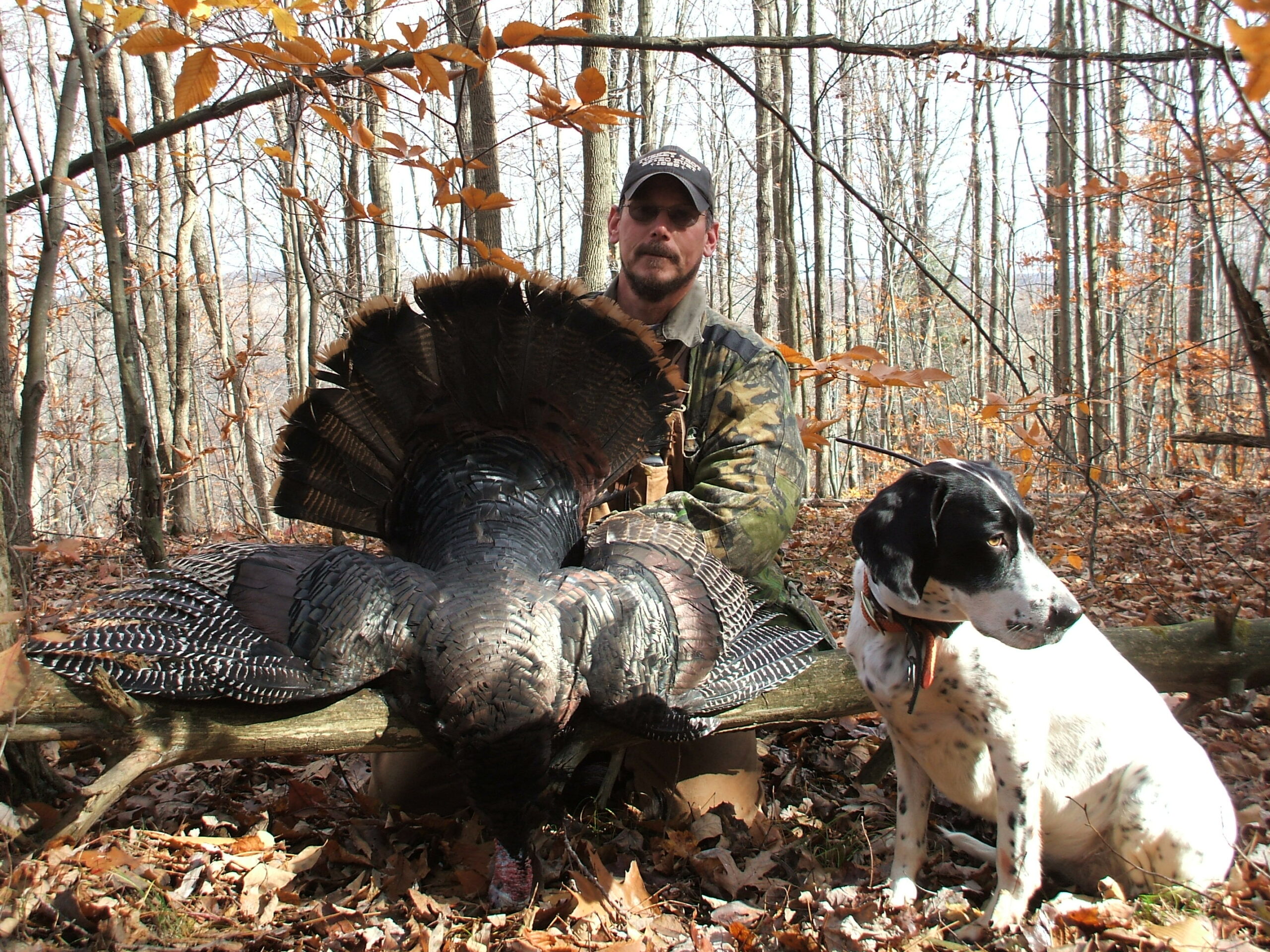
English setters and pointers (especially those that won’t hold point), Labrador retrievers, hounds such as hard-running beagles, Brittany spaniels, and even mixed breeds are capable of becoming decent turkey dogs, assuming you take the time to hunt that dog where it’ll find flocks. Boykin spaniels were bred historically in the Carolinas for turkey dogging, though ironically South Carolina offers no modern fall season, and North Carolina provides only a winter option. Still, this breed is used in other parts of the country where the tactic is legal, and is particularly effective in smaller woodlots where this short-legged canine can find and flush flocks.
Sometimes the intention is more deliberate. Bred by John Byrne and his son J.T. of Lowry, Virginia, Appalachian turkey dogs are from a pointer/setter/Plott-hound line developed specifically for fall turkey hunting. Apart from this willful breeding effort, turkey hunters can still chance at finding a cast-off dog that possesses the nose to find flocks, and the desire to flush them. Training a turkey dog — any bird-finding canine for that matter — is based on two things: showing the dog what you want it to do, and reading that animal’s natural abilities for what it might offer in the field. The marriage of these two components makes for a reliable hunting partner. Are you a serious fall and winter turkey hunter? Do you live in or near a state that permits the strategy? Do you have locations where you can condition and train your dog in the off-season? To use your dog as a tool during the hunting season, you have to spend the rest of the year training it, and enjoying that canine's company. Ideally a turkey dog should cast ahead, check back to your position, and find flocks. When it locates birds — either by foot, airborne scent, visual contact, or all three — the dog should run at the birds, bark to declare the flock’s position, then chase down singles, and lingering turkeys into the air. After the flush, the dog should consent to blind time as you call birds back. Concealed in a camouflage bag (a John Byrne innovation) or behind blind material or both, the dog should rest calmly as turkeys approach your position. Trying to hide the dog in the blind from the wary eyes of regrouping turkeys sometimes offsets the flushing advantage. That’s part of the challenge. |
|
Comments (10)
Correction: Make that North Carolina provided (past tense) a winter option. Previously, even during this past January '09, a short winter either-sex wild turkey season (dogs permitted) had been available. A recent proposal has passed, and the season no longer appears in NC hunting regs for 2009-2010. Regrettably, I might add. I know of several turkey dog men who have enjoyed that option--brief as it was. You SZers, any thoughts on this change? Arkansas fall/winter wild turkey hunters recently saw the same thing happen with their lengthy season. -S.
My black lab/weimariner mix was purchased few years back with the intent of making a grouse/woodcock dog out of her.Her abilities to scent and fluch birds were at a decent level, but I could never break her of chasing.If a bird flushed and the shot was missed,my dog would be off like a bolt chasing the bird, or if we encountered a racccoon or deer, she would give chase and no way could you get her to stop running.
Seeing as my family was aready pretty attached to her,and I was starting to get back into my waterfowler hunting, I decided to try her on ducks, and she excelled at it.No worries about her chasing anything because between retreives I keep her attached to my boatseat with a 2' leash.
So my Question is this, how do you train a Turkey dog to return to your side after its been chasing a flock of birds around?
Hey bigjake. Thanks for checking in. My dogs (English setters)have always hung around at the flush site, inhaling the lingering turkey scent. I put them on a lead, then we settle in to building a blind, putting up a small portable roll-up option, and/or also concealing that canine partner in the zipper camo bag, head exposed. You can also put light camo material over your lap/their head as they rest/sleep (snore). They get the idea after repeated seasons, but as always, certain dogs might do the jack-in-the-box thing at the sound of approaching turkeys. By the end of our time together, my Midge would literally try to crawl into the bag. It seemed she knew by then the turkeys would (might) come back, and she'd get to have at them again--or not; leash and shot depending. I've hunted with a lot of Byrne dogs over the years (owned by buds, including Gerry Bethge, the OL editor you all know of), and they're pretty solid to a dog with the settle in blind deal. But you're right: first you ask them to flush the flock, and then mellow down. Tricky. Bit like a Lab retrieving a duck then calming down again in the blind. -S.
Hey Big Jake and Steve (don't mean to step on your toes), but getting a dog to return after the flush is a matter of consistent repetition. The keys to that are CONSISTENT and REPETITION. If the dog learns early on that coming to you is pleasant and (as Steve pointed out with Midge) pleasurable things happen, they'll naturally want to come to you. The problem is, dogs, like humans, especially children (we won't ask wives about others who might share this trait) are in for instant gratification. That flush and chasing is the highest, purest form of gratification for a bird dog.
Starting early helps greatly, but you can do accomplish the task with older dogs too (it just takes longer). When they're young and in the house or around the yard, keep a long check cord on them and when they're sniffing around, pick it up and call them (or use a whistle, might be better in the turkey woods?) and use the leash to ensure that they come. Keep at it, over and over. Start incorporating birds (pigeons, etc) to recreate that excitement and begin calling them off after the flush. Do this in the back yard or other place and use that cord. With consistent repetitions, you should be able to recall the dog...especially if it figures out it gets more of the same if it returns!! Best of luck!-B
Next year Wisconsin allows turkey dogs statewide and with a long season plus the availability of numerous tags each year it would seem a state tailor made for turkey doggin.
Thanks for the info Steve I am seriously considering getting a dog for turkey hunting.
Been thinking I should try a couple of turkey dog hunts maybe I can find someone who would let me tag along or I can take that someone into some mighty fine turkey habitat and they could provide a demonstration. Although since turkey dogs will be new to WI next year there are not too many hunters doing this around.
Need to make certain that I can commit to the dog too it is not something you can put away on a shelf when you are done. ;-)
Remember the look in the eyes of my last dog when I went deer hunting - about break a guys heart.
With room to run in a 27000 acre area what breed would recommend I consider?
Later,
charlie
Hey charlie elk,
Turkey Trot Acres is your best best for a solid introduction to the turkey dogging tradition:
http://www.turkeytrotacres.com/
As breeds go, I've always favored English setters for my fall turkey dogging. I've lucked out with several dogs that have run big enough to find and flush autumn flocks on the edge of the pocket, and consented to blind time, while others have worked closer. All have taught me about the ways of fall turkeys (and other upland species). They've adjusted to the species: I also don't train my pointing dogs to be steady to wing (or run).
Then there's the time issue you mention. I write full-time out of my home office, so we spend a lot of time together. They're in here as I write this. Time is everything as training goes of course. As a year-round wild turkey enthusiast, we hunt a bunch of fall states together (deer are no longer on my radar at all, though my inbox is full of big antlered heads taken by buds as I write this!), and we spend a lot of time simply moving through fields and the woods, enjoying the outdoors. We're bonded. Heck, I even nap with one or the other if I can fit it in!
Anyhow,other guys I've known have used Labs, Boykins, pointers and other breeds successfully, even mixed lineages. Terriers too. Again, John Byrne's turkey dogs are of a pointer/setter/Plott hound line, developed strictly for turkey dogging in the fall. (He's got a long list of folks interested in having one btw.)
As with any gun dog, it's a gamble. Good breeding can help, but often a renegade dog (a bird-crazy pointing dog that won't for instance), will work best for fall turkey dogging.
I view it like this: I'm a hardcore, longtime turkey hunter who also loves canine companionship. I try to respect and use the strengths each dog presents. I train to use each canine hunting partner effectively for our own mutual benefit. Each dog has offered something in the field (I started hunting with dogs--a beagle who loved both PA cottontails, grouse, woodock and planted ringnecks pheasants--at age 12 back in 1971). Mostly they want to be with me, hunting hard, or simply hanging out with me outdoors. They seem to crave that bigtime scent turkey flocks put down. What bird dog wouldn't?
I couldn't live without it. A full life; a good one.
Happy to answer any other questions as best I can, or suggest that you contact somebody who might. Just one man, with my own deal. There are many other opinions on the turkey dogging tradition of course . . . all are worth listening to.
Keep us posted!
Compared to you I am a new turkey hunter - 1992 was my first spring turkey hunt. Got hooked and always said good thing turkey hunting takes place in the spring. Now the pull of turkey in the fall is getting strong. The dog hunt sounds like an exciting new dimension.
After all these years some parts of deer hunting are getting a bit tedious.(can't believe I wrote that) Got the walls full of heads and find myself passing up shots on nice deer more often.
Before turkey dogs became an option here getting a beagle for bunny hunting was a serious topic. Can't see a beagle settling down enough to stay in a blind.
We have sled dogs (huskies) they would flush the birds real good heck maybe catch a few too but.......... wouldn't see them for a couple of days maybe weeks.
Do your English Setters have any problems hunting in the cold? say 0 or less?
Are turkey dogs used for snow covered late Dec season flushing like in the earlier fall?
Thanks
charlie
Hey charlie,
I got the dog hunting bug early from my dad and his beagles (cottontails & other upland birds), and wild turkey hunting without one from him too (not legal in PA for fall turkeys until recently), so when the notion of finding, flushing and setting up on scattered autumn birds appeared on my radar (an OL article many years ago on John Byrne & his dogs by Larry Mueller), I was ready to listen and learn. I'm not alone as a guy who saw that piece. It was life-changing.
I was fortunate to hunt with John, his son J.T., and Pete Clare at Turkey Trot many years ago as well, and many times since, and that's how I got hooked. Many others were schooled this way, though that's not the original intent; some guys just book hunts and don't become doggers, but I suspect their lives are shaped for the better too. John, J.T. & Pete. They're all special people who have changed the face of modern turkey hunting by bringing the old tradition into the forefront. I'm just honored to be a part of it.
As for your questions,I've known of beagles that would break a turkey flock, but I've never heard of one used for that. Those sled dogs are also an offbeat idea (funny). My setters (long haired of course)stay pretty warm in the blind I guess. Modeling blind bags off of John Byrne's original idea, my wife had a seamstress make us a warm-weather camo bag (the Realtree on it is outdated now but still effective), and one that's insulated. What genius eh. I like the general temperament of English setters, and they seem to be a good fit for me. And yep, we've hunted in snow many, many times.
Hope this helps. Any other questions, just fire away man!
-Steve
When you pick out a pup are there any indicators one should look for? Or is it the luck of the draw?
Are your dogs able to break up a flock of turkeys in an open snow covered field? Or does the flock still have a tendency to fly off the same way together?
Those birds see me coming and always leave together. Wondering if a dog is helpful with this problem.
My young lab passed away this summer that I had successfully used for fall turkey. We now have a 15w/o Boykin puppy that I'm training. Any tips for getting the dog to bark on the flush? I've been teasing him with a turkey wing on a string, but he's only barked twice (barely) at it. Is the barking something they developed with age and exposure to actual breaks of turkey flocks? Is there anything else I can do to encourage barking at turkeys at an early age? So far his nose is unbeatable at finding the pieces parts I hide and he is extremely birdy.
Post a Comment (200 characters or less)
My black lab/weimariner mix was purchased few years back with the intent of making a grouse/woodcock dog out of her.Her abilities to scent and fluch birds were at a decent level, but I could never break her of chasing.If a bird flushed and the shot was missed,my dog would be off like a bolt chasing the bird, or if we encountered a racccoon or deer, she would give chase and no way could you get her to stop running.
Seeing as my family was aready pretty attached to her,and I was starting to get back into my waterfowler hunting, I decided to try her on ducks, and she excelled at it.No worries about her chasing anything because between retreives I keep her attached to my boatseat with a 2' leash.
So my Question is this, how do you train a Turkey dog to return to your side after its been chasing a flock of birds around?
Correction: Make that North Carolina provided (past tense) a winter option. Previously, even during this past January '09, a short winter either-sex wild turkey season (dogs permitted) had been available. A recent proposal has passed, and the season no longer appears in NC hunting regs for 2009-2010. Regrettably, I might add. I know of several turkey dog men who have enjoyed that option--brief as it was. You SZers, any thoughts on this change? Arkansas fall/winter wild turkey hunters recently saw the same thing happen with their lengthy season. -S.
Hey bigjake. Thanks for checking in. My dogs (English setters)have always hung around at the flush site, inhaling the lingering turkey scent. I put them on a lead, then we settle in to building a blind, putting up a small portable roll-up option, and/or also concealing that canine partner in the zipper camo bag, head exposed. You can also put light camo material over your lap/their head as they rest/sleep (snore). They get the idea after repeated seasons, but as always, certain dogs might do the jack-in-the-box thing at the sound of approaching turkeys. By the end of our time together, my Midge would literally try to crawl into the bag. It seemed she knew by then the turkeys would (might) come back, and she'd get to have at them again--or not; leash and shot depending. I've hunted with a lot of Byrne dogs over the years (owned by buds, including Gerry Bethge, the OL editor you all know of), and they're pretty solid to a dog with the settle in blind deal. But you're right: first you ask them to flush the flock, and then mellow down. Tricky. Bit like a Lab retrieving a duck then calming down again in the blind. -S.
Hey charlie elk,
Turkey Trot Acres is your best best for a solid introduction to the turkey dogging tradition:
http://www.turkeytrotacres.com/
As breeds go, I've always favored English setters for my fall turkey dogging. I've lucked out with several dogs that have run big enough to find and flush autumn flocks on the edge of the pocket, and consented to blind time, while others have worked closer. All have taught me about the ways of fall turkeys (and other upland species). They've adjusted to the species: I also don't train my pointing dogs to be steady to wing (or run).
Then there's the time issue you mention. I write full-time out of my home office, so we spend a lot of time together. They're in here as I write this. Time is everything as training goes of course. As a year-round wild turkey enthusiast, we hunt a bunch of fall states together (deer are no longer on my radar at all, though my inbox is full of big antlered heads taken by buds as I write this!), and we spend a lot of time simply moving through fields and the woods, enjoying the outdoors. We're bonded. Heck, I even nap with one or the other if I can fit it in!
Anyhow,other guys I've known have used Labs, Boykins, pointers and other breeds successfully, even mixed lineages. Terriers too. Again, John Byrne's turkey dogs are of a pointer/setter/Plott hound line, developed strictly for turkey dogging in the fall. (He's got a long list of folks interested in having one btw.)
As with any gun dog, it's a gamble. Good breeding can help, but often a renegade dog (a bird-crazy pointing dog that won't for instance), will work best for fall turkey dogging.
I view it like this: I'm a hardcore, longtime turkey hunter who also loves canine companionship. I try to respect and use the strengths each dog presents. I train to use each canine hunting partner effectively for our own mutual benefit. Each dog has offered something in the field (I started hunting with dogs--a beagle who loved both PA cottontails, grouse, woodock and planted ringnecks pheasants--at age 12 back in 1971). Mostly they want to be with me, hunting hard, or simply hanging out with me outdoors. They seem to crave that bigtime scent turkey flocks put down. What bird dog wouldn't?
I couldn't live without it. A full life; a good one.
Happy to answer any other questions as best I can, or suggest that you contact somebody who might. Just one man, with my own deal. There are many other opinions on the turkey dogging tradition of course . . . all are worth listening to.
Keep us posted!
Compared to you I am a new turkey hunter - 1992 was my first spring turkey hunt. Got hooked and always said good thing turkey hunting takes place in the spring. Now the pull of turkey in the fall is getting strong. The dog hunt sounds like an exciting new dimension.
After all these years some parts of deer hunting are getting a bit tedious.(can't believe I wrote that) Got the walls full of heads and find myself passing up shots on nice deer more often.
Before turkey dogs became an option here getting a beagle for bunny hunting was a serious topic. Can't see a beagle settling down enough to stay in a blind.
We have sled dogs (huskies) they would flush the birds real good heck maybe catch a few too but.......... wouldn't see them for a couple of days maybe weeks.
Do your English Setters have any problems hunting in the cold? say 0 or less?
Are turkey dogs used for snow covered late Dec season flushing like in the earlier fall?
Thanks
charlie
Hey charlie,
I got the dog hunting bug early from my dad and his beagles (cottontails & other upland birds), and wild turkey hunting without one from him too (not legal in PA for fall turkeys until recently), so when the notion of finding, flushing and setting up on scattered autumn birds appeared on my radar (an OL article many years ago on John Byrne & his dogs by Larry Mueller), I was ready to listen and learn. I'm not alone as a guy who saw that piece. It was life-changing.
I was fortunate to hunt with John, his son J.T., and Pete Clare at Turkey Trot many years ago as well, and many times since, and that's how I got hooked. Many others were schooled this way, though that's not the original intent; some guys just book hunts and don't become doggers, but I suspect their lives are shaped for the better too. John, J.T. & Pete. They're all special people who have changed the face of modern turkey hunting by bringing the old tradition into the forefront. I'm just honored to be a part of it.
As for your questions,I've known of beagles that would break a turkey flock, but I've never heard of one used for that. Those sled dogs are also an offbeat idea (funny). My setters (long haired of course)stay pretty warm in the blind I guess. Modeling blind bags off of John Byrne's original idea, my wife had a seamstress make us a warm-weather camo bag (the Realtree on it is outdated now but still effective), and one that's insulated. What genius eh. I like the general temperament of English setters, and they seem to be a good fit for me. And yep, we've hunted in snow many, many times.
Hope this helps. Any other questions, just fire away man!
-Steve
When you pick out a pup are there any indicators one should look for? Or is it the luck of the draw?
Are your dogs able to break up a flock of turkeys in an open snow covered field? Or does the flock still have a tendency to fly off the same way together?
Those birds see me coming and always leave together. Wondering if a dog is helpful with this problem.
Hey Big Jake and Steve (don't mean to step on your toes), but getting a dog to return after the flush is a matter of consistent repetition. The keys to that are CONSISTENT and REPETITION. If the dog learns early on that coming to you is pleasant and (as Steve pointed out with Midge) pleasurable things happen, they'll naturally want to come to you. The problem is, dogs, like humans, especially children (we won't ask wives about others who might share this trait) are in for instant gratification. That flush and chasing is the highest, purest form of gratification for a bird dog.
Starting early helps greatly, but you can do accomplish the task with older dogs too (it just takes longer). When they're young and in the house or around the yard, keep a long check cord on them and when they're sniffing around, pick it up and call them (or use a whistle, might be better in the turkey woods?) and use the leash to ensure that they come. Keep at it, over and over. Start incorporating birds (pigeons, etc) to recreate that excitement and begin calling them off after the flush. Do this in the back yard or other place and use that cord. With consistent repetitions, you should be able to recall the dog...especially if it figures out it gets more of the same if it returns!! Best of luck!-B
Next year Wisconsin allows turkey dogs statewide and with a long season plus the availability of numerous tags each year it would seem a state tailor made for turkey doggin.
Thanks for the info Steve I am seriously considering getting a dog for turkey hunting.
Been thinking I should try a couple of turkey dog hunts maybe I can find someone who would let me tag along or I can take that someone into some mighty fine turkey habitat and they could provide a demonstration. Although since turkey dogs will be new to WI next year there are not too many hunters doing this around.
Need to make certain that I can commit to the dog too it is not something you can put away on a shelf when you are done. ;-)
Remember the look in the eyes of my last dog when I went deer hunting - about break a guys heart.
With room to run in a 27000 acre area what breed would recommend I consider?
Later,
charlie
My young lab passed away this summer that I had successfully used for fall turkey. We now have a 15w/o Boykin puppy that I'm training. Any tips for getting the dog to bark on the flush? I've been teasing him with a turkey wing on a string, but he's only barked twice (barely) at it. Is the barking something they developed with age and exposure to actual breaks of turkey flocks? Is there anything else I can do to encourage barking at turkeys at an early age? So far his nose is unbeatable at finding the pieces parts I hide and he is extremely birdy.
Post a Comment (200 characters or less)