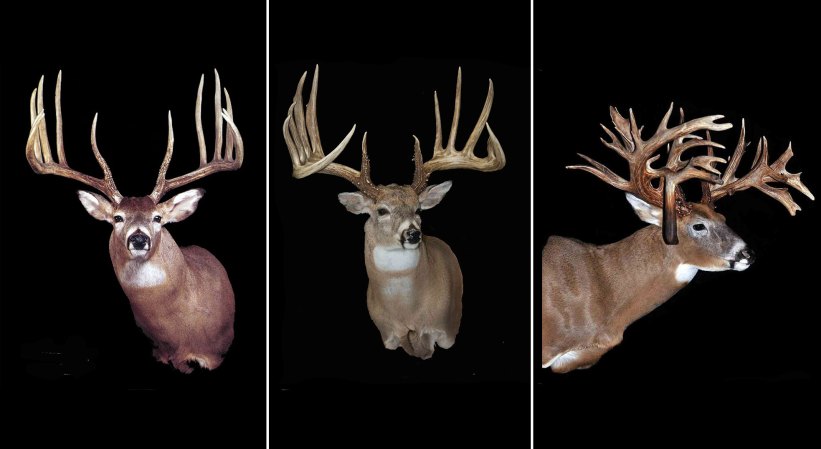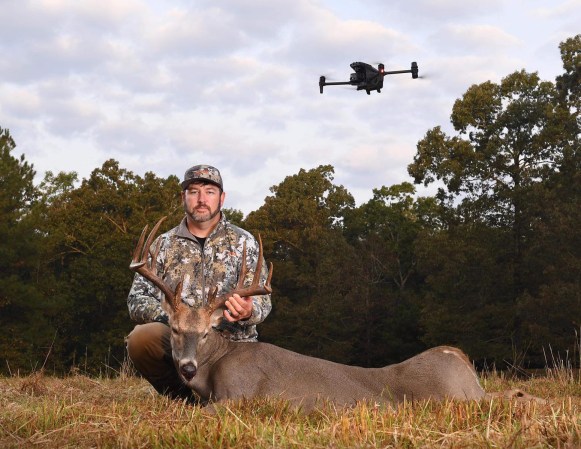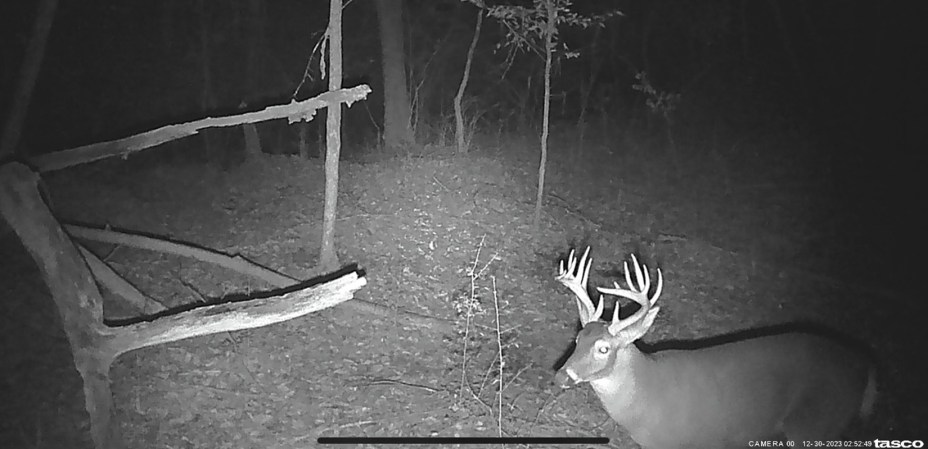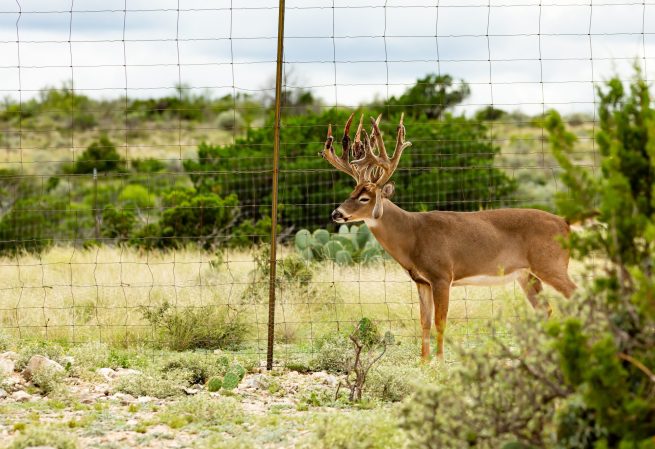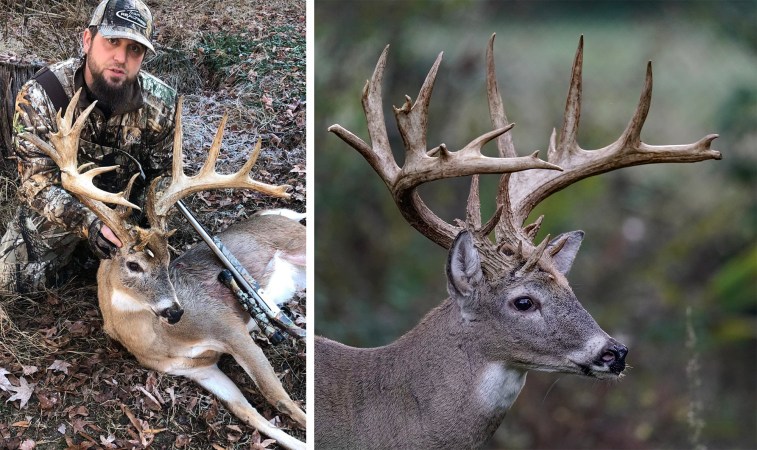
Craig Dougherty investigates the ugly side of deer farming, including this outrageous 561-inch buck.
We put together a countdown of the highest-scoring whitetail bucks ever killed according to Boone and Crockett records.
![]() | Wolf vs. BuckIt's easy to think of wolves as killing machines and whitetails as their defenseless... |
![]() | 40 Best Deer TipsWe've put together the 40 best tips from recent issues to help you kill the biggest... |
![]() | Read a BuckMost deer hunting tips concern reading deer sign. But, don't miss out on your chance to... |
![]() | Black FawnThink albino deer are rare? Check out these photos of a black fawn taken by a... |
![]() | Let 'Em WalkOf all the variables that contribute to record racks, age is the most important. There’s... |
![]() | First Deer IIIt's a season of firsts! At least it has been for these fortunate hunters. |

In late November, the Great Lakes Indian Fish and Wildlife Commission, which oversees the Chippewa tribes' treaty rights in Wisconsin, voted to authorize night hunting for deer by tribal members.
To participate in the after-dark hunt, tribal members would be required to pass a marksmanship test. According to an Associated Press report, 74 members met those requirements but, thus far, none have applied for a night-hunting permit.
But they might. And that has hunters and Wisconsin Department of Natural Resources officials concerned. [ Read Full Post ]

Beef has taken a beating lately. Biblical droughts in the Heartland last year have prices on the rise, new research suggests that bacteria in the human digestive system could make red-meat eaters more prone to heart disease, and health-conscious consumers from Seattle to Brooklyn are demanding "grass fed" and "free range" fare.
And the flaws in beef only seem to highlight the qualities of venison. With the latest (and strongest) trend in dining being all about eating organically and locally, there should be no meat trendier than deer right now. Not to mention that the whitetail deer population, approximately 15 million in the U.S., has never been larger than it is today.
As hunters, we like to brag about the qualities of wild venison: "Most people can't even tell the difference between a beef steak and a venison steak;" "It's way healthier than beef is;" "I haven't bought beef from a grocery store in years;" and on we go.
But is eating wild venison truly better than eating beef? Or is that just something we say when we feel the need to justify killing deer? I conducted an objective (and partially subjective) investigation to find out. [ Read Full Post ]

The whitetail deer breeding industry has been getting more than its share of headlines lately. It seems deer breeders and captive whitetail hunting operations are working hard at loosening restrictions on deer breeding operations. They want state wildlife agencies to hand regulation responsibilities over to state agriculture departments. They believe that state agricultural departments will be better for business and will be more willing to ease “excessive” restrictions like curtailing deer transport, identifying and monitoring unique deer for disease, and double fencing to prevent wild deer from contacting captive deer.
Case in point---deer breeders in Missouri recently attempted to have the classification of captive whitetails changed from “wildlife” to “livestock.” They lost, but the battles continue elsewhere.
[ Read Full Post ]
We have been planting food plots for almost 25 years and have learned a thing or two about what works with whitetails and what doesn’t. And, when it comes to planting food plots you can’t beat clover.
Clover is relatively easy to grow, is loaded with nutrition, and whitetails simply love it. A good clover plot will produce 2 to 4 tons (per acre) of easily digestible plant matter and give your whitetails a shot in the arm when it comes to nutrition. [ Read Full Post ]

With overwhelming support from most of the state’s sportsmen, the New York Department of Environmental Conservation held the state’s first youth deer hunt last fall. The results are in and the three-day Columbus Day weekend hunt was a great success. The DEC estimates that 7,800 junior hunters (along with non-hunting mentors) took 1,411 whitetail deer. [ Read Full Post ]
At the risk of offering cockamamie advice that’ll get readers in trouble with their spouse or ruin a perfectly good friendship, I propose one piece of sage counsel: Never resist the urge to go deer hunting.
Before you brusquely throw me out of the fickle court of public opinion, I submit to you exhibit number 182 1/8, which is the Boone and Crockett score of Michigan’s new archery state whitetail typical record. The exhibit is presented by Robert Sopsich of Milford, Mich., who illustrates another oft-repeated hunting adage: Always be prepared. [ Read Full Post ]
Last week our phone and website came alive with foodplotters placing their spring seed orders. Sadly, few inquired about the most critical aspect of growing a successful food plot: soil testing.
Before planting, it’s of the utmost importance to analyze your soil to make sure that the soil composition is conducive to growing the seed you’re about to sew. Most parts of whitetail country suffer from soils with a low pH; somewhere in the 4 to 5 range. That means they are acidic in nature and most food plot forages won’t do well in them. The solution is simple. Adding pulverized lime to the soil will sweeten the soil making it less acidic. You are looking to raise your soil’s pH into the 6 to 7 range with 7 being ideal. [ Read Full Post ]