
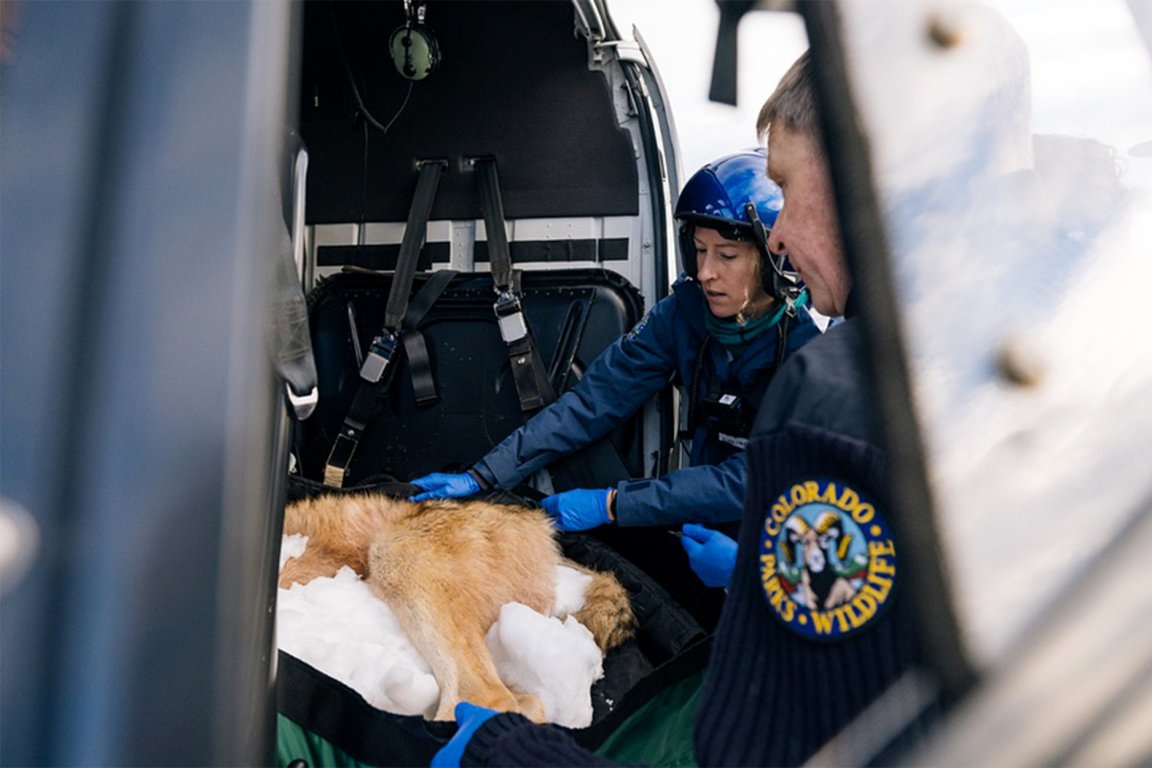
Colorado wildlife managers announced Wednesday that they are no longer planning to release additional gray wolves into the state this winter. The announcement comes as the state has failed to secure a source for gray wolves, and it follows a pair of letters from the U.S. Fish and Wildlife Service calling out the reintroduction program.
The first letter, sent in October, ordered Colorado Parks and Wildlife to “cease and desist” its plans to import an additional 15 wolves from British Columbia this winter. CPW had translocated 15 B.C. wolves into the state in Jan. 2025 as part of the voter-mandated reintroduction effort, and The Colorado Sun reports that the federal agency had initially cleared the agency’s plans for a second reintroduction in 2026. CPW had also reached a deal with Canadian officials to pay $400,000 for those wolves. In the October letter, however, USFWS Director Brian Nesvik told CPW that importing Canadian wolves was illegal under the agreement, and that the state was only allowed to source wolves from the northern Rocky Mountains population.
Read Next: US Fish and Wildlife Director Calls Out Colorado Wolf Program. Could the Next Release Be Stopped?
This option hasn’t panned out, either, because other states and tribes in the region have been unwilling to provide wolves to Colorado. This includes Idaho, Wyoming, Montana, and Oregon, which provided the state with its first batch of 10 wolves. Washington also denied CPW’s most recent request in November, citing declines in its own wolf population and the high death rate among the wolves that have already been brought into Colorado.
A second letter from the USFWS to CPW, sent in late December, threatened to terminate Colorado’s wolf reintroduction program unless the state provided a detailed report of its management activities within 30 days. Acting CPW Director Lauren Clellan confirmed during a commission meeting Monday that the state plans to comply with this request and will continue to work with the USFWS on wolf reintroduction.
“I want to reiterate that CPW has coordinated with U.S. Fish and Wildlife Service throughout the gray wolf reintroduction effort and complied with all applicable federal and state laws, as well as international treaties,” Clellan said in the meeting. “This includes translocations in January of 2025, which were planned and performed in consultation with the U.S. Fish and Wildlife Service.”
CPW now worries that its inability to release more wolves this winter could impede the goals laid out in its Wolf Management Plan, which calls for releasing 30 to 50 wolves over the course of three to five years. CPW released 25 wolves in total so far.
“When populations are small, the contributions of each individual is especially significant,” CPW wolf program manager Eric Odell stated in Monday’s announcement. “It is not possible to predict the impact of foregoing a third year of translocations without knowing what may occur in the coming year. If mortality remains high, as observed in 2025, the risk of failing to achieve a self-sustaining wolf population in Colorado increases.”
Read Next: Coloradans Who Oppose Wolf Reintroduction Can’t Agree on How to Try Ending It
In that same announcement, CPW said it had confirmed successful reproduction in four known wolf packs across the state. So there should be some additional pups on the landscape this year. And, as Odell noted, the recruitment of additional wolves will be a key factor in establishing a viable population of gray wolves in Colorado — especially due to the mortalities that have already occurred there.
On Tuesday, just one day before it announced the pause in reintroductions, CPW informed the public that gray wolf 2504, a female brought from B.C., had died in northwest Colorado. This brings the total number of reintroduced wolves that have died to 11. Because the state’s gray wolf population remains federally protected, USFWS is leading the investigation into the wolf’s death.
Dac Collins contributed reporting.