
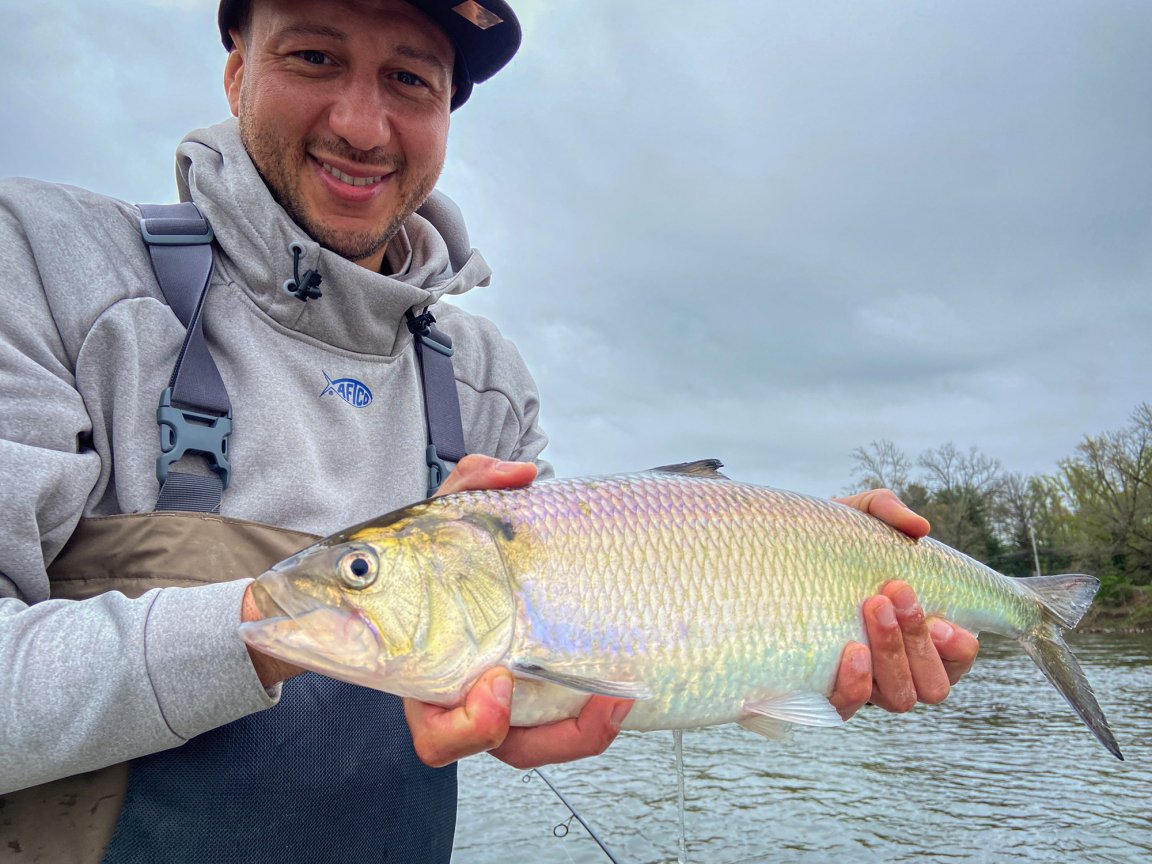
From Maine to Florida and even in the Pacific Northwest, hickory and American shad have cult followings. On the East Coast especially, their spring runs are steeped in history and lore. In some regions, shad fishing culture is waning while it flourishes in others, but no matter where you find these fish, they have one thing in common — they don’t eat once they leave saltwater and enter their spawning rivers. Catching them becomes a game of getting the right lure in their faces as they migrate, which aggravates them into striking. Though there are many lures and flies that will do the job, none is more potent than a traditional willow leaf shad spoon.
It’s widely accepted that the origin of these spoons dates back to Connecticut in the 1970s, though these days they are a staple in boxes from New England through the Mid-Atlantic. The reality, however, is that even in regions where lures like a tiny grub or in-line spinner are favorites, a shad spoon will be productive — possibly even more productive than the local staples. The thing is, delivering a shad spoon isn’t intuitive. Proper methods change whether you’re on the bank or in a boat, so I reached out to Steve Reigles for some clarity. Reigles is the man behind Steve’s UV Leaves, which I believe are the Cadillac of shad spoons. There’s no one better to break it down than the guy who makes the best (and toughest) shad spoons on the market.
Listen to this week’s episode of the Quick Strike Podcast on Apple, Spotify, or wherever you get your podcasts.
Shore Thing
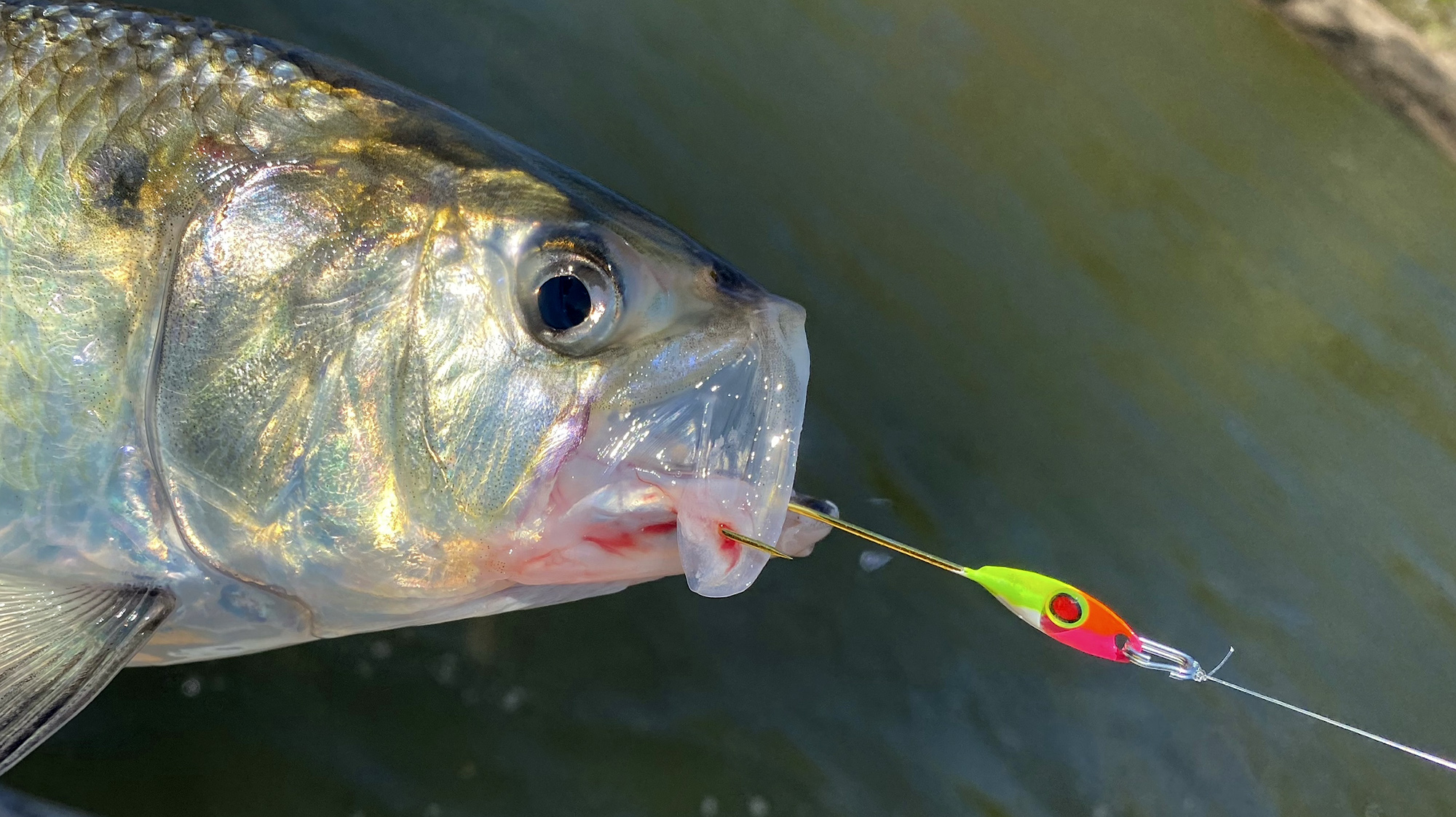
A shad spoon is essentially a small, elongated willow leaf spinner blade with a light-wire, long-shank hook soldered to the inside. Though plain, metallic silver and gold spoons catch piles of shad, they are more commonly painted on the outward facing side. A split ring on the opposite end of the lure allows you to attach your leader and gives the lure more action. However, a shad spoon by itself weighs almost nothing, so, first, let’s look at how you rig one if you’re standing on the riverbank.
“I usually use a leader anywhere from two to four feet in length,” Reigles says. “Remember, shad run along the bottom most often, so you want to keep your spoon as low in the column as possible. At the top of my leader, I tie a small barrel swivel, and then a thread a simple bullet sinker on my main line before tying it to the swivel. The spoon is essentially set up like a Carolina rig.”
Related: How to Catch Shad, a Beginner’s Guide
All you have to do is cast straight across or slightly up current, let the weight touch bottom, and then being a steady retrieve. The current will get the spoon flashing, twirling, and fluttering, and the rig will sweep in an arc to cover water. Assuming you’ve found a heavily traveled shad lane or bottleneck, this easy method should get your spoon in front of maximum faces.
Though you can catch shad effectively on any medium-action spinning rod, length and softness are great qualities in a shad stick. Many devout shad fishermen lean on 9- to 11-foot “noodle rods,” designed for steelhead, and they certainly have an advantage. Their flex creates a shock buffer when a big shad goes sideways in the current or changes direction quickly. With paper thin mouths, shad come unglued easily, so light line — 8-pound test or less — and a light drag setting are helpful, too.
Changing Lanes
Having a boat in the shad game is a major plus. Instead of casting across the river and hoping to pull your spoon across a shad’s face, you can anchor a boat in a likely lane and keep spoons in the zone directly down current the entire time. I’ve been in scenarios where if the run is strong and you’re in the perfect spot, you can barely keep two lines in the water. Historically, anglers would rely on clunky downriggers to positions spoons close the bottom, but somewhere along the line, someone came up with a genius alternative that has become the norm.
“Most people these days are using a crankbait with the hooks removed to fish spoons from a boat,” says Reigles. “You remove the hooks, tie the crankbait to your main line, then tie the leader and spoon to the rear eye of the crankbait. The method really gives you great control of the depth.”
By carrying a selection of crankbaits with varying lip sizes, you can easily switch from three feet of water to ten or more just by swapping out the delivery lure. I know some anglers who keep the belly hook on their crankbaits just in case a smallmouth, walleye, or striped bass decides to take a shot; however, doing so also results in more fouling, tangles, and opportunities to put a hook in your hand. Reigles also notes that the crankbait method seems to add more life to a spoon. Between its natural flutter and the wobble of the crankbait transmitting down the leader, any shad that encounters it isn’t likely to swim past.