
We may earn revenue from the products available on this page and participate in affiliate programs. Learn More ›
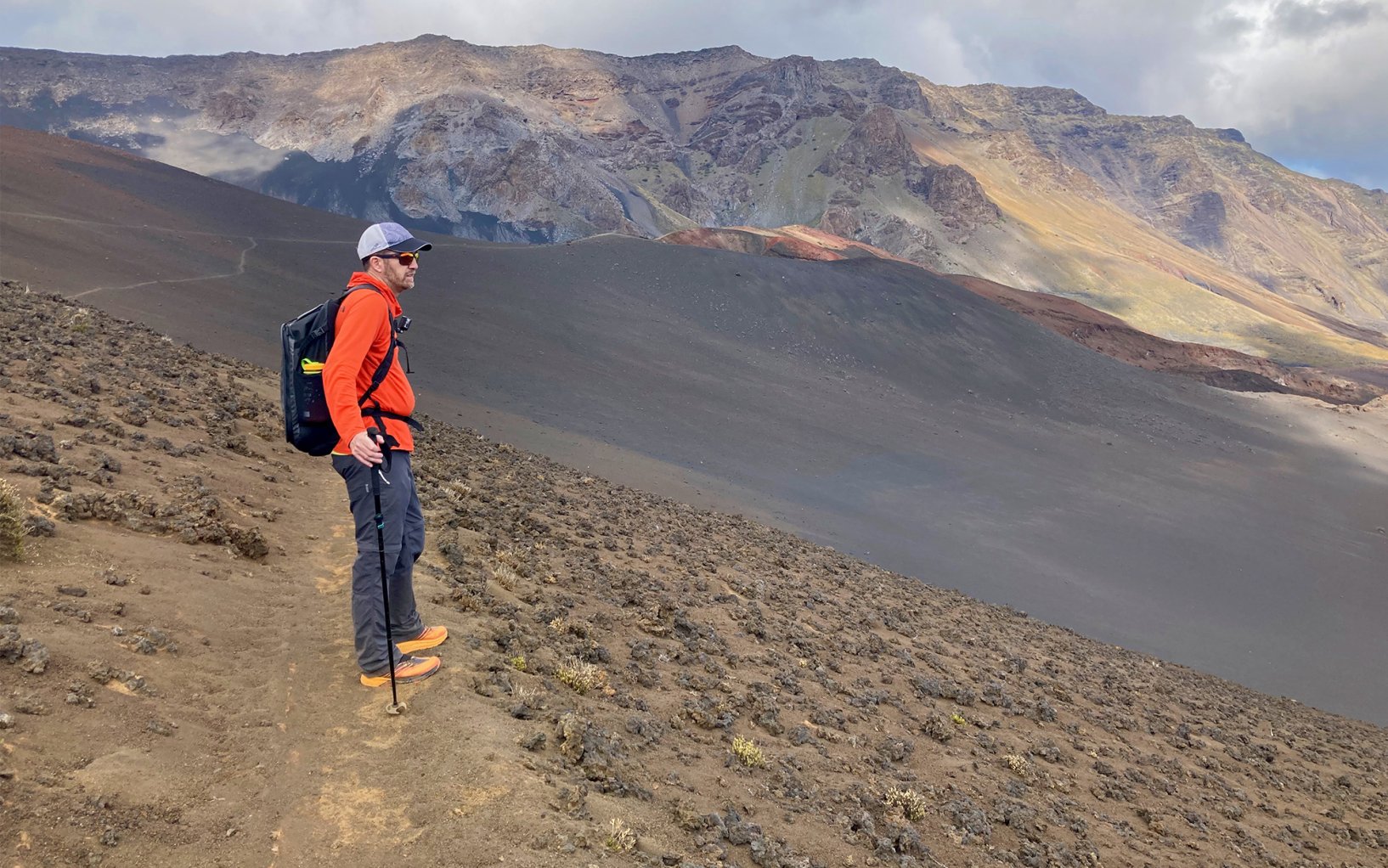
Lightweight hiking shoes are great for established trails, long hikes, and staying nimble on rough terrain. Namely, trail runners are the best lightweight hiking shoes, because they allow your ankles more mobility than a stiff hiking boot. Plus you don’t have to lug over a pound of leather, foam, and rubber on each foot, though you might sacrifice some durability. Our seven top picks are staff-tested favorites, survivors of Alaska backcountry guide Justin La Vigne’s torture testing, and recommendations from REI footwear specialist Kim Kelley.
- Best Overall: Oboz Katabatic
- Best Budget: Merrell Moab Speed
- Most Versatile: Hoka Speedgoat
- Best Zero Drop: Altra Lone Peak
- Most Comfortable: Topo Ultraventure
- Best for Trail Running: La Sportiva Prodigio
- Best Barefoot: Vivobarefoot Trail FG
How We Tested the Best Lightweight Hiking Shoes
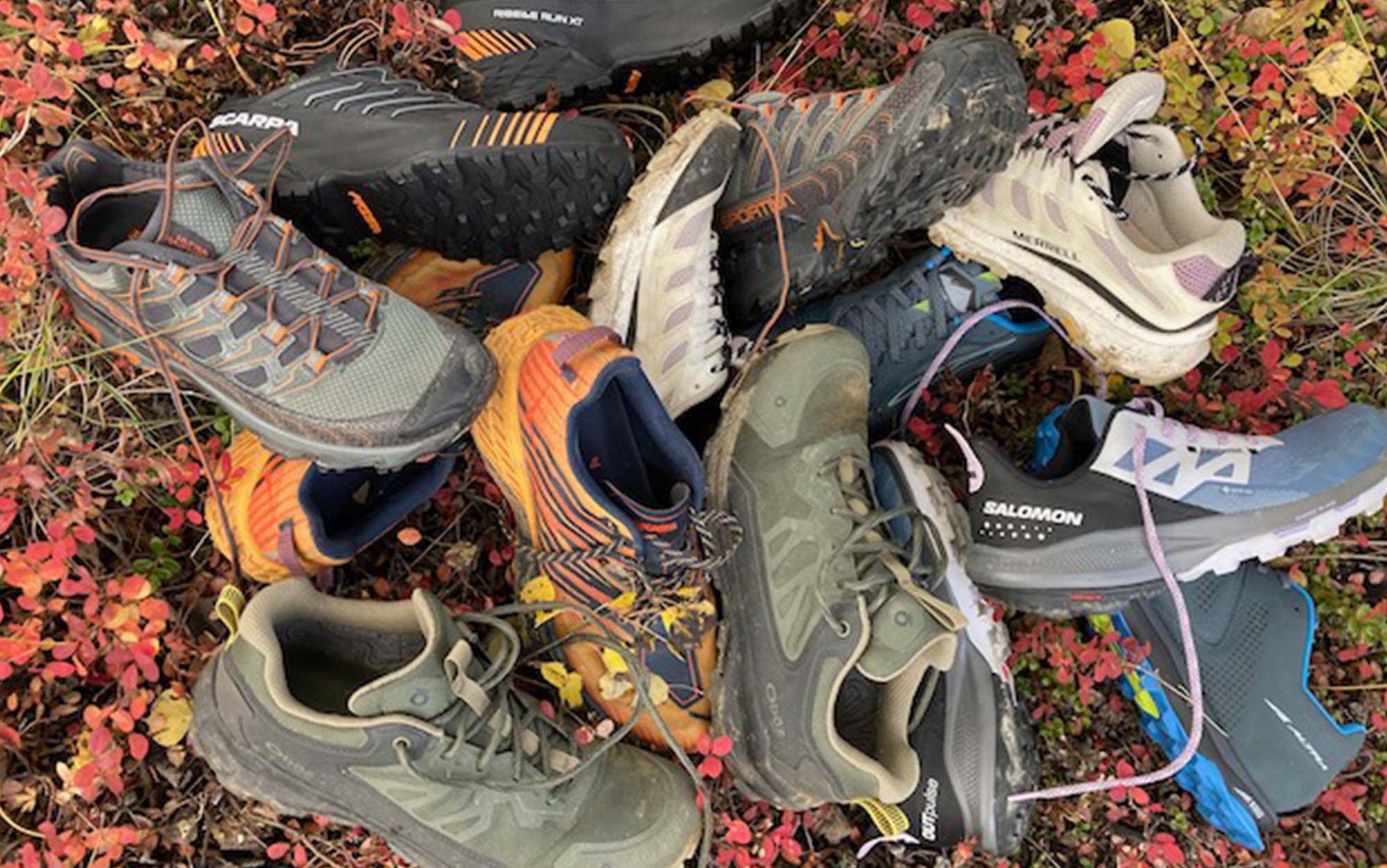
Outdoor Life staff and La Vigne hiked, backpacked, and trail ran in all of these shoes, and more. These seven stood out as the best lightweight hiking shoes. Justin La Vigne took contenders into the harsh Alaska backcountry, while editor-in-chief Alex Robinson, staff writer Laura Lancaster, and associate gear editor Ashley Thess put down miles across the lower 48.
We also called in the expertise of Kim Kelley, footwear specialist at REI. She has 15 years of experience with top brands, design trends, and how these shoes hold up over time. Even if you aren’t planning to run any trails, the best lightweight hiking shoes and trail runners will open up your hiking pace with lightweight, yet supportive materials.
Best Lightweight Hiking Shoes: Reviews & Recommendations
Best Overall: Oboz Katabatic
Pros
- Non-waterproof and waterproof options ($20 more)
- Mid-ankle option available
- Breathable mesh
Cons
- No wide options
- Not a Vibram outsole
- On the heavier side
Key Features
- Weight Per Shoe: 12.7 ounces (men’s), 9.8 ounces (women’s)
- Available Sizes: 8-14 (men’s) and 5-12 (women’s)
- Stack Height: 31/23 mm
- Drop: 8mm
- O Fit insole
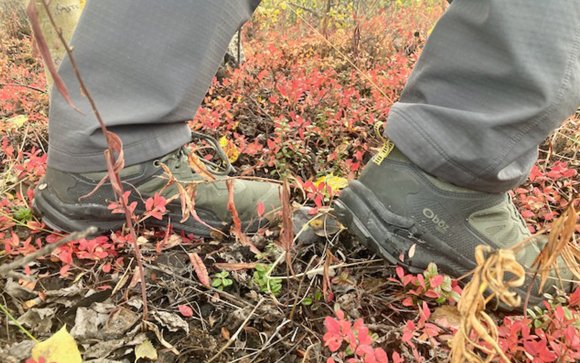
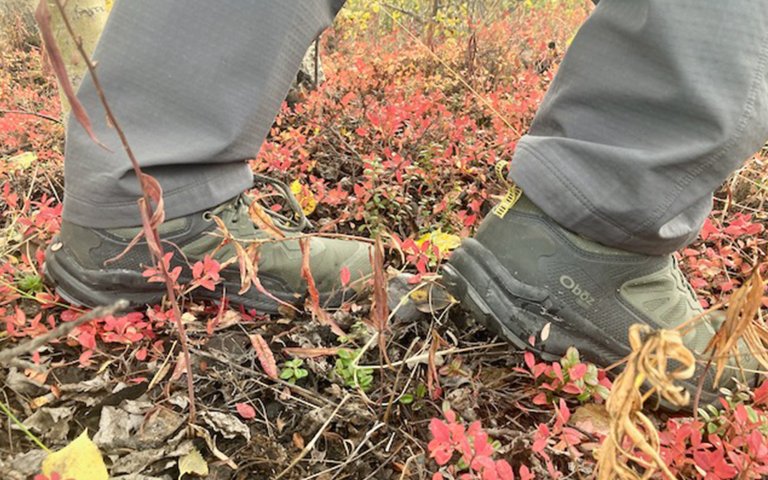
Hikers rave about the brand, the quality, and the comfort, but the Katabatic Lows were my first foray into Oboz footwear. Are they worth the hype? Apparently so; I discovered out-of-the-box comfort and no rub spots after over 100 miles. The breathable mesh stayed comfortable on long treks and plastic rubber molds around the foot offer protection and support. “They are the only company that adds a molded hard plastic insole to their shoes for real arch support that will not quickly squish down under pack weight or a foot that habitually overpronates. It’s like getting aftermarket insoles for free in every pair,” Kelley says.
While they don’t utilize a Vibram outsole, Oboz does have their own Trail Tread, which has an aggressive multidirectional lug pattern comparable to Vibram outsoles. I always kept my grip, even on wet, rocky, and rooted trails. The 8 mm heel-to-toe drop is on the lower end and gives a nice sense of stability.
Green bonus: Oboz will plant a tree for every pair of shoes sold. — Justin La Vigne
Best Budget: Merrell Moab Speed
Pros
- Non-waterproof and waterproof options ($30 more)
- Wide width available
- Affordable regular price ($130), but often on sale
Cons
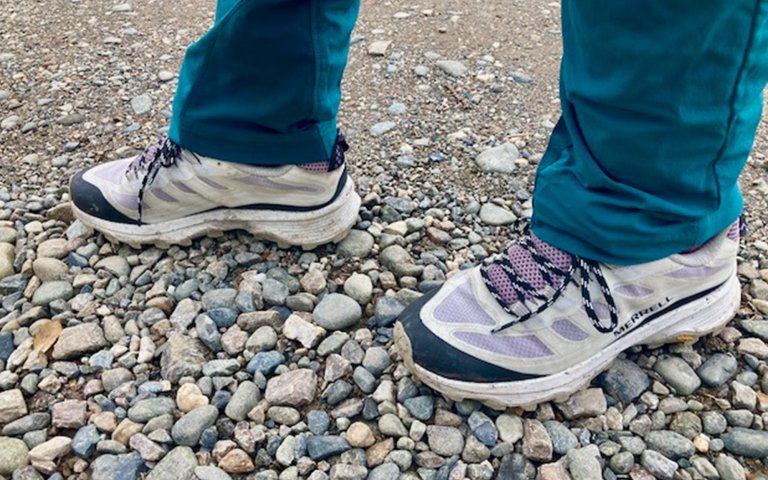
- White color choice gets dirty quickly
- Hard to fit to your feet
Key Features
- Weight Per Shoe: 9.2 ounces (men’s), 8.5 ounces (women’s)
- Available Sizes: 7-15 (men’s), 5-11 (women’s), and kids’ sizes available
- Stack Height: 34/24 mm
- Drop: 10 mm
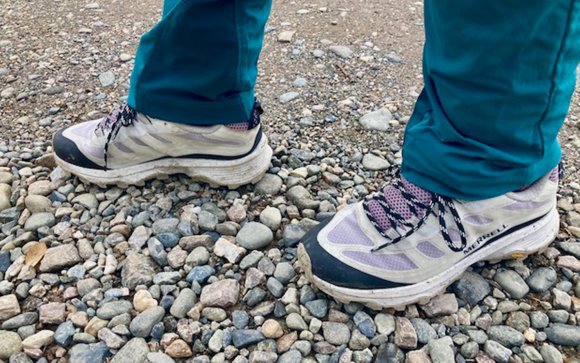
While prepping for my Appalachian Trail thru hike, I was on the hunt for the best lightweight hiking shoes that would give the most support and last the longest. The go-to brand that year was Merrell, and I put 1,000 miles on his first pairs of Merrell Moabs, followed by another 1,000 miles on a second pair. At that time, in 2011, they were in the lightweight category. Since then, the Merrell Moab line’s upgrades still offer the same durability and support in a lighter weight.
The newest rendition of the Moab Speeds steps up the game with its Vibram outsole that now relies on partially recycled rubber, as well as the 4 mm traction lugs. The bellowed tongue truly keeps out debris, a huge plus as most of my hiking in Alaska is through willows and alders where low-top shoes typically gather hitchhiking plants.
They are often on sale, and at the time this article went to print, they were $40 off MSRP. But even at the regular price of $130, these shoes are an ideal price for the durability they deliver. Bonus: They are vegan, so now I’m wondering, can you eat them? — Justin La Vigne
Read Next: The Anatomy of a Shoe: What You Need to Know Before Buying Your Next Trail Runner or Hiking Shoe
Most Versatile: Hoka Speedgoat
Pros
- Good balance of cushion and responsiveness
- Great for running and hiking
- Better durability than previous model
Cons
- Outsole can deteriorate quickly on rocky surfaces
Key Features
- Weight Per Shoe: 9.8 ounces (men’s), 8.2 ounces (women’s)
- Available Sizes: 7-15 (men’s and women’s)
- Waterproof (Gore-Tex) versions available
- Mid height options available
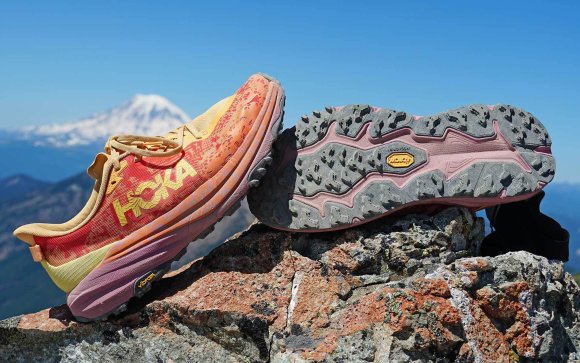
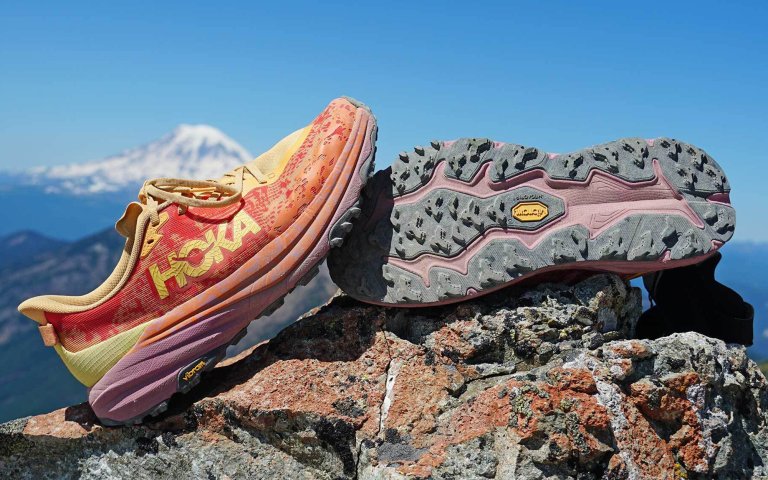
This is an excellent hiking and trail running crossover shoe. Hoka updated the Speedgoat last year with the new 6. It’s slightly lighter, has better durability in the upper, improved lugs and traction, and more responsiveness on the trail. Out of the box it might feel slightly less cushy than the previous model but that’s not necessarily a bad thing.
Overall, this is a well-balanced shoe in terms of cushion and responsiveness. It has 5mm of drop — average for a long distance runner — and 38mm of stack height, on the higher end.
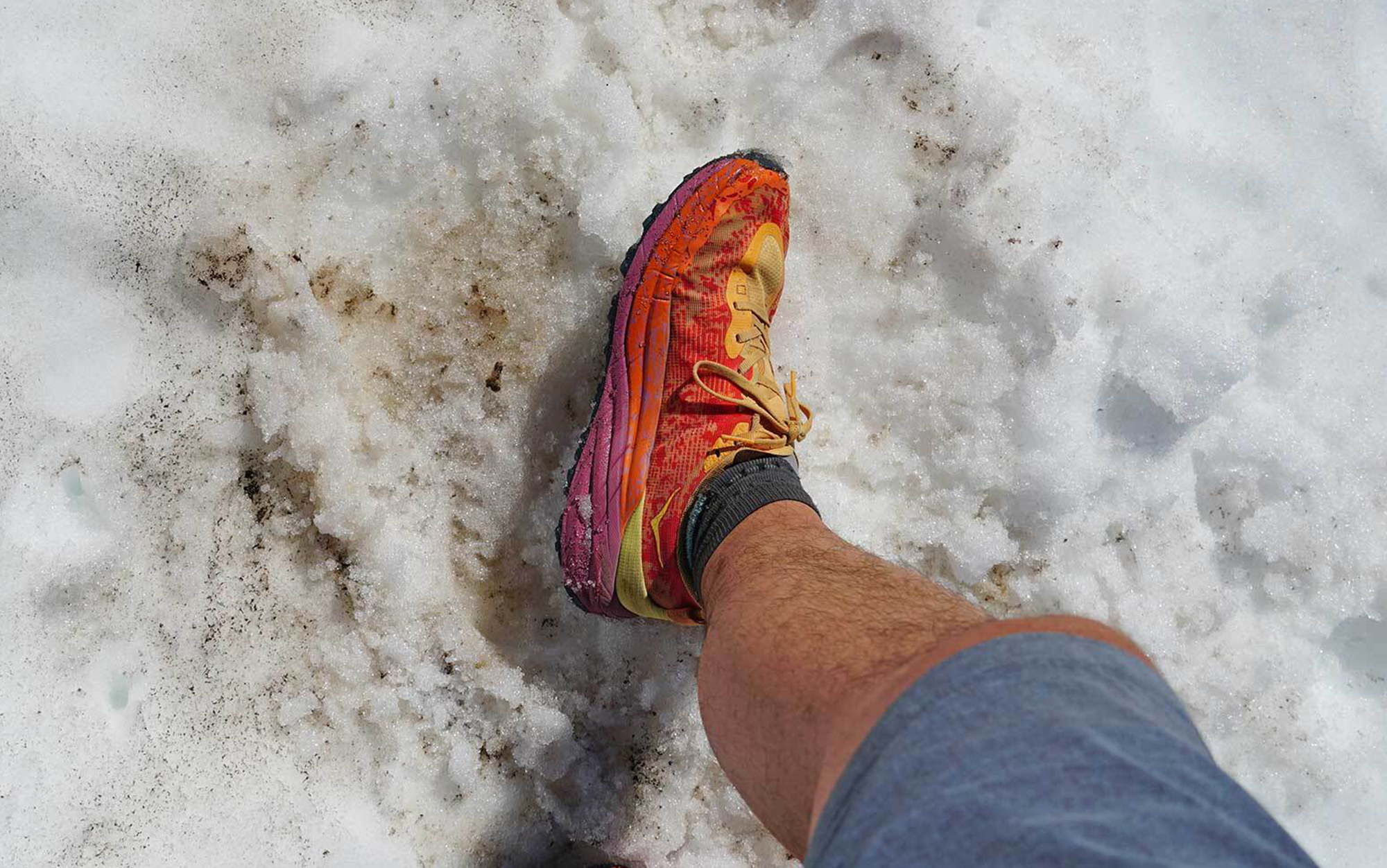
I’ve put more than 100 miles on my pair of Speedgoat 6s and have found that they fit me nicely and I’ve never had issues with blisters or rubbing. Most of those miles were slow trail runs in the five to 10-mile range. Living in Minnesota, that also means a lot of running on snow and ice. I found the Vibram Megagrip lugs to provide plenty of traction when I needed it most.
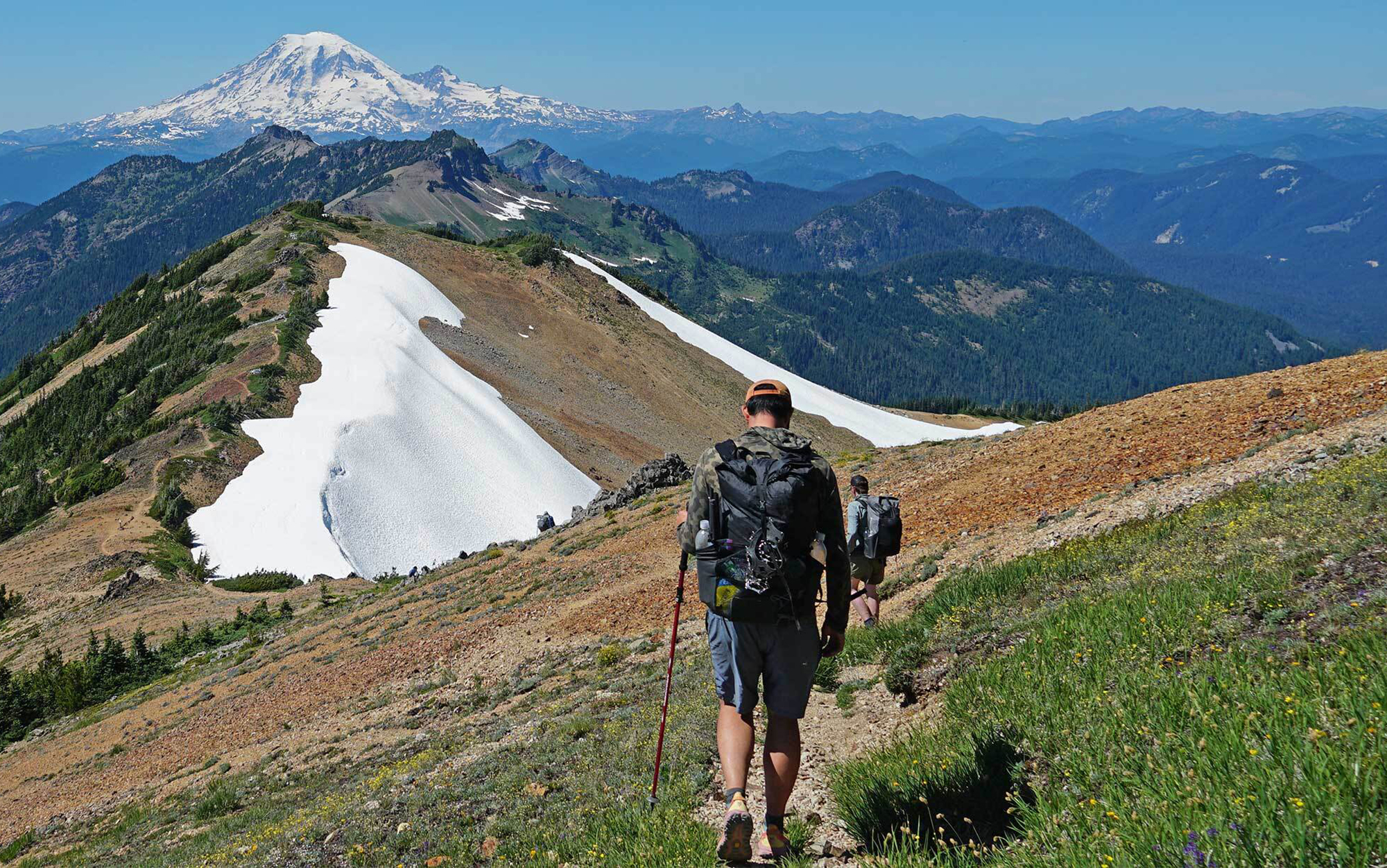
I also hiked in these shoes for a few days on the rocky Pacific Crest Trail, where they performed admirably. Plus, I did a handful of runs on pavement (including one early morning down the Las Vegas Strip). In other words, these shoes have proven to be the picture of versatility for me.
My Speedgoats are still in good shape, though they did suffer some tears around the midsole during the PCT hike. If you are planning on tackling a lot of super rocky, technical terrain, or if you have wide feet, I would recommend a different option.
For everyone else the Speedgoat 6 is a great do-all trail shoe to have in the rotation. — Alex Robinson
Best Zero Drop: Altra Lone Peak
Pros
- Wide toe box
- Zero drop
Cons
- No wide options
- Not very durable
Key Features
- Weight Per Shoe: 11.15 ounces (men’s), 9.3 ounces (women’s)
- Available Sizes: 7-16 (men’s) and 5.5-12 (women’s)
- Stack Height: 25 mm
- Drop: 0 mm
- Improved outsole
- Updated midsole
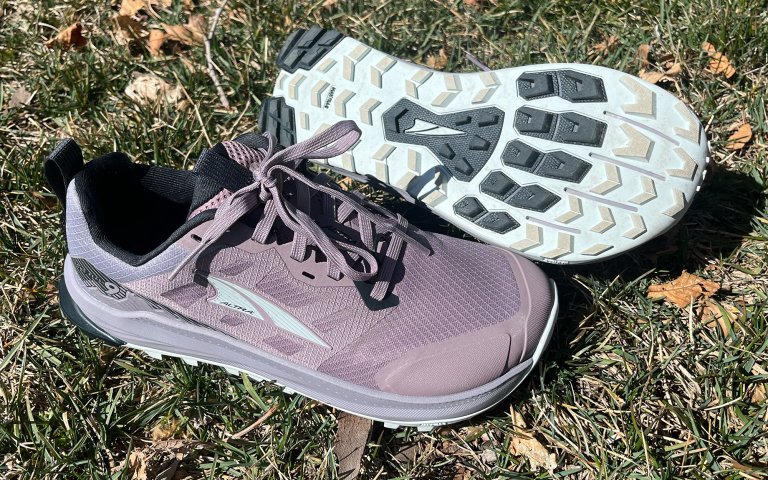
There was a time where any trail runner or ultralight hiker you saw was wearing the Altra Lone Peak. Even Kelley claimed based on REI’s trends, these were the “hottest trail running shoes” out there. This cult following stems from a simple and effective approach to trail runners: Make shoes shaped like feet. Altra’s roomy toe box, minimal arch support, and zero drop (your heel is level with your toes) unlocked more miles with less pain for a lot of hikers and runners.
Altra’s feet-shaped footwear shares some similarities with the barefoot shoe movement, but there are important differences, too. While barefoot-shoe-believers value foot strength above overly-engineered footwear, strengthening your feet is just like building muscle anywhere else on your body: hard, and takes time. The Altra Lone Peaks are a happy middle ground with a moderate 25 mm of cushion to absorb shock as your feet fall, while still allowing your toes to splay naturally and zero drop from the forefoot to heel. Hikers and trail runners achieve a mid or forefoot landing, which encourages a more stable gait and connectivity to the ground.
However, in our in-depth review of the Altra Lone Peak 6, four staff members provided extremely mixed reviews. For the Hoka-lover, the shoe lacked cushion, and for the barefoot-believer it was too much. It’s hard to please everybody, but Altra’s latest iteration, the 9th Lone Peak, is trying. While keeping the same stack height as the 6, the 9’s foam has been updated to absorb more shock. These feel less like a transition to barefoot shoes, and more like our most comfortable pick, Topo.
Plenty of Altra lovers have made the switch to Topo’s Terraventure, but not for more cushion, for a longer lifespan. Durability is a concern with Altra, and anyone putting down serious miles should expect to re-up more frequently than you’d like. Though, the 9 has improved the upper mesh and outsole for durability. A wear-point on the 6 was where my big toe pressed against the mesh and rubber, but the 9 features heartier toe protection along with a thicker upper and deeper lugs. It’s also a bit heavier, but through continued testing I will find out how many miles this lightweight hiking shoe will actually last. — Ashley Thess
Read Next: Altra vs Hoka
Most Comfortable: Topo Ultraventure
Pros
- Wide toe box
- Great cushion and fit
Cons
- No wide options
- Mesh can tear easily
Key Features
- Weight Per Shoe: 10.4 ounces (men’s), 8.2 ounces (women’s)
- Available Sizes: 8-15 (men’s) and 6-12 (women’s)
- Stack Height: 35/30 mm
- Drop: 5 mm
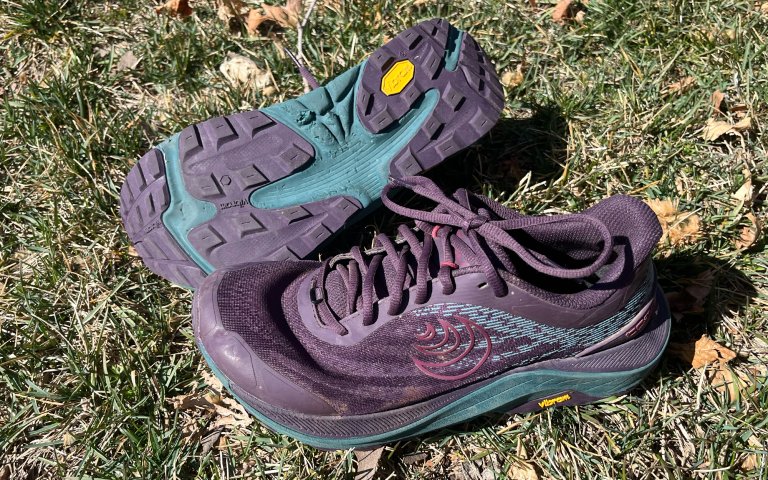
Similar to Alta, Topo is another company making some noise in the lightweight hiking and trail running community with their low heel-to-toe drop and wider toe box. A testament to their cushion, comfort, and support, New Hampshire tester Kristen Coats has a neuroma in her foot, but said with Topo’s larger toe box, her nerve tissue does not get inflamed.
“After trying a dozen other brands, and finding some that worked, I tried the Topo brand and haven’t looked back,” she says. “I can finally run on trails and roads pain-free, and have bagged many peaks all over the world with Topo. In fact, I recently ran my best half-marathon and 5K race in my Topos.”
Associate gear editor Ashley Thess loved the Ultraventure 2’s plush 30/25 mm stack height and roomy toe box. The updated Ultraventure 4 raised the stack height to 35/30 mm, which was noticeable. Thess felt the increased height while backpacking a rocky creek bed, rolling her ankle a few times on the smooth, uneven rocks.
Best for Trail Running: La Sportiva Prodigio
Pros
- Breathable
- Dries quickly
- Narrow toe box for snug fit, scrambling agility
Cons
- Size up a half size
Key Features
- Weight Per Shoe: 9.5 ounces (men’s), 8.1 ounces (women’s)
- Available Sizes: 38-49.5 (men’s) and 36-43 (women’s)
- Stack Height: 34/28 mm
- Drop: 6 mm
- Rocker bottom
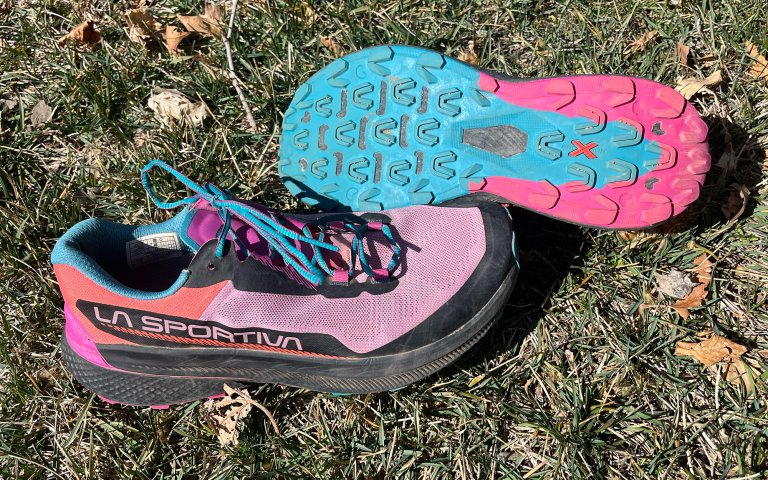
La Sportiva packed everything you need for speed — a snug and stable fit, responsive midsole, grippy outsole, and a rocker bottom — into the lightweight and breathable Prodigio. The mesh upper allows your foot to dump heat and sweat, or dry quickly after a stream crossings. Thess wore these lightweight hiking shoes on a packrafting trip in Colorado. They’re so well ventilated that she transitioned from paddling a soggy boat to hiking through desert rocks and sand without issue.
However, where these shoes really shine is trail running. The mid-foot is snug, for a secure fit, with a narrow toe box that lets you effectively navigate class three scrambles. The rocker bottom is designed to propel you forward. Thess felt sure and powerful in these running downhill. She has low arches, and the Prodigios felt neutral underfoot, with minimal arch support. While the fit is snug, these are far from constricting. La Sportiva recommends sizing up a half size for a less technical fit, and while Thess is religiously an 8 (39.5), the 8.5 (40) fit perfectly.
If you’re looking to bomb downhill or plan on scrambling up rough terrain, these facilitate a fast and sure stride. The outsole features a more durable rubber on the heel with a softer, tackier compound on the forefoot to maximize the lifespan of the shoe, without sacrificing grip. Thess is keeping the Prodigios in her quiver, but for most maintained trails or long hikes, prefers a wider toe box and no rocker bottom. — Ashley Thess
Best Barefoot: Vivobarefoot Trail FG
Pros
- Minimal stack increases ground feel
- Will last well over 500 miles
- Get access to Vivobarefoot’s fundamentals course
Cons
- Pricey
- Not a great fit for wide or high-volume feet
Key Features
- Weight: 12.8 ounces
- Stack Height: 5mm
- Drop: 0 mm
- Removable 3mm insole
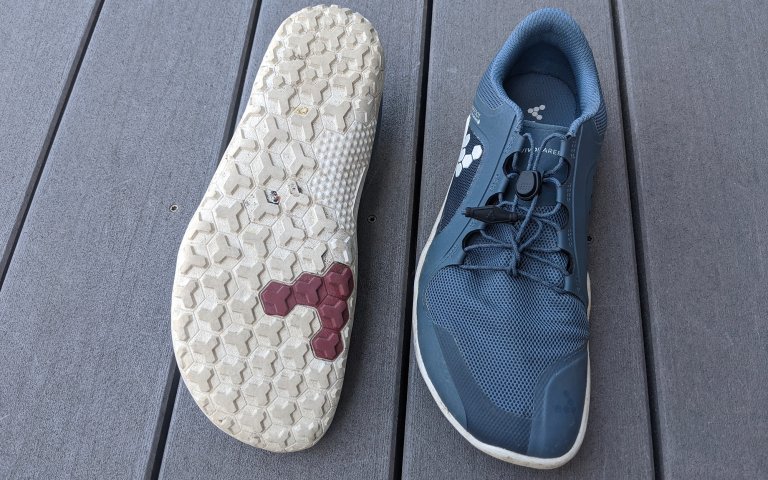
Of course, the lightest of the lightweight hiking shoes are barefoot-style shoes. My favorite is the Primus Trail FG, which adds some serious lugs to Vivobarefoots Primus Lite model, making it ideal for tackling tougher trails. I wore this one on my hike of the 450+ mile Colorado Trail, and found that it held up better in a lot of ways than more traditional trail runners. I can typically get about 1,000 miles out of these shoes before it’s time to trade in for a new model.
Read Next: Best Barefoot Shoes
If this is your first barefoot shoe, it’s important to take it slow, as you’ll need to develop the foot and lower calf strength to avoid injury. One benefit of going with this higher-priced shoe is getting access to Vivobarefoot’s “Barefoot Fundamental Course.” This online course teaches you about your feet and exercises to strengthen and stretch them. — Laura Lancaster
How to Choose the Best Lightweight Hiking Shoes
Drop
The heel-to-toe drop is the difference in the height from the forefront to the heel. So a greater drop means there is a steeper angle and less stability. A zero drop means the heel touches the ground at the same time as the forefront, which offers a stable landing and ideal connectivity with the ground.
Weight
We are not talking in pounds when we reference lightweight hiking shoes; we reserve that for hiking boots. But certain features of shoes can add to the weight, like the outsole and weather protection (like waterproofing). Most of these lightweight hiking shoes offer a waterproof and non-waterproof model, and you can see a difference in their weights.
Outsoles
Usually, every outsole looks different. The shape, size, direction, and depth of the lugs are what assist in traversing mud, dirt, rocks, ice, and snow. Vibram is the most common (and best) material, but there were a few different compositions in this test.
Insoles
Most boots are made with an EVA foam insole. It is a soft material that absorbs some of the impact of your step. It sounds great in theory, but most of that foam is very thin and actually absorbs very little impact. The flimsy factory insoles break down quickly and tend to get dirty and smelly. In most cases, La Vigne upgrades his insoles with an aftermarket brand, to better cushion and cradle your feet with zone-specific areas that offer superior support and comfort. The Oboz Katabatics and Hoka Speedgoats were the only shoes where he didn’t feel the need to upgrade.
FAQs
Trail runners are more minimalist in features than hiking shoes. Trail runners carry a lighter load, are lighter in weight, and are typically more breathable. Hiking shoes, on the other hand, can carry heavier loads, provide a bit more support and stability, tend to have more traction, and are typically warmer than a trail runner.
Fit and comfort are probably more important than weight, but it is a personal preference. You want to reduce any way you can get foot fatigue and having something too heavy on your foot can cause that. The shoes in this test ranged from 8 to 14 ounces, so they are definitely in a lighter weight class than hiking boots. Trail runners should be less than a pound per shoe, and hiking shoes should be less than two pounds per shoe.
You can certainly hike in whatever you want, but sneakers are probably not the best choice. Hiking-specific shoes tend have more features, like a beefy, supportive outsole with multidirectional lugs that provide grip on rocky, wet and uneven surfaces. Hiking shoes can also be waterproof, while most sneakers are not, which can give you blisters, and take a long time to dry out.
Final Thoughts On the Best Lightweight Hiking Shoes
We continuously test the updated versions of these shoes, and other options from different brands. If you’re ready to ditch some of the heft of hiking boots, and embrace more mobility, this list of the best lightweight hiking shoes is the place to start.
- Best Overall: Oboz Katabatic
- Best Budget: Merrell Moab Speed
- Best Bounce: Hoka Speedgoat
- Best Zero Drop: Altra Lone Peak
- Most Comfortable: Topo Ultraventure
- Best for Trail Running: La Sportiva Prodigio
- Best Barefoot: Vivobarefoot Trail FG