
You’re five minutes into legal shooting with high hopes for your morning sit, then you hear it. A faint buzzing overhead. Eyes to the sky, you spot the drone hovering over your property. Suddenly, you’re less optimistic about your hunt.
[Insert neighbor] is up to no good again, you think. But is it actually who you think it is? How can you be sure? Basic, consumer-level drones can fly for miles. They can also spook deer and other wildlife on both public and private land.
Talk to landowners and deer hunters in Big Deer country and you’ll hear that drone usage has skyrocketed in recent years. Sure, there are a lot of folks flying drones legally during deer season. In many places it’s legal to fly a drone while attempting to recover a hit deer. Thermal drones are incredibly effective at this. But more and more, folks are using drones to scan other people’s properties in order to locate (and sometimes harass) big bucks.
Enter the drone defense system — a technology that defends against unwanted drones flying over a hunting property for all the wrong reasons.
Drones and Deer Hunting

Modern deer hunting and land management look vastly different than they did just a few years ago. Today, drones weave through several aspects of whitetail management and sometimes hunting and poaching, too. Drones are used for population surveys, property management, and deer recovery. These are common reasons deer hunters and land managers consult drone operators or fly their own drones. So long as laws are followed and ethical hunting is prioritized, there’s nothing wrong with any of that. In fact, when used properly, drones can be a net positive for whitetail herds, especially when sound management is the driving force.
But like with any new technology, some people are hellbent on using thermal drones for unethical purposes, namely, spying on the neighbor’s deer — and possibly even poaching them. That has sparked the need for the drone defense systems being promoted by Jack Huston, owner and operator of Midwest Deer Surveys.
“Most of the problem is people flying over property they don’t own or have permission to be on,” Huston says. “It’s not so much local landowners flying every day trying to know how to hunt a buck. It’s more people scouting the whole township, if you will.
“That’s a huge problem, and in my eyes, it’s trespassing,” Huston says. “People work so hard to have land to hunt. They work to make it ready for hunting season. Then, if somebody wants to just go fly a drone and buzz your deer, they can. And I don’t think that should be OK.”
The fast-growing popularity of drones in the hunting world creates a whole barrage of questions: What are the regulations around drones? Is it legal to fly over someone else’s property? Will wildlife agencies be using drone tracking tech to prevent poaching? Huston says the laws are very different from state to state.
“You know, Ohio is completely wide open — probably too much so,” Huston says. “Then there are some states that are what I call anti-drone.”
For example, Pennsylvania prohibits drone usage for any type of hunting, including tracking wounded deer.
A Defense System Against Drones
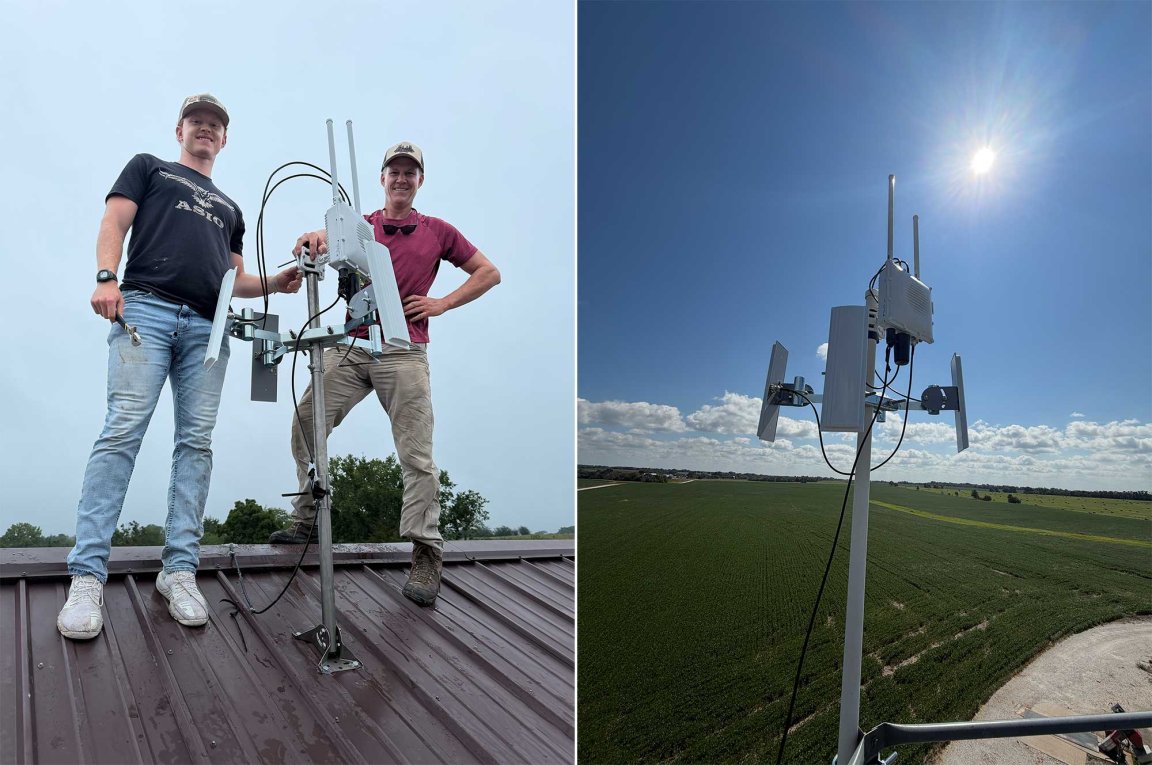
Huston’s system allows a landowner to identify when a drone flies their property, and who the drone is registered to.
“I go all around the country doing deer surveys for landowners,” Huston said. “I talk to all of these people, and they are complaining about drones flying over their farms. A lot of times, these people are bigger landowners in the area, and people get curious.
“A lot of people pushed me to find a product that could essentially serve as a radar for drones. That is this product. People are setting them up at their house or barn and it just sits there and monitors the drone activity on that property, and all around it.”
The system picks up the transmission between the remote controller and the drone itself. It’s able to read that transmission and get the location of the pilot, location of the drone, the make of the drone, its serial number, and more. It records all of that and stores it for the user.
The collected drone detection information feeds back to an app on the landowner’s phone. It lets them know who’s flying, where they’re flying, and everything that’s going on in their airspace. It’s essentially a monitoring tool to alert landowners when someone is flying their property.
“With these drone detectors, we have real data of how many people are flying, and it’s certainly far more than I thought,” Huston says.
Huston says you can buy one of several drone defense system sizes and choose from options that cover roughly a 5-mile, 20-mile, or 40-mile radius.
“A lot of my customers are just geo-fencing their farm,” Huston says. “So, they’re creating a bit of a bubble around their property where they want to cover the skies.”
But as you can probably guess, setting up one of these systems isn’t cheap. Smaller stations start at about $5,000 while the bigger station will set you back about $12,000. Still, for a large property owner who has spent millions of dollars on owning the ground and implementing habitat work, the cost of a drone surveillance system is only a drop in the bucket.
While Huston doesn’t manufacture these himself (he works with a company on the manufacturing side), he helped establish and design the drone defense system.
Drone Defense Systems Are Already Making Positive Impacts
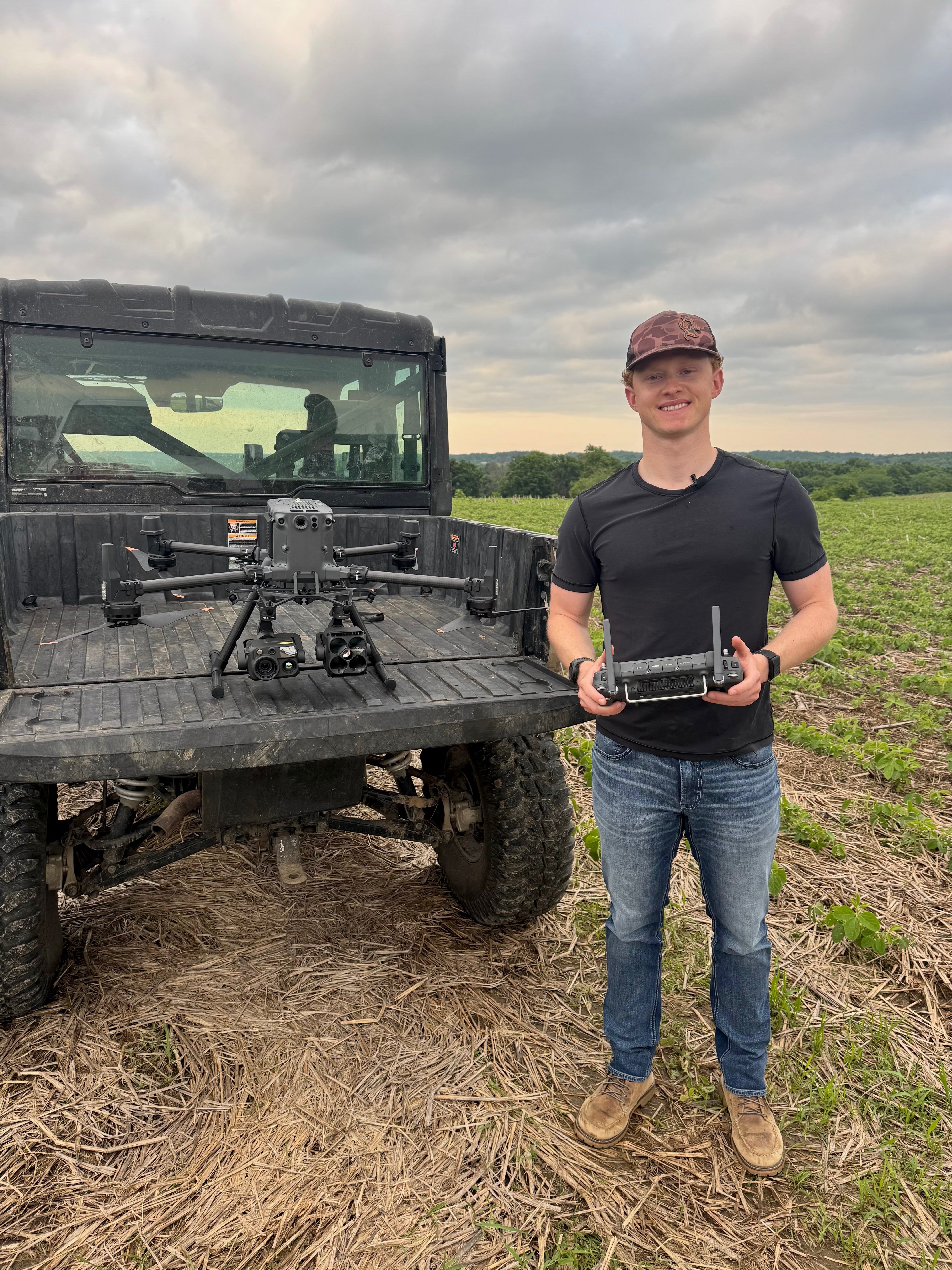
Huston’s installations are already making positive impacts for some landowners who invest. He says there have been several instances where drones were detected, confirmations of illegal use were made, and law enforcement was called to intercept. Essentially, drones were being used to aid in poaching, and the drone defense systems assisted in prevention, and maybe eventual prosecution.
It does not take too much imagination to see how wildlife agencies and their game wardens might one day use similar drone detection systems to catch poachers and illegal fliers.
“Drones are the Wild West, right now,” Huston says. “I think, when the word gets out on these… It will push drones to be used how they’re supposed to be used.
Read Next: Drones Could Revolutionize How Hunters Recover Lost Deer … If They’re Not Banned First
“When I go out on my land, or my family’s land, I don’t want a drone bothering me,” Huston says. “And if there is one, I want to know who it is and solve that problem. This is the solution to that problem. Without it, people can get away with whatever they want.”