
The coffee cups were almost dry again, and so were the hunting stories. Milt’s electric clock showed 6 a.m.—time to go. Moments later, the six of us were swallowed up in the gloom of a dense fog. Four inches of fluffy new snow muffled our footsteps as we began the trek to our deer stands.
There was a nervous excitement in the air that morning. We knew we were going to see deer. Rarely had we been so confident on an opening day. Almost 200 acres of willow swamp and fields belonged to us that morning and the preseason scouting we’d done plus the new snow added up to nothing but good news. The anticipation was almost crackling in the air around us.
I reached my stand first. I brushed off the loose snow and stood listening for a moment. The absolute stillness meant that my ears would be about as helpful as my eyes for the first few hours—longer if the fog remained. An inch of frost covered every limb of the big willow I occupied. I backed into a collar-high branch and a handful of the frozen dew fell, shaking any remaining sleep from me.
To my left was a standing field of short corn. To my right, the edge of a brushy swale wound its way down to the big willow swamp 200 yards away. In front of me, a fallen willow limb blocked my view. I settled comfortably against the trunk of the big tree and surveyed the fields. Sometimes the fog would allow me 80 yards of view, at other times less than 40.
When at last, according to my watch, it was 8 a.m., I knew that the sun had to be up. The light through the fog, however, had changed little. From the cornfield to my left came sounds of movement—short crunching noises. My ears strained to identify them. A cock pheasant crowed not far away and I relaxed a bit. A few moments later I watched a bluejay working over a cob. Birds were making the sounds, I told myself.
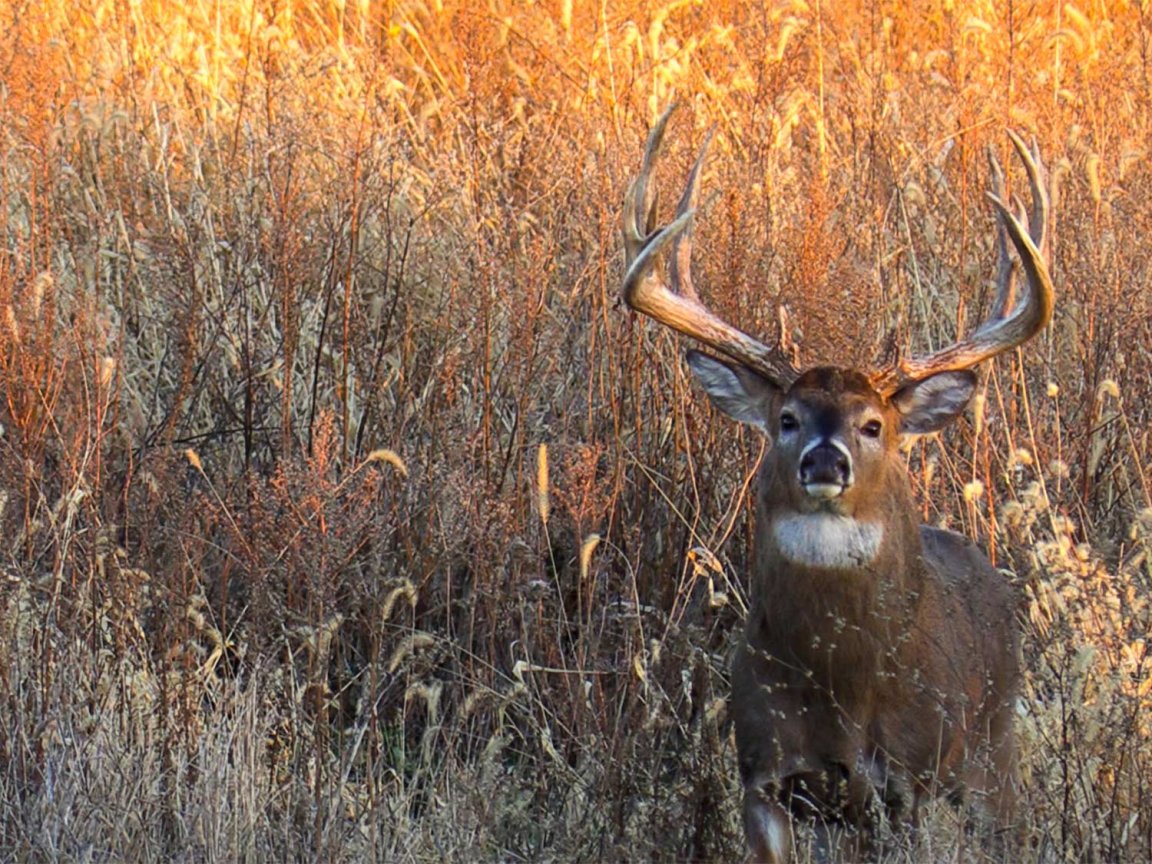
For nearly 30 minutes I continued to hear the sounds: a few crunches followed by silence. Then I saw the outline of a deer’s back moving slowly through the rows. Head down, the deer came closer, quartering across the field. At last it raised its head. For the first time I could see its crown of antlers. Not again, I said to myself, a bit of dread mixing with my excitement.
Seven times before, I’d managed to get shots at trophy bucks and seven times I’d missed—sometimes with a bow, sometimes with a shotgun. I’d got my chance nearly every season I’d hunted, and I’d gone home empty-handed every time. My hunting companions marveled at my incredible knack for being in the right place at the right time and at my equally incredible bad shooting. Despite hours of practice, something always seemed to go awry at the moment of truth. Not again, I groaned inwardly.
When it seemed that the buck was coming no closer, I raised my shotgun. The iron sights of my new slug barrel came to rest on the target—still more than 60 yards away. I fired.
The blast shook frost from the willow branches. For a moment, the buck disappeared. When I could see again, he was on the move.
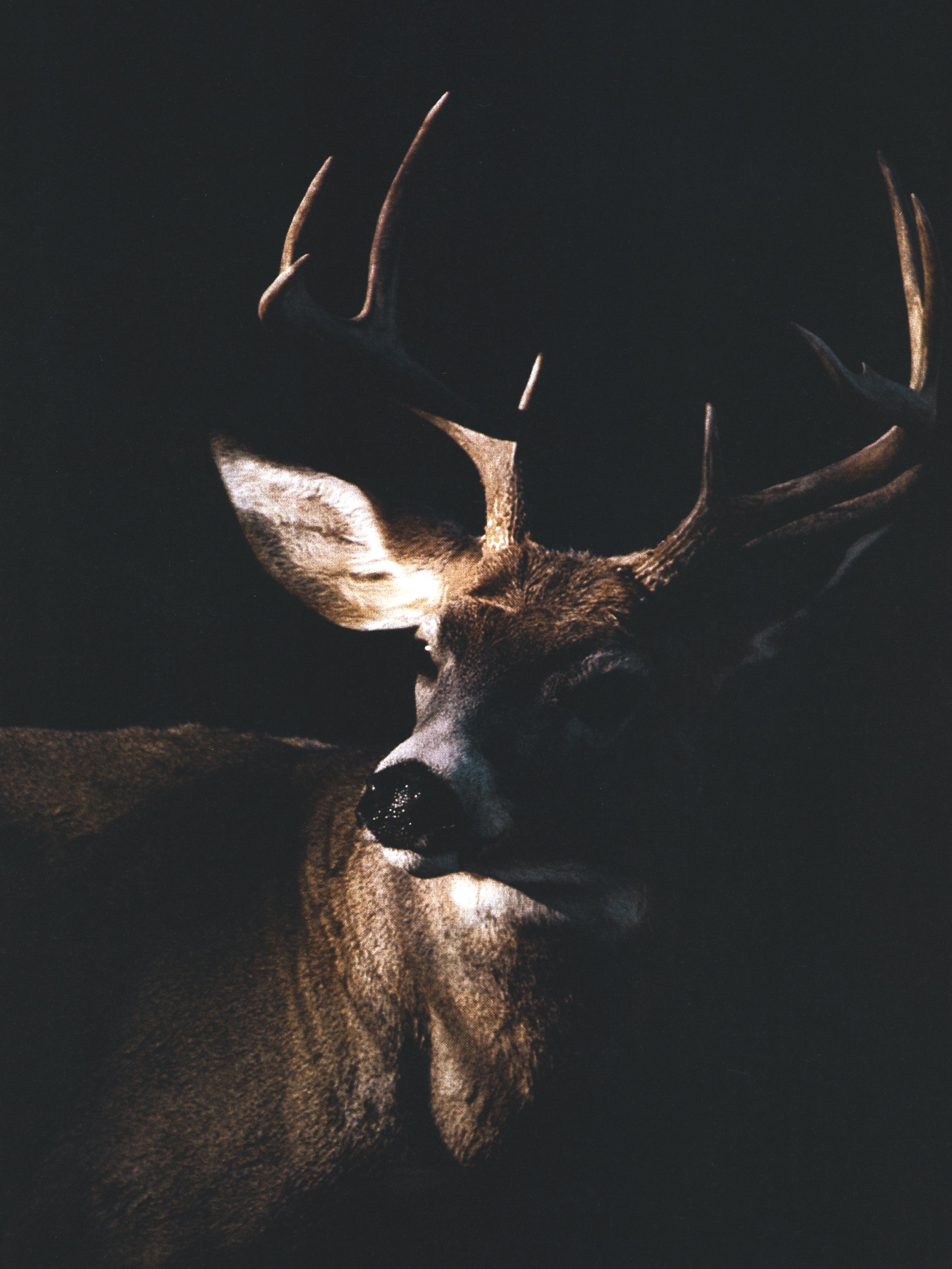
Again I fired and again and again—as the buck crossed from left to right. As the big deer quartered toward me, he was hidden behind the frosty fallen branches of the willow. Suddenly he reappeared before me and I shot once more. The buck stopped just 40 yards away, his wide, dark rack swiveling like a radar antenna.
My gun was empty. I had to reload. Frantically I fumbled deep in my pocket for the shells. They were still in the box. This one time I hadn’t opened a second box just in case. Almost hysterically I tore the cardboard and threw a slug into the chamber. I took aim at the buck’s neck and fired. I thought I saw the deer cringe before he loped away down the swale toward the big swamp. Then I lost sight of him in the fog and frosty willows.
I can’t adequately describe my feelings. Despair is as close as any named emotion comes. I was beside myself. I couldn’t believe I’d missed again. The deer was right there, at the range I’d sighted-in my new barrel for, and still I’d missed. I scrambled down off the stand and began to search for the deer’s trail in hopes of finding blood, hair, anything that might mean the buck was hit. I reloaded the shotgun then and, to my disgust, found two shells in the magazine. In the excitement, I’d evidently put more slugs in the gun than I knew. I could have shot again—more despair.
In the snow, I followed the buck’s tracks across the swale, along the edge of the cornfield on the other side, way past the point at which I’d lost sight of him. For more than 200 yards I moved slowly beside the tracks. Then I was close to the swamp and my friend Steve’s stand. He’d heard the shots, but hadn’t glimpsed any deer passing by. “Maybe it was hidden in the fog,” he said.
I walked the trail many times that morning, tracing and retracing the deer’s movements in the snow. A sad realization was weighing more heavily with every step. Grudgingly, I had to admit that I must have missed number eight.
The next day the hunt ended and I went home, but the memory of the hunt stayed with me. When I tried to sleep, that morning’s events played back like a worn instant replay. Again and again I saw the buck cross and again and again I watched my shots as if I were looking for my mistake. I tried to spot and correct my error, but even in my dreams the buck escaped.
Five days later, a friend and I took to those same willows in search of pheasants. He’d heard my tale and seemed to understand. As we approached where I’d last seen the buck, I took a breath to call my friend. I wanted to tell him where the deer had been when my shots had missed. But before I could form the words, Tim stopped dead in his tracks.
“Oh no,” he said with a groan. “Oh no! There’s a huge buck lying over here.”
My first thought was that he was joking. But he wouldn’t have been, couldn’t have been. I was trembling as I waded the deep grass toward him. A sick sort of feeling began to knot my stomach. The sight of a shining antler almost put me to my knees.
There in the thin yellow grass lay my buck.
He lay there as he must have lain after the final shot that Saturday morning. He was crouched like a sleeping dog, facing the trail that I’d mistaken for his. My last shot had gone very low, into the left hindquarter and up into the body cavity. The wound hadn’t bled. That was why I’d found no blood in the snow.
I stood there in the silence thinking quickly, eyes burning. Tim shared the silence. He understood. I must have passed within a dozen yards of the buck time after time. Why hadn’t I seen him? How could a buck grow invisible in knee-high grass? Maybe he’d been deeper in the swale and had crawled out later when death approached. But why hadn’t we seen him on the second day? The trail to two of our other stands ran close by.
If only I’d gone into the swale on a hunch. If only I’d had a hunch. If only there hadn’t been such thick fog on that day, surely Steve would have seen the deer from his lofty perch. If only the wound had bled so I’d have stayed on the right trail. If only I’d shot truer. If only, if only…
But such musings were no help. I was beside myself with self-loathing. I wanted to throw up. I wanted to cry. Everything I was striving for as a hunter lay in ruin like the buck.
Tim and I returned that afternoon to take the cape and antlers. They were all that we could salvage. Silence returned as I guided the knife, wishing away the green that had begun to color the ruined venison. Forcing myself to speak, I asked Tim to age the deer. He was wildlife manager for the area’s Department of Natural Resources. He estimated 3½ years, give or take a season. That, at least, was a comfort.
I took the antlers as much out of respect for the animal as for myself. I knew the head would be a most worthy reminder.
“Well,” the taxidermist said, “at least you got the horns. You can always buy meat.” He didn’t understand.
Now the head hangs in a place of honor in my home. Beautiful as it is, I get no joy out of looking at it. It remains, however, a lasting monument to that day. I still think of the rotting venison and the slow death the buck may have had. I learned something then, something of deer hunting and of myself.
Read Next: What It Feels Like to Miss the Biggest Buck of Your Life at 45 Yards — With a Rifle
Many evenings, after the head was first hung, I would sit looking at it and recall that day. I had decided that my gun was to blame for the poor shooting, that the barrel wasn’t tightened down properly on the stock. I knew, too, that the deer had been lost because of poor tracking skills, fog, bad luck, all of the classic reasons. But I was only half right at best.
Finally I came to understand that the tale was told in those first moments when the buck raised his crown and I began to doubt myself. I forgot my skills then, thinking only of the glory or the humiliation that I faced. The strain of the moment, my self doubt and consequent loss of concentration cost me that buck. I was not a competent enough marksman to rise to the occasion, under pressure. Only more practice could be the cure.
I haven’t faced a buck since then, although I killed a doe cleanly the following season just 100 yards from the spot where I’d seen that buck. Somehow the pressure had faded then, but does don’t carry antlers. I wonder about that day to come when I’ll face a buck once more. And I wonder if the lesson that began on a frosty morning not long ago will serve me then.
This story was originally published in the November 1982 issue of Outdoor Life.