
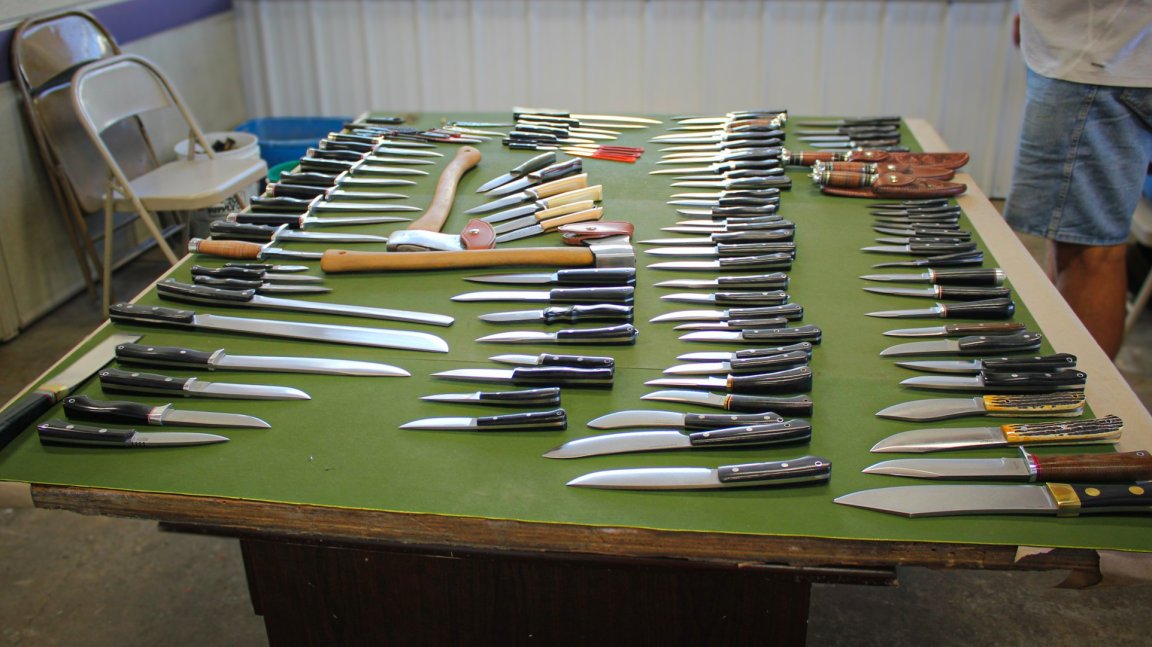
Bark River Knives, a well-known knifemaker based in Escanaba, Michigan, has shuttered its business in the wake of revelations regarding the steel used in some of its blades. The fixed-blade knife manufacturer has now admitted to using Chinese steel in several of its models, even though the knives were labeled and marketed as CPM 154 steel and made in the USA.
Bark River’s owner Mike Stewart made the announcement via Facebook on Monday and said the company had concluded all business as of Friday. Stewart also took full responsibility, saying “it was 100%” his fault and that he had made the cost-cutting decision to keep Bark River in business.
Stewart made the post amid fierce backlash from knife buyers, dealers, YouTubers, and other critics. Stewart did not respond immediately to a request for comment from Outdoor Life, and it’s unclear what exactly led him decided to confess, though rumors had been spreading online in recent days. It is clear, however, that the LLC behind Bark River has been in legal and financial trouble since before the start of this year.
On Jan. 14, Altbanq, a financial lender based in New York, filed a commercial and trade-contract lawsuit against Stewart Knives LLC accusing the company of defaulting on loan payments and breaching their agreement. A separate but similar lawsuit was filed against the LLC on Friday by another financial lender, Litefund Solutions, and it accuses the company of additional breaches of contract.
This was around the same time that some of the rumors around Bark River’s deceptive practices started appearing in knife-making and bushcraft forums. But some industry insiders have previously noted quality-control issues with Bark River Knives. And a whistleblower report published back in 2006 by an alleged former employee of Bark River accuses the manufacturer of running a similar false-advertising scheme with Japanese blades made of inferior steel.
Stewart also admitted in his Facebook post on Monday that his decision to use Chinese steel was part of ongoing mismanagement on his part. He wrote, among other things, that “this closing was long overdue” and he should have done it more than two years ago. Stewart is now likely to face legal repercussions for these deceptive practices, along with additional class-action lawsuits from buyers and knife dealers.
“Please do not Blame Lesley Stewart or Jim Stewart for any of this,” Stewart wrote in Monday’s post. “In addition to my mismanagement the Choice to use an Alternative Chinese Steel was my choice — not anyone else’s blunder.”
He said the imported alternative “had the same toughness” and “almost the same edge retention” of CPM 154, which is a premium stainless knife steel manufactured in the U.S. by Crucible Industries. Stewart also claimed in the post that since the knife blanks were reground, reshaped, processed, etched, and inspected in their shop in Michigan, “they meet the criteria of Made in the U.S.A.”
According to the Federal Trade Commission, a product can only be labeled “Made in the USA” if “the final assembly or processing of the product occurs in the United States … and all or virtually all ingredients or components of the product are made and sourced in the United States.”
By labeling the blades as American-made, Bark River was able to charge a premium for the knives. In his post, Stewart included a list of the affected models:
- Camp Bolo
- Fox River Skinner
- Highwayman 4
- Mini-Manitou
- Gladstone Hunter
- Bitterroot Caper
- The last two Club Knives
“Let me be clear that None of our Dealers knew about any of this and are 100% Blameless for this situation,” Stewart wrote. “Let me also clearly state that all other Bark River Knives have been made with the Steel that is marked on the blade — This use of import steel was only for a very short period of Time to keep our Employees working.”
As for how long this “very short period of time” was, it appears that most of the above models — including the Camp Bolo, Mini Manitou, Gladstone Hunter, and Bitterroot Caper — were part of the brand’s 2025/2026 lineup, based on past release posts on the Bark River Knives Facebook profile, as well as information from retailer sites.
It’s unclear how (or if) buyers of Bark River’s Chinese blades will receive any recourse. According to Outdoor Analyst, a YouTube channel specializing in knives and other outdoor gear, at least two online knife dealers — Knives Ship Free and DLT — will take care of their customers by issuing refunds for the knives listed above.
Editor’s Note: Outdoor Life has not featured any Bark River knives in past gear reviews or buyer’s guides. However, the Michigan-based company was listed as an “honorable mention” of knives our team had not yet tested in an OL article highlighting the best knives made in the USA.