


We may earn revenue from the products available on this page and participate in affiliate programs. Learn More ›
If you spend your weekends and vacations outdoors, especially for extensive periods of time and in distant or backcountry locations, survival books aren’t only useful, they might just save your life. Of course, “Survival” has become an umbrella term that most people use interchangeably with topics such as, bushcraft, disaster-readiness, building a bug-out bag, harvesting wild edible plants, and lest we forget, doomsday prepping. While survival books can encapsulate many of these terms and practices, they tend to focus specifically on just one of these topics and for good reason. A book that helps you build the perfect doomsday shelter won’t do you much good if you’re stranded in the desert with low food and water supplies. I know, this example seems a bit extreme, but it’s helpful to know what type of survival best applies to situations you could potentially encounter. To make this task easier for you, I interviewed three survival experts to learn a bit more about their specific fields and get their recommendations on what they consider to be the best survival books.
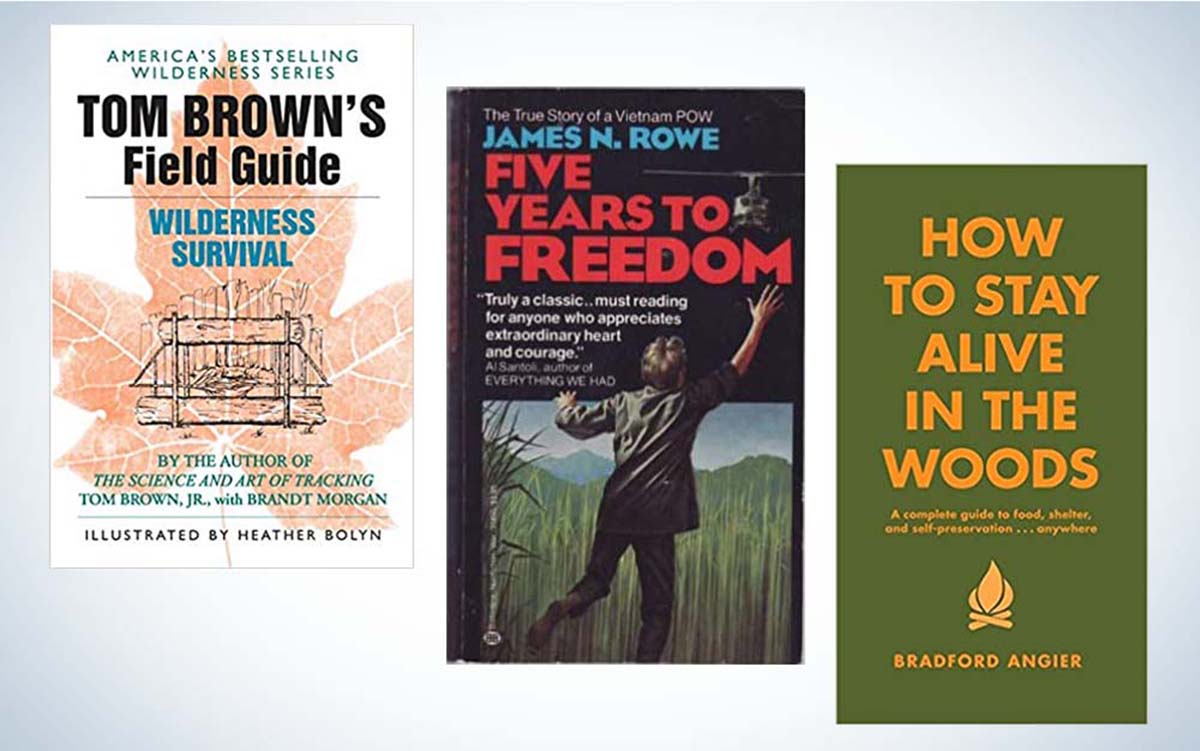
- Best Bushcraft: Tom Brown’s Field Guide to Wilderness Survival
- Best Primitive Survival: Bradford Angier’s How to Stay Alive in the Woods
- Best Non-Fiction: James N. Rowe’s Five Years to Freedom
- Best Wild Edible Plants: The Forager’s Harvest: A Guide to Identifying, Harvesting, and Preparing Edible Wild Plants
- Best First Aid: The Complete First Aid Pocket Guide
Things to Consider When Buying a Survival Book
As I mentioned, “Survival” as a genre includes topics that vary on everything from how to make and set primitive traps to stocking the best bug-out bags with enough preserved meat and freeze-dried food to last you through an apocalyptic winter. It’s important to know what survival skills you expect to learn—or need—before buying a book. Here are some of the main topics within the survival genre and what to expect from them.
Bushcraft/Wilderness Living
All of the survival experts I interviewed agreed that bushcraft is more about wilderness living than actual survival. Still, bushcraft gets lumped into the genre of survival books because many of those skills come in handy if you’re ever in a survival situation. Unlike primitive or disaster survival, bushcraft deals with choosing to live in the wilderness, while the former represent responses to a life-threatening event in which a person—from circumstances beyond their control—is attempting to stay alive until they are rescued or return to civilization.
Primitive Survival
This is probably what most people imagine when they think of survival. It consists of survival without (typically) the aid of modern technology or an abundance thereof. This might include friction fires, making stone blades or points, foraging wild edibles, building a natural shelter, etc. While these can consist of bushcraft skills, these tactics are employed as a means of staying alive until an individual is rescued or returns to civilization, not to produce a long-term, sustainable form of living.
Disaster Survival
This one applies, as its name suggests, to unexpected disasters that usually occur in urban or home settings, though certainly not limited to these. Think bug-out bags and bunkers, hurricanes, and more. This genre usually includes how-to’s on preparedness for disaster storms, foreign military attacks or invasions, and, of course, apocalyptic scenarios and the sounding of the seventh trumpet.
Best Bushcraft: Tom Brown’s Field Guide to Wilderness Survival
Best Bushcraft:
See It
Pros
- Detailed and illustrated instructions
- Small, packable size
- Aesthetically pleasing on the coffee table
Cons
- Hayes noted that some parts of the book can be a “stretch”
Key Features
- Pages: 288
- Weight: 10 ounces
- Illustrated instructions
Why It Made the Cut
Clay Hayes, winner of Alone’s Season 8, pegged Brown’s survival guide as his go-to survival book, which has illustrated instructions that cover tracking and killing animals, crafting shelters in various terrains, building and setting primitive traps, and much more.
Product Description
While Brown’s Field Guide to Wilderness Survival has plenty of instructions that can help you stay a live during a disaster, this book focuses more on wilderness living and skills. It has black and white illustrations that show you how to start a fire, tan hides, set primitive traps and a host of other bush crafting skills. Which are some of the reasons that Clay Hayes cited this survival book as his most influential.
“This book lays a great foundation for wilderness living, and it has a lot of cross over with traditional survival how-to’s,” Hayes said. “I primarily used it for setting primitive traps, and it gave me the fundamentals for making a friction fire. I carried that book around in my back pocket until it literally fell apart.”
Hayes attributes a lot of his interest in wilderness living and survival to this book but said that the best way to learn these skills isn’t just reading about them but spending time in the field.
“There’s a lot of useful information in that book, but some stuff in there is a stretch,” He said. “That’s why it’s important to get out there and actually get your hands dirty.” Which is exactly what Hayes did. And after winning Season 8 of Alone, Hayes has his own book, Surviving Alone, which details and provides a lot of tips about his experience of living over three months in the Canadian Wilderness, as well as articles that can show you how to make a bow and arrow.
“My book isn’t a traditional how-to guide,” Hayes said. “I really wanted to focus on the mental capabilities that Alone requires, because that’s a huge part of it. Where others see difficulty, you have to see opportunity.”
So, if you’re wanting to hone your bushcraft skills and add some “opportunity” to your wilderness living arsenal, Brown’s book might be a great starting place.
Best Primitive Survival: Bradford Angier’s How to Stay Alive in the Woods
Best Primitive Survival
See It
Pros
- Timeless survival skills
- Packs great
- Readily available
Cons
- Illustrated instructions leave a lot to be desired
Key Features
- Pages: 320
- Weight: 1.23 pounds
- Written: 1956
Why It Made the Cut
Survivor Man Les Stroud attributed this classic as being foundational to his own survival book. If you want to learn basic survival skills that can be applied almost anywhere, then you’ll want to keep a copy of this one in your pack.
Product Description
Bradford Angier’s How to Stay Alive in the Woods, though almost a century old, provides a ton of evergreen survival information on everything from tying knots to preparing porcupines for sustenance. If the language seems a bit outdated, remember, it was written when Truman still occupied the oval office. But there’s a reason this remains one of the best survival books out there. The accessible and detailed instructions make it easy for beginners to wet their feet in the survival waters. Yet, these skills remain relevant for perilous situations you might encounter in the wilderness today.
I spoke with Les Stroud, author of Survive! and creator of the television show Survivorman, and he pinned this book and Christian Troebst’s The Art of Survival as the roots to his own. Stroud found the practical directions in this book realistic and applicable to numerous survival situations, which in his opinion, separates it from a lot of other survival books. This ultimately led him to want to correct a lot of misconceptions and problems that other survival books claimed as true when he wrote Survive!
“Frankly, when it comes to survival, there’s a lot of harmful information out there that people try to pass as true,” Stroud said. “And, unfortunately, it’s not until you’re actually in a survival situation that you realize this strategy or skill that you read about actually doesn’t work. This is incredibly dangerous and misleading for readers. So, when I wrote my book, I wanted the information to be referenceable and usable.”
If you’re wondering if Stroud’s book, like Angier’s, includes practical, usable survival skills, you can always watch reruns of his show, and see him perform a lot of these himself. Or better yet, like Stroud encourages, get out there with a survival expert and see for yourself.
Best Non-Fiction: James N. Rowe’s Five Years to Freedom
Best Non-fiction
See It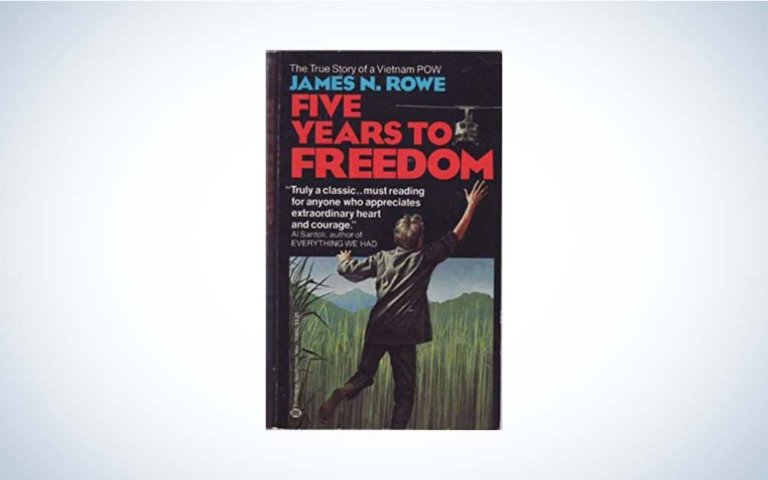
Pros
- Page-turner
- Legitimate, first-hand experience
- Focuses on survival as a mentality
Cons
- Some might prefer a how-to
Key Features
- Autobiographical
- Pages: 465
- Published: 1971
Why It Made the Cut
James “Nick” Rowe’s Five Years to Freedom gives a grueling account of his time as a POW in Vietnam and also unveils the psychological demands of surviving worst-case-scenarios.
Product Description
Five Years to Freedom recounts Green Beret Lieutenant John “Nick” Rowe’s time in a Vietcong POW camp. While captive, he endured physical and psychological torture as he learned to survive not only day by day but even hours at a time. After escaping the camp and later returning home, Rowe advocated for SERE (Survival Evasion Resistance Escape) training and its development for Special Forces.
I spoke with Mike Glover, 18-year Army veteran, former government contractor and Special Forces SGM, and CEO of Fieldcraft Survival, who cites Five Years to Freedom as his favorite and most influential survival book.
“Survival isn’t always about technical skill,” he said, “it’s also about your mindset and resilience, and Rowe’s book highlights those intangibles that survival requires.”
Glover noted the impact that Rowe’s experience played in shaping SERE training that’s required of all Special Forces today, which Glover also completed while actively serving.
“His long-term captivity gave him endurance, sometimes hour by hour, to stay alive,” he said. “It’s a humbling read because he focuses on one’s ability to cope with and manage stress, and you’ll start to better understand the mental and phycological experiences that survival, in this case, behind enemy lines requires.”
Rowe’s book isn’t a traditional how-to guide, but its focus on mental and psychological endurance highlights an area of survival that doesn’t get as much attention as rubbing two sticks together to start a fire. Nonetheless, these concepts are crucial to surviving a worst-case scenario.
Best Edible Wild Plants: The Forager’s Harvest: A Guide to Identifying, Harvesting, and Preparing Edible Wild Plants
Best Edible Wild Plants
See It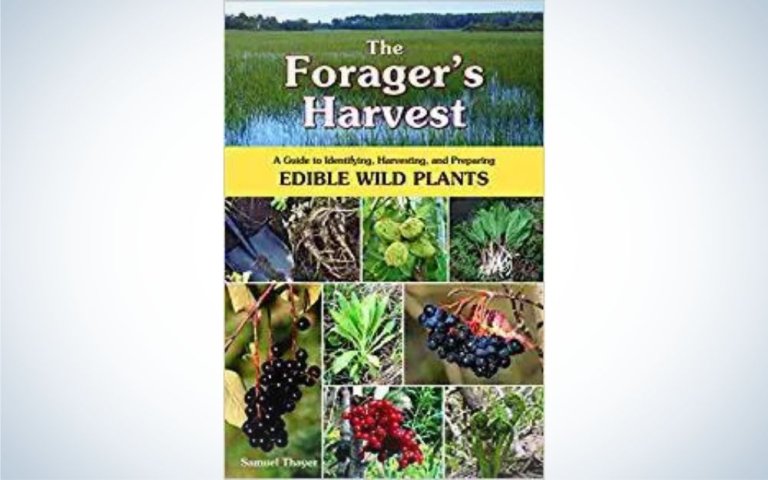
Pros
- Clear, colorful depictions
- Helpful identification tips
Cons
- Have to buy all three books just to cover North America
Key Features
- Pages: 368
- Weight: 1.54 pounds
- Hi-quality plant photos
Why It Made the Cut
The Forager’s Harvest provides a nearly comprehensive and clearly identifiable guide to wild edibles in eastern North America and how to find, identify, and prepare them.
Product Description
Both Clay Hayes and Les Stroud were hesitant to recommend one comprehensive book on wild edible plants, mainly because these differ so drastically from region to region, let alone all around the world. They both recommended that the best way to familiarize yourself with wild edible plants is to go with a professional into the field and learn first-hand. In fact, they both suggested this as the main way to learn and that reading about them only plays a supplemental role. It isn’t just about correctly identifying edible plants but knowing that mistakenly identifying the wrong plant can be life-threatening.
That being said, if you’re looking for a book (or three) to help expand your wild edible vocabulary, The Forager’s Harvest (and the two books that follow it), provide a comprehensive catalog of the edible plants across North America. The first book mainly focuses on the eastern portion of North America, while the latter cover plants found in the American and Canadian West.
Best First Aid: The Complete First Aid Pocket Guide
Best First Aid
See It
Pros
- Clear illustrations
- Small, packable size
- Budget friendly
Cons
- Some might prefer larger print
Key Features
- Pages: 304
- Weight: 7.2 ounces
- Instructional diagrams
Why It Made the Cut
This pocket guide covers everything from minor cuts to strokes and heart attacks and how to handle them when you’re out in the field.
Product Description
If you’re looking for a comprehensive and packable first aid book to keep with you while you’re in the field, The Pocket Guide fits the bill. It covers everything from minor scrapes to life-threatening injuries and illnesses. Every section incorporates how-to-identify instructions for symptoms and how to assess and treat them. And at around five inches tall, this book can easily ride in your hiking backpack.
FAQs
Survival books are typically how-to or instructional books that provide a basic knowledge of how to stay alive in an unexpected or disastrous situation until you are rescued or return to the safety of civilization. Still, survival books aren’t just limited to this and may include topics such as, bugging out, wilderness living, first aid wilderness, and even doomsday prepping.
While this might vary depending on who you read, the 5 most important survival skills are fire, shelter, signaling, finding food and water, and first aid.
The Ultimate Survival Guide written by John Wiseman, is a comprehensive survival book that covers everything from starting a fire to surviving a tornado.
Methodology
For this review, I interviewed experts, Les Stroud, Clay Hayes, and Mike Glover on their fields of survival expertise as well as their top recommendations for survival books. Along with these recommendations, I also included some of the most well-known survival books that cover other areas of survival.
Final Thoughts
Whether you’re hunting, hiking, or riding out a storm in your living room, make sure you’ve done your due diligence for preparing with one of the best survival books. But you shouldn’t just limit your training to these pages. Make sure you spend some time in the field with a professional to better understand what skills actually translate to survival. You might never have to use these skills, but if you do, you’ll be glad you learned them.