
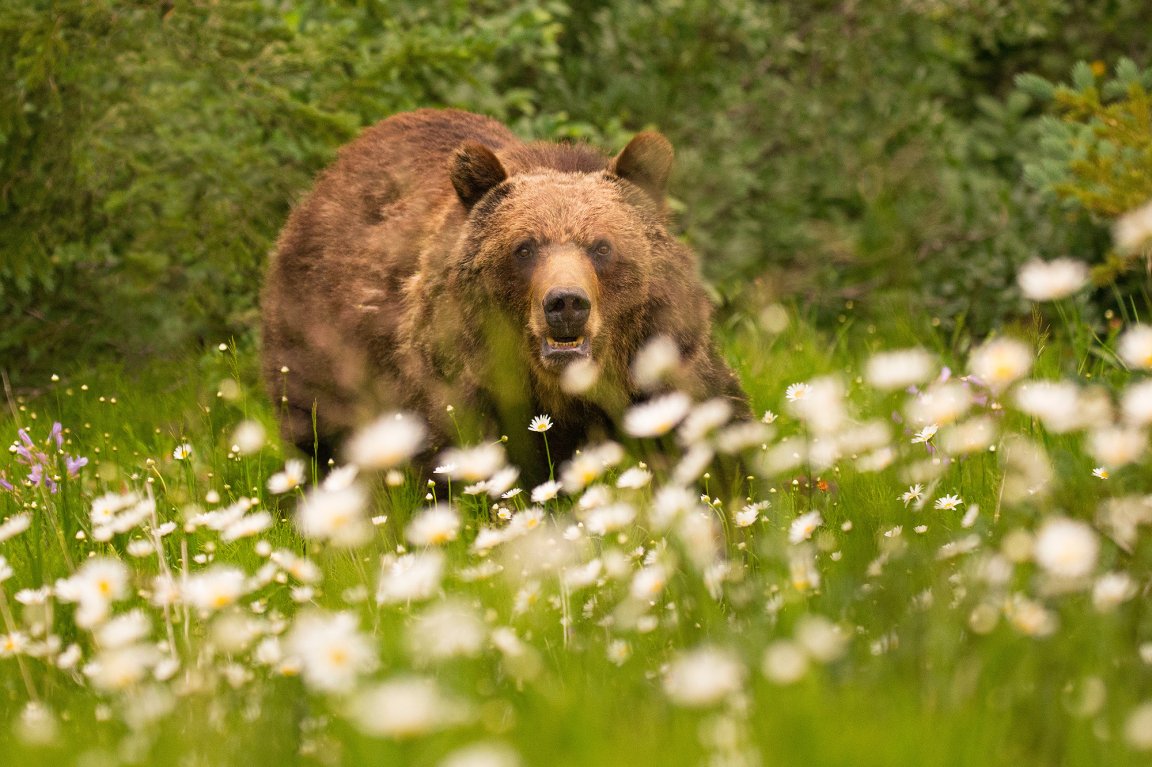
There has been plenty of hype around the idea of reintroducing grizzly bears to California. There is a griz on the state’s flag, after all. But there’s not enough support to advance a proposed bill that would have been the first step toward putting grizzlies back on the landscape. Senate Bill 1305, the California Grizzly Restoration Act, died August 13 when the Assembly Appropriations Committee declined to pass it. The bill would have required the California Department of Fish and Wildlife to assess the viability of reintroducing the apex predator in the Golden State.
Bills heading for a full vote have to pass committee on what’s known as Suspense Day, which was August 13. This entails a rapid-fire process with some bills getting spiked, which means no vote, no discussion, no movement. SB 1305 was spiked. What doesn’t move through committee doesn’t move on to a vote in this legislative session, which ends August 31.
“Senate Bill 1305 was one of the bills this year that had stoked the greatest concern among constituents,” said Sen. Megan Dahle, who opposed the bill. “I appreciate the voices of our local sheriffs, ranchers and farmers, hunting groups and others who made the case that one more top-level predator was more than rural California could take.”
Dahle referenced the existing tensions over gray wolf conflicts in rural California.
The author of the grizzly bill was Sen. Laura Richardson, who serves California’s 35th District in Southern California. She proposed assessing the possibility of a grizzly bear comeback by ordering the state wildlife agency to first evaluate if, and where, reintroduction might be possible. That study, in consult with Native American tribes and local communities, would have to be completed by June 30, 2030.
“I can see the ways in which my homeland has suffered from the loss of iconic species such as the grizzly,” Tiana Williams-Claussen, Yurok Tribe wildlife department director testified in June. “That loss lingers in our heart and in the attenuation of a millennia-old relationship. The full scope of that loss and its impact to our health and wellness I think is yet to be fully understood.”
The first year of grizzly reintroduction research, referred to in the bill as the making of a roadmap, would have cost the state $5.2 million. The bill didn’t include a funding mechanism, and according to a report by the Sacramento Bee, the state has not fully funded its programs for mitigating human-wildlife conflict for years.
The debate over reintroducing apex predators is not unique to California. The most recent example is Colorado, where a ballot measure passed by state majority and forced the game agency to release wolves. The wolf reintroduction began in December 2023 when the Colorado Parks and Wildlife released 10 wolves from Oregon. The program has been mired in controversy and has hit major roadblocks ever since.
There is also a plan to restore grizzly bears in the North Cascades of Washington State. In 2024 the National Park Service and U.S. Fish and Wildlife Service announced a decision to “actively restore grizzly bears to the North Cascades.” But to date there have been no reintroductions and no timeline is set for releasing bears.
Read Next: The Feds Aim to Return Grizzly Bear Management to Western States. Could Federal Delisting Be Next?
Conversely, the population of grizzly bears in Idaho, Montana, and Wyoming was allowed to recover on their own through protective measures rather than reintroduction. Currently there are more than 1,000 grizzly bears living in the Greater Yellowstone Ecosystem, and the Interior Department recently announced that it intends to hand over more grizzly bear management responsibilities to the states.