
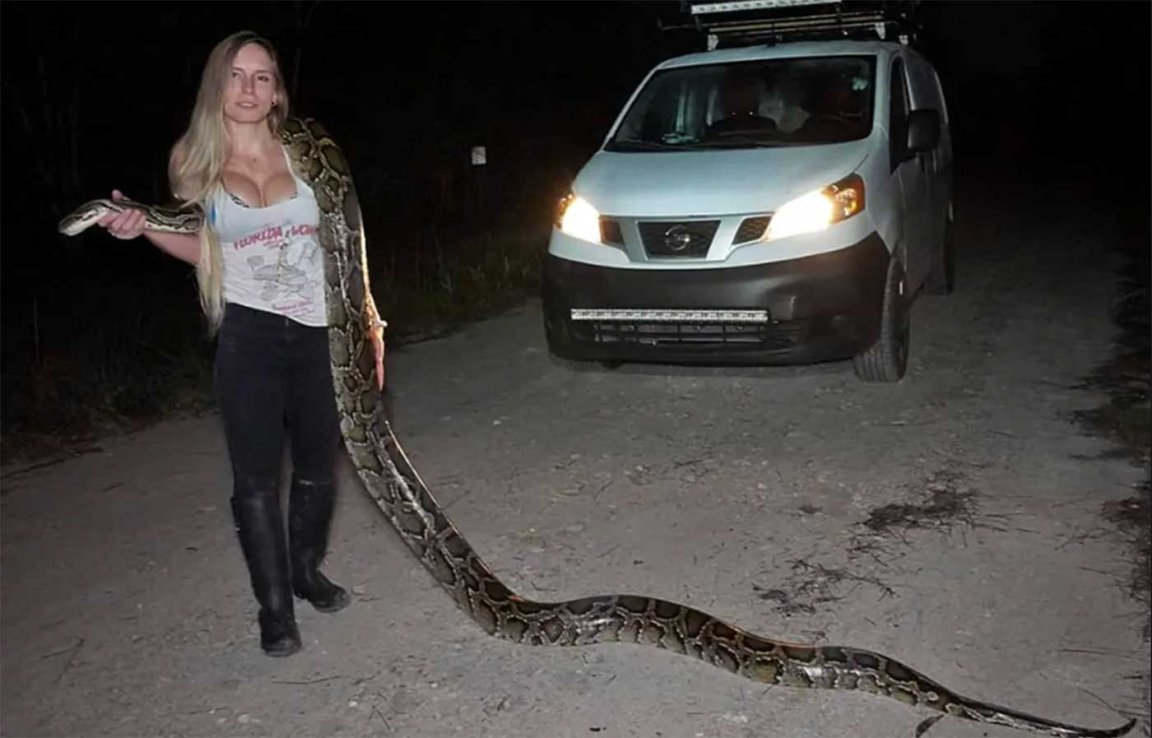
Florida’s Florida Fish and Wildlife Conservation Commission and the South Florida Water Management District are gearing up for the annual “Python Challenge.” This now-viral event is designed to help curb the rapid spread of the non-native Burmese python, and it has reached worldwide fame in the past several years.
For decades pythons have spread throughout much of South Florida, especially in the Everglades region. About 27,000 pythons have been removed from Florida since 2020 via various programs, according to state authorities. But plenty more need to be eradicated.
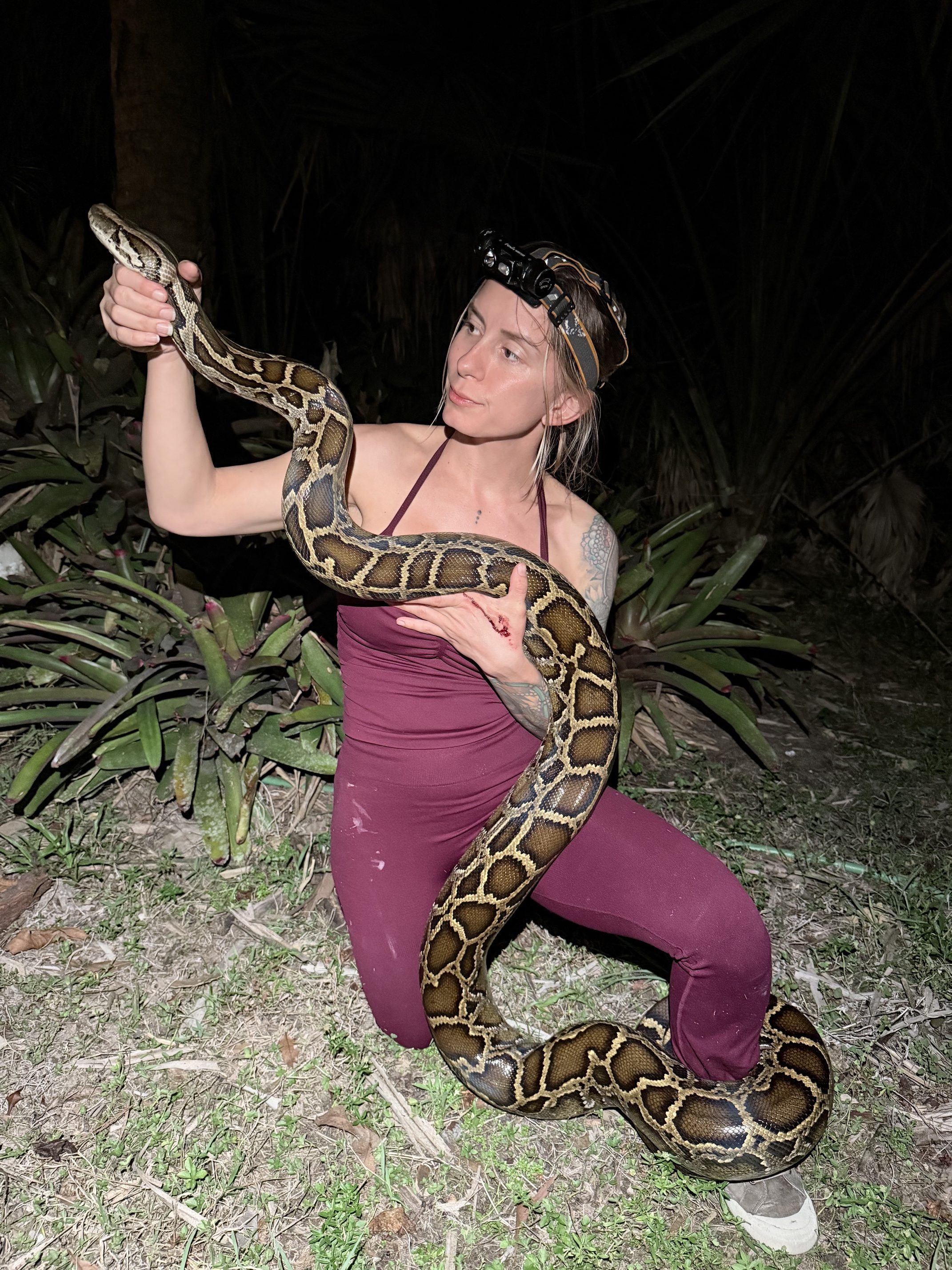
Invasive pythons have a massive negative impact on native wildlife, so the state started the Python Challenge in 2013, offering cash prizes to hunters. Over the years “Challenge” hunters have removed hundreds of snakes, which are caught alive by hand and later euthanized.
Last year 934 people participated in the 10-day event and removed 294 pythons. Challenge hunters came from 30 different states as well as Canada, vying for outdoor excitement and prize money.
This year $25,000 is offered to python hunters in different event categories. Last year’s grand prize winner was Taylor Stanberry who pocketed $10,000 for catching the most pythons during the 10-day Challenge event. She caught 60 pythons and set a record for the event last year.
“My husband Rhett and I are out every night looking for pythons,” Stanberry tells Outdoor Life. “It’s hatching season now, and the baby snakes are just now starting to show.”
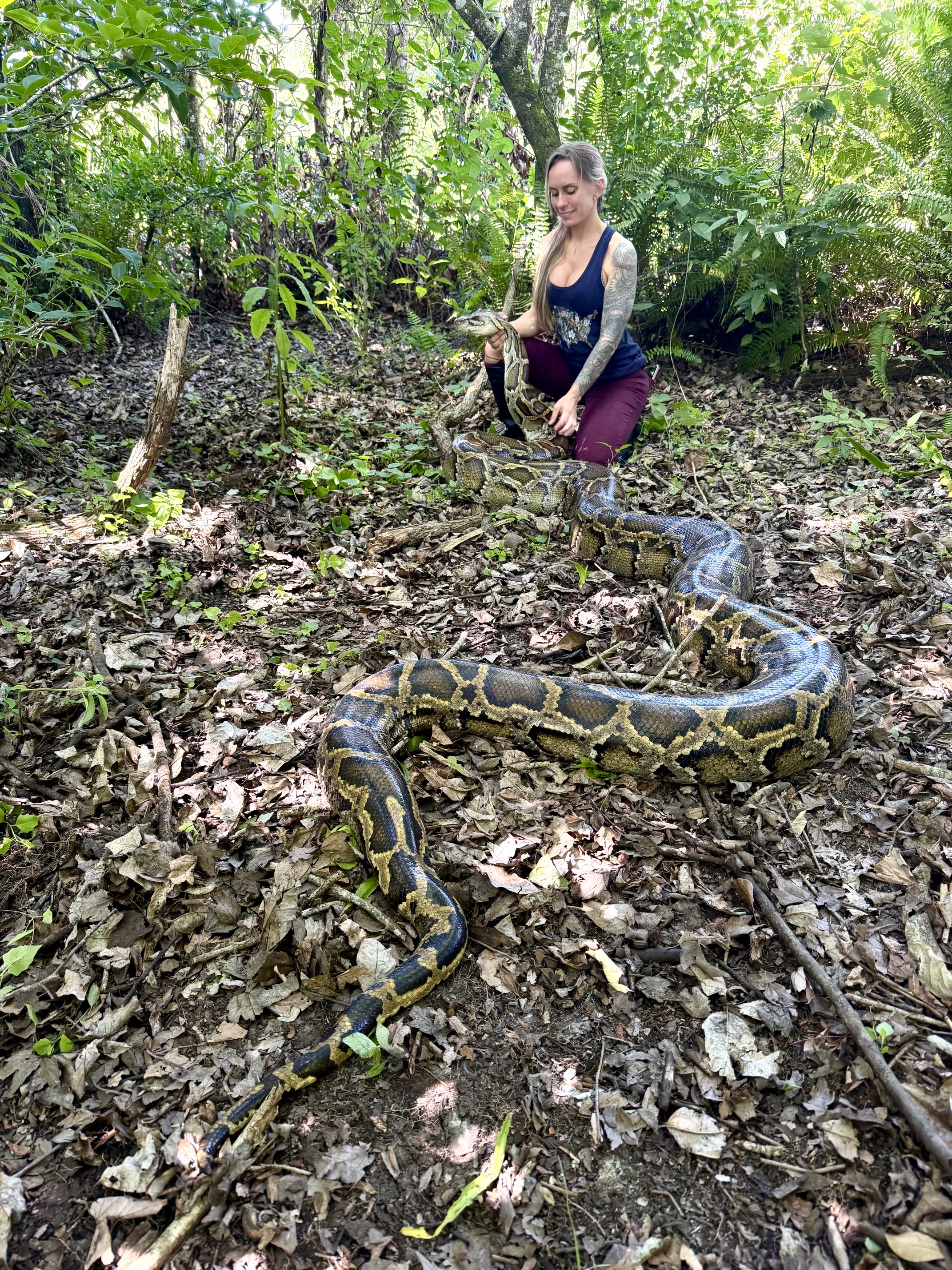
Stanberry says the Challenge timing is ideal for getting lots of young snakes, because removing large numbers of pythons is the goal of the event.
“Last year when I won, I was fortunate to locate a couple nests of baby pythons,” says the 30-year-old wildlife expert from Naples, Florida. “At one snake nest I caught 31 baby pythons and another night I caught 14 babies at a different nest.”
Stanberry says she’s only found one small hatchling python so far this year in her nightly excursions near Naples and into the Everglades.
“We’ve had a lot of rain locally, which has impacted our time looking for snakes,” she says. “Mosquitos have been awful. But baby pythons will be hatching soon, so the Challenge timing is excellent.”
Stanberry says there is plenty of competition from other python Challenge participants, with dozens of people prowling roads in and around Naples and the Everglades.
Read Next: This Wildlife YouTuber Just Became the First Female to Win Florida’s Python Challenge
“We use a jon boat to get deeper into the Everglades,” says Stanberry, who’s been a state licensed python-removing contractor for 11 years. “The deeper into the Everglades we go, the fewer the python hunters there are, and the more snakes we find.”
With hundreds of python hunters chasing $25,000 in prize money Stanberry feels a little bit of pressure after winning the top prize last year. She was also the first woman to take the top award.
Read Next: What It’s Like to Get Dragged Through a Florida Swamp by a 200-Pound Python
“I’ll do my best to catch the most snakes, hopefully finding some nests with lots of hatchlings, but if I don’t win, I’ll just say I didn’t even enter the Challenge,” she says with a chuckle.