
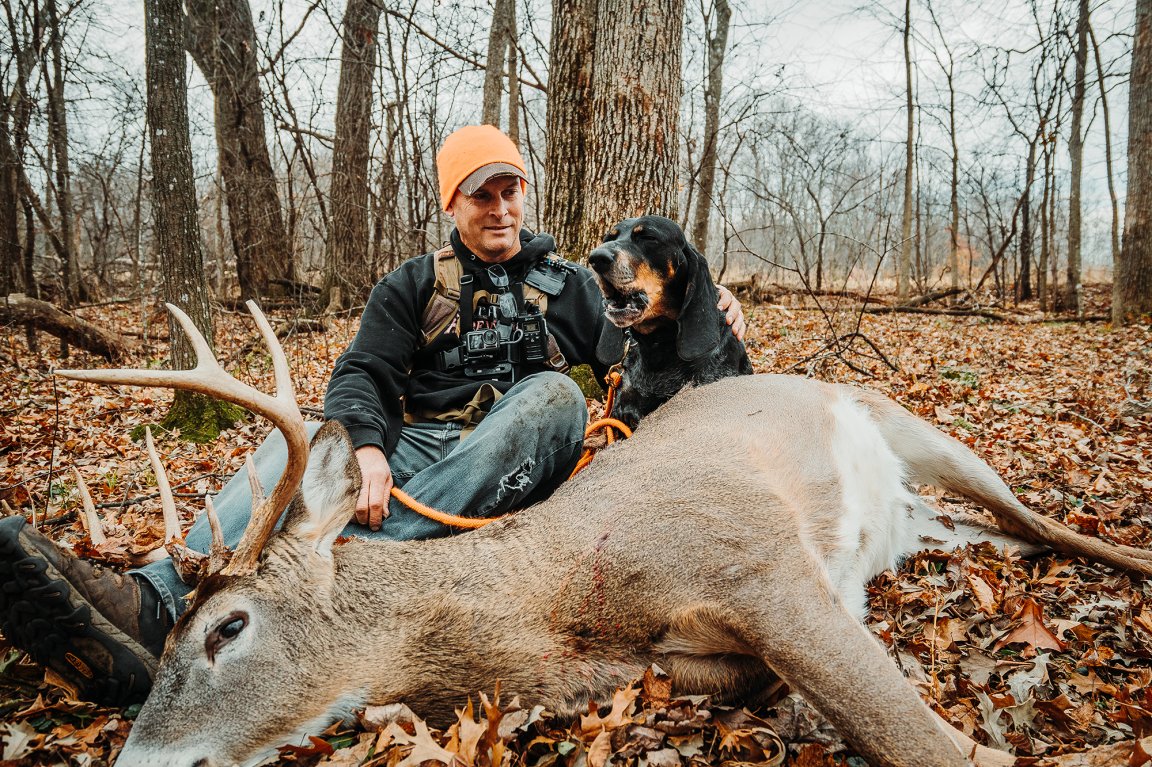
Any serious bowhunter is going to have strong opinions about things like broadhead selection, shot placement, and blood trailing. We all develop our own opinions based on our lived experiences. But in terms of data analysis, our experiences produce insufficient sample sizes. Sure, you might have good success with a certain bowhunting setup or a specific broadhead over the course of maybe 10 or 15 deer, but that’s not nearly enough data to draw any real conclusions from.
The truth is, there’s just not a ton of relevant data out there on the variety of modern archery setups and how effectively these setups kill deer. But that is starting to change. Today on the podcast, I’m talking to Ryan Carpenter and Shane Simpson, who are the creators of the TRAKR app. This app allows hunters who have shot a deer to book a dog tracker or a drone tracker to help them recover that deer. Think of it like Uber for blood-trailing help. Shane is an experienced deer-tracking dog handler, and Ryan is a data nerd by training and a diehard bowhunter. So what they’ve done is design an app in data points on the results of all their tracks. And these tracks are conducted on blood trails around the country.
They gather details like shot distance, shot placement, broadhead type, and much more. And they’re now working with a data set of well over 2,000 tracks. They’ll add thousands more this fall. So in this episode of the Outdoor Life Podcast, we’re going to go over some of their findings and talk about where they hope this app will take bowhunting in the future.
Listen to this episode of the Outdoor Life Podcast on Apple, Spotify, or wherever you get your podcasts. This transcript has been lightly edited for length and clarity.
Full Episode Transcript
Alex Robinson: Ryan and Shane, thank you for joining the Outdoor Life Podcast. For folks who can’t see this, Ryan’s got a stack of paper that he’s holding in his hand, and I think that is linked to a whole bunch of really interesting data that we’re gonna dig into. So yeah, thanks for jumping on, guys.
Shane Simpson: Yeah, thanks for having us.
Ryan Carpenter: Yep, absolutely.
Alex: So to kick us off, will you just talk quickly about the background of the TRAKR app, how you guys have put it together and built it up over the years, and then how that has led to this data set that we’re going to talk about.
Shane: I guess I should probably kick this one off. I’ll give a little backstory about how Ryan and I met. We were on a podcast unrelated to the app — this is before the app came out. I used to collect my own data on spreadsheets from my personal tracking exploits, and I was getting some of that data out on a podcast one day. He contacted me after hearing the podcast, and we discovered we don’t live far apart. So we started getting involved with that, and then we went down the road to building the app.
Shane: I’m an admin for the Minnesota Tracking Dogs Network up here in Minnesota, and one of my admin obligations is to kind of make sure hunters are finding trackers — kind of be a dispatcher. I work weekends, and most of the tracks come in on the weekends and I’m at work. And so I was busy sneaking in little posts on our private chat: “Hey, who’s available for this track that just came in,” et cetera, et cetera. Eventually I was like, “Man, this is just too much manual work to be posting and communicating. There’s gotta be a better way.” Started off first with a form on our website so hunters could submit a form and then it would automatically email all the admins and then go from there. And that was kind of proof of concept of the app. And apps were expensive to build. And so I started reaching out to friends, and Ryan was kind of a first pick because he loves data, and we’d been talking about stuff like this. So we went down the road building the app. Got a couple other friends involved.
Ryan: Yeah. So the other part of that story is when I heard him on the podcast and I reached out, it was right before turkey season. So it was almost like four months later before I got a response.
Ryan: And he’s like, “Sure, yeah, you wanna look at my data?” And I think you had like 300 or 400 tracks on there. So I went through it over probably a couple months and kinda created just like a database of different pivot tables and stuff through Excel, and just looked at some different correlations and stuff. But I remember asking, I said, “Man, we should come up with something on the data side.” I didn’t even think of it on the tracking side, trying to get hunters and trackers together. I was looking more at how could we collect this data. That would be awesome to be able to have it for hunters. So that’s kinda where it’s this twofold thing, where it gets hunters in touch with trackers, but also we get all of that data that comes out of it and all the cool stuff you can do with it.
Alex: Ryan, what’s your background? You’re talking about spreadsheets and pivot tables —
Shane: That’s all above my head.
Alex: Yeah, me too.
Ryan: It’s pretty boring, so I’ll warn you. But I work for a custom HVAC company. I’m a sales manager, but I’ve just really always gotten into numbers and finances and all kinds of stuff. So I was living in Excel. Now that basically dates me — I feel like a dinosaur. I’m trying to show people, younger kids, how to use Excel, and they’re like, “This is kind of silly. Why don’t you use this new AI thing or whatever?” But I just love playing around with numbers and trying to come up with answers, correlations, anything. So it was fascinating to me. A lot of the stuff I would do is come up with a custom air handler, and we would use different types of variables in there and could project what we would think the customer was willing to pay.
Alex: Interesting.
Ryan: You get this value-based price. So I had that on my mind when Shane and I started working with each other. It’s like, well, I wonder if there’s some key variables here that would help you project out what the likelihood of recovery is, or maybe a range on how far the average person would have to track, based on hit placement, if it was a pass-through, what type of broadhead — just even getting down to arrow weights and stuff like that. So we’re still on a quest to find something perfect, but there is a lot of information out there that can get you pretty close to figuring out recovery.
Shane: Ryan’s been a great asset as this has grown and developed. Because without his knowledge, it wouldn’t be where it is right now as far as some of the cool stuff it’s doing. Because that’s way above my pay grade. But I mean, when I gave him that data initially from the spreadsheets and he started sending back charts and this and that, I’m like, “Wow, this is some cool stuff” that I didn’t know I could pull from it, or that we could achieve from looking at the data. So that’s nice to have him on board.
Alex: So one thing that’s probably a challenge is there are so many variables in a hunting scenario. You mentioned a couple of them: arrow weight, broadhead type, shot angle, shot distance. Hit placement, obviously, is a huge one. What have you started to narrow down to? What are the variables that you’re like, “Okay, these are the real key ones to focus on”?
Shane: Pass-through pops through my head, number one.
Ryan: Yes. Pass-through is number one as far as recovery when it comes to just a binary thing. It’s just a yes or no. Was it a pass-through? If it was, you have very good odds of —
Shane: Much, much higher odds than a non-pass-through.
Ryan: Yeah. But clearly, the one that we would want to know is the shot placement — like the exact shot placement. Now, you’re basing that information on what the hunter’s telling you at first. So we’re getting what the hunter thinks he hit, and where on the deer he hit, looking at the grid that we had in the past. Now we’re getting a 3D model to get it a little bit more accurate, where you can click exactly based on the height and everything and get an accurate read on what organs were actually hit, without the hunter saying, “I think I hit a lung and maybe a liver.” Now, a lot of times the hunters are honest. They think they hit that, and they’re usually very close to what they hit. But more often than not, they’re wrong.
Shane: Adrenaline, in the heat of the excitement, they can —
Ryan: Yeah. I think we had a stat where it was 60 percent of the time, if the hunter thinks he hit an organ, or at least he hit one of the listed organs that they put in. So it would be like left and right lung or whatever. Well, they might have hit the left lung and a little bit of the liver, but at least they were in the region. But that’s a big one for us.
Shane: But we have the tracker follow-up for them after our tracker takes —
Ryan: Yes. That is a great point.
Shane: Yep. And once, if they recover the animal, then they mark where the actual entry and exit was. And so then that overrides what the hunter thought. So it’s the ones we don’t recover right now, we have to rely on what they thought they hit. But we’re working on improving that, because we have a proof-of-life automation in it. So if a tracker tracks for a hunter and they don’t recover it, it sends notifications to the hunter periodically and asks them, “Hey, have you seen this deer on trail camera lately? Or did it get shot later in the season?” And if they answer yes, it marks as a proof of life. We’re gonna, at some point, update it where they can look at those pictures off that trail camera and say, “Okay, actually, it was hit here.” Let’s adjust it in the final data so that even the unrecovered ones have accurate shot placement for the data.
Alex: Gotcha. That’s really interesting. Let’s back up to the pass-through stat, because that is really interesting and I think really important for a lot of folks. With that, do you have, like, a delta — if it passes through, we find them X amount of times; if it doesn’t pass through, we find them a different number?
Ryan: Yeah. We actually have it broken out. I know a big topic can be the broadhead type — maybe we don’t wanna quite get into that yet — and then bring it into the pass-throughs. But in general, it’s almost 60 percent. I think it was 57 percent of the time, if it’s a pass-through, then it’s gonna be a recovery. So that’s already a huge increase over what the standard is. What is it, roughly 36 to 38 percent?
Shane: 34, yeah. Typical recovery. So let me give some context to that.
Alex: Yeah, please do.
Shane: I made some TikToks recently, and I was talking about the zombie buck theory, or what trackers call a zombie buck — how they tend to live or survive shots, and sometimes survive shots that they wouldn’t survive otherwise in September, whatever, just because of whatever’s going on in the deer’s physiology, their physical state during the rut. And I was mentioning that in the TikTok, how our recovery rate drops from the non-rut period to the rut period, from 38 percent down to 20-something percent. I don’t know the exact numbers off the top of my head.
Alex: Your recovery rate decreases in the rut.
Shane: For bucks.
Alex: Interesting.
Shane: Yeah, seems to stay standard for the does. And there’s a theory going on, whatever. But there were a lot of comments — these guys were commenting without understanding I’m a tracker. And they were commenting like, “Wow, if your recovery rate is that bad, you need to quit.”
Alex: Yeah, right. That’s not your personal recovery rate. We’re not shooting 100 deer.
Shane: Right. I’m not shooting a hundred deer and only finding 30 of them. And so I mentioned it’s a loss-reduction rate. Out of the deer that are lost, we’re reducing those losses. They’re already lost, 100 deer. We’re reducing those losses by 30 to 40 percent.
Alex: Exactly.
Shane: The other 55, 60 percent of deer that we don’t recover, in most instances, they survive. They’re non-lethal wounds, like a belly graze, a brisket shot, or a back whack — just through meat. Those deer survive. That’s why we’re not finding those other 60 percent. So I just wanted to give some context there when he’s talking about pass-throughs giving us overall a 60 percent recovery rate.
Ryan: Yeah, in comparison to an average of 36 percent for trackers for recovery.
Shane: That’s a huge increase. So your standard recovery rate for trackers, no matter what the method — drone or dogs — after you stretch it out over a number of tracks, you’re not gonna do better than 35 to 40 percent, because of the other 55 to 60 percent. It’s just the law of averages. So that’s kind of the context I wanted to give.
Alex: And then the other important point on that is, if it’s a perfect shot and you see the deer fall — it runs 50 yards and you see him drop — you’re not calling a tracker. So you guys don’t have data on that. Or if it’s a perfect shot and there’s a massive blood trail, he runs 70 yards and is dead, we’re not calling a tracker on that one. So you guys are kind of mostly seeing more of the gray area. Is that fair to say?
Shane: I’m glad you added “mostly,” because there are tracks that come in where, after we get there and track, we actually weren’t needed. The hunter’s worried about the shot placement and he doesn’t track, or he tracks and he or she starts getting worried because the blood’s starting to thin out, and they back out. And then we come in there and track and we find the deer 50 yards down the trail. And I’d say, I don’t know, 10, 15 percent of the tracks we go on, they probably didn’t need us. They could’ve found the deer without us. So there are some tracks in there that were good shots. It’s just, they were overly cautious. Especially someone we tracked for, we recovered a deer for — they tend to prefer to have us come out.
Alex: Right.
Shane: Repeat customers are common. And not because they’re bad shots, just because, hey, they enjoyed seeing the dog work and how quick it made of the track. And if the deer runs out of sight, then they’re just like, “You know what? I’ll just call Shane, see if he’s available.”
Alex: Okay. Ryan, you were about to go into something about broadheads. Sorry for that.
Ryan: No, no, that’s really good.
Alex: This is a fascinating conversation, but I think maybe it’s time to go there.
Ryan: Yeah. And sometimes it can be a little hard to follow, because you start bringing in a lot of different variables and stuff here. But this one I thought was good. And so we kept it starting with just a compound bow. You get crossbows, longbows, recurves, whatever — just let’s look at the compound bow. It’s a majority of what people are using. We’re talking about pass-throughs. So of the fixed blades for broadheads, 60 percent of those were pass-throughs with the fixed blade. Mechanicals, they’re closer to 50 percent. So there’s about 10 points more of an advantage, in a sense, with the fixed head that we’re seeing, to get a pass-through.
Alex: Interesting.
Ryan: This is where it even gets more interesting, because we’ve all went back and forth with which one’s better. And I mean, ultimately it comes down to placement. But as we looked into this, at first it wasn’t saying the story that we thought we would come across here. The recovery for fixed is 37 percent. Just in general, 37 percent And then with mechanical, it’s actually 41 percent. So —
Shane: And that’s with pass-throughs?
Ryan: That’s not with pass-through.
Shane: Oh, that’s just in general. Okay.
Ryan: That’s just in general. The mechanicals went up quite a bit compared to what a fixed is. So again, that fixed is like 37 percent recovery and the mechanical’s 41 percent, based on the data set we have now. But here’s what’s kinda cool: if you get a pass-through for a fixed blade, that’s a 45 percent recovery. So now you’re gonna add eight points onto your fixed blade. But here’s what kind of took us back a little bit. The mechanical that was at 41 percent, if they got a pass-through, that ends up being 54 percent recovery on it. So they have a 13-point gain. Now, mechanicals usually have a larger wound channel, and if it does make it through — now, we already know that there’s not as many going through as fixed. But if it does, it’s usually pretty lethal at that point.
Ryan: So if you’re able to get the mechanical blade through a full pass-through, your odds are gonna be greater to recover the deer than a fixed blade going through. And that’s just in general what we’re seeing. That doesn’t mean go buy mechanical blades and use those only because they’re better. It depends on where you hit it, if it passed through, all the other stuff. But if it does, it ends up being about — what do we got? — a nine-point advantage over a fixed blade.
Alex: Interesting. Why do you think there’s that — I mean, it makes a ton of sense to me why the fixed blades have a higher pass-through rate, right? Why do you think the mechanicals actually have a higher recovery rate than fixed blades just overall?
Shane: More trauma. And more damage internally. Like, if I poke you with a small knife and I poked you with a big knife —
Ryan: Gonna bleed a lot more. There’s a lot of different things too. Like, because with a fixed blade, the odds of it going through are greater maybe with the smaller opening, but now you have two holes and it’s easier to track blood. Usually you’re in a tree stand, or you’re in a saddle and you’re shooting 20 yards, and maybe it’s at a pretty strong angle. You have a higher shot placement. If you have a mechanical, it doesn’t make its way through, you’re not gonna have blood instantly always. Now it becomes one of those things: is the mechanical a higher rate because now they’re having a harder time finding it immediately and bringing in a tracking team to recover?
Shane: Are we being called out to track these just because there’s a lack of blood, not because it’s not a —
Alex: That’s a great question. It was a good shot, but because the mechanical didn’t really do its job, it didn’t pass through, so now there’s no blood, and you’re going to recover a deer that’s maybe only 70 yards away, dead. But if that same shot had been made with a fixed blade, it would’ve punched right through, they would’ve found blood, and they maybe wouldn’t have called you. And that’s possibly skewing the rate. Is that summing that up pretty well?
Ryan: Yeah.
Shane: Basically say what we just said.
Alex: Yeah. Okay, good. We’re tracking then. Have you found anything about, like, brands or styles of broadheads that you’re willing to share? I know this gets a little touchy.
Ryan: Yeah, we’re not affiliated with anything, right? We don’t have any sponsorships or any of that stuff. But we created — because it is such a fun topic, for some reason broadheads are just cool to talk about — the broadhead spotlight that we have on that. And it’s in real time as tracks come through the season. We look at it based on recovery rate, the distance that was tracked, and how much penetration they have. So we weighted it, and we came up with kind of a non-biased scoring system that’s just looking at those three variables. And so we have the top five, I think it came out to.
Shane: Well, let’s mention these variables, like tracking distance. The shorter the tracks overall — the distance from shot placement, or shot location, to recovery — usually means more trauma. It’s killing it quicker. So that’s a good thing. The shorter you can make that track, the better. It gets a good grade for the broadhead. And then pass-through rates: if a head’s built well, designed well, or other variables, the more pass-throughs that broadhead is getting, that’s a good thing. And then what’s the other variable? Just the —
Ryan: Recovery odds.
Shane: Yeah, recovery odds. And so then it’s, like I said, weighted, and there’s an algorithm running in the background. And this is updated too, to see as tracks are coming in daily. It’s instantly updating. So you’ll see broadheads shifting. And they’ll stop shifting as much after the data piles up. But it’s a small data set now, so they move around a lot.
Alex: Gotcha.
Ryan: So we did it by manufacturer of broadhead, and the type of broadhead, if it’s fixed or mechanical, and just left it at that, because there’s so many subcategories of fixed and mechanical at this point. We would’ve probably had a bunch of one certain kind, and then a bunch of other random ones.
Ryan: We do track it, though.
Shane: We do track the individual models. It’s just, there’s nothing to show you that’s important until we get a bigger data set.
Ryan: Yeah. Even down to if it’s forward-deploying, rear-deploying, how many blades, like, all the above. But right now, it’s set up where we have QAD basically set as number one right now. Once the season starts, things get moving again. But that’s for their fixed blade.
Alex: QAD fixed blade?
Shane: Every fixed blade. There may only be one of their fixed blades in this data, but it’s gonna encompass all of them.

Ryan: Right. And we say, too, that there needs to be at least 25 identical ones before it even shows up on this. So it’s not like you have one or two that all of a sudden did really well. They need to have at least 25 tracks associated with it.
Alex: Gotcha. So the QAD fixed blade’s got the highest score overall right now.
Shane: At the end of last season, that’s where it was sitting, in one.
Ryan: Yeah. And then now SEVR, the mechanical blade, is tied pretty much for the most part. It’s just slightly less.
Shane: It has the same score, just we only go one decimal point.
Ryan: Right. So it has just slightly less. I should say it’s a greater length to recover it as far as the track, but not by much. So both of these had very low recovery distances. And that’s what got them up there, basically. And then after that, we get into G5. They’re mechanical.
Shane: Those are probably your Deadmeat and your MegaMeat. Those are the two prominent ones.
Ryan: And they had very good, just in general, the recovery odds of them were great. They had longer tracks to find them. The penetration wasn’t as good compared to maybe the SEVR one, but overall it was top three. And then Magnus fixed blade. That one killed it with penetration. By far it had the most pass-throughs. But again, had longer tracks to find it. And then the last was the Swhacker mechanical.
Shane: Interesting. Yeah, I was gonna touch on that. The Swhacker reminds me of forward-deploying and rear-deploying mechanicals. I don’t know if we have anything we looked at recently, but I remember a couple years ago, a year or two ago, I was looking at it, and it seemed like the forward-deploying broadheads, like a Swhacker, seemed to perform better — more pass-throughs, et cetera — than a rear-deploying.
Alex: Interesting.
Shane: Again, that was a smaller data set. A lot of it was personal tracks I collected the data on, and then our network tracks. So several hundred — comparing like 30 of one to 40 of another. With that, though, that’s hopefully gonna change. We’ll get a bigger set. But so there you go.
Ryan: Yeah, we’ll end up getting it. So this is what’s kinda fun with all the data we were collecting, and we didn’t realize what we could do with it. But it wouldn’t tie as closely, I feel like, as the broadheads. But we’re talking about making a spotlight for arrow brands, for bows. And you’re looking at the tracker side and say, “What about dog breed?” Just having other things. And it’s not necessarily even rating them in a way of “this is the best one,” but —
Shane: Yeah, we have to be careful. Like, when you start putting dogs up there, then you got people saying, “Oh, it’s a competition.” We don’t want it to look like that.
Alex: Yeah, broadheads is already controversial enough.
Ryan: It is.
Alex: Okay. So let’s go back for a second here to the hottest topic we really have, which is mechanicals versus fixed-blade broadheads. And Shane, I know you have some data about pass-through rates. But talk about pass-through rates at distance versus the two types of broadheads.
Shane: Well, how about I let Ryan talk on that?
Alex: Yeah. Ryan’s our data man.
Ryan: So we have it broken out — zero to 20, 20 to 30, 30 to 40. But really, from zero to 30 yards, a fixed broadhead is sitting roughly at, like, 54 percent, and a mechanical is at about 38 percent for a pass-through rate out to 30 yards.
Alex: Yeah, these are not recoveries, right?
Ryan: This is pass-through rate.
Alex: Okay, sure.
Ryan: As you get then into 30 to 40 yards, we’re still hanging close to 50 percent with the fixed, but the mechanical is actually sitting now at 44. So we’re getting really close. It’s 49 percent versus 44 percent. But the big one is when you start going out — and we don’t advise people shooting a compound bow past 40 yards, but the ones that do — it still was holding for a fixed blade at 45 percent pass-through rate, versus mechanical started dropping way off to 35 percent pass-through. And that makes sense. You’re losing that velocity, the momentum, and you have a wider wound channel that’s gonna be going through. It’s just not gonna have the same force possibly for that. So we saw the same thing with crossbows as well. It just went out further. It’s almost like out, I think it was out to 60 yards. We looked at that, and it was basically the same thing, where the fixed held high as mechanical started to drop a little faster.
Alex: Yeah. I mean, we could have done an entire episode just on broadheads. But I do wonder if you guys have any kind of final takeaways for, like, what’s the right setup for someone who wants to shoot fixed blades, or what’s the right setup for someone who wants to shoot mechanicals? Who should kind of edge toward which design?
Ryan: Yeah, I think a setup is gonna be different for different people. And having a bow that’s perfectly tuned, and somebody who’s really into tuning their bow and shooting all the time — when they go from their field point to their typical two-blade, their fixed single bevel, that’s gonna plane a little bit more if you’re not tuned out perfect. To them, that’s fine. They can tune their bow. They’ll get it shooting laser beams, no problem. Somebody who’s maybe not into shooting all the time and is just more into hunting and they don’t know how to tune their bow — if they put one of those on, they might be three, four inches off one side or the other, and they get frustrated. You put a mechanical on, typically they’ll fly more true, or more forgiving for a bow that’s not as —
Shane: Yeah, they’re gonna wiggle back and forth.
Ryan: Exactly. And so, I mean, you look at it for that advantage, as somebody that maybe just wants to take something and go out and hunt. I’m not saying that they should shoot mechanical, but that could be a nice, safe route, just to make sure you’re at least hitting your accuracy. And that’s ultimately the biggest thing: shot placement.
Shane: Yeah, I would rather see them — they’re gonna go out there and hunt whether you tell them to or not. If they don’t have time to tune, or tune it properly, at least this — I know it’s a Band-Aid — but getting hitting in the proper spot is probably a little bit better than in a bad spot.
Alex: Absolutely.
Shane: And then there’s some other data, but we don’t have it handily available. But draw weight is gonna — do we have it handy?
Ryan: We don’t, but that’s exactly what — when you asked what was interesting, or found — these are the things now where it’s like, okay, we looked at it based on distance. Now let’s say anybody who has a draw weight of 55 pounds and less versus 55 up to 80. And then maybe looking at a draw length that’s a certain amount. What does that do to those types of heads, and maybe that arrow weight — putting all these things together and saying, “You know what? This might not be a bad setup if you’re shooting 52 pounds and you have a 27-inch draw length. This might be a better setup if you’re doing 31 inches and at 75 pounds.”
Alex: Yeah. And I’ll just put details on there for that guy who is shooting that 55-pound draw weight. You want a fixed-blade broadhead. You’re not gonna have all the arrow speed, so you don’t need that energy to open the mechanical. So yeah, and that’s why traditional bowhunters all shoot fixed blades.
Ryan: Yeah, they work well.
Alex: And they work great.
Shane: I would never put a mechanical in my recurve.
Alex: No, no. You would get some interesting looks. But on the other hand, if you’ve got that faster setup and you’re shooting a heavy arrow, or just an arrow that’s carrying more energy —
Ryan: Yep.
Alex: — maybe this is where you can consider a mechanical broadhead.
Ryan: And I did — I’m not saying I converted, but I did start shooting mechanicals, and I’ll go either way. It depends kinda where I’m hunting, what I’m hunting. But you don’t want the huge mechanicals typically, because when you start getting into those big two-inch and larger blades, that obviously is gonna have more of the force to open it up and it’s gonna be harder for it to go through. So when I switched over here over the past couple years, I’ve gotten one of the smallest blades that they have for a mechanical.
Alex: ‘Cause you still want that pass-through.
Ryan: I think, yes. So I use —
Shane: It’s a balancing act.
Ryan: I use the SEVR titanium heads. I use the one-and-a-half-inch, the smallest one they have. I like that because, like the best broadheads, they will pivot and they will work their way through, so you’re not hitting something and just stopping that force. Now, I’m a firm believer, though, you could essentially put on — it’s not legal — but you could [theoretically] put a field point on and have good success if your shot placement’s right. So I just went that route, just because the SEVR head, I like it because it’s larger, it’s titanium, so since there’s a good amount of mass with it, the blades are thick and easy to resharpen. That’s another thing I look for in blades, is to get one of those little Stay Sharp jigs, and you can, after you shoot, put that thing on and get it to a mirror polish, basically.
Ryan: And for the price of heads these days too, you’re gonna wanna learn how to sharpen them. And make sure they’re sharp when you go hunting. Do not shoot 20, 30 shots into a bag and have it to the point where you can grab a hold of the blades and not worry about cutting yourself. You want them to be very sharp.
Shane: Yeah, I’m gonna disagree with my friend here on one aspect, and that’s the field point comment.
Ryan: Well, no, I shouldn’t have said that.
Shane: No, I’ve seen it a lot. People talk about shot placement — oh, you can kill deer with a field point. Just from my — I have no evidence about it, other than what I’ve seen with deer shot with blades. You start shooting deer with a field point, a lot of them are gonna survive. I mean, my point I’m getting at is, everyone says shot placement is shot placement. No, it’s more than just shot placement.
Ryan: It’s a combination.
Shane: Yeah, you’ve gotta have the tool that’s gonna do the job. That’s why mechanicals get the bigger cutting diameter. It’s not a bullet that has that speed and that trauma. You need trauma in the organs. You need to cut as much as possible. And like Ryan, that SEVR 1.5, I think it’s a balance. I’ve got a wider cutting diameter than a fixed blade, but not so wide that it’s gonna impede penetration, where I can get a blood trail to follow it. So we’re probably shooting the same thing this season.
Alex: I’ve been shooting the SEVR two-inch broadheads, but now you guys are just — now I gotta change everything.
Ryan: Well, there’s always the debate too about the hybrid, right? So then it’s like, is it the best of both worlds or is it the worst of both worlds?
Shane: You start going back and forth. And then you look at, like, three-way, four-blade, because now you’re cutting four little slots instead of one big wide one. And I’m still kinda torn on that. I think there is some validity to it, that a few more blades — even though it’s not fixed — four might. We’d have to wait till the data comes out.
Alex: But with every blade, you are increasing the resistance, right? So that’s that balancing act of, you’re decreasing the chance of a pass-through. I think the reason why this is such an interesting conversation that can go on forever is just because there is no perfect answer, right? If you’re gonna optimize for cutting diameter, then you start hurting yourself on the penetration, and it’s just finding that balance that works for you and for your hunting and your setup.
Shane: I bet, even though it won’t give us definitive answers, eventually there’s gonna be a guide at some point of, like, what works.
Alex: Oh, absolutely.
Shane: I mean, you could eventually, in the future, with hundreds of thousands of points of data on each type of instrument or this or that, you could come up with, okay, for bows that have a draw weight of this certain poundage and this draw length, you probably wanna stay within these parameters as far as your broadhead setup and your arrow setup and stuff. And so kinda give you a kind of a guidebook.
Alex: That is gonna be fascinating. Going back to shot placement — I think any archery hunter would agree that that’s where we start. Have you found anything interesting about shot placement, kinda good or bad either way, that might help some folks out? Especially folks who are out shooting their bows right now. I’m thinking a lot about new folks who’ve maybe shot a handful of deer, maybe had some good results, maybe had some bad results, and aren’t totally dialed in quite yet.
Shane: If I had to give one answer: shooting too high is the number one reason for non-recovery. No matter if it’s forward or back. Now, the farther back you get, high shots aren’t as crucial or negative.
Alex: As bad, yeah.
Shane: Yeah. When you get farther forward, you got leg bones and stuff in the way, and then when you get up higher, the spine drops really low right there in the shoulder area. And it’s not necessarily that you can’t get through there because of bones. It’s because there’s no vitals right there. And if people hit eight inches below the top of the back in that area, you’re still in the spinal column meat — the fins of the spinal column — still above the spine. So if you can hit lower on a deer, and maybe not so far forward, but it’s still a small window there. You start getting back into liver and guts.
Ryan: Yeah, that’s the other thing. I feel like maybe people that don’t have a lot of experience, they shoot one maybe, say, center mass. Maybe they get, like, a perfect liver shot. But it’s not producing the blood. Maybe it didn’t get a full pass-through —
Shane: They track it too soon.
Ryan: They track it too soon. So that’s kind of what we’ve mentioned before, this paradox of — it’s well-known in the hunting community — if you shoot them back, just wait. I just always wanna wait. And that’s the other question we’ve had: does the fact that they just know to be patient lead to more success, versus shooting more in the boiler room and immediately going after them and kicking them out, if it’s a one-lung or shoulder shot or something like that, and not recovering that? If they would’ve waited, as if it was a gut shot, would that have helped? I’m not sure it would in some cases. But it kinda makes you wonder what it is. We do know, though, if it’s liver or stomach, any of that, we know it’s fatal.
Ryan: It’s just a matter of not trying to push it and turn it into a long track job. They usually don’t go — what’s average, probably?
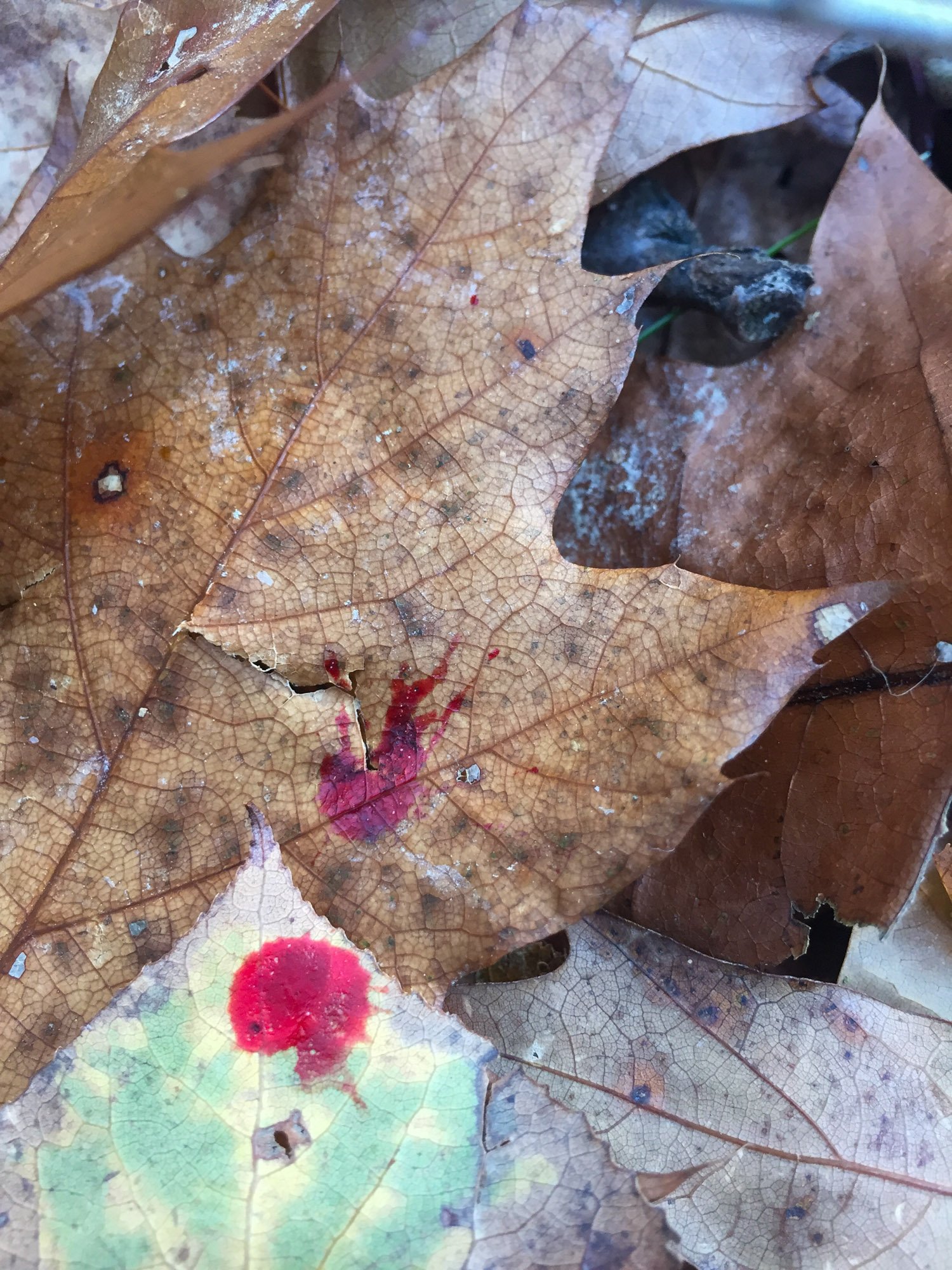
Shane: If I was to shoot a deer myself, knowing what I know, and I shot it back in the liver and guts, I would just back out. And typically — now we’re gonna talk about zombie bucks a little bit — if it’s in September or early October, and this is for bucks, I’m gonna give it 10 to 12 hours for liver and gut. And depending on the temperature too, that can affect how quickly they die.
Alex: Absolutely.
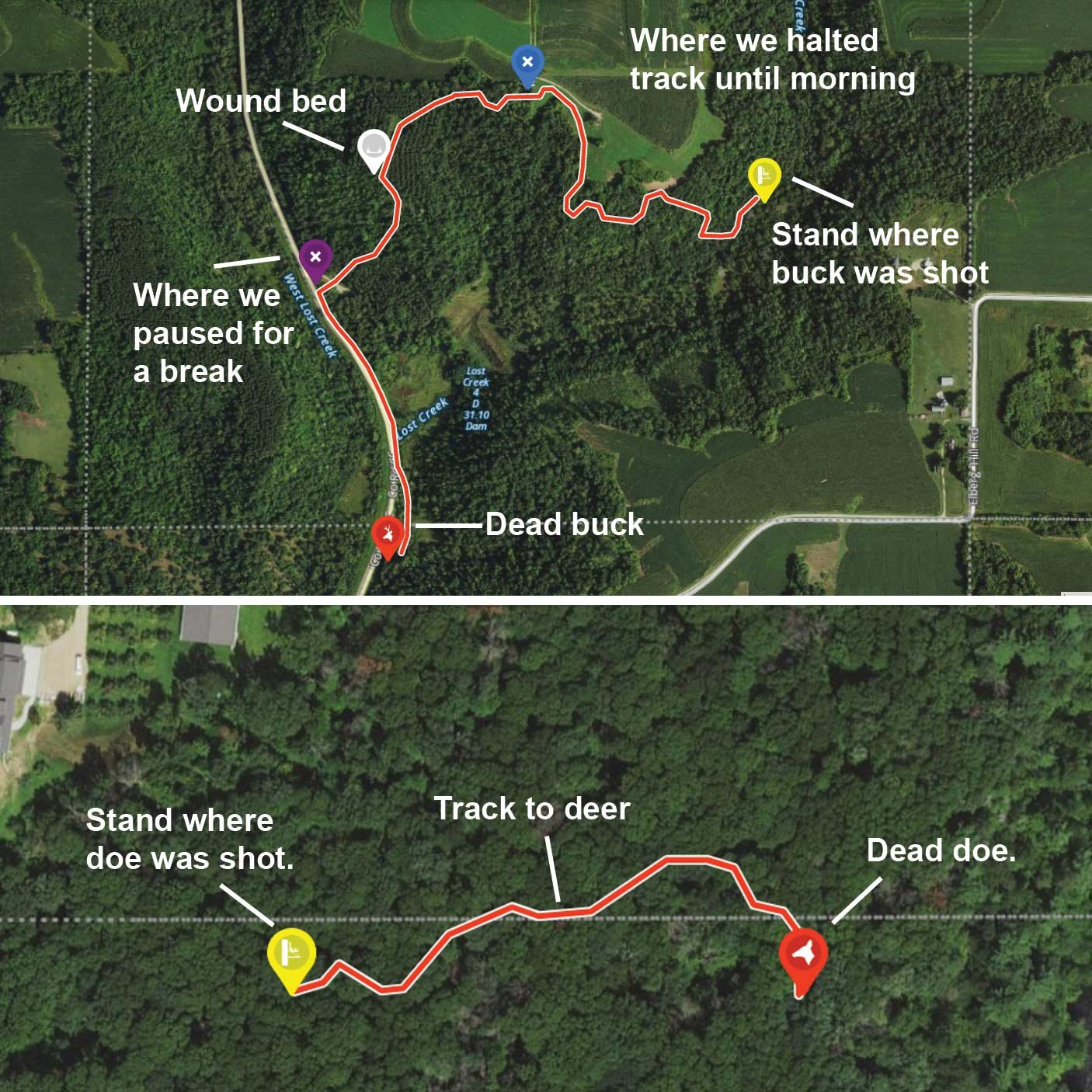
Shane: So if I hit just straight liver, I may give it eight to 10 hours. I may track a little earlier, and then we’re gonna find it dead. But usually those deer run and then start walking. They may pause and then they hunch up a little bit. We usually find those — I don’t know, we could probably pull up the stats, but 250 to 350 yards in a straight line, walk away, and they bed down. And as long as you don’t track them too soon, you’ll find them there. And that’s the number one problem with those types of shots: the hunters track too soon, they bump them out of their first bed.
Shane: And what is the issue with that? Because we always hear people, they don’t wanna wait the proper amount of time because they’re worried about coyotes getting them. If you left one overnight here, the ‘yotes would eat ’em. Well, what increases your odds of a coyote finding that deer significantly is you bumping that deer. Because if that deer, you shoot it and it’s gut shot, let’s say he goes 250 yards and beds down. That’s how long that scent line is. But if you track it and bump it, he’s gonna run at least twice that far. So now he’s gonna run another 500 yards. You got a 750-yard scent line for any stray coyote just strolling through during the night to cut that track. And he instantly knows that’s a wounded deer, just like a tracking dog knows. I don’t even have to give my dog a command. If it smells a wounded deer, she would start tracking on her own. And so you just tripled the odds of a coyote finding that, instead of just waiting the appropriate amount of time.
Shane: Now, you get into the rut, and we’re talking about rutted bucks. Does, you can leave at those earlier timelines I gave, wait times. But you get into the rut with these rutted-up bucks, especially a mature buck, gonna double that wait time: 24 hours for a gut shot.
Alex: Wow.
Shane: Before he succumbs to his injuries. Before he goes septic. It’s basically his own immune system starts attacking the organs, and it takes that long for them to —
Ryan: Right. Die.
Alex: And is the theory there, Shane, that it’s just, like, the increased testosterone, and running bucks are traveling more already — it’s just that they’re gonna move more, it’s gonna take longer for them? Is that kinda the theory?
Shane: Yeah, I don’t know for sure, because I’m not experiencing that. But I’ve seen people say something about the vitamin K in their system, or some other things going on that’s increased in deer in general, but especially during the rut, where it helps them survive those injuries. It’s kinda like their immune system and everything’s on overdrive. You think about it, deer running up and they’re fighting each other, and they’re gonna get gored with antlers and stuff. And I guess God designed them that way to survive that stuff during the rut. Whatever’s going on inside of them, an expert can probably say. I’ve seen some comments on some of the posts explaining these levels of this are increased during this time, and this is increased in testosterone and everything like that. So it helps them survive.
Ryan: And being a part of TRAKR and doing all this, the stories you hear are amazing when it gets into that time of year. One of my really good friends put, I think it was like a 12-yard shot on a pretty mature buck, and did a heart shot, and he was confident that the buck did not move. It just was sitting there and started almost, like, getting aggravated as he’s reaching for his arrow again. He shoots, hits it in the heart again, and the thing took off about 50 yards and just tumbled out. But if he would’ve just kept it, he would’ve probably just bedded down right there eventually. But he was just so much in his head that the second shot then must have scared it, and it took off.
Ryan: Well, you sent me pictures of it and everything with the two shots there. I mean, it’s crazy what they can go through, and how far they can go after they’ve been hit.
Shane: Yeah, one tracking instance I bring up quite often is a buddy of mine shot a deer and he thought it was a great hit, but for whatever reason, it went farther than he thought, and he didn’t like that. And I tell hunters, we’re starting to see in the data here, how far you track — the longer it goes, the lower your odds of recovery. And it’s probably because the deer’s not dead yet and you’re bumping it. But anyway, when you get to a threshold around 200 yards or so, and you haven’t found your deer, it’s probably time to back out and call a tracker. And that’s what he did. He had tracked it a couple hundred yards and he was worried that something ain’t right, even though he thought it was a good shot.
Ryan: Yeah, so if you do not track and you call somebody in, I think our recovery rate was 48 percent if it hasn’t been touched. There’s been nobody on that. If you don’t go tromping around the woods, you just call the tracker, you guys show up. Literally back out from the stand, whatever, you call them, and come up with a plan.
Shane: And that affects the drone operators too, who are not affected by scent and stuff. Their recovery rate drops more than a dog tracking team when you start grid searching and bumping deer up.
Alex: Really?
Shane: Yeah. Well, it’s because what we theorize — and this is just a theory, I don’t have any data to prove it yet — but the deer’s running this way when the hunter last saw it, so he has a direction of travel. He’s gonna tell the drone operator, “This is where it was headed, this is where it was last seen.” They’re gonna create their search zone out from that. Let’s say the deer circled back and went back behind, and the hunter didn’t see that. So now the drone’s not necessarily gonna look for that. Or the drone’s limited in how far they’re gonna look. They’re not gonna search a seven-square-mile area.
Alex: Right.
Shane: Where a dog will look. There’s a number of times where dog trackers have recovered deer — I mean, I’ve done it — well past that one-mile mark. Three, four, five miles, if you’ve got no restrictions as far as property lines. But like the deer I was talking about that I tracked for my buddy, I brought my dog in the next morning, and we tracked and tracked, and then we went through some cattail marsh, and then across the slough, and through some more cattail, and I was like, “Man, I don’t think we’re gonna find this dude. You sure you hit it where you thought you did?” We ended up finding it, and it was three-quarters of a mile away.
Shane: It was hit in the liver, in both lungs, and through the heart — but not in the chambers of the heart. It hit the muscle part in the back. But still, the heart has kind of a membrane around it, to keep the blood pressure equal or something — that’s what someone told me. And then there’s a membrane between the lungs. That’s why one lung sometimes doesn’t kill them, because they still have a functioning lung. I mean, all this internal damage to this deer, and it still made it three-quarters of a mile.
Alex: Yeah, remarkable.
Shane: That’s crazy, isn’t it?
Ryan: Yeah. I just wanted to go back to, if you haven’t tracked anything yet — I’m just gonna use rounded numbers here for the listeners — but let’s just say it’s 50 percent recovery, basically, at that point. If you get to 100 yards and you start going past 100 yards, that 50 percent drops to 30 percent.
Shane: So this is the distance that the hunter’s already tracked. He’s either not tracked at all, or he’s tracked the 100 yards.
Ryan: Yep. So 100 is the first one where we see it drop down significantly. You go over 200 yards, you’re down to 20 percent. And you can say, “Well, of course, because you haven’t seen it for 200 yards, the odds are less.” But you’re also potentially pushing this out. So that was a significant finding, just going from 50 percent down to 20 percent by just tracking potentially up to 200 yards and not finding it.
Alex: Do you have an average for deer that are found? Do you have an average distance of what they’re recovered at?
Shane: We do. We have average recovery distances for different weapons used and different broadheads and all that stuff, but just in general —
Ryan: Well, yeah. So this looks like recovered here. So, like, a liver — looks like that was, like, 130 yards. Liver, stomach. It all evens out pretty close, though, when we have such a large sample size as well.
Shane: I think it is. These are, like, suspected organ hit locations with the average. I can’t remember, I looked it up at one point. I don’t have it in front of me or off the top of my head. But it seems like the average recovery distance is somewhere between 250 or 350.
Alex: So average recovery is somewhere around, like, 250 to 300 yards across the entire thing?
Shane: It’s probably closer to 300. And you’re right — everything, bucks and does, all times of the season.
Ryan: Well, I was gonna see if I can find that.
Shane: We tried to be prepared for this, but we didn’t know that.
Alex: I know, I’m just throwing curveballs at you.
Ryan: We had, like, roughly 380 yards in total for all tracks would be roughly an average.
Alex: 380.
Shane: So a little higher than I thought it was.
Ryan: Yep. And it actually, for recovered, it actually seemed to go a little bit higher, to about 400. And then it was back down to 360 for non-recovered. But there’s reasons for that. Now we’re talking property lines. We’re talking there wasn’t sign, maybe the dog wasn’t on the scent.
Shane: A little context for that non-recovered distance: when a tracker completes a form in the app — another questionnaire at the end after he’s finished — it says, “How far were you able to advance the track with confirmation?” You can’t just say, “My dog took me to the spot.” You gotta have a drop of blood. So they may have tracked it 360 yards and had a drop of blood, but then the dog continued tracking without visible sign another 200 yards, 300 yards. And the tracker said, “Okay, the dog has lost interest. The dog doesn’t smell that wounded deer smell anymore.” And that’s how we know sometimes a deer’s not mortally wounded. They’ll stop putting out that odor, and a dog will turn around and look at it and say, “I’m not tracking this. I don’t smell it.” So that’s why that is probably shorter, because you have to have confirmation in order to write down a yardage.
Alex: Yeah, that makes a lot of sense. Shane, I guess I’m curious for you: as you’re starting to see this data compile, has any of it run counter to what you’ve seen in the field? Or does it all kind of match up? Is it all matching the same narrative that you are seeing play out in the field? The reason why I ask is, a lot of times, hunters, we have kind of a limited window of sample size, right? So even someone like you who’s got hundreds of tracks, it’s still less data than what is being compiled in this app. And I just wonder how much of this do you have to see in real life for it to match the data that’s being taken down in the app?
Shane: That’s a good question. I don’t know how to really answer that, other than to say I was one of those hunters that didn’t believe these distances and stuff. I wouldn’t have believed that some of these shots are not killing deer within sight of the stand.
Alex: Yeah, and you’re talking about good shots.
Shane: Yeah. And so we get those comments too, whenever I post them. And the guy’s like, “Oh, that’s BS, whatever. All the deer I’ve shot in my life, I never needed a dog,” or they all have all these oddball answers. But I’m like, “You’re talking about a sample size of 20 deer that you’ve shot.” One person. We’re talking about thousands and thousands, dude — seven or 8,000 tracks at this point, and growing. But then those guys always get me, because I was like, “You’ve never missed?” Or, “Yeah, I may have missed one or two.” And they’re criticizing bad shots. It’s like, “These guys need to shoot.” I was like, “You never missed?” “Yeah, I’ve missed.” Well, then that’s a bad shot. You just got lucky you didn’t actually hit the deer in a bad location. You missed clean.
Shane: But yeah, I mean, it’s those small sample sizes. But me personally, all the deer I shot growing up before I started tracking, I basically thought if you hit them in the boiler room, that’s a dead deer. It wasn’t going far. And that seems to be the mindset of most hunters out there. But you’re seeing a lot of hunters that are learning, I guess, because trackers now, with social media stuff, it’s out there and there’s videos. And you’ll see some of the hunters defending it, saying, “Hey, you haven’t seen what these trackers see, and you wouldn’t believe some of the things these deer survive.” Me personally, I guess, I mean, that’s the biggest thing — just the scope of it all, what we’re talking about, is most surprising to me.
Shane: But after dealing with it, it’s more believable now. Now it’s kind of like common knowledge to me. It’s like when somebody says, “I shot a deer and it went two miles and we recovered it,” I’m like, “Sounds about right.”
Alex: Yeah. I think for a lot of people, it’s like, maybe you make 10 or 20 good shots on a deer and they all fall within 100 yards, and you just expect that that’s what happens. But then on that 21st deer, you make a good shot and he goes 400 yards, or some distance that you didn’t expect. And then you think that that is just, like, some weird outlier that never happens. But if you go around and talk to a whole bunch of other people, they had that same experience too, once.
Shane: Yeah. And here’s another thing. Just from the comments, it seems to be that most people think it’s one small group of hunters that make — out of the millions of deer hunters in the nation — it’s a group of 20,000 of them that are making all the bad shots. And that’s not the case. And it’s not a lot of deer in the big scheme of things. If you look at, like, there’s 450,000 deer hunters that hit the woods in Minnesota on opening day. And we may get a few hundred calls during that whole opening weekend. But if you did the percentages on it, it’s 0.000-something of the deer shot. So it’s just a drop in a bucket. And the guys that needed a tracker this year, it’s just like the guy that shot 20 deer and says, “I’ve never needed a tracker.” One day you may need that tracker.
Shane: It may only be once in your lifetime. That’s what these guys are tracking for. That may be the first time they’ve ever needed a tracker and they may never need another one again. So you gotta think, there’s millions of deer hunters.
Ryan: It’s not like the same guy putting in, like, eight of them in one state or something.
Shane: Well, sometimes — I told you earlier, we get those repeat customers.
Ryan: Yeah. But there’s usually the —
Shane: The repeat calls from the following year is an easy track. They made a good hit. They just like watching the dog.
Alex: Ryan, how about you? What are kind of the bigger takeaways — a higher vantage point for all of this data — relative to your actual hunting? What was the takeaway for you personally?
Ryan: Well, here’s what’s interesting. I’ve basically been bowhunting since, I think it was like ’97 or something. I’d never needed a tracker until I really started working with Shane. And honestly, I became a lot —
Alex: You jinxed yourself.
Ryan: I know. I became a lot more mobile. You put yourself into different positions that you normally wouldn’t. They’re not perfectly manicured shooting lanes that you would normally have on a piece of private or whatever. So there’s a lot of other variables that go into it. But to me, I’ve just dove more into the broadhead type, and hearing what should be the right answer and then seeing something maybe different. And then you ask why, and then you start going in further. And so being able to dissect a lot of this — now, to be honest, we’ve had some data to work with, but this has probably only been about a month or a month and a half where we’ve had thousands of points, tens of thousands of points of data to be going through.
Ryan: And so we’re looking at it at a high level. And from here, we’re asking the questions, “Well, why this? Why that?” And trying to refine some of this information a little bit better, to help get maybe not a root cause or anything to it, but just maybe be able to point at something.
Shane: Yeah, I’m excited for all the data we’re getting. I mean, we’re starting to get some stuff that can start being predictive, especially with AI coming out.
Alex: Yeah. I mean, what you guys are doing and the amount of data that you’re gonna be getting season after season is gonna be really powerful. And you’re right, I think it has the potential to answer a lot of questions in the hunting and blood trailing world, bowhunting world, that we’ve all just kinda talked about, and everybody has opinions, but there’s really not data. Because what everyone does is they just take their own personal experiences, and those are all just anecdotes. So it’s just one guy’s anecdotes versus another guy’s anecdotes and they just argue about it. But you guys are getting, like, actual data, real data, that I think can shed some light on some of that stuff.
Shane: Yep. I’ll tell you one thing that surprised me, though. When I first got into tracking, my buddy Al Sherman — he’s been tracking for decades — he says, “No matter what you do, like I mentioned earlier, no matter the method, no matter what you do, you’re not gonna beat the odds. The recovery rate’s gonna be somewhere between 35 and 40 percent.” And I thought that was interesting. I was like, “Well, what if I’m a better tracker or worse tracker?” I guess if you don’t train your dog well, you could have a lower recovery rate. But we’ve seen that. Like, I had my own on spreadsheets, and mine was right there around that 40 percent, or 38 percent. And then the app came out and we started collecting data. And then you look at archery recovery rates, you look at firearm, you look at it on the app right now in the analytics — they’re identical or almost identical, 38 percent, no matter if it’s a gun or a bow.
Shane: That’s, I guess, the biggest surprise for me, is how accurate he was. And I don’t know where they got that number from.
Alex: How about drones versus dogs? Is there a delta there in recovery?
Ryan: No, not in recovery. Same recovery rate.
Shane: So here’s the thing about drones. There’s drone guys are gonna be irate when they hear us say this initially. But recovery rate in the tracking world is not how many deer you locate. It’s how many deer the hunter is able to tag, right? So we may locate a lot more deer than the 38 percent. It’s just, we jump them up and they run off, or we call the tracker because we, as an experienced tracker, we’re starting to learn to read the dog, and the dog tells them it’s not mortally wounded. A drone goes up there, they fly, they find the deer bedded up, and he’s got a leg wound, or he’s got a back whack or something, a non-lethal wound. And some of those more experienced drone operators are saying, “Yeah, that’s a non-lethal hit and no need to come back out.” But they’ll count that as they located a recovery. We recovered the animal. And it’s just the way of thinking — you’re thinking of it as, you didn’t actually recover a dead animal.
Shane: But when you look at it, I guess they’ve physically, or visibly, saw the deer, laid eyes on the deer. And so they’re gonna do that more often than a dog. But the experienced dog tracking teams are still gonna know that the deer’s still alive, and we may see it, but it bumped. But overall, as far as recovery rates — finding dead deer, mortally wounded deer, the hunter tagging it — it’s the same for drones and dogs.
Alex: Interesting.
Shane: Now, dogs, like I mentioned earlier, usually can range out farther than a drone. So that kinda helps in that regard. So there’s gonna be caveats, so it’s not a solid answer right now. But right now the data’s the same. The recovery rates as far as tagging the deer is the same. We’re pretty close.
Alex: Okay. Last question for both you guys. Give the listeners some advice — like, after they hit a deer, just some stuff to 100 percent do and to definitely not do. Give us a little list here.
Ryan: One thing that I always tell people is right after that moment, get your phone out, start video, and just start pointing towards where you saw the deer run, what happened, exactly — just to get that in your head. You can go back and look, because I’ve had numerous times you go to where you think you shot and you’re 10 yards off.
Alex: Wow.
Ryan: Yeah. If you can sit there and immediately get your phone out, start video — you could even be quiet and see if you can hear it crash — but point and just point at the screen exactly to where it is. And I mean, taking a video of your finger pointing and going through the woods, that to me has been a huge thing. And to be honest, in the moment, I forget a lot of times to immediately pull out my phone.
Ryan: It’ll be maybe five minutes later, I’ll be like, “Oh, I should get this before I get down.” ‘Cause as soon as you go down, if you’re up in a tree, you lose all of that perception of what anything is. You go back up in the tree and now you’re questioning, “Well, was it there? Or was it over there?” So that’s a big one, I feel like, is just being able to have that recorded right away.
Shane: Yep. Yeah, I agree with that. I’ve told a number of hunters that. It’s like, after you shoot, don’t hop on your phone and start posting, texting your buddies and celebrating and shouting out — especially like you see these YouTube videos of guys shooting deer. You should be stone silent for like a minute straight, just listening for that deer and which way it ran. And then do like Ryan says: take a picture, point at the tree where you last saw it. Mentally mark it. But I’d go a step farther. I like recommending hunters use lighted nocks. Number one, you see the arrow with your eyes where it hit. If you’re recording on your phone — a lot of people are doing stuff like that, or action cameras — you have a line of sight of the arrow.
Shane: It’s much easier to see it. And then the third thing is you’re able to find that arrow easily and to inspect it. Does it have gut matter on it? What’s the blood look like? That all tells you what your next step is gonna be. And then from there, if you’re tracking — first of all, if the shot is not right there in the boiler room where you want it to be, then right there, I’m gonna back out and get a tracking team on it, especially if it’s like a gut shot or something. You’re not gonna have much blood to track. But let’s say it’s a good shot, everything looked good, but you start tracking. Again, that 200 yards, 150 to 200 yards, that’s when you need to just really start questioning things, mark it with tissue and back out, maybe think about getting a tracker in there.
Shane: If you’re gonna back out for the night, go ahead and get a tracker. And I know it may say, well, that’s gonna cost money. Most trackers don’t charge. I think the national average is 50 percent of trackers in the nation work on tips. And they’re not gonna be upset if you can only afford $20. I’ve had hunters where I knew they probably weren’t in the best financial situation — maybe a student going to college, whatever — and it’s like, “Man, I got $30 on me.” I’m like, “You just keep it, dude. I’m there to help you find your deer.” So don’t be so concerned about cost of money if you’re in a sticky situation. Remember, trackers enjoy doing this. As much as you love bowhunting, we love tracking.
Shane: So we’re basically getting paid to do something we enjoy doing. So don’t feel bad if you can’t afford it and you can only tip 40 bucks.
Ryan: Yeah, I wanna just touch again quick on the lighted nock, because I’m looking at our stats here. I suggest everybody use a lighted nock. One of the biggest things is, if you have a pass-through — but sometimes if you can’t find the arrow, you don’t know if it was a pass-through or not — you are two times more likely to know if it’s a pass-through with a lighted nock.
Alex: Oh, interesting.
Ryan: So that’s what our data is showing. So you’re two times more likely to know at that point. If you shoot and it goes right through and you can’t find that arrow, it’s through cattails or something like that, you assume, oh, maybe it just stuck in them and I didn’t. The visual’s one thing, but that confirmation that you had a pass-through is another thing.
Shane: Yeah. And they’re also more accurate when they report back to us where they hit the deer.
Ryan: Where they think they hit. For sure.
Shane: For ones without, they usually just tell us where they were aiming. It’s like, I don’t know — especially the crossbow hunters. It’s like, “Oh, it’s shooting so fast. I don’t know where it hit. I aimed right here.” All right. That’s where everyone aimed.
Alex: Yeah. All right, that’s all really interesting information, guys. And I can’t wait, as you start turning out more data and getting more tracks. Obviously the TRAKR app, it’s live. Talk about, like, I don’t know, just any advice for folks using that app, or how to follow the stuff that you guys are doing this fall.
Shane: I wanna mention real quick, because you’re just reminding me, there are ways to submit. There are manual submissions in the app for hunters and trackers. All the data doesn’t just come from tracking. So you can go in there and log in and start adding tracks. Say you shot 10 deer last year, or two deer, or you have data on the 10 deer you shot over the last five seasons. You can go in there and type in your bow setup, your broadhead setup — you hit the deer here, and you tracked it 50 yards. Especially if you’re out there and you’re like, “Oh, man, I’ve been using this broadhead all my life and never had a problem.” Go document it, go plug in all those data points. And then on the analytical side, you can always, as a user, filter and say, “Hey, I don’t wanna see manually submitted data from hunters. I just wanna see these organic tracks that are coming in.”
Alex: Nice.
Shane: So you can contribute data. But what was your question?
Alex: Just, yeah, no — just other ways to follow along this fall.
Shane: Yeah. I mean, you can join us on TikTok and Instagram. I’m gonna start doing a better job of posting over there, because I have my own social media stuff. Our Facebook page. Go to gettrakr.com. Oh, there’s no links to our social media there — we’re rebuilding our website. We’ll add links to our social media there, and you can find us, just click on those links. Or just search up TRAKR, T-R-A-K-R, on any of the social media platforms.
Alex: Nice. Thank you, guys. I appreciate it.
Shane: Hey, thanks for having us on.