
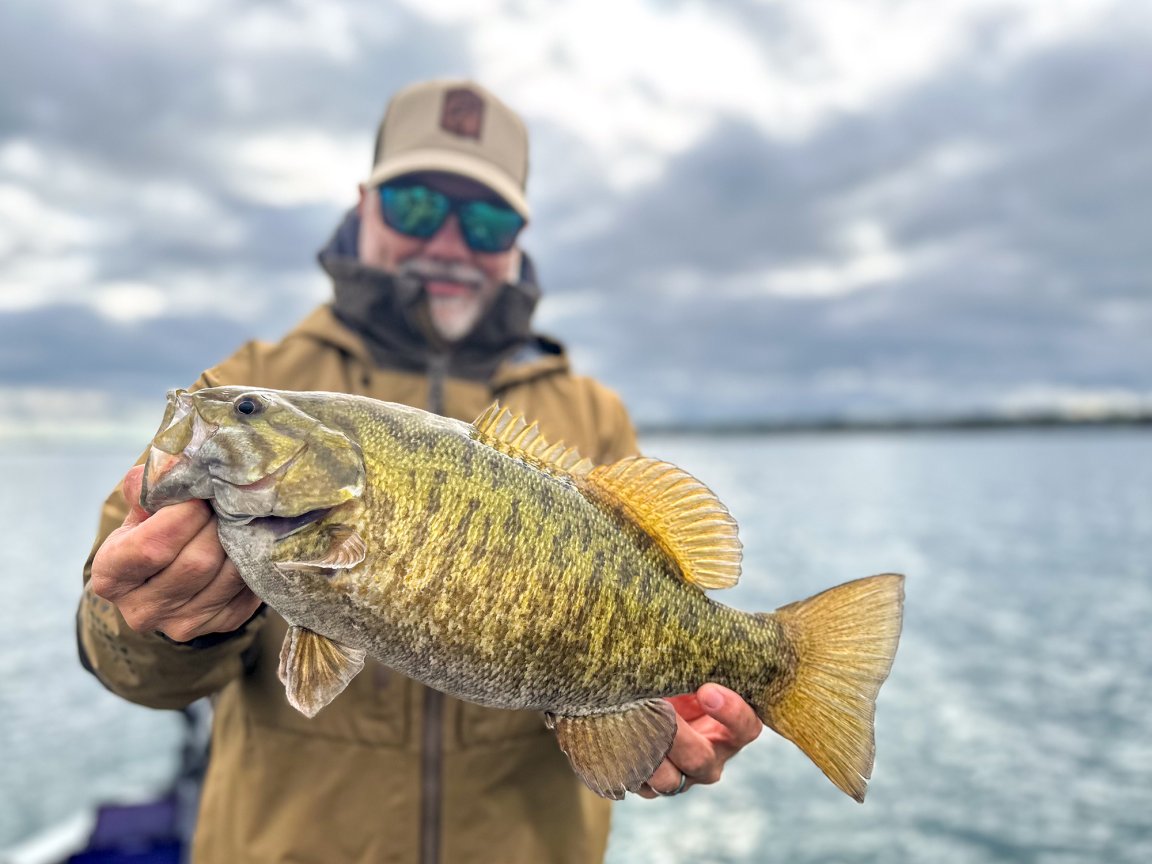
When Mother Nature opens the north door to fall breezes that cool shoreline waters, bass in impoundments move to warmer habitats in coves and creeks, and into the backs of bays. These migrations are tied to the fall movements of their critter menu, which consists mostly of shad, crayfish and minnows of various types. As the chilled surface water becomes heavier and sinks, the warmer water moves up in the water column, attracting forage fish to shallower, warmer areas where they can still feed on algae and plankton.
This phenomenon is called the “fall turnover.” When their food sources move toward warmer water, so do bass, which must lay up fat tissue in the fall to tide them through winter. Depending on water clarity and light penetration, bass might be encountered at various depths, and different tactics are necessary to catch them.
Match Lures to Water
Bass rely more on “hearing” than “seeing” when their visibility is limited by murky water. Here, use lipless crankbaits that wiggle so sharply they make your rod tip quiver. These give off enticing vibrations that bass can detect from yards away. Also, use lipped crankbaits that can dive 15 to 20 feet deep and have “tight” wobbles that send out the sharpest vibrations. Crankbaits with rattles might attract a jarring strike now, too. Retrieve crankbaits more slowly than usual through the murky depths and keep them coming at a steady pace so bass can home in on them. Big-bladed spinnerbaits retrieved at a methodical, steady pace are productive as well.
If the water is clear, choose lures that closely resemble the favorite fall diet of bass, including shiners, shad, crayfish, insects and lizards. Fish the fakes in shallow water first, and make them perform like the critters they’re designed to imitate.
Points that disappear into deep water have bass lurking around them. Position your boat offshore from the point and cast big-lip crankbaits down it as far as you can. Try both sides.
Fish the shoreline out to deep cover with spinnerbaits and crankbaits to catch fall bass.
Read Next: The Best Bass Lures: The Ultimate Guide to Every Type of Bass Bait
Hit the Cover
Locate the biggest concentrations of minnows and crayfish in creeks that feed the main lake, and you’ll find bass. Begin upstream and work down, using any current to take lures into holes and under overhanging banks and fallen trees. Work bank cover, rocky drop-offs and the edge of eddy waters made when dam-keepers open the turbines.
Fall bass are roaming the shorelines and coves of lakes now, looking for easy meals. Keep moving, keep casting and cover all depths until you cross paths with them.
Easy Does It
If you spot minnows scattering across the surface in shallow water ahead of hungry bass, approach quietly and make long casts so as not to spook the bass. When you hook a fish, push your rod tip down into the water and try to keep the bass from jumping and frightening other fish.