
This story, “Brown Bass of the Buffalo,” appeared in the April 1965 issue of Outdoor Life.
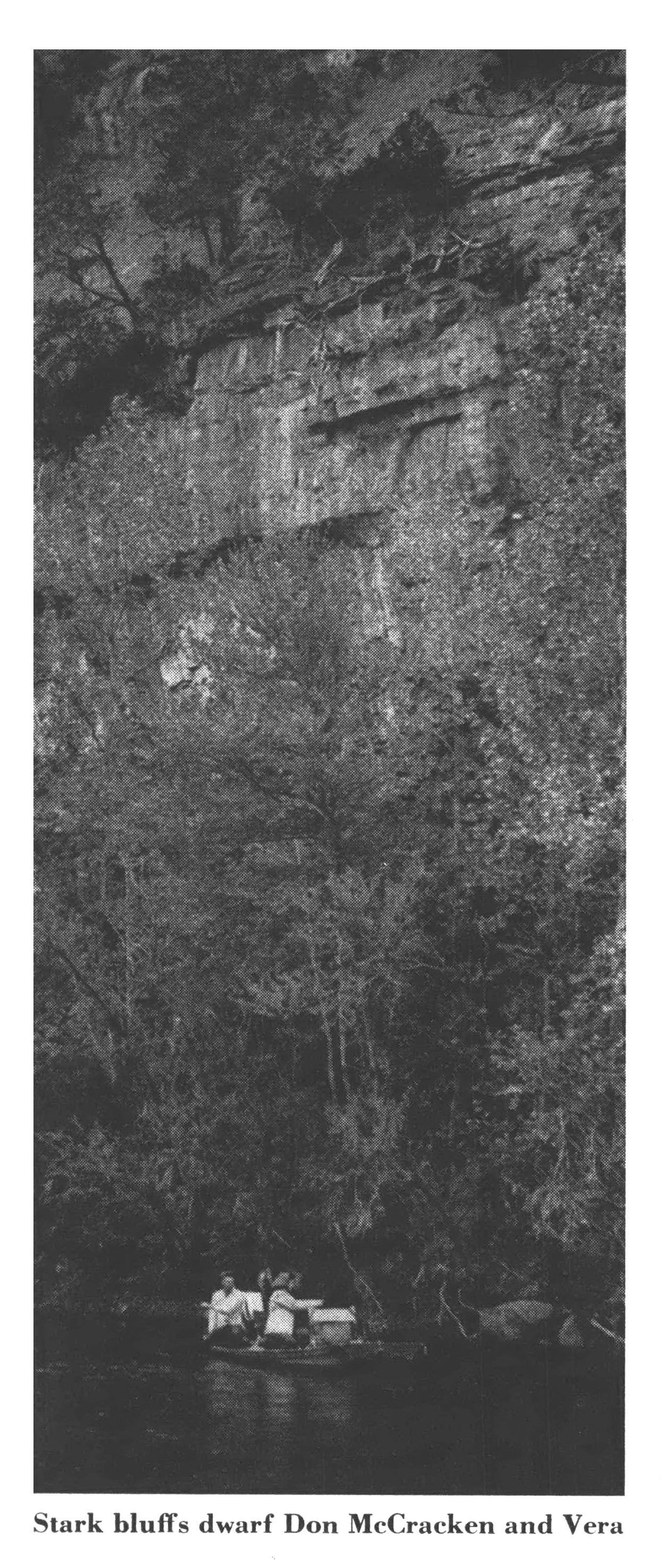
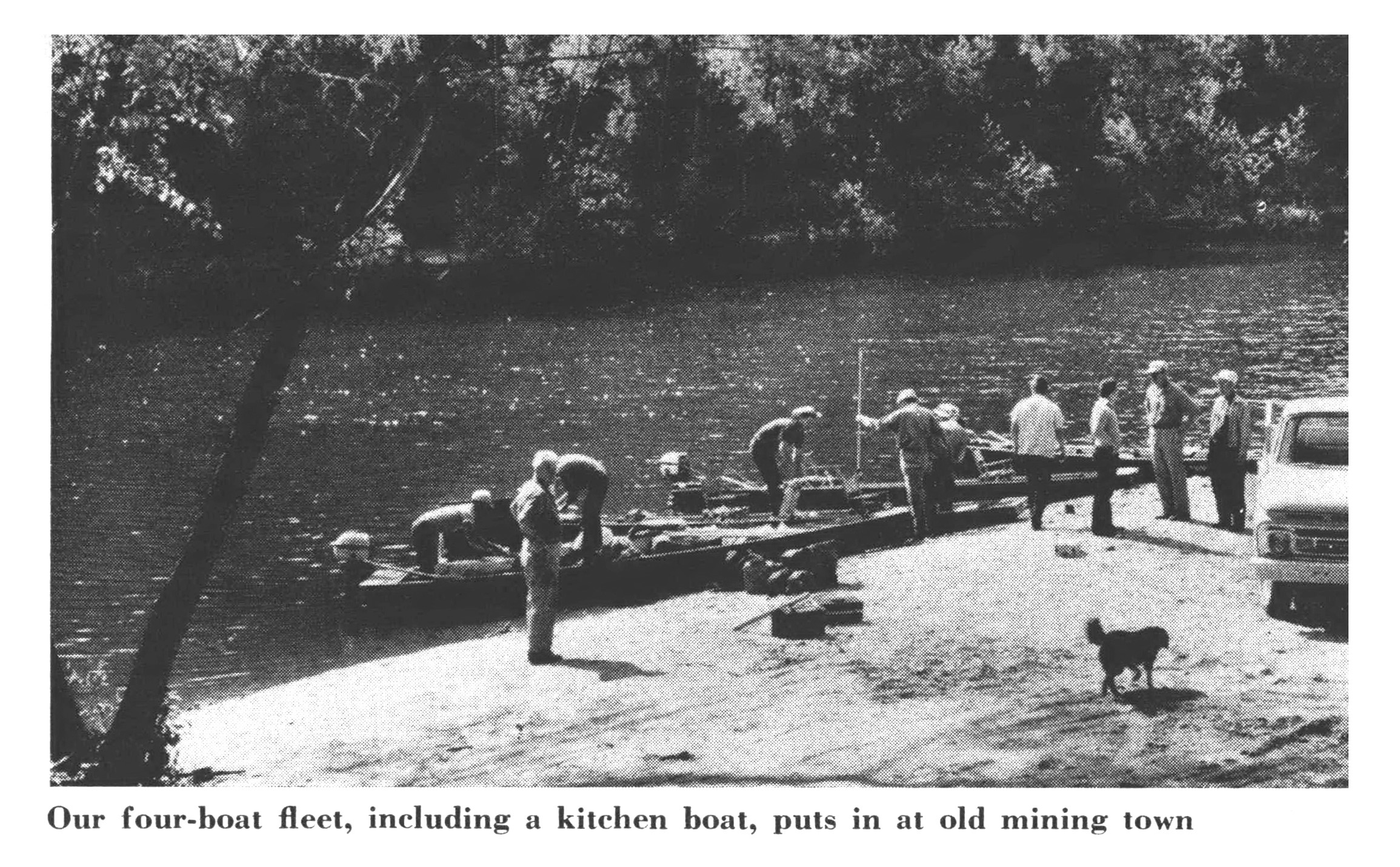
Though we had scarcely left the landing near Rush, an abandoned mining village, for our float on the Buffalo River, a wild new world was already ours. This narrow, serpentine river. which rambles tor 128 beautiful, canyon-like miles through the green Ozark mountains across the top of western Arkansas, had caught us in its six-mile current and was drifting us rapidly along. Dramatic bluffs, some 500 feet high, dwarfed our queer-looking fleet of johnboats. the 20-foot-long, yard-wide, flat-bottomed affairs that are peculiar to Ozark streams.
Almost immediately, we faced a wicked-looking white-water shoal, and I marveled at how dexterously our young, smooth-faced guide, Don McCracken, used his paddle to maneuver the boat so that we felt only a gentle bounce as we negotiated the boiling rapids.
If the smallmouth fishing, about which my friend Sam Welch, champion bass fisherman of Bull Shoals, Arkansas, had written me, was on a par with the scenery, this would be one of my greatest fishing trips. If the bass disappointed me. though, I’d still have the thrill of floating one of the last wild rivers in America, home of colorful wood ducks, beavers, water snakes, and baggy-chinned heron. In fact. the Buffalo is the last of the choice, free-flowing streams in the Arkansas Ozarks (all others have been dammed) and is now being considered by the National Park Service as the first “National River.” (To help save this river from being dammed, and it is being eyed by the Army Engineers for that purpose, write to The Ozark Society to Save the Buffalo, Box 38, Fayetteville, Arkansas.)
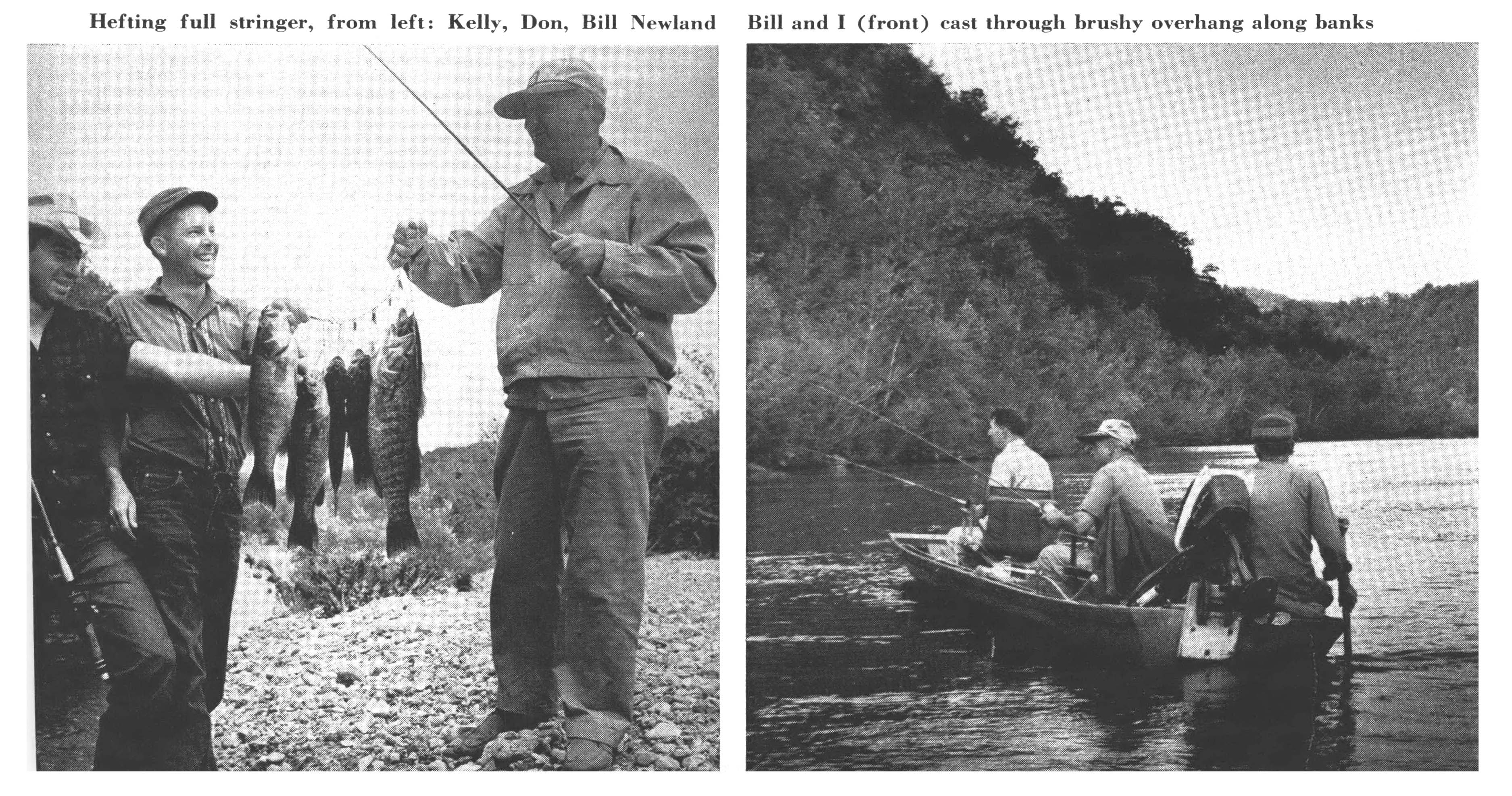
There were four boats in our fleet on this expedition for smallmouth bass, which are called brownies in the Ozarks. Tall, energetic Bill Newland, my host and owner of Newland Float Trips, headquartered at Bull Shoals, was my fishing partner. My wife, Vera, and youthful guide Charley Stewart, Don’s brother-in-law, had embarked ahead of us, attempting to get the front-runner’s edge on the fishing. In the third boat were Bill Fabina and Bob Devereaux, Kansas City business men, with guide Kelly Hudson. The commissary boat, long since out of sight, was manned by cook Bob Henderson, who also had the tents. We would camp out tonight somewhere in this country and tomorrow we’d float as far as the mouth of the White River. Then the boats would be loaded on a truck and transported back up the Buffalo for a third day’s float down a rugged section from Maumee down to Highway 14.
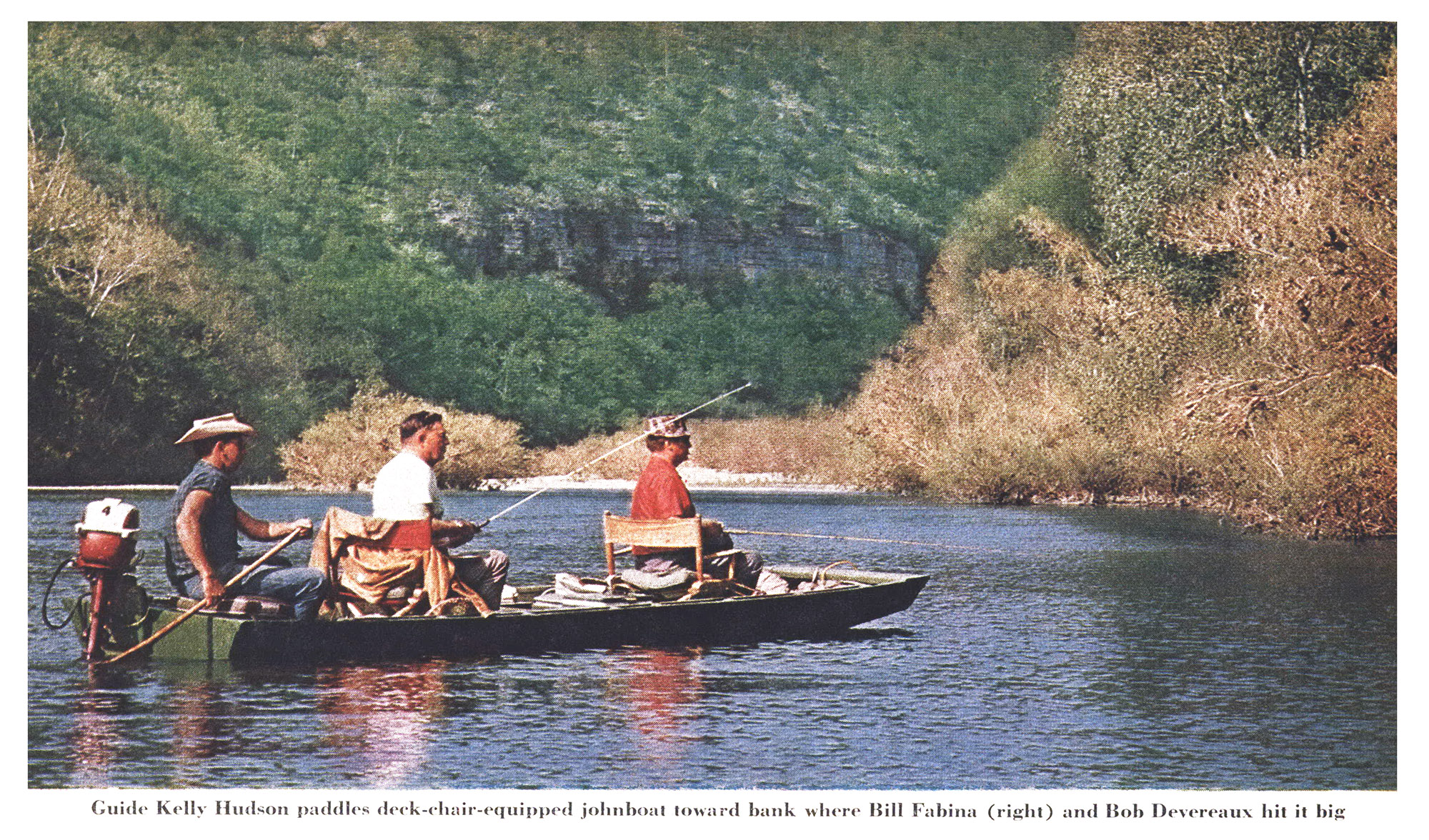
We must have floated downstream half a mile before Don gave the word to start casting. On the way, he sped us through a couple of shallow stretches with the 5 1/2-horse motor, which these modern Ozark guides use mainly for backing upstream to fish good spots. I felt like a plutocrat — we were sitting in canvas deck chairs securely roped to the boat.
Related: The Unmaking of an Ozark Stream, and One Last Big Bass with My Grandpa
With light spin-casting tackle, I shot a cast shoreward, aiming at a shady little pocket where black water swirled against the cut bank. The leafy limbs of graceful willows, leaning slippery elms, and drooping, gray sycamores hung out over the water. Somehow my lightweight floating plug skimmed through the drooping barricade and landed softly within six inches of the bank.
I was well satisfied with my cast and with everything around me. It was early May, the ideal time to float the Buffalo. Because of the numerous shoals, the high-water periods of spring and fall after the equinoctial rains are the best times for a good float. And Bill Newland, who gave up teaching school because it interfered with his fishing, claims that the prime time during those periods is a day or so after a rain, when the river has cleared.
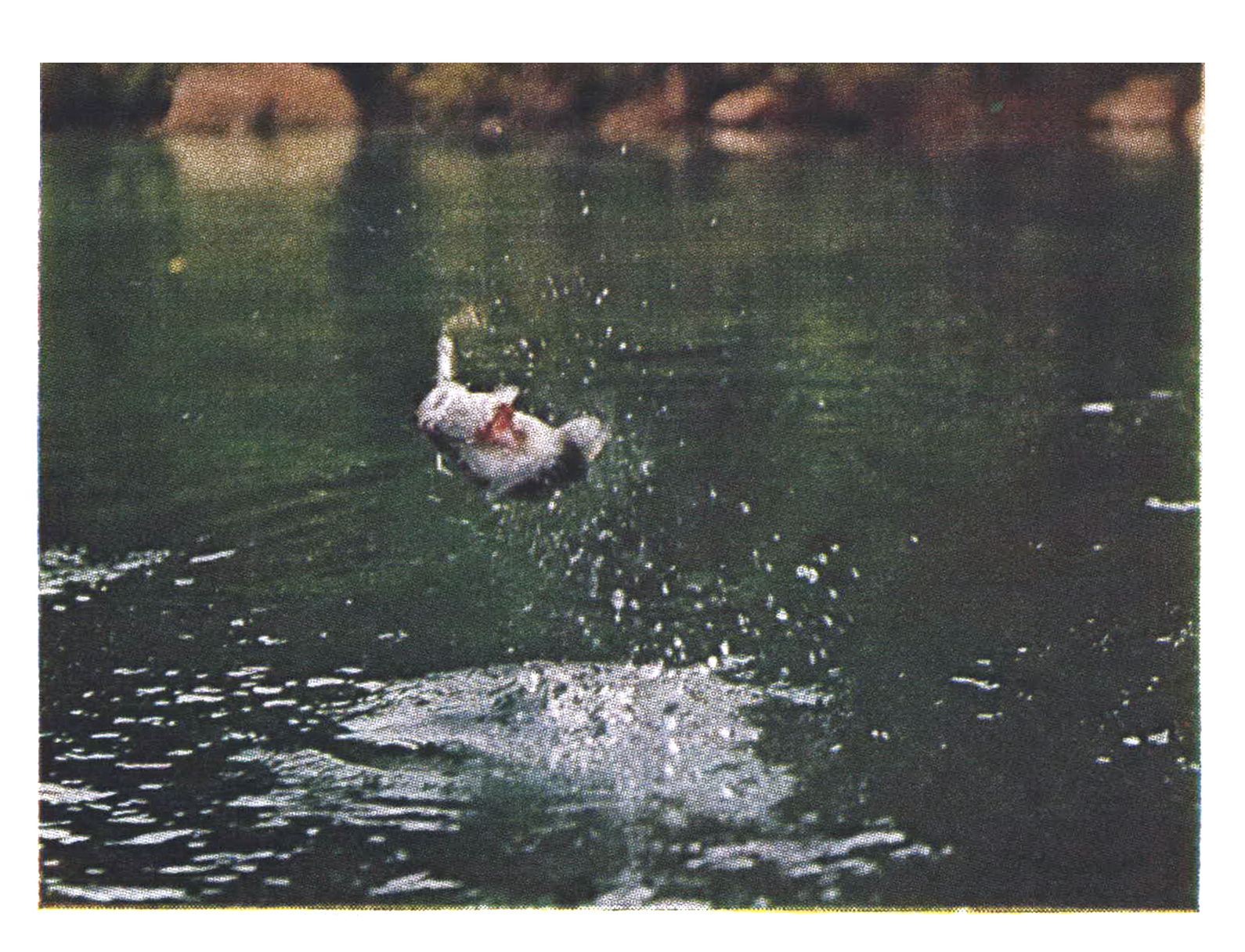
I watched the curling water twist the silvery plug I had cast. It floated toward a welter of half-sunken brush. Just as I was ready to reel it away, something flashed, looped like a porpoise out of the water, and dived headfirst on the plug. I jerked, the water exploded, and, in its splashing white midst, a brownie stood on his tail and shook his head.
When he tumbled back and ran, I knew I had a pretty fair specimen “stuck,” as they say in the Ozarks when you hook a fish. He put on a good show, and, when he finally surrendered. I knew I had been in a fight.
“He sure came out with his fists up, didn’t he, though?” commented Don, as he admired the two-pounder before releasing it.
Related: The Best Bass Fishing Rods, Tested and Reviewed
We drifted along, casting to the tree-shaded banks and catching numerous small bass. The water was so clear and the bottom so rocky and clean that we got a kick out of watching them follow our lures. My only problem was getting my lure into the right spots. It had to land right in the little pockets under the thick, overhanging branches where the bass were lying. This was difficult because, to get it there without tangling, it was usually necessary to cast sidearm. Also, to avoid spooking the bass, we had to stay a healthy distance from shore. To make matters worse, my guide insisted I use a balsa-wood plug that was as light as a puffball and difficult to cast. “These brownies will warp them. Shure ’nuff,” he vowed.
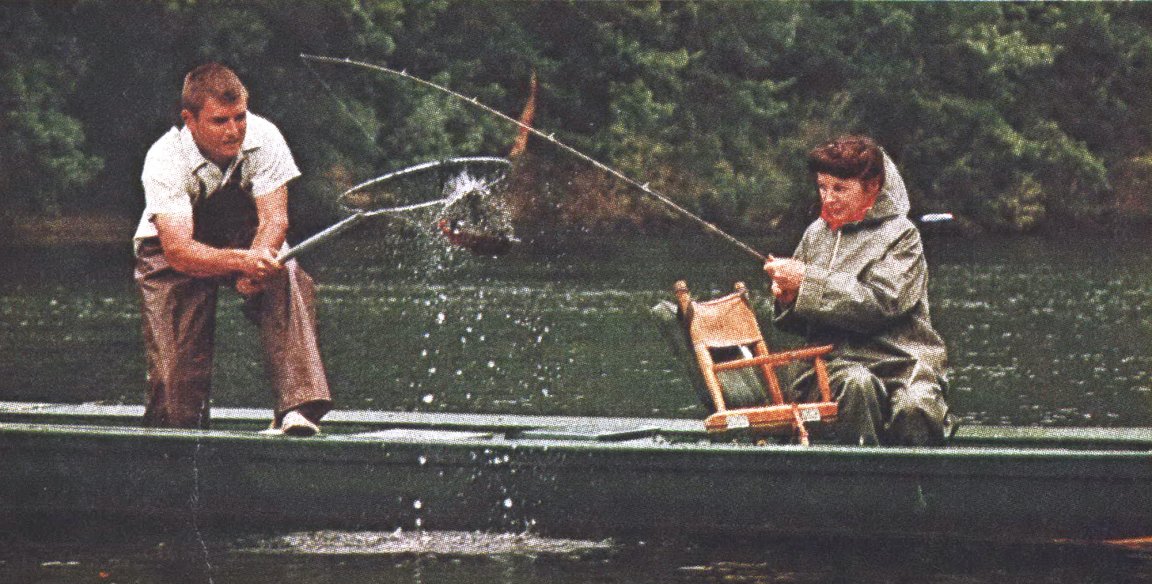
Around a corner, we came upon my wife and Charley. She was having a hassle with a good bass. It jumped twice as we watched, then the guide netted it. Because I accuse her of exaggerating the weight of her fish, she promptly put it on the scales she carries especially for my benefit. It went 2½ pounds.
“They don’t hit unless the plug is almost stationary,” she informed us. This confirmed our findings. Neither Bill nor I had caught a fish on the retrieve. They would strike only when we twitched the lure gently or while it was floating like a dry fly.
We stopped to let Vera and Charley move ahead again. As we waited, the sky, murky and drizzly before, cleared, the sun came out, and white, cottony clouds appeared.
“Bad for fishing,” complained Don. “These bass like it cloudy.” He was right. The warm sun chased the bass from the shoreline and we got no more hits.
“They’ve moved to deep water,” Bill Newland decided. “Let’s try the bottom.”
Bill put on a jig-and-eel, a Southern bait usually used in impoundments, which has proved to be a dandy. In fact, Bill and his wife, Louise, make their own brand of jigs, tying various color combinations of hair and marabou to lead heads carrying a single hook, all with a fiber weed guard. Bill selected one of these, a yellow-and-black, 3/8-ounce affair, and added a black pork-rind eel to the hook. He cast to shore, then bounced the lure slowly along the bottom into deep water. A few casts later, something grabbed the eel.
Bill leaned forward, kept a tight line, and gave the fish a moment to chew the eel. Then he socked the hook home. The rod vibrated as the line cut toward the swiftest part of the current. This is a typical move of a smallmouth as soon as it feels the hook-instinct tells it to use its flat side against the water as a brace.
From the looks of things, Bill had a good fish on. He swung the rod tip high, letting the bass fight the bow in it. The fish weakened, and Bill began his retrieve. Near the boat, the fish jumped once. It was disappointingly small. Where it got all its power I’ll never know, unless it was from swimming in the fast current.
I had to agree more than ever with Dr. Henshall, who, back in 1891, described the smallmouth as “having the class of both the salmon and the trout, with an additional system of fighting tactics of its own,” and that “inch for inch, pound for pound, the smallmouth is the gamest fish that swims.” Bill slipped the hook out of the little bass without boating him.
Bill caught three more small bass before I nailed one on a little spinning lure with a white pork-rind strip.
These small bass were fun, but I began to wonder where the big ones were. My answer came when I snagged a tree limb, and Don paddled in so I could get free. There in the mirrorlike waters, I saw a tremendous smallmouth swimming slowly from the shoreline toward deep water. We had flushed him. I gasped and pointed. But Bill and Don weren’t surprised.
“Lots of them in here like that,” Bill said offhandedly. “We just haven’t hooked one yet.”
I doubted it, even though this river has everything smallmouths want — fast, clean water, plenty of shade and cool spots, and schools of minnows. I guess my eyes said so.
“You’ll see,” Bill predicted.
At noon, under the kitchen fly, we ate Southern-fried chicken, corn, and black-eyed peas, and discussed fishing. Charley was scolding himself.
“I ought to have my head examined,” he moaned. “Lost a pretty brownie back there. Don’t know what Vera and I are doing wrong, but we’re doing it.”
Fabina and Devereaux, however, were beaming. They had caught some good bass on a different kind of balsa plug that had a golden sheen and traveled deeper than ours when retrieved.
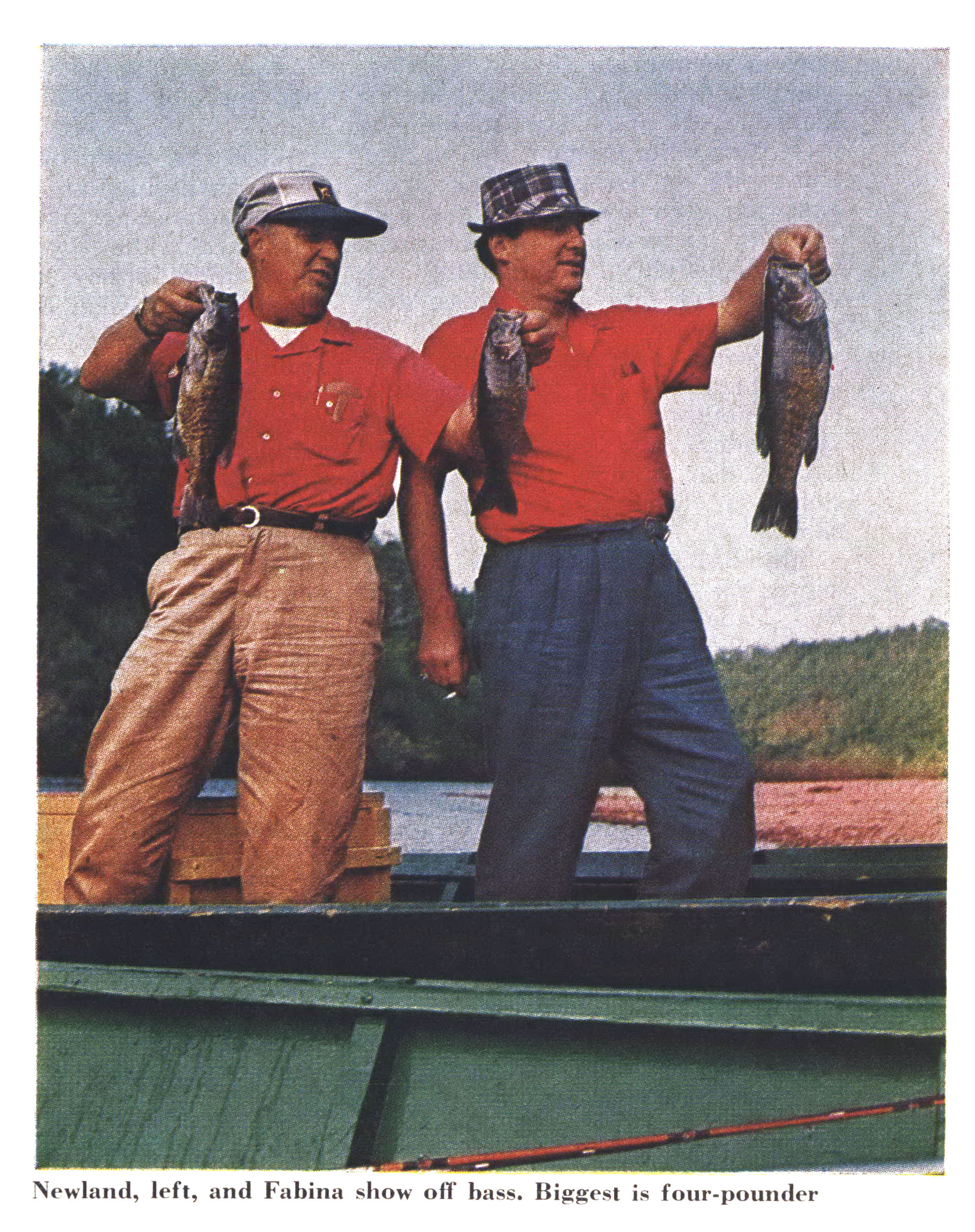
It wasn’t until evening, though, when we landed at the campsite, that Bill Fabina came in with the prize, a four-pound smallmouth that looked as it it would go six. It was a beautiful fish, the vertical bars clearly visible on its shiny, bronze hide. In their live box were more heavy bass. We had tangled with some nice ones, too, but theirs were better. I began to wish I had a lure like Fabina’s.
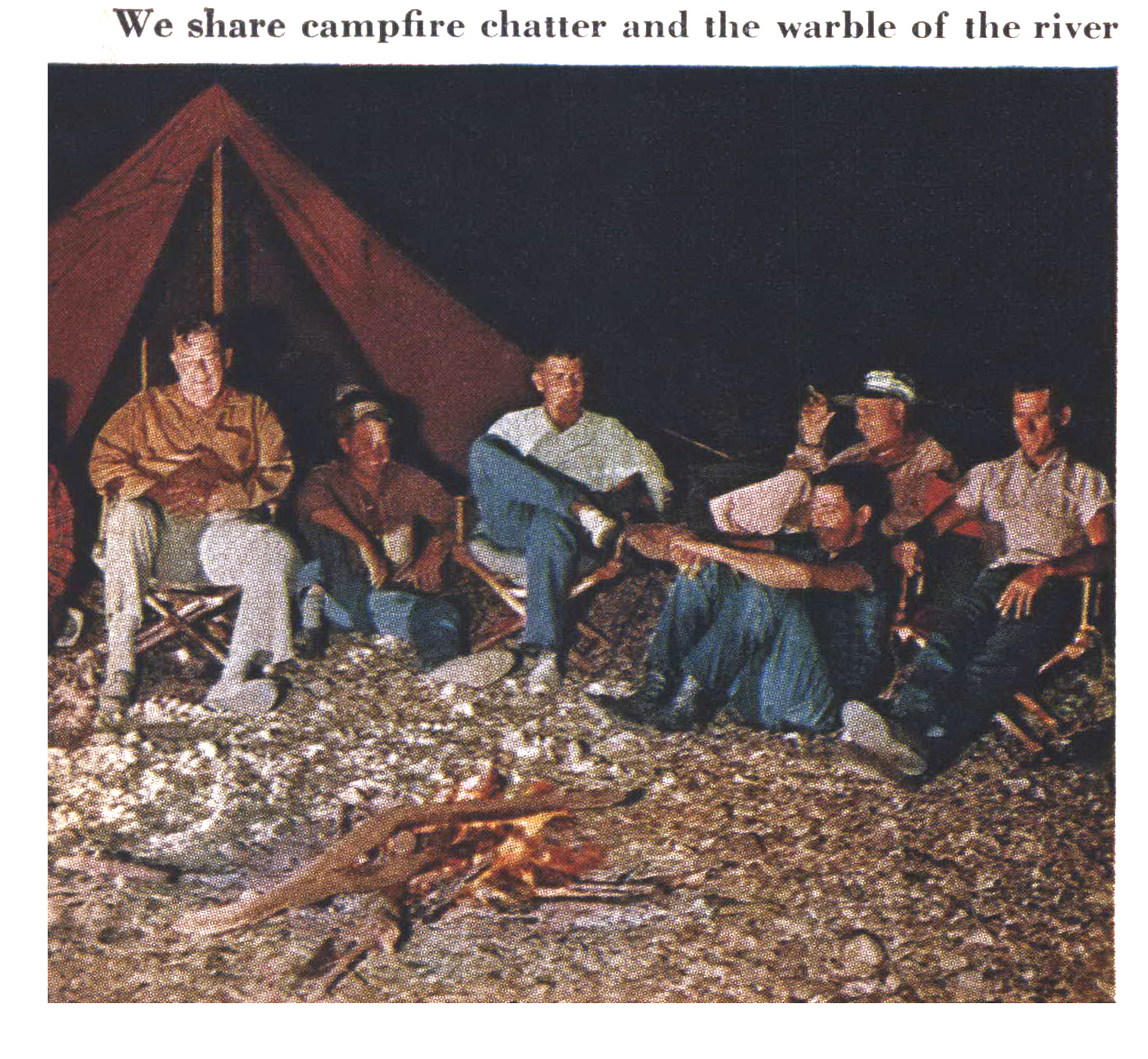
That night, it was T-bone steak for dinner, cooked over an open fire on a lonely gravel bar. When Vera and I finally tore ourselves away from the campfire and went to our tent, she said, “Happy anniversary, Hank.” That shook me up. It was our wedding anniversary, and I had forgotten it. Feeling foolish, I half apologized for not having a gift. “Well … there is something out here you can get me,” she said silkily. “Fabina’s lure.”
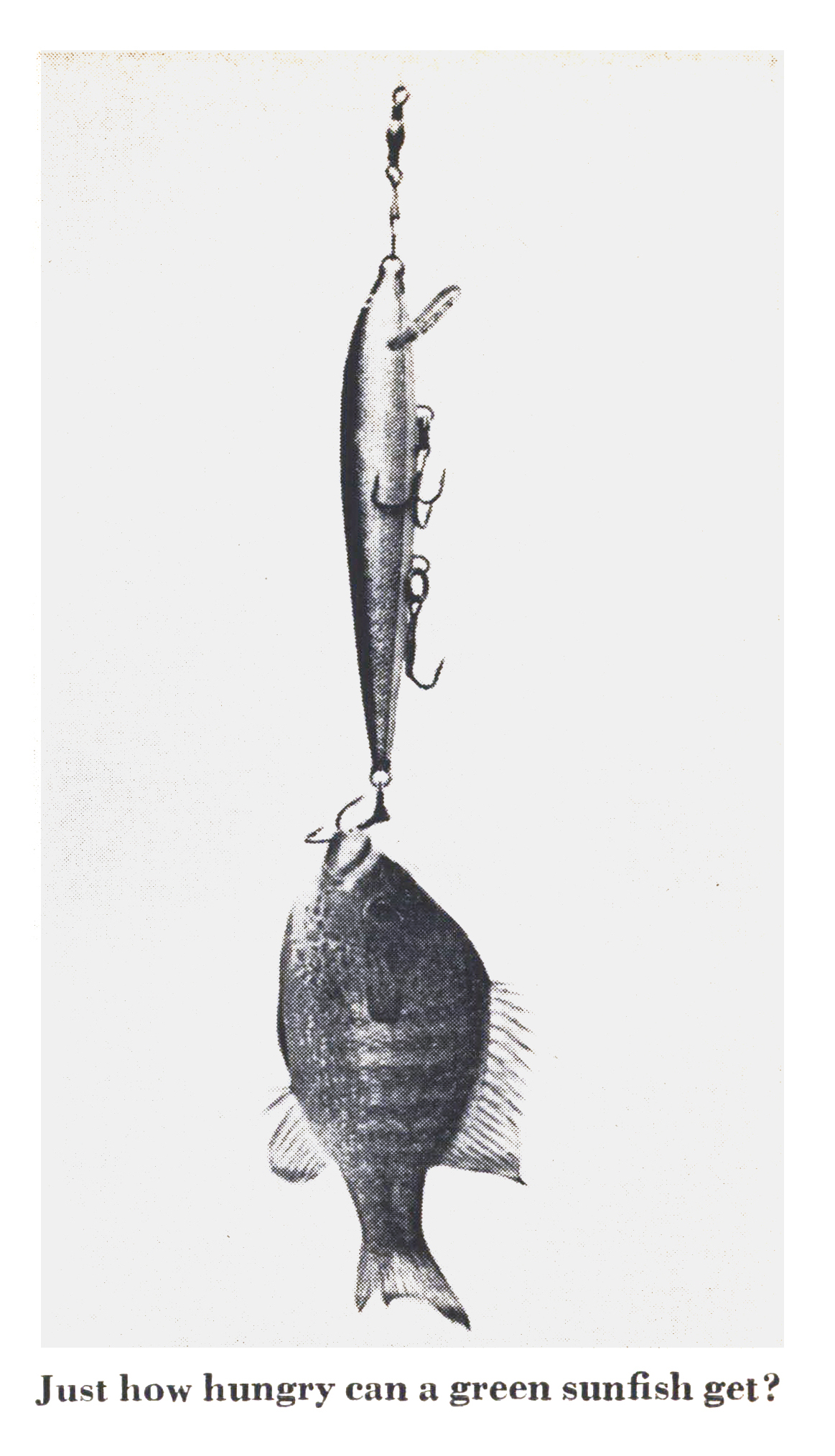
That was easier than I thought. Next morning, as we broke camp, Fabina came to our boat. “How’d you like to try a lure like mine?” he asked. “I have an extra.” He handed me one of the golden-sheened plugs. Vera and Charley had left, so I decided there was no reason to tell her, at least not yet. Like wives everywhere, she consistently outfishes her husband. No use giving her an extra advantage, anniversary or not.
The plug proved its worth. That afternoon I caught and released some fine bass. Goggle-eyes and green sunfish also liked it. But it was on the third day of the float, when Vera, Don, and I went out alone, that I really scored.
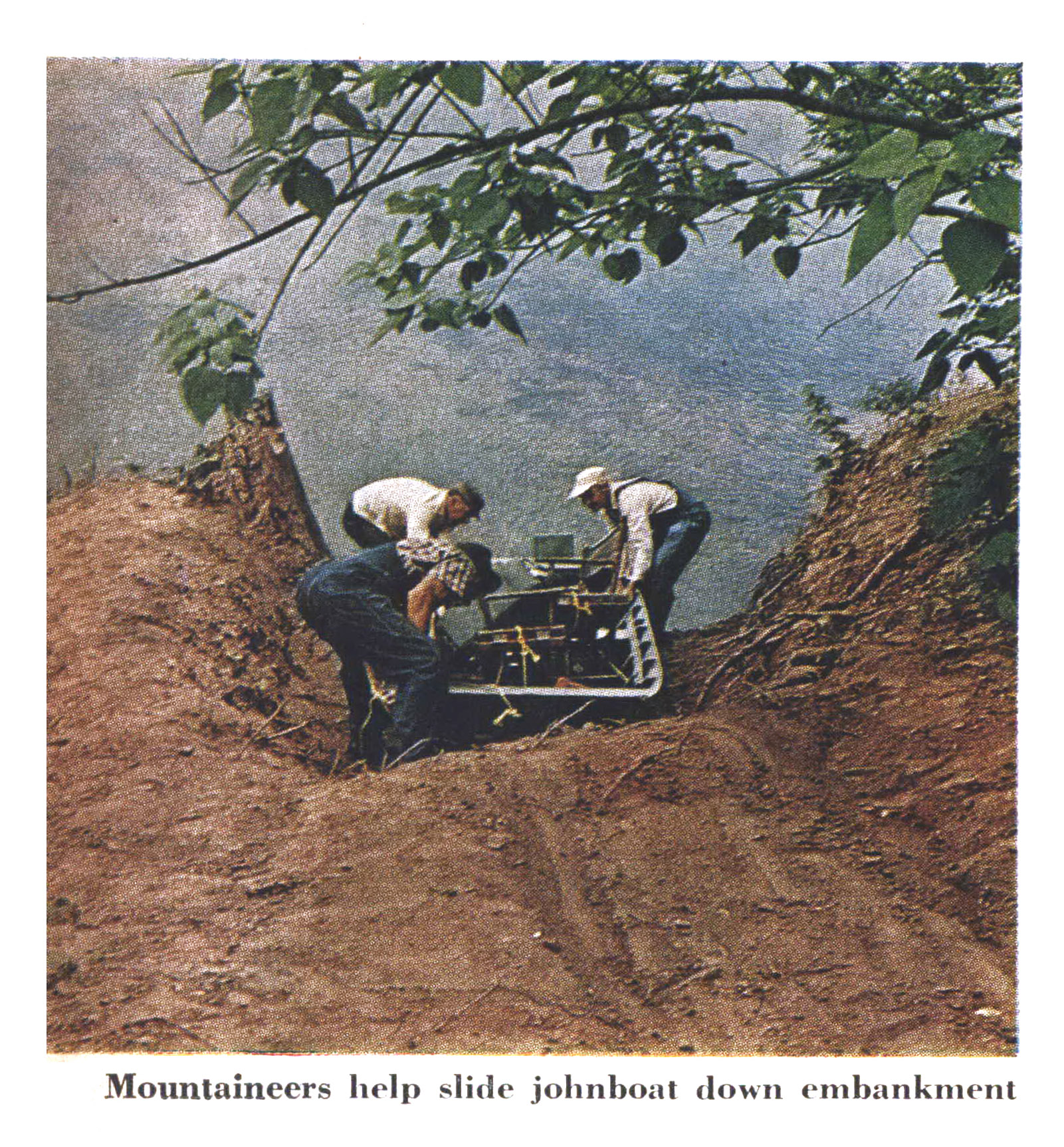
We put in at Maumee. The road to the landing, if you could call it that, was full of deep ruts and almost impassable. But we finally reached the river. A tougher, steeper embankment I hope I’ll never see again. It was almost impossible to walk down it, so we sat on our behinds and slid down the narrow trough to the water’s edge. With the help of the fellow who would drive the car to the Highway 14 bridge to pick us up, Don put our equipment in the boat and slid it down the same way.
But it was worth it. The country here was even wilder and more remote than that of the day before. It was cloudy and smelled like rain, just the weather Don had wanted.
“We’ll get a big one today for sure,” he said.
We hadn’t gone a mile when, as I was retrieving, Don let out a low whistle from his back-of-the-boat vantage point. Immediately, I had a strike, set the hook, and watched a handsome smallmouth jump. As I brought the fish to the net, I noted that Don was really excited, much more so than he should have been over a two-pound bass.
“He beat the big one to the plug,” Don explained, as he hurriedly unhooked the bass while looking back upstream. “We’ll just go back and get that big fella. He’s squattin by that beaver house.”
Related: Why Smallmouth Bass Are One of the Most Problematic Fish in the Country
The current wasn’t too strong in this stretch, so Don swung the boat around and motored upstream to a point about 50 yards above the beaver house. Then we started to drift, all three of us casting and twitching the lightweight plugs.
As we reached the tumbled limbs of the beaver house, I laid one alongside, let the lure float a foot, then bobbed it. When that bass hit, it sounded like thunder. He immediately swung into the current, turned sideways to me, and dared me to take him. I held on and hoped my six-pound monofilament line would hold. I played him gently from my spin-cast reel, using all the bow my limber, 6 1/2-foot rod could take. Gradually, the fish worked to the bottom. I couldn’t lift him, and my line was easing out against the drag as we drifted slowly.
When, suddenly, the fish came up, not angling like a sluggish largemouth, but straight up. He bombed out of the water, the wreath of his red gills flashing. The taut, transparent membranes of his open mouth appeared tissue-thin as he shook to free himself. But the hooks held, and the bass eventually had to give up and come to Don’s net.
He was 20¼ inches long and weighed 3½ pounds. That length in a lake would have spelled 5½ or six pounds. And the day was only starting. We caught three more like him, one for each of us. Before we were driven off the river at 3 p.m. by a terrific downpour, we caught and released 30 bass, both smallmouths and largemouths. As usual, Vera caught more than I. When we motored in under the Highway H bridge and hauled out our boat, we looked at each other and laughed as water dripped off our noses. It had been a thrilling experience.
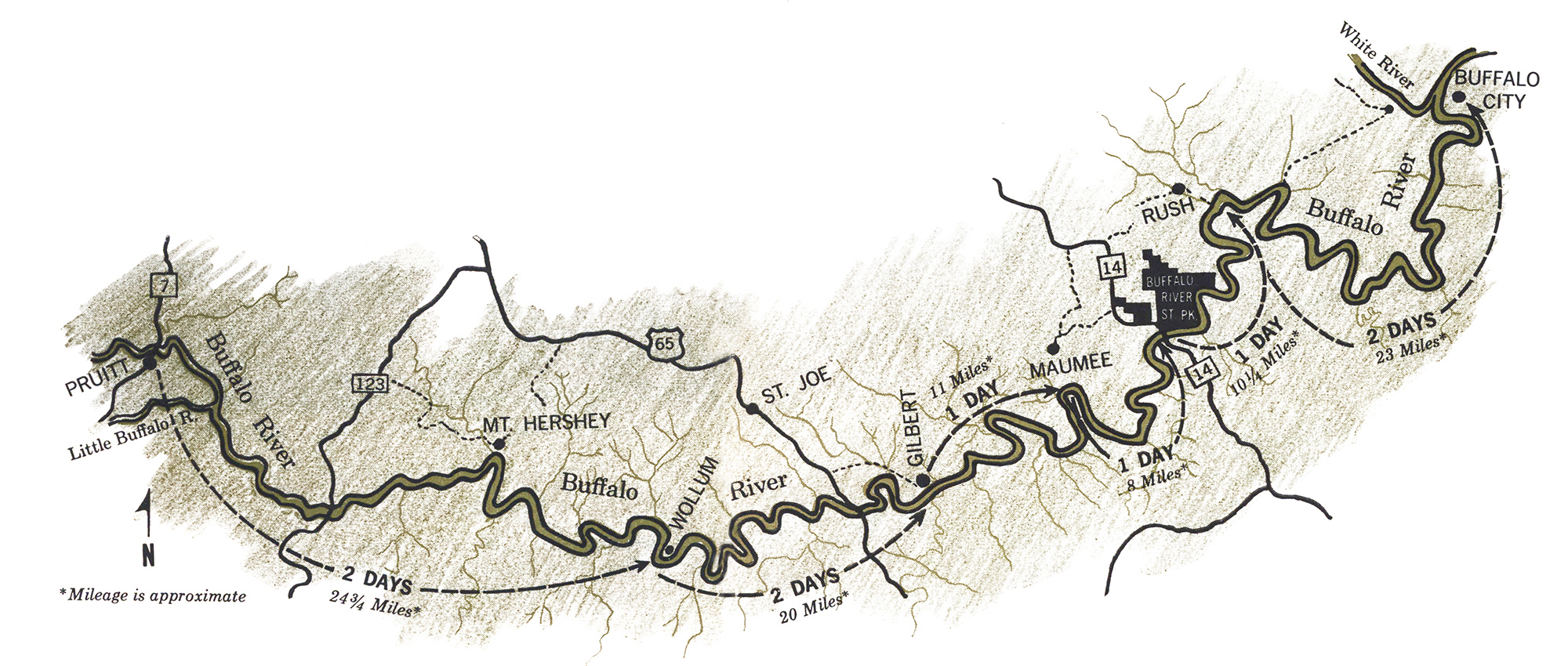
If you want to try for similar excitement, there are several sections of the Buffalo that may be floated, and several outfitters operating out of the villages of Bull Shoals, Flippin, Cotter, and other towns located along the White River who also float the Buffalo. To cover the entire Buffalo would take nine or ten days from Pruitt, near its headwaters. But you may float from Pruitt to Wollum in two days, from Wollum to Gilbert in two, from Gilbert to Maumee in one, from Maumee to Highway 14 in one, from there to Rush in one, and from Rush to Buffalo City on the White in two days (see map).
Read Next: Old-School Tips for Catching Big Bass Right Now
Three days is recommended as the best average float, which will give you two nights camping out. For two days or more, the average outfitting cost per person is $30 per day for four or more persons in even numbers, two to a boat. Some outfitters add a boat-hauling charge of $10 or $15. For one or two persons, the daily cost approximates $35 to $37.50 per person. These charges include guide, boat, motor, fuel, food, and other equipment. All you need to bring are your fishing tackle, license, and toothbrush. You sleep on cots in tents. For a single day’s float with guide, lunch, and equipment furnished, you’ll pay $35 for two.
If you’re wondering about Fabina’s plug, Vera showed up on the Maumee trip with one of her own. How she talked Fabina out of it, I’ll never know. But I do know that next May, on our anniversary, you’ll find us floating another section of the Buffalo.