

We may earn revenue from the products available on this page and participate in affiliate programs. Learn More ›
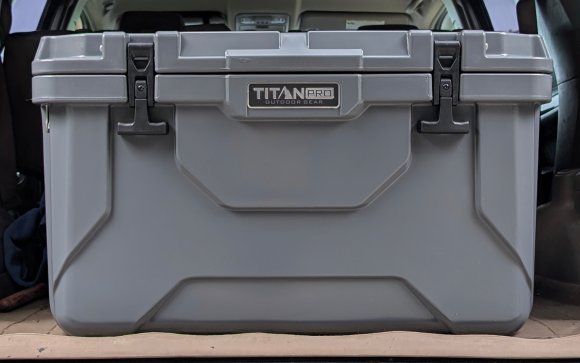
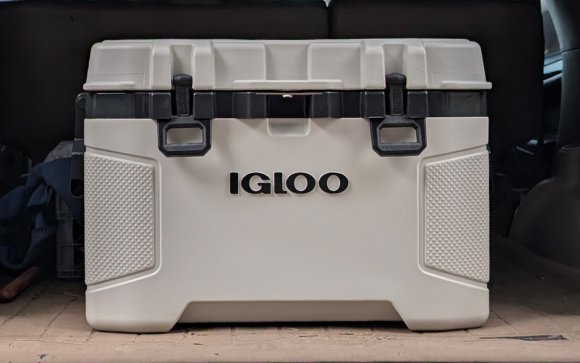
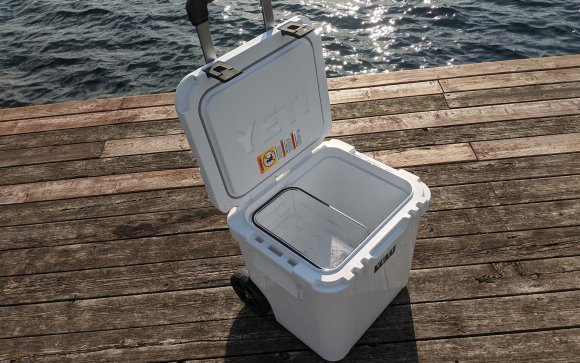
Over the years I’ve tested dozens and dozens of coolers: Big coolers. Small coolers. Backapck coolers. Electric coolers. One thing I’ve learned is that there is a shocking difference in quality between the best coolers and those that are just ho-hum. But also that price is not always a great indicator of quality, with relatively unknown brands often impressing me more than those that are household names. I tested the insulation, build quality, and capacity of coolers from the likes of Yeti, Igloo, RTIC, Coleman, and more to determine the best of the best.
- Best Overall: Titan Pro 55Q High Performance
- Best Value: Igloo Trailmate 50
- Most Portable: Yeti Roadie 48
- Best Warranty: Pelican 45QW Elite Wheeled
- Best Soft Cooler: Orca Wanderer Tote
- Best Backpack: Yeti Hopper M20
- Most Packable: Monti Shasta
- RTIC 45QT Ultra-Tough Wheeled
↓ Jump to How I Tested the Best Coolers
↓ Jump to Test Results
The Best Coolers: My Top Picks
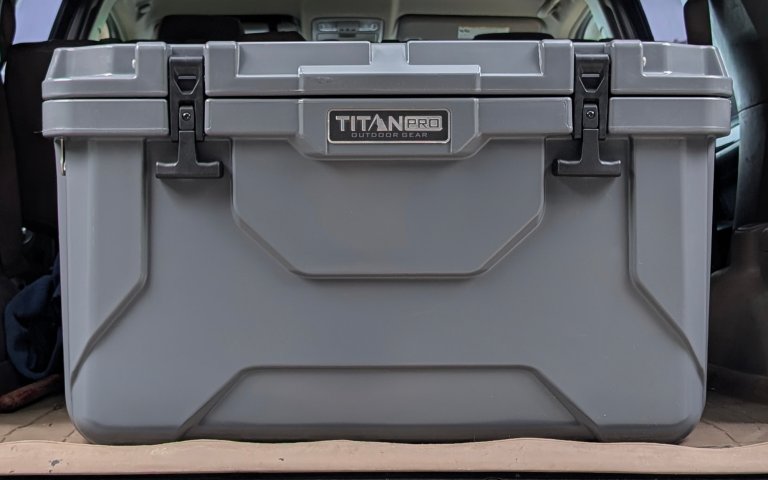
Best Overall: Titan Pro 55Q High Performance
Pros
- Waterproof
- Excellent insulation
- Great ratio of capacity to packed size
- Easy to use latches
- Lights up when you open it
Cons
- Expensive
- No wheels
Key Features
- Price: $400
- Exterior Size: 17” x 29” x 18”
- Can Capacity: 80 (tested)
- Comes with an internal basket, ice saver lid, bottle opener, and internal light
- Not IGBC certified
Test Results
- Ice Retention Test: 118 hours
- Port Quality: Great
- Latch Quality: Great
- Portability: Good
- Waterproof: Yes
This was the cooler that ticked every box for performance. It had a ton of interior space relative to its actual size, and it held a third of its capacity in ice for almost five days. Its handles were comfortable to hold onto which made it easier to move in and out of my car. The latches were even easier to use, minimizing concern that someone will forget to close up the cooler properly. And it also featured a ton of less essential features like a bottle opener, bungee tie-downs on the top, and — my favorite — a light that turns on when you open the cooler. Nice for retrieving a beer in those twilight hours before you’ve broken out the headlamp. It was even waterproof.
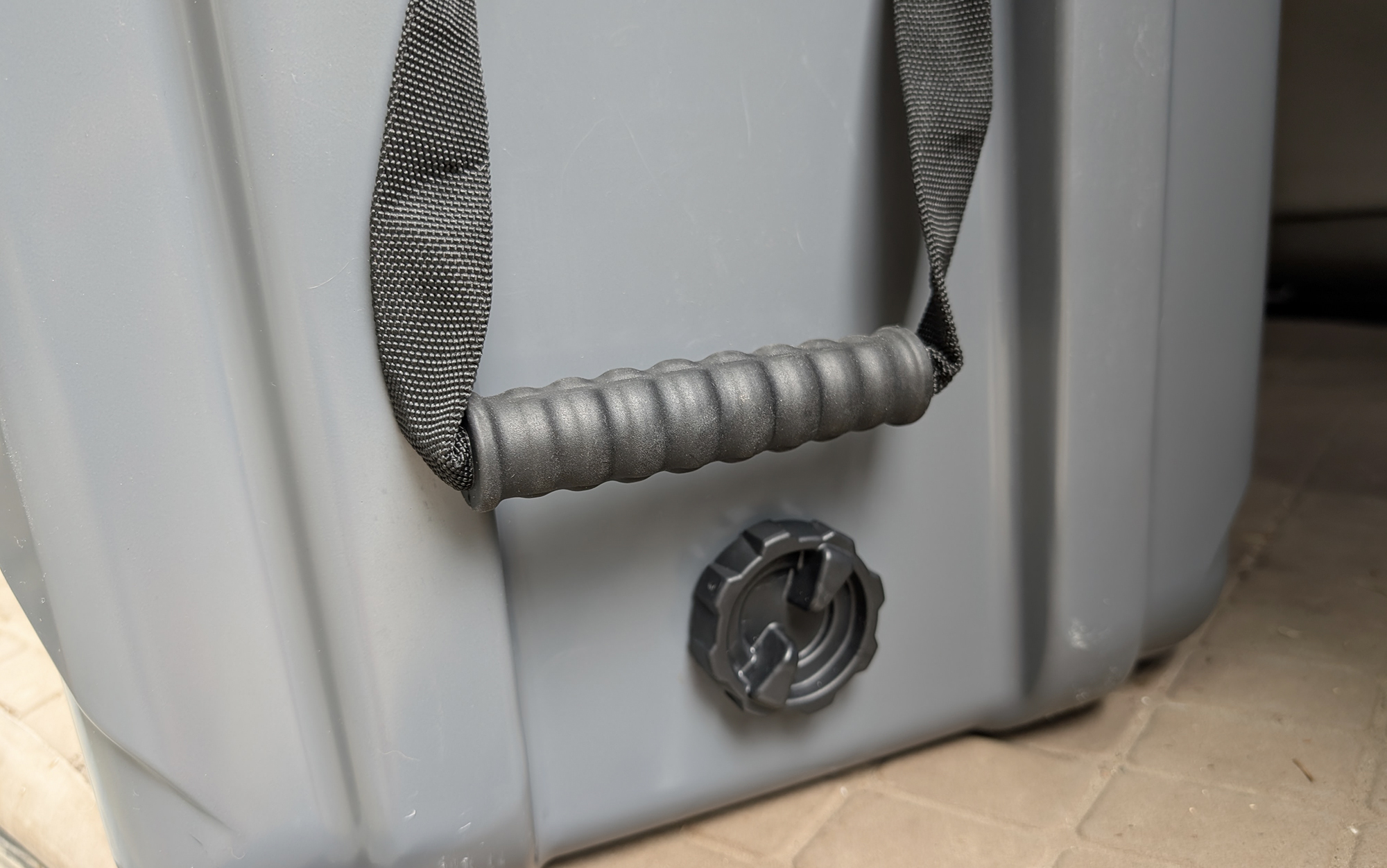
The only real downside to this cooler is that it’s pricey. But if you want the best of the best, I think you’ll be happy with this pick. The lack of wheels may also make it difficult to lug around this cooler if you have a shorter wingspan.
Best Value: Igloo Trailmate 50
Pros
- Great ice retention
- Affordable
- Great capacity to packed size
Cons
- Latches are difficult to use
Key Features
- Price: $100
- Exterior Size: 18” x 25” x 17”
- Can Capacity: 81 (claimed); 82 (tested)
- Comes with a built-in bottle opener
- Not IGBC certified
Test Results
- Ice Retention Test: 122 hours
- Port Quality: Great
- Latch Quality: Poor
- Portability: Great
- Waterproof: No
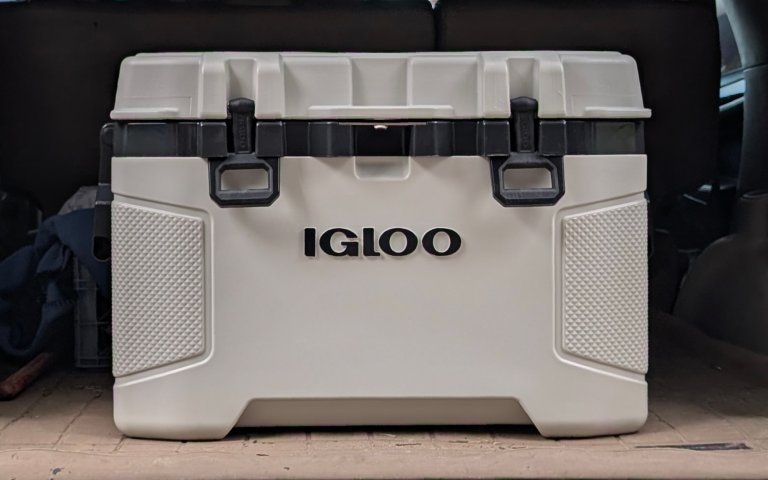
I was blown away by the Igloo Trailmate 50. Despite being a quarter of the price of flashier brands, this cooler held its own in testing, outlasting every single other cooler in my ice melt test — the only one to pass the five-day mark before the ice was fully melted. This is especially impressive given that it has a ton of capacity relative to its packed size. Because it had so much interior space, it got loaded with a pound or so more ice than other coolers of its same exterior volume. My main takeaway from this is that, at a certain point, more ice is a better use of space for a cooler than more insulation. And when the price point is this low, you can probably afford to get a few more of the best ice packs for coolers to line the bottom of it before dumping in your own ice.
But, there is one problem with this cooler. Its latches are a pain in the butt to use, requiring some hand strength to get it pulled back down. No child is going to be able to use this one on their own, unfortunately, and I had to put some real effort into it myself when the cooling interior of the cooler created a suction effect.
Most Portable: Yeti Roadie 48
Pros
- Good ice retention
- Easy to use latches
- Very portable
- Fits in my car
Cons
- Expensive
- Port is not attached to the cooler
- Not waterproof
Key Features
- Price: $425
- Exterior Size: 19.5” x 21” x 20.5”
- Can Capacity: 76 (claimed); 68 (tested)
- Comes with an internal basket
- IGBC certified
Test Results
- Ice Retention Test: 115 hours
- Port Quality: Good
- Latch Quality: Great
- Portability: Great
- Waterproof: No
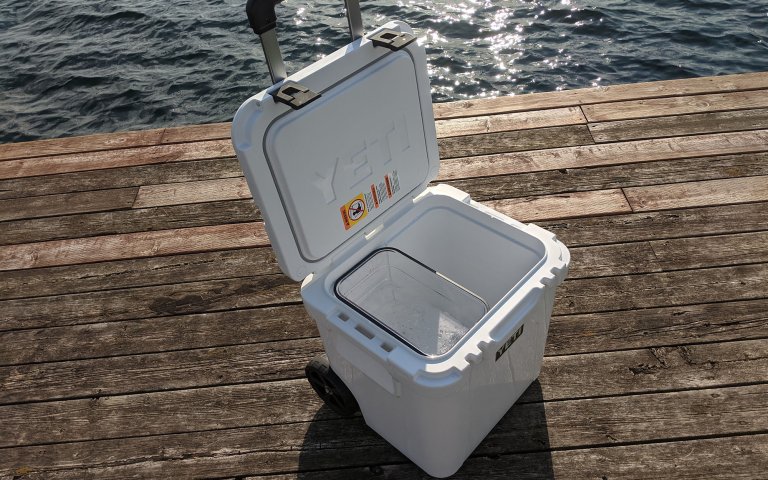
This test started with me pulling my Yeti Roadie out of my storage closet, and it’ll end with me putting it back. The Yeti Roadie might not have been the best cooler in my test, but for a smaller individual like me, its portability trumps all. This is the cooler that I can get into the backseat of both my sedan and my 4runner. I can pick it up fully loaded without discomfort. Its wheels and telescoping handles have never let me down. And it held its own in the insulation test, lasting nearly five days. Sitting in the baking sun (I’m too lazy to move it to the shade), three bags of ice were plenty for the entirety of Memorial Day weekend.
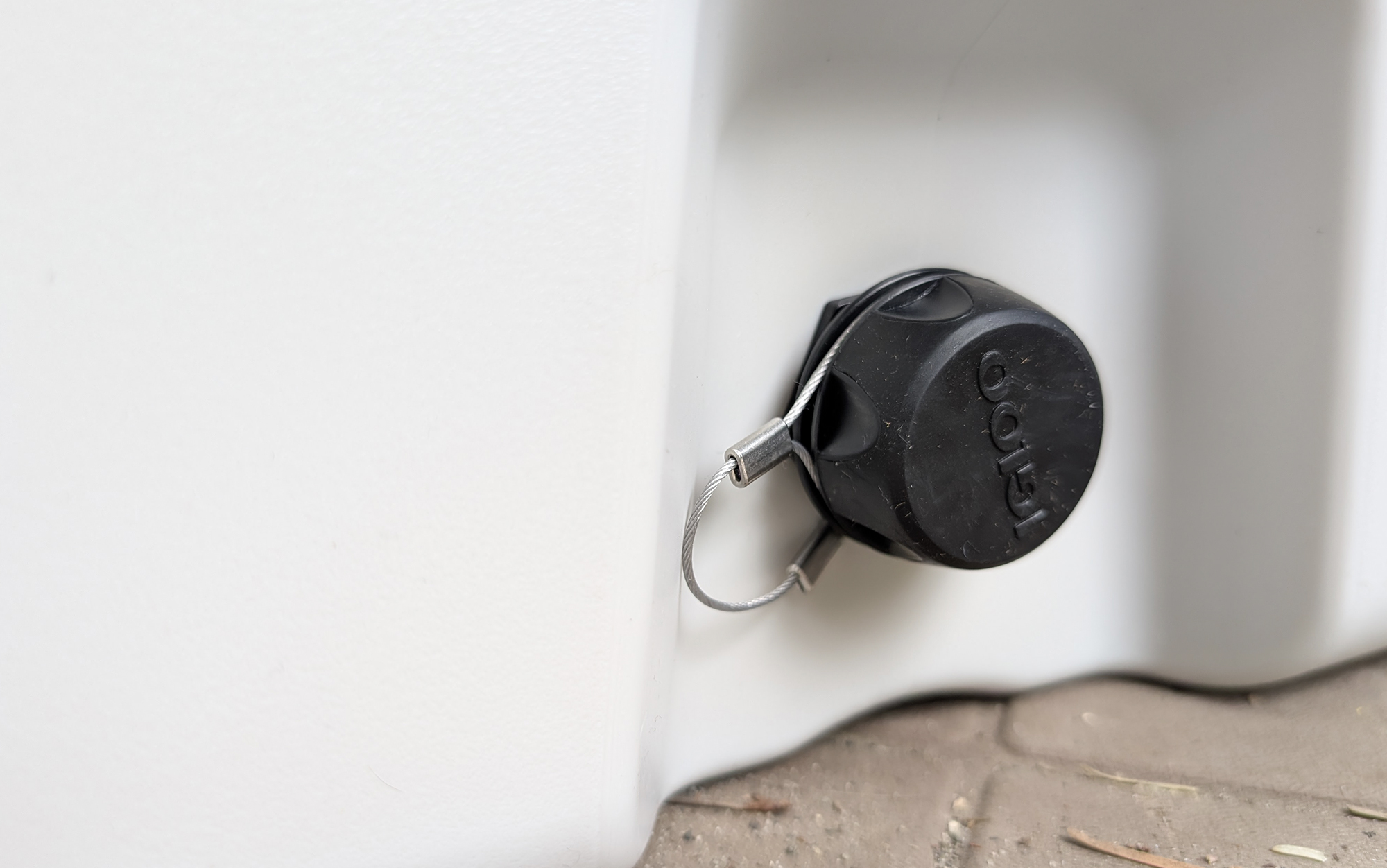
Of course, like all things Yeti, this one is very expensive. I also don’t love that the outlet port isn’t attached to the cooler, which means you risk losing it if you aren’t careful.
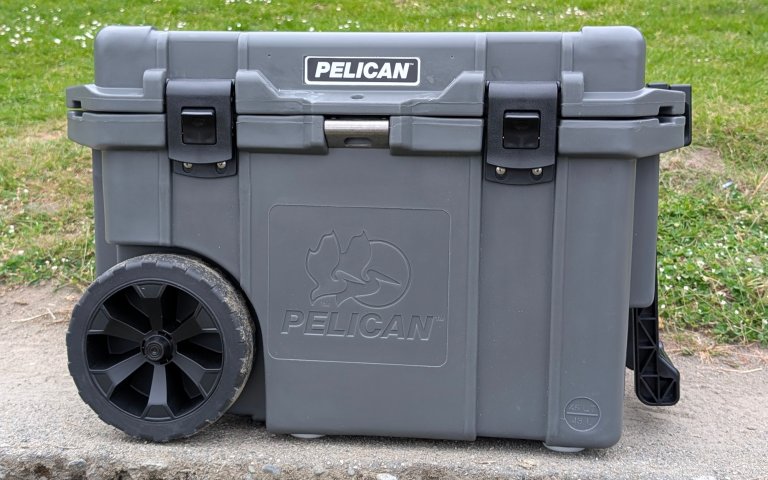
Best Warranty: Pelican 45QW Elite Wheeled
Pros
- Great lifetime warranty
- Good insulation
- Easy to use latches
Cons
- Not my favorite wheeled cooler
- Expensive
Key Features
- Price: $466
- Exterior Size: 18.5” x 28” x 18.5”
- Can Capacity: 68 (tested)
- Comes with a built-in bottle opener
- IGBC certified
Test Results
- Ice Retention Test: 115 hours
- Port Quality: Great
- Latch Quality: Great
- Portability: Good
- Waterproof: No
If you’re after thoughtful design, go with Yeti. But if absolute durability is your aim, go with Pelican. Yeti offers a five-year warranty on their coolers; Pelican offers a lifetime warranty, with a good reputation for standing by it. And they were about equal in my insulation test, although the Yeti does offer a better packed size to capacity ratio.
While the latches were easy enough to use that you shouldn’t have problems with this cooler being left open, it’s not my favorite for wheeling around. The side handle, as opposed to telescoping handle, just doesn’t offer enough leverage; the cooler has a tendency to hit your legs as you walk. This is also a pretty pricey cooler, the most expensive that I tested.
Best Soft Cooler: Orca Wanderer Tote

Pros
- Great ice retention
- Easy to use latch
- Waterproof
- Fun color options
Cons
- Doesn’t pack down
- Slightly less capacity than other models I looked at
Key Features
- Price: $225
- Capacity: 15 liters
- Ice Melt Test: 60 hours
The Orca Wanderer Tote was the cooler that ticked all the boxes during testing. It had excellent ice retention, coming in a close second to the Brumate MagPack. It took 60 hours for 7 pounds of ice to completely melt at room temperature (68 to 72 degrees). That kind of performance tells me that not only is this cooler going to keep everything cold for your day at the beach, it’s also equipped for a weekend car camping getaway. That’s impressive for a soft cooler.
But the ice retention wasn’t the only thing I loved about the Orca Wanderer Tote. I was very impressed by the latching system. Along with the Yeti Hopper M20, these were the easiest latches to use in my test, which is important when you’ve got other people going in and out of your cooler all day: The easier the latch, the more likely people will use it. Even better, when latched, this cooler was fully waterproof. While this cooler doesn’t pack down at all, and wasn’t as comfortable to carry as other soft coolers I looked at, it’s still miles better than a traditional hard-sided cooler. If you’re looking for a soft-sided cooler to round out your hot-weather arsenal, the Orca Wanderer Tote should go to the top of your list.
Best Backpack: Yeti Hopper M20
Pros
- Great ice retention
- Excellent latch
- Waterproof
Cons
- Expensive
Key Features
- Price: $325
- Capacity: 20 liters
- Ice Melt Test: 55 hours
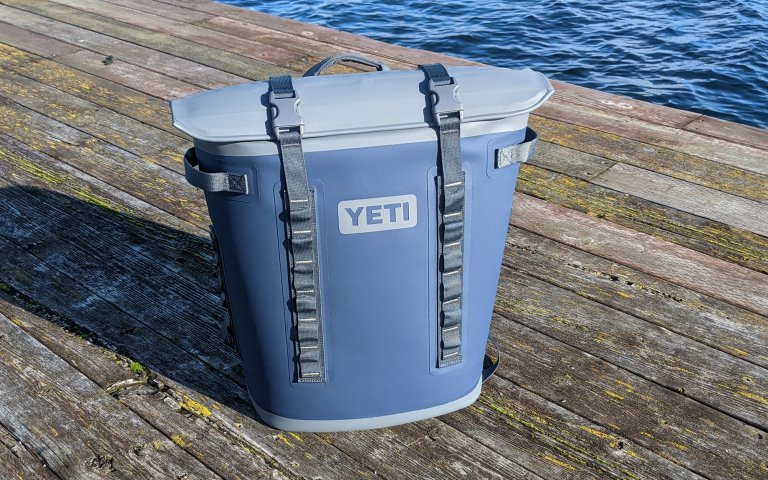
Like with so many of their products, Yeti nailed nearly all the details on their Hopper M20 Backpack cooler, but at a cost. This one was over three times the price of my best budget pick, and $100 more than my best overall pick.
Ice retention was excellent with the Yeti Hopper M20 backpack, tying for third in my test with the Monti Shasta. It also has an unusually excellent latching system. There are two buckles to tie down the roll-top opening for waterproof transport. But when you’re at the beach and your friends are going in and out of the cooler for brews, you won’t have to worry that they forgot to close the cooler, because there is a magnetic closure that is super effective, closing securely with the slightest effort. Check and check. Because this is a backpack cooler, it is more comfortable to carry than the Orca Wanderer Tote — my only ding here is that the backpack straps themselves are fairly stiff, so it is less comfortable to carry than the HydroFlask Day Escape. Yeti also has a three year warranty on Hoppers.
Most Packable: Monti Shasta
Pros
- Packs down very small
- Great ice retention
- Affordably priced
Cons
- Prone to condensation (although otherwise waterproof)
- Lack of structure means it’s easier to tip over and can have knobby bits when fully packed
Key Features
- Price: $144
- Capacity: 23 liters
- Ice Melt Test: 55 hours
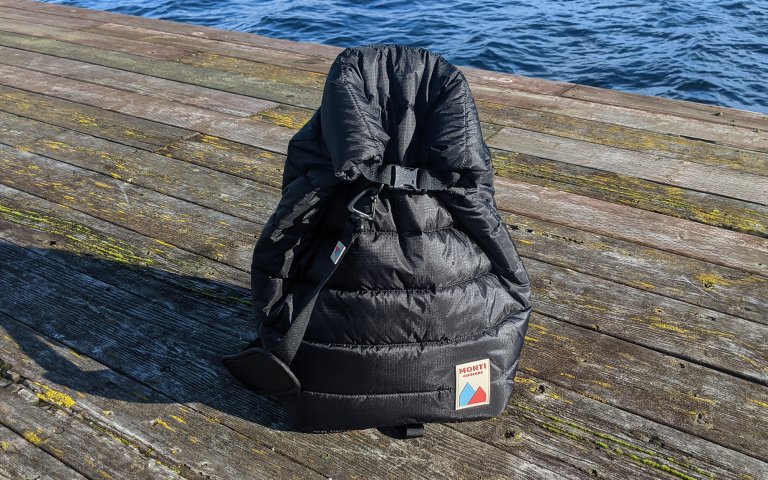
If you’re looking for a soft cooler to save on space, then the Monti Shasta is the cooler for you. The exterior pocket doubles as a stuff sack for the rest of the cooler, which reduces the size down to 9 by 8 inches. Prior to testing I guessed this would negatively impact its performance in the ice retention test: not so. It was tied with the Yeti Hopper M20, taking 55 hours for 7 pounds of ice to melt. Even better: You have the option to use the rolltop to squeeze the excess air out of the cooler when in transit, which should up its performance even more. This is a great, space-saving cooler with a unique design at a good price.

After the first day of testing, I noticed some moisture on the exterior of the Monti Shasta. At first I thought it was leaking, but the limited amount of wetness over the course of two and a half days of testing suggests this was something else: condensation, a lot of condensation. Once you figure out what’s going on, it’s not a problem, but expect there to be a small wet spot wherever this cooler is sitting. Though, during testing, the zip and roll-top closure proved to be completely waterproof. It’s also worth noting that due to its design, this cooler doesn’t have the structure of the other options in this story. It sits upright just fine, but will be more prone to tipping.
RTIC 45QT Ultra-Tough Wheeled
Pros
- Less expensive than the equivalent Yeti
Cons
- Not quite as good as the equivalent Yeti
Key Features
- Price: $270
- Exterior Size: 18” x 23” x 20.5”
- Can Capacity: 60 (claimed); 69 (tested)
- Comes with a pocket under the lid and removable bottle opener
- Not IGBC certified
Test Results
- Ice Retention Test: 109 hours
- Port Quality: Great
- Latch Quality: Great
- Portability: Good
- Waterproof: No
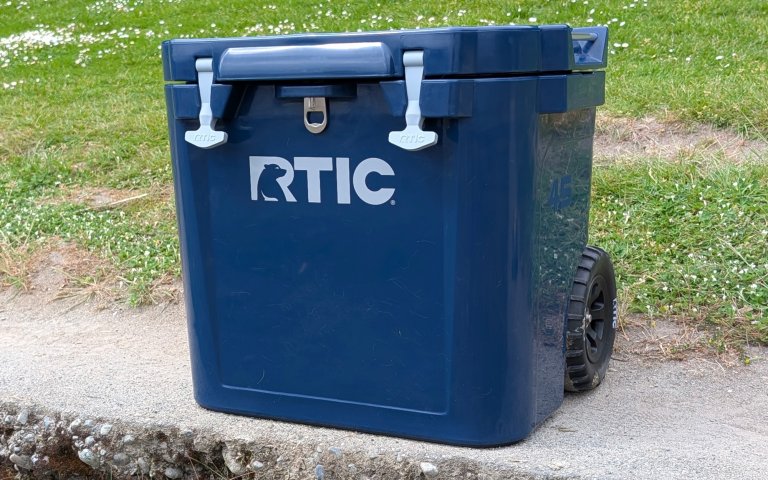
If you’re thinking about buying an RTIC cooler, chances are you’ve wondered if it’s a good deal compared to the equivalent Yeti cooler. After having a chance to test two of them side-by-side, the answer is a resounding yes. For a hundred dollars less, you get a cooler that can perform to a high level across a variety of metrics.
Which isn’t to say it’s as good of a cooler. It’s not. The equivalent Yeti can hold ice for longer. The handles of the Yeti are also more comfortable for lifting it up, although the RTIC has an attached port, which is a plus.
Don’t overthink this one, you know which of these two coolers is right for you.
How I Tested the Best Coolers
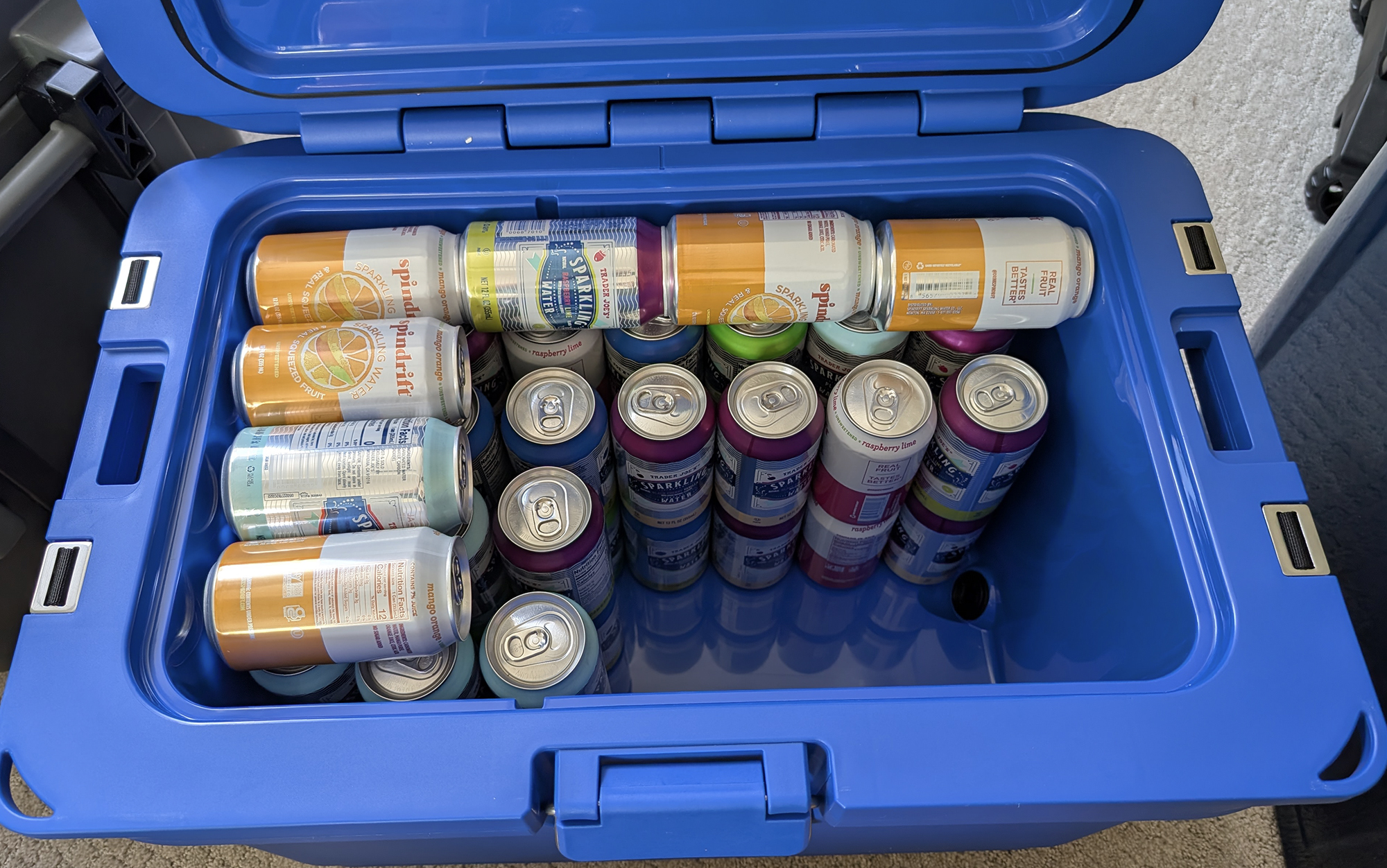
I’ve tested dozens of coolers over the years, looking at everything from ice retention to wheel performance to latch quality. My tests for this story focused on capacity, insulation, packed size, portability, latch and port quality, and waterproofness. I also considered price. Step one was to determine the capacity of each cooler in cans, and measure its exterior size, calculating the liters based off of this
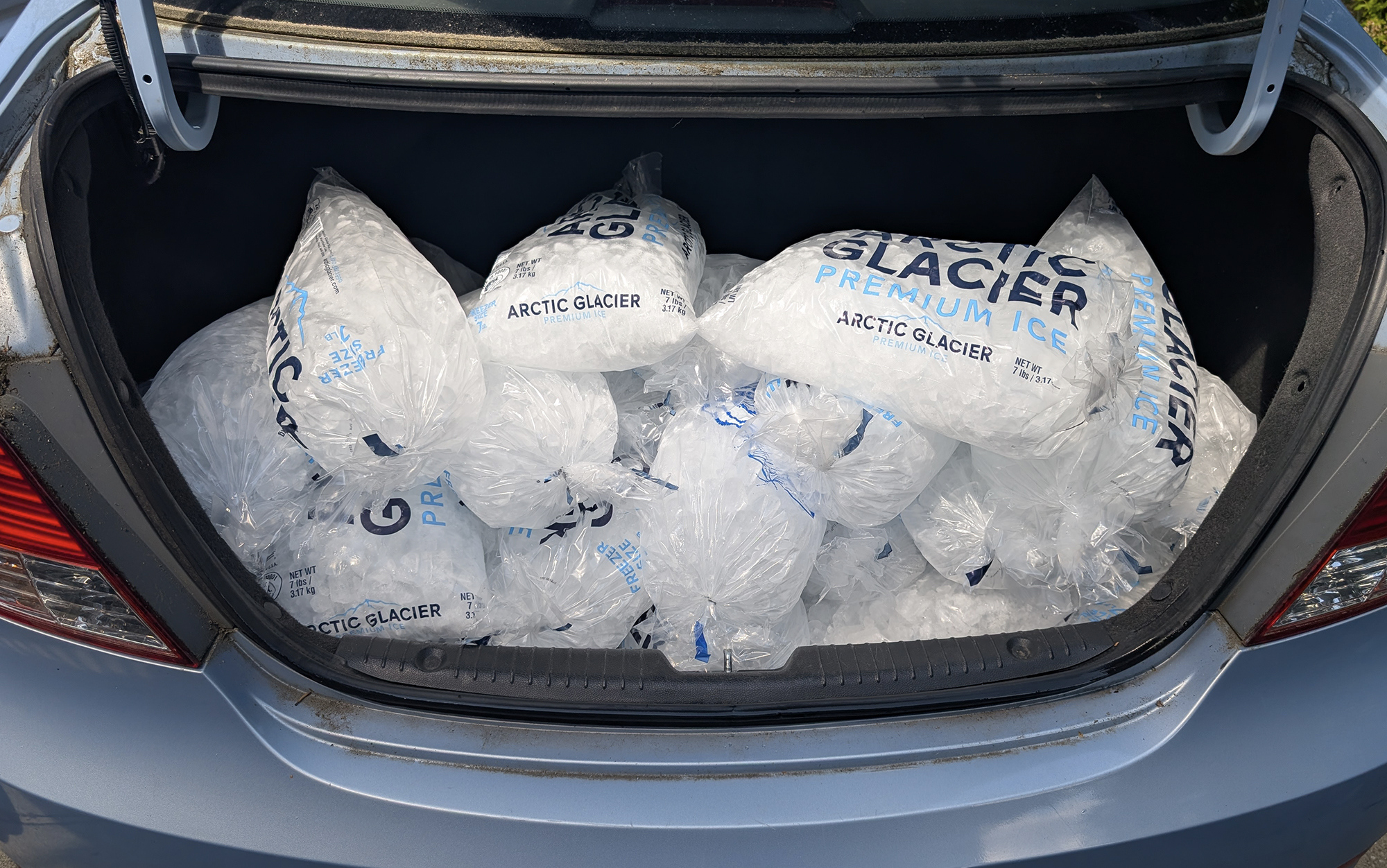
Next up was my insulation tested, which timed how long it took for ice to melt in the cooler. Frequently claims by manufacturers (and some gear testers) use a cooler filled to the brim with ice. That’s pretty ridiculous, and it’s certainly not how anyone actually uses coolers. That’ll give you an OK picture of relative performance but it won’t give you an idea of how long you can expect your cooler’s ice to actually last in the field. For this test, I filled each cooler with one third its capacity in ice (cans/3 x .71 pounds), and left it to sit at temps that range from 60 degrees overnight to 70 degrees during the day. Then I sat back and waited to see how long it took the ice to melt.
During the insulation test, when the coolers were filled with ice, I also tested their portability, including handle comfort and how easy it was to walk with the cooler. Where the coolers had wheels, I relied on the test from my story on the best coolers with wheels to provide relevant data for ease of use. Once the ice had fully melted in all the coolers, I looked at how waterproof each cooler was.
Finally, I looked at port and latch quality. While these details are often overlooked, they impact your cooler experience in several ways. The port is especially important as one that is difficult to use or, worse, not attached, can make draining your cooler and then sealing it up again a major hassle. Latches in my experience are also important. You’ll most likely have different people going in and out of your cooler whenever it’s being used, and a difficult-to-use latch is just not going to be used at all. That will impact how well your cooler retains its ice in the long haul.
Test Results
| Cooler | Price | Exterior Dimensions | Exterior Volume | Tested Can Capacity | Ice Retention | Waterproof? | Latch Quality | Port Quality | Portability |
|---|---|---|---|---|---|---|---|---|---|
| Brutank Brumate 55 QT | $400 | 19” x 30.5 x 19” | 6.4 ft3 | 78 | 119 hrs | Yes | Poor | Great | Good |
| Coleman Pro 45-Quart | $200 | 1617” x 24.5” x 17” | 4.6 ft3 | 72 | 103 hrs | Almost | Good | Great | Good |
| Dometic Patrol 35 | $230 | 16.5” x 27″ x 14.75” | 3.8 ft3 | 56 | 110 hrs | No | Great | Poor | Great |
| Igloo Trailmate Journey | $260 | 24” x 33.5” x 18” | 8.4 ft3 | 84 | 94 hrs | No | None | Great | Great |
| Igloo Trailmate 50 | $100 | 18” x 25” x 17” | 4.4 ft3 | 82 | 122 hrs | No | Poor | Great | Great |
| Pelican 45QW Elite Wheeled | $466 | 18.5” x 28” x 18.5” | 5.5 ft3 | 68 | 115 hrs | No | Great | Great | Good |
| RTIC 45QT Ultra-Tough Wheeled | $270 | 18” x 23” x 20.5” | 4.9 ft3 | 69 | 109 hrs | No | Great | Great | Good |
| Titan Pro 55Q High Performance | $400 | 17” x 29” x 18” | 5.1 ft3 | 80 | 118 hrs | Yes | Great | Great | Good |
| Yeti Roadie 48 | $425 | 19.5” x 21” x 20.5” | 4.9 ft3 | 68 | 115 hrs | No | Great | Good | Great |
| Yeti Tundra 65 | $375 | 17” x 30” x 16” | 4.7 ft3 | 72 | 117 hrs | No | Good | Good | Great |
Things to Consider When Purchasing the Best Cooler
Ice Retention of the Best Coolers
I’ve seen a wide range of ice retention capability in my years of testing coolers, and one thing has become clear: You get what you pay for. In almost all scenarios, the coolers that have the best ice retention have been the most expensive. However, how much ice retention you need personally will vary. If you’re only planning to head out for the day or overnight, you can get away with a less capable cooler than if you need three bags of ice to last for a week or more. Consider your needs before making a final purchase.
Size of the Best Coolers
There are two dimensions you should be concerned with when it comes to coolers: external size and internal size. The external size will need to fit your available storage, both in your home and in your car. The internal size will need to hold sufficient food, beverages, and ice to meet your needs. Consider both dimensions before making a final purchase.
Read Next: The Best Small Coolers
Portability of the Best Coolers
In testing coolers, which typically involves hauling them up and down several flights of stairs and into my car before I even get to a testing site, the details that make for a portable cooler really start to pop. For large, non-wheeled coolers, comfortable haul handles are everything. For wheeled ones, a short handle can make for a miserable experience. Some small coolers sit comfortable against your body when you’re carrying them. Others are awkward and dig into your legs. And, as someone who has tested a number of the best backpacks, I’m still waiting for a backpack cooler that I’d actually want to take on a longer hike.
Read Next: The Best Backpack Coolers
Latching Mechanism of the Best Coolers
You can maximize the ice retention of your cooler by keeping it closed. That sounds like an obvious point, but how easy the latches are to use can really impact how this plays out in practice, especially when children are involved. If you expect a variety of people to go in and out of your cooler all day, look for latches that are simple and secure, and don’t require a lot of torque.