
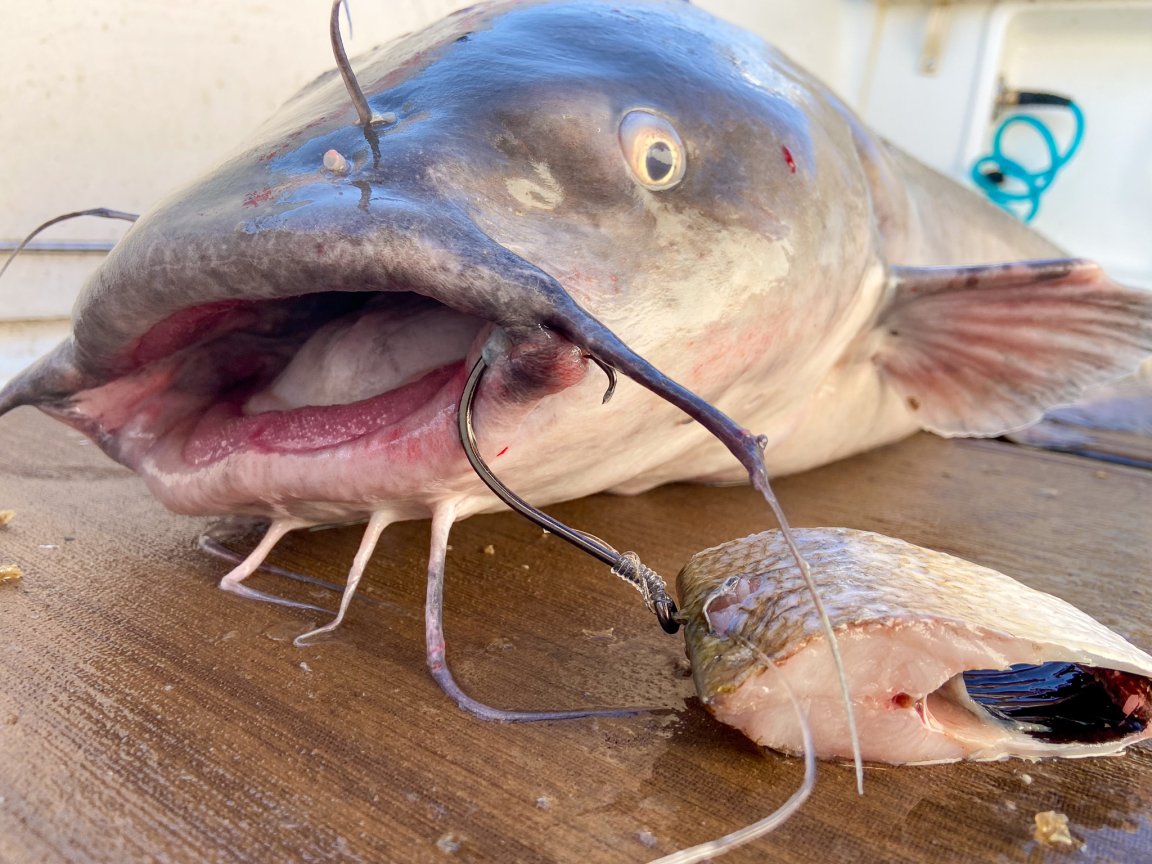
The biggest catfish I’ve ever seen in person weighed 52 pounds. I didn’t get to reel it in, sadly, but was awestruck nonetheless by this blue cat. A friend and I were fishing with a charter captain on the James River in Virginia, which is renowned for its trophy cat fishery, so it was no shock that we’d encounter a blue of that caliber. What struck me was the setting and time of year. It was January and so bitter cold that the water, fish slime, and bait slime on the deck turned it into an ice rink. We were bundled up to the max with hand warmers jammed in every pocket. But we had made the trip because the captain had sworn there was no easier time to get tight to a giant than in the middle of winter.
For anglers who think of catfishing as something you do on a warm summer night, the idea that winter is peak season can be shocking. The truth, though, is that unlike chasing river muskies or bass in winter when bites can be few and far between, blue cats remain highly active in cold water. Guide Brian Funnell who fishes the James near Williamsburg, Virginia, knows their cold season habits well and takes many clients out long after summer crowds have departed. What he’s learned on the James applies to moving water blue cats anywhere in the country, so if you need a break from the ice or want to increase the odds that braving the chill will actually be worth it, here’s what you need to know.
Listen to this week’s episode of the Quick Strike Podcast on Apple, Spotify, or wherever you get your podcasts.
No Hole in One
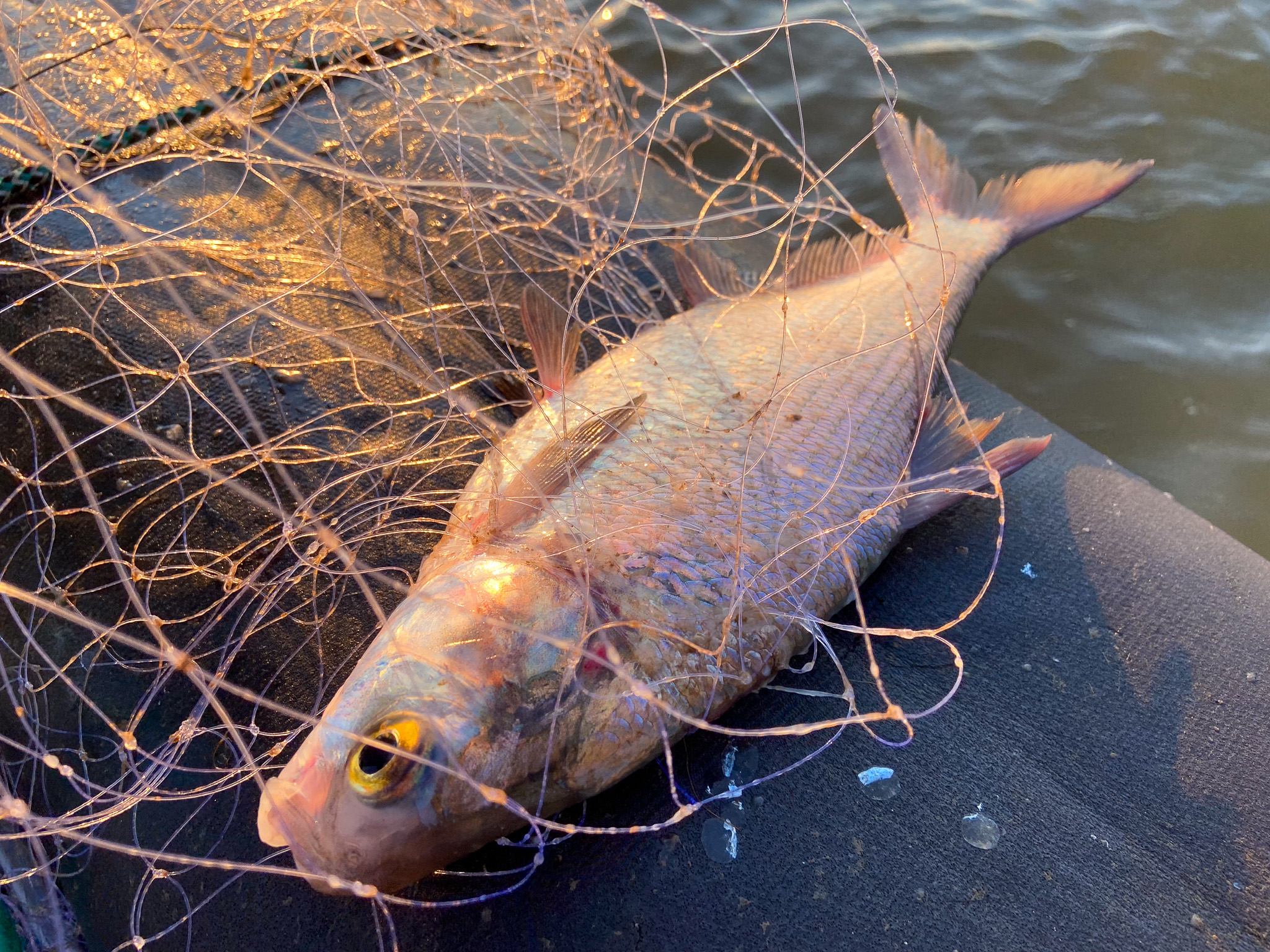
Winter fishing, especially in freshwater, is often associated with deep fishing. Fish either hunker down in holes or suspend at the thermocline in deep water. That’s true for many species, but river catfish buck the trend. This is perhaps the most critical piece of information you need for a winter cat hunt.
“September and October are really transitional times in the river,” Funnell says. “Those can be some of the most difficult months to pinpoint the fish. But eventually, as winter takes over, the water temperature becomes the same from the surface to the bottom. Catfish are a cold-blooded animal, so once that happens, they need to collect heat from somewhere. The best way for them to do that is to slide up shallow.”
Come winter, Funnell spends most of his time on flats with mud bottoms ranging in depth from 5 to 15 feet. This is where, as he puts it, the fish are “scrounging around for food and trying to collect some warmth.” This is good news for anglers bound to the bank, because finding shoreline access that will place your casts in deep water can be a challenge. Conversely, finding foot access that abuts shallow flats is easier and can get you into fish faster than the proverbial “wintering hole.”
Mobile Connections
Although blue cats actively feed all winter, what they don’t do as much is move. Funnell pointed to studies where tagged fish have wound up hundreds of miles from where they started, but cold water will decrease their willingness to travel. That’s why it’s important that you move. Unlike warmer times of year when the scent of your bait can draw fish in from a great distance, that’s not likely to happen in winter.
“When you have very cold water, obviously your bait is also going to be very cold, too,” Funnell says. “On a molecular level, the amino acids and scents in that bait simply won’t disperse or travel in the water as well as they will when it’s warm. That means the fish won’t home in on your bait as easily.”
With that in mind, Funnell has a rule: Change baits approximately every 30 minutes, and don’t spend much longer than that in any location. Most of the time (and I’ve experienced this myself) bites come relatively fast. Active fish in the zone eat while the bait is freshest and most potent. But even if you score a few fish quickly, don’t assume the action will continue. I’ve been on a boat when we marked a pile of fish in a depression within a flat but only caught two or three. Not all the fish will want to eat. A boat, of course, makes it easier to cover ground, but if you’re a shore angler, it’s wise to have a milk run of locations planned out.