
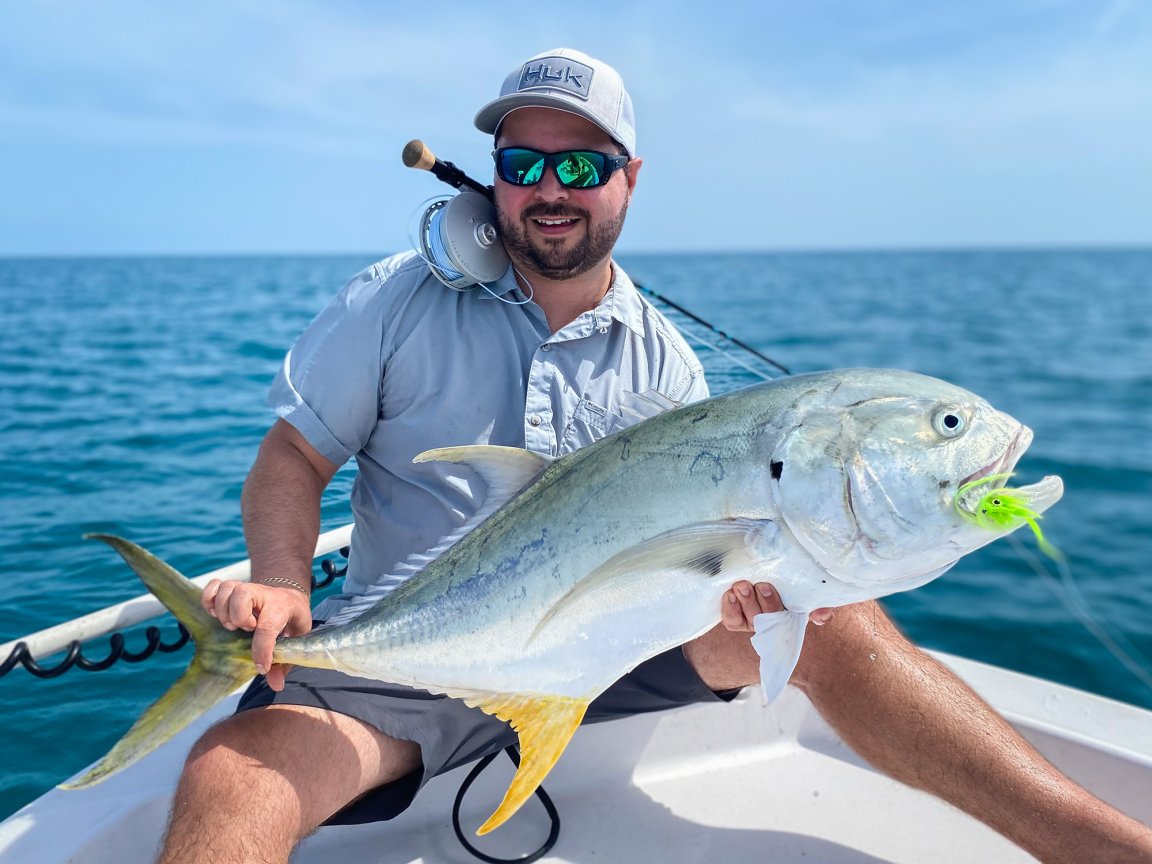
As much as I’d love to get to the Great Barrier Reef or Christmas Island to chase giant trevally, I’m not sure it’ll ever happen. Those trips require serious time and a lot of money. But for a fraction of the cost, I can go anywhere along the Gulf or Southern Atlantic Coasts to tangle with the next best thing. Jack Crevalle are cousins of the coveted GT, and while they might top out around 40 pounds, they’re widely available, smack lures and flies with that GT gusto, and are easily one of the hardest fighting inshore fish in the U.S.
Not long ago, Crevalles were largely viewed as nuisance fish because they weren’t very prized on the table. That attitude, however, is changing, thanks in part to anglers like my friend and former Florida charter captain Zach Miller. As fishermen begin to value fish based on speed and strength over edibility, chasing jacks is growing in popularity year over year. While they can be found somewhere practically year-round, Miller points to the early season in South Florida as a peak time. Here’s why, and some tactics to consider if you want to take a swing at these bruisers.
Listen to this week’s episode of Quick Strike on Apple, Spotify, or wherever you get your podcasts.
Wind Power
It’s rare to encounter a lone jack Crevalle; where you find one, there’re usually more. The fact that these fish school when feeding is what makes them so exciting. It’s not uncommon to see acres of boiling water, or what looks like bombs detonating at the surface, when a jack school is hunting. I’ve been lucky enough to bump into these kinds of feeds several times and at varying times of year. But if you’re looking for consistency, Miller says early spring in South Florida is tough to beat.
“In the spring, whenever we get sustained south wind for a few days jacks will push inshore from Central to South Florida in droves,” he says. “They come within a couple miles of the beach to spawn, and you’ll see football field-sized schools. Often, they’re feeding, but a lot of times you find them in transit pushing just under the surface. Then it becomes more a game of staying ahead of them and presenting lures and flies the right way.”
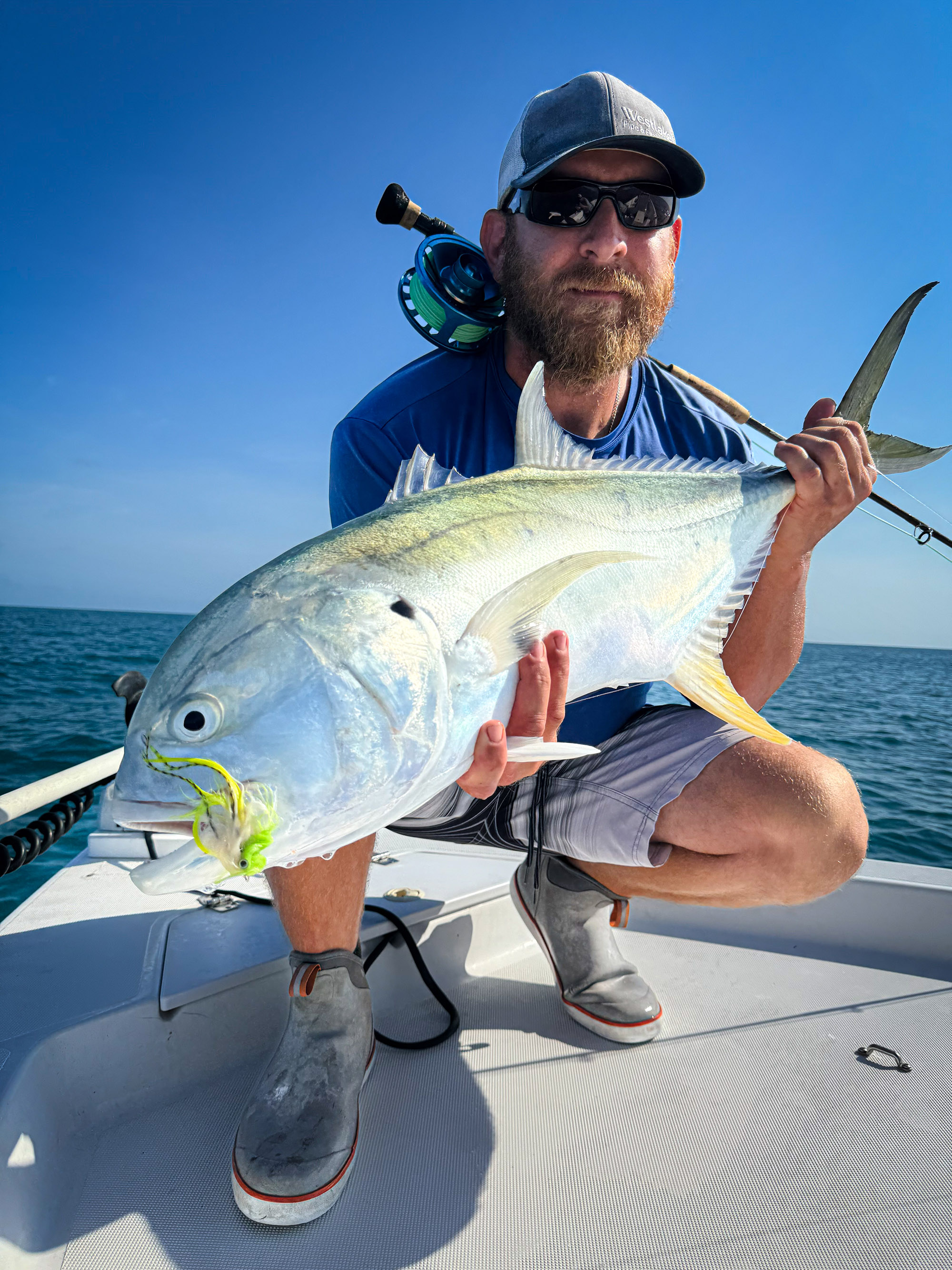
According to Miller, if you’re throwing a diving plug, popper, or metal jig on conventional gear, the surest way to get bit is to rip the lure through the school as fast as possible. The illusion of prey escaping tends to trigger the fish even if they’re not in full-blown feeding mode. Getting them to consistently eat flies, however, is a different story.
Frequent Flyers
Though Miller targets jacks with every kind of tackle, his true passion is catching them with a fly rod. I also believe this is a great choice for these fish because at times they can be so thick you’re hooking one on every cast with conventional gear. That’s not a bad thing, but if you’re using lures with treble hooks, releasing each one becomes a chore. A fly rod forces you to slow down, presents a different style of fight, and allows you to deal with a single hook in their mouths. But the approach to presenting a fly to a moving school can be a bit challenging.
“When you move in on a school of jacks, they’re usually doing one of two things,” says Miller. “They’re either balled up and swimming in a circle, milling around like a tornado, or they’re swimming fast in a straight line. Which kind of behavior you encounter will dictate your setup. Most people try to get ahead of them and assume they’ll swim close enough to get a fly in front of them. But I swear every time I try to do this, they’ll just be getting in range and then dive or split right around the boat.”
Related: The Best Trout Fly Rods of 2026, Tested and Reviewed
Miller prefers to target “tornado-ing” jacks, as he calls them. While they may not be actively feeding, he says that if you can land your fly approximately five feet from the near side of the school, one of them will break off to attack. Miller adds that while casting across the school and retrieving through might be tempting, he’s noticed that slapping fly line across them usually spooks them or shuts them down.
Heavily Armed
Miller most commonly employs an 11-weight fly rod for jacks and prefers to fish floating line. Though you can handle Crevalles on lighter rods, a heavier outfit shortens the fight time, which is important because sharks love to chow down on battling jacks. A reel with a solid drag that can take some heat is also important, and Miller also likes a stout outfit for the flies he finds most productive.
“Bigger is better in my opinion,” he says. “Most of the time I’m throwing a fly that’s six inches long at minimum, but I throw 10-inch flies a lot. When the jacks are balled up and circling, a larger profile fly seems to trigger one to peel off more consistently than smaller patterns.”
As for the flies, Miller says not to over think them. Anything that represents a larger baitfish, such as Cowen’s Magnum, in white, yellow, or chartreuse will make the play. In fact, Miller ties many of his jack flies with minimal materials because after a few battles they’re often shredded.