
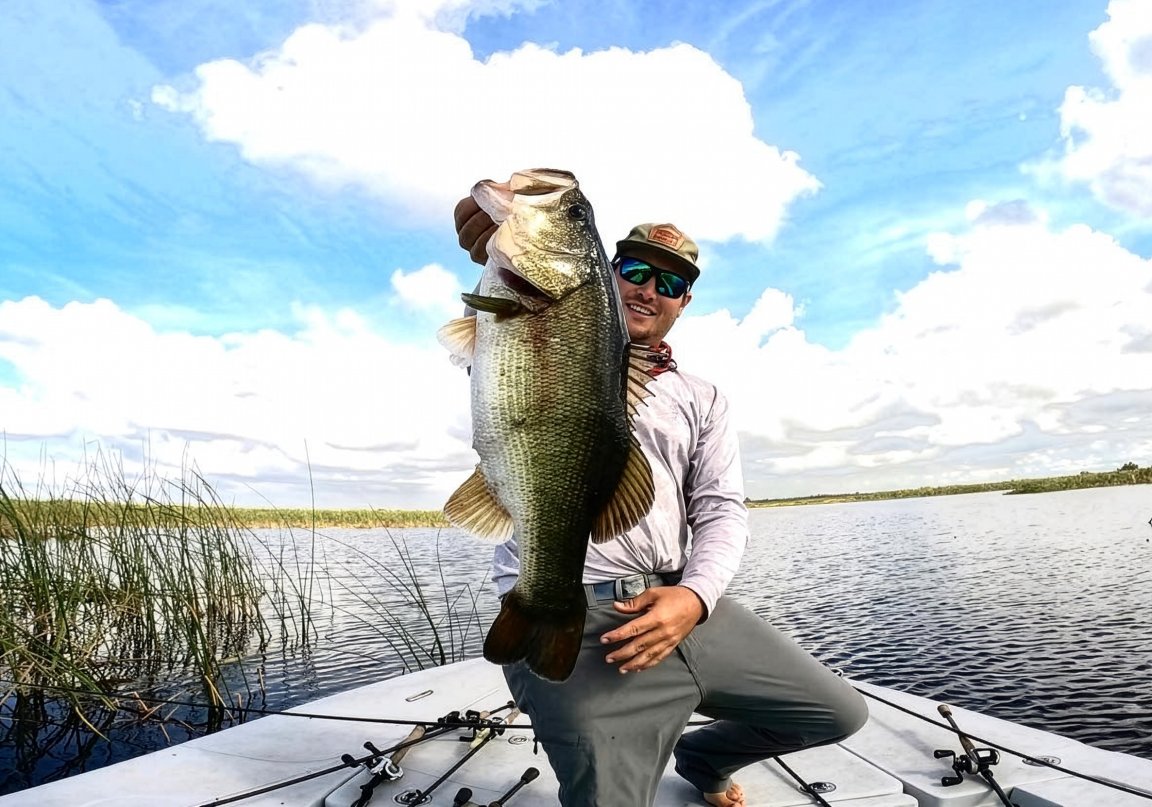
There are several lakes in the southern U.S. that are hailed as prime winter bass destinations. We actually broke them down a while back on another episode of the Quick Strike Podcast. But it’s hard to make the case that Florida’s Lake Okeechobee isn’t the number one winter hot spot, and that’s not just because the fishing is so good. The fact is, people associate Florida with warmth and sunshine, which creates appeal beyond just rod bending. Taking your wife, girlfriend, or whole family along? Florida is a much easier sell than Texas or Louisiana in the dead of winter. But while a double-digit bass could be in your future if you make the trip, so could the need for base layers.
Winter weather patterns in Florida are as deceiving as the fishing patterns out-of-towners might expect. So, to break it all down, I linked up with my friend and full-time Okeechobee guide, Cody Davis, to get the real skinny on this huge, massively popular body of water. Follow his advice and you can score the bass of a lifetime this winter while your home lake is frozen over.
Listen to this week’s episode of the Quick Strike Podcast on Apple, Spotify, or wherever you get your podcasts.
Blowin’ in the Wind
Will it be warmer than many regions of the country at Okeechobee in winter? Short answer: yes, but not necessarily for the full duration of your visit. The only constant according to Davis is change, and it’s not uncommon for the air temperatures to begin the 40s or 50s at the start of the day and climb above 80 degrees by midafternoon. He routinely deals with clients who show up underdressed, and reminds everyone that even though this is Florida, you need layers. If you’re staying for week, it’s highly likely the conditions will be all over the map in that short time. You can also bank on wind.
“Wind is god on Okeechobee,” Davis says. “People show up in winter with a plan to fish this side of the lake or launch from that ramp, but that’s really not how it works. In winter, you have to fish where the wind lets you fish. You also have to pay attention to the wind ahead of your visit, because say it’s been blowing hard north for a few days. Even if it lays down, if you planned to fish the south side, it’s probably going to be dirty.”
If you’re hiring a guide, the ball is in their court on where to launch. But if you’re trailering your own boat, being flexible is critical. Most often, despite the wind direction, you can find an area to fish comfortably if you’re willing to stay mobile.
You’re So Shallow

One thing that makes Okeechobee so unique is that, regardless of air temperature, the bass never go into “winter mode.” In the north, fish suspend in deep water when it gets cold. But Okeechobee is very shallow despite its size, and the lush vegetation it’s famous for never dies off. So, when temperatures fall, the reaction of the fish is counterintuitive to what many bass anglers in other parts of the country experience.
“The fish will actually come in shallower,” says Davis. “There’s no deep water with a comfortable thermocline. So, to get warmer, they’ll slide into the shallow grass. I’ve actually seen them with their backs against the underside of thick weed mats in winter because those exposed weeds will hold some extra heat. And when they’re doing this, they’re very catchable.”
According to Davis, in a winter week it’s possible to catch bass almost any way you want — and 10-plus-pounders at that. That’s because Okeechobee’s fish spawn in waves all winter, which means there are always big fish in pre-spawn kill mode. Does that mean you’ll never have to slow down and dead stick a Senko? No, but it means that with rapidly fluctuating conditions, it’s possible to have to finesse them early but find them attacking frogs by lunch time.
Hold Your Ground
If you’re making a DIY trip to Okeechobee and are unsure of where to begin, Davis says outside grass lines are your starting point. This lake is ringed with reed and grass lines, and Davis always works from their outside — or offshore — edge into the shallower parts of the line. What you do when you connect with your first fish, however, can make or break your day.
“Stop moving if you hook up,” Davis says. “One of the biggest mistakes I see is that guys will just keep cruising the grass lines with their trolling motor in winter. If you catch a fish, assume there are more in that area. Hit your SpotLock or drop anchor and really work that area hard.”
Davis likes to remind his clients that the fish still move around a lot in winter, so if an area is attractive to one fish, it’s reasonable that more will gravitate to that location. In other words, don’t keep moving to find your next fish. Keep working the area where you scored a bite or two and let more fish come to you.