
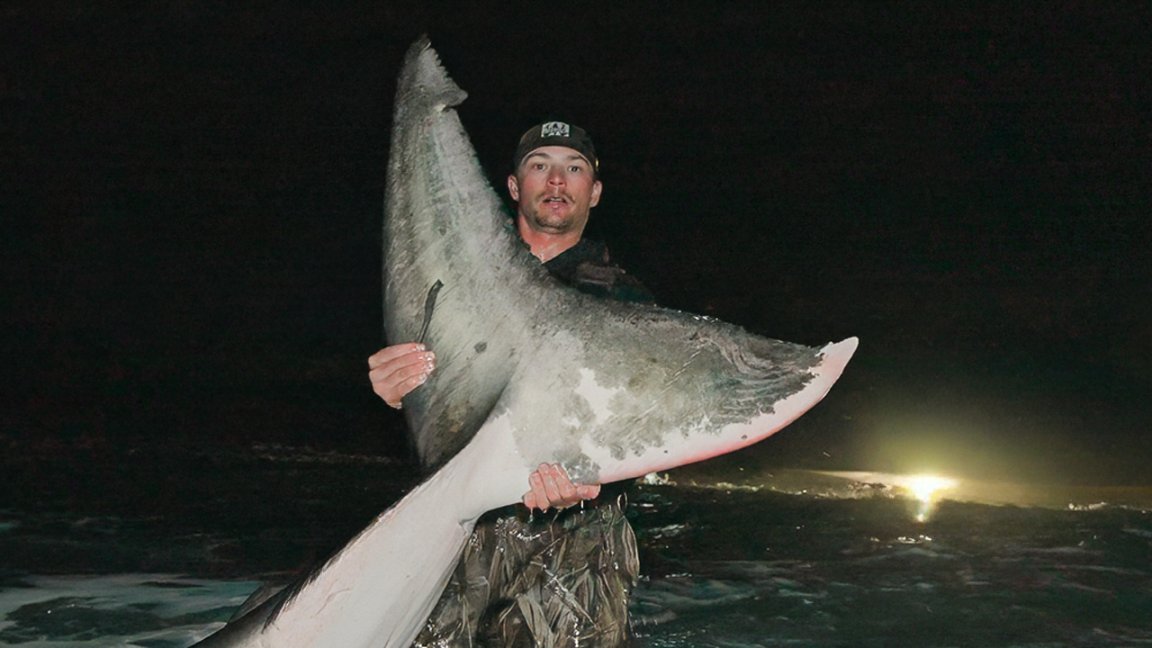
For four years Blaine Kenny and his business partner, Dylan Wier, have run a guide service for catch-and-release shark fishing on Florida’s Panhandle. The two fish the surf from Pensacola to Navarre Beach, moving to wherever the fishing is hottest.
Last week their company, “Coastal Worldwide,” took four non-local clients out for a 48-hour charter.
“It was a group of guys from Kentucky and some friends who drove to Pensacola to try for a big shark,” 21-year-old Kenny tells Outdoor Life. “We started fishing about noon from the beach.”
On Thursday Kenny and Wier had paddled kayaks out past the surf, just east of Pensacola, to drop baits. When they reached about 800 yards offshore, they dropped big yellowfin tuna heads on 16/0 circle hooks in 35 feet of water. With special weights designed to prevent them from drifting, the baits held on the bottom. The clients were fishing extra heavy rods fitted with rugged Okuma 80-wide reels spooled with 200-pound test braided line. Leaders were 50-feet long, made from 900-pound cable to thwart the sharp teeth and raspy skin of the sharks they were hoping to target.

The first fish they hooked was at about 7 p.m., says Kenny, who lives in Pensacola. It turned out to be a giant white shark that required all four angling clients to battle it to shore. (While it’s usually illegal to deliberately target great whites or to harvest them, fishermen occasionally hook them and must release them unharmed. The species is federally regulated and Florida also has strict requirements for shore-based shark fishermen.)
“It took about an hour to get the shark into the surf,” Kenny says. “Great white sharks are huge and powerful and easily could take all the line if they fought hard and pulled straight away. But the way we catch them is to kind of [horse] them slowly with consistent pressure – sort of lead them in, where we can measure them, make a few photos, and let them go.”
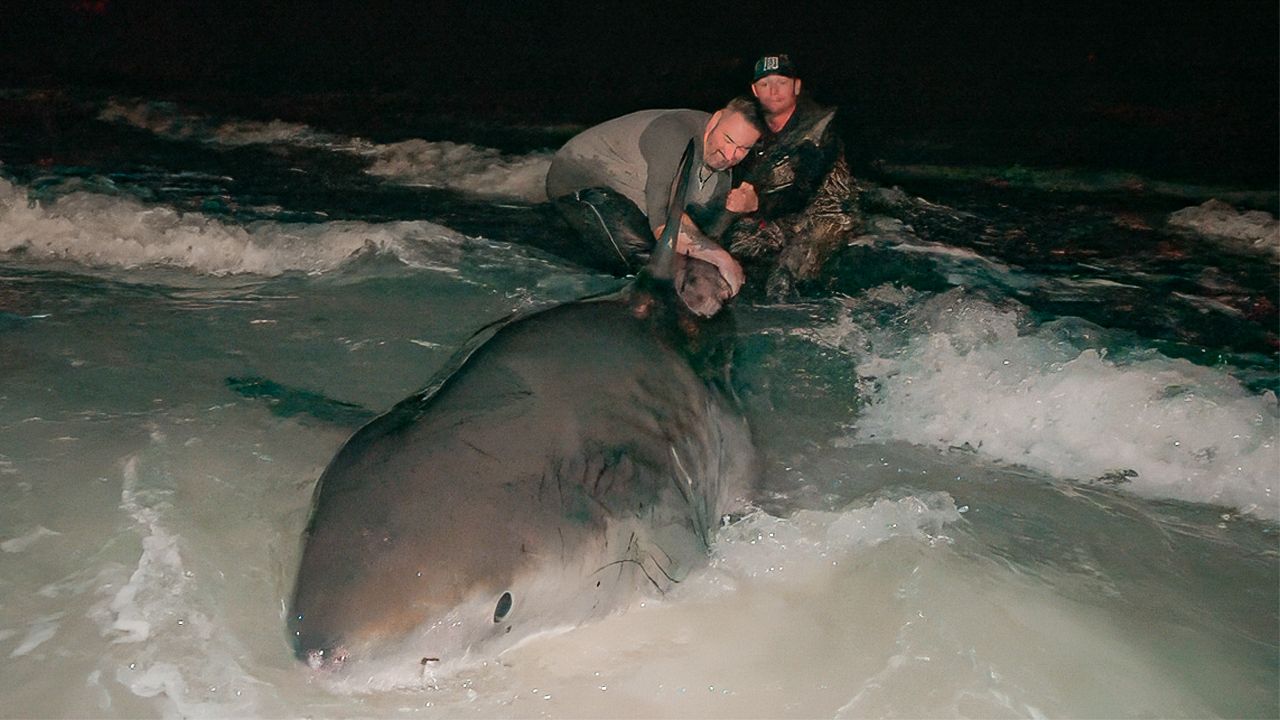
Kenny and Wier explained to their fishing clients ahead of time how they were going to work the shark in the shallows when it got into the surf.
“After a fight, white sharks are remarkably docile when they’re in the surf ready for us to unhook them,” Kenny says. “I was on the leader when the fish got shallow, and got it unhooked. We made a few photos of all of us with the shark, got it turned around, and eased it out through the surf. It swam off unharmed.”
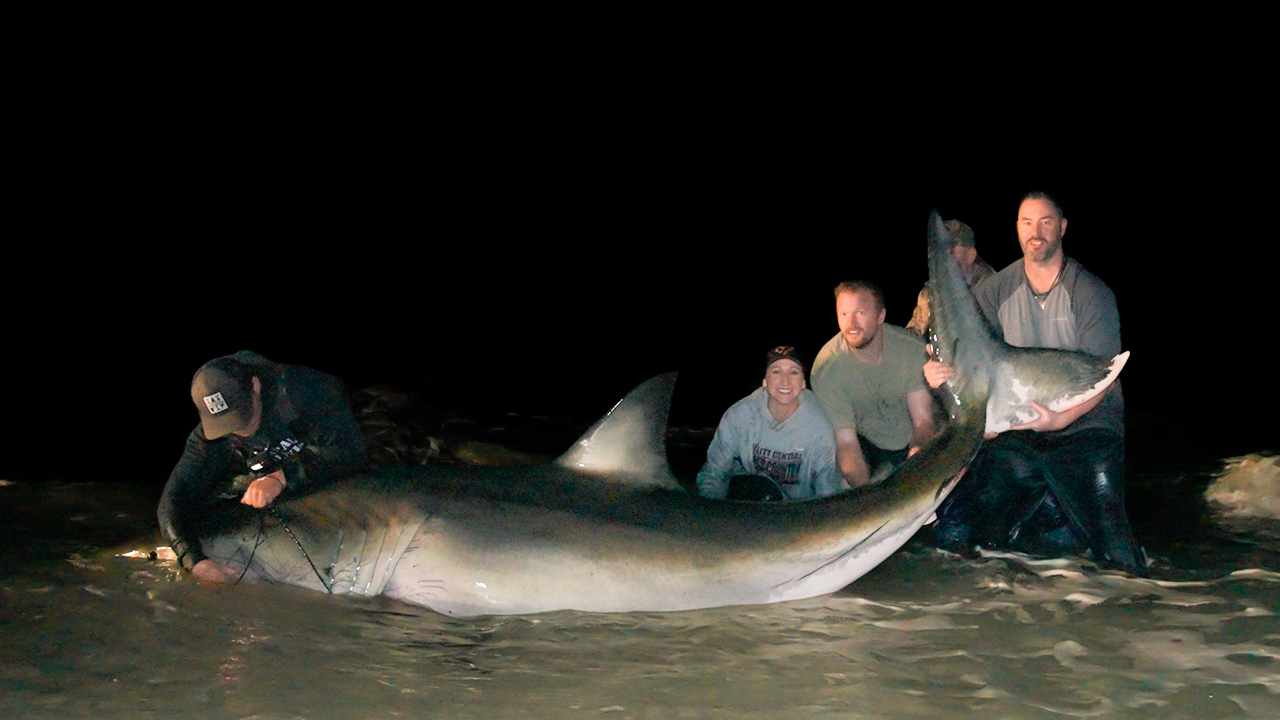
The shark measured about 12 feet long and weighed about 1,000 pounds. They made a video of the catch and release that night and posted it to the Coastal Worldwide YouTube channel, where it’s garnered over 20,000 views in less than a week.
Kenny says this was the fourth white shark he and his partner have caught in four years fishing from beaches along the Panhandle. The Atlantic White Shark Conservancy has allowed photos of the tail fins, which can help identify individual sharks, to be entered into its white shark database.
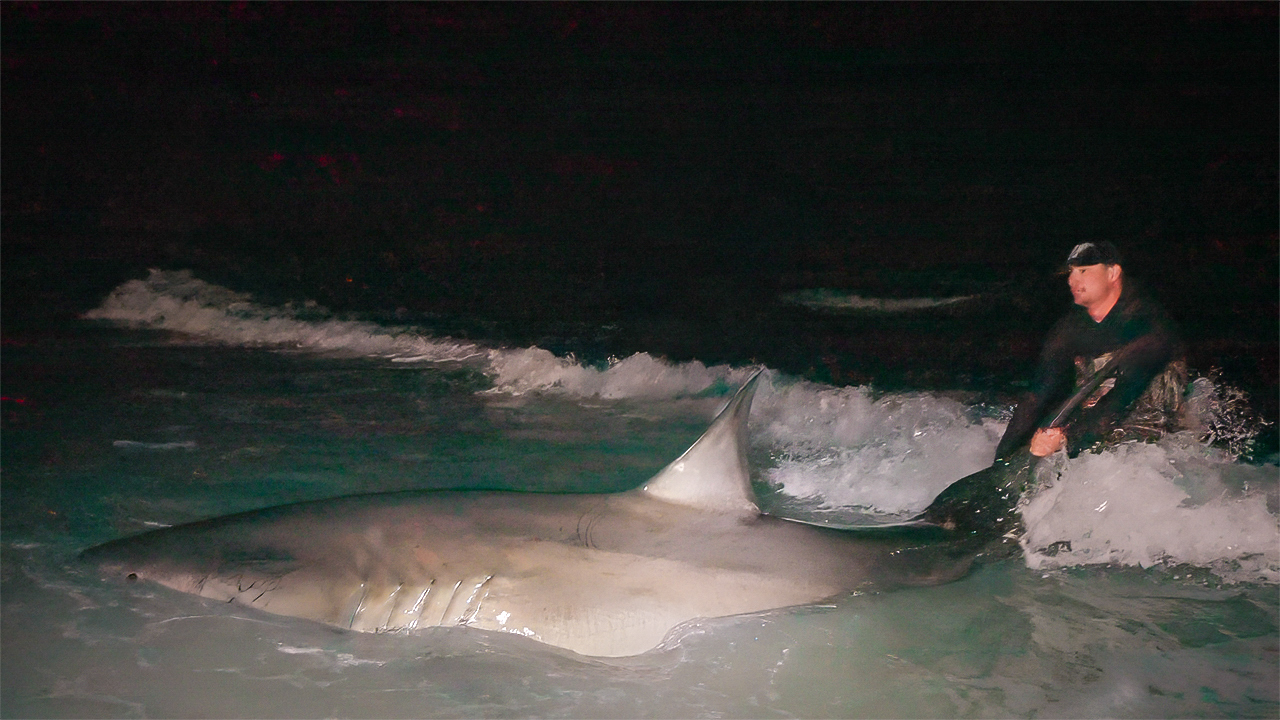
“We target the biggest sharks, and there are lots of them along the beaches in winter. January through March are the best times.”
Read Next: The Legendary Shark Fishing Record That’s Never Been Broken
The clients who caught the giant shark were still talking about it long after the fight was over, says Kenny.
“It took them awhile to realize they’d just caught a great white. It was pretty special.”