
We may earn revenue from the products available on this page and participate in affiliate programs. Learn More ›
The rising category of Low Power Variable Optics (LPVOs) continues to enchant and enrage us, the former because there’s so much variation within the theme, the latter because some brands continue to treat their LPVOs as sub-sized versions of higher-magnification rifle scopes.
Most optics manufacturers, though, have seen the benefits in sales and brand loyalty of building their LPVOs around purposeful reticles and smart configurations that are sized for AR-15 platforms, shotguns and pistol-caliber carbines. These are the scopes that are winning 3-Gun and multi-gun matches, or they’re taking on bears in North America or dangerous game in Africa, or they’re defending homes and platoons in close-quarters engagement.
We had 10 new LPVOs in this year’s test, and the diversity of build, purpose, and price impressed us and at times made us sweat to tease out the talents of a specific model, or to make a case for hunting situations for a scope that was intended for competition.
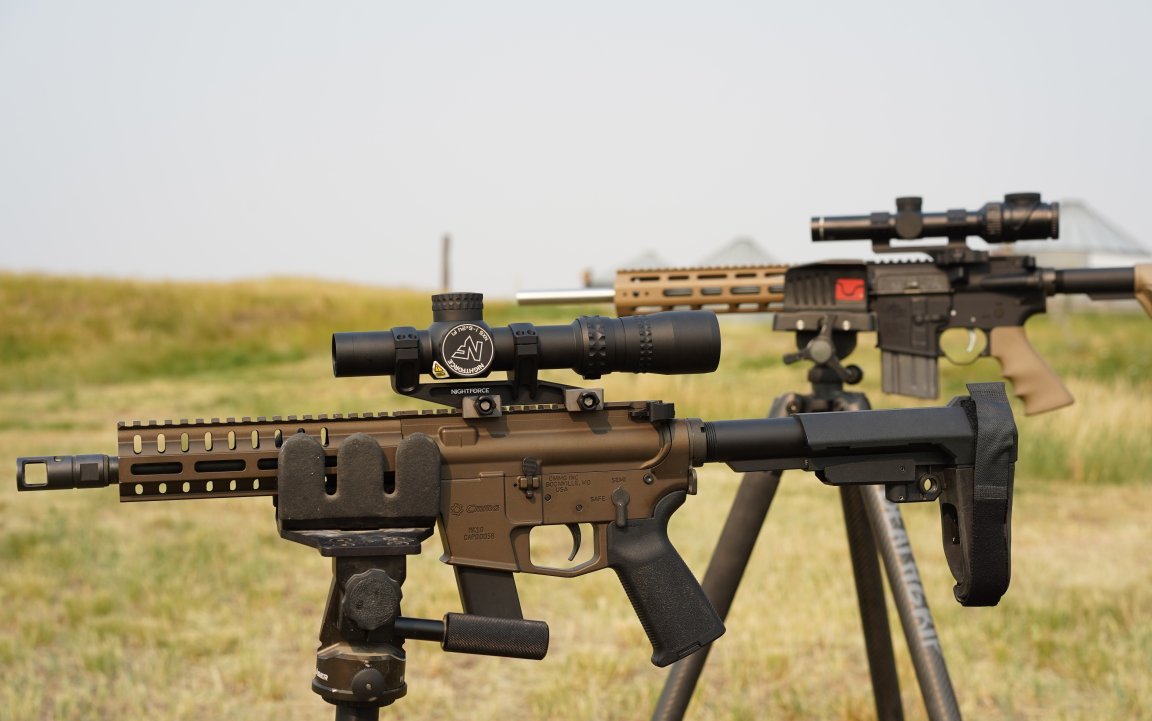
When the brass cleared our 10mm CMMG Banshee and the last of the 400-yard MGM swingers had stilled, we scored each submission, added our comments, and rated this year’s crop of LPVOs. We hope you have as much fun parsing their differences and similarities as we did.
Best LPVO Scopes
- Editor’s Choice: Nightforce NX6 1-6×24 FC-DMx F1 Reticle
- Great Buy: Sig Sauer TANGO-MSR Compact 1-6×24 Illuminated BDC6 Reticle
- Vortex Strike Eagle 1-10×24 Illuminated EBR-8 BDC Reticle
- EOTECH Vudu 4-12×36 Illuminated MR5 Reticle
- Leupold Patrol 6HD Gen2 1-6×24 Illuminated CM-R2 Reticle
- Best 1-10 LPVO: Vortex Razor HD Gen III 1-10×24
Best Hunting-Oriented LPVO Scopes of 2026
Best LPVO Scopes Under $400
- Arken EP-8 1-8×28($375)
- Athlon Talos HMR 1×24 ($199)
- Monstrum Challenger Micro 1-6×20 ($79)
The Best LPVO Scopes, Reviews & Recommendations
Editor’s Choice: Nightforce NX6 1-6×24 F1 FC-DMx Reticle
Pros
- Versatile first focal-plane reticle
- 10-step red illumination
- Bombproof durability
- Handy .2 MIL turret clicks
- Durable build
Cons
- Old-school locking eyepiece diopter
- At $1,800, pricey
Key Features
- 30mm tube
- Capped turrets
- Dual-use close-in and precision reticle
- Throw lever included
- Utility extends from personal defense to hunting situations
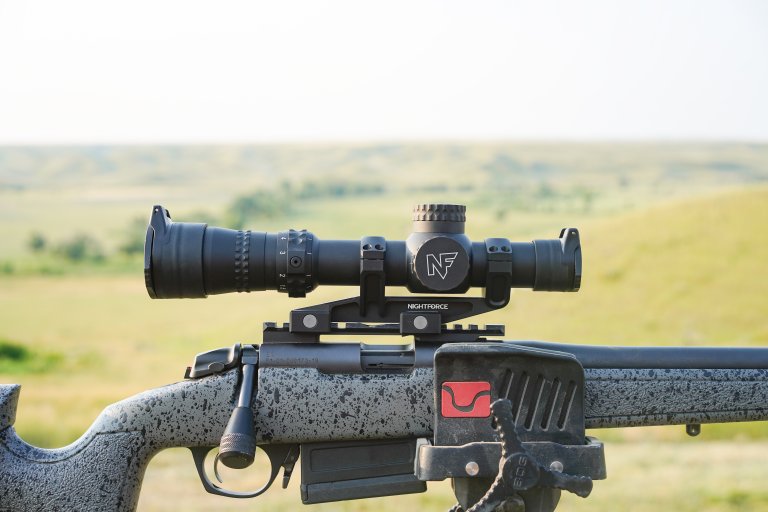
This short- to medium-range workhorse from Nightforce was years in development, but it was worth both the wait and the weight. While it’s a compact unit, measuring under 11 inches long and weighing just over a pound, the NX6 feels much more substantial.
That weight and durability will make this a battalion optic for uniformed services around the world. But it will also make it a very good pick for a 3-Gun competitor or a fly-in Alaskan bear hunter. Nightforce has had the entire NX6 line in incubation for years, as an answer to scopes like Leupold’s Mark 4HD and Mark 5HD, Vortex’s Razor HD and the Vudu from EOTECH. It was worth the wait.
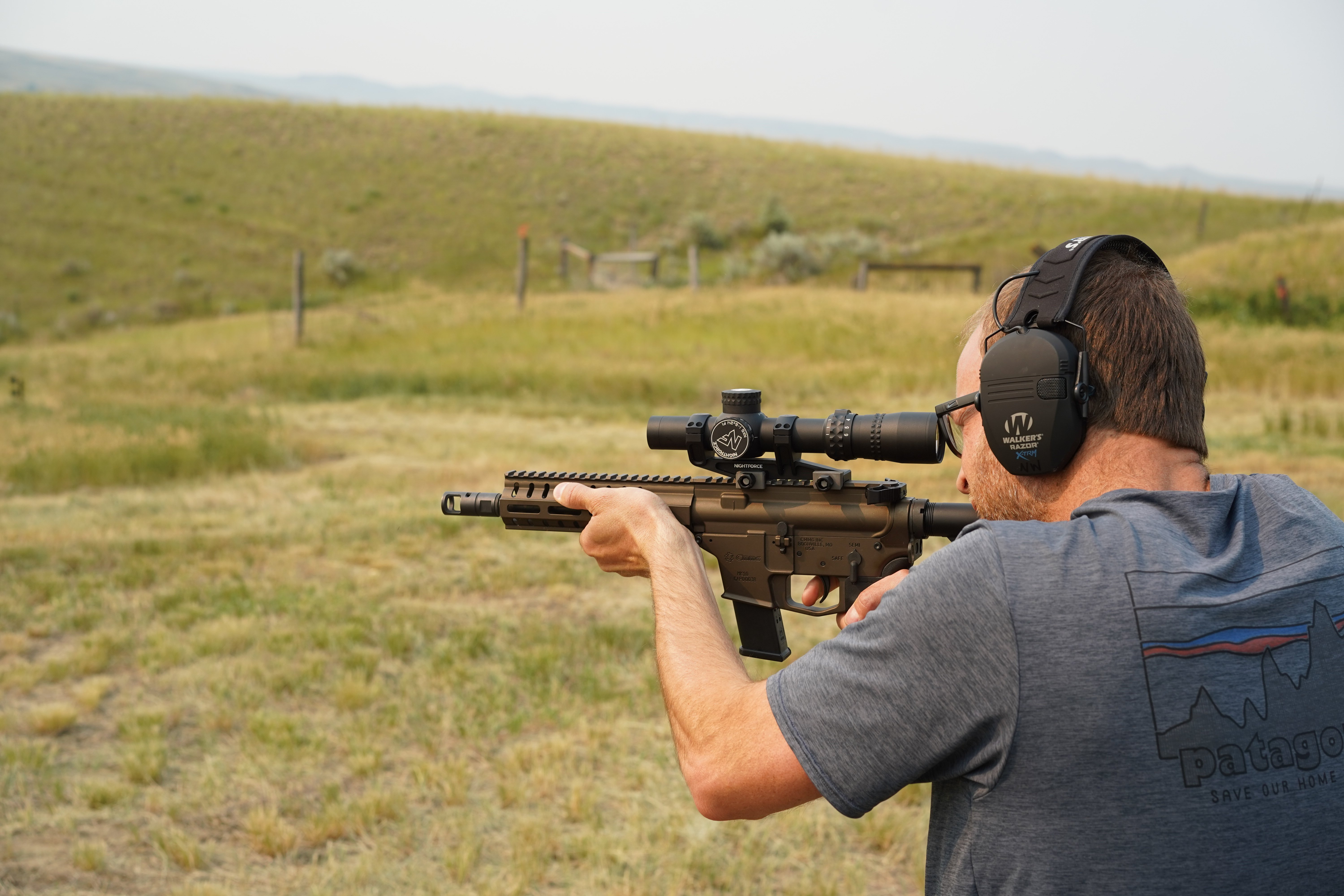
We tested many configurations of the NX6 line in our other rifle scope tests, but the standout of the new family is this smart, sharp, and extremely versatile 1-6×24 LPVO. For bringing best-in-class controls, a smart first focal-plane reticle, useful illumination, and a built-to-last package, the Nightforce NX6 1-6×24 wins our Editor’s Choice award for the top LPVO in this year’s test.
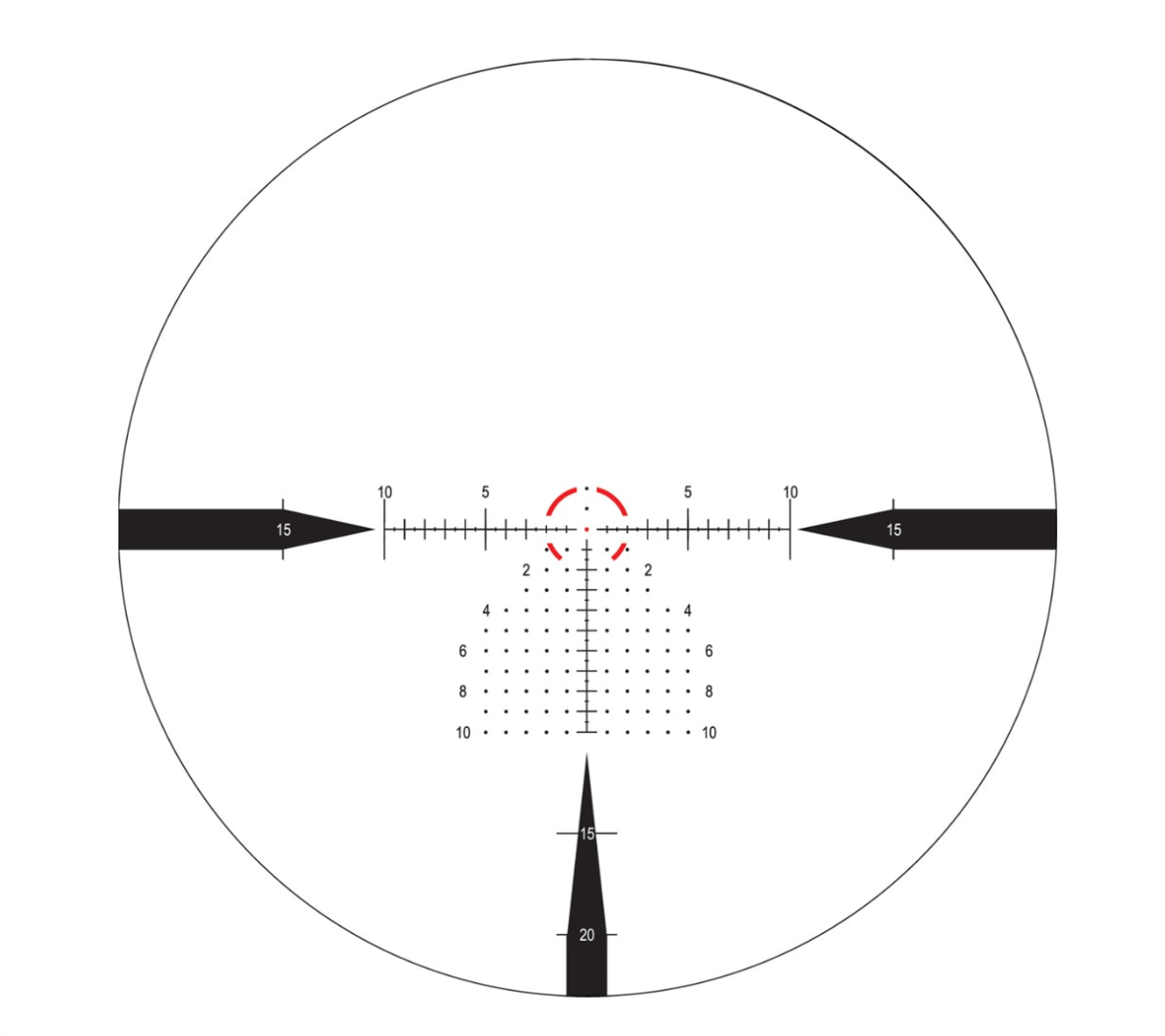
The Nightforce comes in three reticle types, either the standard illuminated 4A duplex, the hash-style FC-6c BDC reticle that’s configured for multi-gun competition, or the illuminated FC-DMx in the first focal-plane, which is the version we tested.
The reticle features an illuminated segmented circle with a floating center dot that, on increasing the magnification, reveals a 1 MRAD aiming grid. At lower mags, the clustered circle-dot arrangement makes a coherent and fast red-dot sight. At higher mags, that grid comes into view and assists precision bullet placement out to as far a rifle with this type scope can shoot.
The old-fashioned locking eyepiece diopter is strong and reliable, but it’s also stiff and slow, especially if you’re trading the scope between shooters with different optical prescriptions. The eyebox can be stingy at higher magnifications. We’d like to see a couple of brighter steps in the illumination, and we think the sweet configuration for this scope is 1.5-9x so that the reticle’s precision references might have even more visibility.
But the Nightforce behaves as you’d expect it to, and its 6-times magnification range seems optimized for this LPVO platform. The controls are tight and smooth. The 30mm main tube is rigid and stiff. The entire unit feels like you could use it as a falling wedge in the big woods around Nightforce’s northern Idaho home. In our experience, it would probably excel at that task, too, and then stack bullets in just about any competition or hunting scenario you can imagine.
At $1,800, the 1-6×24 is pricey. But that price doesn’t feel out of line for an heirloom optic that will trade across not only rifle platforms, but generations.
Nightforce NX6 1-6×24 Specs
- Magnification: 1-6-power
- Objective Lens: 24mm
- Tube Diameter: 30mm
- Light Transmission: Not provided
- Exit Pupil Diameter: 7.4-4mm
- Twilight Factor: 4.9-12
- Field of View: 116.1-19.1 feet at 100 yards
- Reticle Plane: First
- Reticle Type: FC-DMx segmented circle with floating center dot and 1 MRAD aiming grid
- Turret Click Values: 0.2 MRAD
- Adjustment Per Revolution: 20 MRAD
- Total Internal Adjustment – Elevation: 34.9 MRAD
- Total Internal Adjustment – Windage: 34.9 MRAD
- Parallax Correction: Fixed at 125 yards
- Weight: 18.9 ounces
- Length: 10.2 inches
Great Buy: Sig Sauer TANGO-MSR Compact 1-6×24 BDC6 Reticle
Pros
- Includes factory-mounted ALPHA-MSR mount
- Versatile dual-purpose reticle Includes lay-flat lens caps
- Daylight-bright illumination
- Throw lever enables fast mag changes
Cons
- Forgettable glass
- Stingy eyebox
Key Features
- 30mm tube
- 6-step red center-circle illumination
- Reticle has distance and windage holds out to 600 yards
- Lifetime warranty
- At just 8.4 inches long, extremely compact
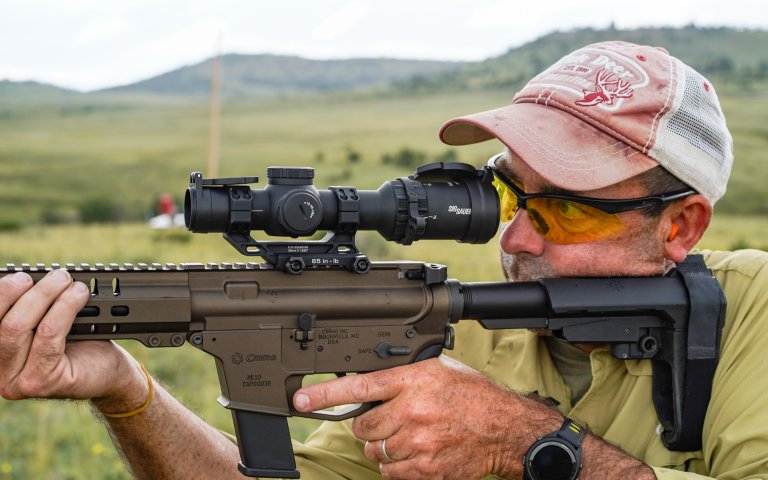
Sig Sauer’s best-selling LPVO just got smaller, tighter, and brighter. The TANGO-MSR Compact brings all the versatility of the original in a package that measures a puny 8.4 inches and comes pre-mounted on a very good cantilever unimount for the screaming price of $399.
For packing in so much value in a tidy, powerful package, the TANGO-MSR Compact is our Great Buy as the best deal of this year’s Outdoor Life LPVO test.
We’ll detail the two things that gave us pause before gushing about all the features of this scope that make it a winner. The glass isn’t that good. We detected some pincushion aberrations that are noticeable when panning at lower magnifications, and the overall resolution is average. The eyebox is pretty stingy, meaning that when you throw the scope up to engage a target, it’s easy to be out of alignment with the image.
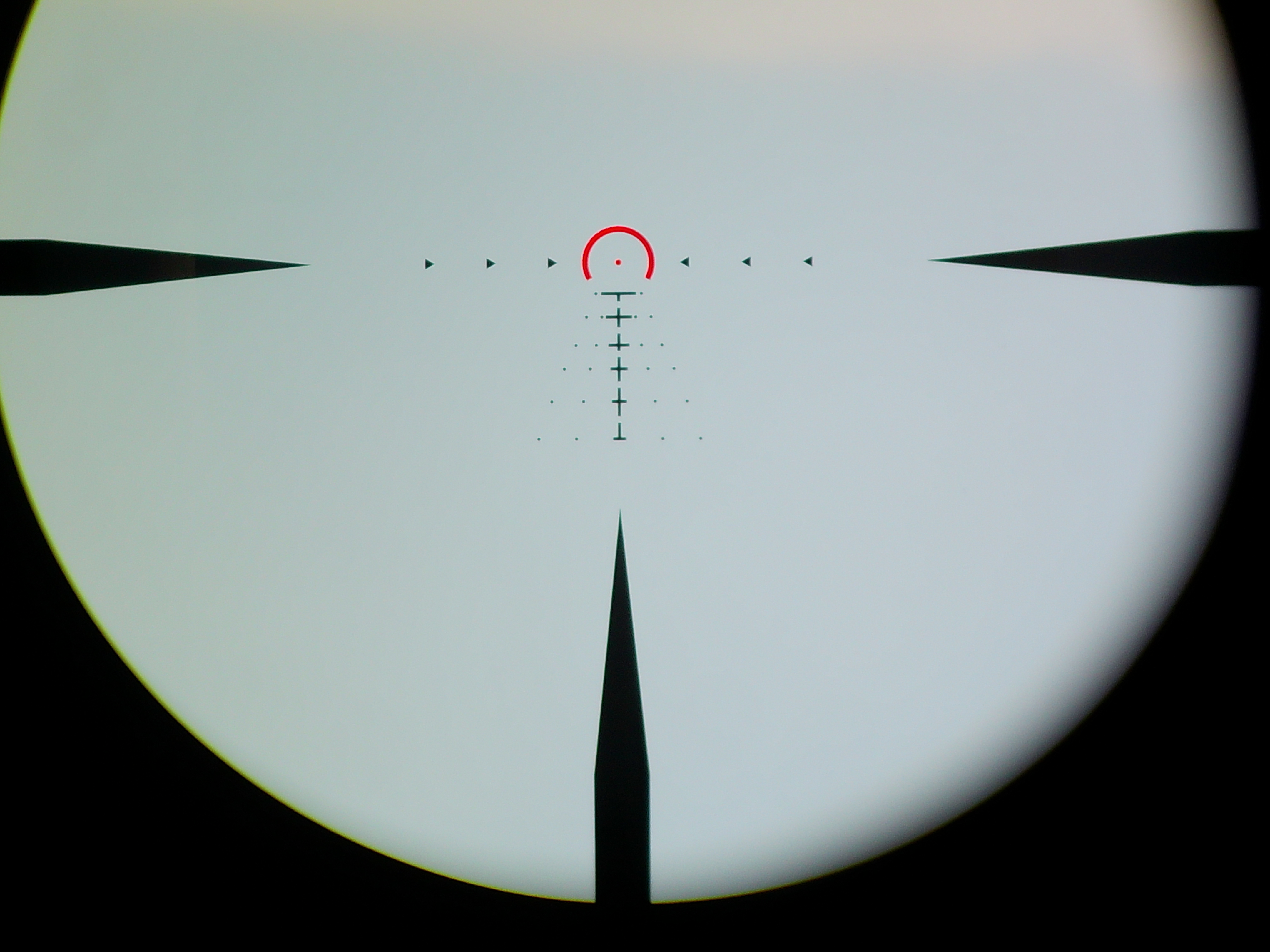
But everything else about this little marvel is spot-on. Generally, we like to see first focal-plane reticles in LPVOs because they boost the platform’s versatility. At their lower magnifications, FFP reticles act as a red-dot sight, and at higher magnifications, they perform as precision optics. But the second-plane arrangement in the TANGO-MSR — the MOA-based reticle is called the BDC6 — is nearly as useful for those purposes. The inverted-horseshoe center aiming arrangement blazes bright in daylight conditions, and the BDC grid is useful for placing bullets with precision on targets out to 500 yards. The only real tradeoff is that the scope must be set at its highest magnification for the bullet-drop subtensions to be accurate.
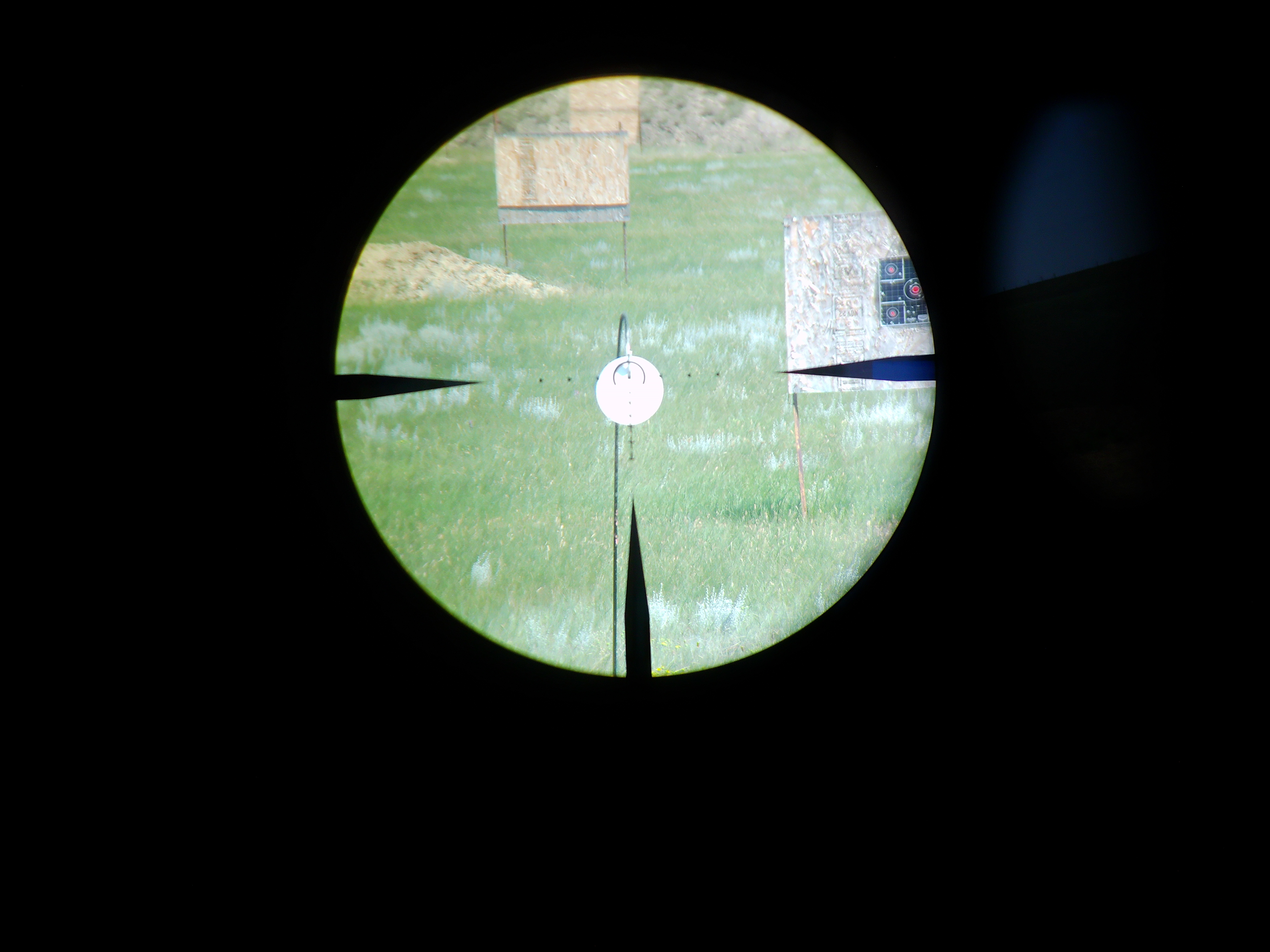
We put the scope through a battery of close-range fast-fire drills, and atop an AR carbine it’s a nimble and effective personal-defense scope. Then we slowed things down and rang steel out to a quarter-mile with the scope, using both its BDC references but just as importantly, its fine MOA-based windage dots to hold into the prairie breeze.
The TANGO-MSR is optimized for this AR-15 work, but it would be great on a straight-wall cartridge carbine, muzzleloader, or a pistol-caliber carbine, and it’s made for 3-Gun competitions. The super-compact size makes it a great fit for rimfires. And the price makes it accessible for just about any shooter. The addition of its mount means that it’s ready to rock, right out of the box.
Sig Sauer TANGO-MSR Compact 1-6×24 Specs
- Magnification: 1-6-power
- Objective Lens: 24mm
- Tube Diameter: 30mm
- Light Transmission: Not provided
- Exit Pupil Diameter: 24-4mm
- Twilight Factor: 4.9-12
- Field of View: 122.1-20.1 feet at 100 yards
- Reticle Plane: Second
- Reticle Type: BDC6 inverted horseshoe plus MOA aiming grid
- Turret Click Values: ½ MOA
- Adjustment Per Revolution: 44 MOA
- Total Internal Adjustment – Elevation: 80 MOA
- Total Internal Adjustment – Windage: 100 MOA
- Parallax Correction: Fixed at 100 yards
- Weight: 26.5 ounces with mount
- Length: 8.4 inches
Vortex Strike Eagle 1-10×24 EBR-8 BDC Reticle
Pros
- Available in either MOA or MIL versions
- Appealing magnification range
- Versatile first focal-plane reticle
- Oversized turret dials
- Impressive field of view
- Fully transferable lifetime warranty
Cons
- Eyebox stingy at higher magnifications
- No off steps between illumination intensities
Key Features
- 30mm tube
- First focal-plane EBR-8 BDC reticle
- Rezeroable turrets
- At 10 inches, very compact
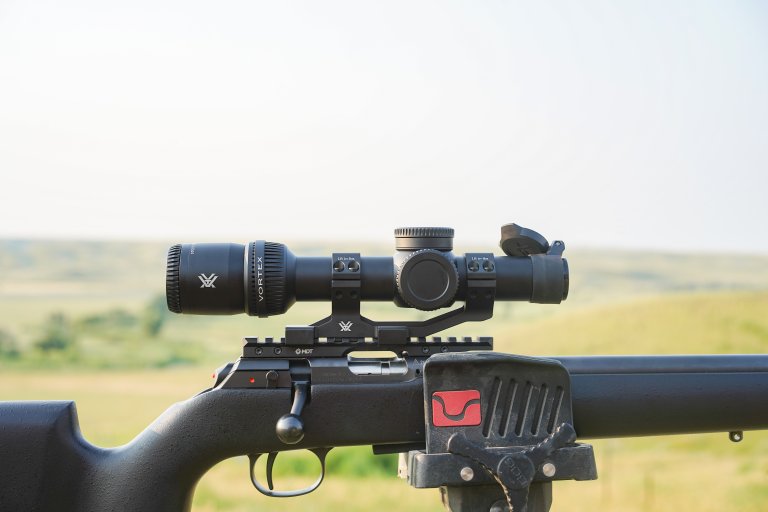
This extremely versatile LPVO from Vortex is conceived as a competition optic, built to clean 3-Gun stages. But open your mind to all the other uses it knocks over after the watch stops: turkey scope, lever-gun optic, dangerous-game scope, and killer rimfire companion.
Better yet, the 1-10x Strike Eagle brings 40 percent more magnification at about a third of the price of Vortex’s gold-standard LPVO, the Razor HD GenII 1-6×24 that’s a darling of the 3-Gun set, giving shooters a foot in the Vortex ecosystem for about $700.
That’s still a lot of money, but by handling so many tasks well, the Strike Eagle scored well on our versatility and price/value assessments. The first focal-plane MRAD-based reticle (it’s also available in an MOA version) is fast and sure at lower magnifications, its red illumination blazing bright, and it has useful precision references north of about 7x.
The low-profile capped turrets are big and grippy, for sure reticle adjustments, and the illumination has 8 steps of red and two night-vision settings. Completing the adjustments, the eyepiece is overbig and riffing from 1x to 10x is a cinch with the power-changing throw lever. The scope is generally well-indexed, and the positive controls are stiff without being disciplinarian.
If only the glass kept up with the manners of this versatile LPVO. Testers universally panned the glass, which wasn’t able to resolve .22-caliber bullet holes to our satisfaction at 50 yards. Edge distortion was noticeable throughout the magnification range.
That’s a big demerit, but it’s the only one. The reticle, with its inverted segmented horseshoe and illuminated floating center aiming dot (0.165 MRAD), is clean, although it’s more useful at 3x than it is at 1x. The BDC aiming grid extends to 6 MRAD of elevation and 4 MRAD of windage. On both our .223 Rock River AR and 10mm Banshee from CMMG, the reticle did a nice job of transitioning from point-blank dangerous-game scenarios to slow-fire precision work out to 400 yards.
But on our precision .22s, the lack of optical resolution held the scope back from such a basic job of reading bullet holes in standard range conditions. Yes, it’s fun as hell to shoot fast, but a scope of this pedigree should also have $700 glass.
Vortex Strike Eagle 1-10×24 Specs
- Magnification: 1-10-power
- Objective Lens: 24mm
- Tube Diameter: 30mm
- Light Transmission: Not provided
- Exit Pupil Diameter: 24mm to 2.4mm
- Twilight Factor: 4.9-15.5
- Field of View: 109.6-11.5 feet at 100 yards
- Reticle Plane: First
- Reticle Type: EBR-8 BDC MRAD
- Illumination: Yes, 6 intensities
- Turret Click Values: .1 MRAD
- Adjustment Per Revolution: 10 MRAD
- Total Internal Adjustment – Elevation: 32 MRAD
- Total Internal Adjustment – Windage: 32 MRAD
- Parallax Correction: Fixed at 150 yards
- Weight: 21.6 oz.
- Length: 10 inches
EOTECH Vudu 4-12×36 MR5 reticle
Pros
- Includes mini-ACOG mount
- Optional off-set red-dot sight
- Super compact, at just 7.1 inches long
- Aggressively textured and grippy controls
- Optimized for close-in and mid-distance work
Cons
- Mushy turret clicks
- Indistinct indexing
Key Features
- 10-step illumination
- First focal-plane design
- MR5 tree-style reticle great for close-in and precision work
- Off stops between illumination intensities
- Easily accommodates a scope-mounted red-dot sight
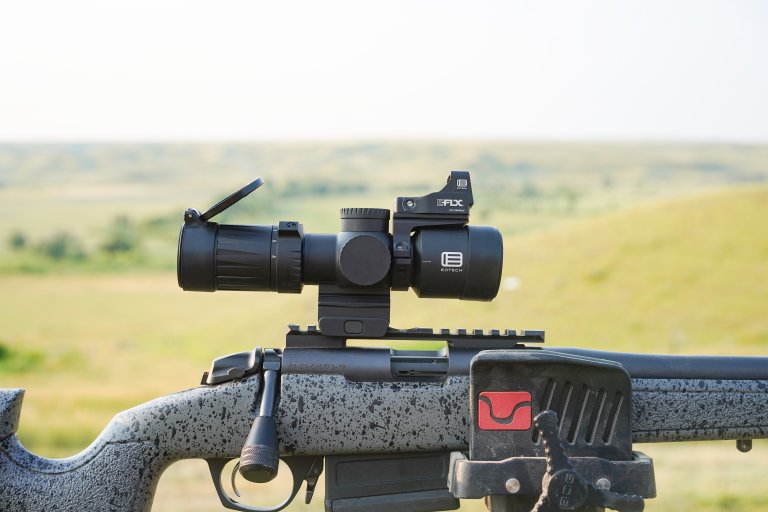
With its low-mag Vudus, EOTECH has created an entirely new category of rifle scope: the super-short LPVO.
We had the 3-9×32 Vudu in last year’s test, and got to see first-hand the versatility of the package, with a magnification range that riffs from close-quarters fast to slow-fire precision. If you think about the target audience for this scope, our uniformed troops that might be clearing houses one minute and taking out a 400-yard target the next, this is a platform that’s expanding in its reach and audience.
This year’s 7.1-inch 4-12×36 Vudu builds on last year’s model, with a more useful upper magnification and better glass. And, most critically, a first focal-plane reticle that extends the useful range of this bantam scope.
The pioneering work of EOTECH has enabled the designs — and readied the customers — of brands like Sig Sauer, with its sized-down TANGO-MSR, and entry-level Monstrum, with its tiny but powerful Challenger Micro LPVO.
The 4-12×36 Vudu has the same micro form factor, single-ring ACOG rail mount, and capability of adding a red-dot sight in case users want even more situationally-aware close-and-fast shooting. That’s a smart add, because the illuminated cross in the MR5 reticle is still too bold, even at 4x, for fast target acquisition.
The reticle’s best expression is from 9-12x, as the MIL-based hashes come into full view. The reticle has illuminated holds out to 8 MILS, with short hashes at every .5 MIL, longer hashes at every full MIL and even-number numeric references. The reticle has windage hashes, with references every .5 MIL, out to 6 MILS on either side of the center cross, with .1 MIL mover references at the ends of the horizontal stadia. That’s plenty of detail to make hits out to 500 yards, and even further in the right hands and conditions.
We detected some spherical aberration in last year’s 3-9x Vudu, but this year’s 4-12 version showed no distortion, either at the edge or in the middle of the image, at any magnification. It’s clear and sharp, but the short build limits the Vudu’s low-light performance. The image gets grainy and dim at a faster rate than an equivalent 3-9×40 or 4-12×42 rifle scope.
That’s where the finely adjusted illumination comes into play. The middle of the reticle might burn too bold for some situations, but EOTECH’s illumination mutes the MR5 to a just-visible aiming aid, boosting its low-light performance. EOTECH hasn’t positioned its scope for this, but the 4-12×36 would make an excellent slave optic for a thermal clip-on, further extending the Vudu’s usefulness into no-light situations.
At around $1,200, this might be the most expensive LPVO in our test if you measure it by the inches. But measured in terms of all-around utility, the EOTECH Vudu is a trend-setting bargain.
EOTECH Vudu 4-12×36 Specs
- Magnification: 4-12-power
- Objective Lens: 36mm
- Tube Diameter: 30mm
- Light Transmission: Not available
- Exit Pupil Diameter: 11mm to 2.75mm
- Twilight Factor: 13.3 to 26.5
- Field of View: 28.5-9.5 feet at 100 yards
- Reticle Plane: First
- Reticle Type: MIL inverted horseshoe/hash style
- Illumination: Yes
- Turret Click Values: .1 MIL
- Adjustment Per Revolution: 10 MIL
- Total Internal Adjustment – Elevation: 22 MIL
- Total Internal Adjustment – Windage: 36 MIL
- Parallax Correction: 10 yards to infinity
- Weight: 16.9 ounces
- Length: 7.1 inches
Leupold Patrol 6HD Gen2 illuminated CM-R2 Reticle
Pros
- CM-R2 reticle features illuminated aiming point and BDC references
- Push-button illumination
- Exposed push-to-turn CDS-ZL2 elevation turret
- Custom turrets available
- Removable magnification throw lever
Cons
- At nearly $1,800, one of the most expensive LPVOs
- Reticle references useful only at highest magnification
Key Features
- Parallax correction fixed at 150 yards
- Premium glass and coatings
- Competition-proven reticle
- At 16 ounces and just 10.7 inches, compact and light
- Lifetime warranty
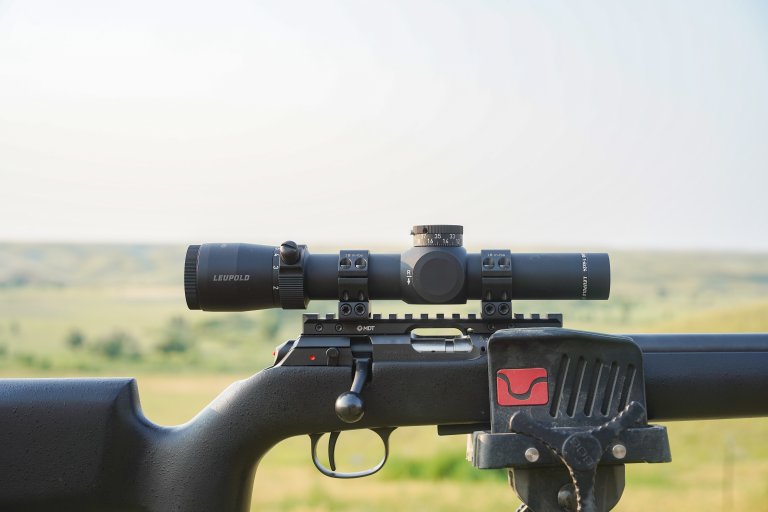
Leupold has poured nearly all its proprietary optical upgrades into this high-end LPVO. You want the new Custom Dial System Zero-Lock elevation turret? Check. How about premium Guard-ion scratch-resistance and Leupold’s contrast-boosting coatings? Check.
Same with battery-saving Motion Sensor Technology, night-vision compatible illumination and best-in-class internal adjustment range. We’ve seen many of these attributes in the Patrol 6HD before, but the Gen 2 version upgrades the elevation turret.
In this Gen 2 version of the second focal-plane Patrol 6HD, Leupold offers a choice of an illuminated FireDot duplex reticle or, for $200 more, the BDC-style CM-R2 reticle with vastly more utility. The heart of the latter reticle is a 6 MOA open-bottom circle with a .5 MOA (.15 MIL) floating center dot. Both aiming features are nicely illuminated. A hash-style BDC post extends out the bottom of the circle, offering 43 MOA (12.5 MILs) of bullet-drop references.
On paper, this should be a close-enough-for-government hold-over reticle for standard AR calibers. Testers had fun beating up creature targets at powder-burn range, with the illumination blazing bright, and then slowing things down and trying to ring 10-inch plates at 400, then 500 yards. We had to really play with the dope to get beyond that, but our exercise showed the elastic capabilities of this fun little scope.
Is it worth $1,800? We struggled with that question. There’s enough about the little Patrol 6HD Gen 2 that gave us pause — a pretty stingy eyebox, some reticle tracking that started to open up beyond 38 MOA and the magnification limitations of the second focal-plane build — that we concluded it was a little overpriced for its performance.
But it’s also the scope that we reached for when we considered a short- to medium-range optic for all the short- to medium-range rifles in our collection. It’s a classy build for a traditional straight-wall cartridge rifle, and it has the guts to hold up to a big bore like the .458 SOCOM that we use for our dangerous-game replications. And it’s stylish enough to dress up any rifle, from a pickup-seat ranch rifle to a custom-made safari gun.
Leupold Patrol 6HD Gen 2 1-6×24 Specs
- Magnification: 1-6-power
- Objective Lens: 24mm
- Tube Diameter: 30mm
- Light Transmission: Not available
- Exit Pupil Diameter: 24mm to 4mm
- Twilight Factor: 4.9-12
- Field of View: 121-19.2 feet at 100 yards
- Reticle Plane: Second
- Reticle Type: Illuminated CM-R
- Illumination: yes, 8-step intensities
- Turret Click Values: ¼ MOA
- Adjustment Per Revolution: 20 MOA
- Total Internal Adjustment – Elevation: 180 MOA
- Total Internal Adjustment – Windage: 180 MOA
- Parallax Correction: Fixed at 150 yards
- Weight: 16 ounces
- Length: 10.7 inches
Best 1-10 LPVO: Vortex Razor HD Gen III 1-10×24
Key Features
- Magnification: 1-10x
- First focal plane
- Eye relief: 3.6 inches
- Field of View: 116 to 11.7 feet at 100 yards
- 34mm tube
- Length: 10.1 inches
- Weight: 21.5 ounces
- Reticle: EBR-9 (MOA or MRAD)
- MSRP: $3,999
Pros
- Great glass
- Excellent illumination
- Smooth magnification ring and positive adjustment clicks
Cons
- Not ideal for dialing elevation
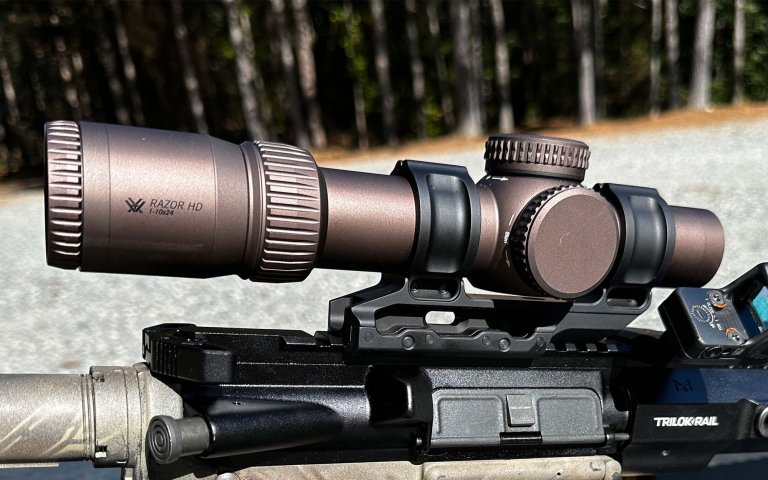
You can accomplish a lot with a 1-6 LPVO but, if you’re willing to take a weight penalty, you can do more with a 1-10 optic. Up close shooting is just as good and you’ll have the benefit of being able to ID and shoot targets at a greater distance. There are some great budget options in the 1-10 category, but, if you want the best option, get the Vortex Razor HD Gen III 1-10×24.
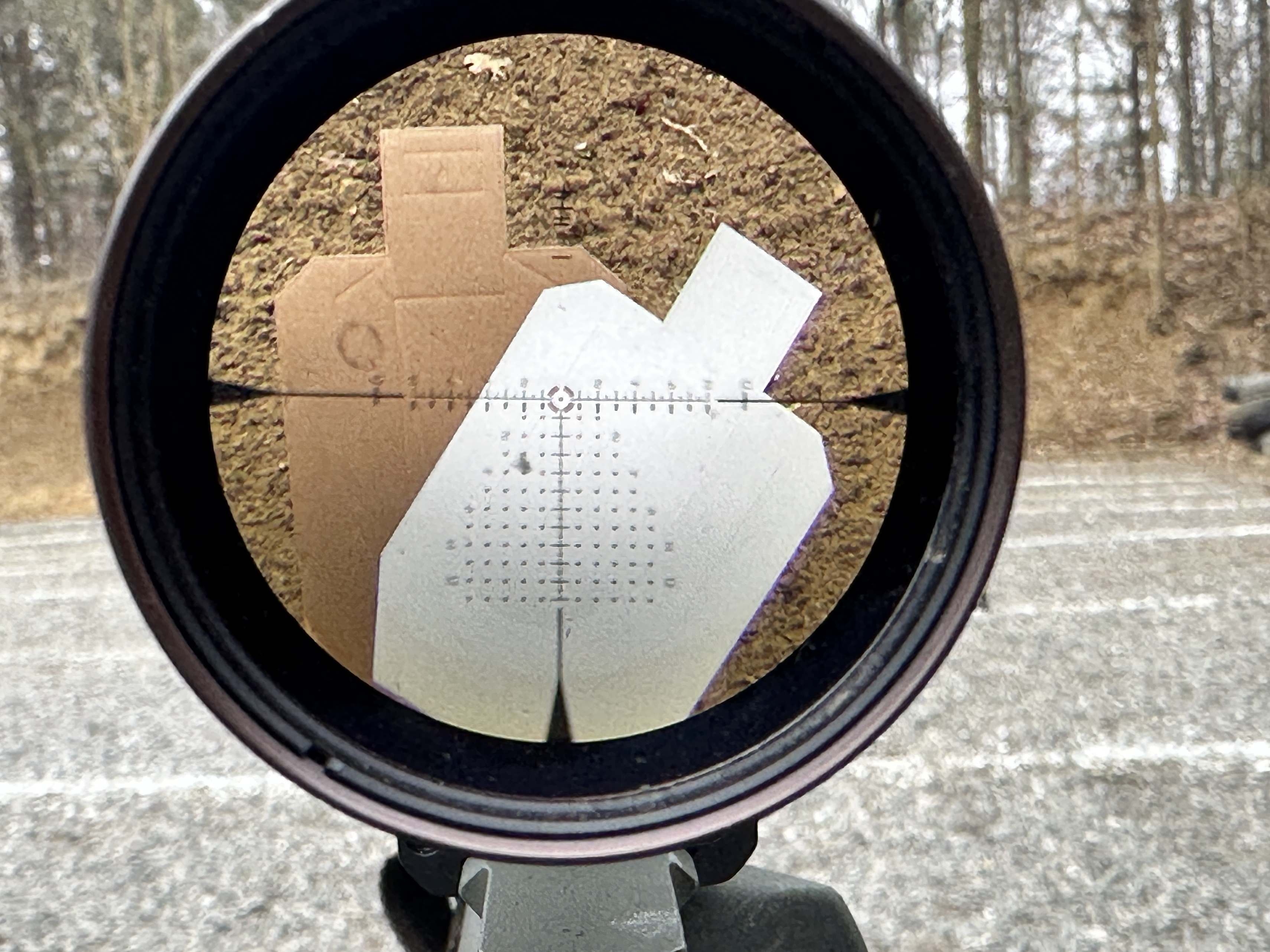
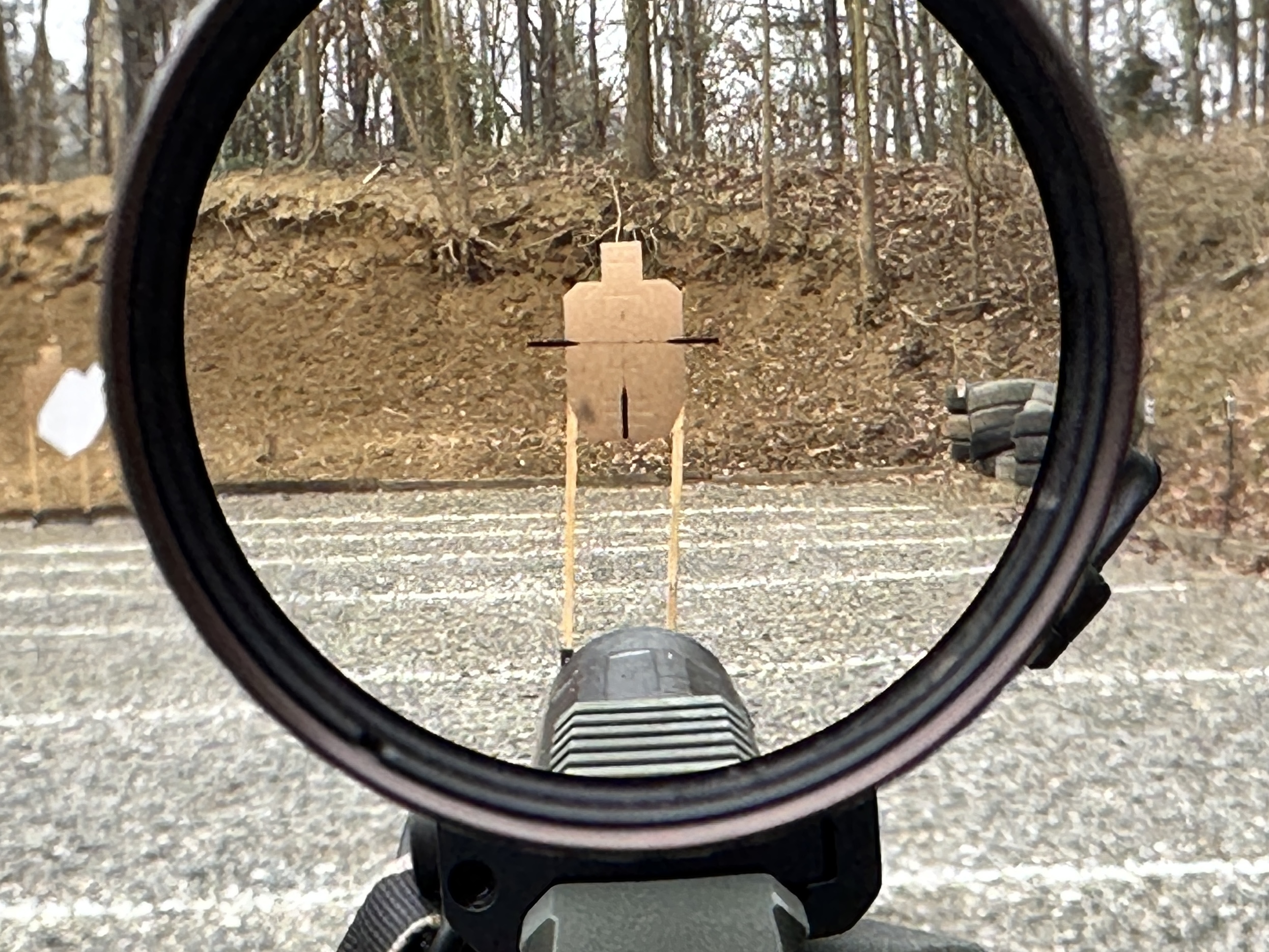
I tested the Razor 1-10 while high rack hunting hogs and predators. I primarily used the optic at 1x with a clip-on thermal in front of it. I had no issues with shadowing while making quick, off-hand shots. On the flat range, I shot an array of targets with the 1x setting to test its close, fast shooting capabilities. The bright illumination was easy to pick up and the 1.1x magnification was fast on transitions. I ran an accelerator drill against one of my red dot equipped ARs and the times were nearly identical.
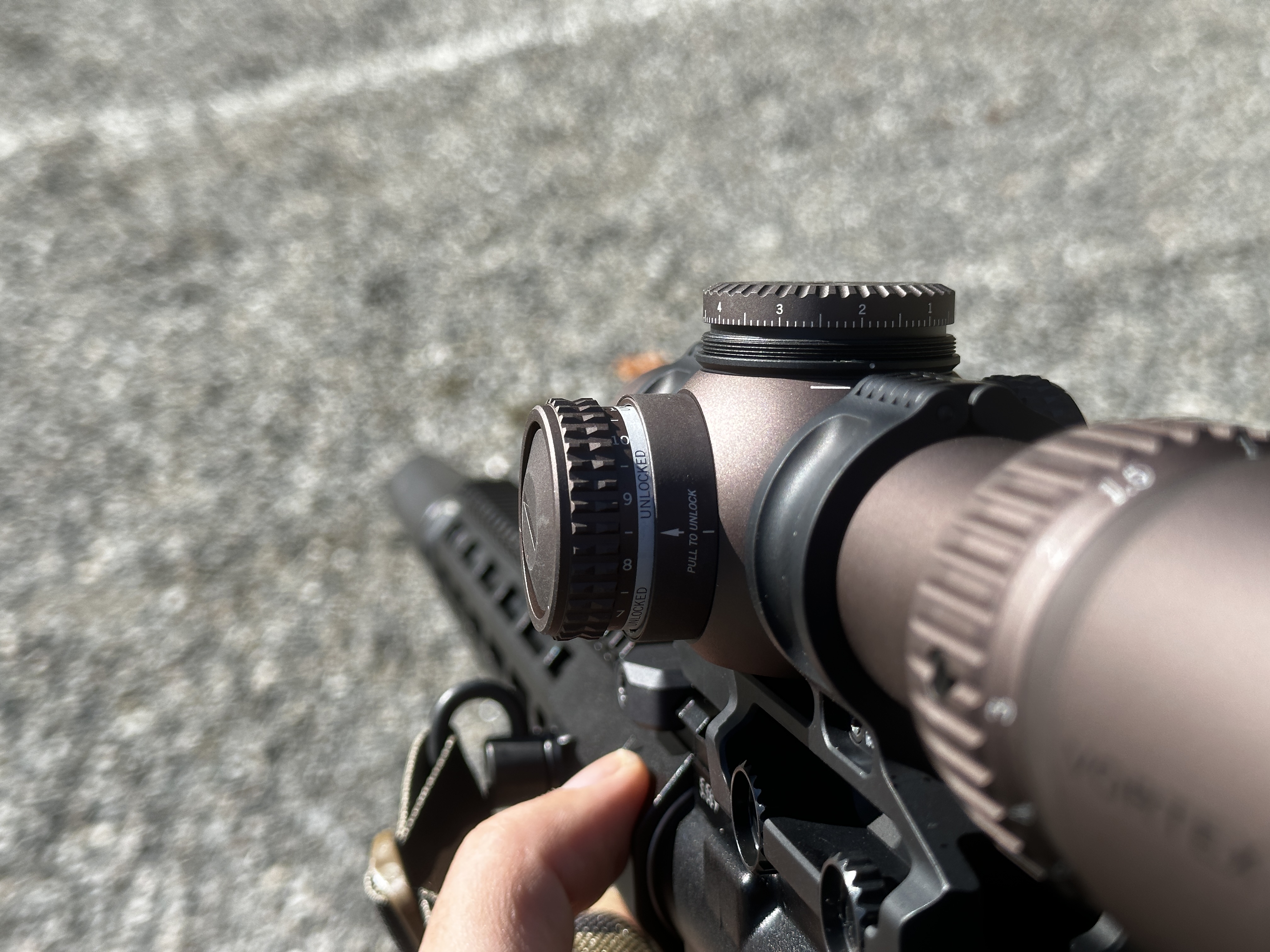
The FFP EBR-9 reticle has a lot of data, which is great for holding elevation and wind with precision. For me, it disappeared into the background at 1x and my focus was entirely on the target and the bright red dot. At 10x you’ll notice the eye relief shrinks and the eye box gets tighter. That can be an issue if you’re in an awkward position or need to get a shot off quickly. Although I’d argue time practicing with the optic would shave away that deficiency. The throw from 1 to 10x is smooth and surprisingly short. Yet it’s not so loose that you’d accidentally bump your magnification setting.
I didn’t do a formal resolution or lowlight test, but one will be forthcoming. I’ll update this review with those results.
Best Hunting-Oriented LPVO Scopes of 2026
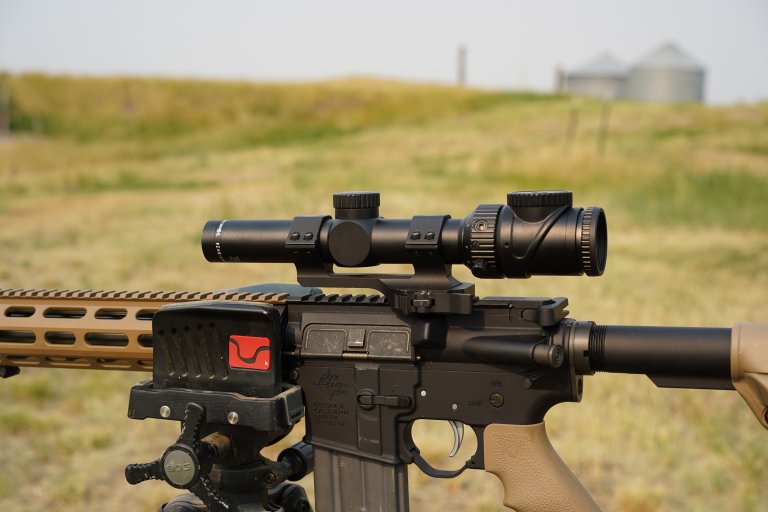
Trijicon AccuPoint 1-8×24 BDC Hunter Holds Reticle
Pros
- Battery-free illumination
- Excellent glass
- Simple green illuminated center dot
- Liberal mounting dimensions
- Rezeroable turret dials
Cons
- At about $1,300, expensive for an LPVO
Key Features
- Up to 100 MOA of internal reticle adjustment
- Reticle illumination adjusted by fiber-optic dial
- Promoted both-eyes-open aiming
- Hash-style BDC references for distance work
The latest incarnation of Trijicon’s legendary AccuPoint line, this durable LPVO might be the most natural dangerous-game scope of this year’s test. The tight build is designed to withstand the recoil of big-bucking buffalo guns, but its always-on illumination doesn’t require a battery to fire. Its balance, style, and grit befits a bespoke rifle that’s imagined as an heirloom but used as your ride-or-die hunting gun.
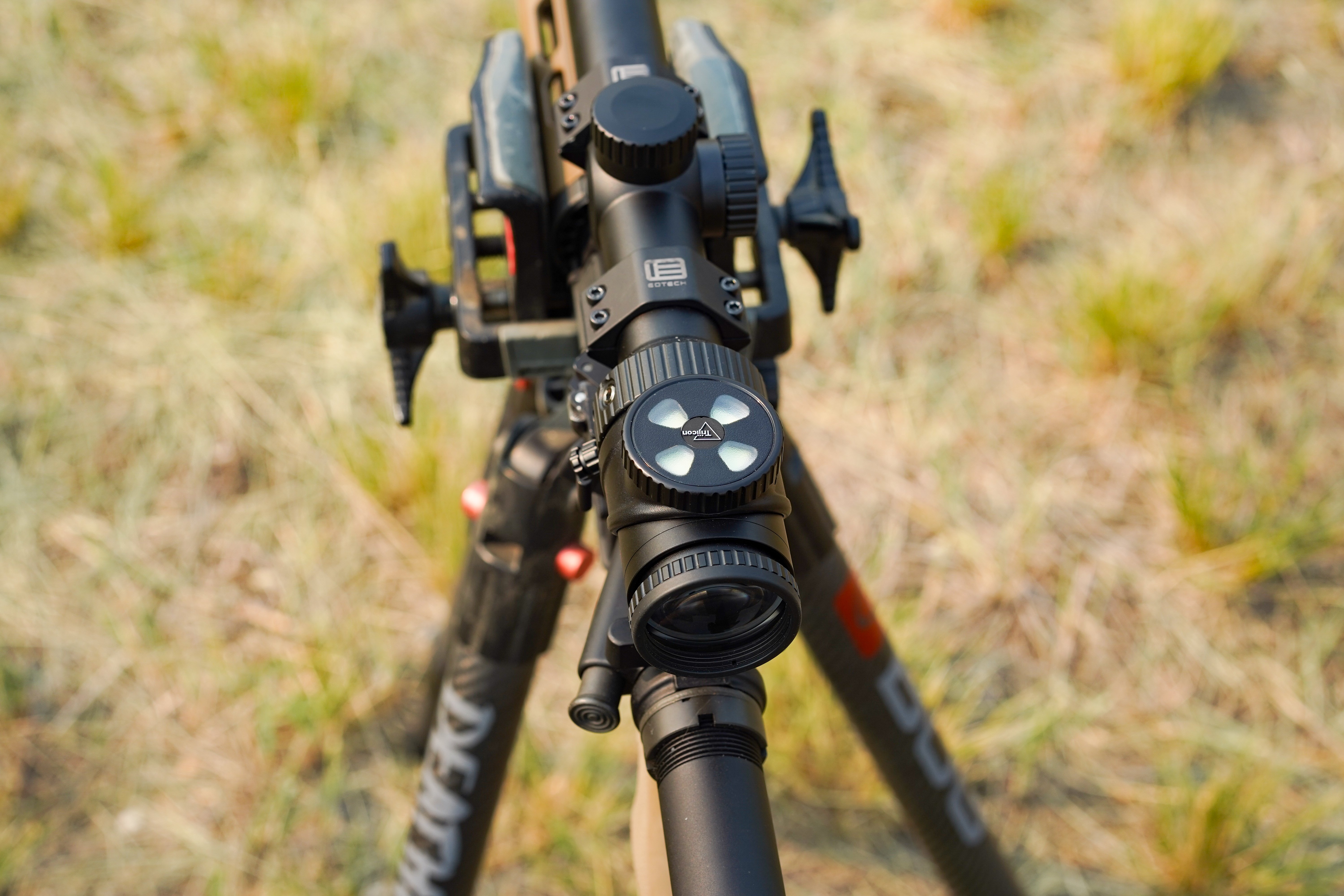
Instead of relying on a battery, the Trijicon’s illumination is activated by sunlight that hits the windows of a fiber-optic receptor and translates photons into intensity of a fine 0.25 MOA green dot at the intersection of a bold second focal-plane duplex reticle. In low-light situations, the element tritium does the work of the sun and supplies the energy to light up that aiming point.
It’s an elegant and durable system that’s optimized for this 1-8×24 build, which neatly fits every AR and straight-wall cartridge carbine made but which shines on a .404 Jeffery or a .470 Nitro Express. Let me build the use-case for this scope. You are in Africa’s timeless outback, killing bushmeat for meals and using the last of the petrol for the light-supplying generator that keeps lions out of the tents. Do you really want to add the lifetime of your CR2032 battery to your list of worries? This scope’s illumination runs without all that fuss, allowing you to concentrate on killing that dagga boy, or marauding elephant, or over-bold lion.
Even if you never hunt Africa, the Trijicon brings its talents to domestic considerations. It’s a great straight-wall or pistol-cartridge carbine scope, and it belongs on slug guns and muzzleloaders. The Dangerous Game BDC reticle in MOA is built for close-in and medium-range target work, though testers noted the shortcomings of its extreme close-range talents. The tough detail is its price. It retails for about $1,900, and while you can generally find the AccuPoint at about $1,300 on the street, that’s still a steep climb.
The excellent glass, tight but understated controls and tasteful lines elevate the Trijicon to a level of sophistication that most grubby LPVOs can’t reach. But its price and fairly limited utility narrows its appeal to a small audience that will use it on once-in-a-lifetime hunts in places the rest of us can only imagine or pronounce.
Trijicon AccuPoint 1-8×24 Specs
- Magnification: 1-8-power
- Objective Lens: 24mm
- Tube Diameter: 30mm
- Light Transmission: Not provided
- Exit Pupil Diameter: 24-3mm
- Twilight Factor: 4.9-13.9
- Field of View: 120-13.1 feet at 100 yards
- Reticle Plane: Second
- Reticle Type: illuminated Dangerous Game Hunter Holds BDC
- Illumination: Infinitely adjustable depending on fiber-optic control
- Turret Click Values: ¼ MOA
- Total Internal Adjustment – Elevation: 100 MOA
- Total Internal Adjustment – Windage: 100 MOA
- Parallax Correction: Fixed at 100 yards
- Weight: 19.4 ounces
- Length: 11 inches
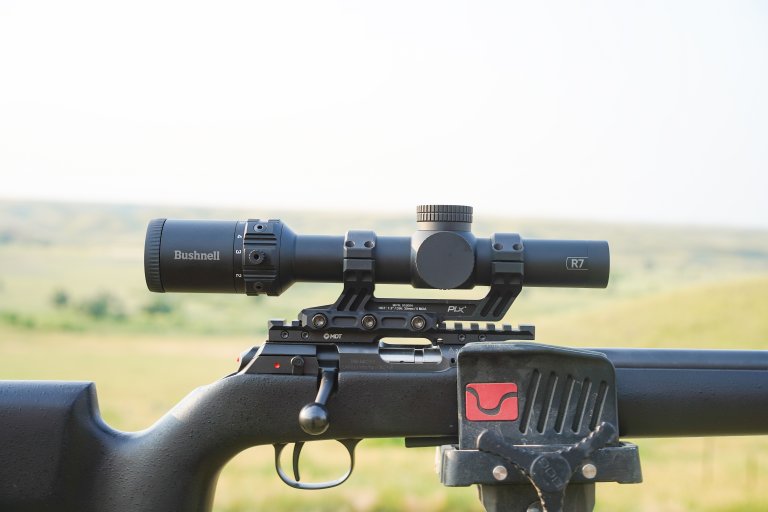
Bushnell R7 1-8×24
Pros
- Excellent crossover hunt/target scope
- Available in either MOA or MRAD configurations
- Finely rendered 0.4 MOA/0.12 MRAD illuminated center dot
- Versatile AR, lever-gun, straight-wall, muzzleloader, or turkey scope
Cons
- Second-plane duplex reticle limits precision work
Key Features
- German #4 illuminated duplex reticle
- Liberal mounting dimensions
- .1 MRAD/.25 MOA turret click values
- 11-step red center-dot illumination
- Fully transferable lifetime warranty
This is a classy and well-mannered LPVO that responds well to turret, magnification, and illumination adjustment. But while each of us testers could imagine some gun to mount the R7 on, we had a hard time imagining ourselves shelling out nearly $800 for it.
That’s because while the German #4 duplex reticle in the second focal plane is classic, it’s just not as useful as a more modern reticle with BDC hashes or a first-plane workhorse that, in the LPVO platform, can either be a point-and-shoot red dot or a slow-fire precision reticle.
“The Bushnell is a basic 200 yards and in workhorse,” says tester Todd Netto. “If you want simple and solid, this is a good option.”
Fellow tester Nate Ward concluded that the Bushnell is a “set-it-and-forget-it” short- to medium-range scope with good tracking and better glass than its peers. We like that the model is available in either MOA or MIL-based turrets, but given that there’s so little benefit from either system with a second-plane duplex reticle, we can’t recommend one configuration over the other.
It’s important to note that the Bushnell R7, like the Trijicon AccuPoint and the Leupold Patrol 6HD, isn’t designed as a tactical battle optic, as many LPVOs are. Instead, they’re intended as short- to medium-range slow-fire optics. Think about a stylish addition to a lever gun, or a hard-wearing optic for a turkey or slug gun, or a very good companion for a straight-wall cartridge rifle. Considered this way, the R7’s simple, useful reticle — with 11 illumination intensities — along with wide field of view, satisfying eye relief and good glass boosts the value of the Bushnell and makes an argument for its proud price.
Bushnell R7 1-8×24 Specs
- Magnification: 1-8-power
- Objective Lens: 24mm
- Tube Diameter: 30mm
- Light Transmission: Not provided
- Exit Pupil Diameter: 24mm to 3mm
- Twilight Factor: 4.9-13.9
- Field of View: 123-15 feet at 100 yards
- Reticle Plane: Second
- Reticle Type: Illuminated German #4 duplex
- Illumination: yes, 11-step intensities
- Turret Click Values: ¼ MOA/.1 MRAD
- Adjustment Per Revolution: 25 MOA/10 MRAD
- Total Internal Adjustment – Elevation: 35 MRAD/120 MOA
- Total Internal Adjustment – Windage: 29 MRAD/100 MOA
- Parallax Correction: Fixed at 100 yards
- Weight: 19.2 ounces
- Length: 11.2 inches
Best LPVO Scopes Under $400
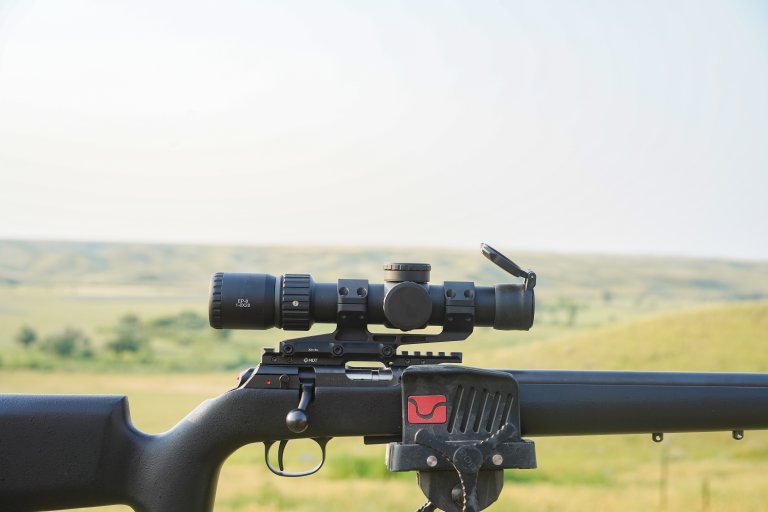
Arken EP-8 1-8×28 KLGRID FFP MIL Reticle
Pros
- Factory-installed and leveled 34mm cantilever mount
- Capped low-profile oversized turret dials
- Available in either MOA or MIL versions
- At under $300, a killer bargain
- Exceptionally versatile reticle
Cons
- 21 ounces, but seems heavier
Key Features
- Capped re-zeroable turrets
- 8 daylight and 2 night-vision illumination steps
- Flip-up lens caps
- KLGRID reticle offers tree-style elevation and wind holds
- KLBOX reticle offers BDC holds for standard AR calibers
With a pair of big, beefy LPVOs, Arken has raised the bar on a competition scope. That it’s produced a serious, full-service first focal-plane gem for under $300 should send shudders through its own competitors.
There’s a lot to this EP-8, including its heft. Built on a 34mm tube, with oversized turrets and a big, grippy power-changing wheel, the Arken weighs 21 ounces but seems heavier. That’s probably because the chunky cantilever mount — which shockingly is included in the $299 street price — adds another 12 ounces to the rig. Also included in the base price are useful flip-up lens caps, a rubberized lens cover and a power-changing throw lever. All in, it’s hefty.
“It’s a big ole mamba jamba, but I’m okay with that,” notes tester Todd Netto.
We tested both the MIL version, with what Arken calls its tree-style KLGRID reticle, and the MOA version, with a BDC reticle called the KLBOX (Known Length Box) that’s optimized for the ballistic drop of standard 5.56 and 7.62 cartridges.
We could make a case for either configuration, depending on your preference and shooting pursuit. The KLBOX is the faster and cleaner of the two, but if you are placing precise shots at distance, as we did with our 300-yard .22 Long Rifle test, you’re going to want the windage dots in the grid. The center aiming point differs slightly. The MIL version has an illuminated segmented circle around a 0.12 floating aiming point. The MOA version has an illuminated inverted horseshoe and floating aiming dot and is configured for rapid target acquisition.
In both cases, the scopes have a very handy magnification range, with both-eyes-open point-and-shoot capability at 1-3x. At about 4.5x, the illuminated outer aiming ring nicely frames the center complex. At 6x, the outer ring disappears and allows the eye to focus on the precision references of either reticle. It’s a versatile and useful aiming system that offers three different sight pictures based on the magnification of the first-plane reticle.
Of course, you give up some features with the low price. The glass, which is purportedly sourced in Japan, is a little disappointing, and turret indexing could be much better. There’s no off position between illumination steps. But those are very minor quibbles for a truly remarkable, and remarkably priced, competition-grade LPVO.
Arken EP-8 1-8×28 Specs
- Magnification: 1-8-power
- Objective Lens: 28mm
- Tube Diameter: 34mm
- Light Transmission: Not provided
- Exit Pupil Diameter: 28mm to 3.5mm
- Twilight Factor: 5.3-14.9
- Field of View: 121-14.6 feet at 100 yards
- Reticle Plane: First
- Reticle Type: Illuminated KLGRID (MIL) or KLBOX (MOA)
- Illumination: 8-step day, 2-step NV red aiming point illumination
- Turret Click Values: .1 MIL
- Adjustment Per Revolution: 10 MRAD
- Total Internal Adjustment – Elevation: 30 MRAD (110 MOA)
- Total Internal Adjustment – Windage: 30 MRAD (110 MOA)
- Parallax Correction: Fixed at 100 yards
- Weight: 21.1 ounces
- Length: 10.3 inches
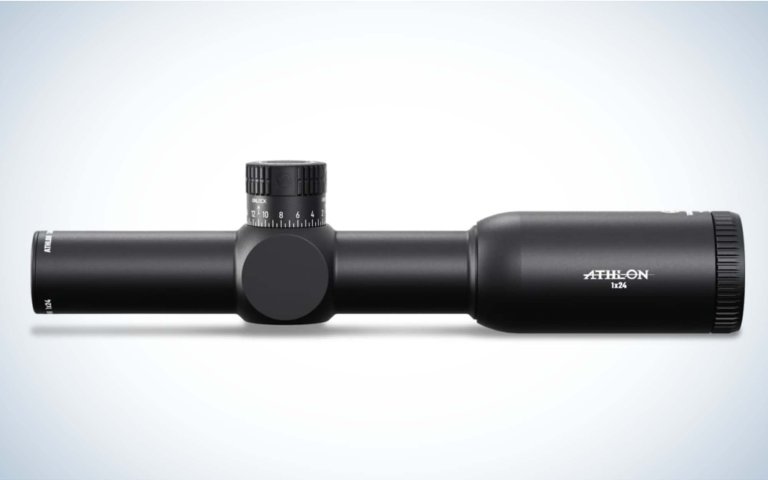
Athlon Talos HMR 1×24 Center X Reticle
Pros
- Purpose-built muzzleloader scope
- Fixed 1-power magnification
- Super simple operation
- Rezeroable turret dials
Cons
- Spongy turret action
- Limited utility with 1x magnification
Key Features
- Second focal-plane duplex reticle
- Center X design focuses eye on aiming point
- 30mm tube
- ½ MOA click values
- Fully transferable lifetime warranty
In an era of fancied-up scopes with granular reticles, precise parallax correction, and illumination modules so bright you could plasma-cut with them, it’s refreshing to see a simple, old-school optic hitting the market. This stripped-down fixed-power scope from Athlon is designed for muzzleloaders, but it could just as easily make a great rimfire plinking scope or improve a slug or turkey shotgun.
There’s remarkably little to say about this Talos HMR. Its 1x magnification is pretty solid, without the fishbowl distortion of some low-power scopes. The duplex reticle is proven. There are no illumination or parallax controls to worry about.
All that simplicity holds the Athlon back, of course. It’s not going to help you reach out beyond 300 yards to ring a steel target, and it’s not going to offer any windage or hold-over marks. But it should be durable and fast to target in close-in situations. I’m thinking of woodland whitetails, food-plot box blinds and gobblers inside about 30 yards.
We’d recommend a capped elevation turret, but that’s about the only improvement we see for a model that’s nearly perfect for what it doesn’t bring to the hunt.
Athlon Talos HMR 1×24 Specs
- Magnification: 1-power
- Objective Lens: 24mm
- Tube Diameter: 30mm
- Light Transmission: Not provided
- Exit Pupil Diameter: 24mm
- Twilight Factor: 4.9
- Field of View: 96.6 feet at 100 yards
- Reticle Plane: Second
- Reticle Type: Center X duplex
- Illumination: No
- Turret Click Values: ½ MOA
- Adjustment Per Revolution: 30 MOA
- Total Internal Adjustment – Elevation: 100 MOA
- Total Internal Adjustment – Windage: 100 MOA
- Parallax Correction: Fixed at 100 yards
- Weight: 11 ounces
- Length: 9.8 inches
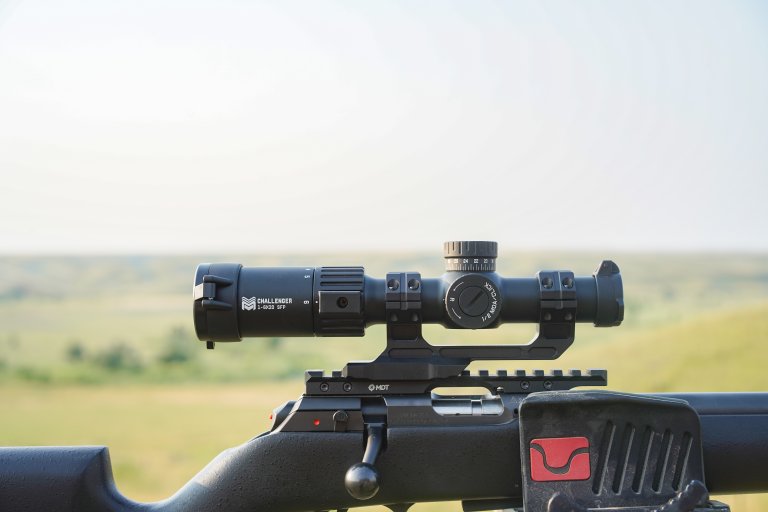
Monstrum Challenger Micro 1-6×20
Pros
- A crazy-accessible price: $79
- Includes cantilever scope mount
- Off stops between illumination intensities
- Removable magnification throw lever
- Decent entry-level competition LPVO
Cons
- Disappointing glass
- Limited internal adjustment range
Key Features
- 1-inch tube
- MOA-based BDC second-plane reticle
- Center-circle illumination
- Available in black or flat dark earth
- At only 8.5 inches, very compact
This nifty little scope almost defies comprehension. How can a company produce a serviceable, fairly rugged optic for under $80, and include both a decent cantilever mount and lifetime warranty?
We won’t audit Monstrum’s balance sheet, but we can report that the company, which mainly sells cut-rate optics through Amazon, can’t be making much profit on this smart little LPVO. The Micro is well-named. Built on a 1-inch tube, the scope measures only 8.5 inches long, fully 20 percent shorter than Monstrum’s equally noteworthy standard LPVO. It’s significantly lighter, too, weighing only 12.3 ounces. The featherweight build makes this a smart companion for a .22 auto-loader or just about any small-framed AR.
The answer to our opening question, about how Monstrum could produce a scope so cheaply, lies in forgettable glass and flimsy components. The turrets move like a fly in buttermilk — sluggishly — and the pull-to-turn locking feature is imprecise and prone to stripping. The second focal-plane reticle — it’s a standard of the LPVO category, with a floating center dot inside a segmented circle with hash bullet-drop references below — is a little thin. The Challenger Micro has dismal internal adjustment range, the result of its 1-inch tube and a fairly pedestrian erector system. And that little 20mm objective lens makes the scope pretty dark in low-light conditions.
But the 6-step red illumination that lights up the center aiming features is bright, and we like the off stops between the intensity steps. The turret click value of .5 MOA is the right increment for a low-mag LPVO.
Overall, we had few quibbles with the Challenger Micro’s handling. It engaged close and mid-range targets with ease, though its turret tracking opened up beyond about 35 MOA.
“It’s cheap and it feels cheap, but you could do worse for your money,” wrote one tester.
“The eyebox is very finicky,” wrote another. “The elevation clicks are solid, though the windage dial is sticky. It’s hard to tell when the turret is locked or not. But the glass is better than I expected and it comes with a mount. I question its durability but the warranty is a good compensation.”
This is not a scope that will compete with mid- and higher-end LPVOs, but it’s not intended to. For well under $100, it’s a very serviceable optic that will enable new shooters to get into just about any target game that pulls them. It’s a testament to the talents of this little marvel that those new shooters may take stages from competitors behind scopes that easily cost 10 times this impressive Monstrum.
Monstrum Challenger Micro 1-6×20 Specs
- Magnification: 1-6-power
- Objective Lens: 20mm
- Tube Diameter: 1 inch
- Light Transmission: Not provided
- Exit Pupil Diameter: 20mm to 3.3mm
- Twilight Factor: 4.5-10.9
- Field of View: 82.5-17.9 feet at 100 yards
- Reticle Plane: Second
- Reticle Type: BDC-B1
- Illumination: 6-step red
- Turret Click Values: ½ MOA
- Adjustment Per Revolution: 20 MOA
- Total Internal Adjustment – Elevation: 50 MOA
- Total Internal Adjustment – Windage: 50 MOA
- Parallax Correction: Fixed at 100 yards
- Weight: 12.3 ounces
- Length: 8.6 inches
How We Tested the Best LPVO Scopes

Just as our test has evolved to evaluate rifle scopes on a different basis than we judge spotting scopes and binoculars because their job as projectile-placement instruments is categorically different from image magnifying and clarifying optics, we test LPVOs differently than precision scopes.
We gave slightly less emphasis to turret feedback, for instance, than reticle illumination. And we rewarded reticle versatility of an LPVO slightly more than we do optical quality, the idea being that these aren’t observational instruments so much as bullet-placement devices.
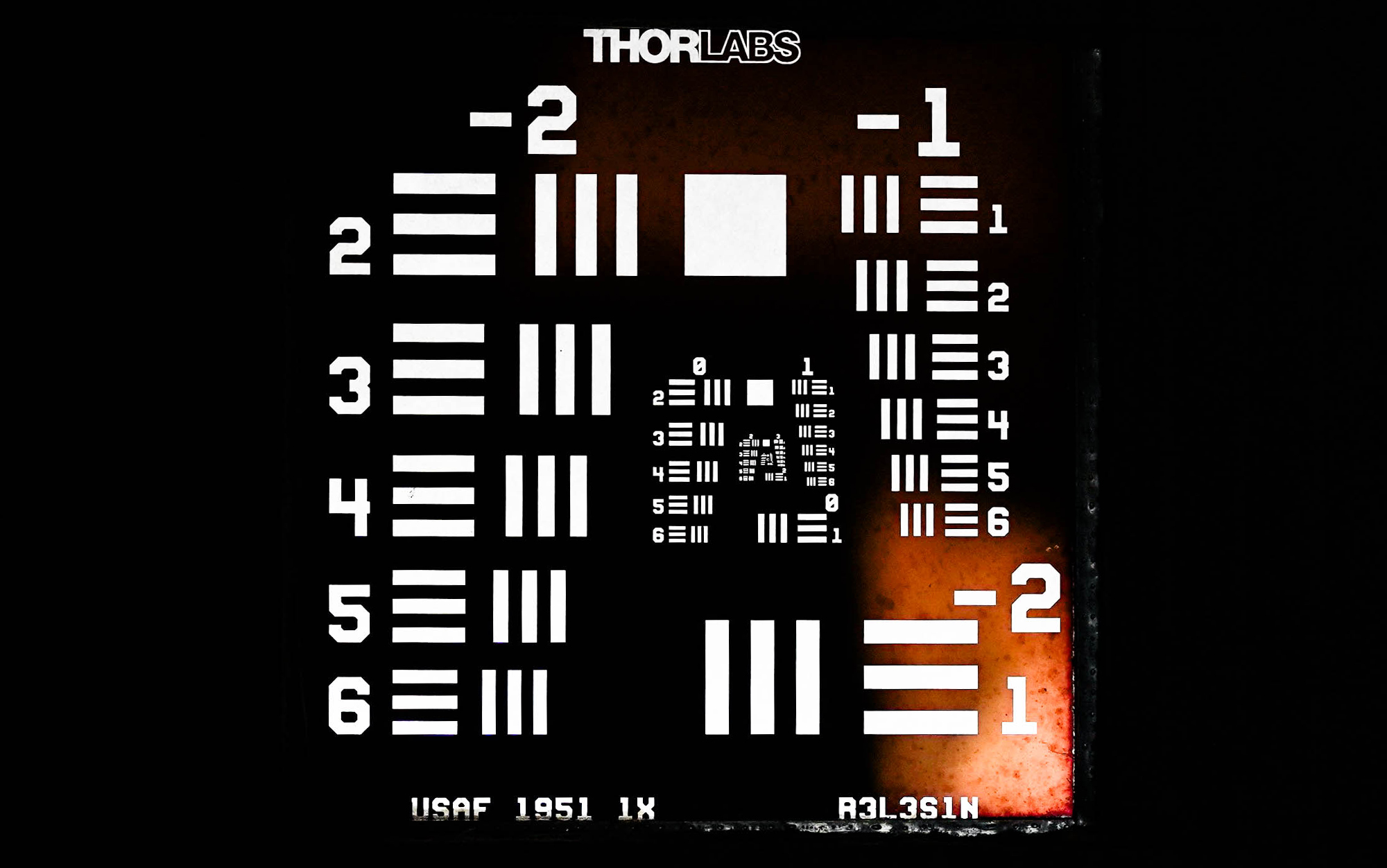
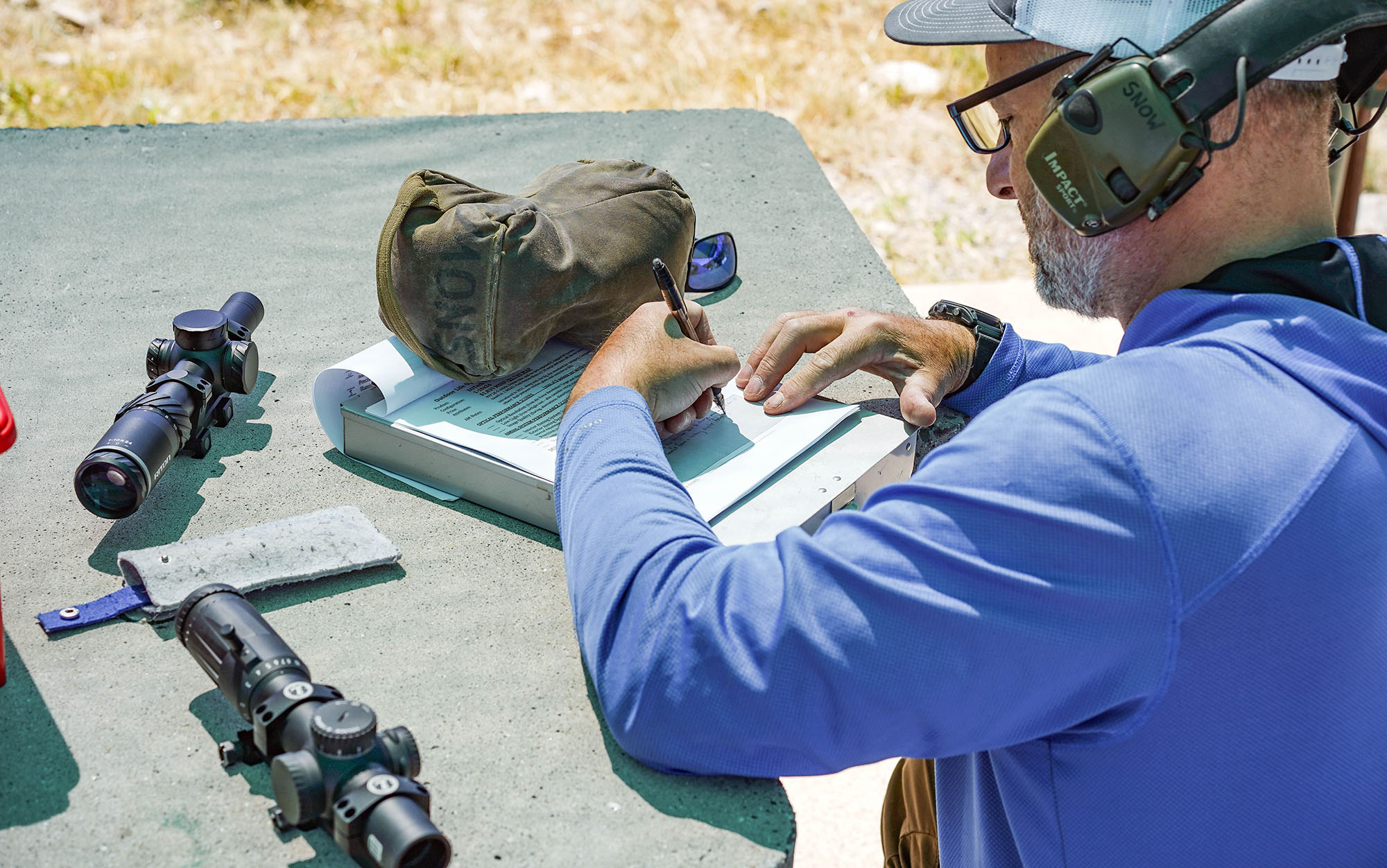
Just as with our other Optics Test categories, we put all submissions through the same criteria. First, we measure optical resolution, using the diminishing black-and-white lines of a 1951 Air Force Resolution Target to score the optical performance of each submission. We also measure the low-light performance of each LPVO scope by mounting them to tripods and focusing them as a group at 200 yards at a black-and-white resolution target at twilight, all in order to measure the brightness of the glass. As we discussed, neither resolution nor low-light performance are deal-breakers for this category, but both criteria provide valuable insights into the optical performance of the scope.
Then we take each submission to the shooting range. We put each LPVO through the same regimen of accuracy testing on bullseye targets, tracking, and return-to-zero assessment on a 10-minute grid, but we spent relatively more time on shooting drills to assess their combination of instinctive aiming, precision, and versatility. These included rapid target transition drills from standing, seated, and prone positions, followed by a big-bore instinctive shooting drill in which we walked a target course of steel plates positioned anywhere from 20 to 70 yards, and when a referee blew a whistle, the shooter had to find and hit a target within 5 seconds.
We break our 10-point scoring into four general categories:
- Optical performance (15 percent of total grade)
- Aiming system (a whopping 60 percent of total grade)
- Design (15 percent)
- Value (10 percent)
The average of these categories is the basis of our grades, detailed below.
Optical performance includes the resolution and low-light tests plus the more subjective assessments of image quality and brightness. Aiming-system performance assesses interior (reticle design, visibility, and utility as well as illumination) and exterior aiming system (turret positivity and indexing, parallax adjustment, zero stop), precision, and shootability. Design considers the exterior finish, interior blacking, mounting dimensions, and durability.
And then our price/value score rates how much scope — along with warranty and amenities such as rings, extra turrets, and lens covers — you get for your money. The LPVO that gets the highest overall score wins our editor’s choice award for the best in the category; the optic with the highest price/value score wins our Great Buy recognition, and we give other awards based on specific attributes.
How We Grade LPVO Riflescopes
Our 100-point evaluation adds up to a total numeric score, but we translate those to grades for each submission. Our optical performance grade combines the scores from resolution, low-light, and image quality. Our aiming system performance grade aggregates the interior/exterior aiming system, precision, and shootability scores. The design grade considers construction, innovation, versatility, and durability. And then the price/value grade is our good-deal grade.
To earn an “excellent grade,” the average of that category must be 9 or higher, which is extremely hard to achieve. “very good” is an average score of 7 to 9. A “good” grade is 5 to 7. Our “fair” grade is 3 to 25, and “poor” is anything under 3.
How to Choose a LPVO

Because this is such a new and rising subset of sports optics, innovation defines the LPVO category. That dynamic alone makes this a buyers’ market. Do you want a do-it-all scope that can dominate a precision steel-target competition and then defend your homestead? Or do you want a simple, durable low-power scope that can toggle between your new 350 Legend lever gun and your turkey shotgun? This category has something for you.
Buyers are wise to look out for a few attributes. First, an unilluminated reticle on a 1-to-something-power scope is worthless. You need the aid of a bright, adjustable illuminated aiming point both in low-light conditions and in full sunlight. Second, you need a dual-purpose reticle. Here’s where the first-plane models have an advantage. They can transition from capable red-dot sights at the lowest magnifications to precision scopes at higher powers, boosting their value proposition in the process. That’s not to say second-plane reticles are useless. They are excellent choices for turkey and lever guns or for dangerous-game rifles where sure, swift, close-range shots are not only preferred, they may save your life.
One of the most surprising trends of modern sports optics is how expensive premium LPVOs have become. That may well be a function of the market; you buyers are willing to pay a kings’ ransom for these fairly niche optics. Look for the price to come down as more brands enter this space, delivering even more versatility and utility in configurations that put a premium on reticle design, illumination, and turret behavior than on glass quality.
Final Thoughts on the Best LPVO
More than any other category of rifle scope, the LPVO class has the widest variability of price and attributes. Want to spend just over $100 on a scope? There’s a model for you. Have a cool $2,000 to throw toward a short-range rifle scope? There are a couple options.
Given the variation within the category, it’s important to return to the value propositions of the configuration. LPVOs were initially AR-platform scopes, low-power workhorses that could engage targets up close and sometimes in dark conditions but they could also place bullets with decent precision at middle distances. That remains an important use-case for the platform.
But even more important is the scope’s “shootability.” That’s a squishy term, but it’s a combination of a number of attributes that combine to make an LPVO feel like an extension of your eyesight, or an organic part of your rifle. At low magnifications, can you engage targets quickly and with both eyes open for better situational awareness? Does the reticle and illumination guide your eye to the target, or are you fighting eye relief and reticle fuzziness and poor ergonomics?
“Shootability” extends to slow-fire situations, too. How clear is the glass and how visible are reticle references for precision bullet placement at ranges well beyond your zero-distance?
While we’re talking ideal LPVOs, we’d like to see capped turrets and a throw lever. And we don’t need manual parallax in this class; fixed 100-yard parallax is just fine.
When you’re in the market for your next LPVO, consider our wish list, plus good glass, liberal mounting dimensions, and a rock-solid warranty. If you use the scope the way it was designed, you might well need that warranty before your time with the scope is over.