
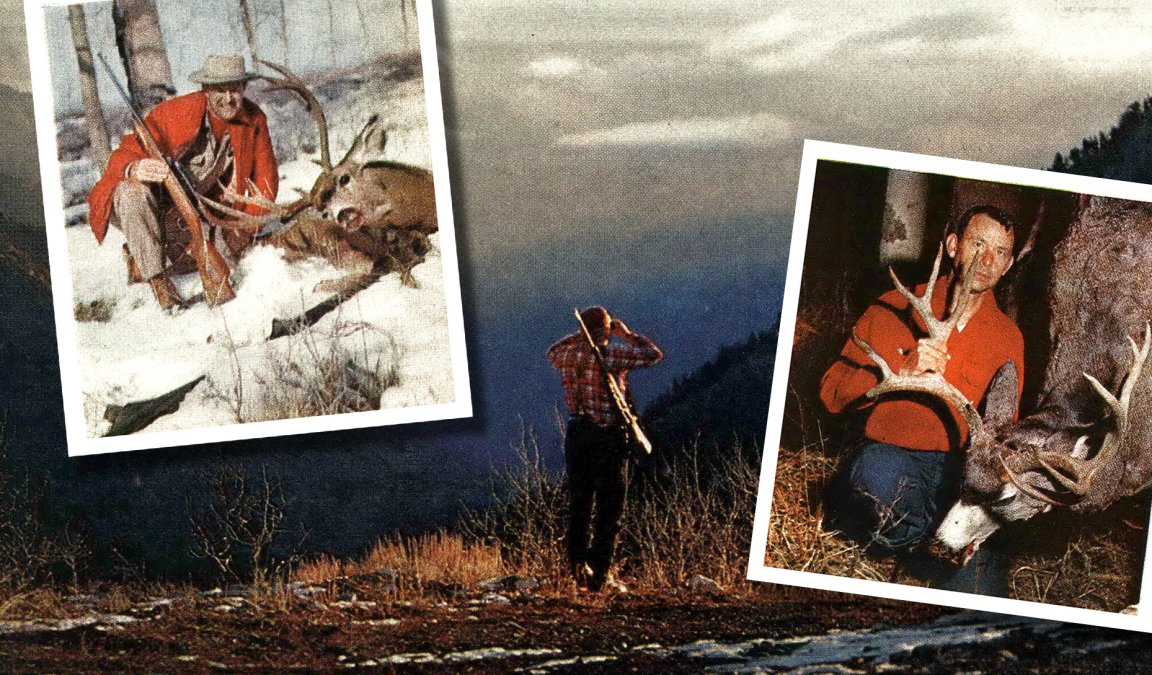
This story, “Buckskin Bonanza,” appeared in the September 1961 issue of Outdoor Life.
During most of that raw and bitter afternoon, I followed a mule-deer track which was hard to believe. The sharp prints were nearly as big as the palm of my hand.
Sometimes the prints were distinct in the snow that had fallen a few days before. Elsewhere they vanished as the biting wind blew snow across them. My ears and fingertips were numb, and the farther I traveled, the more elusive became the trail. Several times I almost gave up, but these were the biggest deer tracks I’d ever seen.
“I’ll cross just one more ridge,” I promised myself, thinking of the long hike back to the jeep. “Then I’ll turn back.”
I trudged ahead and found the tracks again, 100 yards or so beneath a low ridge. I followed them slowly toward the crest, trying to keep the snow from crunching too noisily underfoot. Just under the crest I paused to catch my breath before peering over the top. There, not 200 paces away, my deer was standing and watching his back track. He was even bigger than his hoofprints suggested.
As carefully as possible, I raised my .270 behind the trunk of an aspen. Using the tree as a rest, I held the crosshairs of my scope squarely on the big animal. He had five points on each side, and the rack was thick and heavy. But even as I counted the points, I caught movement in a clump of trees beyond the buck. It was another muley almost as big as the buck I’d followed. Then suddenly the landscape before me was alive with deer.
Just by panning my scope from left to right, I saw six more deer — all within good range of my .270. Each was the kind of beautiful trophy that deer hunters dream about.
I studied the herd a long time, perhaps too long, trying to pick out the best rack. Several bucks began to drift away. The biggest ran. I never did pull the trigger; the deer season wouldn’t open for two more days.
Finding these bucks was the result of a pre-season reconnaissance made especially to locate the big ones. I carried the rifle only because this country was also good for bears and lions, on which the season is never closed.
Though I saw no bears or lions, in a few days of wandering across the West Tavaputs Plateau of northeast Utah, I found enough deer for a lifetime of hunting. It’s a region that more and more sportsmen are bound to find.
This Tavaputs country came to my attention in a roundabout way. First I noticed in the official Utah Fish and Game magazine that a record kill of 128,000 deer had been made in the state during 1959. A similar score was predicted for last year. That 1959 bag of mule deer was the largest anywhere in the nation. Even more important to me was the unusually large ratio of trophy heads. I’m always looking for new and better deer-hunting areas, so I filed this information away.
In the spring of last year I traveled to Utah to fish and explore some remote parts of the Green River country. That’s when I met Jim Hurst, who leads an exciting, sometimes perilous, life. He’s a bush pilot whose best customers are uranium prospectors, petroleum scouts, and sportsmen. Jim also flies the mail to remote ranches, and every year he participates in river rescues on such wild stretches of river as Desolation Canyon on the Green and Cataract Canyon on the Colorado. Many boatmen owe their lives to him.
One day we were flying over Desolation Canyon, and Jim pointed a finger toward the trackless landscape to the west.
“That’s great deer country,” he shouted above the motor’s roar. “The best I’ve ever found anywhere.” That rang a bell; I remembered the magazine report.
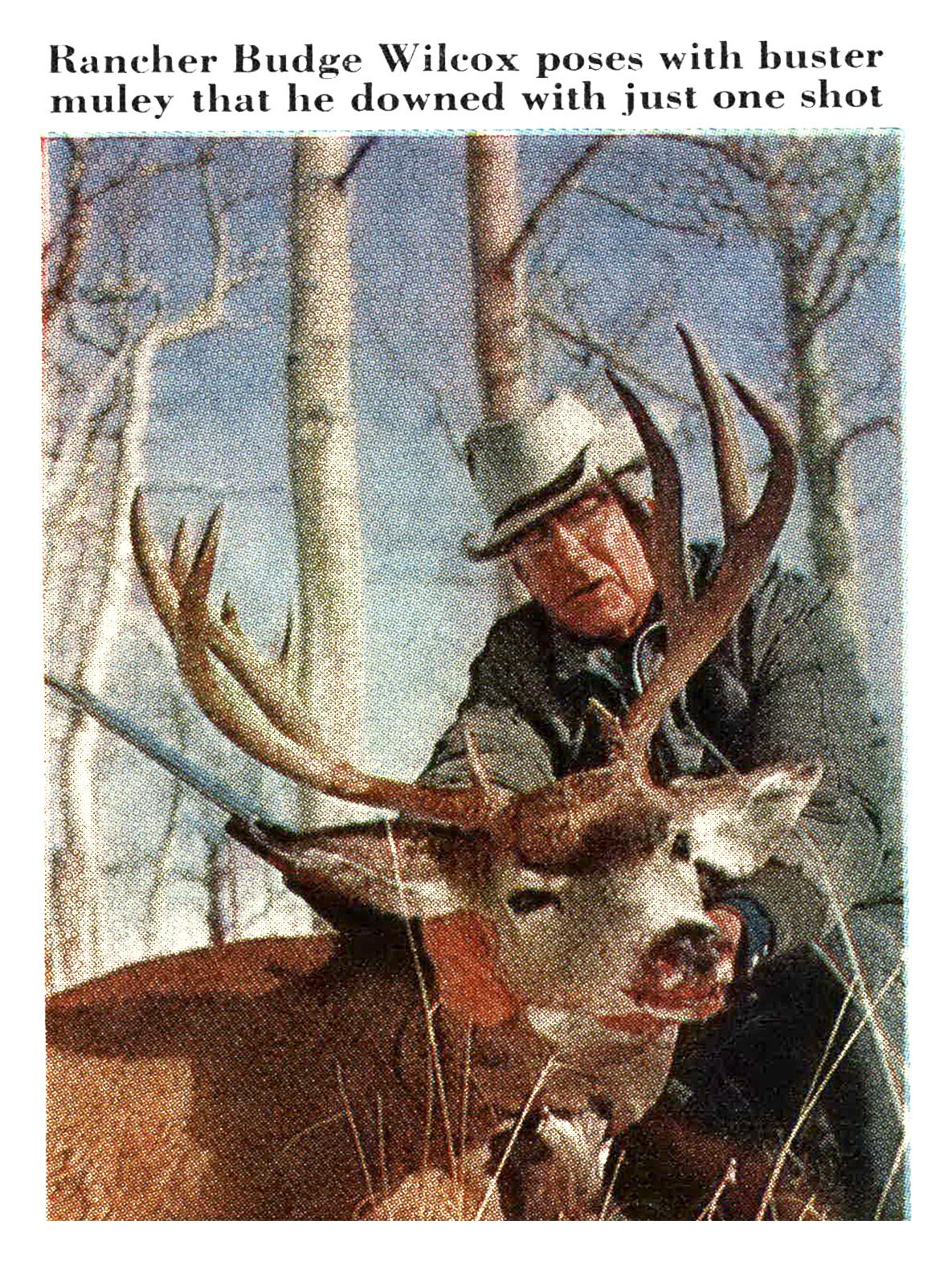
Next day Jim introduced me to Ray (Budge) Wilcox who operates a vast cattle ranch in the middle of that West Tavaputs Plateau. Thereafter Budge and I carried on a lively correspondence right up until deer season.
“Why don’t you be our guest?” Budge had written during the summer. “Plan to arrive a week before the season. Deer are easy to get, but with a free week to scout around, we can get a line on some bucks as big as our yearling heifers.”
He didn’t have to elaborate. I arrived in Dragerton a week before opening day, and Budge and his oldest son, Don, were there to meet me. We drove 30 miles across steep and upside-down country to the Range Valley Ranch, which is co-owned by Budge, Don, and Don’s younger brother, Waldo. Besides the cattle operation, they entertain hunters for a reasonable fee. They furnish meals, transportation, lodging, guide service — the works.
There are several ways to contact ranchers, and these will work almost anywhere in the West. One is by local inquiry — around farm and ranch-supply shops or around cattle auctions. Another way is to write to the local chamber of commerce, to the state fish and game department, or to the county agricultural agent. This last man really knows his way around.
The cost of your hunt depends on how the rancher operates. For instance, will he let you set up your own camp somewhere? Can he accommodate you if you want room and board instead? Conceivably a hunt, exclusive of licenses and transportation, could cost you as little as $25 for a small party. On the other hand it could cost as much as $200 per person for the whole season. A Utah nonresident license is $40.
The layout at Range Valley is actually two ranches. The first, or winter, ranch is a picturesque spread deep in a red and blue rock canyon formed by Range Creek. The elevation is about 8,000 feet. It’s in this vicinity that the Wilcox cattle herd in winter. Although the Tavaputs region is extremely dry, several clear, cold springs keep Range Creek running the year around. I recall when I arrived, the sagebrush in surrounding meadows was fragrant, and giant cottonwood trees all along the river were as bright as nuggets of gold.
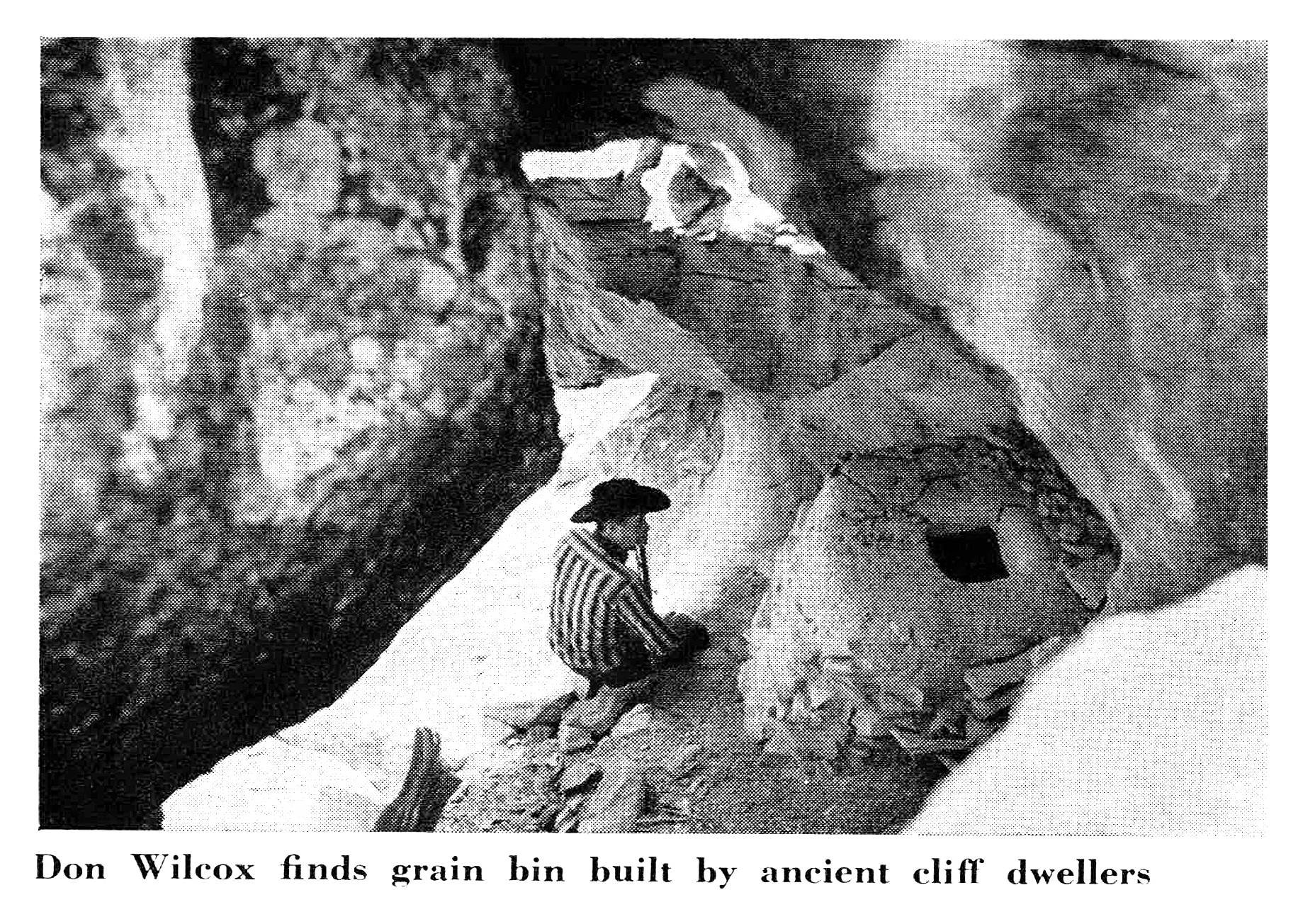
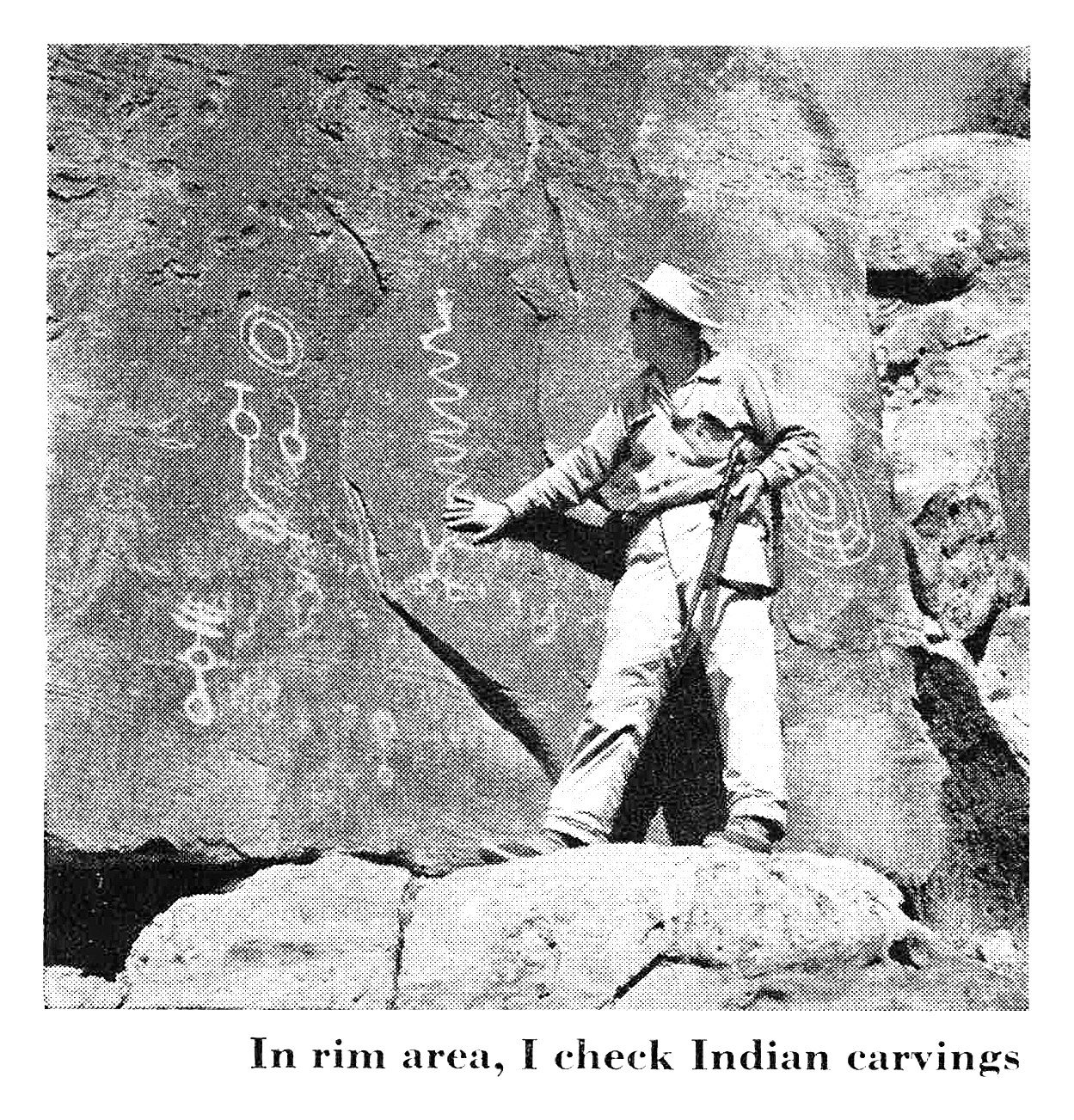
Don told me some interesting stories about the Mokies, a civilization of cliff dwellers who long ago inhabited the area. Tradition has it that they seldom grew more than four feet tall. Their tiny “apartments,” granaries, and crude pictographs still exist on nearby canyon walls.
Also still in evidence are drawings made later by Indians. They seem to show that rattlesnakes, deer, sheep, and bears lived in the valley in those days; today only the sheep are missing. Still later, the valley was a hiding place for outlaw Butch Cassidy’s Wild Bunch. The first homesteader was an army deserter from Fort Duchesne to the north. His shack and hay derrick are still standing.
The second, or summer, ranch is breath-taking in its location on a canyon rim 10,000 feet high. Almost from the cabin door a canyon falls away in a dizzying, near-vertical slope. But behind the main building stretch thousands of acres of rolling plateau. It’s a mixture of sage and grass upland laced with strips of quaking aspen. Together, the summer and winter ranches comprise the finest of mule-deer range.
Budge and I stopped long enough at the lower ranch to drop Don off there. Then we continued up to the summer camp where we’d do most of our deer reconnaissance. I’d thought the driving was tough enough on the way to the lower place via a winding road and a wind-swept 10,000-foot pass. But it was like turnpike travel compared with the road to the summer camp. I wouldn’t recommend it to anyone with a weak heart.
This trail is a thin strip dynamited out of sheer cliff in places where even a bulldozer couldn’t operate. It has 12 switchbacks to climb 2,000 feet in less than a mile. And since it’s impossible to turn a jeep around on several of the switchbacks, you have to back up part way. Budge drove in four-wheel drive.
When we were about halfway to the top, wet snow began to fall. We finally arrived, after constantly skirting the edge of oblivion, and I had a new respect for both my host and his vehicle.
I also had a tremendous appetite for the extravagant T-bone steaks that Pearl Wilcox, Budge’s wife, prepared on our arrival. Waldo and his wife Julie joined us for dinner.
That night I slept with visions of deer running up and down the cliffs.
In the morning, the West Tavaputs Plateau was a blinding white. Five inches of snow had covered the high country during the night, but the storm had passed and the sky was deep blue from horizon to horizon. We could see that no snow had fallen at lower altitudes, at least not in Desolation Canyon.
Budge and I enjoyed a breakfast big enough for four men, pulled on heavy jackets, and went out into the cold.
“We’ll take the jeep,” he said, “and sashay straight across the plateau to get you acquainted. After that, we can separate and cover more country.”
“Sounds sensible to me,” I said, “but I’ll need a little time to get accustomed to this altitude.” I live in Columbus, Ohio, where it’s only 500 feet above sea level; two miles higher made quite a difference.
“Just take it easy at first,” Budge advised. “But carry your rifle, because lions like to run after a fresh snow. You might see one.”
The jeep coughed and sputtered several times before starting, while I scraped a crust of snow from the windshield. Once we were under way, Budge said, “I think you were mighty wise to get here early — especially with this new snow. I figure the biggest bucks will be more bunched up than ordinarily at this time. They’ll be harder to find, but when you do find them, you’ll know how to save plenty of footsteps once the season opens.”
During the next few days we covered plenty of Utah’s most air-conditioned real estate, both by jeep and on foot. On southern exposures, some of the snow melted; on northern slopes, it remained. It was a pleasure to reconnoiter the land with Budge. He has spent all of his 58 years in this part of the West, and he loves it. We saw plenty of deer.
We found one spot where a lion had stalked a small band of deer and then had waylaid a forkhorn buck not long before we discovered the kill. On another occasion we had a close look at a pair of golden eagles. At dusk on still another day, I saw a spectacular scene I’ll never forget. In an irrigated alfalfa field above the winter ranch buildings, we counted 65 deer at one time. I’ve traveled widely in deer country, but can’t recall anything to match this.
There was just one disappointing note: Among all those muleys were only two or three bucks in the true trophy class.
The big herd, though, was a welcome sight to Budge, for he’d have 23 hunters coming to the ranch on the eve of opening day. His 16 bowhunting guests had scored 100 percent during an earlier archery season. And now he was optimistic about the rifle season.
The dates of Utah’s deer season vary from year to year. Generally, though, the bow season opens October 1 and runs for two weeks. The rifle season opens toward the end of October, often on the third Saturday or third weekend.
Since I wanted to see more really big deer, I returned to the high camp next day to continue my exploration. Experience and a strong hunch told me that the biggest bucks would still be in the highest country despite the snow. That’s how I happened to follow that one big track I mentioned earlier to the six big deer on Monument Knoll, where the elevation is about 10,500 feet. That’s also how I found still other big bucks in the same area the next morning while Budge went into Dragerton to pick up his party of hunters.
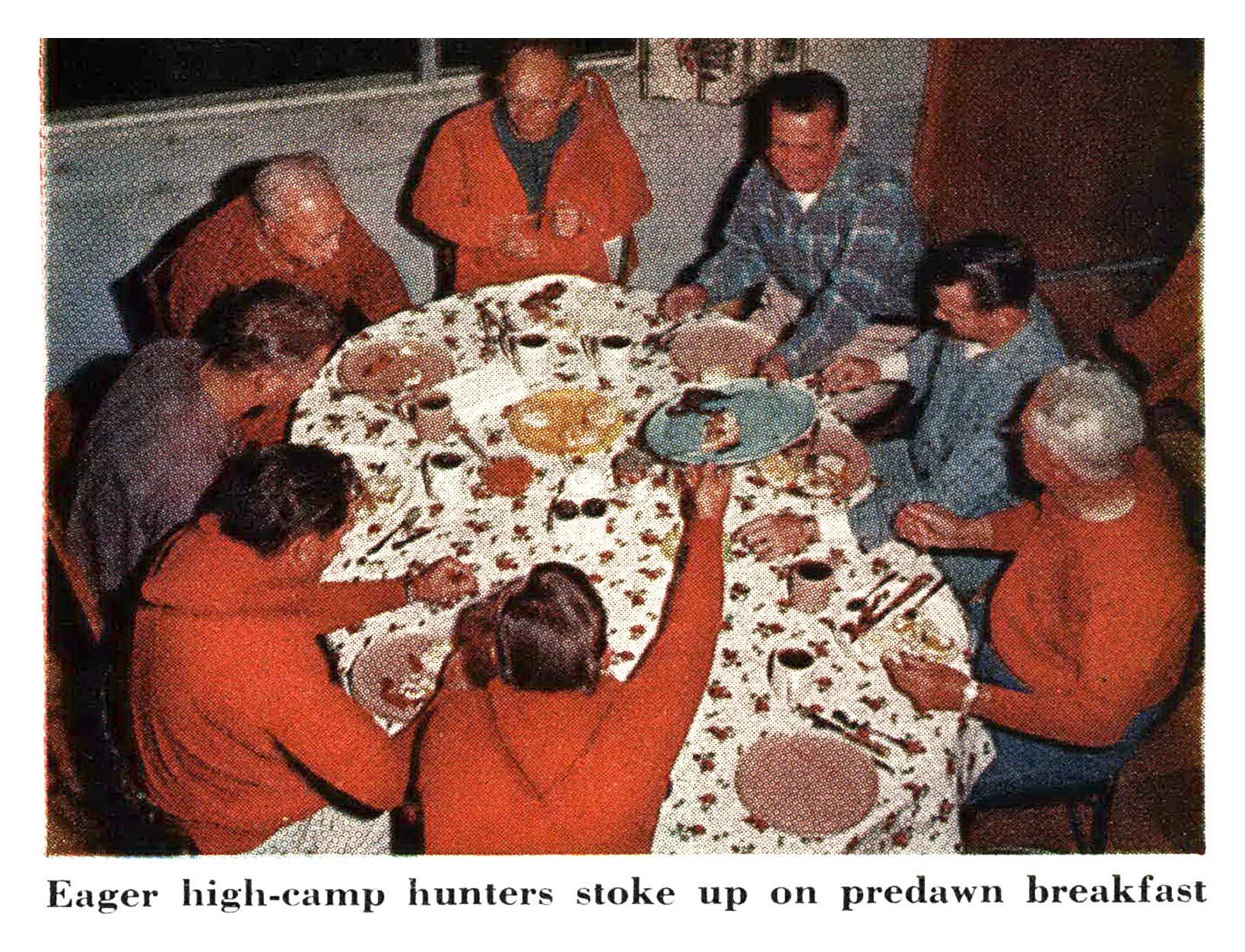
It’s always exciting to spend the eve of opening day in a deer camp. Of the 11 California hunters who arrived at the upper camp, even those who’d scored in their own state’s deer season were full of expectation. They oiled rifles, swapped yarns, and made a few friendly bets on the biggest buck. Then they all retired early.
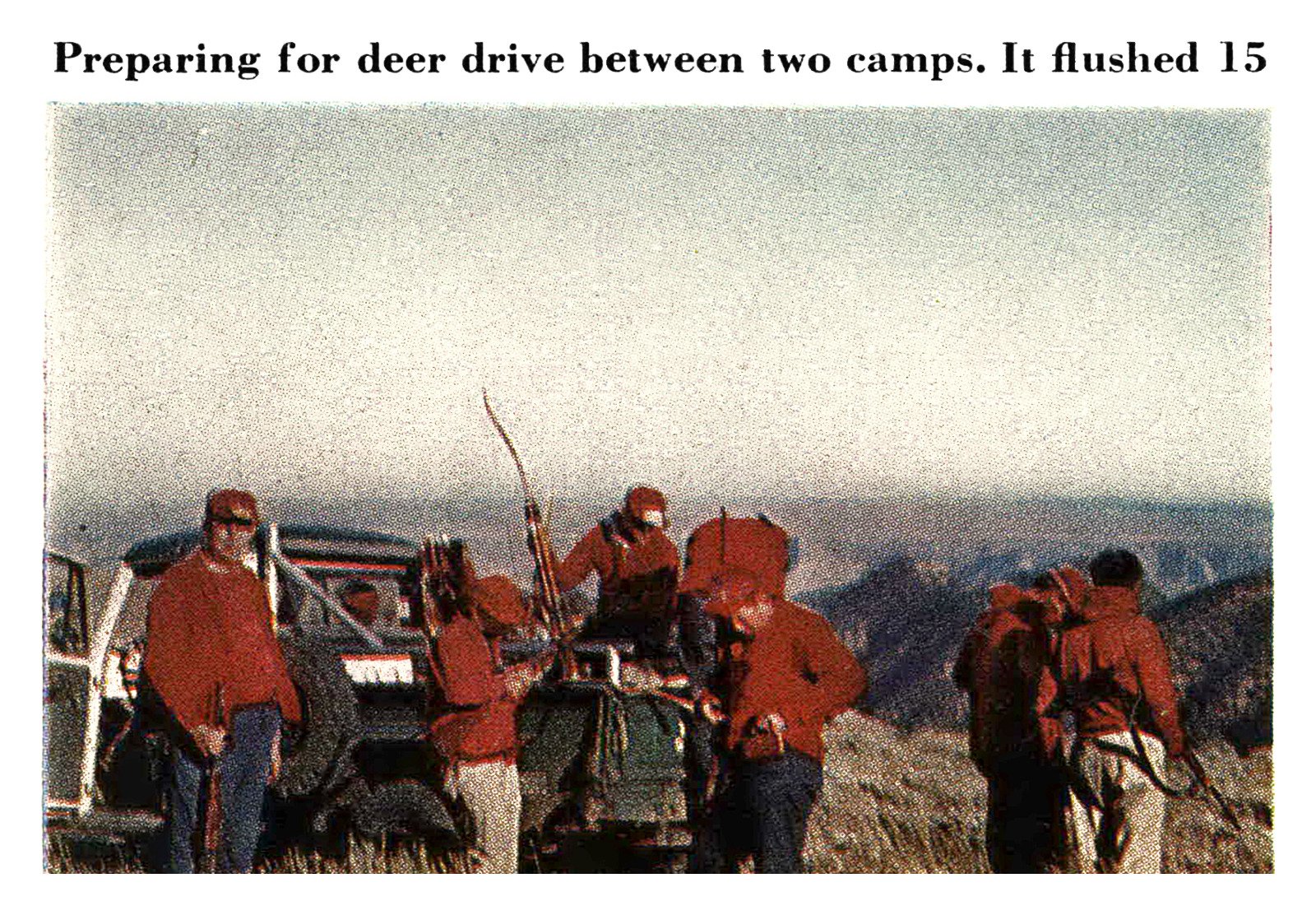
Next morning Pearl Wilcox was the busiest person in camp. She fried enough bacon and eggs and made enough hotcakes to feed everyone in the county. With these calories under their belts, the Californians scattered to every corner of the plateau before daybreak. I headed straight for Monument Knoll and wasn’t too surprised to find Budge going the same way. Two other hunters joined us.
“Let’s surround the area,” Budge suggested, “and stillhunt it until noon.” As an afterthought he added, “Then I’ll get the jeep and pick up the deer.”
He was mighty optimistic, I thought, as I went my own way. But so was I.
I’d no sooner separated from Budge than I found the fresh tracks of eight or nine deer heading for lower altitudes, but I didn’t bother to follow; all were obviously small animals. Instead I continued along a contour, climbing occasionally to the rounded summit of Monument Knoll. Suddenly a fine muley buck and I were looking at each other less than 50 paces apart.
For a moment I stood flat-footed. With a mittened hand, I fumbled for the safety on my .270, a Remington Model 721 with homemade myrtle stock. I tried to find the deer in my scope. The buck stood and watched. It wasn’t until my scope’s crosshairs were wavering on his neck that he bounded off, but only to stop and stand motionless 50 yards farther away. I aimed again, but lowered the rifle. He was a good buck, but not up to what I was looking for.
I’d just started on my way again when there was a shot not far to my right. I hurried that way and found Budge just under the ridge dressing out a bragging-size muley. Its rack looked as big as a rocking chair. Budge first saw the fat six-pointer silhouetted on the skyline; immediately it broke and ran. It didn’t even flinch when he hurried off the shot.
“I was sure I missed him,” Budge said, “until I found big splotches of blood on the snow.”
Somehow the deer ran far downhill, even though hit with a solid chest shot. I helped Budge finish dressing the critter and then moved on again. The happy rancher wished me luck and repeated, “I’ll meet you here at noon.”
Monument Knoll seemed to be loaded with outstanding bucks. A quarter of a mile from Budge’s kill, I picked up a fresh, unusually large track and decided to follow it.
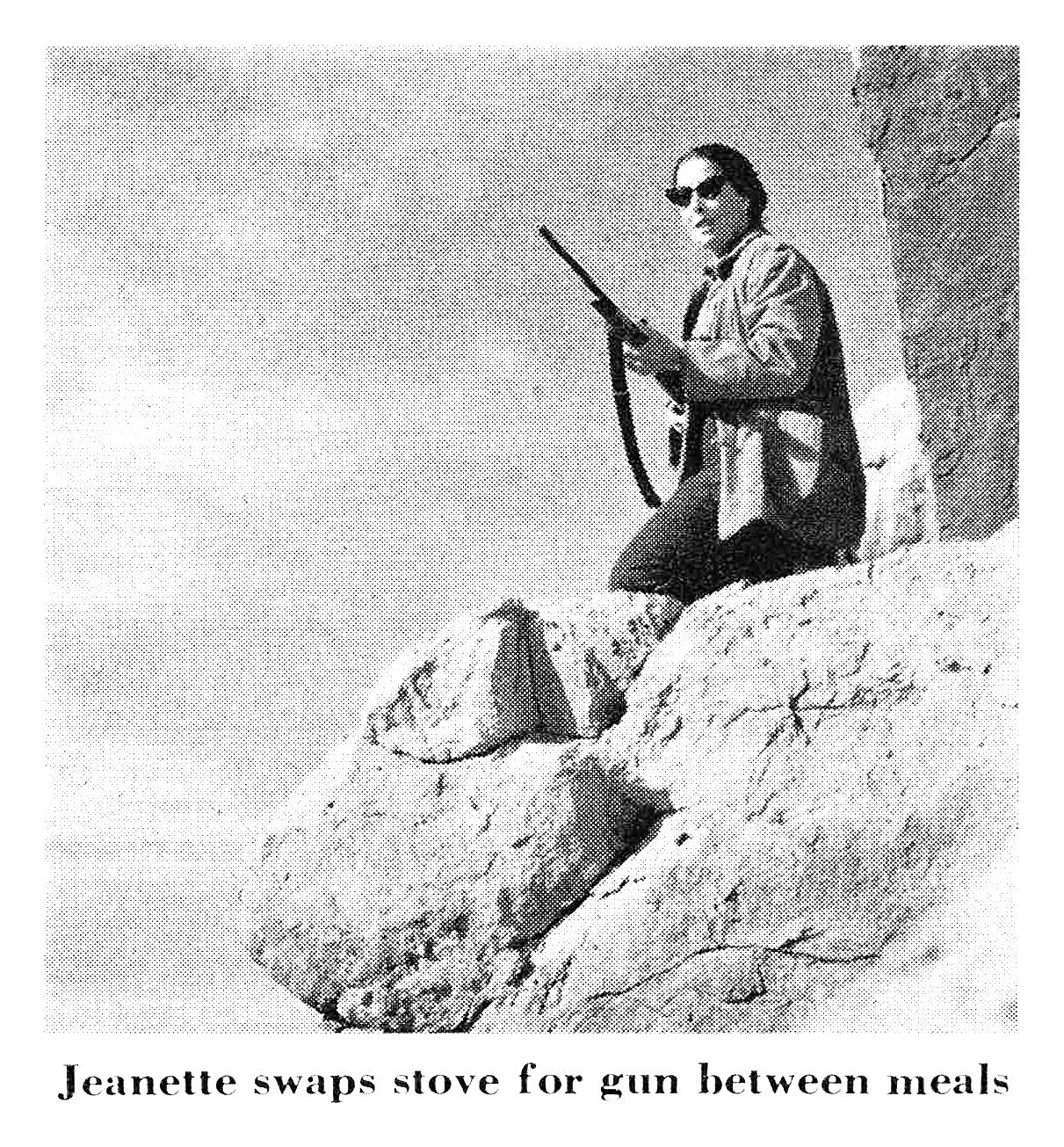
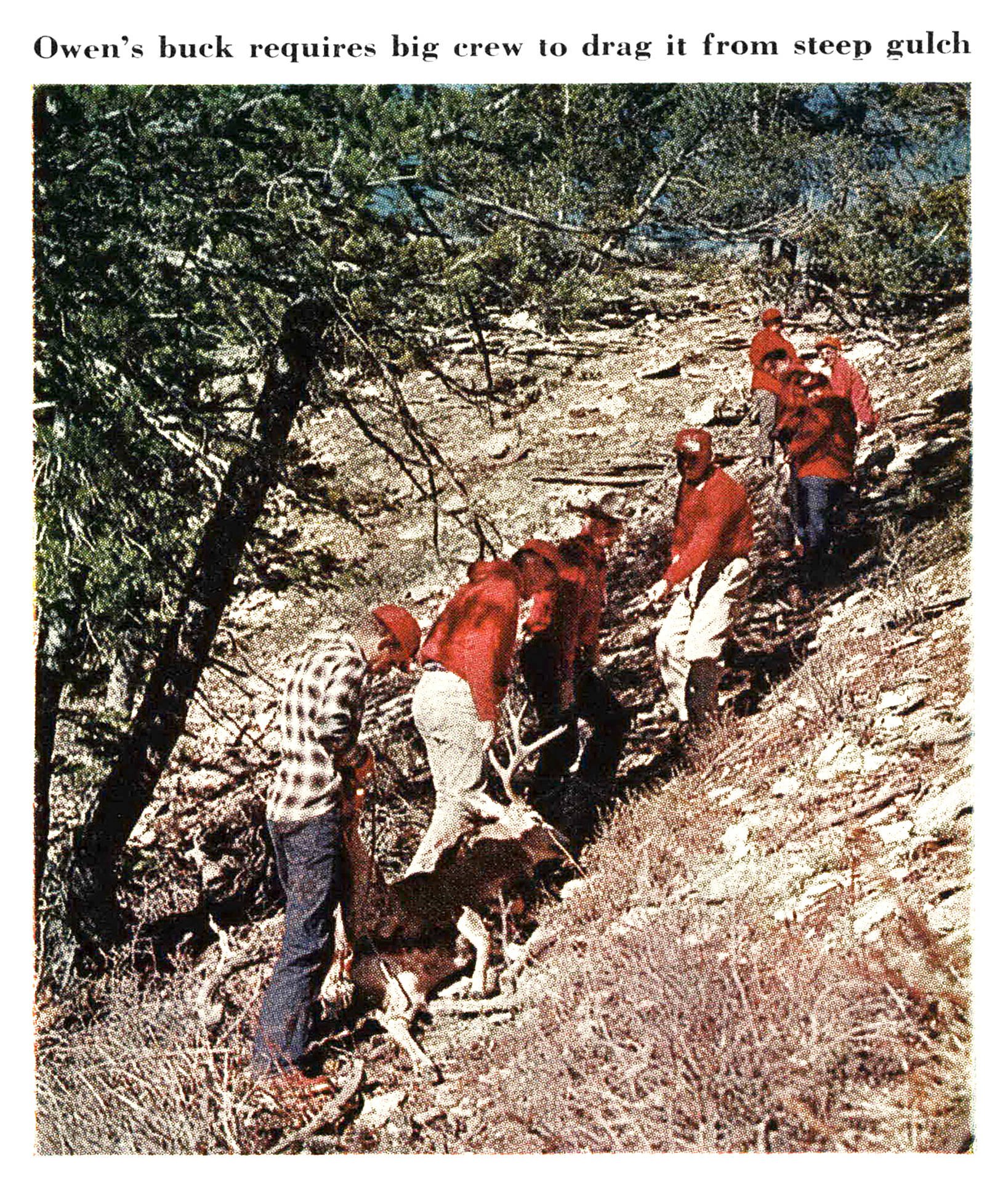
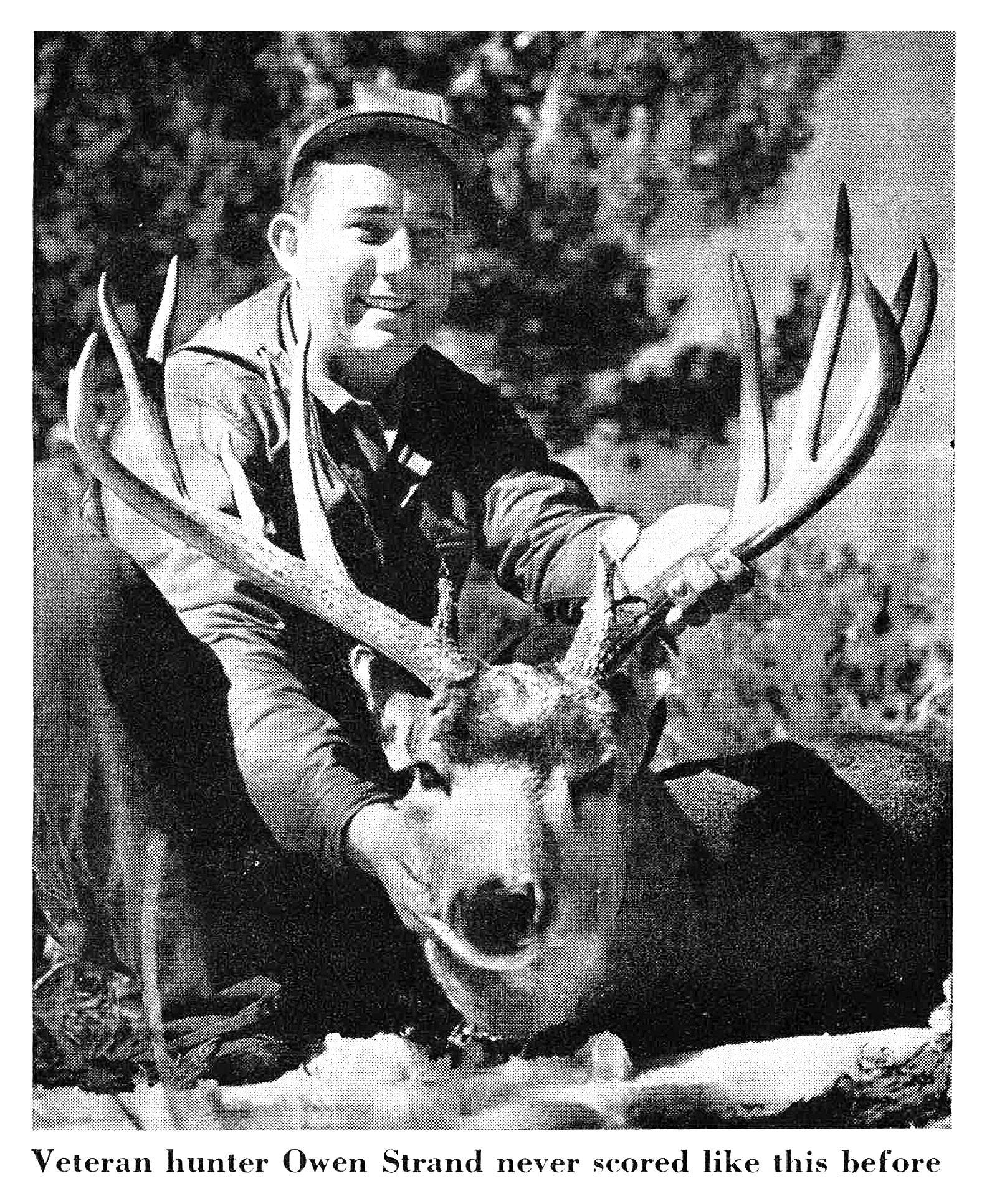
That was a good decision as far as Owen Strand of Hawthorne, California, was concerned; I pushed the deer right past the spot he’d selected to scan the surrounding country. He needed just one shot to tumble the buck into a steep canyon. It was an extremely handsome, heavy-antlered buck. The deer was so big that even with its entrails removed, the two of us couldn’t begin to drag it up the steep slope. Actually it was to require a major effort by eight hunters later on to drag the deer back to the canyon’s rim. There it could be reached with a jeep.
That afternoon I had Monument Knoll to myself. The morning’s shooting hadn’t made the muleys thereabouts any less jittery. I spotted three good bucks at extremely long range, but they evaporated before I could even begin a stalk. I decided to hunt more slowly, more deliberately. I saw other deer far away. But before I realized it, afternoon was becoming early evening. The sun dropped behind the purple badlands in the west, and I turned to head back toward Budge and the jeep. All at once I was exhausted both mentally and physically.
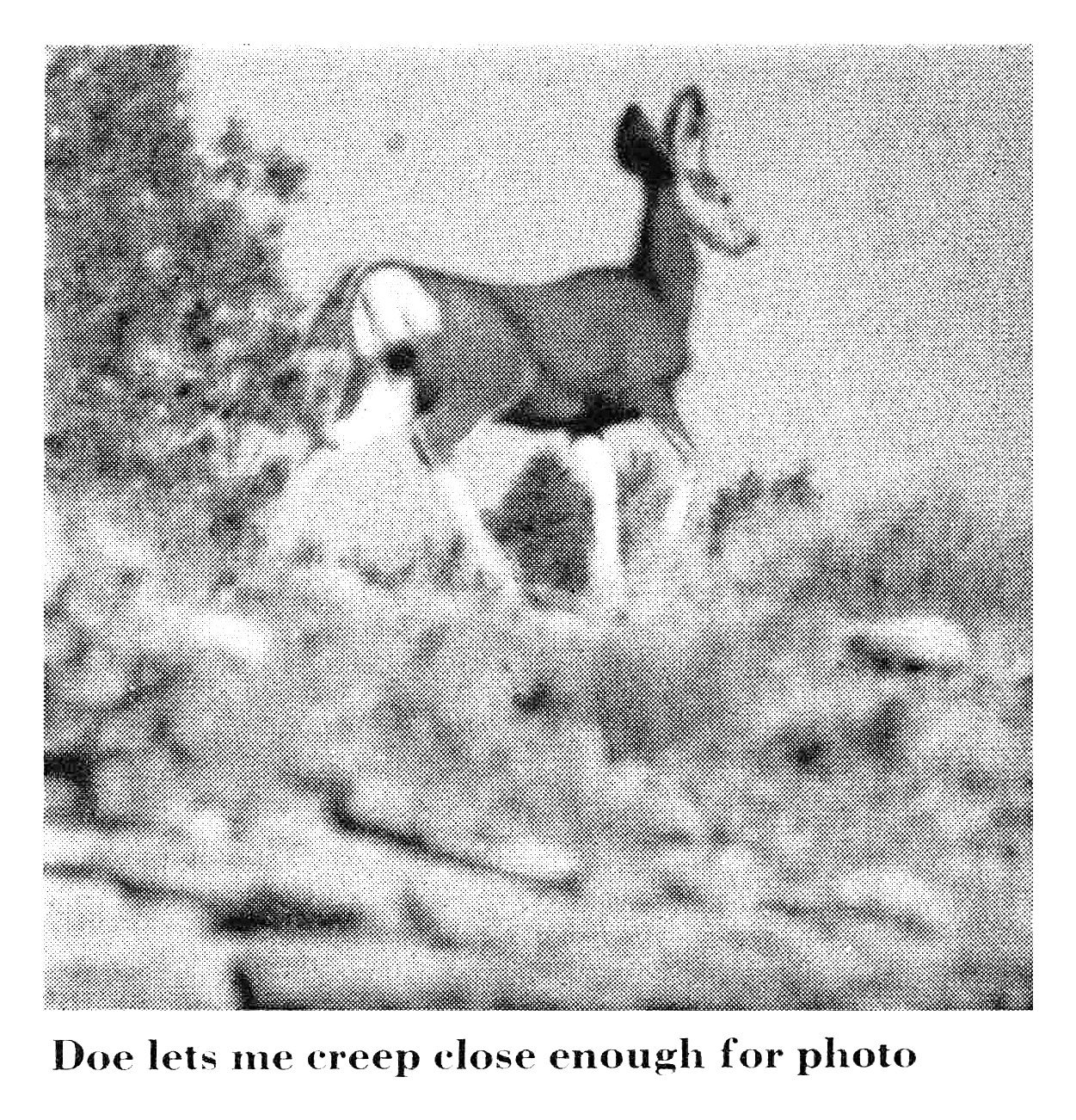
I’d concentrated so hard all day that at first I thought I was only seeing things. But there it was again — a flick of movement in the aspens across a long draw. I held my rifle against an aspen to steady it, and carefully studied the spot through my scope. In the rapidly fading light, a splendid buck muley took half a step forward and looked straight toward me. Here was the buck I’d dreamed about so long, but my dreams hadn’t included such impossible conditions.
The buck was 300 to 400 yards away. Besides, he stood in second-growth aspen with little more than his neck, rack, and rump showing. When I stretched out prone in the snow and tried to steady my sights on the dim and distant target, I had serious doubts. The crosshairs wouldn’t stop wavering.
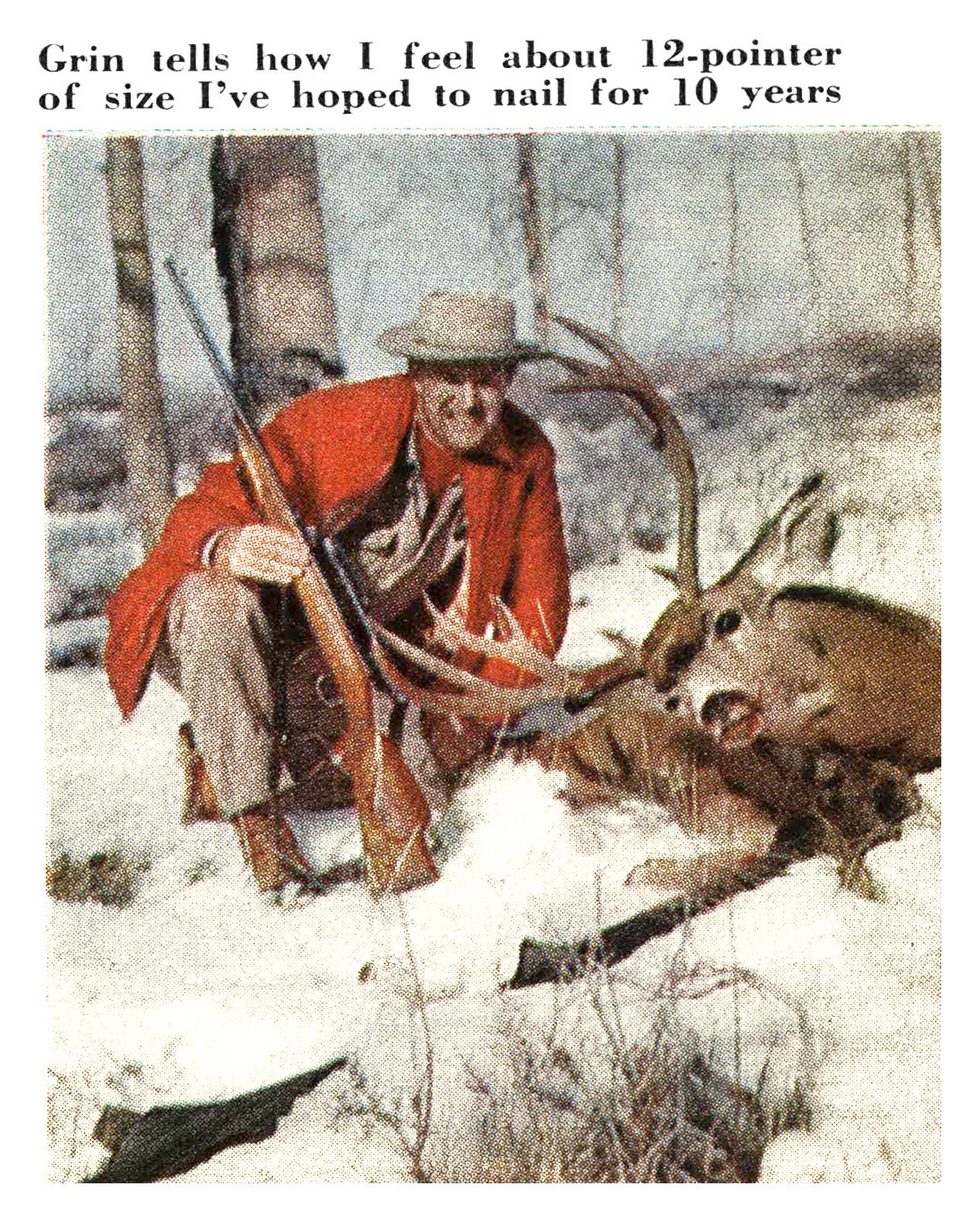
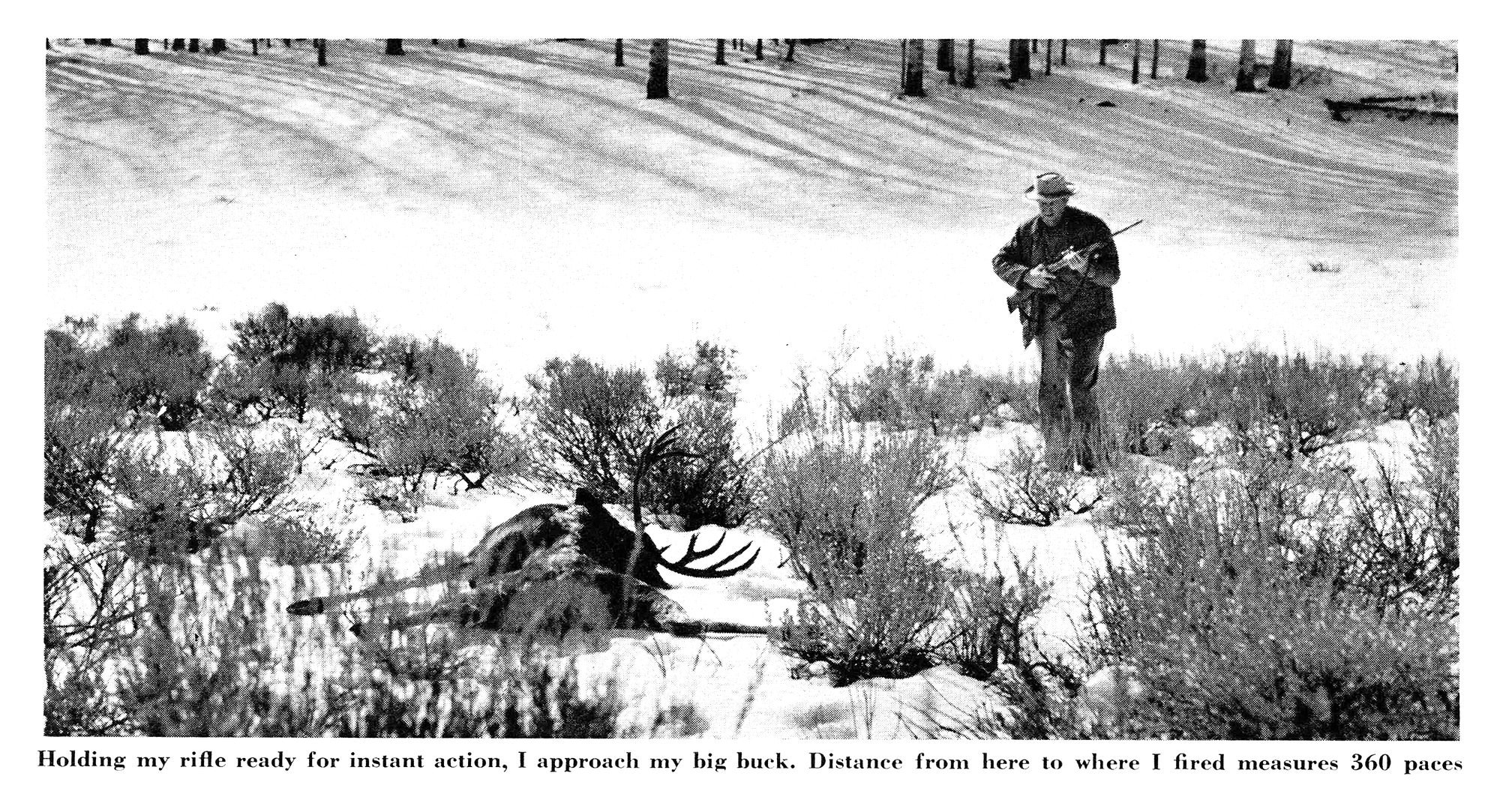
Then I took a deep breath, held it, and squeezed off a shot. The buck staggered, lurched downhill, and fell. I found him 360 paces from where I fired.
I’d been hunting for a trophy muley like this one for 10 years. It had six points on each side, and I estimated it weighed 250 pounds, maybe more.
I’d barely finished field dressing the deer when I saw lights come bobbing over the ridge behind me. A few minutes later Budge was shaking my hand. He seemed even more pleased with the world than I was, and he had good reason.
“All the fellows had deer practically coming out their ears,” he said. “Everybody got at least one.” (Utah’s limit was two deer per hunter: one buck, one doe. Even extra permits were available in some areas).
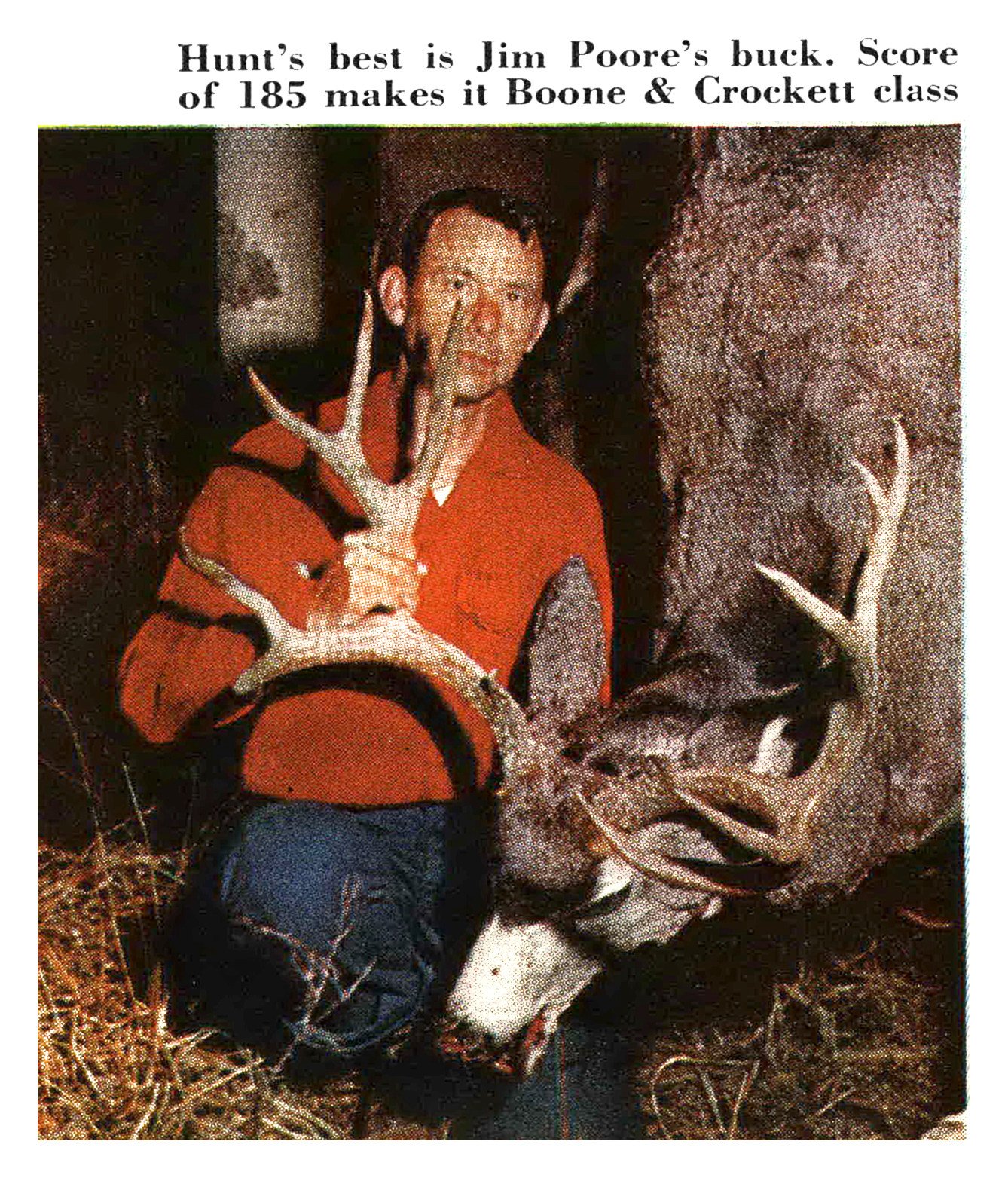
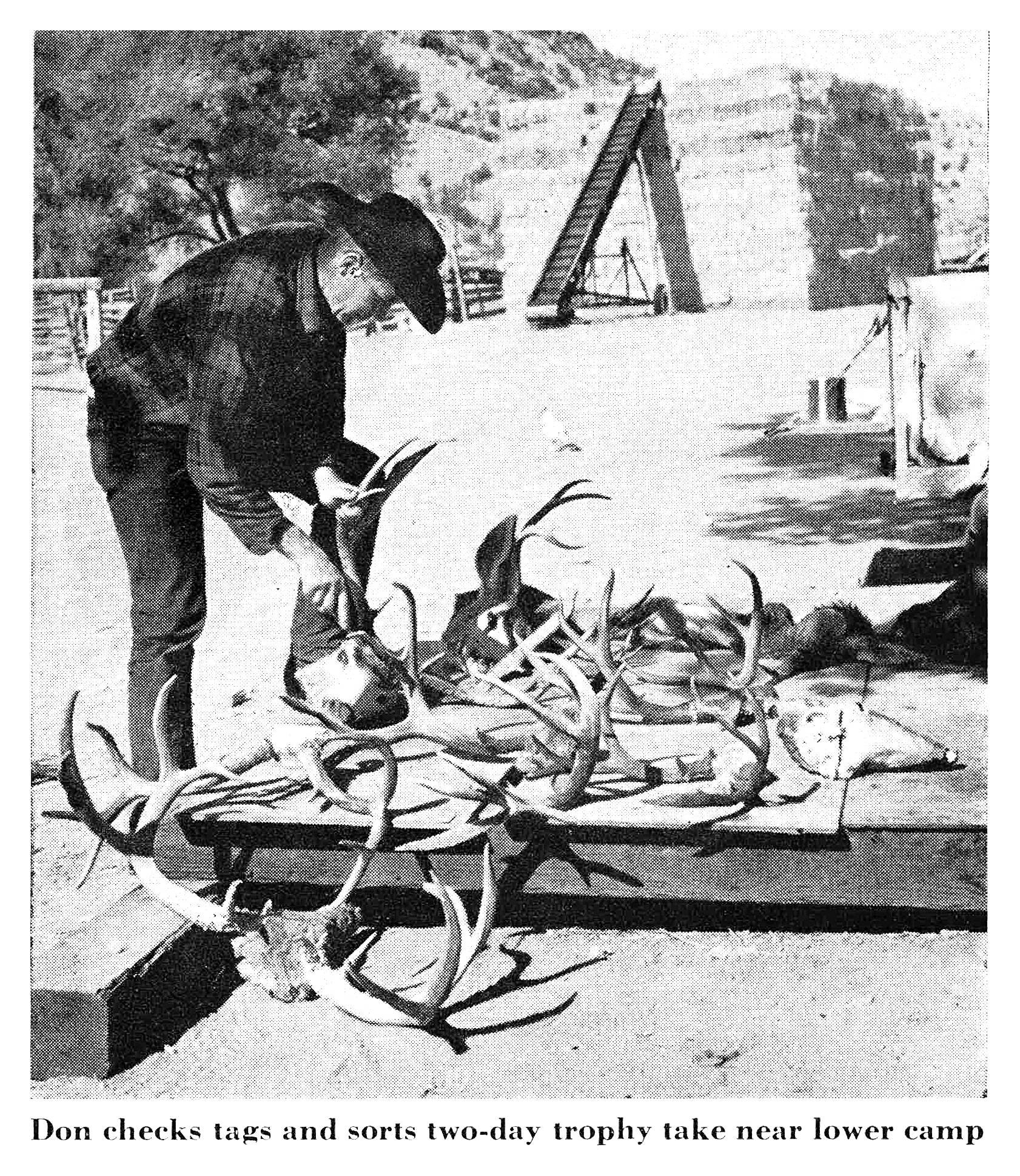
Naturally there was a celebration in camp that night. For me, the rest of the hunt was pure clover. I didn’t care about bagging a nontrophy deer, so I took photos and jeeped down to the winter camp where 12 other hunters were having a great hunt. By noon of the second day, the 23 hunters on the spread had bagged 46 deer, a score hard to match. There were many fine trophies. Largest of all was a slightly amazing five-pointer collected by Jim Poore, a Los Angeles attorney, at the high camp (see photo). The main antler beams were as thick as my forearms, and a quick job with a tape measure indicated it would make the Boone and Crockett Club’s record book.
For Don Wilcox the hunt meant plenty of hard work; he helped most of the hunters skin, cape, and quarter their deer. But for everyone else, it was mainly an adventure to be long remembered.
By the Same Author: I Was Floating One of the West’s Great Trout Rivers. Then the Governor Dropped in on His Helicopter
Besides bagging a winter’s supply of meat and a year’s supply of hunting stories, they hunted in magnificent country. They traveled across improbable landscapes and stumbled across ruins of an ancient civilization, which few other men have seen. Some found delicate Indian arrowheads, and others found a welcome change of pace from the smog and the grind of life on the West Coast.
But all were elated that they’d discovered Utah deer hunting. They voted to try it again this year.