
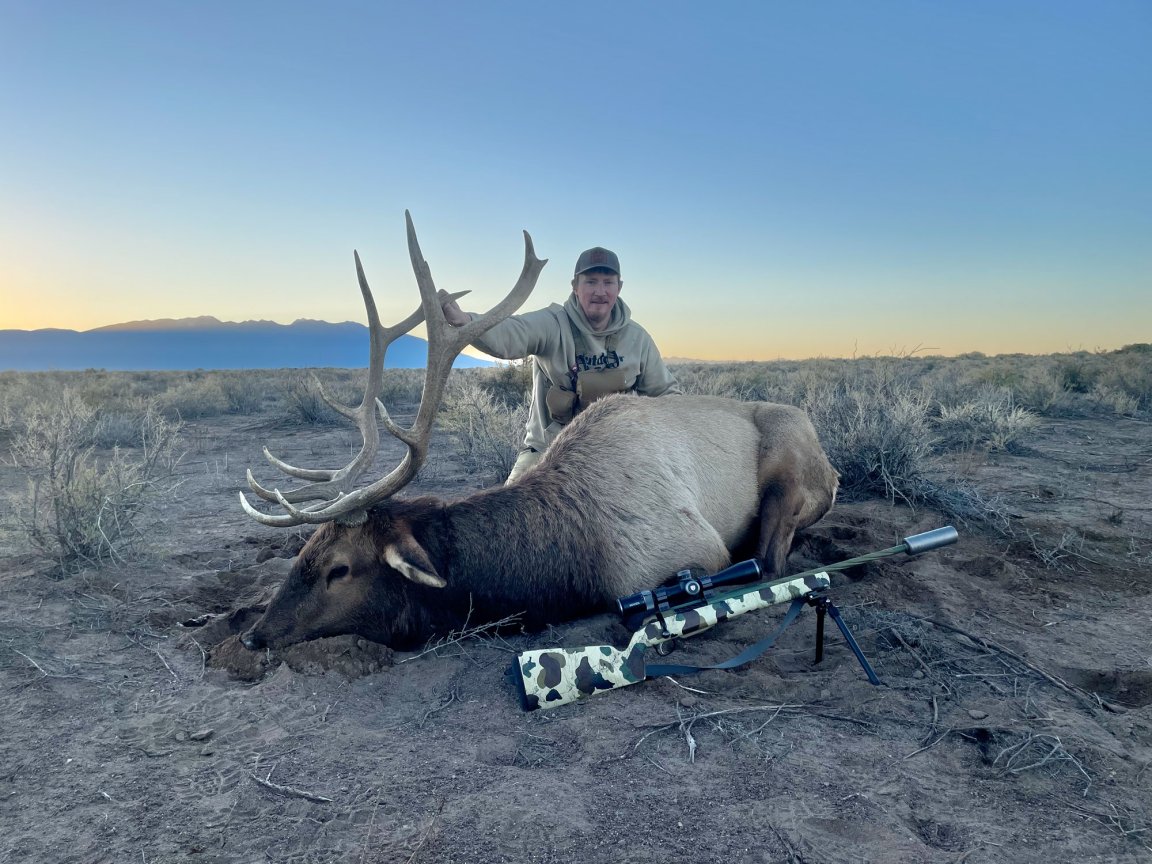
Elk have this reputation for being extra-tough critters. The old way of thinking is that an elk hunter should carry the biggest, hardest-hitting rifle he can handle, because even a well-hit bull can travel into tough terrain. While it’s true that elk are big animals, it’s also true that there’s a certain amount of lore about them.
So today on the podcast, editor-in-chief Alex Robinson talks to senior staff writer Tyler Freel, who just came back from an elk hunting trip with his buddy Frank. On that trip, Tyler and Frank killed three bulls with the little 6mm Creedmoor, firing 93-grain bullets. Tyler’s farming family in Colorado has killed countless elk with the 6.5 Creedmoor. Today, they dive into the fact and fiction of elk cartridges and bullet selection.
Listen to this episode on Apple, Spotify, or wherever you get your podcasts.
Full Episode Transcript
Alex Robinson: Hey Tyler, good to have you back — back home and back on the Outdoor Life Podcast. How you doing?
Tyler Freel: Good to be back, Alex. I’m doing pretty well.
Alex: So you were just shooting bulls — and not the bulls that you’re used to. You were elk hunting. So tell us about what you were doing and why you were able to shoot two bull elk.
Tyler: Well, there’s a little bit of backstory. This summer, one of my relatives was up visiting and was like, “Hey, when are you gonna come elk hunting?” I was like, “Well, what’s it like getting tags? Because across the West, in a lot of ways, elk tags are a little bit more difficult to get.” And he said, “Well, it’s not too hard with us.” A lot of my relatives are farmers, and in this specific area, they’re dealing with some depredation issues and a lot of crop damage. So that was kind of back-pocketed, and with just some family life stuff, I was thinking I probably wouldn’t get to go. And then we were sitting in moose camp — well, 10 days of moose camp turned into two weeks — kind of beating our heads against the wall there. That’s a whole different story.
But towards the end of that, much to your frustration, with about two days left, I started talking to my buddy. I said, maybe we need to go elk hunting, because this is the first time I can remember two years of not getting a moose, and the freezer’s kind of getting depleted. So we kind of just decided, with a few days’ lead time, we’re gonna go down to Colorado and hunt elk. We booked our tickets and asked for forgiveness afterwards and went down there for 10 days to hunt elk. And it’s not like elk hunting that most people think about. It’s elk that live out in this brush country where there’s not a tree around anywhere, but they have areas where they’re safe, and they know they’re safe.
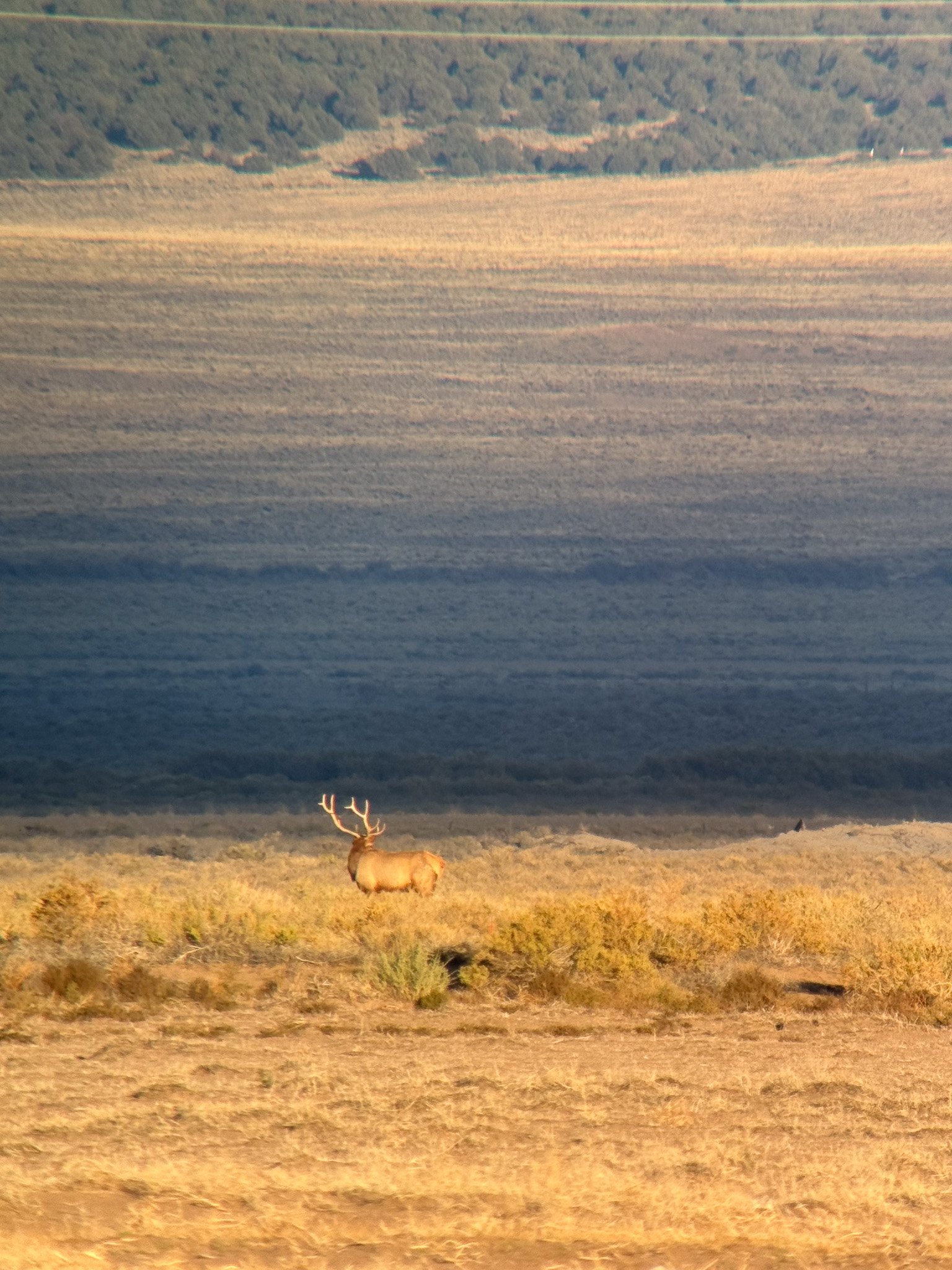
They live out there, and then they come dig up potatoes and wreck oats and whatever else they get into at night. So it was almost more like caribou hunting, where we’re locating them because they’re bugling. It was the first week of October, so the bulls are still just going nuts. In the evenings, we’re locating them in the dark, finding them, watching them get up and go where they’re going. But usually they’re pretty wise. They weren’t getting to where we could shoot them till after dark. So we used that to have a starting point in the morning. It took us a few days to get a solid option. We were seeing bulls every single morning and evening, but getting a realistic shooting opportunity took a few days to figure out.
But yeah, basically locating them in the dark, hearing them, and then sitting on the edge of land that no one can access to cut them off. And it worked pretty well.
Alex: So you ended up shooting two bull elk, and your buddy Frank shot one, right?
Tyler: Yep. We both started with one apiece. They’re List B tags in Colorado, so you can get two bulls. But we started out with one each. I got a bull one morning, and then after Frank got his bull, I decided I wasn’t ready to be done hunting. There’s a process for getting them, so I went and got another one. And then a few days later, I was able to kill my elk. It’s unlike any other elk hunting, but it was also a cool elk hunting experience, because you’re walking in the dark through brush and fields — very open country — to cut these elk off.
A lot of times you’re walking up to within 200 yards of some of them, and you can just hear them, or if you pull up your binos in the dark, you can kind of see them. Sitting there in the dark waiting for it to get light and having them come by you at 100 yards or less, you’ll hear their hooves clicking on the fence as they’re jumping over, bugling their heads off in front of you, behind you, all around you. It was pretty rad. And I remember his bull. There were a bunch of cows, but there were 16 bulls in this herd. In the dark, there was one bull with some cows about 200 yards away.
He kept coming back and forth in the dark before it was shooting light. But the main group of them was like 700 yards away across the sprinkler quarter, and they’re slowly working their way toward us as it’s getting light. We’re looking and ranging, and we’re just set up there against the fence, and finally the whole group of them is at, like, 200 yards or so. And I’m like, “You better pick one and shoot him.” Then it’s tough, because you’re trying to pick out a good one, but the bulls are also fighting and chasing each other around and getting through the cows. It was a little chaotic.
Alex: Chaotic in a good way.
Tyler: Chaotic in a good way, where you’re like, “Yeah, this is awesome.”
Alex: Which one am I gonna shoot?
So the reason why we’re having you on this podcast this week is because you had this hunt, and you also just did some ballistic testing with the 6.5 Creedmoor and .300 Win Mag. And you also just wrote a piece about whether elk are really tough. This is something that Outdoor Life has probably published content on, and other publications in the outdoor space have definitely written about it a lot. It’s this idea that bull elk are these big, tough critters. There’s something about an elk that makes it tougher. It’s not just bigger than a deer, but it’s tougher — as in harder to kill than most other game animals. And the rationale for that is, well, if we’re dealing with this bigger, tougher critter, then we have to use a big, heavy magnum rifle.
In getting ready for this podcast, I just quick scrolled around and read a bunch of the suggestions for elk cartridges and elk bullets. And most writers seem to settle on the .300 Win Mag, shooting a 180- or 200-grain bullet. If you brought that into camp, everyone would tip their hat to you and be like, “Yeah, that’s an elk hunting cartridge right there.” But you’ve done so much writing about using smaller cartridges and their effectiveness on big game. And now you’ve had a chance to go elk hunting and hang out with your family back in Colorado, and who knows how many elk they’ve shot over the years. And I wonder —
Tyler: Yeah, a lot.
Alex: A lot. And we’ll get into that too. I wonder, is there something to elk being tougher?
Tyler: I think that any animal can display toughness. There’s probably a scale of that, where some animals are a little bit more durable than others. But it just seems like wherever a person is at, they think that what they hunt is the toughest animal on the planet. That’s grizzly bears, brown bears, moose, caribou, whitetails. I mean, the limited number of whitetail deer I’ve shot have run farther after I shot them than probably anything else. I think each animal has its own characteristics that can kind of be described as tough. And bull elk are big animals relative to a lot of other stuff. As we discovered, they’re about one-third the size of just a decent-size bull moose. They’re about like a big moose calf, basically.
But I’ve dissected this every way I can, looked at my own experiences, and when someone comes at me with a story of how tough they are, it almost always boils down to a shot that’s not ideal. Bears can display incredible toughness under the right circumstances, but it almost always boils down to things going wrong. And that’s almost independent of caliber or cartridge used. The more I dive into this — it’s become my personal interest and infatuation to really flesh this out and see what there is to it and what isn’t as far as smaller cartridges.
Related: Why Small Cartridges Are So Effective for Big Game
But even reading back through our own published stuff — Jack O’Connor, one of his early stories, I can’t remember what year, I have it on the shelf behind me — it’s called “The Big Berthas,” and he’s talking about .375s and .350s, big cartridges specifically, and how good they would be for elk. And in the story, he admits that the only elk he’d seen at the time were at the Bronx Zoo. And then you step forward to later, after he’s had a lot more experience hunting them, and he writes things like, if you shoot an elk in the leg with a .270, he’s gonna be no more dead than if you shoot him in the leg with a .375. Or vice versa — I can’t remember, that might have been flip-flopped.
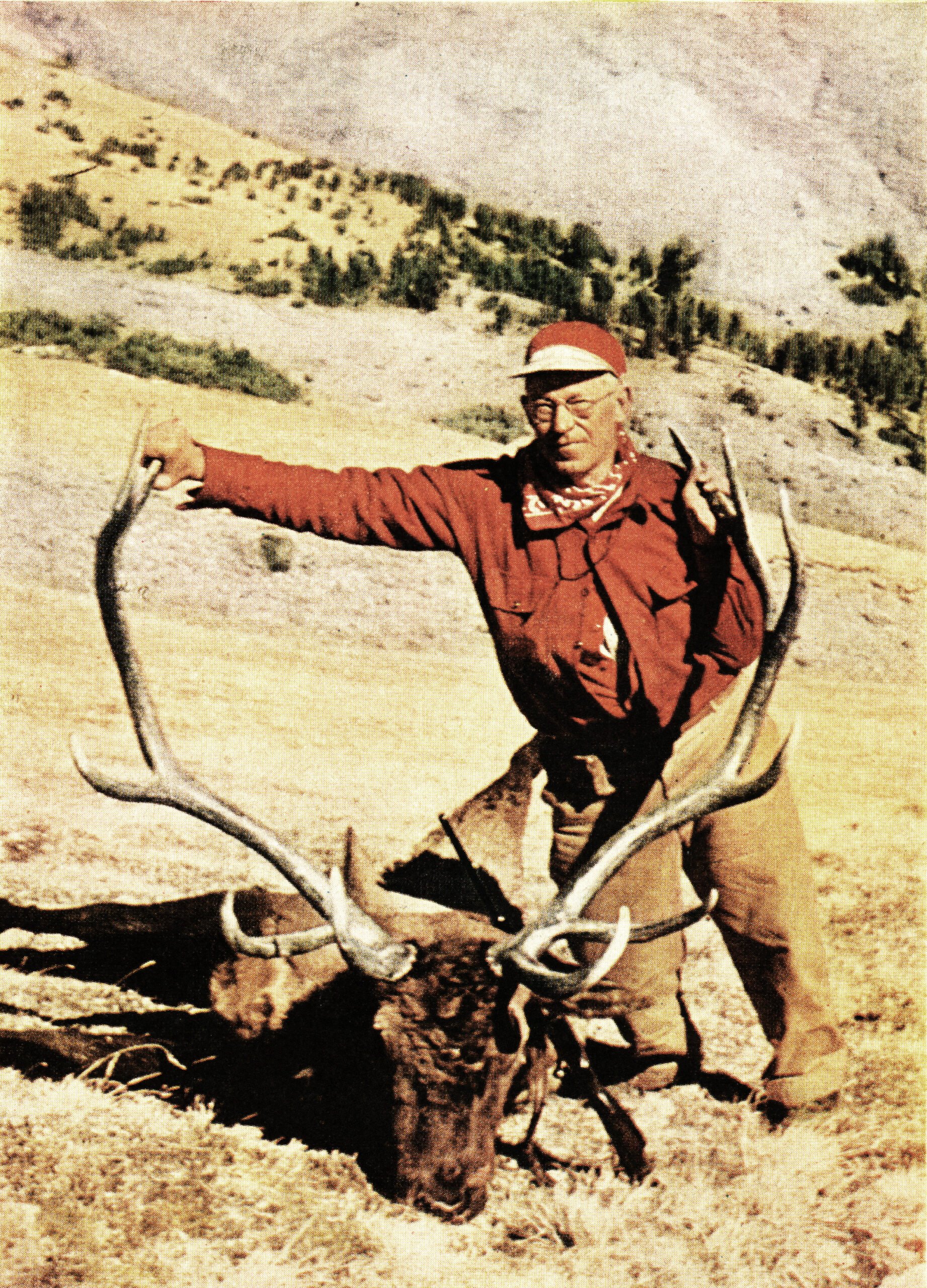
But he basically seemed to recognize that there was a lot more to it than just picking a big gun or just the toughness of the animal. If you use something that’s gonna give you adequate penetration and wound channel to compromise the lungs or the heart, they’re dead. They’re not too tough. They’re not tough enough to survive that. Some of them may go a little ways farther than others depending on the circumstances, but —
Alex: I was just scanning through a Jack O’Connor story before this. And I think his biggest bull was killed with a .270. He was shooting a 155-grain bullet that he said had a muzzle velocity somewhere around 3,000 feet per second. That’s not a big booming cartridge — a 155-grain bullet at about 3,000 feet per second out of the muzzle. That’s pretty mild these days in the world of cartridges.
Tyler: Yeah. And we’ve seen this — people chased the magnums. The 1950s, 1960s — like, the ’60s was when a lot of the Win Mags were introduced, and the 7mm Rem Mag and stuff like that. And they’re good cartridges. They’re totally capable. But I think people a lot of times confuse capable with necessary. What it boils down to a lot of times is — kind of stealing the term — a confirmation bias funnel, where something works, so you keep using it. And there’s nothing wrong with that, but because option A works doesn’t mean option B doesn’t work just as well. You just haven’t tried it. And this is applicable to reloading ammunition, all kinds of stuff.
As hunters, we get passionate about what we like, and we tend to funnel ourselves into these silos, and we use what we know works because it works, and there’s nothing wrong with that. But when you start dipping your toes into speculating about other stuff, it’s kind of important to have experience with what you’re talking about.
Alex: As you can see, even Jack O’Connor was guilty of that when he started.
Tyler: We all are. I have been in the past too. There’s a lot of things that I’ve been compelled to change my way of thinking about because I dip my toes in, and what I’m seeing doesn’t line up with what I’ve always thought.
Alex: Well, tell us about the elk shooting experience there in Colorado. What were you shooting in terms of cartridge and bullet? And then also just talk about what your family’s experience has been. What are they shooting when they’re shooting elk off their ranches out there, off their farms?
Tyler: So my hunt partner and I brought one rifle, just my custom Tikka 6mm Creedmoor. I would’ve brought my 22 ARC, but it’s not legal in Colorado. You gotta have a .243, 6mm minimum — which, the cartridge requirements, people will lean on as some sort of concrete evidence that smaller stuff isn’t capable. That’s an entirely different discussion. But in the 6mm Creedmoor, I was shooting the McGuire Ballistics 93-grain Copper Rose, which I’ve been shooting a lot of. I was introduced to them a year and a half ago, and since then I’ve been really shooting a lot of them to try to build a data set, to just see how consistent the performance is. And so far, I’ve been really pleased with a number of offerings.
Related: I Shot a Grizzly with a 22 ARC — and the Results Were Not Surprising
They’re what I would call a modern copper bullet. What I call traditional copper bullets are, like, Hornady CX, Barnes TSX, TTSX — that type of bullet, the copper that is tipped or hollow-point, expands to a certain diameter, and that’s about it. That’s all they do. And I’ve killed a lot of stuff with them. They work well within the performance envelope that they’re designed for. But these McGuire bullets — and other companies like Lehigh Defense and Hammer Bullets make copper bullets that behave similarly — are lathe-turned copper bullets with big cavities that expand violently, more like you would expect a lead-core bullet to do. And many of them will shed their petals during that expansion. They’ll go into whatever medium you’re shooting them in a little ways.
As they start to expand, they’ll have kind of a violent wound cavity. Those petals will shear off and create their own wound cavities. And the base of the bullet, which is usually slightly deformed, will continue to penetrate and usually exit. You don’t recover very many of them. And so far, I’ve been really pleased with how they do on a lot of game. So that’s what I took. And my family down there — and I say cousin, like, I just say cousin for everybody —
Alex: Tyler’s got a lot of cousins.
Tyler: I got a lot of cousins and second cousins. So my own cousin, Clint — I think he said that him and his son each shot really big bulls a week or two before we came, with a 6.5 Creedmoor.
His son just shot another big bull because, with the List B tag, you get a second tag. And I think he used the 6.5 for that too. And some of those guys will use .300s and stuff like that. But at times — not all of them personally — they’ll have family and friends come out, just trying to knock some of these elk down, because they are causing a lot of damage. I think they said one year they ended up killing 30 or 40 of them. And the thing is, they don’t really seem to focus a lot on the cartridge. One of them said, “Well, our buddy Sean” — who is a friend of theirs and a friend of my uncle’s — “shoot, he’s probably killed four times more elk than all of us put together, and mostly with a .243.”
Alex: Really?
Tyler: Yeah. Which, I mean, up here, tons and tons of moose are killed with a .243 all the time. It’s just a thing. It’s not anything special. It’s not anything groundbreaking. That’s what a lot of people got and like to use, and they use it pretty effectively.
Alex: So to that kind of traditional gun writer who’s writing about the .300 Win Mag and how you need a big, heavy bullet for elk, what you’re describing is wrong, you know?
Tyler: Oh, yeah.
Alex: For a certain type of thinking, what you’re describing is borderline unethical, because in their mind —
Tyler: Or not even borderline, yeah.
Alex: Yeah, or just straight-up unethical, because in their mind, any little flaw where you’re not shooting that bull perfectly through the heart and lungs with those tiny little bullets — 90-grain bullets — you’re gonna have a wounded bull. You’re not gonna kill him. So I’m curious, what were the results from the elk that you killed with those 90-grain copper bullets?
Tyler: So my first bull, I shot him bagged off a fence post, and again, it was kind of chaotic. I just had to pick one and shoot him. And it was around 150 yards. I didn’t range him, so just to be safe in case I was a little off on that, I held just a touch high. He was quartering to me slightly. I shot him right through the scapula, and it exited the opposite ribs, and he spun around, took a few steps, and then tipped over. Pretty uneventful. And with that bull, I have pictures — we saw this with those bullets shooting big hogs, where you see the bullet going through the shield, and as soon as it starts hitting some of that softer tissue, it starts opening up.
Well, this bullet punched a hole like that through the scapula, and then it was about a baseball-size hole going into the ribs, and then roughly an inch or so exit hole through the ribs out the other side. Like I said, it was pretty uneventful. The second bull, which was Frank’s bull, was an illustration, I think, of what probably happens a lot and why elk get the reputation of being tough. As we’ve discussed this afterwards, I’ll take the blame for what happened. The whole herd is kinda moving. I’m ranging, and I think I ranged the wrong elk or ranged the other herd, because I had him dialed for 225. And we’re communicating, “All right, the bull that’s got his nose up that cow’s —”
“All right, now he turned to the right. Yep, that’s him. All right, he’s clear. Shoot.” We’re having to make sure we don’t shoot through and hit another one. And he shoots. The bull’s facing left to right. The bull whips around, and I can see him picking up his left front leg, and I’m like, “Oh, it looks like you hit him hard.” I was not on a tripod, just looking through my binos, so I didn’t see the impact. He’s hit hard, and he kind of veers back around and stands there and then gets into the herd. So we’re just sitting there waiting to watch him tip over, is what we’re expecting, and it goes on and on, and nothing’s happening. And I’m starting to be like, “Man, is this gun too little? Like, did I …”
Because honestly, if I do encounter things that are genuinely indicating that the information I’m giving to people, or what I’m experimenting with myself, isn’t working, I’m gonna change. I’m gonna alter that, because that’s my interest —
Alex: You always have an eye out for suboptimal performance, right? If something you’re doing is not working, you wanna find that out and understand why, and then obviously change it and write about it so that other people don’t do it too.
Tyler: Yeah, because despite some of the conspiracy theories about all this small-caliber stuff — whether it’s Hornady paying me to promote these small calibers — if they were doing that, I would think that I would be pumping the 7mm PRC, probably. But that’s beside the point.
Alex: Or at least shooting their bullets, not the McGuire stuff.
Tyler: Or at least, yeah. So it’s genuinely my own interest. I’ve said in other podcasts, I’ve always kinda shot stuff with whatever. I’ve shot plenty of moose with .300 magnums, but I’ve also killed stuff with a .25-06, and there’s always been a little bit of resistance. We’ve killed tons of black bears with a .243. So these modern, highly efficient bullets in .22 cals and 6mms have really got my attention, and I feel like if I’m gonna have any kind of legitimate voice about it, I need to be trying what I’m talking about and reporting the results. And so far, they’ve been really promising. Anyway, so all that — I’m questioning my entire reality there.
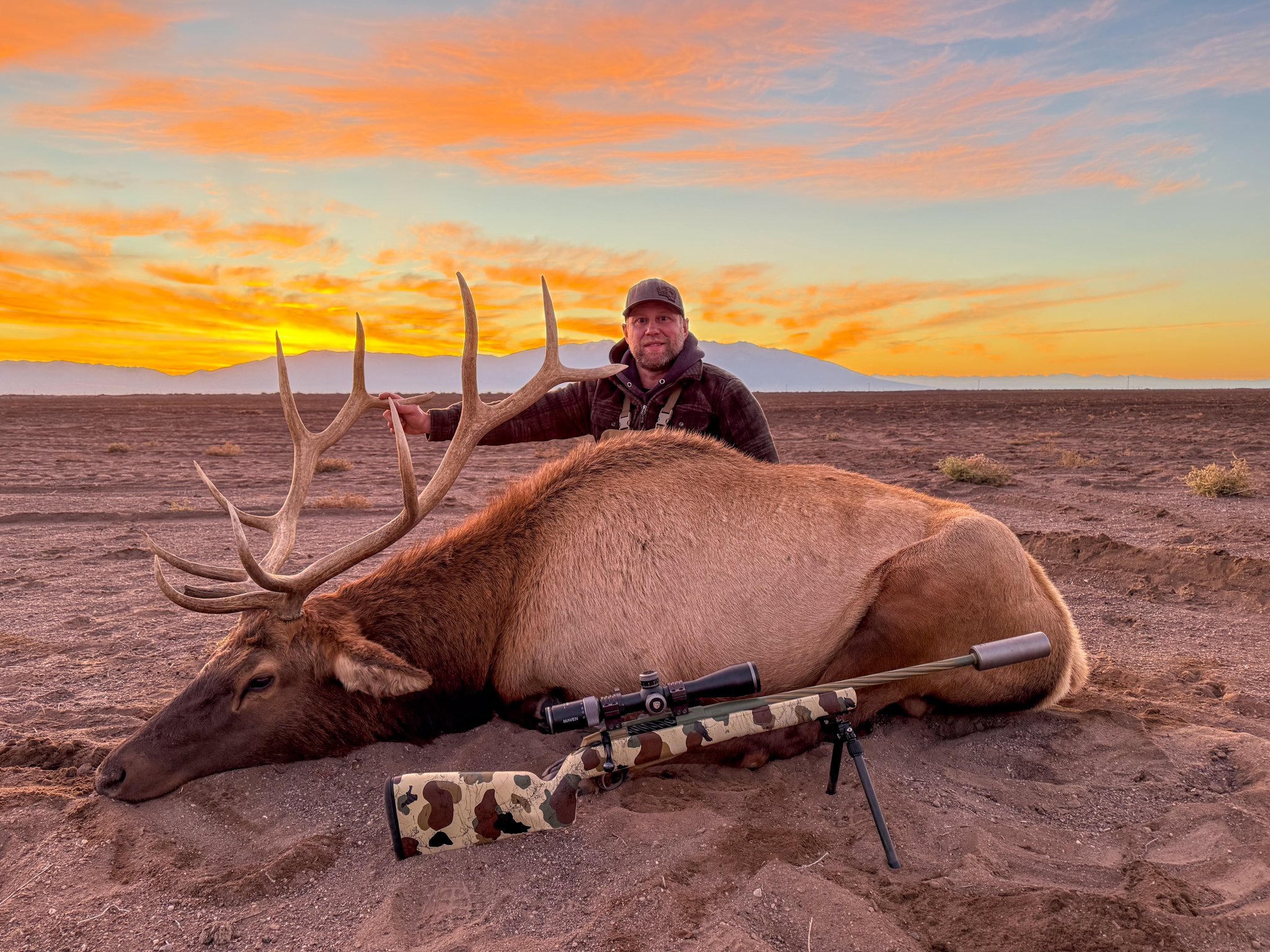
We eventually noticed this one bull by himself, but he’s over there bugling. So it’s like, “Well, that’s not him.” And then he lays down, and it’s like, “Oh, that’s probably him.” And he gets back up, and you could see him favoring that leg. So it’s like, yeah, that’s definitely him. And holy cow, bugling after you’ve been shot — that’s tough, you know? It’s a tough critter. So anyway, we re-ranged him, and it was, like, 370, and he was quartering away pretty steeply at that point. He smacked him, put it right in the back of the ribs, and I ended up digging the bullet out of what you’d call the shoulder knuckle, where the scapula ties into the next leg bone. It had shattered that joint, and the bullet was on the backside of that joint, and of course he went down on his face.
In hindsight, looking at him, all I can think of is he was closer to 300 or a little beyond, as opposed to the 225 that I was ranging at, and I screwed up, because he hit the offside leg below the brisket and shattered that thing. So he just hit way low. None of us ever like to do things like that or see it, but sometimes mistakes happen. And I could see how, in a situation where maybe you’re in the timber or areas where you can’t sort that out, you shoot an elk, you think you hit him hard — because our memories are very fallible when it comes to exciting situations like that.
And the elk gets in the timber, and you can’t find much blood, and you’re just like, “Well, the gun was too small,” when really it had nothing to do with it. It was either a poorly executed shot or a mistake like a misrange or something like that. So I think we can learn even from our mistakes, and I think that kinda illustrates what I would suspect is the case with a lot of other animals. I haven’t killed very many elk myself, so take that with a grain of salt. But bears — every bear that I’ve ever seen lost was poor shooting or poor choice on the shot you take. And a lot of that stuff is independent of the cartridge you’re shooting, you know?
The temptation as hunters a lot of times — and you see this in writing about elk cartridges — is to pick the cartridge so that, essentially, as soon as you see the elk, under any circumstance, you can shoot. And I’m not joking. When you break it down, that’s really what people are saying. And big cartridges with good bullet selection can offer forgiveness in some ways. Most of the time, it just means you have a longer distance at which your bullet is gonna be traveling at sufficient speeds to do the damage it needs to do. You can get more forgiveness on some shot angles and stuff like that, but a lot of times, it still boils down to choosing your shot wisely and exercising some restraint — which, the next part of the story, my bull …
Alex: So your third — bull number three.
Tyler: My third bull — bull number three. So my second bull. It was a couple days later. Basically, as soon as we got that bull cut up, I was to the store getting another license. The next morning, they were in the same area, and they all just got across the fence before it was even light, which was super cool — but before it got light enough to even really see ’em well, much less shooting light. Then two mornings later, we were in the same spot, and they were really spread out. We kinda got ’em cut off, but a bunch of ’em went by us in the dark, and there was still a bull bugling way out in the danger zone.
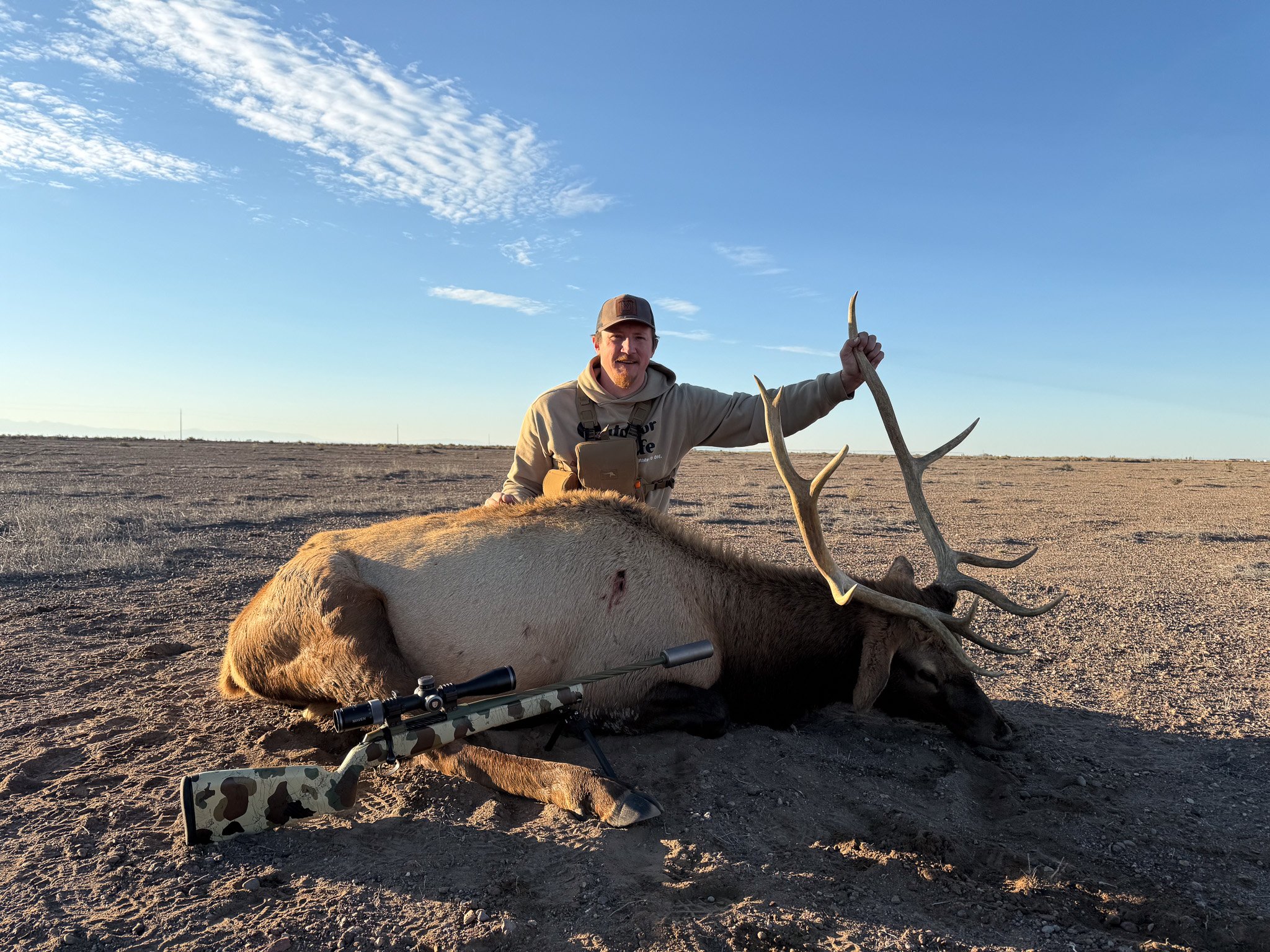
And we knew they’re gonna come working their way back, and as it got light, we’re getting nervous, and you would still hear them bugle. At one point, when it was starting to get light, Frank turned around, and there were eight or nine bulls, like, 75 or 100 yards behind us. You could see ’em skylined, bugling. And anyway, as it got light, eventually we spotted these elk coming through this patch of brush. It’s all private-land licenses, and we could hunt there. So all we could do was move 400 yards closer, to the edge of the brush. And as they were moving through, they were a ways away — I don’t know — but maybe slightly angling toward us. If we’re looking down the fence line between no hunting and where we’re good, they’re paralleling toward that no-hunting zone where they’re safe.
And they were a few hundred yards from it, and we were laying down on this nice sandy knob, ranging ’em, looking at ’em. They were stopped, kinda milling around, and the rangefinder was saying 800 yards, which is a long shot, and I would tell most people never do that. There was one chance, actually, where the bulls were at, like, 400 yards, but they were just walking too much, and I passed on it. It was not worth a chance. And so I can’t really explain — and whatever, people wanna criticize me for it — the thing’s standing out there broadside at 800, and that rifle, we verified it once we went down there, and I can …
On an 8- to 10-inch piece of steel, I can usually smack that thing reliably at that distance.
Alex: This is a rifle you’ve shot extensively.
Tyler: Oh, yeah. That barrel’s probably almost done on that gun. But just walking through my process — and why. Because typically, I would say no, but there’s zero wind, the bull’s standing there perfectly broadside, and I’ve got distance to deal with them if something went wrong. And so it was kind of a snap decision. I said, “You know what? I’m gonna shoot that bull right now.” And I ranged — and it’s a lesson to be learned — I don’t know if I ranged something in front or behind him.
I was pretty sure I was getting a range on the animal, but I missed him. The brush is below their belly, but it’s tall enough where you couldn’t see the impact. And basically, as soon as I saw I missed, I was like, “All right, that was not wise.” And then they turned and ran straight to us. So I told Frank, “That was my plan the whole time.”
Alex: Gotta get him closer somehow.
Tyler: So yeah, in hindsight, would I take that shot again under those circumstances? No. But it kinda worked in my favor. The bull came running basically straight to us, and we were in their escape route, and I shot him at 225. I just waited — he stopped. And it was pretty cool, because I’m watching him through the scope, and he’s getting closer, and he’s bugling as he’s coming closer. And then he stopped broadside, and I just shot him kinda mid-shoulder — not high shoulder, but just mid-shoulder — through both shoulders, and he spun around and down.
Alex: On the cases where the bullets hit where they were supposed to, perfect performance. On the cases where the bullets didn’t hit where they’re supposed to, not good performance — and cartridge really has nothing to do with it.
Tyler: Yeah. The first one was probably a mistake on my ranging. And the second one was just a shot that I probably honestly should not have taken. And it’s something to consider, you know?
Alex: Well, listen, we live in a world where people are shooting elk at 500, 600, 700, 800 yards and farther. And this is a little bit of a related subject, but for a certain type of Western hunter, they feel like that gives them a real advantage, and that is part of their elk hunting process, like, “Well, if he’s at 700 and the wind’s not bad, I’m gonna kill him.”
Tyler: And that’s reasonable for a lot of people — including myself, I would say, most of the time. Hindsight’s 20/20. When you miss a shot, I think you almost have to be like, “All right, I shouldn’t have done that.” Especially in the context of, I had no idea what went wrong. Adding up the math of my experience with that gun, the conditions lining up, the way the animal’s acting and behaving and where he’s at, it was lined up to be pretty favorable. And ultimately, I was like, “You know what? I feel good about this.” Maybe I shouldn’t have. But that’s not uncommon.
But certainly when I was watching and that bullet did not hit the elk, I was like, “All right, that’s enough.” We’re not gonna compound this poor judgment by making it worse.
Alex: Right.
Tyler: Exactly. Because sometimes that’s a temptation for people. You get desperate. And people might think that maybe I just felt like I had to kill that thing so bad that I was gonna do that. And I don’t feel like that’s really how I felt, because as soon as I missed, I was like, “All right, let’s pump the brakes.”
Alex: Your idea wasn’t like, “Oh, well, I’ll just aim higher on the next one.” You’re like, “Oh, I should stop shooting.” But kinda where I’m going with this, back to our elk-are-tough thing: we’re making 700-, 800-yard shots, or even 500- and 600-yard shots. It’s pretty hard to hit exactly where you’re aiming on an 800-yard shot. You can consistently get in the vitals on a broadside bull if you know what you’re doing and you have the right setup. But like you’ve talked about a lot, there’s that cone of dispersion, and that cone of dispersion gets bigger the farther out you get. And I think part of the reason why there’s this idea that elk are so tough is when you’re shooting at ’em from far ranges, you’re not always hitting exactly where you wanna be.
And those kind of marginal but fatal shots make the animal look like it’s tough, but it just wasn’t hit perfectly. It applies to any animal.
Tyler: And at closer distances too. Like I said, our memory is fallible. So many times you feel like you made a perfect shot when that’s not where the bullet went. I still don’t know — it had to just be a ranging error. Because, like I said, with that gun I can pretty consistently, even in some more challenging conditions, make solid vital-zone hits at that distance. And that’s kind of, at that elevation, the limit of where that bullet’s going to reliably do what it’s supposed to do. And I think that’s another aspect too, and partly why cartridges like the 6.5 Creedmoor get so much shade. I know I’ve started paying attention to impact velocity a lot more in the last number of years than I ever did before.
With cartridges like the 6.5 Creedmoor, for all the reasons we like ’em, you have to pay attention to how fast your bullet’s going. And I think a lot of animals sometimes are shot because you may be able to take your 20-inch 6.5 and hit a steel plate reliably at a thousand yards, but that bullet’s really going too slow to do the amount of damage it needs to do for consistency —
Alex: At that distance.
Tyler: Yeah. A lot of times with a 20-inch 6.5, you’re limited to, at this elevation, like 400 yards, maybe 600 or so at higher elevation.
Alex: Because of the velocity. And we’re talking velocity on target, right? Not muzzle velocity. That’s where a lot of entry-level or basic-level hunters get tripped up — they just focus on muzzle velocity, and they’re not paying attention to how those bullets are bleeding velocity or retaining velocity downrange. I think another reason that there’s this elk-are-tough idea is that a lot of people who shoot them and then go back to write about them — like you and I — are not always Western hunters. And for the Midwest guy who goes out, and this is his big elk hunt, his one opportunity to kill an elk, whether he’s an outdoor writer or not, he’s gonna be pretty nervous.
He’s gonna be pretty excited. I remember the first elk I shot. My dad took me on an elk hunt as a high school graduation present. We went out to British Columbia and did this horseback hunt — me, my dad, my uncle and grandpa. It was the second morning out, and my guide and I crested this little hill and saw a legal bull, like, a hundred yards away. I was surprised to see a bull there, and the guide was too. And I was like, “OK, we’re gonna kill this bull.” And I got such a rush of buck fever — classic feeling of buck fever, just pure panic. I was resting on a backpack, laying down, and I looked through my rifle scope, and the reticle was just doing circles, zigzagging all over the bull.
And I just freaking yanked the trigger.
Tyler: Punched her.
Alex: Just closed my eyes and punched the trigger. And I shot the bull square in the back, and it crippled — paralyzed it. It rolled downhill, and then I got my wits about me and shot it again. Luckily, I had hit it in the spine. But I think a lot of Midwest, Eastern, Southern hunters have this dream of an elk hunt, and then finally get to go do it, and hunt their asses off, and then finally get a shot — I think that all builds up to this moment where they’re super nervous all of a sudden. And that does not lead to good shooting. And that poor shooting then leads to this myth of the super-tough elk. Because it’s hard to go back and say, “Man, I got buck fever and just rammed the trigger and made a bad shot, and that ruined my once-in-a-lifetime elk hunt.”
That’s not a good story to tell. Rather, it’s better to be like, “Man, those elk are tough. They’re not like whitetails, buddy. I’ll tell you what, those are some tough critters.”
Tyler: Well, we see the same thing with bears. My buddy Frank has a good story of guiding an archery hunter on this brown bear that they found sleeping on a beach. They got around in perfect position — I think the bear had maybe gotten to its feet or something — no idea they were there, really close, and the guy can’t draw his bow.
And he’s like, “Dude, breathe. You gotta calm down. This is just a bear. He’s not going anywhere.” And then the guy was able to reset and gather himself and kill the bear. I think that’s a big thing. And it’s a thing in a lot of outdoor writing, gun writing, writing about elk hunting — the stressing of the once-in-a-lifetime opportunity. And it is true for a lot of people who may travel out West to go elk hunting. I mean, shoot, I’ve only killed three of them now. It took me almost 40 years to kill my first one. It is a very exciting thing, and you naturally want to hedge your bets.
And pick the gear and equipment that you think gives you the best chance. I don’t know how many times — this line is more worn out than my small-caliber stuff — “Well, it’s your once-in-a-lifetime hunt. You gotta pick a rifle that’s gonna let you essentially shoot this elk as soon as you see hair, no matter what. He cannot get away.” And it just doesn’t jibe with sound hunting practice, in my opinion. You look at that compared to a deer hunter or someone who just does their thing, and that’s their regular jam — whether it’s hunting deer, hunting bears, hunting elk — they kinda operate differently than the person who is out of their element hunting something for the first time.
And a lot of times, those guys don’t really find that they need a big cannon to do this. That’s kind of the tendency — and it’s a stereotype — to pick some sort of larger magnum rifle. I mean, our colleague John Snow, just a couple years ago, found a wounded elk that, you know, they tracked down with the outfitter. And the guy — brand-new, first time elk hunting — got a .300-something magnum and could not shoot it well. And if you can shoot them well, we’re not saying they’re bad options, but I don’t think they give you the forgiveness, or margin for error, that a lot of us kinda think they do.
Alex: The last thing I wanted to ask you about is — the other interesting thing is you just tested this. You shot the 6.5 Creedmoor against the .300 Win Mag head-to-head. Would you talk about what you did and then what you found out?
Tyler: Yeah. And that goes back to this, because the margin-for-error argument, or way of thinking, is one of the most common things we hear as feedback from people who just pick something bigger to feel better about it. So I wanted to examine at least one aspect of what that margin for error looks like. Because you ask people, and they can’t tell you what the margin for error is. And now the can of worms is opened, and I wanna do a lot more of this, because it’s super interesting. But I took identical factory rifles except for the barrel length. They were both Browning X-Bolts — an 18-inch, I think, 6.5 Creedmoor and a 22-inch .300 Win Mag.
Shooting basically the same factory ammo offering, Federal’s Fusion Tipped, which I think, if anything, is a very underrated hunting ammo. Good bullet. It’s really accurate in what we shoot it in. So 180-grain for the .300 and a 140-grain bullet, same construction, in the 6.5. I shot them into identical gel blocks at 200 yards and measured the velocity downrange. My line of thought was, all right, the .300’s probably gonna make maybe an inch bigger wound cavity. I was being conservative. I didn’t think it would be too much, but probably some.
Alex: I mean, most people are imagining a massive wound cavity for the .300 Win Mag.
Tyler: Like a football.
Alex: Like a football. Yeah, totally. And then a marble for the 6.5 Creedmoor — just a tiny little wound channel just punching through. Honestly, I think that’s what people are gonna imagine. So what actually happened?
Tyler: The line of thinking is, you hit them a little far back, just off the edge of the lungs, and that massive hole is gonna compromise what you need to and kill them just as well. Anyway, there was not much difference at all in what I saw in the gel. They had virtually identical penetration. It was, like, 21 inches. I think the 6.5 maybe had a quarter to half an inch more penetration. Virtually the same. The permanent cavity of the .300 at the front and back ends had a little bit more volume to it, but not much. And it also kinda depends, because those wound cavities aren’t perfectly circular, and you rotate the block …
When you’re looking at it in person, you get a better feel for it. But the permanent cavity diameter was within a quarter inch between the two. Effectively the same. Within the noise. And it kinda derailed the video, because I was expecting this difference, and we’d shoot them on steel and see. And then we shot the .300 second, and we ended up shooting it about the same or a little bit better. So the premise was kinda derailed, but it was super interesting, because the 6.5 bullet — we measured velocity at the target — was going 300 feet per second slower, but it was still above 2,000. It was still in that effective window. And they did pretty much exactly the same amount of damage.
Now, I just posted a teaser picture and had guys go, “Well, in an animal, the .300’s gonna do way more damage.” It’s like, well, when you shoot ’em in exactly the same medium and the results are pretty much exactly the same, I don’t think the difference is gonna be that much. And there’s so many things like this that even you and I and everybody else have speculated about and just repeated as fact, because that’s what we’re told from the guys who, you know, a lot of —
Alex: The stuff we read when we were kids.
Tyler: Stuff we read. Yeah. And I have a lot of respect for the old-guard gun writers. In some ways, they were doing the same thing we’re doing — giving the best information they can give — but I think we’re constantly learning. And there’s just some conventional wisdom that may not be wrong, but it’s not exclusively correct.
Alex: Right.
Related:
Tyler: And this is the same thing back to the elk. You post a picture of that, and I’m like, “I don’t know. We shot three of them, and when we shot them in the vital zone, they died right there. It was uneventful.” Not to say they might not run a little ways now and then. But you get this: “Oh, those flatland bulls, those aren’t near as tough as mountain bulls.” It’s like, oh, so when they walk to the mountains that are 10 miles that way, they get tougher?
Alex: Yeah, exactly. I think what it comes back to is cartridge selection — and you’ve talked about this before — is really one of the least important things. Of the things that we talk about versus what actually matters, cartridge selection is for sure the thing we talk about the most and that matters the least in terms of having a successful hunt. The guy’s name was Clint, that guy who’s shooting all those elk?
Tyler: Yeah. Well, he’s one of them.
Alex: One of the guys who’s shooting all those elk with a .243. If you gave him a .30-06, he’d have killed the same amount of elk. If you’d have given him a .300 Win Mag, he’d kill the same amount of elk. It would not matter to Clint at all. He just happens to shoot a .243.
Tyler: Or a 6.5. I think they were shooting 6.5 Creedmoor.
Alex: 6.5 Creedmoor for those.
Tyler: But that’s the point. It doesn’t really matter that much. It’s our job to look at these things in depth, and it’s fun to kind of hash out the differences and potential advantages here and there of different cartridges. But a guy could really stress about or put a ton of thought into his cartridge selection, and the guy that just goes and picks something but shoots a lot and spends a lot of purposeful practice — whether it’s learning to shoot off a shooting bag, or manipulating your gear, learning to use whatever gear you have the most effective way — is gonna be way more consistent than someone who just focuses on the cartridge.

Alex: I agree. And I also think people who have hunted a lot and really understand the animal — that information is way more valuable. Woodsmanship or skills in the mountains are way more valuable than what you know about cartridges. I do think one of the things about elk is when they are hit and not hit super well, they can just travel. Unlike whitetails, they will go, and they can travel really long distances, and often they’re traveling really tough terrain — mountain terrain that is hard for us to travel through, but they just seem to glide right through it even when hit. So that is a characteristic about them.
Now, if the bull is hit well, he’s not doing that. In your case, the elk that I’ve shot with 6.5 Creedmoor — John Snow has shot a bunch of elk with 6.5 Creedmoors and 6.5 PRCs — any elk that’s hit well isn’t running miles. But when there’s a poor shot and a bad blood trail and the elk travels far away, the hunter never really knows exactly where he hit him, right? And the hunter wants to talk himself into, “Well, man, I must have just hit him a little back or a little low or a little something.” But he never knows, because he never recovers that bull. And that just adds to the lore of this tough mountain critter that is unstoppable unless you shoot him with a .300 Win Mag.
Tyler: When we don’t know, we tend to speculate. And the path of least resistance is to go to, “Well, if I had just picked something better.” Or even if you don’t convince yourself fully of that, “I’m gonna be safe and pick something bigger next time.” And I’m not criticizing that line of thought, because I think that’s a natural path, but it doesn’t necessarily mean it’s correct.
Alex: Well, you even caught yourself doing it with Frank’s bull when it was standing out there, and you’re like, “Oh no, did I make the mistake?”
Tyler: Yeah. Like, did this go sideways because of that? And no, it definitely didn’t. That wasn’t the issue. It had a good explanation. And one of the things we always talk about when shooting smaller stuff, for whatever animal it is, is shootability and recoil management — which is a whole other topic. Old school, you think recoil management is a measure of being hurt by the gun or being a sissy, when it’s the value of — in more circumstances, being able to see your bullet impact is so beneficial, especially when you mess up. My example of the shot I should not have taken: I didn’t see it, and that tells me, all right, you have no idea what happened. Stop.
Alex: Stop.
Tyler: Stop what you’re doing. The shot when he was closer, I watched that bullet hit him. And I said, “Yep, he’s dead.” And he turned around and fell over. Being able to spot your impacts is not a universal fix for anything. But I do think that in a lot of situations — and I’ve kinda seen this even with the grizzly bear — when you learn to run your gun like that and you can see your impacts, you can make follow-up corrections pretty quickly, and you have a better chance of fixing a mistake. It’s not a license to go out and do stuff that you shouldn’t be doing, but when you do make a mistake, which you inevitably —
Alex: If you correct it.
Tyler: Yeah. You can make a quick adjustment and shoot them again before things get out of hand, because it just gets exponentially more difficult after that. Without diving into all these subjects that are kind of converging on this, I think that’s probably pretty important to mention.
Read Next: Sorry, But Elk Aren’t Really That Tough
Alex: All right. Well, I guess next year we’re just gonna have to go shoot some more elk, and we’ll have to reconvene after that, because you just need more data, I think.
Tyler: I need more data, you know? So do you want me to shoot 100 of them before? I’ll try.
Alex: Yeah, but I wanna go too.
Tyler: Yeah, we need to figure something out. It’s kind of an ever-changing pursuit. And so far, my elk experiences — the first one I ever killed was with a .300 mag. I shot him at 200 yards, and he took off running, and luckily I hit him again. And he piled up right on the edge of — we could’ve recovered him on public land, but I couldn’t have shot him again, because that was a private-land tag too. And boy, “they’re tough,” you know? But they didn’t go as far with my 6mm Creedmoor.
Alex: Now you’re dropping them with a 90-grain 6 Creed bullet, so there you go.
Tyler: We’ll just have to get more.
Alex: All right. Thanks, Tyler.