
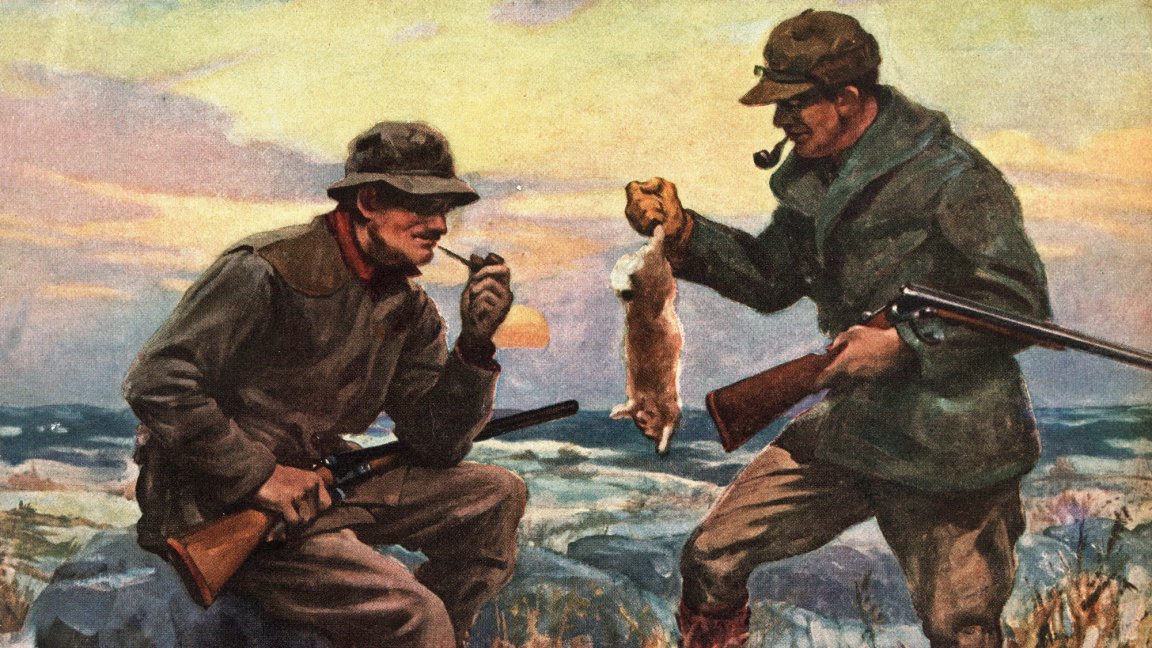
The cold wind whipped the watery sleet against the back of my neck, and my ears tingled when I took off my cap and placed it on some high weeds. Then I eased away with my 20-gauge shotgun ready for action. My eyes searched every clump of grass and weeds as I walked slowly away. When I was 30 or 35 yards from my cap, I turned right and went 10 steps. Then I headed straight back. I followed that out-and-in pattern around the hat until I had almost completed a circular design that resembles a flower with many petals (see the drawing).
I was beginning to think my efforts would be useless when a brown blur shot out of the weeds 10 feet away and turned sharply to the right on a well-trodden runway.
Under ordinary circumstances that cottontail would have vanished safely in the weeds, but I was ready. The little scattergun was already on my shoulder when the rabbit turned onto the runway, and I had punched the safety as the gun was coming up. I actually followed the rabbit with the front bead until I saw the right opening in the weeds and squeezed off the batch of No. 5’s, stopping the cottontail cold. I picked up my prize, and the thought of golden-brown fried rabbit, hot biscuits, gravy, and all the trimmings brightened that miserable day.
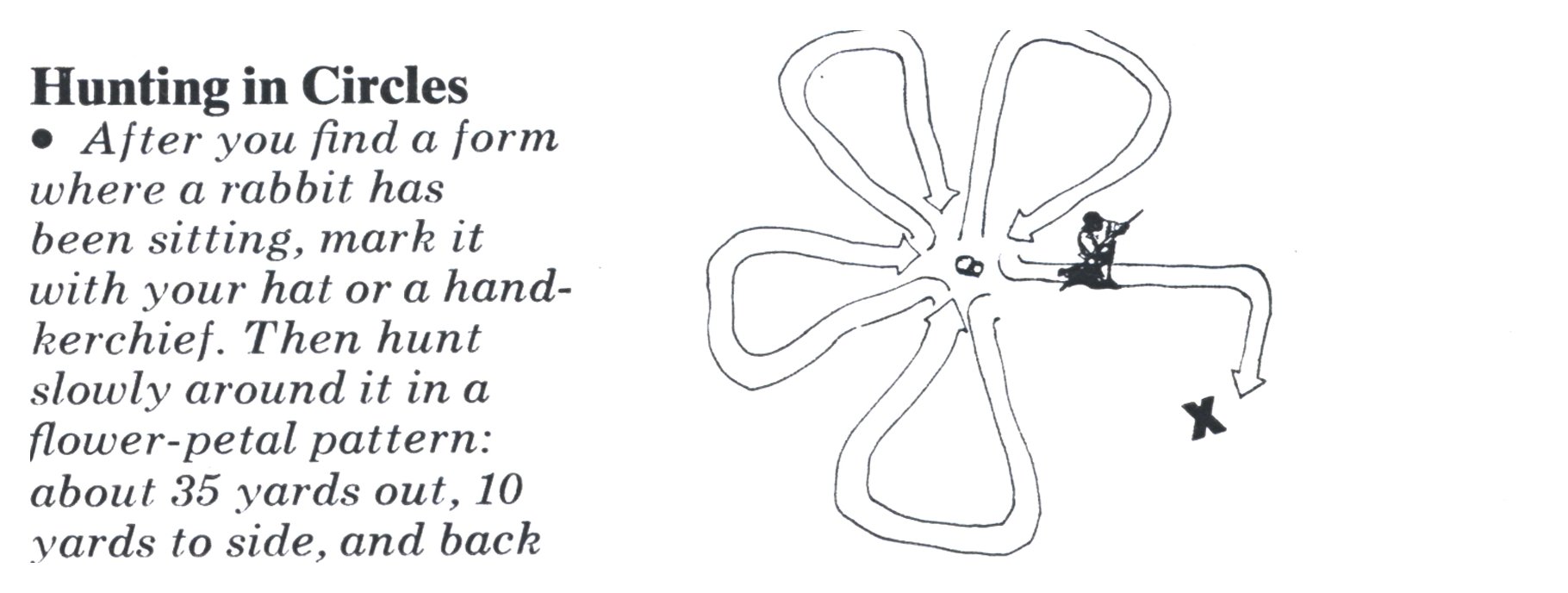
My method of hunting rabbits stems from the things my Dad — the late Jacob W. Scifres — taught me more than 40 years ago in southern Indiana, but I have added a wrinkle or two of my own. The method is based on the fact that the cottontail rabbit is a creature of habit. Once you find his home range, you will probably find him nearby. If, for example, you find a well-used form — the place where a rabbit has been sitting with some regularity — chances are pretty good that the rabbit will be close, perhaps closer than you think.
That was precisely what I had done. I had found the crushed weeds and grass of a freshly used rabbit form. To mark the place, I put my cap atop the weeds, and I hunted out and back around the form until I flushed my rabbit. My Dad always used his big red bandana or had me stand at the spot, but I never seem to have a handkerchief handy, so I usually use my cap.
If the outward-and-inward, 35-yard legs of a 360° search don’t produce a rabbit, I widen the circle a bit and try it again at least once. I usually look for the game only 10 to 15 feet ahead.
My real purpose in marking — or “flagging” — a spot where a rabbit has been sitting is to give myself the chance to hunt the surrounding cover as thoroughly as possible. If I can do that, I have a fair chance of finding a rabbit sitting. To me, that’s a raging success.
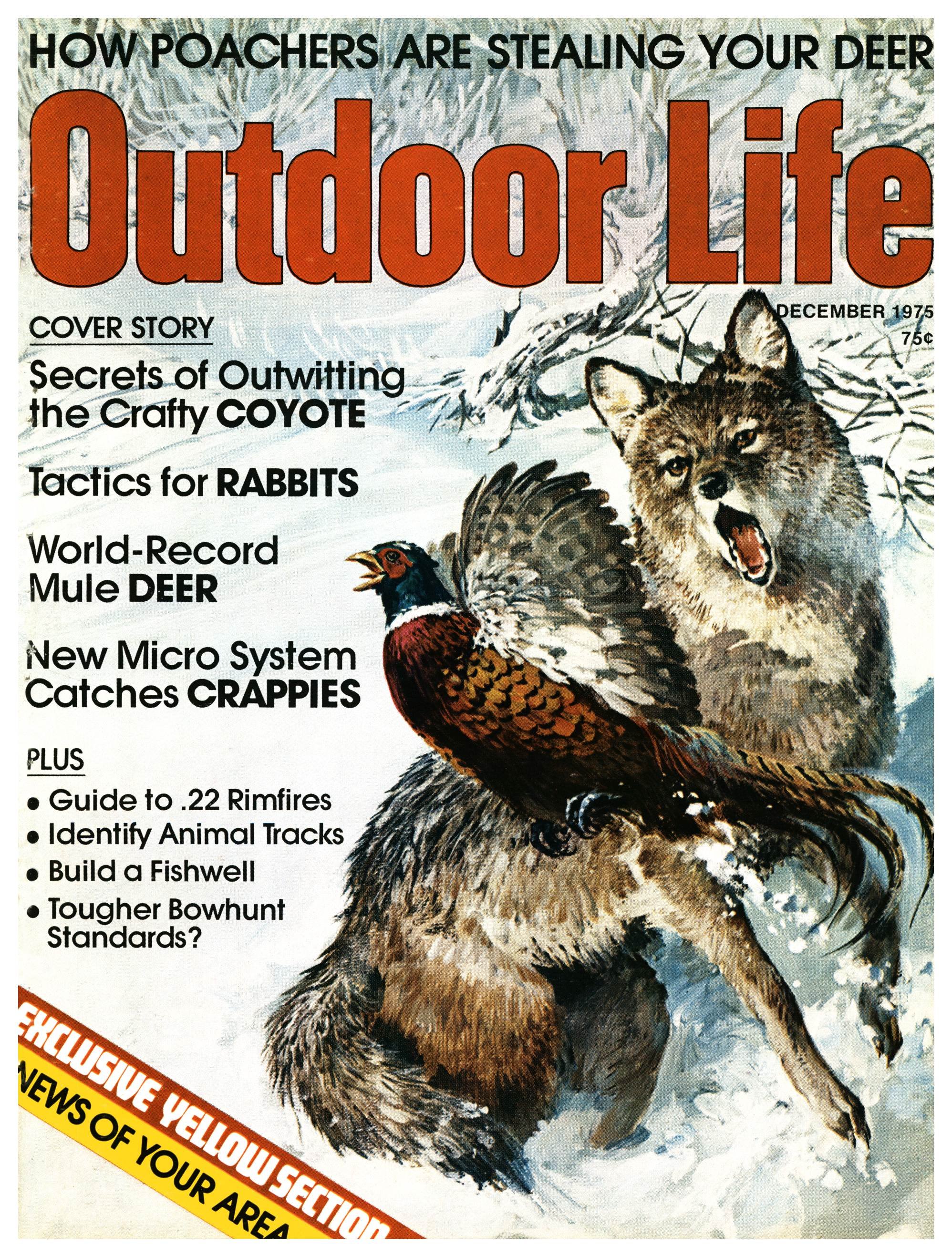
This story, “These Tactics Take Rabbits,” appeared in the December 1975 issue of Outdoor Life.
At this point I must confess that I shoot sitting cottontails. There — I said it, and I’m glad! Some hunters, I know, will be shocked, but I do it, and I do it as often as I can.
Let me explain. You may want to join the club.
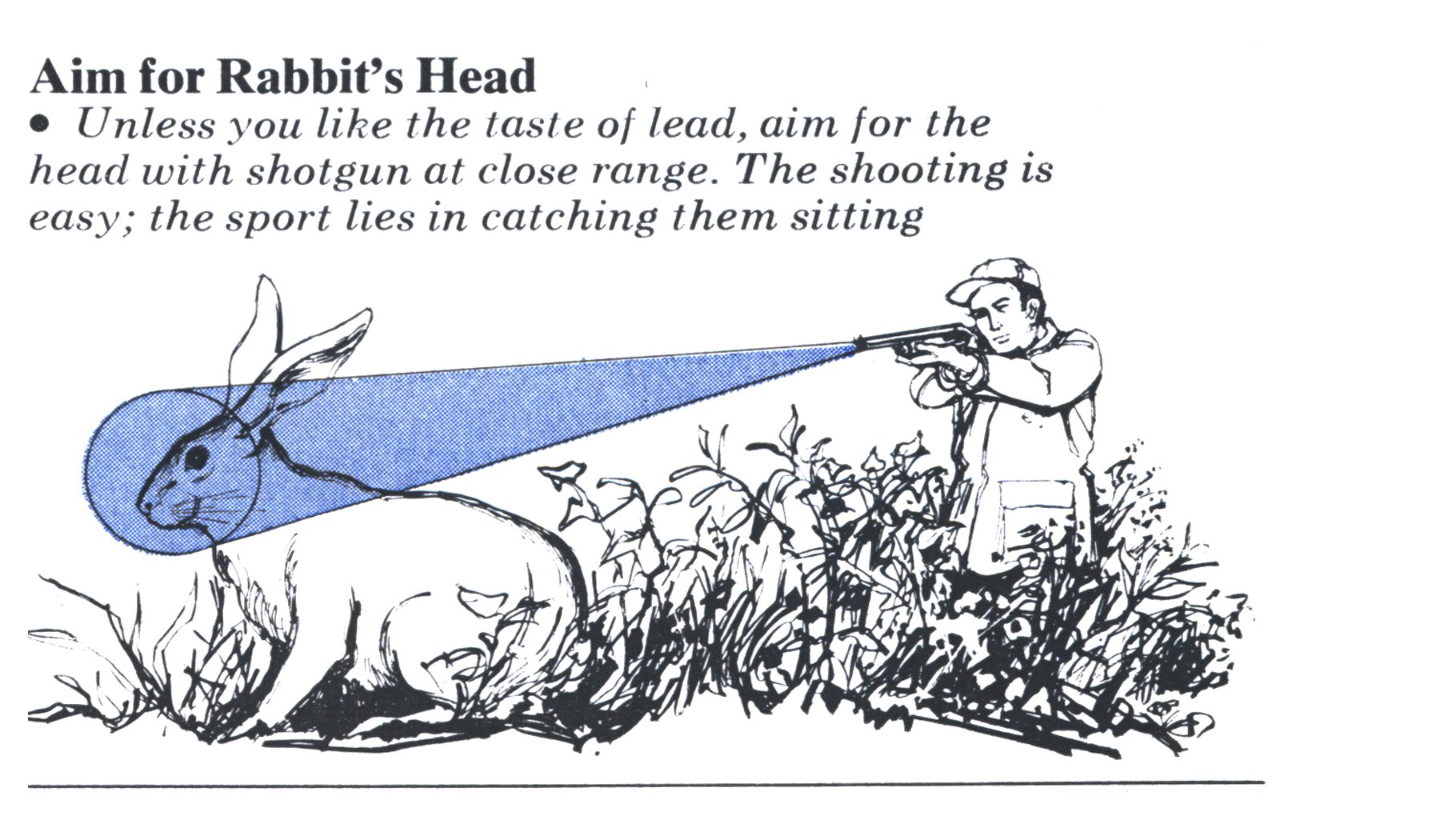
I hunt rabbits because I like to eat them. If I can spot a rabbit sitting and shoot it in the head, I get 1½ or two pounds of very good meat that is not mutilated by lead shot, without causing the animal to suffer. Since I often shoot at very short ranges, it’s possible to hit them in the head even when I’m using a shotgun. As I see it, deciding whether or not to shoot a rabbit sitting is nothing more than a matter of taste, and few people like the taste of lead shot.
“I’ll never shoot a rabbit sitting,” says one hunting friend of mine, explaining that he wants to see them run to make sure they are healthy.
To this, I reply only that many sick rabbits can still run. You have to look for other signs of disease. The disease most often contracted by man from rabbits and other wild animals is tularemia — rabbit fever — but there are ways to eliminate worry about that. You can simply wear rubber gloves when you gut and skin your kills. I also inspect the liver very carefully. It must be a dark-brown, healthy color and free of lesions and gray spots, or I discard that particular cottontail. Tularemia is usually contracted through cuts or sores on the victim’s hands. Be especially careful if your hands are in poor shape. After doing the cleaning, strip off your rubber gloves, wash your hands, and rub them with methyl alcohol.
Some hunters shun rabbits until well into the winter because of warbles — lumps in the skin caused by the larva of the bot fly. This infestation does not occur often enough to be a real problem, and when it does occur it doesn’t harm the meat.
Even if you eschew sitting shots, you can profitably employ my hunting method. If you can find the rabbit before it jumps, you will be ready for the shot when you kick it out or the rabbit finally panics and bolts.
Nobody should really miss a rabbit with an open-choke shotgun, but the element of surprise does strange things, and some skilled scattergunners do miss rabbits, even in wide-open places. I can help you if you have that problem. Learning to hunt rabbits my way starts with a few basic facts about the animals. Most importantly, rabbits are nocturnal animals. They feed at night, breed at night, and take care of their young at night. This is why the grassy nests of young rabbits found during daylight appear to be abandoned by the doe. She has cared for her young at night, and in almost every case the doe is somewhere nearby, keeping an eye on her offspring. She’s a good mother but very cautious.
You often see rabbits moving late in the afternoon and early in the morning during the summer, but in the late fall and winter months when rabbits are hunted in much of the U.S., they are in their forms, under brushpiles, or in holes during daylight hours.
There is some evidence that female rabbits spend a good part of the day during the winter in holes in the earth or under extremely heavy cover, but I have yet to find a zoologist who fully agrees. I’ve noticed, however, that I seem to shoot more males than females during the winter. Males and females often go underground when heavy snow cover and extremely low temperatures prevail for long periods. The lowly groundhog, despised by farmers and cattlemen alike, really is an important cog in the rabbit supply because that animal digs many of the holes used by cottontails.
Rabbits create their forms in several different ways. At times they simply worm their way into heavy weed cover, a brushpile, or anything else that will provide some protection from the wind and predators. They sit in the form with their powerful back legs drawn up under them. The belly is right on the earth. In this position a rabbit can rocket out of a form and bolt for safety if a predator or a hunter comes close.
In many cases, however, cottontails dig a shallow depression in the earth, partly or completely under some form of natural cover. Harold A. Demaree, a biologist for the Indiana Division of Fish and Wildlife, has done much research on rabbits. He told me that the shallow, oval depressions are probably dug so the rabbit can present a low profile and get out of the cold wind. As a boy in southern Indiana I often heard people say that the rabbit has a very sensitive underside. By placing its belly against the earth, the legend went, the animal is able to feel vibrations caused by approaching predators. That may sound far-fetched, and Demaree says that the cottontail’s belly has no special sensitivity. Yet I have noticed something that supports this idea. The cottontail is a nocturnal animal and sleeps during the day. But I never find a sitting rabbit with its eyes closed. Perhaps they do feel vibrations in the earth.
When a rabbit settles down in a form, it usually stays there all day unless it is disturbed. How much disturbance a rabbit will tolerate before it jumps varies from one day to another. I have always liked to think that the weather or barometric pressure has something to do with it, but I can’t be sure. On some days rabbits sneak out well ahead of the hunter. At other times you almost have to step on them to move them.
I used to think that I would always find rabbits in brier patches, brushpiles, and other heavy cover on cold, rainy, or snowy days, but I often hunted that kind of cover on bad days without success. Often as not, I’d accidentally find rabbits in good numbers in short stubble and other unlikely places, even when snow was falling.
I always try to start my rabbit hunts where I have good reason to think I’ll find game. If that fails, I take the cover as it comes. I try every bit of ground that offers rabbits a place to sit. If one kind of cover produces better than others, I go out of my way to find similar places.
Did you ever stand motionless in a field for several minutes, waiting for a friend to catch up, and then send a rabbit scurrying through the weeds almost from beneath your feet when you took your first step? If you hunt much, you probably have, and you probably wondered why you didn’t see the sitting rabbit.
Chances are good that only a small portion of the animal was visible in the brush. Add the rabbit’s superb natural camouflage, and you have a game animal that is just about invisible if it doesn’t move.
The Achilles’ heel in these defenses is the rabbit’s eye. Those big, black, shiny eyes are positioned on the sides of the head to provide a tremendous field of vision that covers 360°. These extraordinary eyes are surprisingly easy to see if you look for a single shiny liquid-black spot. Once you see the eye and make out the rabbit, don’t look directly at the eye when you raise your gun or ease closer. Doing so often causes the rabbit to jump before you are ready to shoot. I look off to one side or another but keep the rabbit in the corner of one eye. It works.
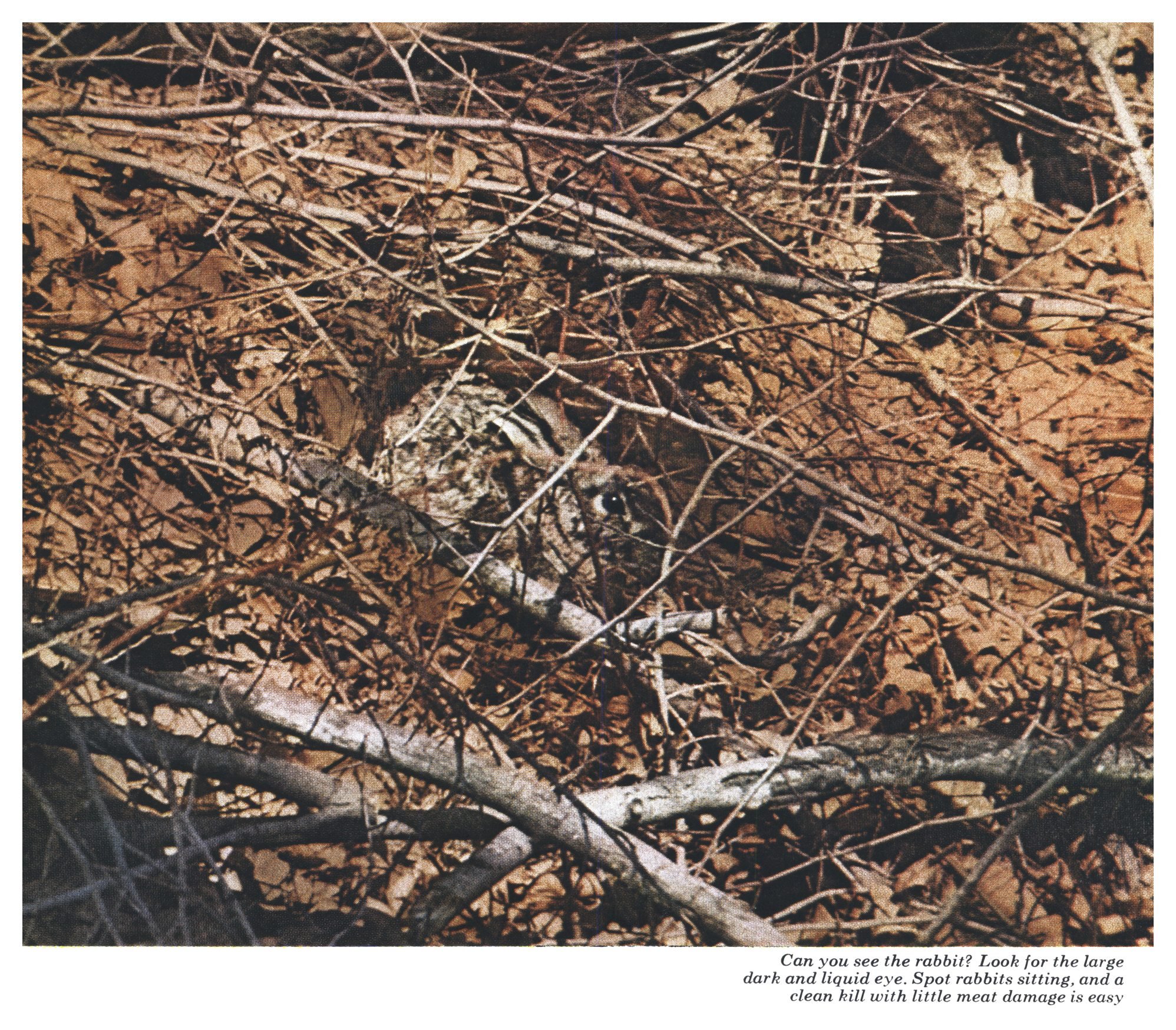
Unless you are on an exact collision course toward a rabbit, it will often sit tight and let you walk by. Coming to a stop and standing quietly often puts other game out, but it seldom bothers a rabbit. On the other hand, staring directly at a rabbit’s eye, making quick moves in its direction, or making loud noises usually moves them — often too quickly for you to have time to get off a shot.
Here’s a good example. One day last winter I drove down to Martinsville to hunt with Steven Higgins. Steve lives on a 40-acre rabbit patch outside of town, and since we were going to be close to the house, he took along his five-year-old son Herb.
We soon found a fresh rabbit form in a clump of grass at the base of a little tree, and Steve started Herb’s rabbit-hunting education right there.
While the youngster looked for the rabbit, I took a picture or two and then ambled over the brow of the hill and found the rabbit backed up at the base of a small tree with only its head showing. That big black eye seemed to jump out at me, but I could hardly see the rest of the animal on the dry oak leaves.
I stopped in my tracks with my little scattergun ready and called softly to Steve and Herb. The rabbit was no more than eight or 10 feet from me, but I talked freely, though softly, to guide Steven and Herb to a spot where they could see.
Steve has always given me the raspberry because I carry a slingshot on my rabbit hunts, and I thought I might make him eat his unkind words.
“You just watch,” I said, still looking at the rabbit out of the corner of my eye, “and I’ll show you why I carry this slingshot.”
I eased the slingshot from around my neck, fished an 00 buckshot out of a pocket, placed it in the pouch of the sling, and hauled back on the slingshot.
Before I could satisfy myself that I would put the lead ball between the rabbit’s eyes, the left band snapped and slapped my face. That sudden movement launched the rabbit from its form, though my previous quiet motions hadn’t frightened the animal. Steve laughed so hard he almost missed the wide-open shot. Slingshots, by the way, are not listed as legal hunting weapons in most states. If in doubt, check with a warden.
Most of the time I hunt rabbits with a shotgun — modern or muzzleloader — but I also use a bow or a little single-shot .22.
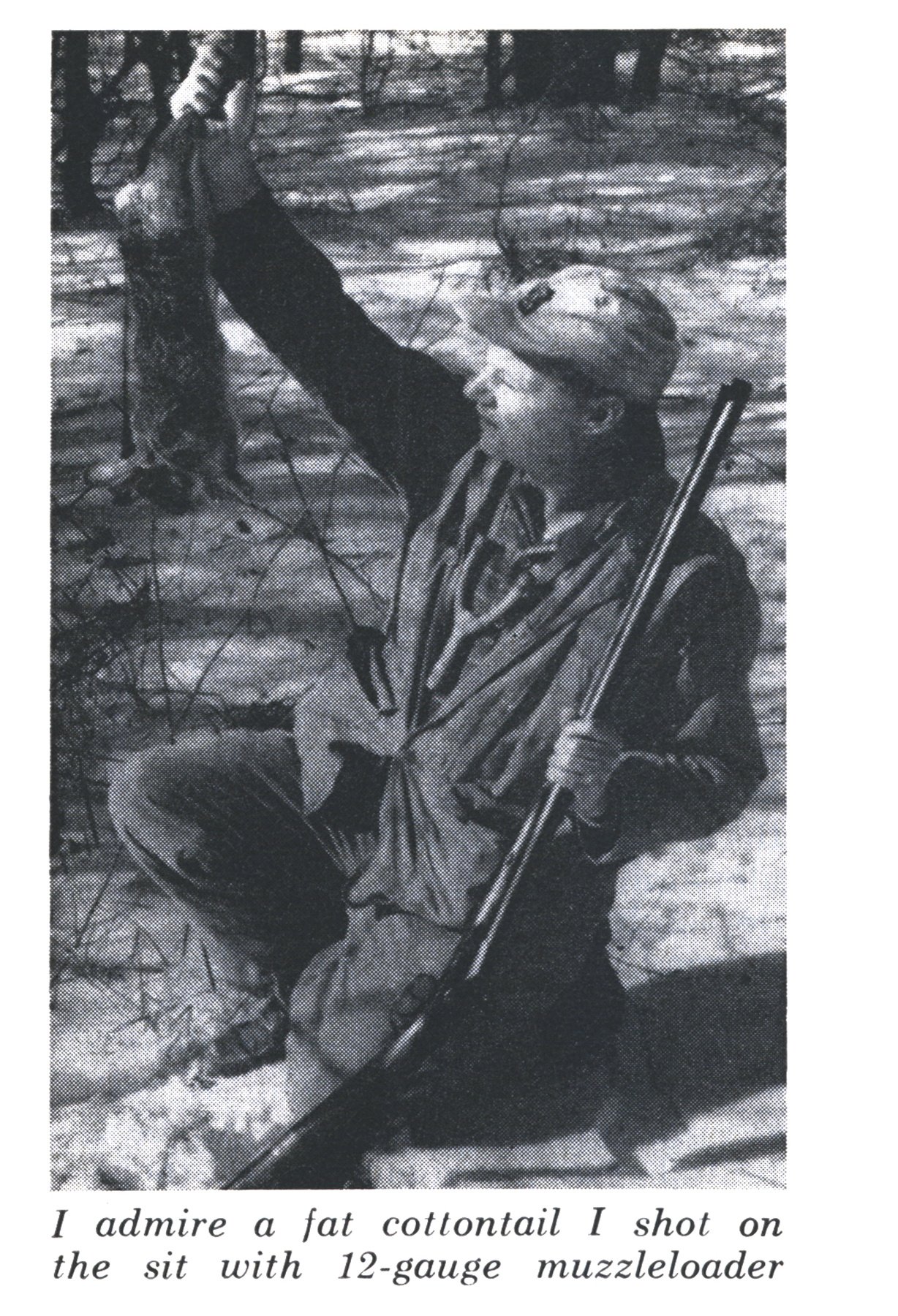
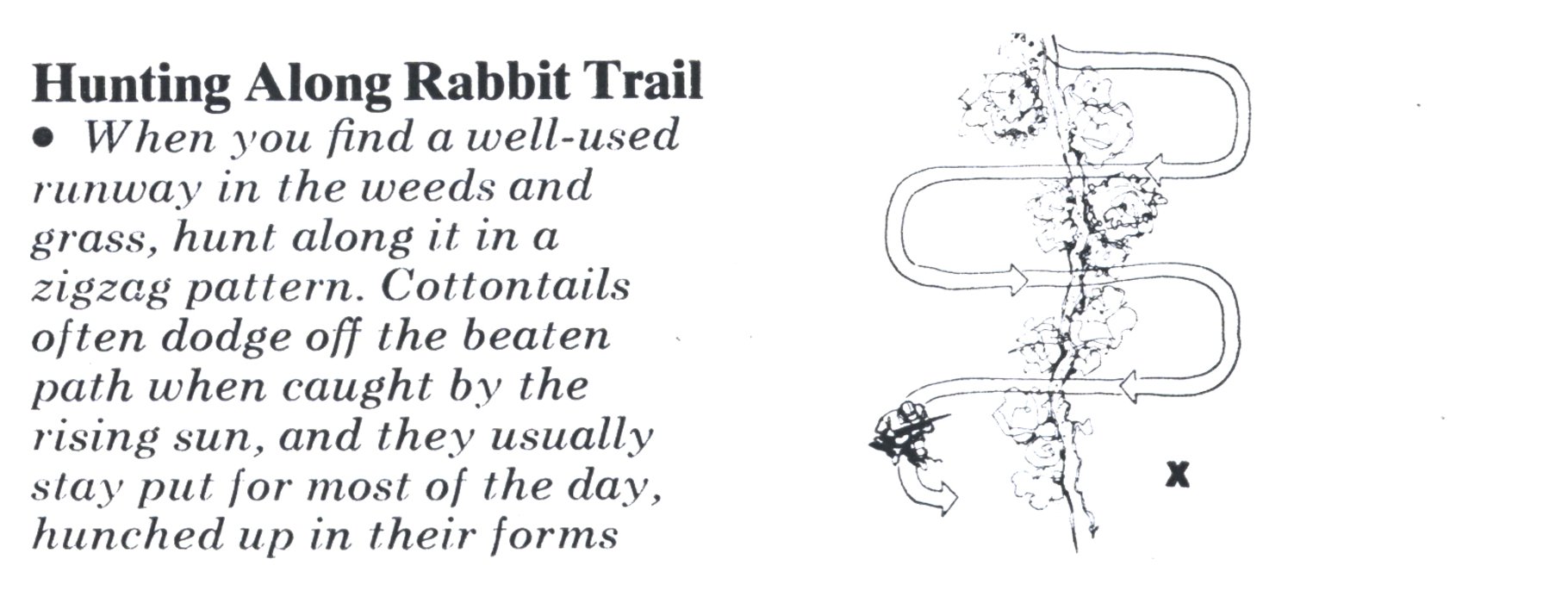
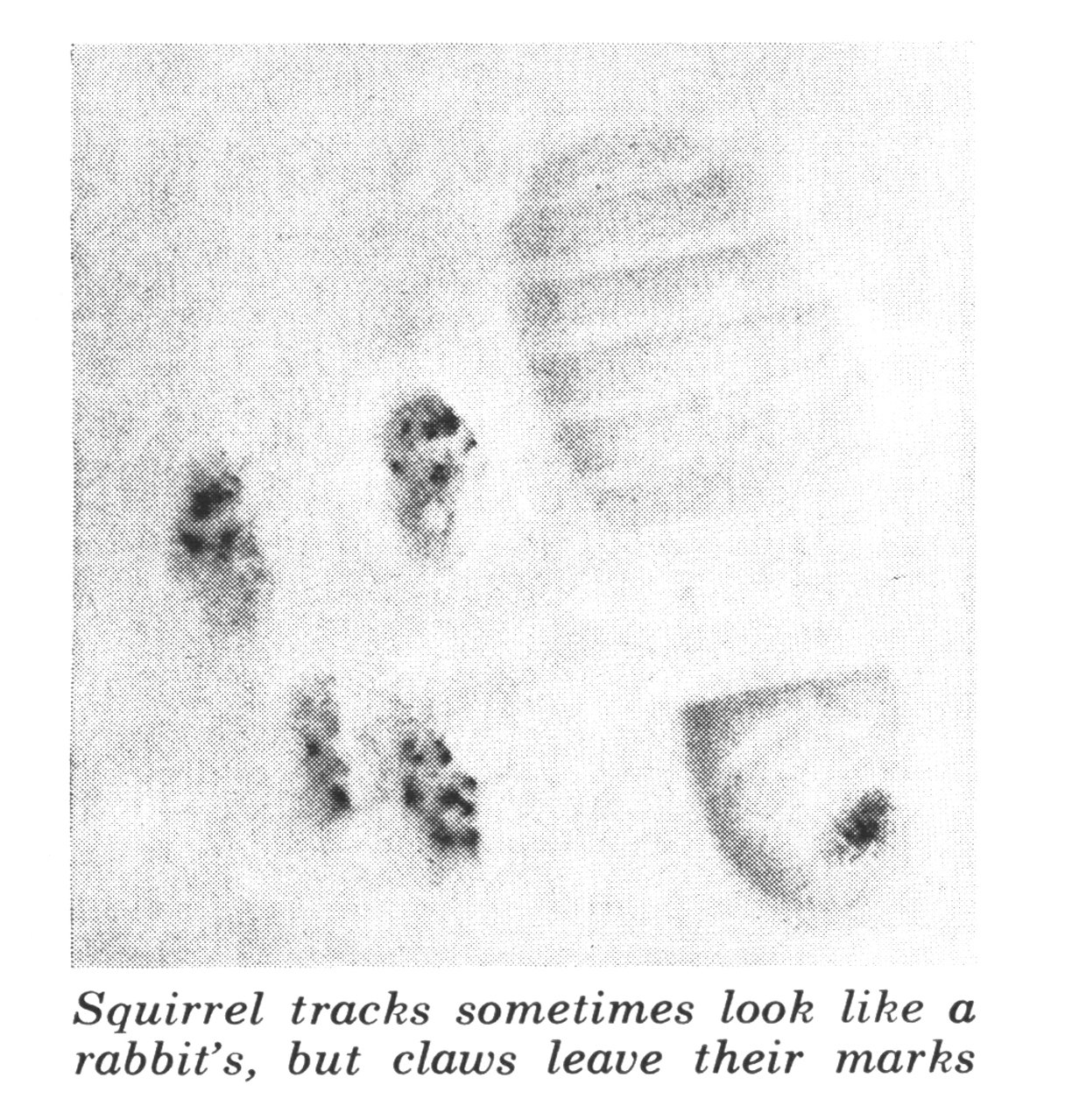
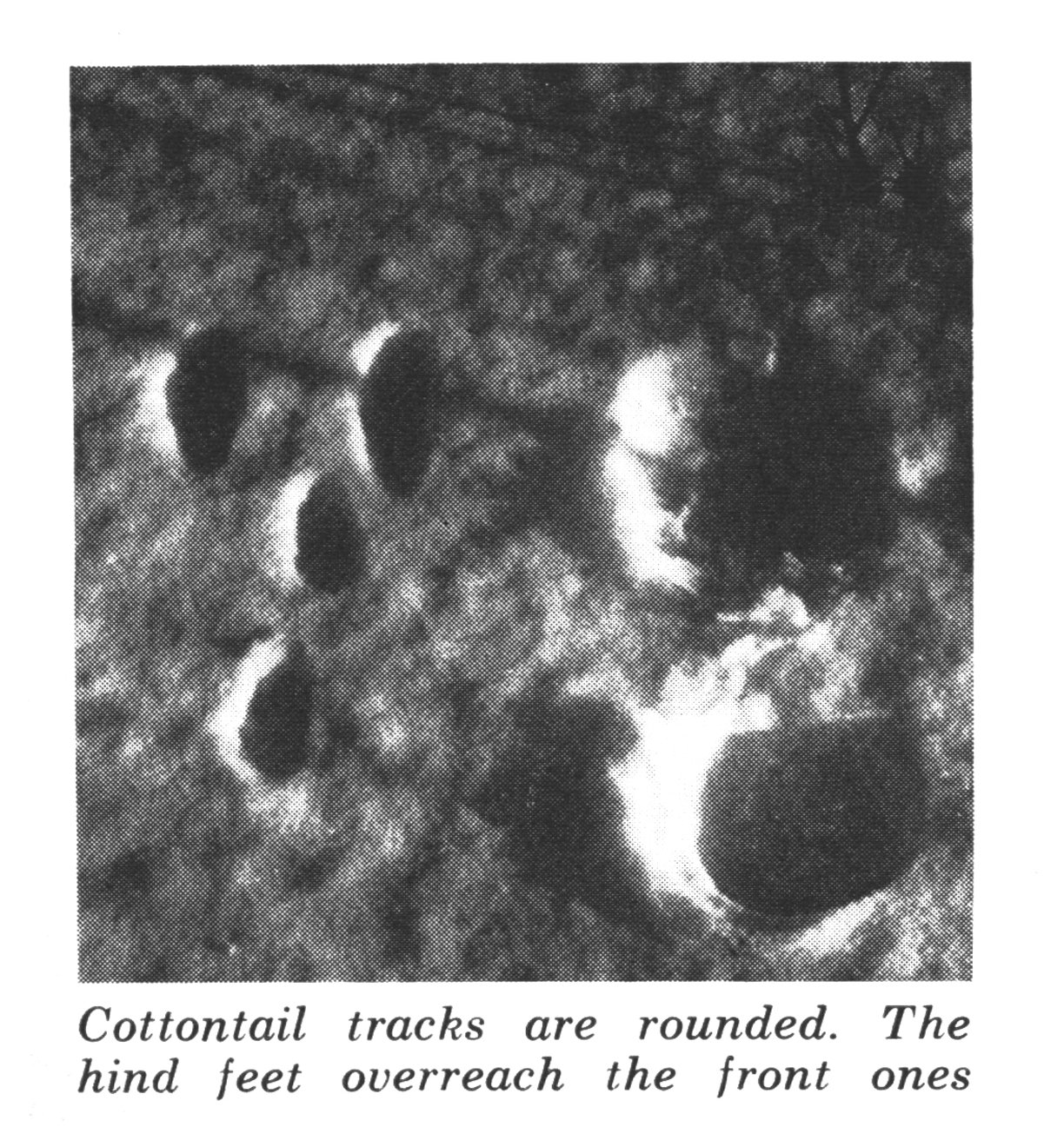
A man must do a good deal of walking these days if he expects to find much game. While you are doing that walking, you might just as well cover the ground that has the best potential. Finding rabbits when there is a good tracking snow is usually easy. All you have to do is find the tracks, follow them, and keep a sharp eye on the cover. If there is no snow, I look for rabbit paths — narrow, beaten-down trails through thick weeds and brush. Whenever I find a rabbit runway bisecting a weed patch or any other good cover, I hunt along both sides of it in a zigzag pattern (see sketch). Rabbits that are traveling on a runway when daylight comes often jog off to one side and take or make a form for the day. You can find them if you hunt slowly and carefully.
If I must hunt an unfamiliar area, I concentrate on the edges of good cover first, say the first 50 to 60 yards of cover around the edges of an open field.
No method works if you don’t have access to areas where rabbits are fairly plentiful. This becomes more and more important as habitat dwindles, and it will become even more of a problem unless farmers and other landowners start to use their heads. The fence row and the ditch bank, very good cover for rabbits, are fast disappearing as clean farming eats them up, and fall plowing every year eliminates hundreds of thousands of acres of cover that would otherwise serve all kinds of wildlife through the winter. In recent years the U.S. Department of Agriculture has cut available habitat drastically by changing the set-aside-acreage program that formerly kept more land out of production. And, of course, many biologists believe the use of pesticides and herbicides is taking its toll among rabbits.
But even so, Mr. and Mrs. Cottontail are still doing quite well in many areas, and some good rabbit hunting is available — if you don’t wait until the day of your hunt to look for it. I hunt rabbits only half a dozen or so days a year, but I never stop looking for them. In late winter and early spring I watch for road kills. If a lot of rabbits are killed on a stretch of road, there’s good cover nearby. Other sightings tell me a lot too. Rabbits don’t stray far from home. Since they move late in the afternoon and early in the morning during the warm months, I find many hotspots when I go fishing early and come home late.
Read Next: The Best Wild Rabbit Recipes
But my most reliable information on rabbits is gathered while I’m bird hunting. When I find good concentrations of rabbits I make a mental note, and when the quail hunting is history and a month of rabbit season remains, I go back. It’s a simple matter of keeping my eyes open.