
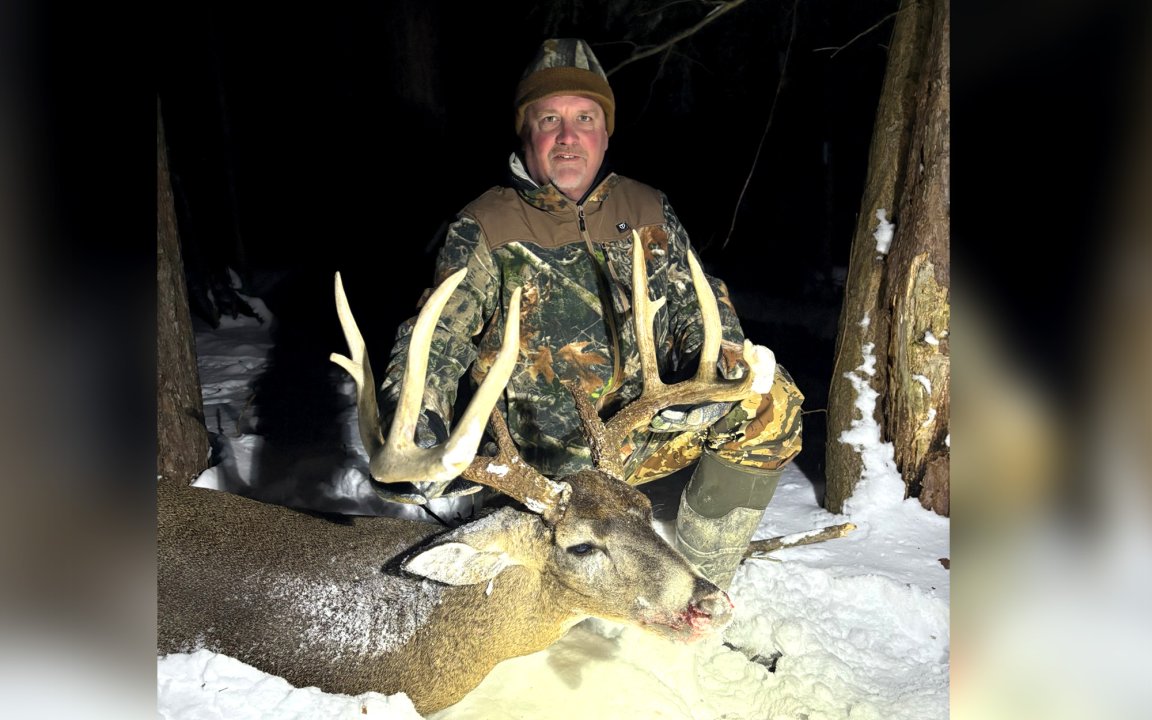
Pennsylvania’s early archery and rifle deer seasons had ended, and Chris Rhoades was still waiting for a chance to take an especially huge buck. He’d seen the deer on trail camera photos and just once in late December on his hunting property, where he’d set a blind.
“I saw the buck very late [that] day in the cornfield on my 165-acre farm,” Rhoades tells Outdoor Life. “But it was too late to shoot.”
Rhoades was hunting with his .45-caliber CVA as part of Pennsylvania’s traditional flintlock season that runs from late December through much of January.
The blind that Rhoades had set up in his Erie County cornfield was well-camouflaged. It has sturdy walls and windows to buffer Pennsylvania’s bitter-cold winter weather, but he always waited until conditions were perfect before hunting the blind. And on the afternoon of Jan. 1, the wind was perfect.
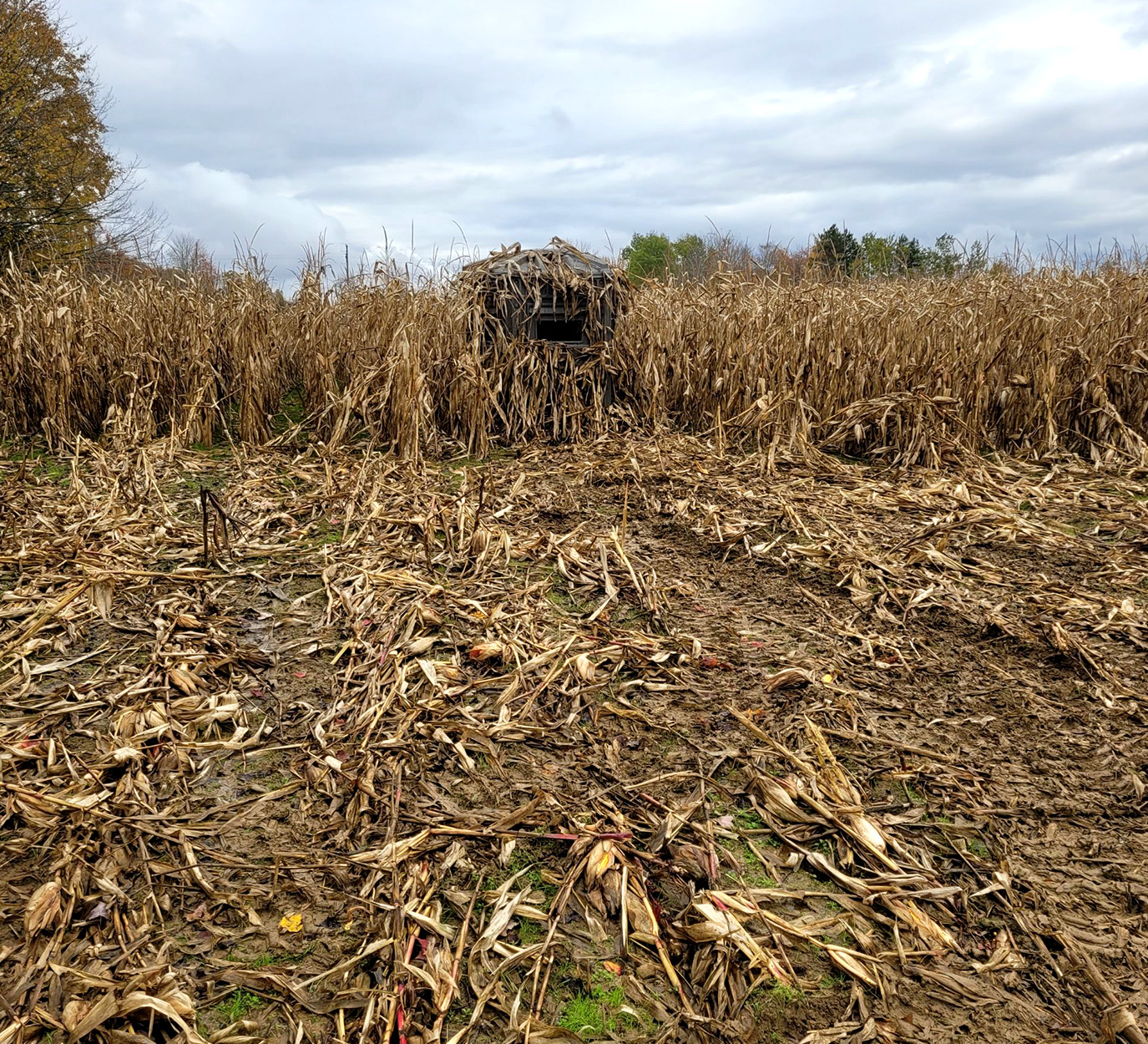
Rhoades has hunted deer for most of his 54 years and knows that patience and stealth pay big dividends. So that New Year’s afternoon, he walked several hundred yards along a railroad track to slip into the cornfield and settle quietly into his hide.
The ground was covered with snow. It was 15 degrees and a bit overcast with a slight wind. But it was snug inside the blind, and a few does and small bucks eventually fed out in the cornfield.
“Finally, about 5 p.m. the buck I was after stepped into the corn, apart from the other deer,” says Rhoades. “I waited for him to get a little closer, and when he stood at 55 yards I put the iron sights of my rifle on his shoulder and fired.”
Smoke billowed from his flintlock and Rhoades didn’t see where the buck ran after the shot. With night falling, Rhoades went to where the buck had stood but found no blood. Deer tracks were everywhere in the field, so he couldn’t tell which way the deer had ran.
“I was definitely shaking. He was a magnificent animal,” Rhoades told GoErie.com, which first reported the hunt. “I had to calm myself down.”
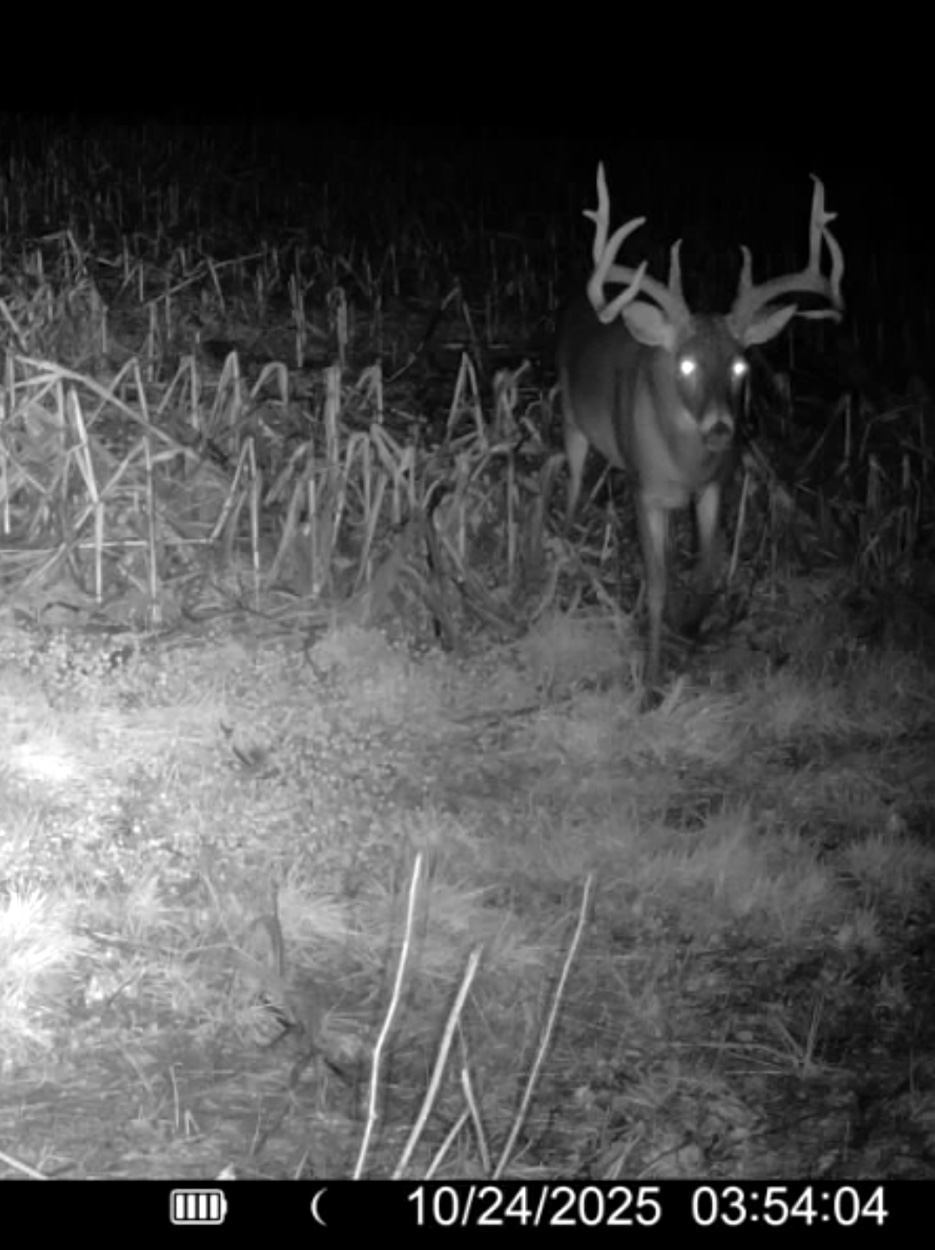
Rhoades phoned his local hunting buddy Kurt Hotchkiss and told him he’d shot the deer but had no track to follow. He decided to leave the area, then return later with Hotchkiss and another friend, Brent Soety, to look for the buck.
“We got back there about 7 p.m. and started walking the edge of the cornfield looking for sign,” says Rhoades, who had been hunting with a 240-grain hollow point. “Kurt found him just inside the woods [along the] edge of the field. He’d only traveled 60 yards from where I hit him. But there was no blood at all, and no exit.”
The hunters then loaded the estimated 200-pound deer onto an ATV and drove to a nearby home to dress the buck. The deer is a main-frame 10-pointer with heavy mass. It has been green scored at better than 170 inches, with a 24-inch spread. Rhoades will have the buck mounted on a pedestal to display on a whiskey barrel in his business office.
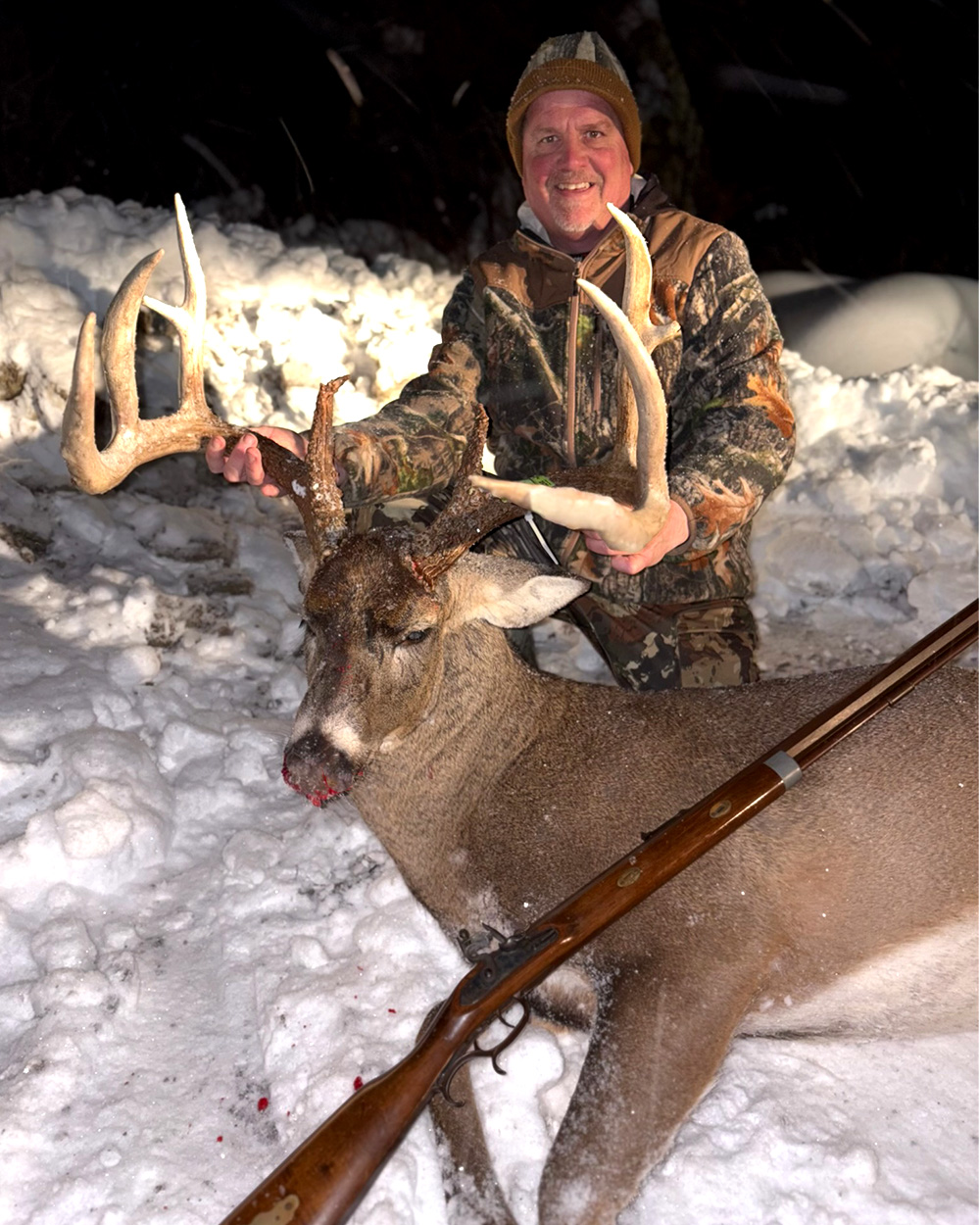
“We think the buck was between 5.5 and 7.5 years old,” said Rhoades, who’s taken other big bucks during the flintlock season. “I have to wait 60 days before the buck can be officially scored. But he’s been green-scored in the 170-inch range.”
While tagging a buck like Rhoades is an accomplishment with any method, it’s particularly impressive with a flintlock. The current No. 1 Pennsylvania flintlock buck scored 146 4/8 and was taken by John Martin in 2003 in Armstrong County. Another flintlock hunter, Larry Oswald, shot an 8-point earlier this season that scored 150 2/8.
Related: 19 Timeless Photos from Pennsylvania’s Flintlock Season, the Last of Its Kind in the Country
“I talked to Brian Knightlinger who’s an official scorer and he believes my 10-pointer will be a new Pennsylvania state record buck taken with a flintlock rifle when it’s scored in March.”