
We may earn revenue from the products available on this page and participate in affiliate programs. Learn More ›
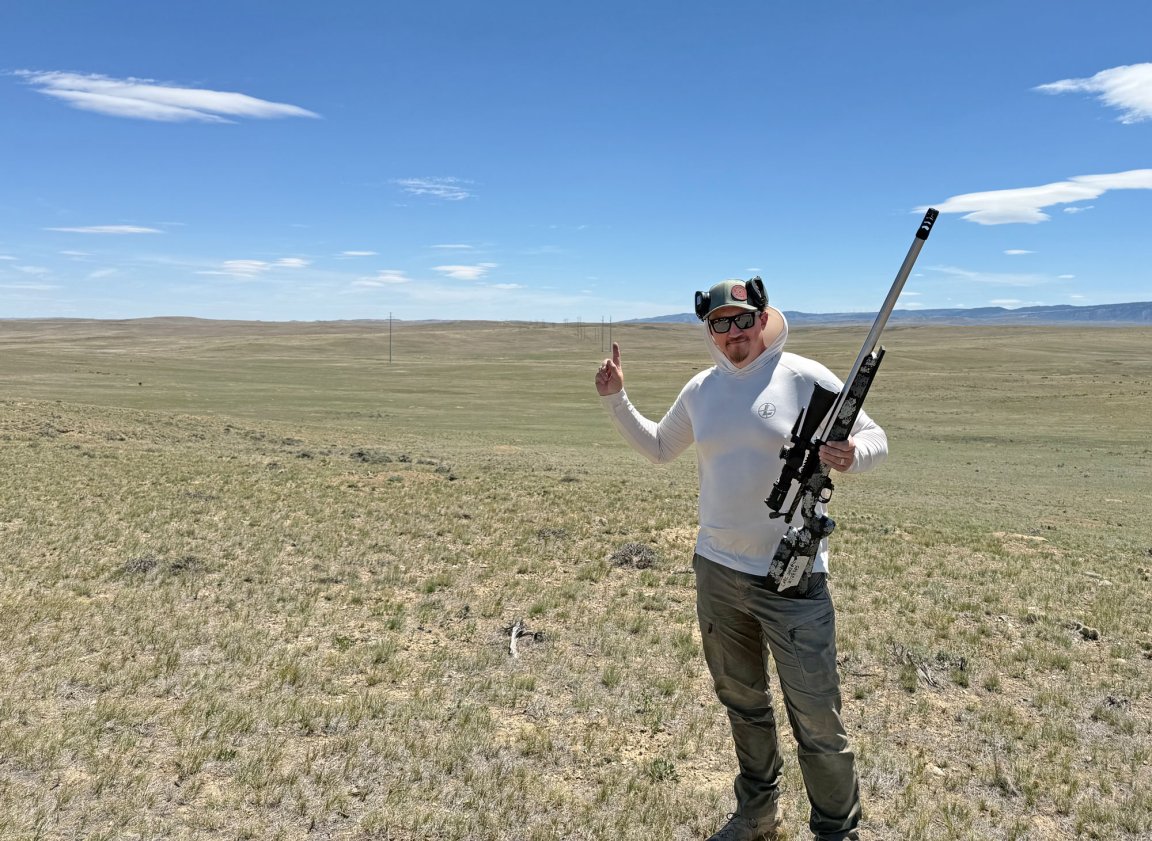
Prairie dog shooting is the sort of high-volume rifle practice that’s been popular among hunters for ages. Sizzling-hot bull barrels, dusty vistas, and sunburns are the name of the game. I don’t know that there’s ever been a prairie dog shoot without some element of friendly competition over bragging rights on the longest shot. Stretching the distance was one of the goals of a recent shoot I attended on the outskirts of Casper, Wyoming. The goal, in addition to getting reps in with Leupold’s new BX-6 rangefinding binoculars which use Hornady’s 4DOF ballistic solver, was to try and hit at least one prairie dog at 1,000 yards.
A Little More Than Luck
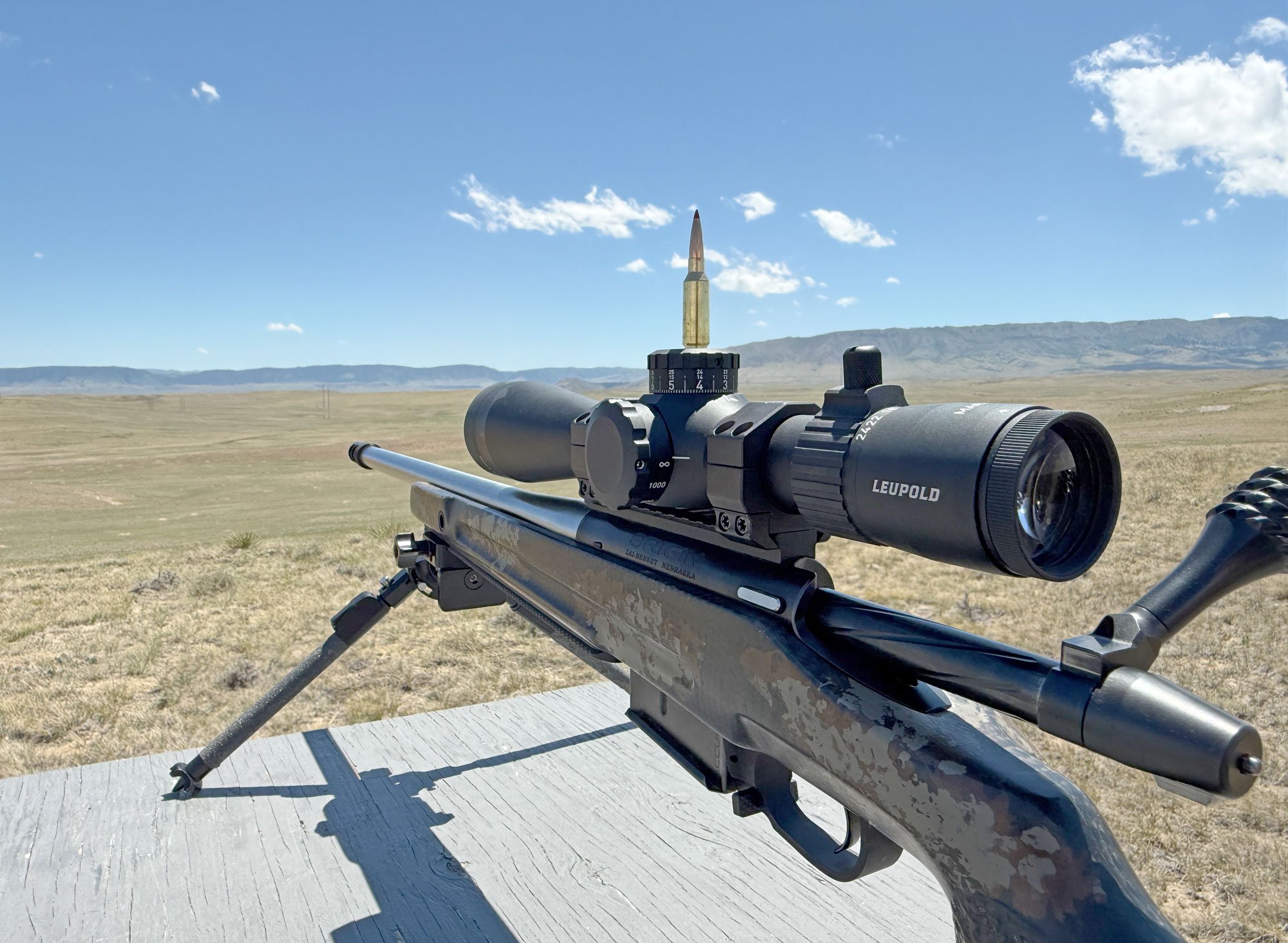
The dust hadn’t settled back into our tire tracks before I was unrolling my shooting mat on the first morning of our shoot. Winds were dead calm and if there was a time to score on long shots it was now. I quickly fit a heavy-barreled 6mm ARC with a bipod, cracked a box of ammunition, and began scanning for a mid-range prairie dog to check dope before trying a far shot. I found one at about 500, fired once, and hit him. After that, I quickly hit three between 1,000 and 1,228 yards. As the wind picked up, we shortened distances and continued shooting. By quitting time in the afternoon, we were holding over a MIL (3.6 MOA) of windage to hit prairie dogs less than 300 yards away. We even put a solid effort in achieving another challenge for the shoot — taking the closest prairie dog. I managed to shoot one in the head with a .22 LR at 11 yards after belly crawling through the dust.
I spent most of our second morning working a vermin-infested patch of ground between 400 and 600 yards from our shooting position, alternating between a 6mm ARC and 22 ARC to keep barrels cool. The afternoon wasn’t quite as windy as the previous day, and I spent most of it bouncing between clusters of prairie dogs between 600 and 900 yards. However, they were also scattered along a fence line approximately 1,100 yards away and, while looking at one particular group, I noticed a conspicuous stander a couple hundred yards beyond the fence. A challenge, in the afternoon conditions, was actually finding prairie dogs that could be seen clearly enough to aim precisely through the mirage.
The rangefinder read 1,368, and I applied the elevation correction of 13.3 MILS, holding about .4 MILS for windage. After a crisp trigger pull, more than a second ticked away before a dust cloud erupted just to the right. A quick correction and another shot sent a 6mm bullet a hair’s width to the left. The third shot flipped him over. Or perhaps it was the fourth — I don’t remember.
While I certainly felt the temptation to hit the gas station for a scratch-off at the end of that day, there’s a little more to hitting something as small as a prairie dog at that distance than pure luck. I hit seven or eight over 1,000 yards on that trip, but the real accomplishment was the practice — and what that means when applied to running a rifle at normal hunting distances.
How Hard Is It to Hit a Prairie Dog At 1,368 Yards?
While the average smart-ass will suppose that if you’ve got unlimited ammo, it’s not very hard at all to hit a prairie dog at three quarters of a mile, but that’s not really true. Neither is it true that a marksman with enough skill has a good chance of doing it on the first shot. So what do you really need going for you? Let’s take a look at some of the factors involved.
How Big Is A Prairie Dog?
The average prairie dog, when standing up, is around 12 inches tall and 4 inches wide, give or take. If you’re dealing with closer distances and windier conditions, a horizontal varmint gives you a more forgiving target to aim at and the opposite is true if there’s light winds and less precise distances. Any way you cut it, a p-dog is a tiny target beyond 1,000 yards.
In terms of minute-of-angle, that prairie dog is approximately .28 MOA wide by .84 MOA tall. There are a lot of hunters who think they have a quarter-MOA rifle, so hitting one should be no problem, right? Well, it doesn’t work like that. Through thousands of rounds of testing, we’ve found that the old standard of a rifle that shoots three-shot, sub-minute groups doesn’t qualify it as a sub-minute rifle. When testing with valid sample sizes (at least 20-shot aggregate groups), hunting rifles that are truly capable of reliable sub-MOA performance aren’t the norm.
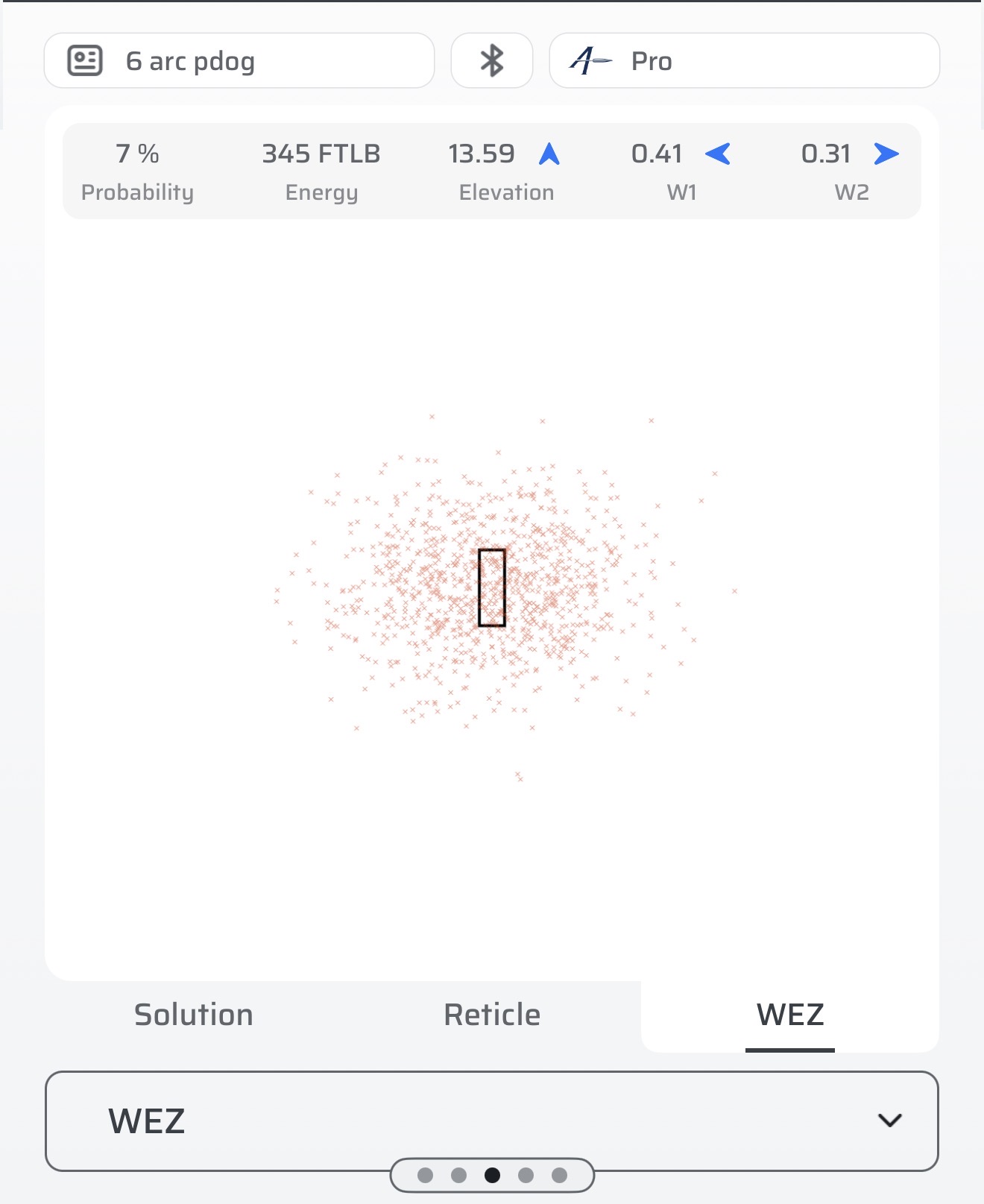
Fortunately for me, I was shooting very accurate rifles that were reliably sub-MOA, but likely not capable of half-MOA precision. Considering the size of the target and that level of dispersion, under perfect conditions, with precise wind judgement, and less than 10 fps velocity variability, that gave me only a 7 percent hit probability according to the Applied Ballistics WEZ hit probability calculator.
Velocity Variability
Variation in velocity from shot to shot is one of the biggest factors in shot-to-shot precision at long distances — especially when we’re talking about such a small target. Reloaders strive for low standard deviation of velocity but, like with dispersion, it’s important to use valid sample sizes to calculate it accurately. Single-digit SDs can be achieved with large samples, but it’s not common. Top factory match ammo usually has SDs of between 12 and 18 fps with extreme spreads in the 40 to 75 fps range. If we apply a 30 fps range to our velocity, that drops our probability of an impact to 1 percent.
Drag Variability
One thing that often doesn’t become a factor until you reach long distances is drag variability. This is the slight difference in drag from shot to shot and bullet to bullet. Slightly more drag means a bullet will slow down more quickly, less drag means it will stay faster longer — and impact higher downrange. I was shooting Hornady bullets, which incorporate their Drag Variability Reduction Technology, or DVRT, but that still isn’t entirely consistent from bullet to bullet.
Wind: The Great Equalizer
One of the greatest influences on where your bullet lands is the wind. We’ve already seen that the odds are against hitting such a small target, even with no wind. A perfectly constant wind from shooter to target is easy to calculate and compensate for, but it’s never consistent. What does this do in the case of a prairie dog? Going from a zero to one mile per hour wind would move my bullet about 13 inches at 1,368 yards. A three mile per hour change — which is often imperceptible — moves the bullet 39 inches. Any variability at this distance drops the theoretical hit probability to zero or one percent in the WEZ calculator. Ultimately, shooting in the wind requires a best guess, an accurate correction, and rapid shooting before the conditions change again.
Making Hits Happen
Looking at all this, it’s surprising that these hits are even achievable — and I certainly put more slugs into the dirt than on fur at that distance. It can be done, but it takes getting everything right, plus repetition. Consistent position, crisp trigger squeezes, and good recoil management gives you a fighting chance to spot your misses, make corrections, and send shots that will connect. One key thing to know is when not to correct. At extreme distances, the very nature of your rifle’s dispersion will cause some misses. If your shots are falling within the expected area of dispersion, don’t change anything, just keep shooting. If shots are falling consistently low, high, right, or left of where the group center should be, make a correction. This is relatively scientific, but also depends on some intuition.
Final Thoughts
Ultimately, the accomplishment in doing this is the fun, practice, experience that can be applied to other hunting and shooting disciplines — if it’s done purposefully. Banging away all day at tiny targets until you hit one won’t do you any good if you don’t do it in a way that will improve your skills. Three of the most valuable things I was able to work on were wind calling and correcting, accurate ranging, and target referencing. On a tiny target, you must not only guess the wind correctly, but make a precise hold so that you can correct accurately if you miss. Otherwise you’re just guessing. Precise ranging can also be tricky depending on the terrain. This is something that match directors regularly leverage in NRL Hunter competition. Target referencing is another valuable skill both in competition and the field. Spotting, ranging, and shooting one particular prairie dog, across a mile-long basin full of prairie dogs, can be more difficult than it seems — especially when talking a partner or spotter onto the right one.
I think every good prairie dog shoot should close out with some sort of nearly unbelievable brag. Whether it’s the offhand shot across half a sprinkler quarter, the long-distance poke with a rimfire revolver (which wasn’t me), or a precision rifle reaching towards the bounds of space and time itself, a prairie dog shoot is the place to make it happen. There’s hardly a funner way to improve the skills that will serve you come hunting season.