
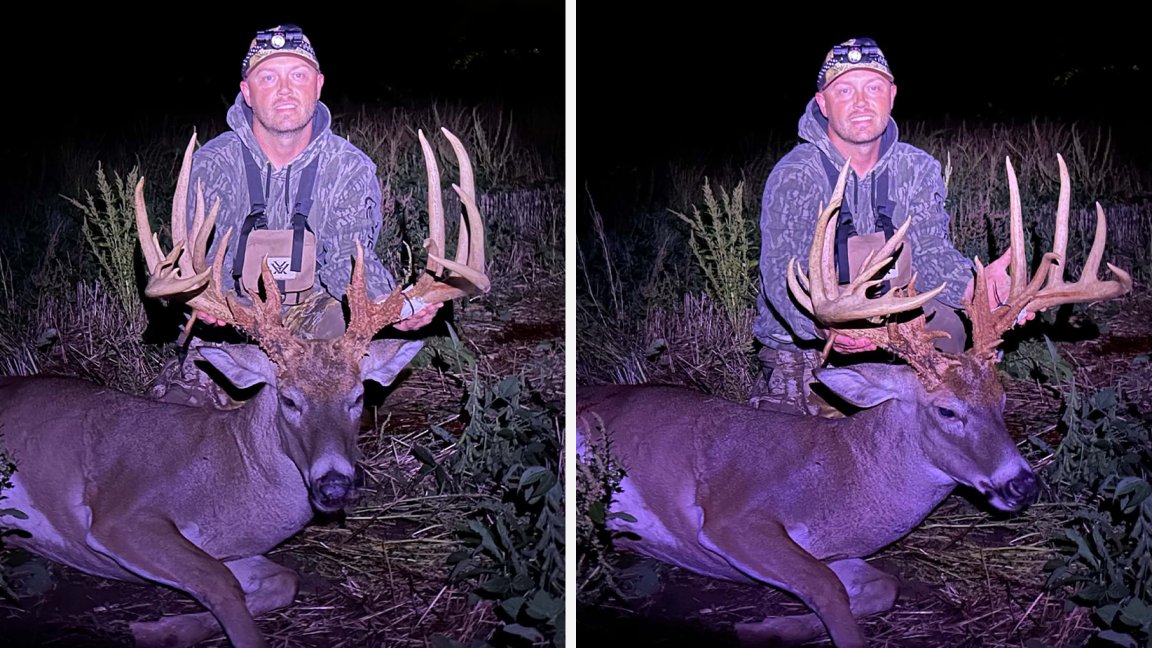
Stephen Crowell of New Paris, Ohio, is a manufacturing project manager. But he works on the side guiding walleye anglers on Lake Erie. He had a scheduled fishing trip for Oct. 2, but it was raining and his charter bailed on him. So Crowell went deer hunting.
“With the cold weather coming in that afternoon I figured it would be a good time to check a small farm I’d just secured permission to hunt,” says the 35-year-old bowhunter.
Crowell had only been on the property in east-central Indiana a time or two. But he’d heard tales of a giant buck roaming the area that he’d not seen. For that reason, he dubbed the buck “Rumor.”
“In late September I went to put out cameras on the farm and I saw him near the edge of a still-green bean field.”
Crowell was carrying a lock-on stand to a lone tree on the edge of the same bean field on Oct. 2 He got there at 3:30 p.m. and hung the stand quietly, taking care not to make much noise. He also didn’t trim many limbs, which he planned to use for cover.
“The tree was covered in poison ivy, and it took time for me to get my stand set,” he says. “I was settled in for hunting about 4:30, and I was about a hundred yards from where I’d seen the buck two weeks prior.
“It was cool, the wind was perfect, and the beans were the only green food source around – so I figured deer would be on it.”
About 6 p.m. three does entered the bean field and fed for awhile before wandering off. An hour later a small buck came to the field but soon vanished in a thicket 100 yards away. At 7 p.m. the little buck stepped out again. This time, there was another buck behind him, and his antlers were unmistakable.
“He came from the little thicket into the beans and was really slow and cautious as he fed on the beans occasionally. He was working my way slowly, but when he got broadside at one spot I realized he wasn’t coming any closer and was going to head away.”
Crowell ranged the buck at 51 yards, and made his decision.
“I knew I had to shoot then or maybe never again.”
Crowell was shaking, but he slowed his breathing, steadied himself, and drew.
“The arrow hit him high and he went down right there. I think he dropped to turn and run when I released my arrow, so the broadhead hit him high. I’m not complaining, though.”
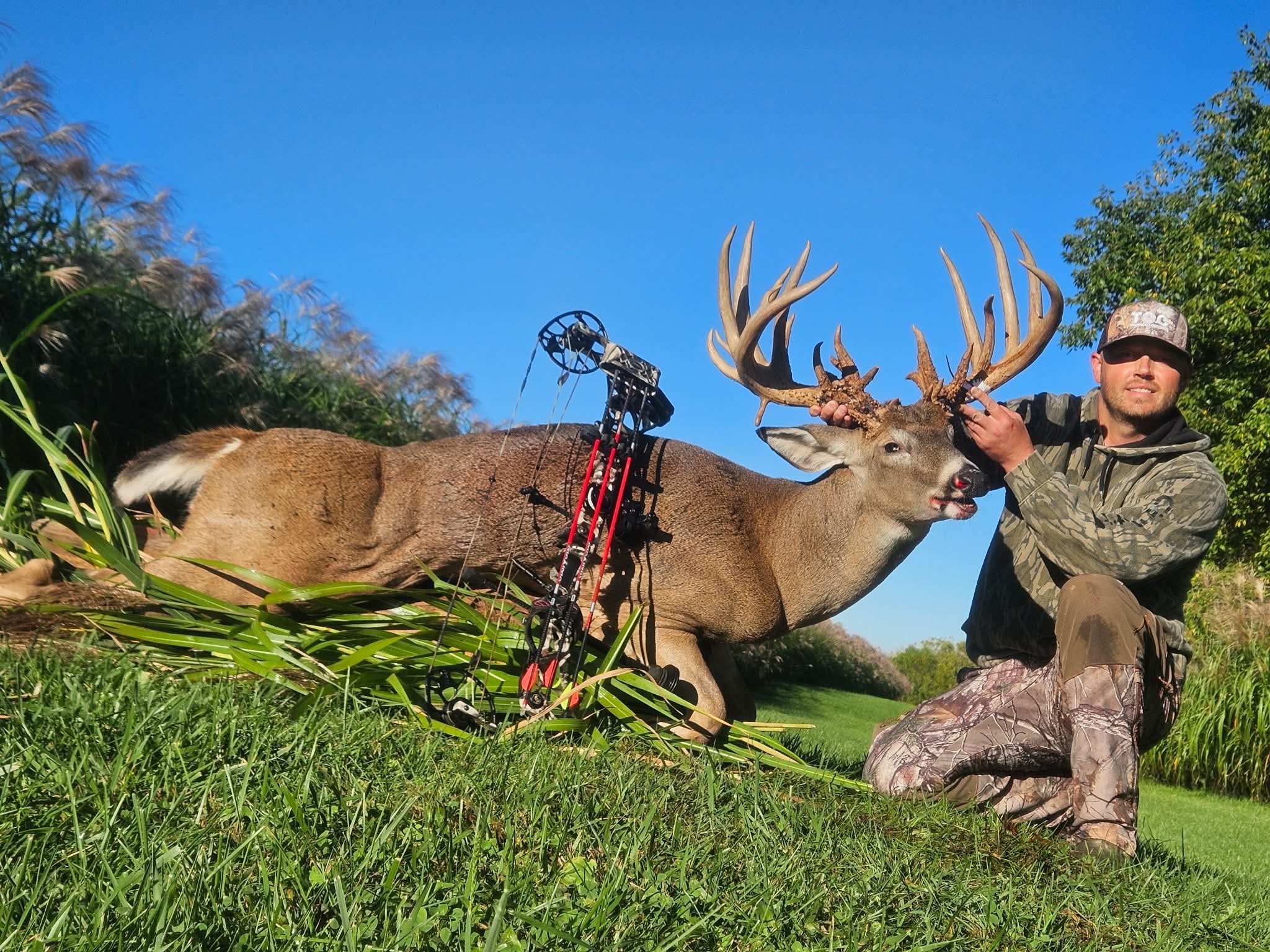
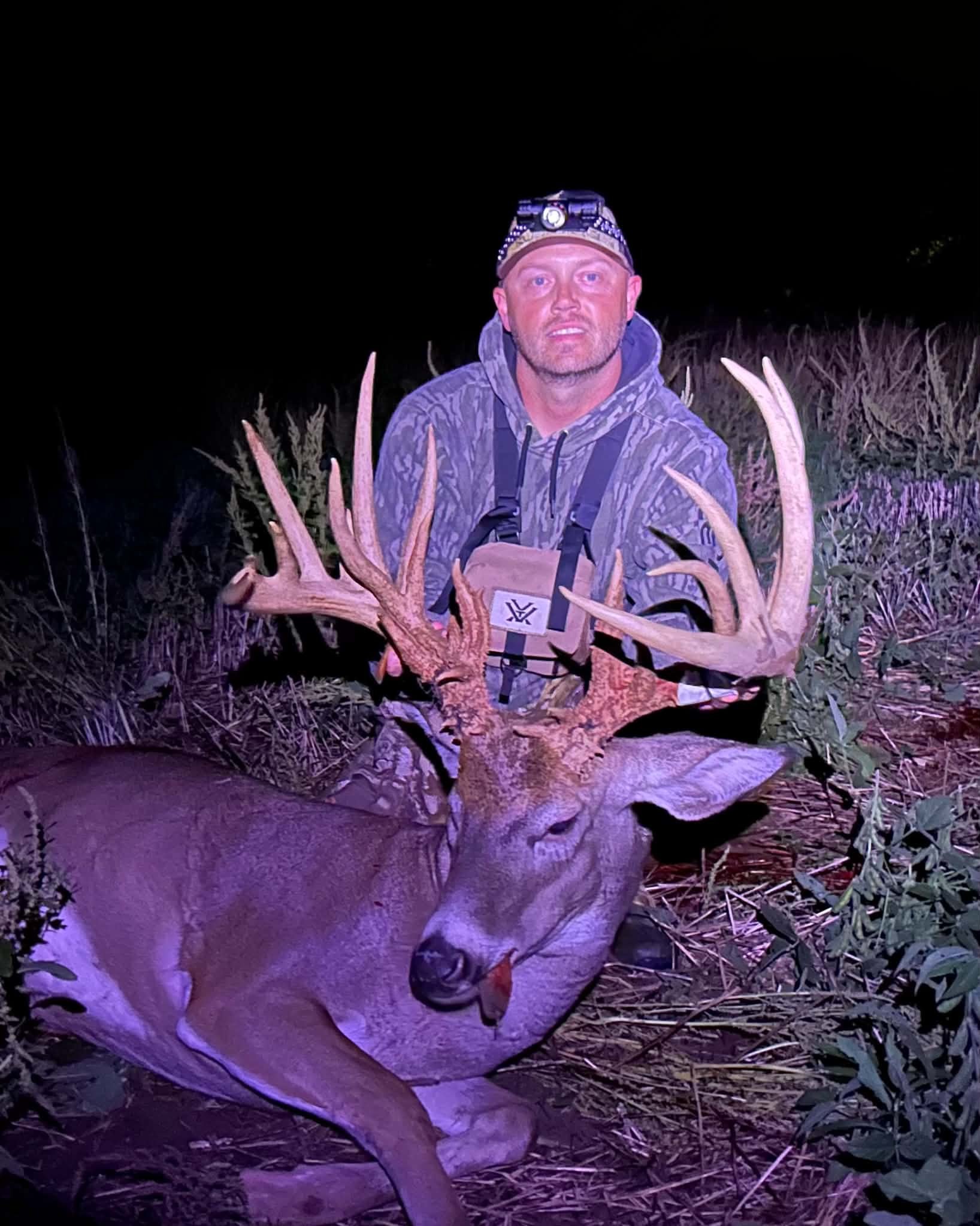
The archer stayed in his stand for a time, collecting his thoughts and thanking God. Then he climbed down to see the buck up close.
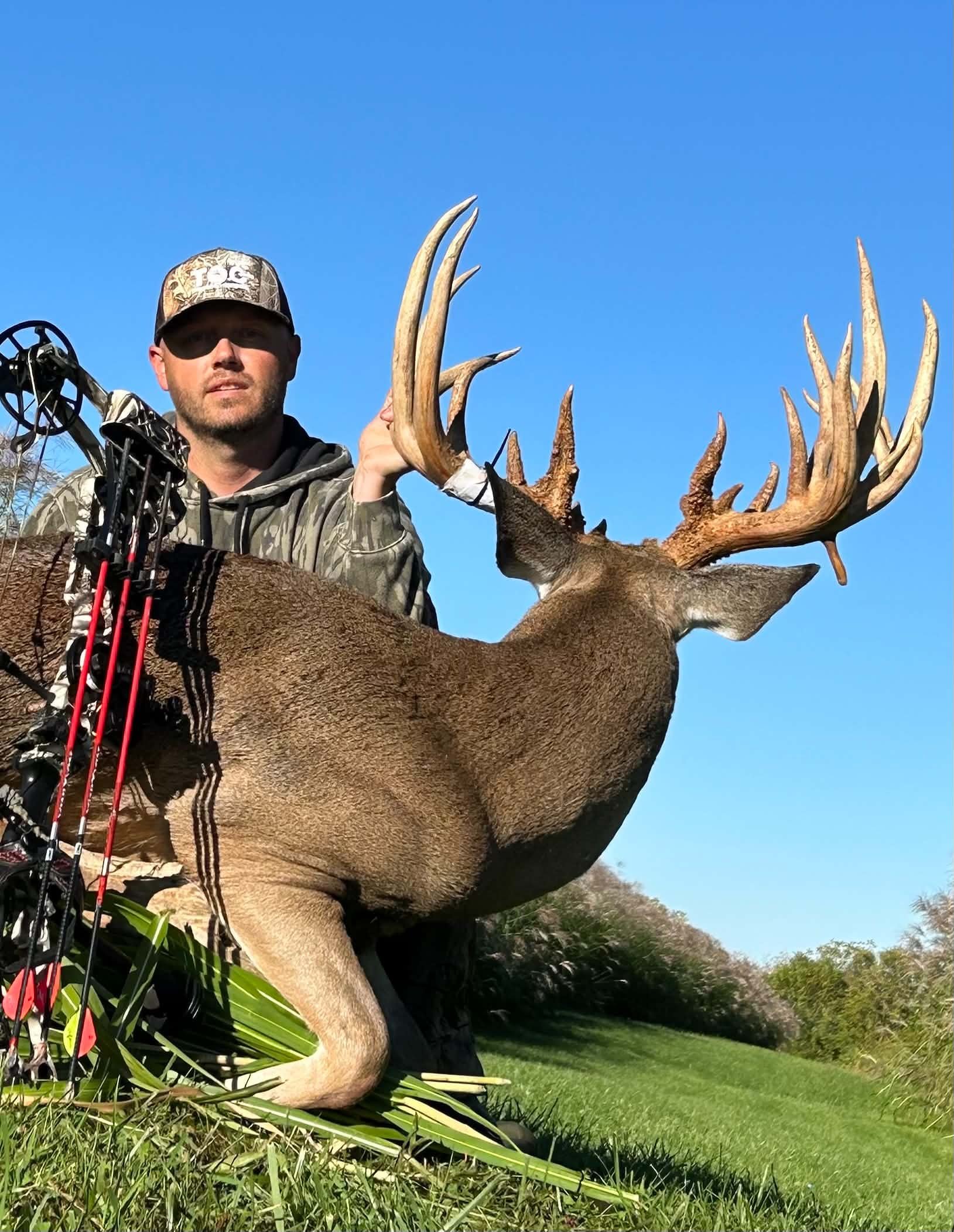
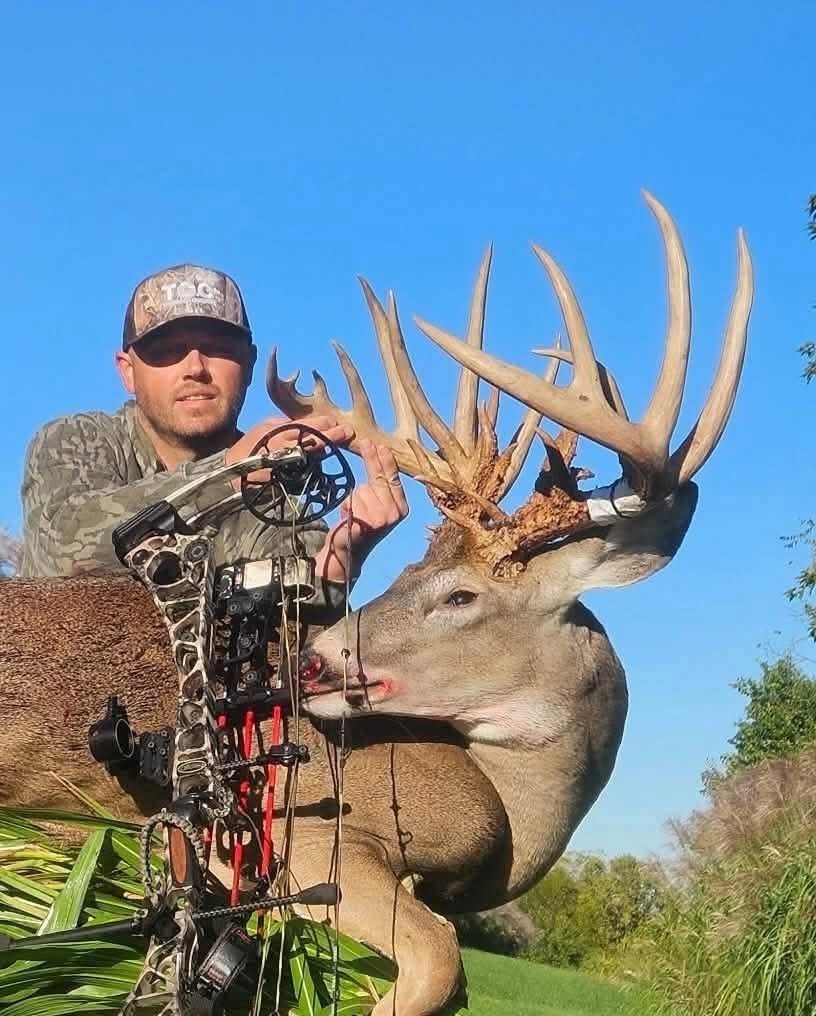
“I knew he was big, but I had no idea how big until I got to him,” Crowell says. “It looked like he had a brush pile of antler tines. I hope every bowhunter can feel the same way I did then with that buck.”
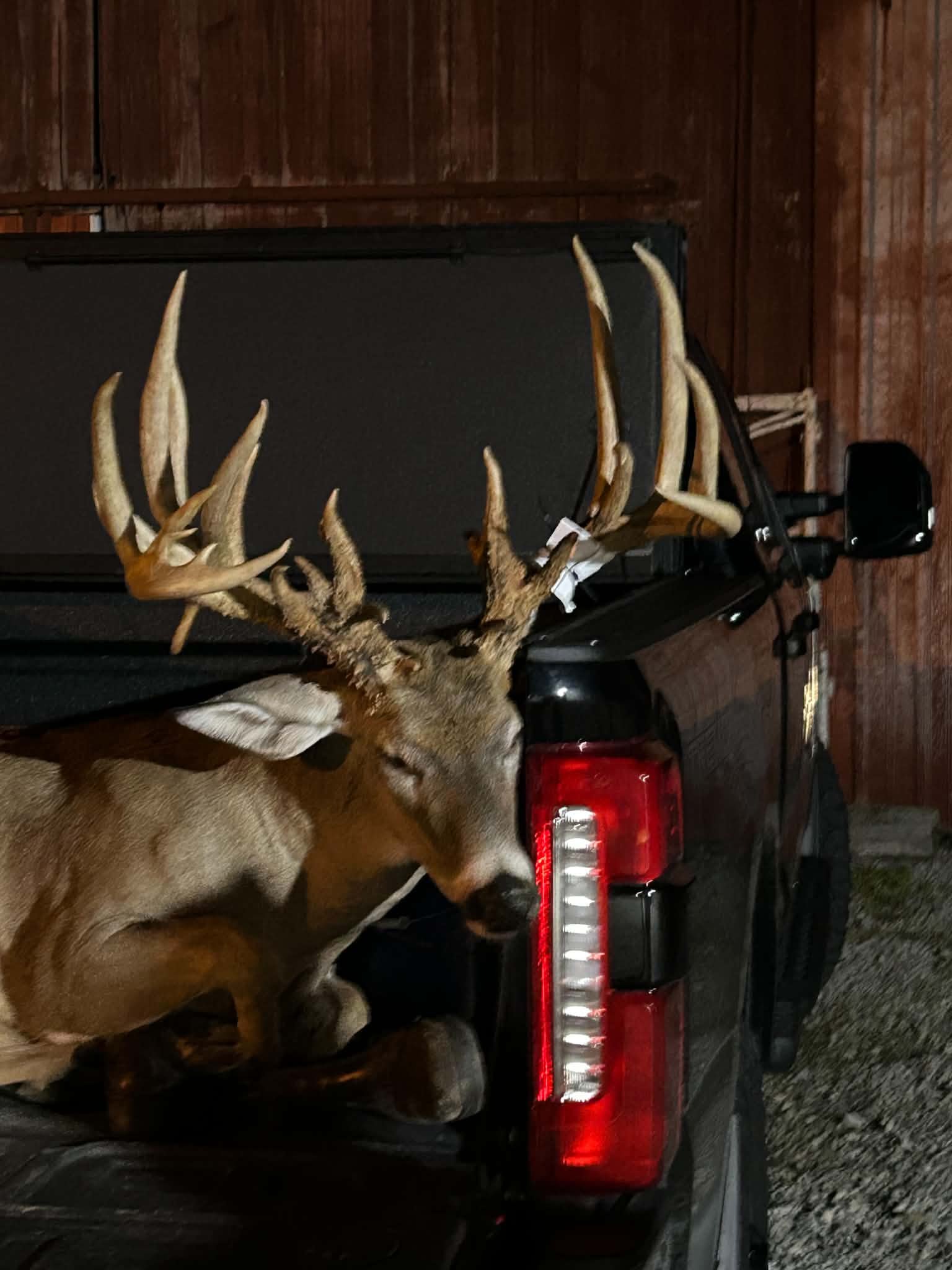
Crowell used a heavy-duty carry tote, much like a wheel barrel to get the buck out and to his truck. Then he took the whitetail to his Indiana friend Paul Lyles, owner of Wildlife Creations Taxidermy.
Read Next: Ohio Bowhunter Takes 200-Class Buck With His Recurve at 15 Yards
The buck’s dressed weight was 220-pounds, with an estimated live weight of 250 pounds. The deer has a 21.5-inch inside rack spread, with an astounding 28 scorable points. Buckmaster official scorer Rick Busse calculated the buck’s rack at 266 4/8 inches.