

There’s a growing movement around the country to enshrine the right to hunt and fish in state constitutions. This effort is now expanding to the West.
Two dozen states have already written these protections into their constitutions — starting with Vermont in 1777 and culminating most recently in Florida, where voters overwhelmingly approved an amendment by ballot measure in 2024. Another dozen states are forwarding amendments through their legislatures, while in Colorado, supporters are busy collecting the signatures necessary to put these protections on the ballot in November
That is what being on offense looks like. It’s not sitting back and waiting for opponents of our outdoor traditions to make their next radical attempt to ban, criminalize, or take away our access to the outdoors.
Naysayers within our own ranks might wonder aloud, however, whether these measures are worth our time. Or if it’s mostly symbolic theater in an era of ballot-box warfare and urban vs. rural voting blocs.
As CEO of the International Order of T. Roosevelt and T. Roosevelt Action, I’ve spent years in the trenches of this fight, and I can tell you the critics are missing the most important part: these amendments aren’t just words on paper. Their real power lies in the case law they create — solid, precedent-setting barriers that make it far harder for groups to erode hunting and fishing, either through the next wave of emotional ballot initiatives or through overreach by city councils and state wildlife commissions.
I’ve personally been involved in four such cases that prove the point.
- First, in Wisconsin, our work helped stop an attempt to shut down the statutorily required wolf hunt. We did this by invoking the state’s constitutional right to hunt and fish.
- Second, in Maine, we successfully argued that the new Right to Food amendment’s reference to “harvest” necessarily includes hunting — adding explicit constitutional cover for our traditions where none existed before.
- Third, when anti-hunting activists challenged Florida’s bear hunt in court, the International Order of T. Roosevelt filed an amicus brief citing the state’s brand-new Right to Hunt and Fish amendment — the one approved by nearly 7 million voters. The court took notice and the bear hunt continued.
- Fourth, we’re now in the final stages of a Maine case establishing that the same Right to Food language also protects fishing under the definition of harvest. We expect to win that one soon as well.
These aren’t hypotheticals or symbolic victories. They are part of an emerging body of law that turns a constitutional promise into a practical shield.
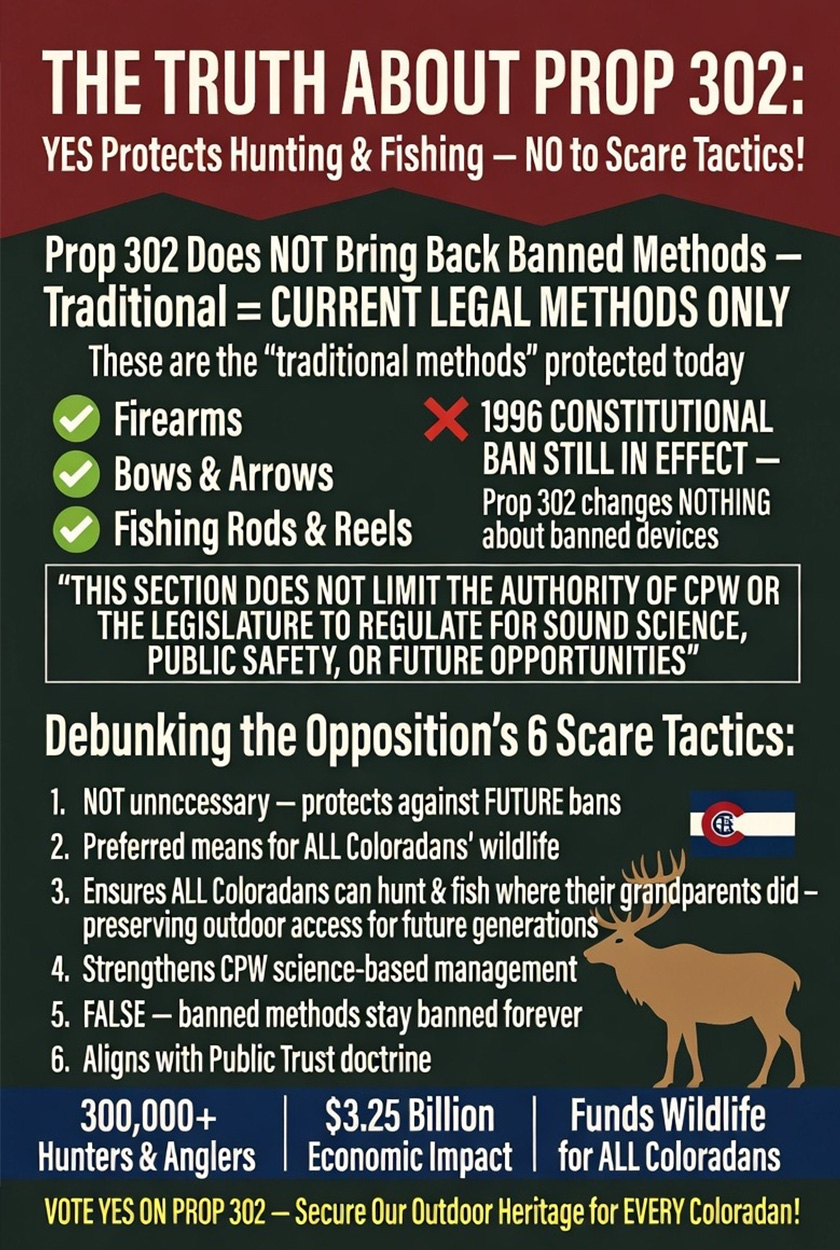
The amendments don’t just declare rights. They give everyday citizens and sportsmen’s groups the legal footing to stand in court and say, “The people already voted on this, and you cannot take away my right to fish or hunt.” That’s the difference between playing defense and being on offense.
Look at what’s happening on the ground in Florida right now, for example. A group of beach fishermen in Marco Island faced a city-council proposal that would have effectively banned traditional surf fishing. They didn’t hire high-priced lobbyists or run expensive ads. They simply showed up, cited the new constitutional right to fish, testified alongside Florida Wildlife Commission staff, and convinced the council to pull the ban.
This is the amendment at work — not in some dusty courtroom years from now, but in real time, empowering ordinary people to defend their traditions before the damage is done. The will of the people really is the law of the land. That premise guided the founders of our Republic, and it is exactly what those of us who have fought to enshrine these rights in state constitutions have always understood.
Doubters inside the hunting and fishing community keep focusing on what these amendments haven’t yet stopped. They miss the power we unlock when we unite, speak persuasively about our sports, and remind the public of the countless benefits hunting and fishing deliver — from putting wild food on the table to sustaining rural economies and conserving millions of acres of habitat.

If those who doubt these impacts would take the time to map where the most aggressive attacks are actually landing, they would see an unmistakable pattern.
There’s the so-called “Peace Act” in Oregon, an attempted ballot initiative that would make it a crime (yes, a crime) to hunt, fish, farm, ranch and even exterminate pests. In Colorado, there’s now talk around a fur-trapping ban just two years after residents voted down a mountain-lion hunting ban. These radical measures keep surfacing in states that do NOT have constitutional protections for hunting and fishing.
Anti-hunting organizations aren’t stupid. They often target places where there is no legal backstop, no voter-approved right they have to overcome in court. In states with Right to Hunt and Fish amendments, the fight is becoming uphill and expensive. That’s not symbolism. That’s strategy meeting reality.
And they’re not backing down quietly. Anti-hunters are fighting back hard in every state where we show up to testify in support of these protections. Ohio is the most recent example. In February, when the Senate Government Committee held hearings on Senate Joint Resolution 8, establishing a right to hunt and fish, multiple national anti-hunting groups dispatched their lobbyists and state directors to vehemently oppose the measure.
Mark Finneran, Ohio State Director for Humane World for Animals (formerly the Humane Society of the U.S.), testified that the amendment has “a far more nefarious intent: to lock cruel and unpopular practices into our state constitution,” and he called the proposal “frivolous language.” Kailey Leary of Ohio Animal Advocates insisted “no one is attempting to abolish this right, nor is there any threat to same.” (Oh, really? Look no further than Oregon.)

Nearly 50 opponents lined up to testify against the Right to Hunt and Fish in the Ohio legislature that day. Which begs the question: If these amendments don’t do anything, then why are the antis fighting so hard to prevent their enactment?
Nebraska’s experience is a perfect illustration. After voters passed the amendment, the legislature tried to repeal the hunting season for mountain lions. The governor vetoed the bill, explicitly warning that it would violate the new constitutional language and invite costly litigation. The mere existence of the amendment changed the political math before a single lawsuit was filed.
The legal record is still young, yes. But it is growing precisely because groups like ours are willing to step into the arena and use these tools. We are not waiting for the next ballot fight to define us. We are building precedent that will protect hunting and fishing as the preferred methods of wildlife management for decades to come.
Read Next: The 3 Anti-Hunting Arguments Hunters Should Actually Worry About
The founders in Vermont got it right in 1777. Twenty-three states have now followed their lead, for a total of 24 states. And those of us who hunt and fish should no longer be content to play defense in states that refuse to protect these rights. We are on offense, armed with constitutional language that is proven in court and carried forward by citizens who refuse to surrender their heritage.
The stakes are real. So is the progress. And the naysayers who dismiss these amendments as mere symbolism are simply standing on the sidelines. The rest of us will be busy writing the next chapter of American conservation.
Luke Hilgemann is the CEO of the International Order of T. Roosevelt. He’s a hunter with experience in the Wisconsin state legislature, and has spent his career fighting for limited government and increasing opportunities for sportsmen everywhere. Hilgemann is now working to secure our outdoor heritage through a nationwide campaign to enshrine the right to hunt and fish in state constitutions. He lives in Wisconsin with his family.