

Everybody wants to talk about Stevan Pearce, President Trump’s pick to run the Bureau of Land Management. Everybody, that is, except Pearce himself.
Pearce, a veteran, former state legislator and congressman from New Mexico, oil-and-gas executive, and former chairman of the New Mexico Republican Party, will appear before the Senate Energy and Natural Resources Committee Wednesday morning to consider his nomination to the role that oversees 245 million acres of America’s public lands, plus another 700 million acres of subsurface mineral estate across the U.S.
Conservation groups and public-land advocates slam Pearce as a public-land denier. Meanwhile, livestock groups and the energy-extraction industry endorse Pearce’s nomination for his support of “opening up valuable federal lands for safe and responsible oil and gas development.” In a short statement shortly after Trump’s nomination of Pearce in November, the National Cattlemen’s Beef Association and Public Lands Council said Pearce “understands the important role that public lands play across the West. Pearce’s experience makes him thoroughly qualified to lead the BLM and tackle the issues federal lands ranchers are facing.”
How a single person can incite such polarized views is an artifact of this political moment. The same ideological wedge that currently divides neighbors and political parties on issues ranging from immigration policy to gender identity is the same wedge that divides public-land users. That divide will be evident during Pearce’s nomination and confirmation.
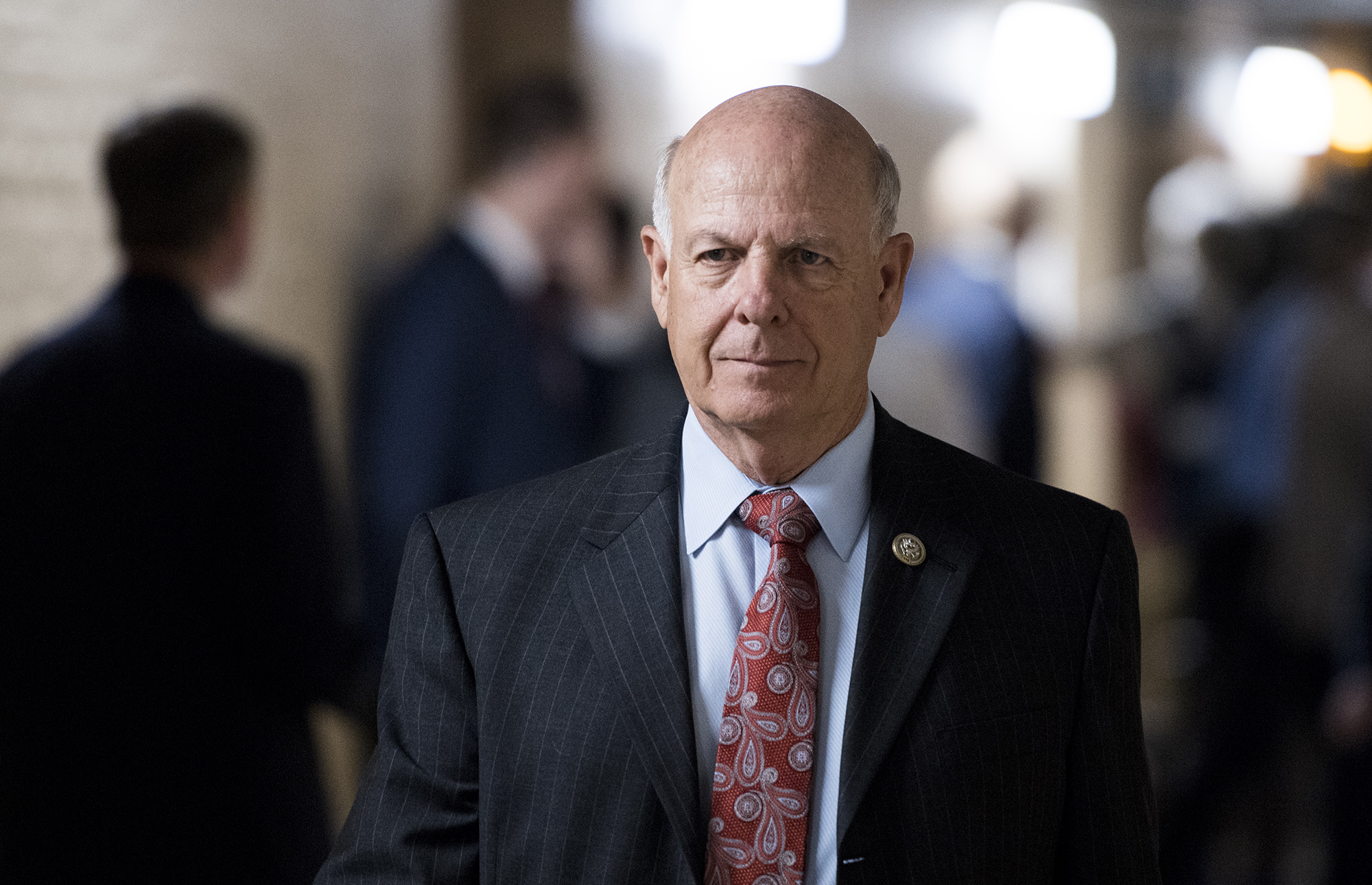
To cut through the sound bites and press statements, Outdoor Life attempted to contact Pearce himself, to get his views of public-land management, how he might administer the BLM’s heralded multiple-use mandate, and how he’d balance Trump’s Unleashing American Energy executive order with the enduring conservation and recreation values of BLM lands. But despite several attempts to talk with Pearce, he was unavailable for a conversation previewing the perspectives he’ll share with the Senate committee.
“This is not unusual behavior,” one of Pearce’s handlers insisted in response to OL’s request for an interview. “Historically, nominees don’t make themselves available to the media ahead of confirmation hearings.”
Fair enough. We’re left with his record and with various perspectives of how Stevan Pearce might manage the agency responsible for managing nearly 10 percent of America’s land, and the majority of public land in the Western U.S.
‘Sell-Off Steve’
For environmentalists and many hunting and fishing groups, Pearce’s accession to the BLM’s top post could accelerate and execute the public-land sale ideas expressed by Senator Mike Lee (R-Utah) last summer in the context of the One Big Beautiful Bill. Lee’s idea, which nearly derailed the federal spending blueprint, was to sell portions of the U.S.’s public-land estate to offset tax cuts to wealthy Americans and balance the budget.
Pearce has expressed support for divestment of federal land, a position that’s unacceptable to a group of 154 mostly preservation-oriented organizations that wrote to Lee, chairman of the very Senate committee that will consider Pearce’s nomination.
“We write to strongly urge you to oppose the nomination of Stevan Pearce to be the Director of the Bureau of Land Management,” the groups wrote Lee and Sen. Martin Heinrich (D-N.M.), the ranking minority member of the Energy and Natural Resources Committee. “Mr. Pearce’s record in Congress, including his public support for selling off America’s public lands, his conflicts of interest with the oil and gas industry, and his efforts to undermine national monuments and the Antiquities Act, demonstrates that he is the wrong candidate to lead this complex multiple-use agency.”
Another 81 land-protection groups echoed that position, asking Lee and Heinrich to oppose Pearce’s nomination.
The gist of groups opposing Pearce’s nomination is that his previous stated positions either opposing or casting doubt on the government’s role as the nation’s leading public-land steward is anathema to sustainable management of these public lands. Adding to that is Pearce’s cozy relationship with both the oil-and-gas industry and corporate livestock producers, both of which have deep and longstanding relationships with the BLM.
But offstage is the Trump administration’s rejection of conservation as a co-equal priority for public-land management. Last August, the Department of the Interior started its rollback of the Conservation and Landscape Health Rule, passed during the Biden administration, that would have required BLM managers to consider conservation and landscape health as an equal multiple use on par with oil and gas development, commercial livestock grazing, and recreation.
“The Conservation and Landscape Health Rule identifies conservation – a non-use – as a productive use for leases and permits,” the Trump administration wrote in its proposal to rescind the rule.
But conservationists maintain that sustainability should be a cardinal directive of land managers. Without it, BLM parcels serve as a national sacrifice zone, serving extractive industries without considering the long-term health of landscapes that don’t have the same protections as national parks, national monuments, or wilderness areas.
‘Sustained Yield’ Over Conservation
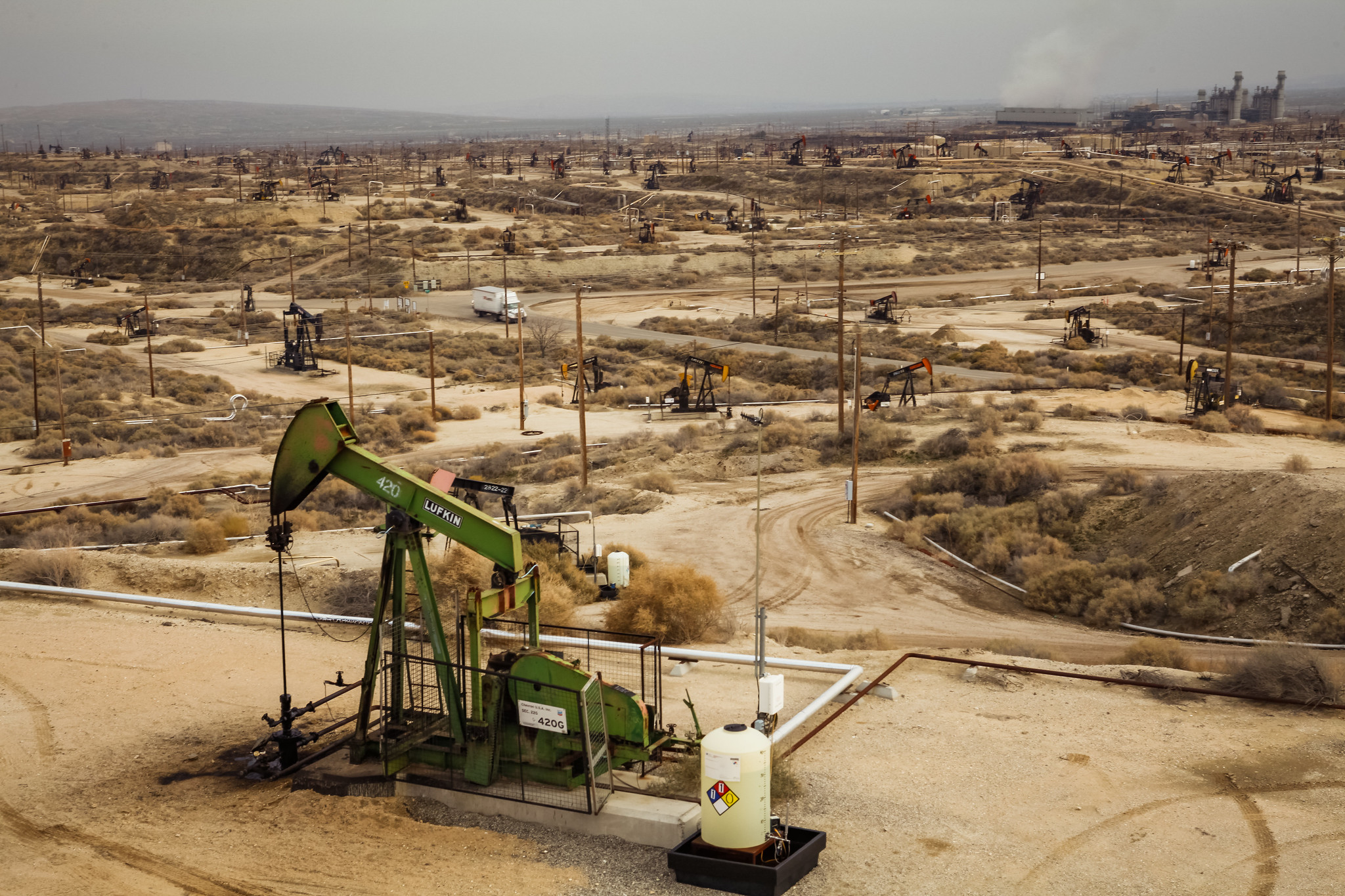
The reality, at least according to the Trump administration and many industry watchdogs, is that BLM land is designed to produce a product, in some places a barrel of crude oil, in other places a pound of beef.
In its proposal to rescind the Public Land Rule, the Trump administration argued that “the BLM works to conserve resources, as appropriate, to ensure balanced resource use while also achieving and maintaining appropriate output of those resources, in all cases consistent with the principles of multiple use and sustained yield.”
Advocates for sustained-yield management readily concede that BLM lands are intended to be industrialized. It’s a happy condition that BLM acres also host pronghorn antelope, mule deer, and sage grouse, but their conservation shouldn’t be a first-order priority of managers.
This is the basis for the energy industry’s insistence that federal land is an important part of the administration’s “energy dominance” agenda, and that with appropriate mitigations like directional drilling, both liquid-fuel production and wildlife conservation can be achieved. It’s unclear how the administration’s rescission of a number of BLM Resource Management Plans that struck a balance between resource extraction and landscape conservation can be retained.
Two Votes to Watch
If you’re a BLM user, whether a public-land hunter, a public-land grazer, or an oil executive, Wednesday’s Senate Energy and Natural Resources Committee hearing will be must-watch media, not only to learn how Pearce balances his prior stances with the competing pressures of the BLM director. It begins streaming at 9:30 a.m. EST.
It’s interesting to note that the Trump administration has not had a permanent head of the BLM in its six years of governance. In Trump’s first administration, nominee and celebrated anti-public-land advocate William Perry Pendley couldn’t get a Senate hearing based on his abundant conflicts of interest. In his second administration, early nominee and energy executive Kathleen Sgamma withdrew her nomination after media accounts revealed she had criticized the Jan. 6, 2021 assault on the U.S. Capitol.
On Wednesday, viewers should note Sen. Heinrich’s questions and overall reception of Pearce. Heinrich, the ranking minority member of the committee, is a New Mexico sportsman who has a much longer relationship with Pearce than most of his colleagues, given their home-state commonalities. Heinrich’s questions will provide insight into the minority Democrats’ strategies to derail his nomination.

But also watch Montana Sen. Steve Daines. Daines is on the record as an enthusiastic supporter of both public-lands access and of Pearce. But Daines was also the lead author of the plan to use the Congressional Review Act to reject the Biden-era BLM Miles City Field Office’s Resource Management Plan, which directs all the varied multiple uses on 2.7 million acres of BLM land in eastern Montana. Daines claimed that the Miles City RMP, passed with thousands of comments of local grazers and hunters, inappropriately excluded 1.7 million acres of federal land from coal leasing.
Critics, including Montana conservationist Randy Newberg, have maintained that applying the Congressional Review Act to land-use plans short-circuits public processes. It’s a “handout,” they contend, to industries that support the politicians who remove restrictions on extraction of public lands.
“I knew Steve [Pearce] in the House days, and Steve is a great pick,” Daines said in an interview. “I think it’s helpful when we have leaders in those important positions that come from the West, when they understand uniquely the challenges we face as it relates to federal land, state land, private land. And Steve Pearce has lived it and breathed it.”
But a recent poll of Montanans indicates that 75 percent of likely voters oppose Pearce’s nomination. Notably, 74 percent of Montana Republicans oppose Pearce’s nomination. Considering that Daines is in a stiff re-election contest this year, many insiders are watching his reception of Pearce in his own influential committee tomorrow.
Pearce needs a majority of the committee, where Republicans hold the majority, to approve his nomination. If approved, his nomination will go to the full Senate for final confirmation.