
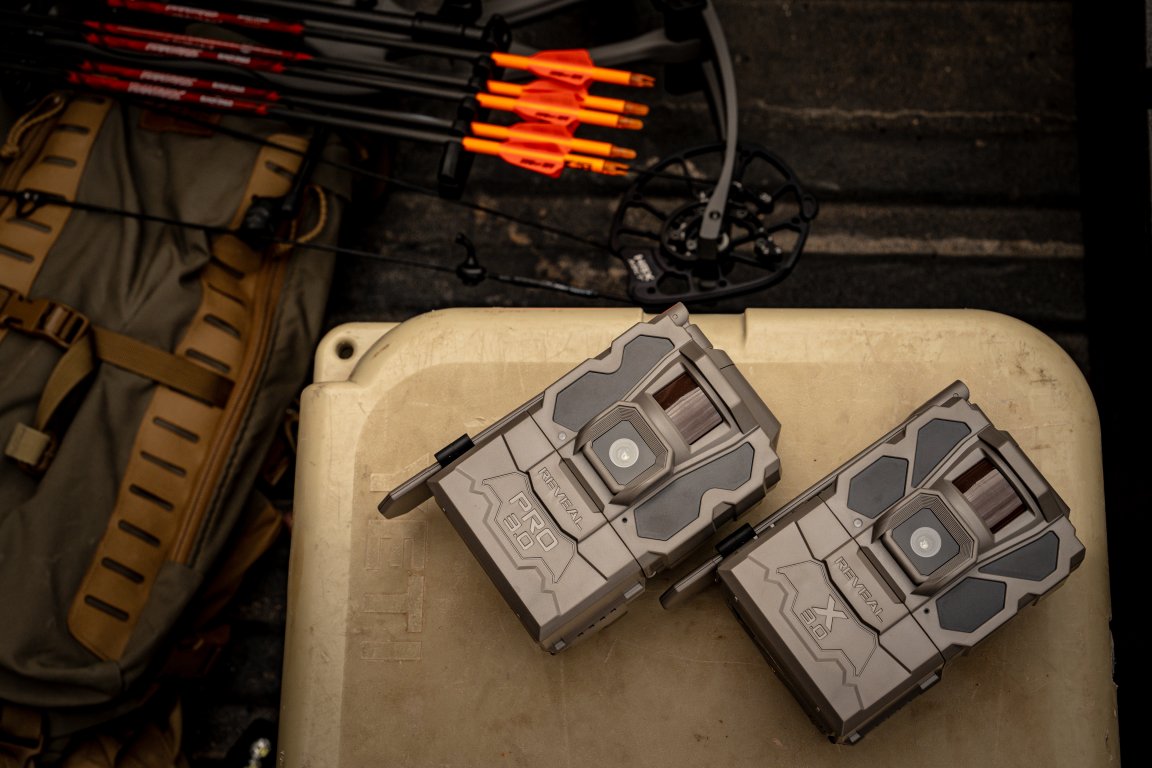
If you don’t already run trail cameras in your hunting area, you’ve probably looked at various models that not only extend your season but give you insights into animals and their behavior that you can only guess at without remote surveillance.
There’s a reason transmitting cellular cameras are one of the fastest growing segments of the sporting goods market. They make all of us, whether we hunt intensively managed private land or wide-open public land, more knowledgeable and successful hunters.
While most entry-level cameras, and many more advanced models, promise plug-and-play deployment, you’ll get the most out of your camera, your cellular data plan, and your camera’s power plant, by understanding a few basic—and a few insiders’—tricks to camera operation and placement.
Just don’t overthink deployment of a trail cam, especially if you’re just starting out in remote surveillance.
“My recommendation to a brand-new customer is to buy one of our entry-level cameras, the X Gen 3 or X Gen2 (available at Walmart),” says Mario Bonardi, Tactacam Reveal’s senior vice president for product development. “I would recommend taking it out of the box and leaving it on the exact settings that it comes with. The reason is that those settings are tailored to be the most ideal for the greatest range of situations.”
Then, as you observe how the camera works in the terrain, setting, and distances where it’s deployed, you can start to adjust the settings from the pre-set baseline.
“Those factory settings will give you the best sensitivity, the best battery life, and it’s going to connect to the best [cellular] service provider automatically,” says Bonardi. “All you have to do is hang it on a tree, click it to on, and walk away. When you do want to change settings, you don’t have to go back to the camera. You can do it all in the Reveal [mobile] app.”
In areas where you want additional reach at night, consider Reveal by Tactacam’s Ultra model, which gives users the option of switchable low-glow or no-glow flash for added versatility and stealth. Flash settings can be updated remotely through Tactacam’s mobile app.
Understanding Sensitivity
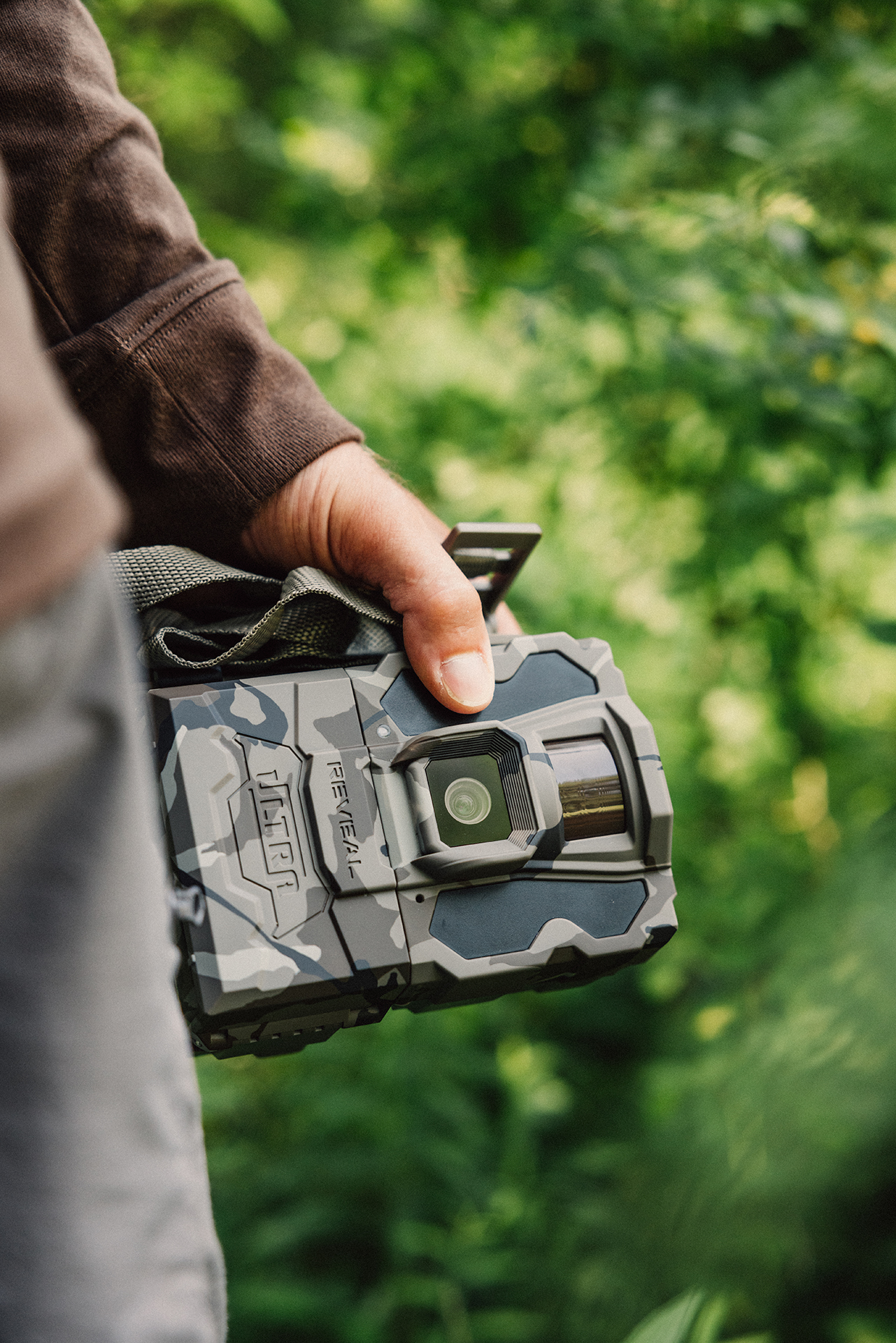
One of the settings you’re likely to change is the camera’s sensitivity, which can be defined as its range and detection ability. Higher sensitivity will capture more images at longer distances but may also result in lots of incidental image captures, from things like blowing grass or tree limbs. Those “accidental discharges” not only eat up batteries but can blow through cellular data plans.
Sensitivity is seasonal, says Bonardi.
Because the PIR (passive infrared) sensor in Tactacam Reveal’s devices uses an animal’s heat signature to trigger the camera, ambient environmental heat can trigger the camera.
“The sensitivity on our cameras comes standard at 7, on a 1-to-9 scale,” says Bonardi. “That setting is the sweet spot for detection during hunting season, but it can be a little too sensitive during the summer months when the sun heats up objects in front of the camera that are not mammals.”
Bonardi turns his cameras’ sensitivity down to 4 or 5 in the summer and then boosts them back to 6 or 7 during hunting season.
“The risk of turning down sensitivity is that you’ll lose a little range,” he says. “You might go from getting triggers at 90 feet with sensitivity at 7 to getting them at 70 feet with sensitivity at 4 or 5. The upside is you’ll get a lot fewer of those non-animal triggers.”
Because Bonardi likes to set his cameras to capture animals from 20 to 50 feet, that limited range with suppressed sensitivity is rarely a problem.
Mounting Considerations
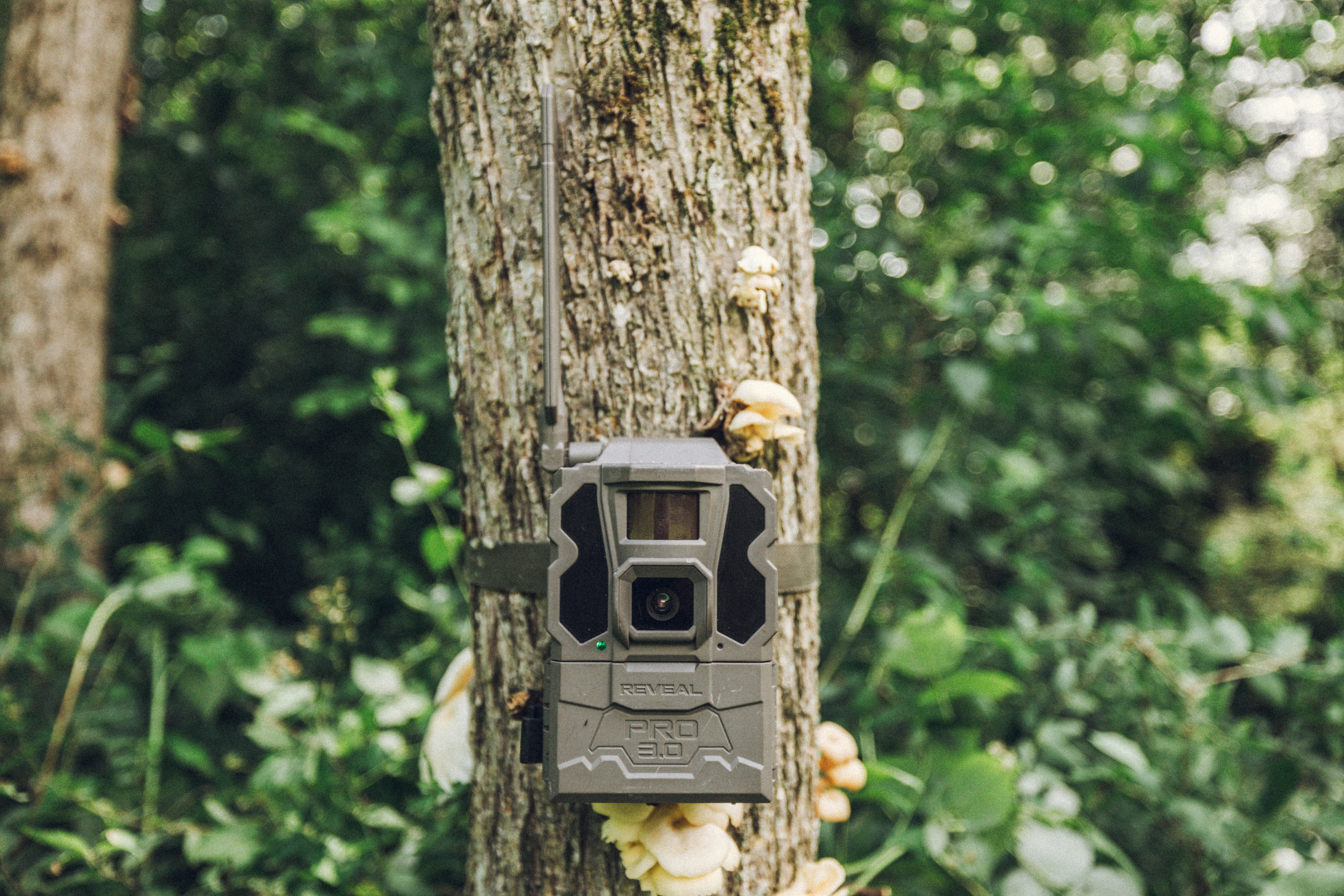
The distance at which you expect to detect animals is a key consideration when mounting your camera. But so is height from the ground and the cardinal direction it faces.
Bonardi likes to mount cameras for most whitetail surveillance about waist high, facing generally north to avoid direct glare of the sun on the lens. That height enables the camera to capture images of deer moving across the landscape, whether they’re running along a trail or milling in a food plot.
“Waist height generally ensures that the animal triggers in the center of the photo, not the top or the bottom,” says Bonardi. “But when you are trying to detect a deer at, say 50 feet away from the camera, you want to precisely aim the center of the photo at that spot. That’s because sensors are designed to detect horizontal movement, deer moving from left to right or right to left.”
One trick to ensure consistent image capture is to point your camera at a 45-degree angle to the anticipated path of travel. That ensures that the deer will have the opportunity to move from the top of the frame, through the sweet spot in the center of the frame, and through the bottom of the frame.
Think of that sweet spot in the middle as a smaller rectangle inside the larger rectangle of the image frame. The farther you get from the camera, the larger the trigger area grows, up to the point where the camera’s sensitivity no longer detects the animal.
This adjustable trigger area also has a sweet spot in terms of distance from the camera, and is why Bonardi likes to set his cameras up in spots where he expects to get most observations anywhere from 20 to 50 feet from the camera. That gives him the best combination of trigger area, image resolution, and trigger sensitivity.
Incidentally, he says if you’re hanging cameras in elk country, that waist-high mounting rule goes out the window.
“For elk, it’s important to get cameras up high, like, really high,” he laughs. “I’ll take one or two climbing sticks from my saddle setup and use them to get a camera anywhere from 12 to 16 feet off the ground. Elk are really hard on cameras. They’ll find them. They’ll grab them. And they’ll chew on them.”
Cellular Connectivity
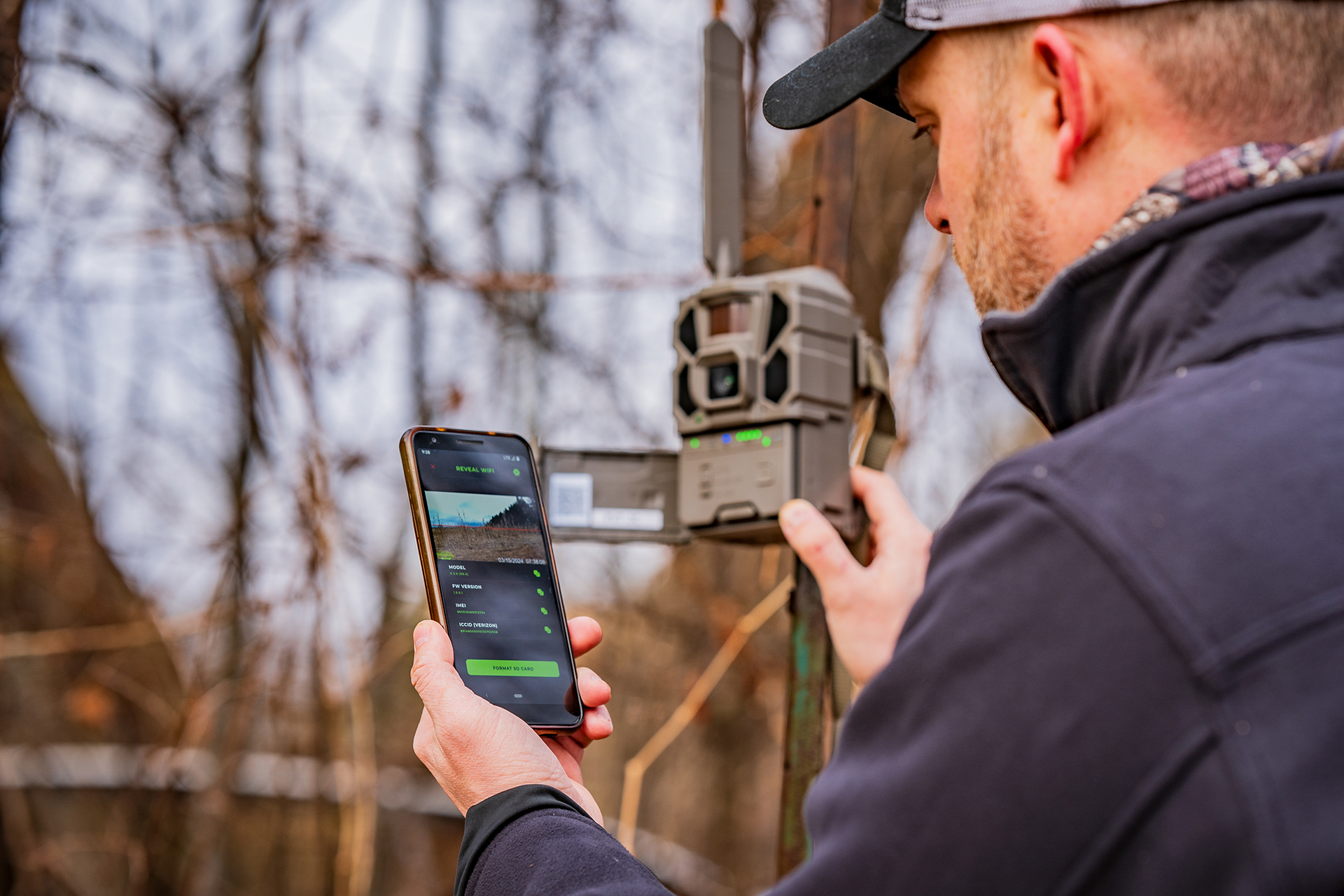
One of the benefits of an elk-resistant mount is that in many places of the backcountry West, where cell signals are notoriously weak, that high mounting location may pick up one or two more bars of service than you’d get at ground level.
Connectivity is an important consideration with all transmitting cameras, but Bonardi says you don’t need four bars of service to have a fully capable camera. Tactacam Reveal measures cell service as either Weak (one bar), Moderate (two bars of service), Good (three bars), and Excellent (four bars).
“If your camera has a Moderate signal, you’ll be able to get your photos easily and you’ll be able to send your camera commands through the app to change the settings,” he says. “But there’s the low end of Moderate and the high end of Moderate, and on the low end you’re not going to get a reliable live stream or HD photos. On the other hand, on the upper end of Moderate, you’ll be able to live stream and get high-def images, so there’s variation even within a single bar.”
Generally, try to find areas where your camera has either three or four bars, and you’ll be able to enjoy all the functionality of the camera.
Other Considerations
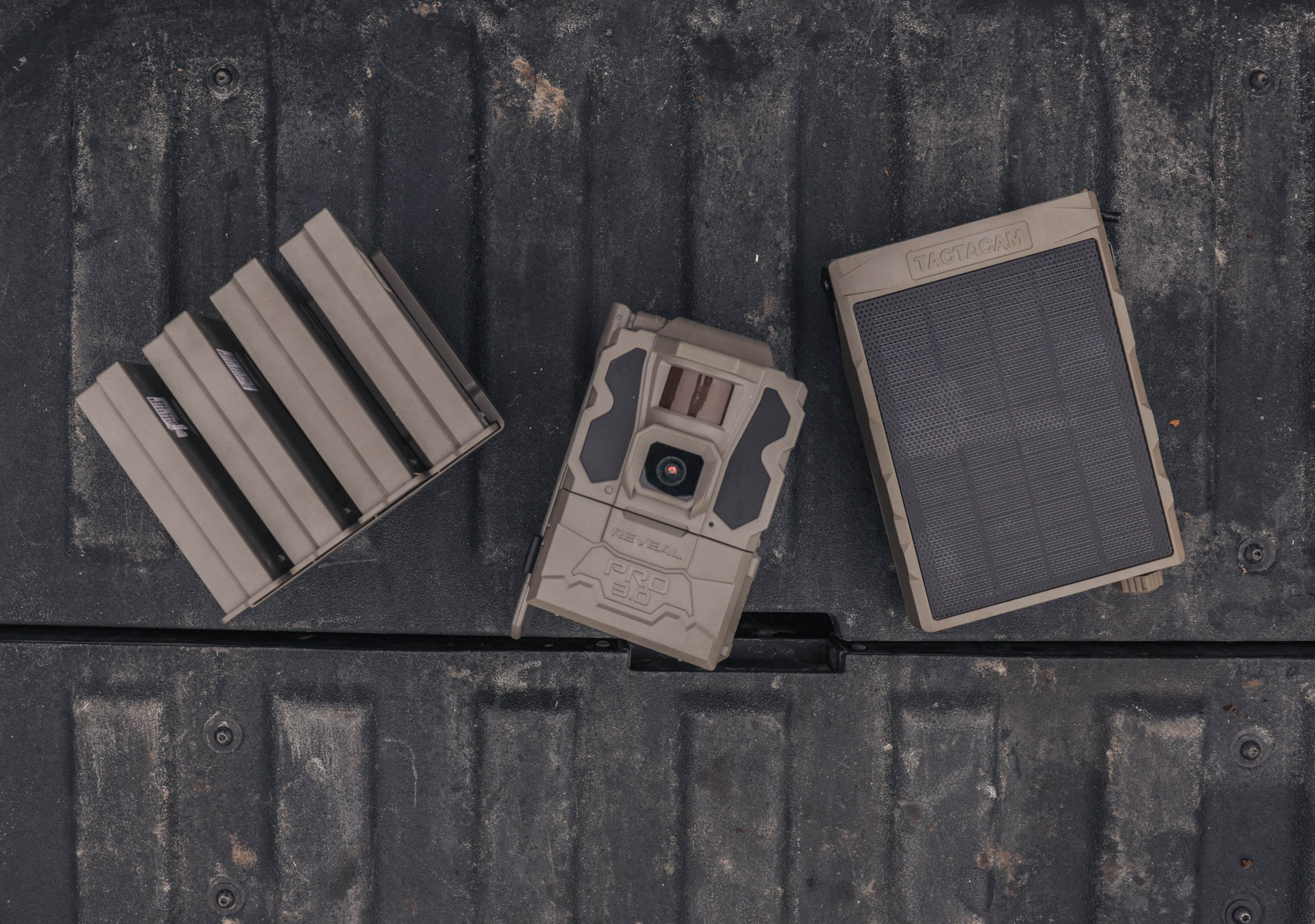
One of the most common complaints of trail cams, whether a Tactacam Reveal model or its competitors, is limited battery life, but Bonardi says that’s a sliding scale that can be influenced by usage as well as power supply.
“If you set your camera to record 30-second videos and it’s set on a deer feeder or a hog trap, then you’re going to burn through a set of 12 AA batteries pretty quickly,” he laughs. “But if you’re in an area where you might only get a dozen videos a day, those batteries will last an entire season. Similarly, if you’re requesting full-length videos from your camera every day, it’s going to drain batteries quickly.”
If you’re setting a camera in an area where you’re not sure the level of wildlife activity, consider using an external power source, either a solar panel or a lithium pack, he says. Tactacam Reveal’s Battery Belt is six rechargeable lithium batteries linked in a flexible harness that can be wrapped around trees. The belt can be recharged with the Reveal Folding Solar Panel which not only contains its own lithium battery but can trickle-charge either internal or external lithium cells. The external power systems are designed to be mixed and matched to provide the amount of battery boost users need depending on location and the number of photos and videos they’re collecting and transmitting.
If you’re unsure about how much footage your cameras will capture, or how frequently you’ll be uploading images, opt for the more robust data packages, recommends Bonardi.
“I always tell people to go ahead and buy the unlimited data, at least at first,” says Bonardi. “If you find out that you’re not using all of it, then you can always back down. But the last thing you want is to be on a plan that only gives you 250 photos, and you get to Oct. 27, just as the rut is heating up, only to find that your plan is maxed out and you can’t get any more photos.”