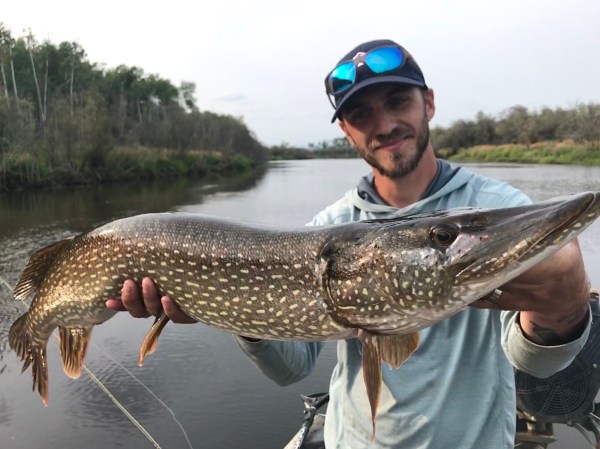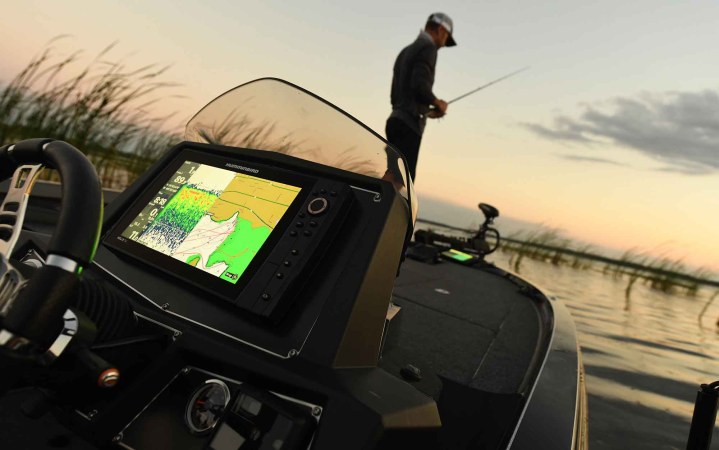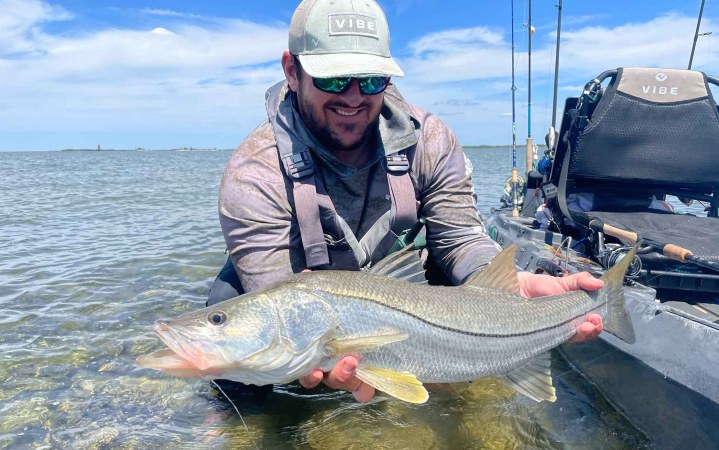
Here's a look at the best new spinning and baitcasting rods and reels from our 2013 test.
Bass fishing isn't so easy during the dog days of summer. In this gallery, bass expert Hal Schramm puts your bass knowledge to the test.
![]() | Fishing in -50These anglers braved -50 degree wind chill temps in hopes of catching a few pike,... |
![]() | 13 Jungle FishCheck out the 13 most interesting fish species Gayne Young caught during his trip on... |
![]() | New Fishing PhotosWe recently ran a fishing photo contest for our Instagram followers and we've got the... |
![]() | Finicky FishCheck out the 10 toughest species swimming to catch on artificial baits. But if you're... |
![]() | King of CrabAn Outdoor Life Web Exclusive: You know him best as crab-catching Captain Sig Hansen... |
![]() | 15 Signs of SpringAt long last, it's April and if you look hard, Spring is everywhere. By now, most of... |


Sharks don’t get much bigger than this!
Mesquite, Texas angler Jason Johnston caught what could be the new record mako shark just outside of the Los Angeles Harbor in California Monday morning. It took Johnston more than two hours to reel in the 1,323.5-pound, 11-foot long shark, a feat that he told CBS was extremely dangerous. [ Read Full Post ]
Bull sharks are known for being the deadliest man-eaters in the seven seas. It turns out that they're pretty good at eating tarpon too.
Check out this crazy video uploaded last month of two bull sharks thrashing a big tarpon boatside. [ Read Full Post ]
The Marine Corps is going after the invasive snakehead.
Unfortunately, they’re not bringing heavy artillery—just some rods and reels and maybe some bows and arrows.
The Marine Corps will be hosting their first ever snakehead fishing tournament June 7 in the waters surrounding the Marine base at Quantico, Virginia. Event organizer Euel Tritt explained the idea behind the 24 hour-long to Marines.com. [ Read Full Post ]
The Bureau of Land Management (BLM) has released a proposed re-draft of “commonsense safety standards” for hydraulic fracturing on federal and Indian land a year after its initial proposal generated more than 177,000 mostly negative comments from the public.
According to a May 16 BLM press release, the revised regulations seek "to achieve a balance between commercial and environmental interests, streamlining or loosening many requirements and adopting existing state programs, while providing a federal backstop to ensure protection of water quality and public disclosure." [ Read Full Post ]
It’s the ultimate evolution of angling ambition. First, we aspire simply to fish, then to catch a fish. Next, we aim for our personal best. Before you know it, we’re eyeballing state record fish and finally… world record fish. The most competitive anglers in the world are chasing after angling immortality. But all fishing records are not created equal. Some records, near-records, and old records are almost too amazing to be believed – almost. [ Read Full Post ]
Anglers throughout the Gulf of Mexico share a common interest in the aggressive and delicious red snapper; but when the season opens June 1, not all Gulf States will share the same time frame in which to keep these crimson beauties.
Essentially, the National Marine Fisheries Service (NOAA Fisheries) manages red snapper in federal waters, while states have sovereignty inside their marine boundaries. Some states have chosen to mirror the federal red snapper season, which concludes at midnight July 4, while others have taken other routes. At the request of its Gulf of Mexico Fishery Management Council, NMFS implemented an emergency rule on March 25, 2013, which allowed for state‐specific closure authority of the federal exclusive economic zone off states not adopting consistent federal recreational red snapper regulations. [ Read Full Post ]
For more than a quarter century, the Utah State Legislature has been in a contentious debate with the U.S. Department of the Interior and its maze of subsidiary land-management agencies over how to preserve wilderness and other environmentally sensitive areas while opening up other federal lands to oil and gas drilling.
Approximately 66 percent of Utah -- 30 million acres -- is "owned" by the federal government. About 12.7 million acres -- 36 percent of the state -- is set aside for national parks or monuments, conservation areas, wilderness, wild and scenic river corridors, and Forest Service roadless areas while only about 4.3 million acres -- 12 percent of the state -- can be leased for energy development. [ Read Full Post ]