Best Times to Hunt and Fish
Today's Best
Times to
Hunt & Fish
issue cover small In this Issue:
OL 25
The Ultimate Rut Handbook
Win Our Gear
Alaska Grand Slam Adventure Photos
Where to Buy
Subscribe Today or
Get the Digital Edition

 Daily Regional News

 Bass Pro plans big for Christmas

 Deer of the Year 2009 contest entry form

 Bass

   ADDITIONAL INFO
How to Cast and Fish
The Float 'n' Fly

The proper casting technique is much like that used in flyfishing.

1. Point the rod tip directly at the target with the float resting on the water and the fly hanging below it.

2. Bring the rod overhead, pausing for a moment until both the bobber and the jig are laid out smoothly behind the rod tip.

3. Sweep the rod tip forward so the fly lays out ahead of the float and hits the water.

4. Hold the rod tip between 9 and 10 o'clock and wait for the fly to sink.

5. Shake the rod tip gently so the float quivers and the tiny jig pulsates in place.

6. Reel in 2 or 3 feet of line, pause while the fly sinks again, shake the rod and repeat the retrieve back to the boat. If the water is choppy, hold the rod steady and let wave action activate the float and, in turn, the fly. No guessing here-when the float sinks, it's a bite. Instructional videos are available from Jim Duckworth Productions (www.fishing tennessee.com) and Bullet Lures (www.bulletlures.com).

Tiny Jigs And
Long Rods

All it takes to get started fishing the float 'n' fly are a handful of 1/16- and 1/8-ounce hair jigs and some ¾- to 1-inch snap-on plastic bobbers. Ordinary crappie jigs are cheap and readily available at any bait shop, but premium craft-hair jigs are recommended due to their lifelike appearance and "breathability" in clear water. Bullet Lures offers 24 different Float-n-Fly kits, each containing 18 craft-hair jigs and four pear-shaped floats in a handy tackle box. ($34.95 each; 423-753-6151; www.bulletlures.com)

The rod should be long and whippy to absorb the shock of a big bass on light line. Eddie Nuckols recommends St. Croix's 8-foot Avid and 8½-foot Premier float 'n' fly rods, available from Bullet for $160 and $95, respectively. Likewise, G. Loomis offers a 9½-foot rod (SMR1140S-FF) for float 'n' fly fishing. The rod, rated for 4- to 8-pound-test mono, is incorporated in Loomis's new Bronzeback series. ($225; 800-456- 6647; www.gloomis.com)

Any medium-sized, light or ultralight spinning reel spooled with 4- or 6-pound-test small-diameter mono will work.

Float a Fly for a Bass


By Don Wirth


The float 'n' fly system can heat up your fishing in cold weather.

Dec 1, 2003


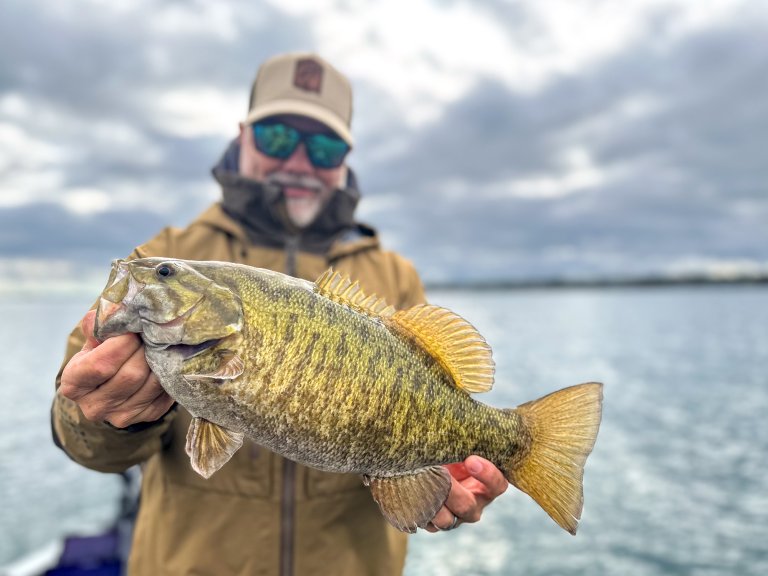
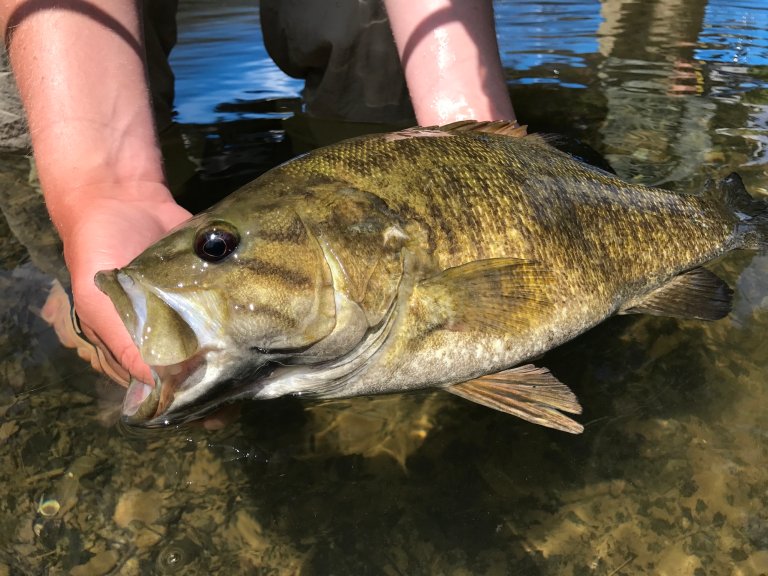
Every so often a bass-fishing technique comes along that's disarming in its simplicity, yet absolutely deadly when properly executed. Such is the case with the float 'n' fly, the most innovative method for catching bass in clear, cold water to surface in years. While it's especially potent on smallmouths, it will catch largemouth and spotted bass as well. And because it works better than any system in hyper-chilled water, it will extend your bass-fishing season by weeks, if not months. Don't hang up your rods and put your bass boat in winter storage until you read what follows.

Solution for Suspenders
The float 'n' fly system was developed by eastern Tennessee angler Charlie Nuckols as a method of teasing sluggish smallmouth bass to bite in clear, frigid water. Nuckols, owner of Bullet Lures, knew that once the water temperature dipped below 45 degrees in winter, the bass in his local reservoirs became so lethargic they were virtually impossible to catch. Nuckols could see fish on his graph. He just couldn't catch them by conventional means. The bass suspended in the water off rock bluffs or deep points. He tried to catch them on a jigging spoon, but even this old winter standby would falter once the water temperature dropped into the low 40s. Sometimes the bass wouldn't budge regardless of what the angler did to elicit a response.

Nuckols suspected that the answer to the slow-bite riddle would be a small lure fished for extended periods at the depth at which the smallmouths suspended. Instead of trying to trigger reaction strikes, Nuckols decided a soft sell was better. He started experimenting with tiny crappie jigs dangled under a bobber and soon began catching bass. The more he refined the concept, the more fish he caught, until he eventually arrived at what many bronzeback aficionados feel is the ultimate system for big smallmouths in cold, clear water: the float 'n' fly.

Charlie Nuckols drowned in a boating accident in 1996, just as his revolutionary bass system was gaining a following among smallmouth anglers. Today, Charlie's brother Eddie runs Bullet Lures, which remains the main source for the specialized lures and equipment used with the float 'n' fly system

. How it Works
One reason for the float 'n' fly's popularity, beyond its effectiveness, is its simplicity. The float 'n' fly system consists of three basic components:

1. A tiny leadhead jig, or "fly," tied with craft hair (a crinkly man-made material frequently used in the toy industry). When suspended beneath a bobber in clear water, a craft- hair jig will puff out, or "breathe."

Consequently, the small jig (usually 1/16 ounce and 2 inches long) resembles one of the diminutive lake minnows that suspending bass feed on in winter.

2. A small (¾- to 1-inch) plastic bobber. Float 'n' fly fanatics insist on a stationary float as opposed to a slip bobber. The float is clipped onto the line from 8 to 13 feet above the fly. The float bobs on the surface and keeps the jig suspended at the desired depth. It's simple, but effective.

3. A long, flexible spinning rod.

Anglers proficient with the system use two-piece rods 8 to 11 feet long. The rod should have a super-soft action, almost like a flyrod, to cast the lightweight jig and float long distances and to provide the shock absorption needed to prevent huge bass from popping light line. This rod is paired with a spinning reel loaded with small-diameter 4- or 6-pound-test monofilament line.

The Big Chill
The float 'n' fly method is most effective in clear water with a temperature between 38 and 48 degrees. It absolutely shines when the water is in the low 40-degree range-a period when many reservoir smallmouth anglers have traditionally hung up their rods. "I got two big surprises when I first began using the float 'n' fly in midwinter," Tennessee bass guide Jim Duckworth says. "I was amazed at the sheer number of fish I caught. And I was stunned by the fact that even larger bass will go after those small jigs. Four-pound smallmouths are common with this method."

When the water is extremely cold, suspending bass are in a totally neutral mood, Duckworth explains. "Their metabolism is cranked down so low and their digestion process so sluggish, they don't feed very often. But they will strike a tiny lure dangled right in their faces."

Where to Fish
The float 'n' fly works wherever smallmouths suspend in winter. High- percentage spots include:

  • Bluff banks
  • Rocky points, especially those with a quick drop into deep water
  • Sloping rock or clay banks (aka "45-degree" banks)
  • Flats or bars adjacent to any of the above structures
  • Open water in "hollows" (deep, narrow, V-shaped tributary arms) "The float 'n' fly method is ridiculously simple," says Duckworth. "First, idle your boat around in a likely area and locate suspending fish with your graph or flasher. The most 'catchable' bass will be hanging eight to fifteen feet below the surface."

    Once the depth of the fish has been determined, peel sufficient line off the reel and position the bobber so the fly will be presented at the bass's depth, or slightly above them.

    Next, cast the rig to your target. "I like to either work the rig back to the boat with short twitches of the rod tip, or, if the water is choppy, just let it set there and let the wave action activate the bobber and fly," Duckworth says. "Slower is better because bass are likely to be sluggish and won't chase a fly." As with most fishing techniques, the float 'n' fly method works better at some times than at others. "On windy, overcast days, smallies tend to suspend shallower and are highly susceptible to this technique," Duckworth notes. "The bite often gets tougher when the sun comes out and fish go deeper; that's when it's better to target shady bluffs or windy banks. Dead-calm, sunny days also are bad; try setting the float as high above the fly as you can cast it, or look for dingy water where the fish are likely to be shallower."

    A major part of the fun of using the float 'n' fly system is that it might take five minutes to land a lunker on that soft-action rod and wispy line. But then, what else do you have to do on a cold winter day?

    Search within the archives
     
    [Browse archives] - [Advanced Search]


    Comment on This Article

    At 12:00 AM, 2008-12-02, Jeff said:
    i fish this method alot and where i fish in east tn i catch most of my fish with about a 6 foot leader and a fly. i havent had much luck on leaders 10 feet and below. why is that?

    Flagged for review


    Your Name:


    Enter the following word:


    Your Comments:
    Please keep comments focused on the subject (and profanity-free) or we may delete your post. Do not enter more than 10 lines. If you see inappropriate language, e-mail us.

    We require all participants in interactive areas to accept the terms of the Bonnier Corporation subscriber agreement. Please read the agreement before making comments. When you click on the button above to submit your comments, you are indicating your acceptance of and are agreeing to adhere to the terms of the subscriber agreement.
  •  

      OTHER AREAS OF INTEREST OTHER AREAS OF INTEREST
    Hunting
    Big Game
    Whitetails
    Hunting Dogs
    Upland & Waterfowl

    Photo Gallery

    Gear
    Field-Tested Gear
    Gear Reviews
    Trucks & RVs
    ATVs & Snowmobiles
    Boating

    Adventure
    This Happened to Me

    Survival

    Columnists
    Fishing
    Bass
    Trout

    Shooting
    Gun Vault
    Shotguns
    Rifles

    Destinations
    Outdoor Trip Search

    Humor & Fun
    Pat McManus
    Snapshots

    D-I-Y Projects