
We may earn revenue from the products available on this page and participate in affiliate programs. Learn More ›
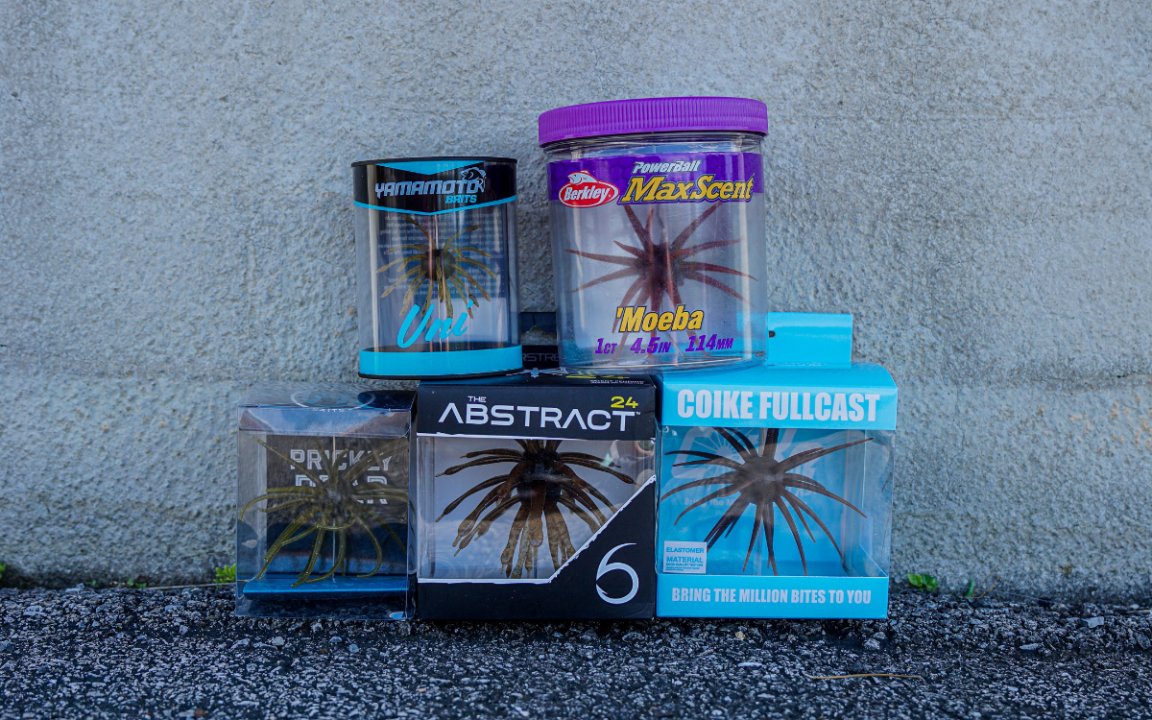
I’ve covered the rise of the weird urchin style bass bait multiple times and even discussed it on a recent podcast. In that time, I’ve gone from a non-believer, to skeptic, to a full believer in the urchin. But, that didn’t happen because it’s trendy, it happened because these baits actually catch fish. Throughout the spring and summer, I’ve experimented with different rigging options, different sizes and colors, and now have a full on collection of urchin style baits taking up a compartment in my bass boat. After landing my personal best largemouth on one in July, and plenty of giant bass since then, I’ve found that there’s pros and cons to each of the major urchin options available. Here are my top picks of the best urchin baits from the major bait manufacturing companies.
- Best Overall: Hideup Coike Fullcast
- Best Scented: Berkley PowerBait MaxScent Moeba
- Best Small-Profile: Yamamoto Uni
- 6th Sense Abstract
- Hag’s Baits Prickly Pear
How We Tested the Best Urchin Baits
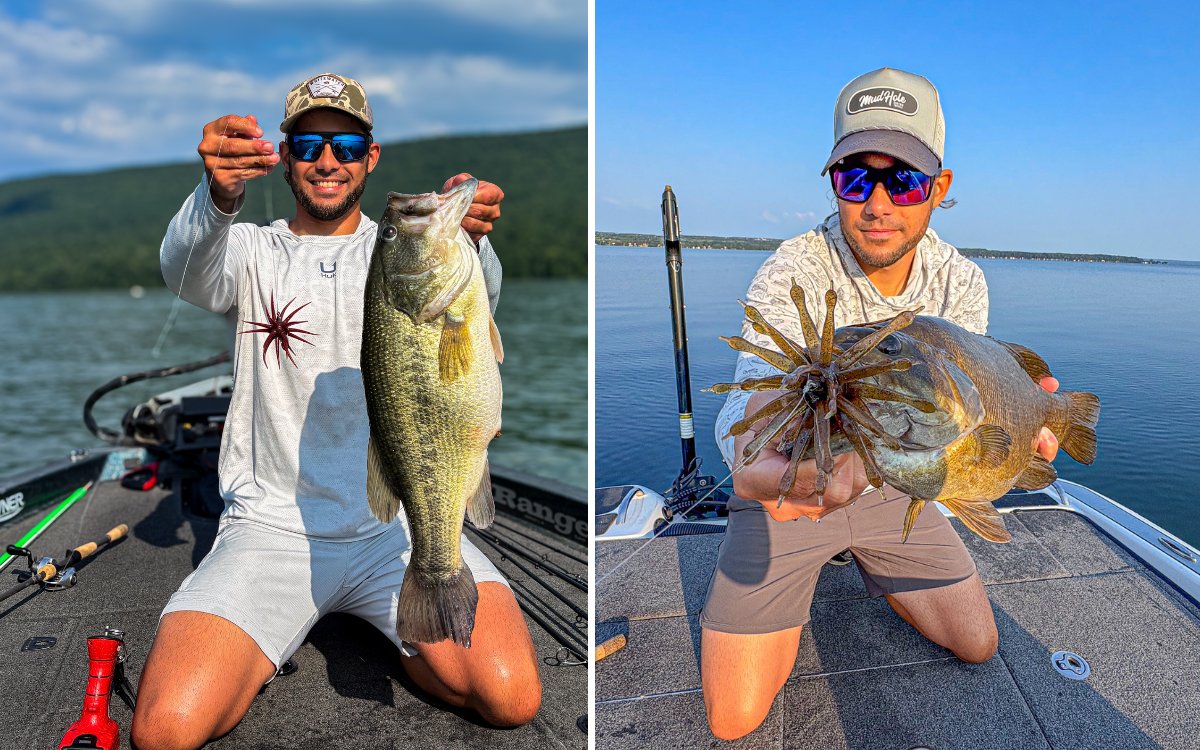
As opposed to some of the gear testing I’ve done in the past, testing urchin style baits was more of a personal pursuit of the best urchin, rather than trying to figure out which is objectively the best option. I became fully invested in the fall rates, the action, the rigging options, and what colors seemed to get more bites. Admittedly, I’ve spent a small fortune on my urchin collection, but when something this weird comes along and upends the bass fishing industry, I can’t contain my curiosity.
Throughout my testing, I fished for both largemouth and smallmouth bass around the Northeast. From the Finger Lakes in New York to some small reservoirs near home, I found out that bass everywhere will eat an urchin bait. Perhaps more importantly, urchin baits also move a ton of bass, showing you schools that were lying in wait on the bottom. And if these fish don’t commit to the urchin, you can target them with different techniques. The technique reminds me of fishing with large swimbaits or glide baits. Even if I didn’t get a bite, I would see a ton of fish in pursuit of my bait.
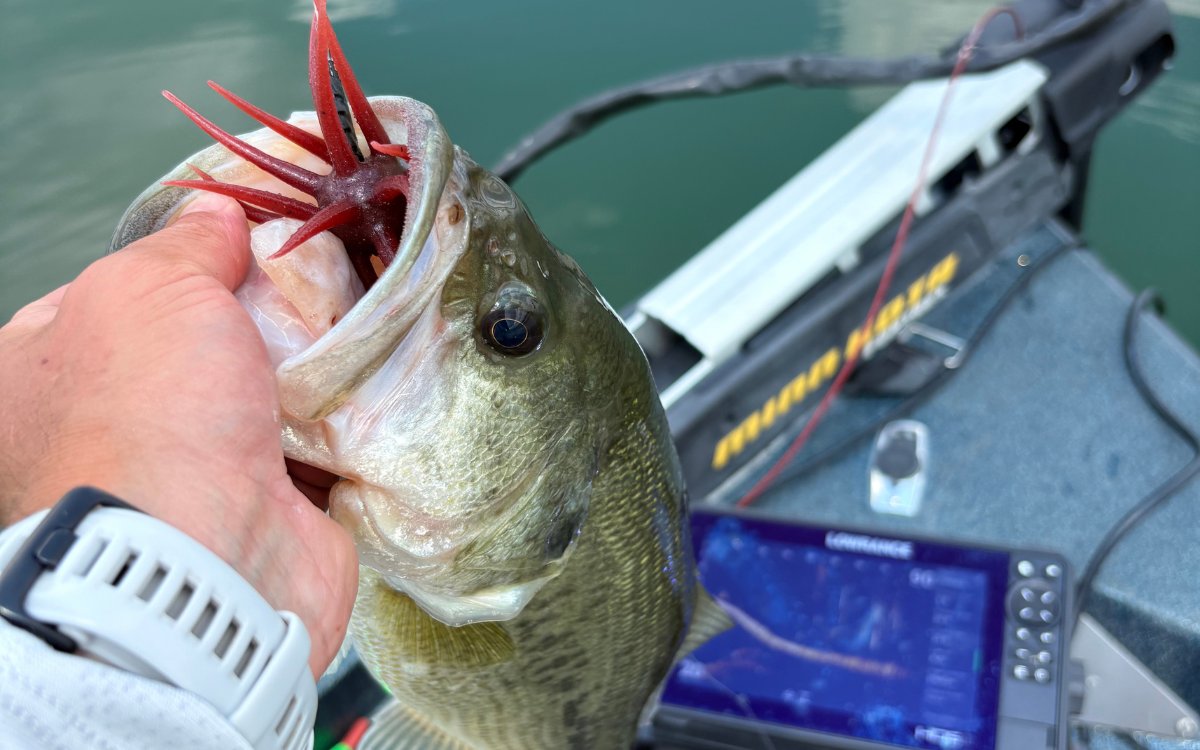
To really see how these fish reacted, I almost exclusively fished an urchin bait with the help of my Lowrance Active Target 2. Thanks to the live imaging, I was able to watch my bait subtly fall through the water column to suspended bass, or bass relating to cover like a rock pile, bait ball, or stump. It also gave me an in-depth look at how the bass reacted to pulses, different fall rates, and the action of each urchin bait. Below is a look at how each of the 5 major urchin baits performed throughout my summer of testing.
Best Overall: Hideup Coike Fullcast
Pros
- Highly durable
- Incredible action
- Slow fall rate
- Easy to rig
Cons
- Very difficult to find
- More expensive MSRP than others
Key Features
- Size: 25mm
- Material: Durable, high-floating elastomer / TPE
- Price: $20.49
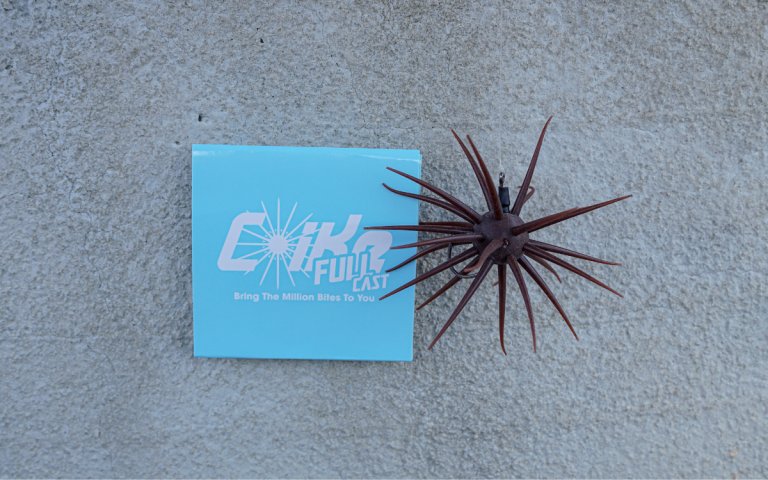
To anyone even remotely familiar with urchin baits, this shouldn’t come as a surprise. The Hideup Coike Fullcast just might be the most sought after bait in the world this year. It’s won hundreds of thousands of dollars on professional tours and sells out in seconds any time it hits the shelves in retail stores or online. There just isn’t a consistent supply coming over from Japan. I was lucky enough to grab a couple during an online drop, and have held onto them like a prized possession.
What sets the Coike Fullcast apart from the competition is the material that Hideup uses. It’s a durable, high-floating TPE (thermoplastic elastomer) that allows the tentacles to shimmy and shake like something a bass has never seen before. Similar to a falling senko, the shimmy during the slow fall rate is almost irreplicable and it drives bass nuts.
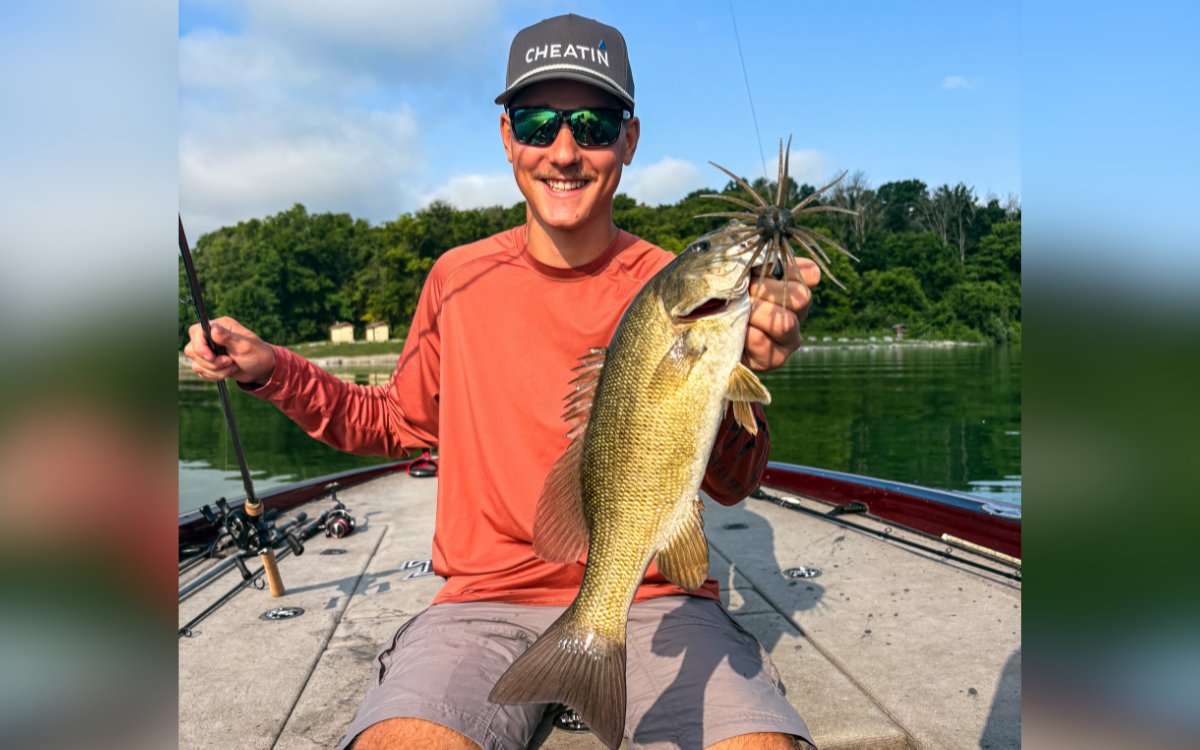
As far as catch rates go, the most consistent urchin bait I’ve thrown has been the Coike Fullcast, and many other anglers have had similar results. The only negative is that finding one in stock is tricky. You can spend ridiculous amounts on Ebay for them, but in my opinion, that’s unnecessary. There’s no doubt in my mind that they’re the best urchin style bait, but with plenty of other options that also catch fish, I wouldn’t go spending a mortgage payment on a few chunks of TPE.
Best Scented: Berkley PowerBait MaxScent ‘Moeba
Pros
- Affordable
- Easy to find
- Scented
- Incredible action
- Easy to rig
Cons
- Fast fall rate
- Less durable than TPE
Key Features
- Size: 4.5 inches
- Material: Dense, traditional soft plastisol
- Price: $14.99
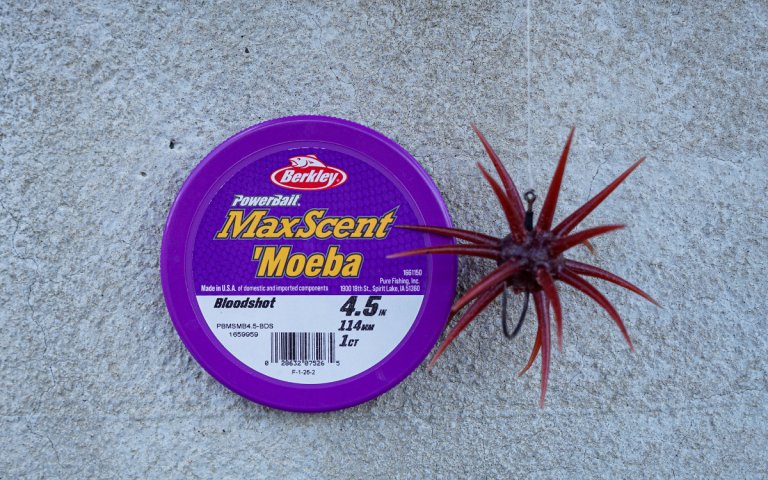
The Berkley PowerBait MaxScent ‘Moeba is another option for urchin anglers looking for a more readily available bait. While these also sell out quickly, there are seemingly more and more hitting the market every few weeks. This is a good thing, because these baits flat out catch fish. Second to the Coike Fullcast, I’ve caught a lot of bass on the 3.5” and 4.5” ‘Moeba this summer, including my personal best largemouth at 8.1-pounds.
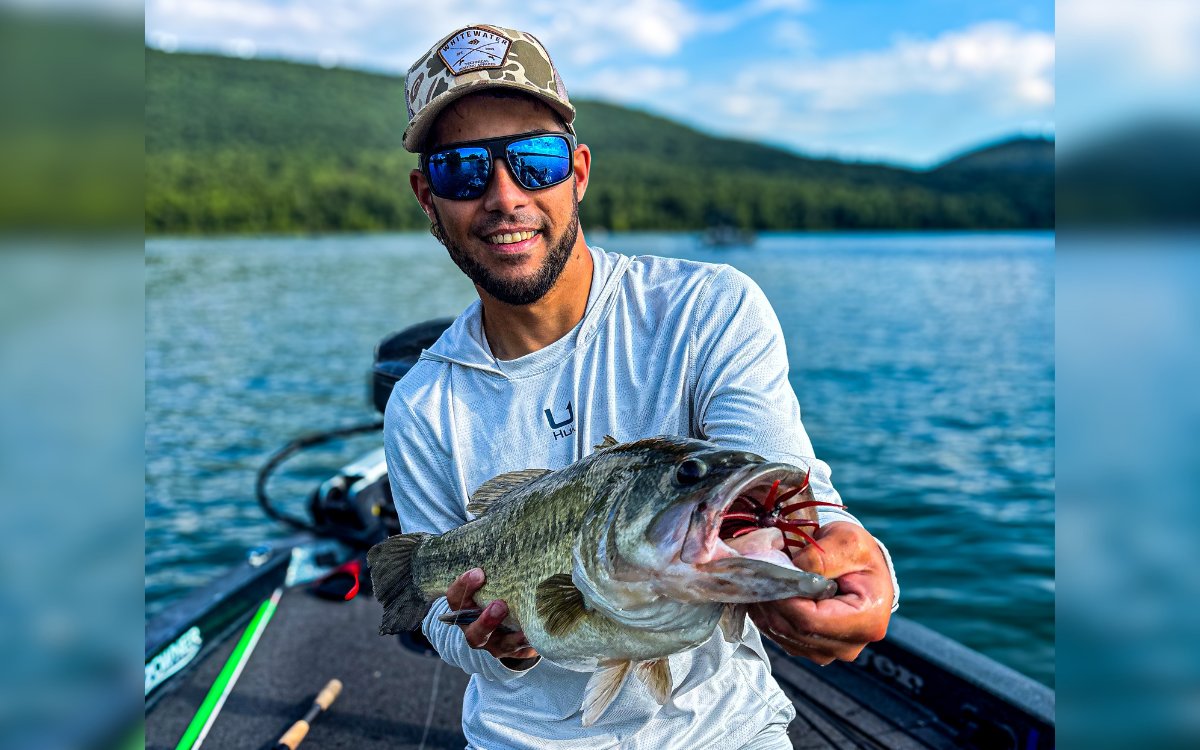
What sets the ‘Moeba apart from the other urchin baits is that it’s scented, and not made of TPE. Rather, it’s made of a dense, more traditional soft plastisol which gives it a much faster fall rate. But, as a trade off for scent and a non-TPE material, you get a bait that offers less durability in the long run.
I’ve had a few ‘Moeba’s to this point, and after a day of fishing, there’s likely at least 2-3 tentacles missing from the bait. The trade off is typically plenty of boated bass, so I’m not complaining about that, simply sharing that the durability of TPE is unmatched when compared to traditional soft plastisols. As for the fall rate, a faster fall rate can be good or bad, depending on bass behavior. In the case of bass actively chasing baitfish or feeding, getting the ‘Moeba down to them quickly typically leads to a reactive strike after the first pulse or two. But, when the bass get a bit more lethargic, you’ll end up having a lot of followers that remain non-committal.
Overall, if I were to suggest an urchin style bait that’s both affordable and easy to find, I’d look no further than the ‘Moeba. It’s caught more bass than I can count this summer, and I think the MaxScent formula has a lot to do with that success.
Best Small-Profile: Yamamoto Uni
Pros
- Affordable
- Easy to find
- Slow fall rate
- Great action
- Easy to rig
Cons
- Not as durable as other TPE baits
Key Features
- Size: 13mm
- Material: Custom TPE formula
- Price: $14.99
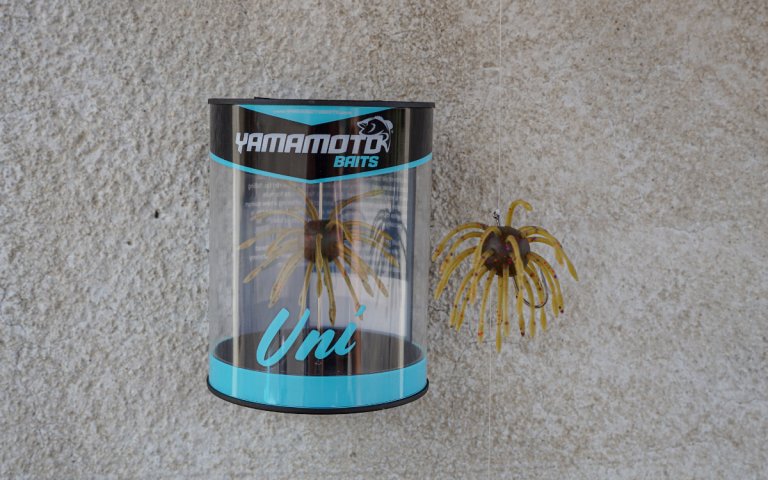
The Yamamoto Uni was one of the first urchin style baits I tried this spring. More similar to the dice style bait that was gaining traction last summer, the Uni is a smaller urchin bait with loads of action. You can fish them like a normal urchin style bait, or throw them on a dropshot with plenty of success. They have a slow, subtle fall rate when rigged with a light nailweight, and they catch a lot of bass. The only issue is that you’ll end up catching a ton of smaller bass, with big bites mixed in from time to time.
Thanks to the smaller profile, a 1 to 2 pound bass won’t be shy when biting an Uni, whereas the larger style urchin baits seem to catch above-average fish. The key to the Uni is Yamamoto’s custom TPE formula that is both stretchy but also soft to the touch. It allows for a pulsing action from the tentacles as the bait glides down through the water column and drives bass to instinctively bite. However, unlike the Hideup TPE, this custom TPE formula is less durable. I’ve had several Uni’s that caught a couple of fish and then all I was left with was the center material with very few tentacles left over.
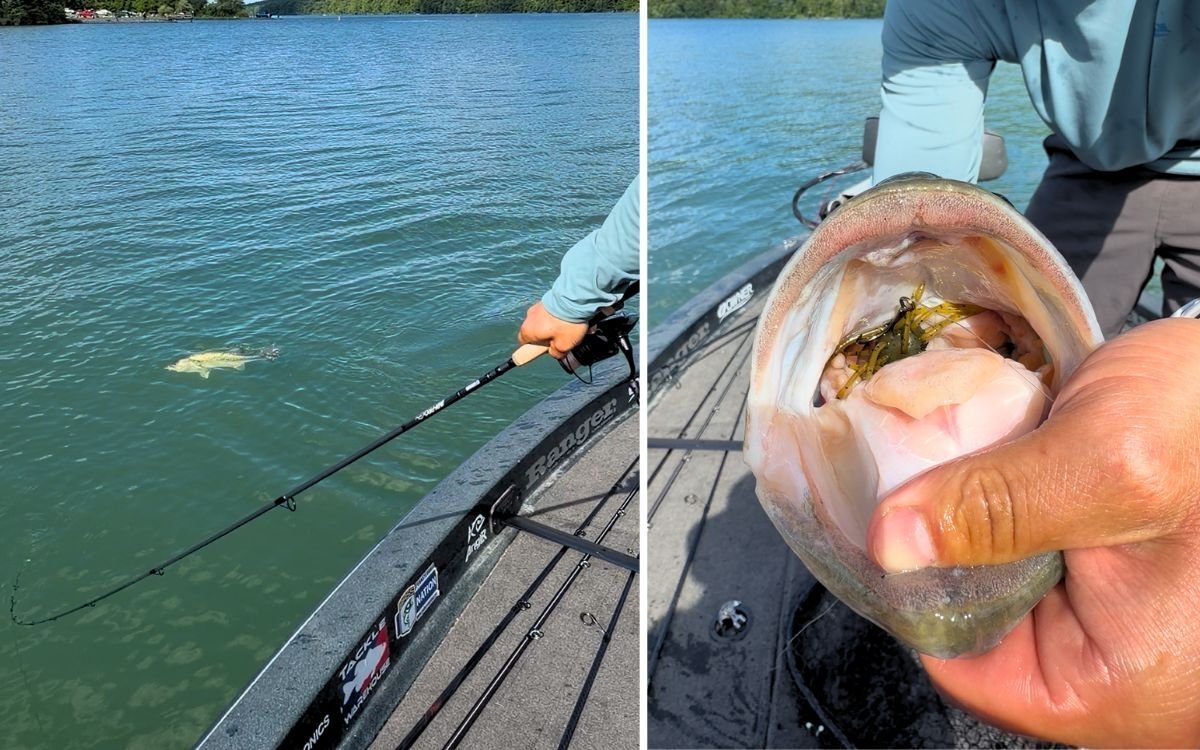
Similar to the ‘Moeba, the good news here is that the Uni is widely available online and at major retailers. So when one inevitably gets chewed beyond recognition, you’ll be able to get your hands on a few more before your next trip. The Uni is a great option for anglers looking to dip their toes into the urchin game, without feeling overwhelmed by the large 25mm offerings.
6th Sense Abstract
Pros
- Durable
- Affordable
- Unique shape and tentacle design
Cons
- Too slow of a fall rate
- Difficult to rig
Key Features
- Size: 24mm
- Material: Durable HyperStretch TPE
- Price: $14.99
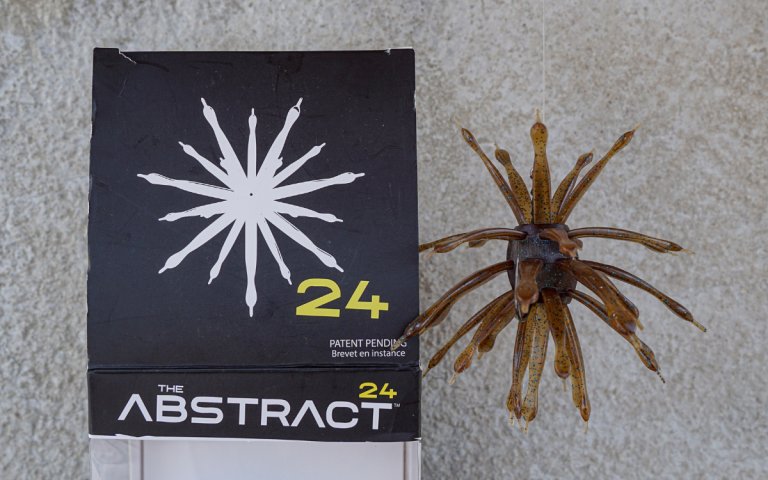
The 6th Sense Abstract is the most unique urchin bait I’ve fished so far. With a root beer barrel style center and unique tentacle design, I was a bit skeptical when I pulled the first one out of a package. After fighting to rig it for a bit, I was able to finally get it in the water and realize that the action is insane. One might argue too insane, but I think the mood of the fish decides that. With an incredibly subtle fall rate due to the sheer amount of water displacement, I found that in the right scenario, the Abstract triggers actively feeding fish like no other.
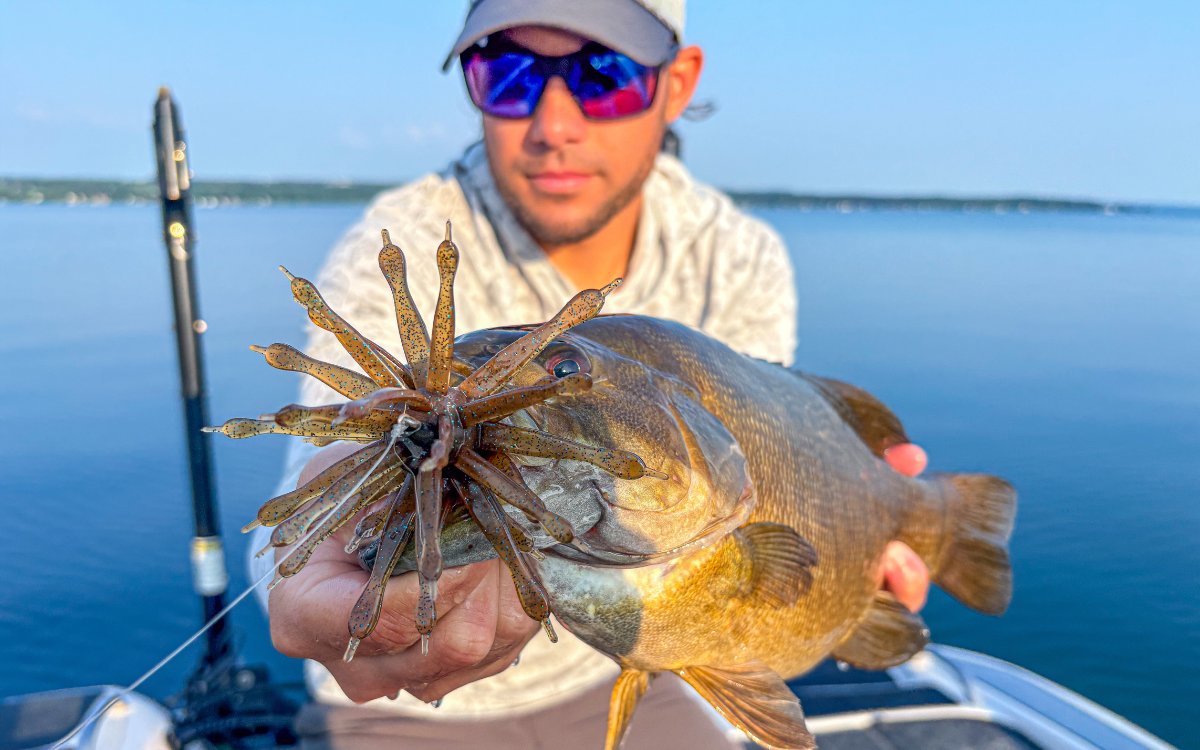
That being said, I struggled with rigging the Abstract due to the HyperStretch TPE material, and I really had to beef up my weight options to get it down into the water column while fishing for deeper summer bass. But, aside from those few gripes, the Abstract proved to be a durable, fish catching option for urchin anglers looking for something just a bit different than the competition.
Hag’s Baits Prickly Pear
Pros
- Durable
- Affordable
- Easy to find
- Slow fall rate
- Easy to rig
Cons
- Reduced action in tentacles
Key Features
- Size: 19mm
- Material: Durable, floating TPE
- Price: $14.99
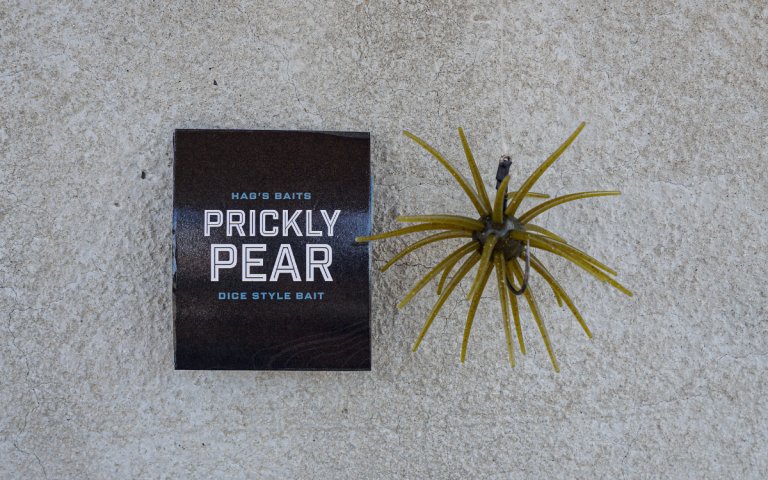
The Hag’s Baits Prickly Pear is likely the first urchin style bait that most anglers were able to get their hands on this spring as the Coike Fullcast madness began. Hag’s deserves a tip of the cap for quickly recognizing the opening and capitalizing with an easy-to-find and affordable option. Made with a durable, floating TPE, the Prickly Pear looks quite similar to a Coike Fullcast, but looks are where the similarities come to an end, at least in my experience.
Admittedly, when I first started my urchin journey, the Uni and the Prickly Pear were the first two I could get my hands on. After plenty of success with the Uni, I transitioned my testing to the Hag’s Baits Prickly Pear and simply put, flat out struggled. I put the Prickly Pear in front of a lot of bass without so much as a nibble. As hard as I tried, after days of testing, I never once got a bite on a Prickly Pear. I’m not entirely sure why, but I believe it has to do with the action in the tentacles. When I compared the Coike Fullcast and the Prickly Pear side-by-side, I noticed that there was exponentially more action from the Coike Fullcast. Perhaps that’s the difference maker here.
While these baits are affordable and easy to find in stores, my personal recommendation would be to avoid them if there are any other options available.
Rigging Options for Urchin Baits
After testing plenty of ways to rig an urchin bait, I’ve found a few options that work best for me. The tried and true method would be to skin hook the urchin bait with a treble hook and insert a small 1/16 ounce nailweight through the body of the urchin. While I did catch fish using this method, I also lost a lot of bass during the initial jump after the hookset.
That made me transition to a single hook option like a straight shank hook with the nail weight heat shrinked to the shank near the eye of the hook. This allowed me to get a larger hook hidden through the body of the urchin and increased my landing ratio significantly.
A final method that I’ve experimented with, but many friends lean on, is the frog hook method. Here, you take a traditional hollow-body frog hook and thread the urchin past the eye of the hook. Then, using a split ring, attach a small weighted sinker to the eye of the hook. This gives you two points of contact for hooking the fish, and moves the weight system up on the hook shank, reducing the amount of leverage the fish has during the fight.
Here are the the hooks and weights I’d recommend for each option:
Treble Hook Method
Straight Shank Method
Frog Hook Method
- 4/0 Owner Double Frog Hook
- Size 5 Owner Hyper Wire Split Rings
- Flat Out Tungsten Tear Drop Drop Shot Weights
Final Thoughts on the Best Urchin Baits
After an entire spring and summer on the water with urchin baits on my line, I still don’t feel like an expert. There’s still a lot to be learned about this new technique and the different rigging options that are available. Companies continue to innovate with new hooks, weight systems, and even bait materials to satisfy the urchin craze.
I, for one, look forward to continued testing of this new, undeniable workhorse of a technique. Plus, with new urchin bait options on the way from other major manufacturers, I’ll be sure to test those and add them to this roundup as they hit the shelves.