
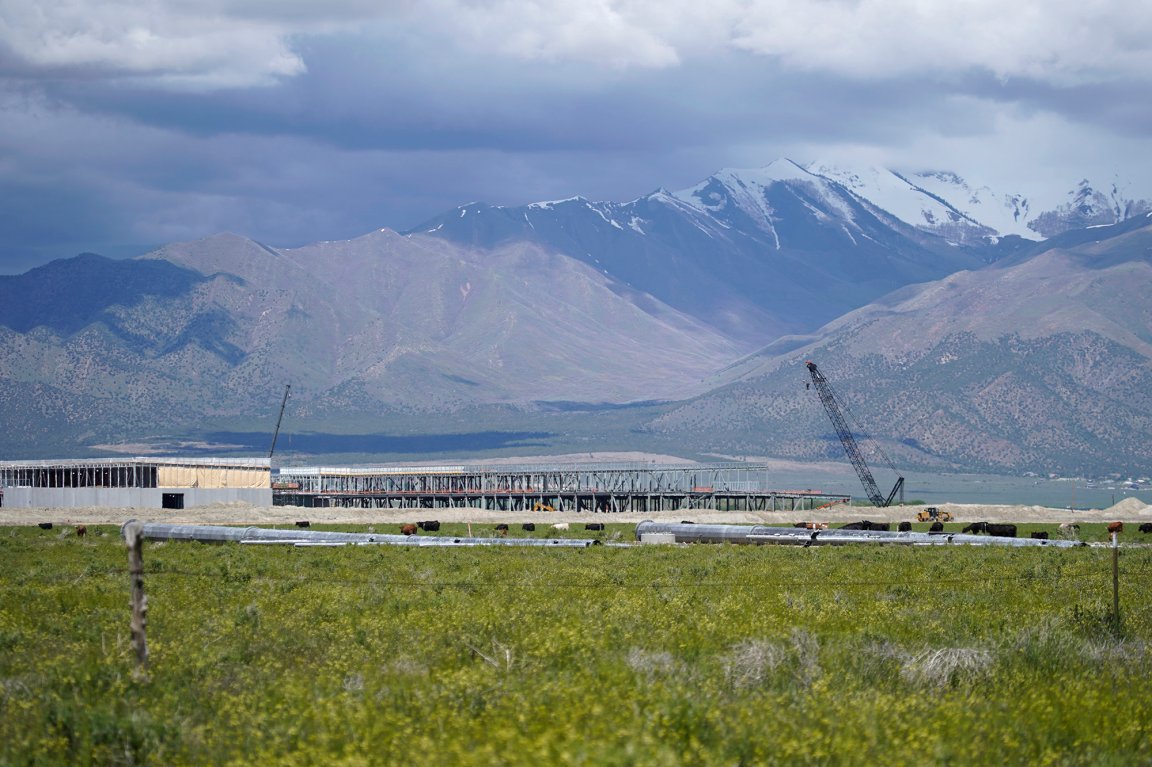
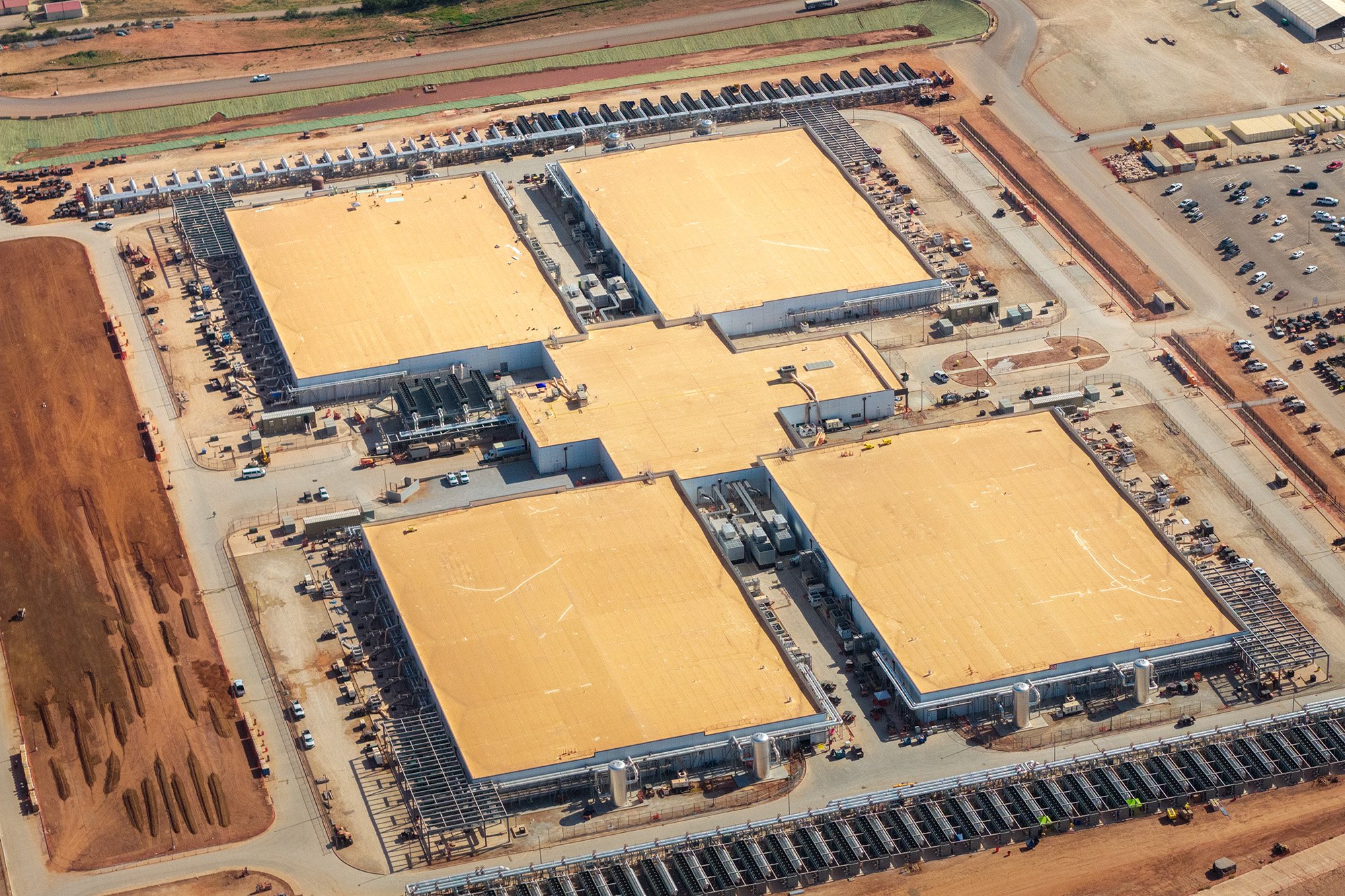
As dozens of mammoth data centers are being proposed — in some cases without community input — on public land around the West, a new tool launched this week provides a window into the scale, location, and status of these resource-intensive industrial facilities.
The web-based Data Center Tracker is searchable by location, size, and whether the facility is proposed, under construction, already in operation, or if it’s been stopped by the communities affected by the proposed installation. The interactive site specifically tracks data centers proposed for public land, and also provides the distance to public lands for the hundreds of data centers sited on private land.
Data-center developers that have applied recently for public-land occupancy permits includes a massive nuclear-powered facility that was proposed for 10,200 acres of BLM land plus several hundred acres of state land just outside the northeast Utah town of Green River.
Related: First AI Data Center Approved on Federal Public Land Hits a Major Roadblock
Just as news of the plan was made public today, developer Valar Atomics announced that it was scrapping its Green River Gigasite and instead pursuing a data center on undisclosed land elsewhere in Utah. It’s unclear if the substitute facility would be powered by nuclear reactors or by more conventional natural gas or solar.
The Salt Lake Tribune reported last month another massive data center, the Delta Gigasite Project, proposed for 1,140 acres of private land plus another 13,000 acres of leased state land in Millard County southeast of Delta in central Utah. An even larger project, which would have covered 44,000 acres of mostly private land in Box Elder County, Utah, has been scaled down after intense community push-back.
Reporting this week by The Washington Sun indicates that the Trump administration is considering proposals for no fewer than a dozen data center projects on public land. Together, they could impact at least 17,600 acres of public land in the West.
The roster includes the 3,200-acre Rhea Data Blacks Creek Campus on BLM land south of Boise, Idaho, the 744-acre Bergen Data Center proposed for BLM land north of Las Vegas, and a mysterious data center project that might be built on BLM land outside Hermiston, Oregon, according to the Umatilla County Board of Commissioners.
Other data centers, or infrastructure projects related to data centers, are proposed for public land with three in Arizona, four in Nevada, and one in Utah. The Data Center Tracker notes that public-land data centers are also under construction in Ohio and on Department of Energy sites in Georgia, Idaho, and Tennessee.
The sheer scale and speed at which data center construction proposals are popping up — or not, since in some cases developers keep their plans secret — motivated creation of the Data Center Tracker, say its developers.
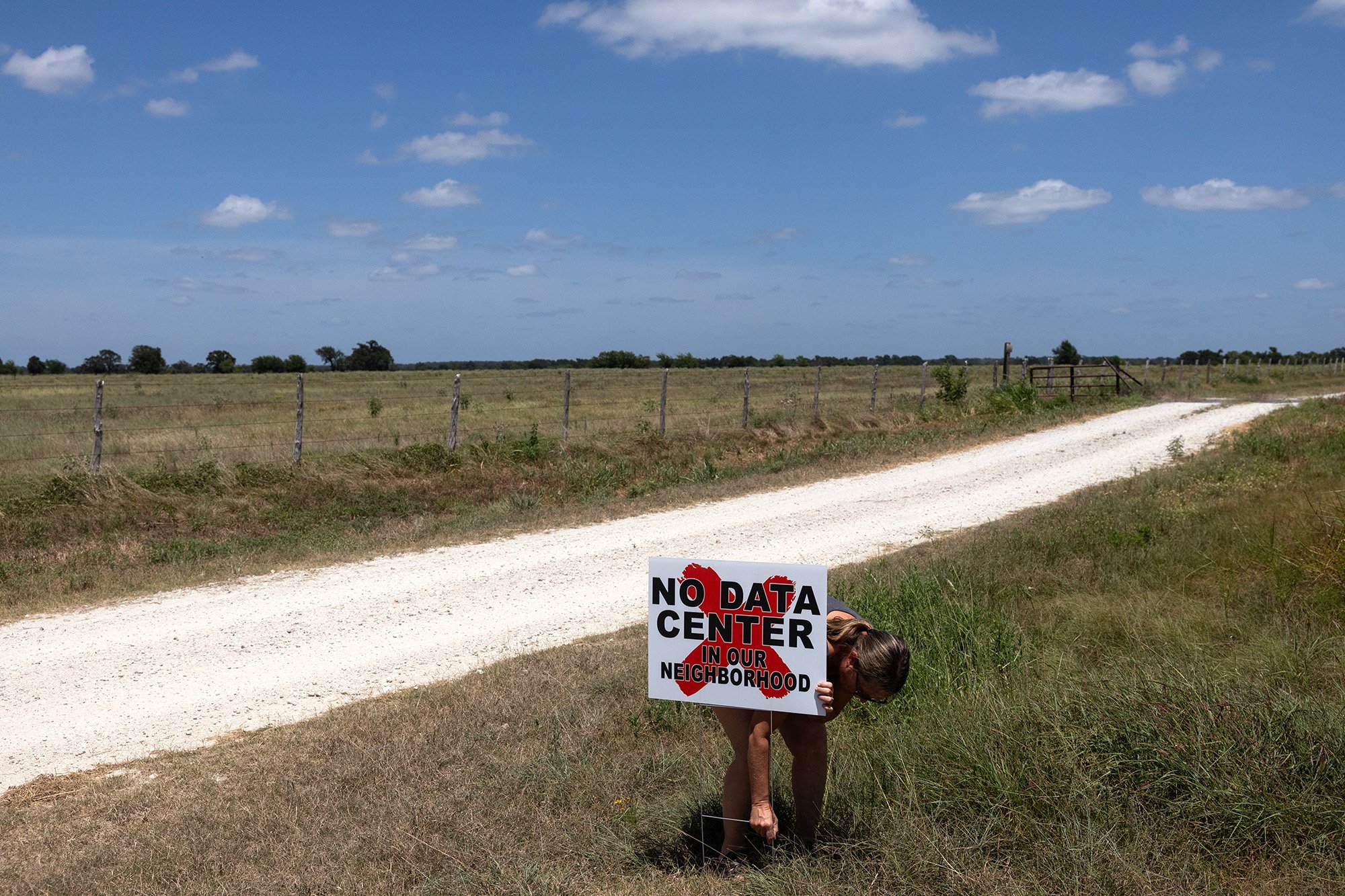
The site tracks 2,173 facilities in 49 states and notes that 568 have been stopped by local communities. In a political era characterized by stark divides, opposition to data centers seems to be a unifying force ahead of next month’s mid-term elections. These massive facilities are often pitched by developers as employment opportunities in economically struggling rural communities. But concerns over noise and pollution from the facilities and their potential to deplete local water supplies while spiking electric bills have soured local ratepayers on the facilities. Then there’s the growing suspicion that the artificial intelligence they’re powering is dangerous.
That’s the context for the Data Center Tracker, say creators Jim and Will Pattiz, who run the public-lands-focused Substack More Than Just Parks.
“America is in the middle of an enormous industrial buildout, moving at extraordinary speed, with remarkably little public input or visibility,” write the Pattiz brothers in their launch of the tracker. They note that data-center proposals are often secretive, disguised by developers, and pitched to local development authorities that aren’t equipped to adjudicate projects of the scale and disruption of these high-tech computing facilities.
“We initially started this project with a much narrower goal to track where data centers were being proposed and built on America’s public lands,” write Jim and Will Pattiz. “But we quickly realized this story was far bigger than public lands. It was a story about communities all over America being asked to absorb an enormous industrial buildout they had little ability to see, understand, or influence. Until now, there has been no accountability, no transparency, no public record that lets an ordinary person see what’s actually happening.”
The map has tools that allow users to see facilities sited near them, to sort data centers by proximity to protected public lands, and to view proposed projects that are somewhere in the development pipeline.
Mitigation Potential
Among the many details overlooked or undiscussed in the data-center land rush is the impact on aquifers, surface water, wildlife habitat, and migration corridors for seasonal movement of wildlife. While those impacts should be addressed in the planning process, with abundant public input, the buildout of data centers might represent an opportunity to make equivalent investments in wildlife habitat, says Nick Fasciano, executive director of the Idaho Wildlife Federation and occasional Outdoor Life contributor.
“All the other questions raised by data centers need to be asked, but mitigation funding is an important consideration if those questions are all answered in a sufficiently satisfactory way,” he says. “I’m concerned we’re going to miss an opportunity in the scramble to make conservation investments” to offset the impacts of data centers.
There may be a universe where the cumulative impact of appropriately sited data centers can be offset by sufficient mitigation funding, Fasciano suggests. It could pay for things like wildlife crossings, conservation easements in migration corridors, and other projects.
Read Next: Grizzlies Are Killing Far More Livestock in the Rockies Than Wolves
But as the land rush to build out data center intensifies, says Fasciano, “those are the questions the conservation community should be asking, and the issues we should be demanding, right now.”