
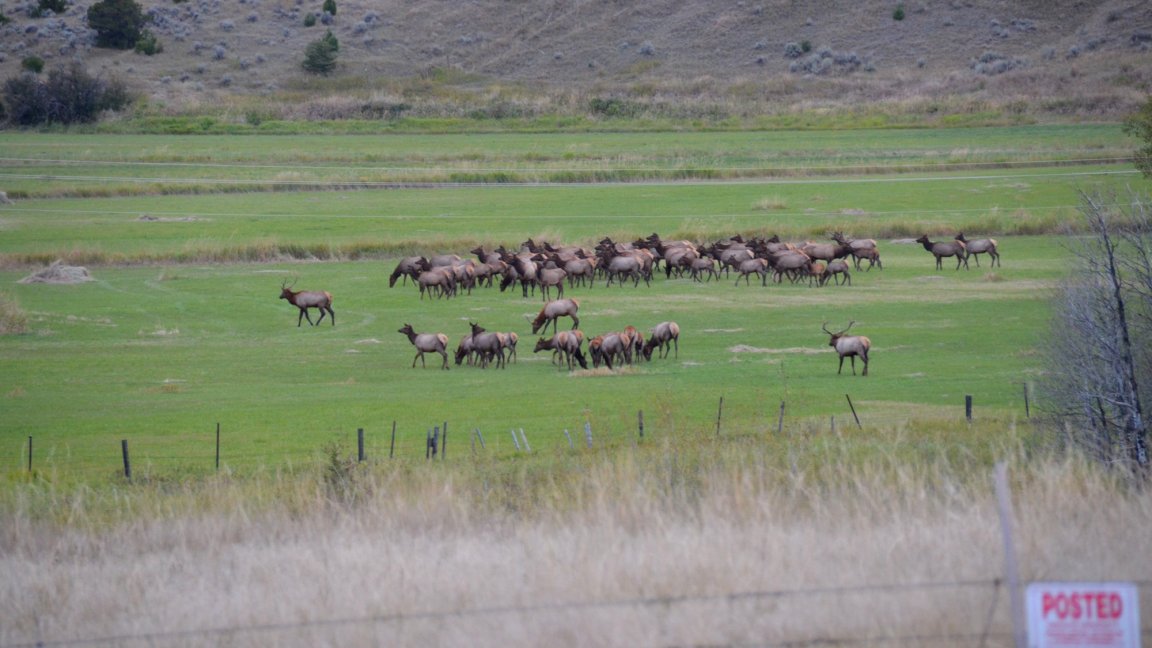
Most hunters look at elk as one of the ultimate big game quarries in North America. Some will spend a decade or more waiting to draw a bull tag in a premier unit or wilderness area. But outside of these zones, and especially in agricultural areas, elk are sometimes viewed as a destructive nuisance. Which is exactly why, on May 5, a legislative committee in South Dakota passed a rule allowing for an unlimited number of elk hunting licenses in the eastern part of the state.
The committee, made up of three state senators and three state representatives, voted 4-2 in favor of the new rules package, which also increases the number of resident elk tags issued in Custer State Park. (South Dakota does not offer general elk tags to nonresidents in any part of the state.)
While the idea of unlimited tags may seem drastic, the reasoning is that the state doesn’t want to manage any elk herds east of the Missouri River. On average, a mature Rocky Mountain elk will eat roughly 3 pounds of forage per day for every 100 pounds that it weighs. This translates to a lot of crops when they move onto private farmlands.
“Eastern South Dakota is almost exclusively privately owned,” a wildlife biologist and spokesperson with South Dakota Game, Fish, and Parks tells Outdoor Life. “The whole region is operated at almost 100 percent close crop agriculture, and the potential for elk causing damage to that is so great that we just don’t want to the animals anywhere in the area.”
Under this new zero-tolerance policy, SDGFP will establish a new elk hunting zone east of the Missouri River. The agency will then be able to issue an unlimited number of tags to South Dakota residents, which can be used to harvest any cow or bull that wanders across the Missouri.
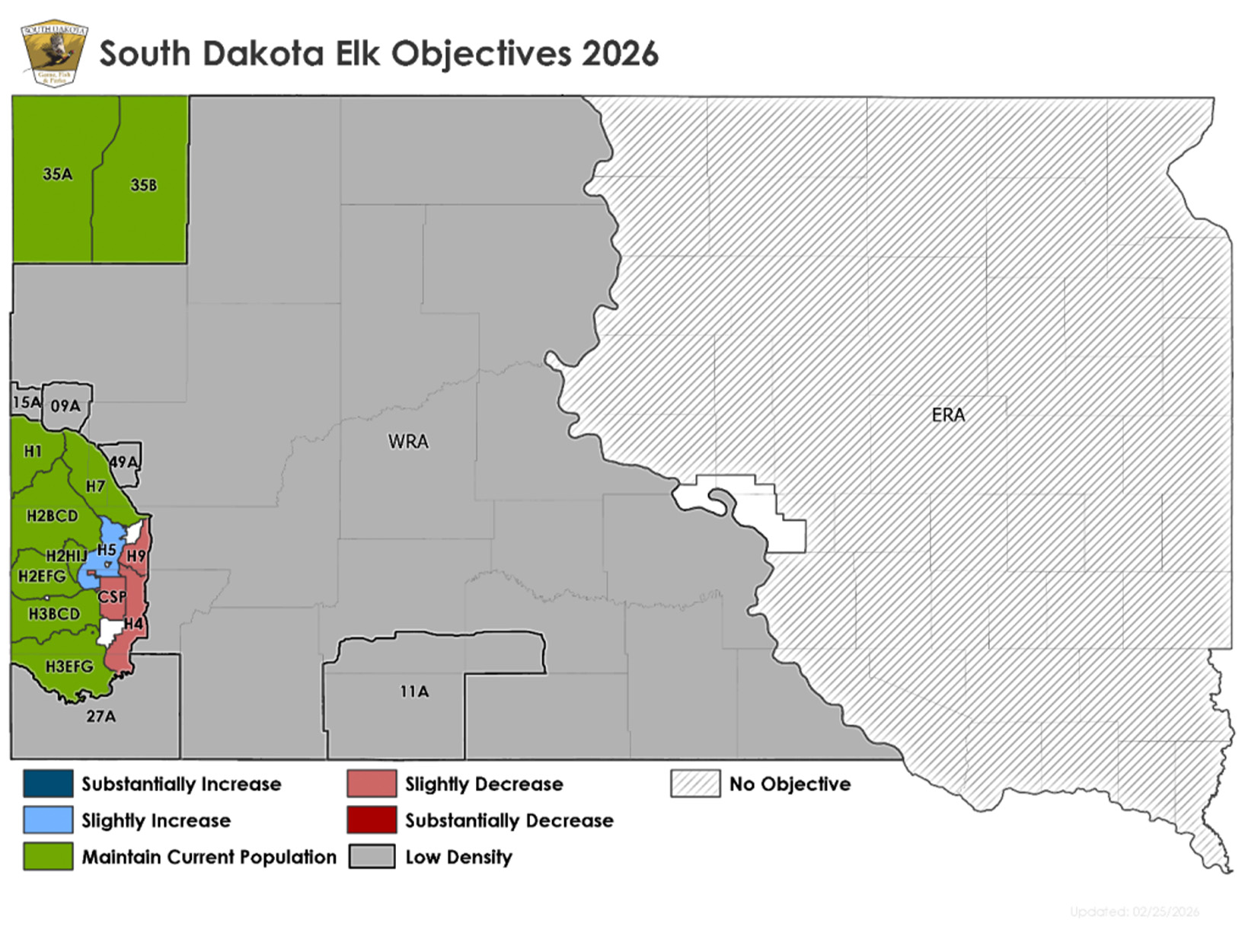
The core of South Dakota’s elk population is found around the Black Hills, and the statewide population is somewhere around 8,000 animals. There are currently no big herds established on the grasslands east of the Missouri River, and it’s estimated that only a few elk cross the river on occasion. Most of these elk are found between Pierre and Chamberlain on the Crow Creek Sioux Reservation, which will be excluded from the new hunting unit.
“We’re issuing the tags to try and nip a potential problem in the bud,” says the SDGFP spokesperson. “Elk are a fantastic big game animal that are welcome in every other part of the state, but the fact is we just can’t tolerate having them in eastern South Dakota.”
Read Next: Lawmaker Proposes ‘All-You-Can-Kill’ Elk Permits for Wyoming Ranchers
The other piece of the new rules package is an increase in the number of elk tags available in Custer State Park. According to state wildlife biologists, the park can only support around 500 to 600 elk, and the latest estimates were over that when SDGFP did an aerial survey this last winter.
“The population estimate came in well above our current objective, with nearly 800 elk counted in the area,” the agency spokesperson explains. “So, we decided to start issuing more licenses to get the population down to a more manageable level and to create a healthier elk herd.”
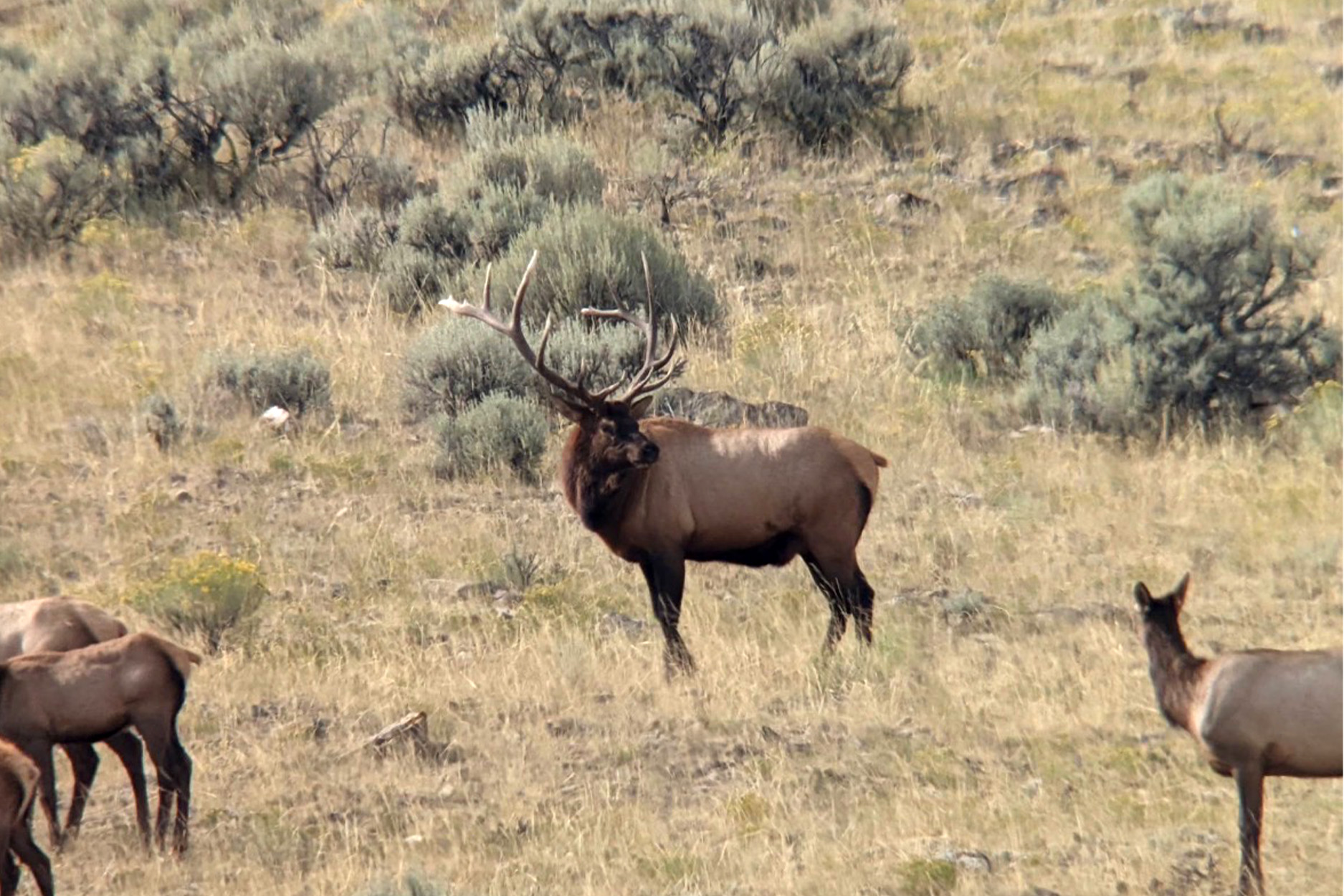
Another reason for the increase in elk tags at CSP is the need to balance those herds with other big game species. Chronic wasting disease is also a concern.
“This habitat is shared by a bison herd and other wildlife,” a spokesperson for CSP tells Outdoor Life. “We also have CWD within the park boundaries, and maintaining the elk herd at a little lower number than we previously have has been helpful in trying to manage the disease within the state park.”
Read Next: The Ultimate Guide to Elk Hunting
The 71,000-acre state park has long held an elk season for bulls. The state issued 10 archery tags and 25 firearm tags there in 2025. For 2026, those numbers will increase to 15 and 35, respectively. SDFWP will also be issuing 50 cow tags, which hasn’t been done in several years.
“We typically see 100% success in the general elk licenses,” SDGFP told Outdoor Life. “While the harvest success in antlerless elk has been a little bit different, ranging anywhere from 20% to 90% success whenever we’ve done it in the past, so hopefully it will all make a dent.”