
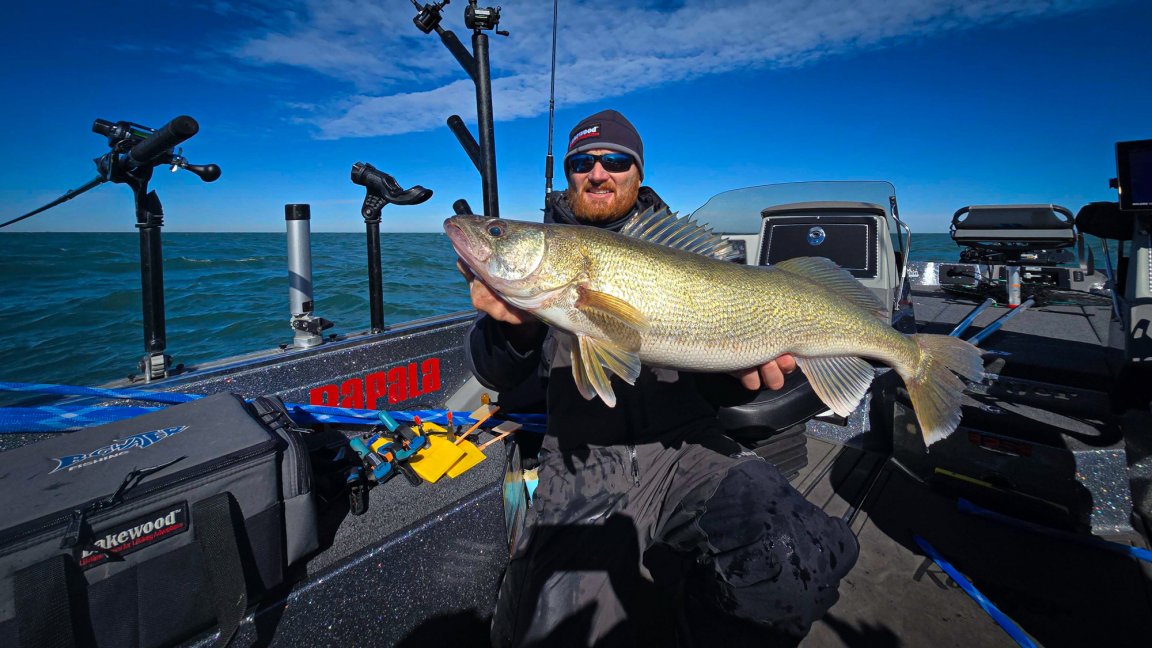
As Forrest Gump famously said, “life is like a box of chocolates.” The cute analogy also applies to many fisheries in the late winter and very early spring, and walleyes are no exception. You just never know what you’re going to get — a few more weeks of safe ice, your very first crack at open water, or, in the event of an abnormally warm winter, fear of missing out?
My friend Captain Ross Robertson makes his living chasing walleyes on Lake Erie out of Port Clinton, Ohio, 365 days a year. He never takes a break, which means he has decades of experience dealing with this transitional period that often throws you big curveballs. The truth, however, is that there is no better time to hook big numbers of massive walleye than late March and early April. But success revolves around being able to quickly adapt to changing conditions. No matter what you’re experiencing on your home lake this year, Robertson has the secret sauce.
Listen to this week’s episode of the Quick Strike Podcast on Apple, Spotify, or wherever you get your podcasts.
Scenario 1: There’s Still Safe Ice
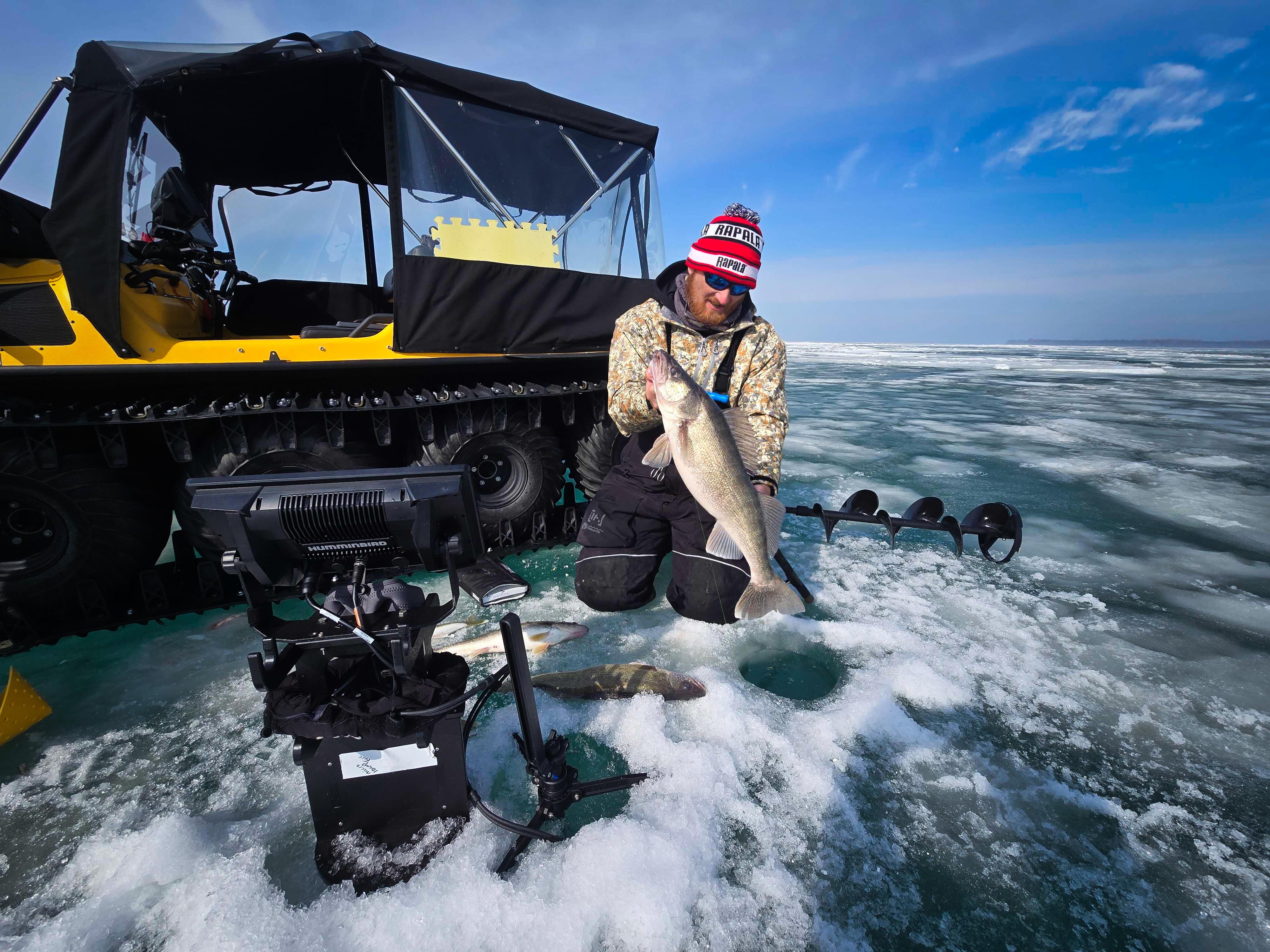
Given how cold it’s been this winter, there’s a chance that the ice will still be plenty thick in the very early spring, especially if you live in the northern part of the country. And you may have already been having a stellar hardwater season. What you may notice, however, is that as things begin to warm up, the fishing gets tricky. What worked in January may not be the ticket now. That’s because — despite the lake still being locked up — the fish are altering their behavior.
“If you’re on the Great Lakes in late March, you have to assume this fish are going to be spawning within 14 days,” says Robertson. “The water is often very clear, and now the fish are coming out of hibernation, if you will, and they’re moving around putting the feedbag on. So, if I’m still on ice this time of year, I’m leaning hard on lures with loud rattles.”
More from Robertson: The Best Walleye Lures, Tested and Reviewed
Robertson calls out the Silver Streak Rattle Streak Spoon as his first choice, and notes that with fish on the move, a loud bait is key to draw them in from a distance. More importantly, he also suspends a simple jig on a second rod in the same hole. Robertson says it’s not uncommon to draw a big fish in with a rattle spoon that may be hesitant to bite, but the dead-sticked jig sitting there doing nothing provides a secondary target for the fish and often makes the final play.
Scenario 2: The Ice Just Came Off
When the ice is thick, it’s easy to trick yourself into thinking it will take an eternity for it to go away. But that’s simply not the case. Even feet of ice can break up quickly as temperatures rise. In fact, years ago I planned an open water trip with Robertson and just days before the ramp was still frozen. He wasn’t sure if we’d get out, but the ice cleared 48 hours before I arrived, and we were treated to some of the most exceptional walleye fishing I’ve ever experienced.
“What a lot of guys do in those first few days of ice out is fish like the ice is still there,” Robertson says. “They target the same locations, use Spot-Lock to stay in place, and fish vertically. I’ve even seen guys bring their ice fishing flashers out on the boat. This method can work well, but I prefer to cover more water.”
Robertson trolls crankbaits like a Rapala Husky Jerk, but the key is moving painfully slow. He leans on his trolling motor — not a kicker motor — to creep along at speeds close to one mile per hour. Though the fish may be on the move, they may not be aggressive enough to smack fast-moving lures, so this style of trolling provides a slower presentation similar to what you’d want on the ice but allows him to cover a wider swath of water until he finds a pile of fish.
Scenario 3: It Was an Abnormally Warm Winter
We already know this wasn’t the case in the winter of 2025-2026, but it does happen from time to time, even around the Great Lakes. In March, many boats are still winterized in backyards, and it’s not uncommon for anglers to think that, despite the early warm up, the fish will wait until April to get into their spawning patterns. But Robertson says that’s not the case.
Read Next: Never Fillet Bluegills Again, Use This Method Instead
“The larger the body of water, and the larger the walleye population, the more a very early spring will affect the fish,” he says. “But the key thing to understand is that the biggest fish spawn first. There’s data to back that up. Trophy-class fish are just going to spawn whenever the conditions make them think, ‘hey, I feel good with this.’ The bigger fish especially won’t care about the calendar.”
The point Robertson is making is that if you believe you won’t miss out if you wait until early April to start fishing, you’re both right and wrong. Yes, the bulk of the walleyes may hold off despite the abnormally early warm up, but you could be missing out on peak time for the giants. The only way to capitalize is to be flexible — if long term forecasts are showing a major, warming trend in late February or early March and the ice is off, don’t wait around. Get the boat ready and go.