
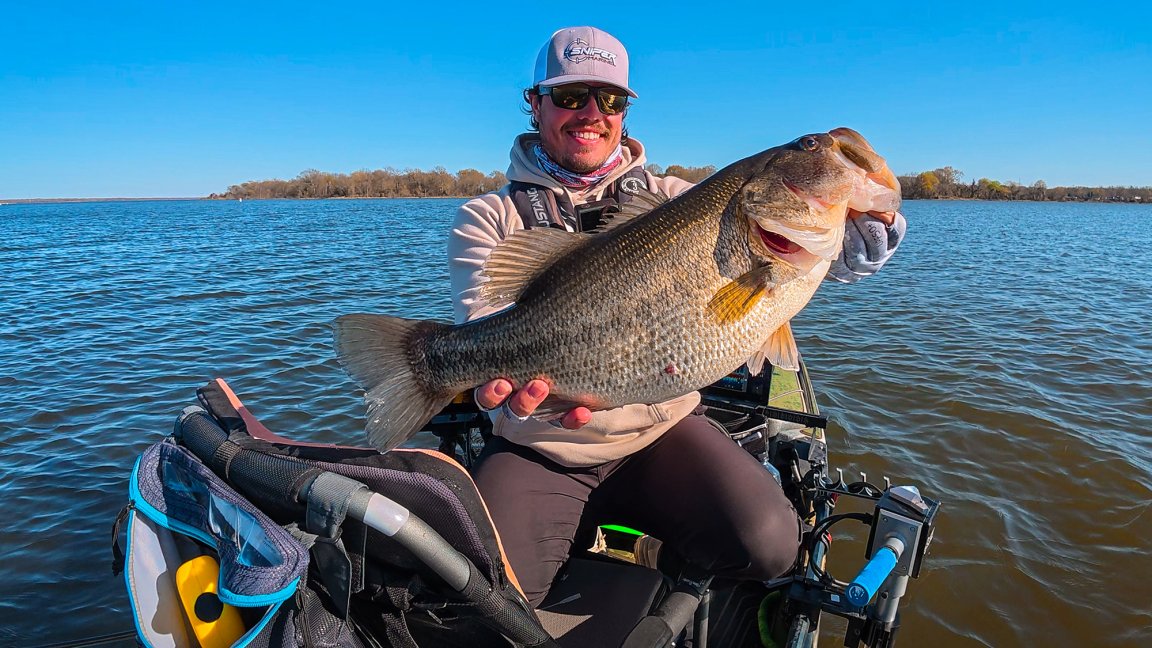
The number of anglers fishing from kayaks nowadays compared to just 20 years ago is staggering. And a key reason there’s been such a spike is because two decades ago, specialized fishing kayaks were just starting to gain momentum. Since then, we’ve come a long way in technology, propulsion, and stability. Today, fishing kayaks are (mostly) still more affordable than buying a big boat, provide access to hard-to-reach-waters, and have opened loads of opportunity to shore-bound anglers. A byproduct of this has been a boom in the popularity of kayak fishing tournaments.
Bailey Eigbrett is the host of the “Serious Angler” podcast and a seasoned kayak tourney angler. In fact, he competes at the highest level within the B.A.S.S. circuit, which has only had a kayak division for six years. Of course, you might not be ready to jump in at that tier, but every year there are more and more local tourneys popping up on bass lakes and rivers. So, if you’re feeling competitive and think you’re ready to put your skills to the test, some pointers from Eigbrett can give you an advantage.
Listen to this week’s episode of Quick Strike on Apple, Spotify, or wherever you get your podcasts.
The Calculation
Although kayaks — particularly those with pedal drive and electric motors — allow you to cover more water than just splashing with a paddle, these vessels will never be bass boats with a couple hundred ponies on the back. With that in mind, Eigbrett says what trips up many kayak anglers is time management. You simply can’t make long runs in short amounts of time, which is why having a solid plan before tournament day is critical. Much of that plan revolves around Mother Nature.
“First foremost, you’re competing against the weather,” he says. “On a big body of water especially, you need to be constantly checking weather forecasts, wind directions, things like that regarding the places you want to fish and know that there are going to be certain days where you’re not going to be able to get there. So, you have to be very calculated. You can fish in three footers in a bass boat, but not a kayak.”
Related: The Best Fishing Kayaks Under $1,000
Eigbrett says everything you do will be based on conditions, which is why it’s wise during practice days or if you’re pre-fishing to establish likely areas to fish based on a multitude of wind directions. Ask yourself: Which areas will be easily accessible and shelter if the wind is out of the east, south, and so on? You also have to factor in if conditions will change. You might be able to cover three miles in the morning when it’s calm, but if the wind is coming up at lunch, it could be a nasty — and very time consuming — return trip.
The Organization
Modern kayaks allow you to carry a fair amount of gear, but not quite as much as a bass boat full of rod lockers and storage compartments. So, learning how to edit yourself in the tackle department if you’re fishing from a kayak is essential. For Eigbrett, that means focusing in on what he believes his most likely path to success will be on any body of water.
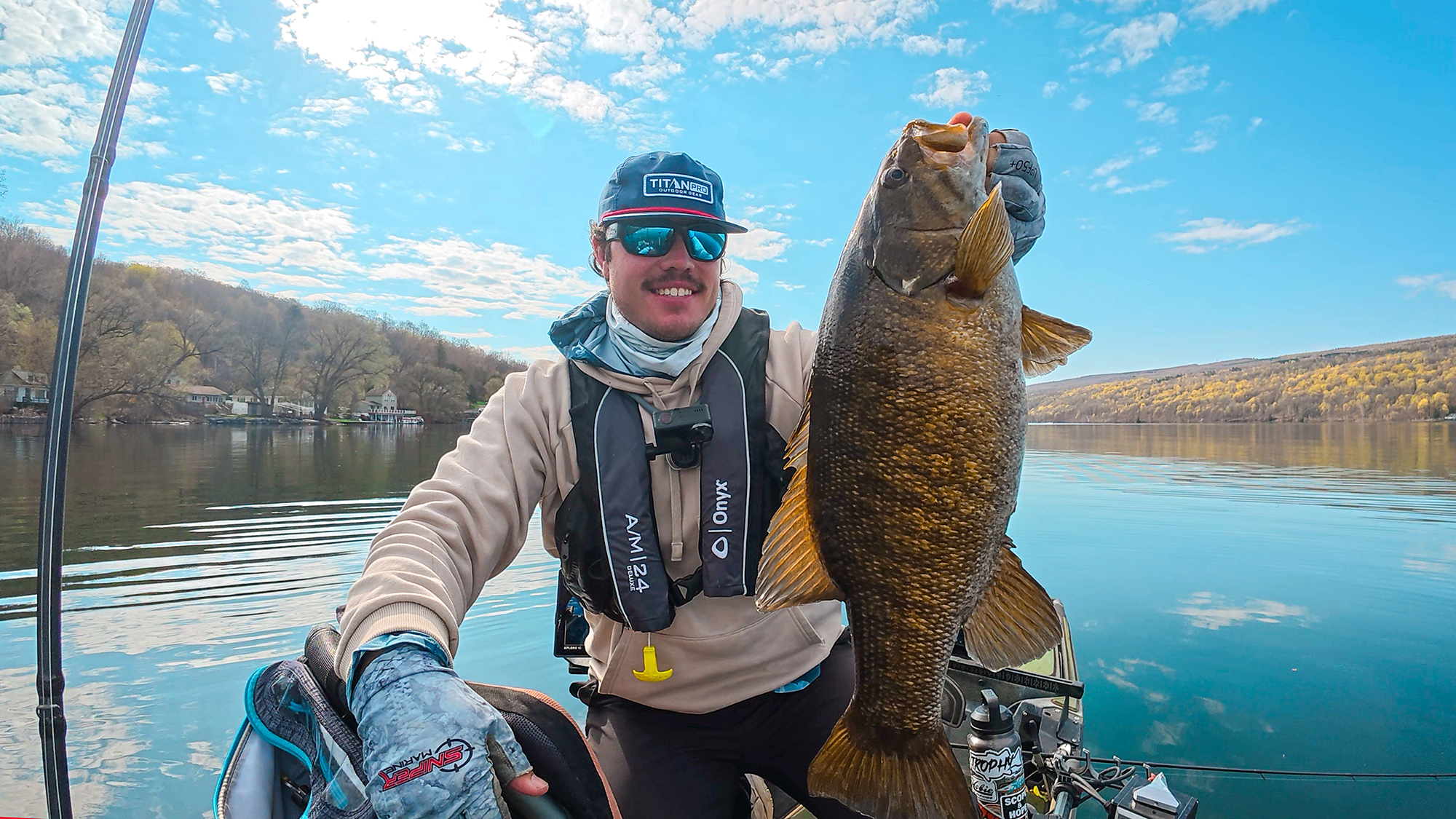
“I travel with just as much tackle as you’d find on a bass boat, but it’s in my truck,” he says. “So, what I’ve done over the past two years now is I have a couple spare tackle boxes that I use that are basically my day bags. The night before, I’m adding just the essentials to those based on the exact spot I’m going to fish first. But because you’re allowed to hitch up and re-launch during most tournaments, I’m also going to have anything else I need in terms of tackle ready to go in the truck if something different is required for the next spot I drive to.”
Related: The Only 8 Lures You Need to Catch Fish, Anywhere
Eigbrett points out that in some cases, he packs almost nothing. As an example, if he knows he’s going to be doing nothing but throwing frogs all day, those are all he brings, along with a spare spool of braid. It can take some time and experience to comfortably whittle down your stash for an event but carrying too many lure boxes and other gear you likely won’t even touch only weighs you down and creates more clutter on the kayak.
The Winning Strategy
So, what’s Eigbrett’s strategy for winning a tournament? Fish where there are winning fish. It sounds obvious — and applies to any tournament — but many newcomers to the scene try to put themselves in areas where there are lots of fish. Those places, however, are not necessarily where you’ll find heavy winning fish, and since we’ve already established that travel is slower on a kayak and time is of the essence, Eigbrett suggests not spending too much time in areas with numbers if those fish aren’t big enough to produce the right bag.
“During practice, I try to go to a community hole just to get a beat on what’s happening,” he says. “That’s where I can gauge how the fish are behaving, where they’re setting up, and so on. And from there, I know they’re staging off secondary points to get into spawning pockets or whatever the case may be. This helps me better decide where I should be during competition, which I’m hoping is a quieter area with perhaps fewer but bigger bass setting up the same way.”
Eigbrett also tries to avoid any areas that he knows will get a lot of pressure from kayak anglers even when there’s no tournament going on. It’s also worth looking to see if there have been any other recent tournaments. Pouring over the results can help you determine where the fish have been most pressured, as well as give you a preliminary idea of a pattern.