
We may earn revenue from the products available on this page and participate in affiliate programs. Learn More ›
When it comes to bass fishing baits, the Slither Rig is the latest craze on social media. Half flipping bait, half saltwater spoon, this setup certainly raises an eyebrow at first glance. But when an urchin is the most effective lure for catching a bass, who’s to say a saltwater spoon couldn’t work, too? So I set out to try this new contraption, and here’s what I found.
What Is the Slither Rig, and How Does It Work?
Recommended Gear for the Slither Rig
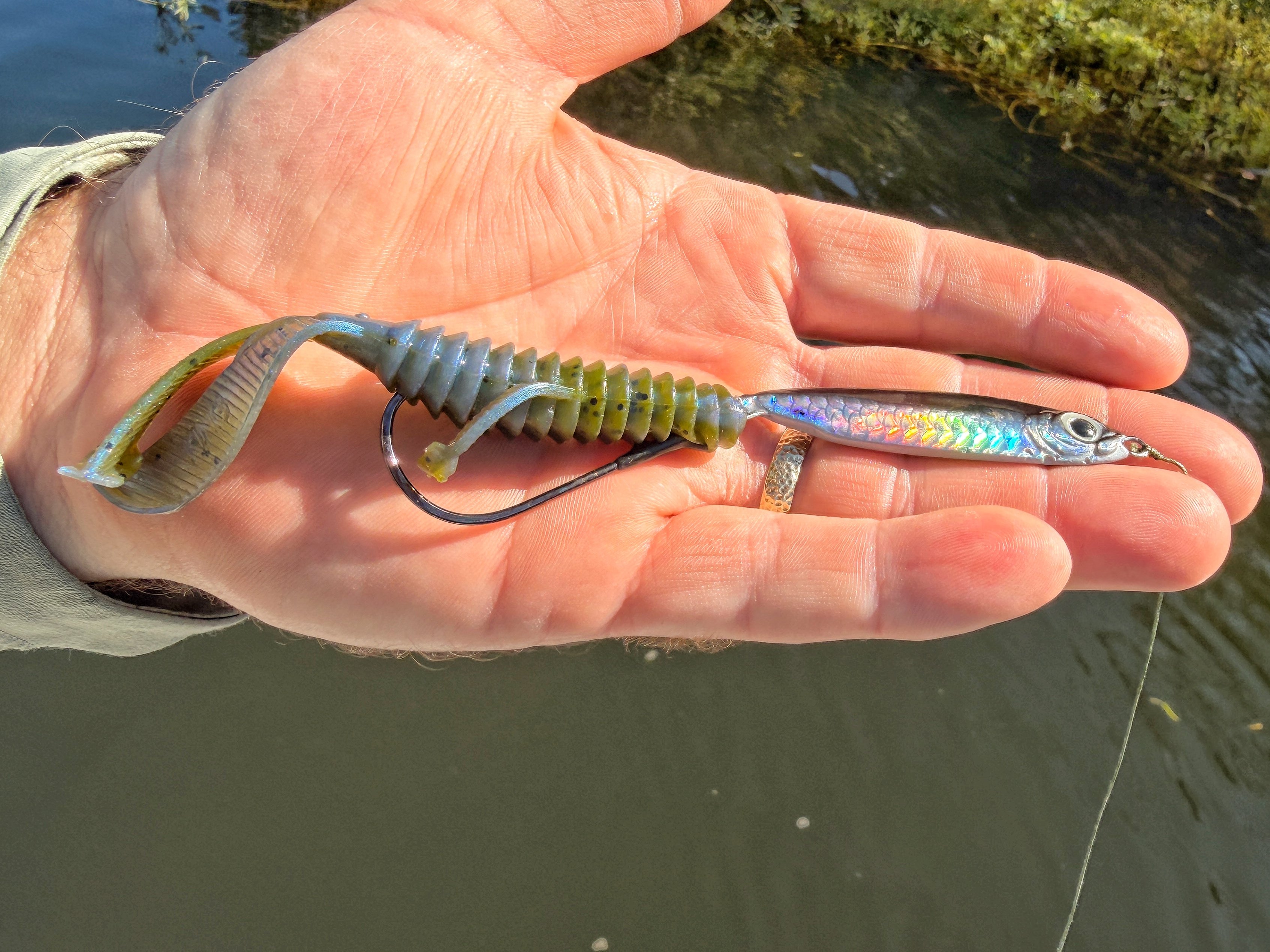
- Hook: 4/0 VMC Heavy Duty Flippin Hook
- Spoon: 1-ounce Saltwater Jigging Spoon
- Bait: Strike King Midsize Rage Bug
- Line: 65# Sufix 832 Braided Line Lo-Vis Green
- Reel: Lew’s Super Duty LFS Casting Reel 8.3:1
- Rod: 7’8” Extra Heavy/Fast Shimano Curado Casting Rod
The Slither Rig consists of three parts: a saltwater jigging spoon, a flipping hook, and a flipping bait. Any saltwater jigging spoon will do; I picked up a pack of five for about 12 bucks on Amazon. You’ll want the spoon to weigh at least an ounce, because you’ll essentially be using it as a flipping weight. Remove the hooks from the spoon and replace the back one with a 4/0 flipping hook. Then slide your soft-plastic bait onto the hook, rig it weedless, and you’re ready to go.
The idea behind the Slither Rig is that you replace the traditional bullet-style weight with a spoon and use the weight of that spoon to plunge your bait through thick vegetation. For this style of fishing, you’ll need an extra-heavy/fast flipping/punching rod that’s at least 7 feet, 8 inches long. Pair that rod with a reel with a 7:1 or higher gear ratio, and spool the combo with 65-pound or stronger braid.
Testing the Slither Rig on the Water

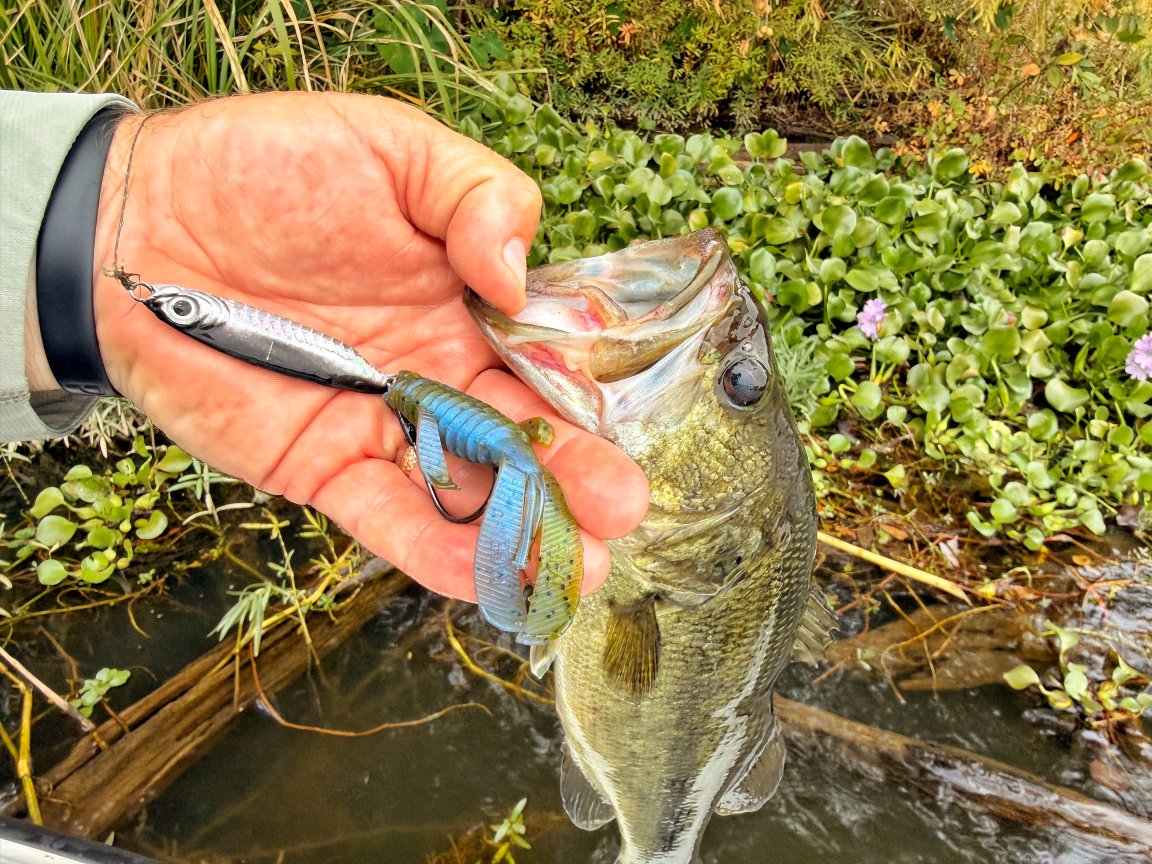
I fished the Slither Rig intermittently over the course of three trips, totaling six or seven hours with it. Toward the end of my testing, I finally got a couple of bites flipping thick gator grass and hyacinth mats. But up until that point, I found the Slither Rig to be more trouble than it was worth.
My biggest frustration with the Slither Rig was its inability to punch cleanly through the mat. Granted, I was only using a 1-ounce spoon in areas where I would typically use a 1 1/2-ounce tungsten weight. But this chunk of metal was already as long as my bait, so I didn’t want to go any bigger for fear of increasing the risk of a fish hitting the spoon and missing the bait carrying the hook. And I’m not sure it would have mattered anyway. The issue had less to do with the weight of the setup and more to do with the way it hinged in the middle.
Nine times out of ten, when I flipped the Slither Rig out, it would land flat on the cover and then bend in the middle, causing both the bait and the spoon to catch on the cover. It was like trying to push an already-sprung drywall anchor into a hole in the wall. The physics just didn’t work.
I found that I could flip the bait higher and get it to go through a little better, but the kerplunk of it smacking the mat was off-putting to me and no doubt disturbing to any bass sitting in the foot or two of water beneath the mats. So I was left with no option but to flip the bait onto the mat and then gently jiggle it until it fell through, which worked about a third of the time.
Final Verdict on the Slither Rig
Personally, I don’t see a situation in which the Slither Rig would ever be a better choice than a traditional punching setup. Yes, the spoon adds flash that could have some appeal in stained water, perhaps. But silver tungsten weights can do the same thing, and they punch through cover far more cleanly.
While I did manage to get a couple of bites on the Slither Rig, I have zero doubt that I could have caught more fish had I flipped a traditional pegged punching rig or Texas rig through all of the same areas, simply because I would have been able to present my bait to the bass better.
Is the Slither Rig legit? Practically speaking, no. You may see someone on facespace talking about how it’s the next big thing, but don’t let them fool you. While I did prove to myself that I could get bit on it, the mechanics of the setup just aren’t conducive to heavy cover. Consider this one debunked.