
We may earn revenue from the products available on this page and participate in affiliate programs. Learn More ›
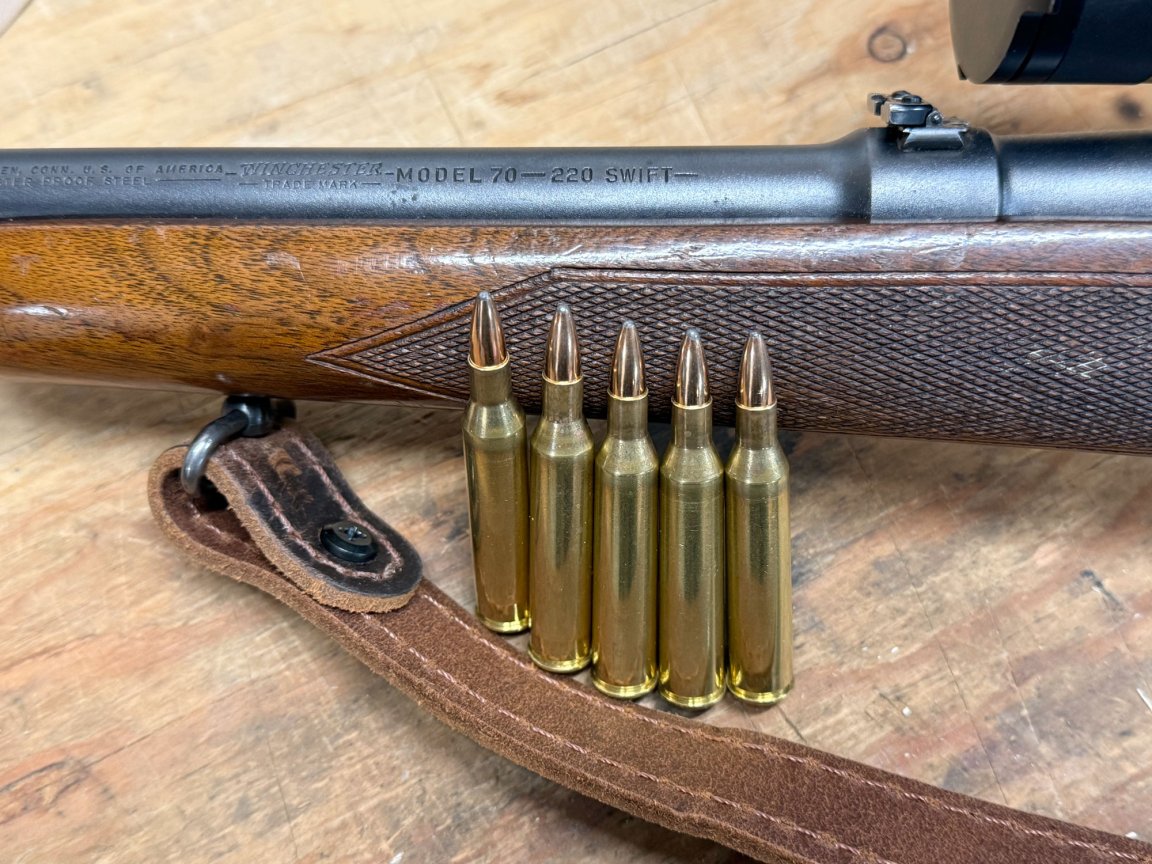
Many hunters who love older cartridges sometimes feel left behind. The firearms industry is humming away and, while we greatly appreciate the many advancements in cartridge and bullet design, cartridges that are steeped in history and nostalgia are slowly and steadily being discarded by the masses. We see new rounds firing highly efficient, heavy-for-caliber, bullets spun by tighter twist rates to deliver better speed downrange and cut the wind more effectively. But bullet development has also helped to elevate performance in older cartridges too. This winter, I bought a 1954 Winchester Model 70 chambered in .220 Swift — the favorite of legendary predator control agent and Outdoor Life Contributor Frank Glaser. While the gun shoots well with more traditional bullets, I’ve found that three newer designs help the 90-year-old cartridge perform even better.
McGuire Ballistics 34-grain Copper Rose
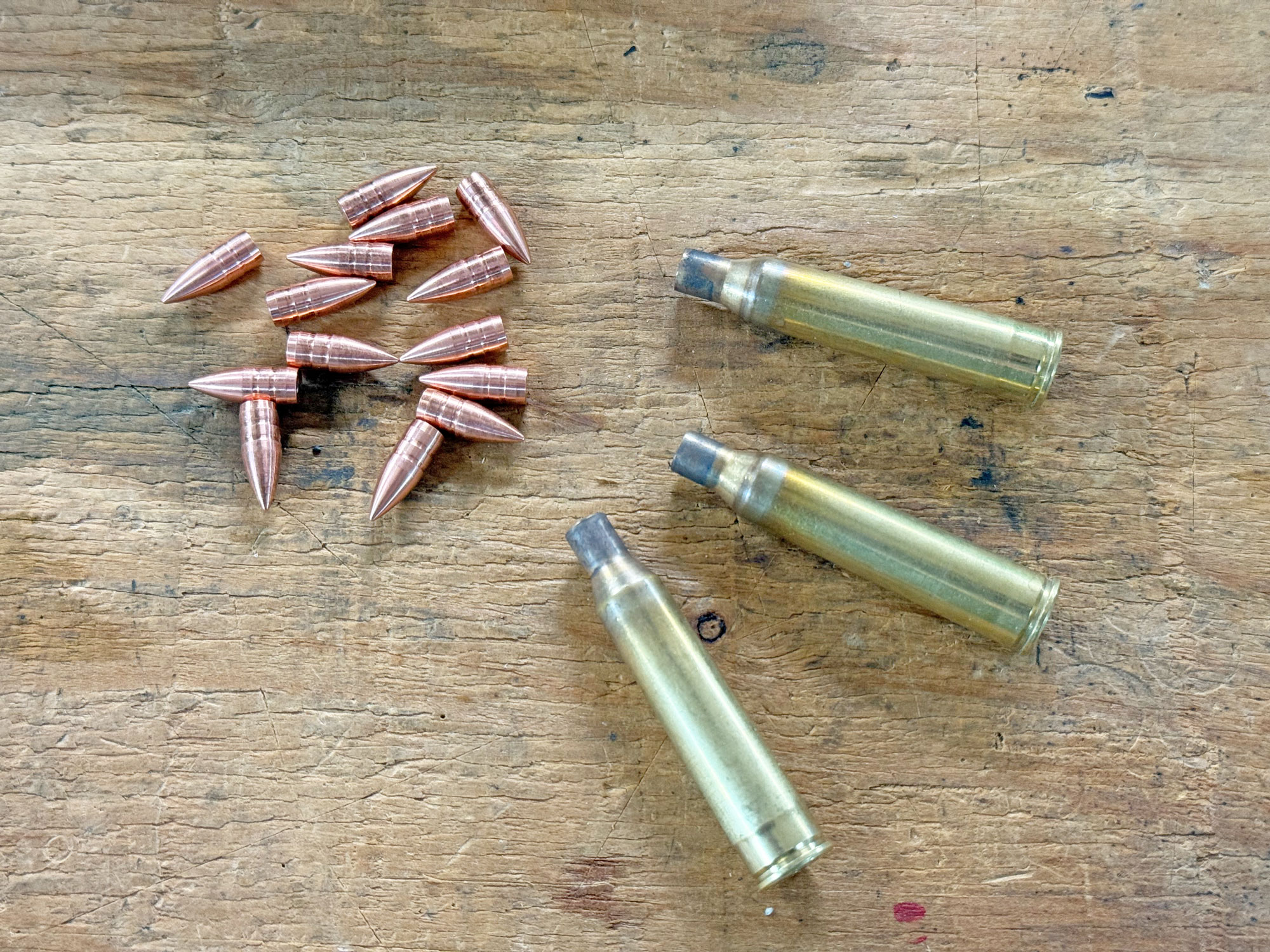
The challenge with many older chamberings, and their associated rifles, is twist rate. The most efficient modern bullets generally require tighter twist rates to stabilize. In the .224 bore, there are many great options that require a 1:7 twist to work well, but my old Swift has a 1:14-twist barrel. A few months back, when Sam McGuire told me he was working on prototype bullets, I quizzed him about making one of his rapidly expanding Copper Rose bullets for the 1:14 twist. His other .224 bullets, at 71 and 63 grains respectively, only work in 1:7 and 1:8 twist barrels.
The bullet Sam came up with, which is turning out to be a hit among .22/250 shooters too, weighs a meager 34 grains, but features the same internal cavity that initiates violent expansion and the solid base which penetrates deeply. After trying Varget and CFE223, I’ve settled on a load with IMR 8208 XBR which produces a muzzle velocity of 4,500 fps from the old gun’s 26-inch barrel.
As I observed in ballistics gel, this tiny little bullet penetrates about an inch before expanding dramatically, sending copper shards forward in a cone shape. In a block of Clear Ballistics gel, these shards ended up in a 4.5-inch-diameter pattern 6 inches deep. The base passed through the 16-inch block. Considering that this gel is much more dense than lung tissue, it’s safe to say that no deer shot in the ribs with this bullet would make it very far.

Speer 55-grain Gold Dot
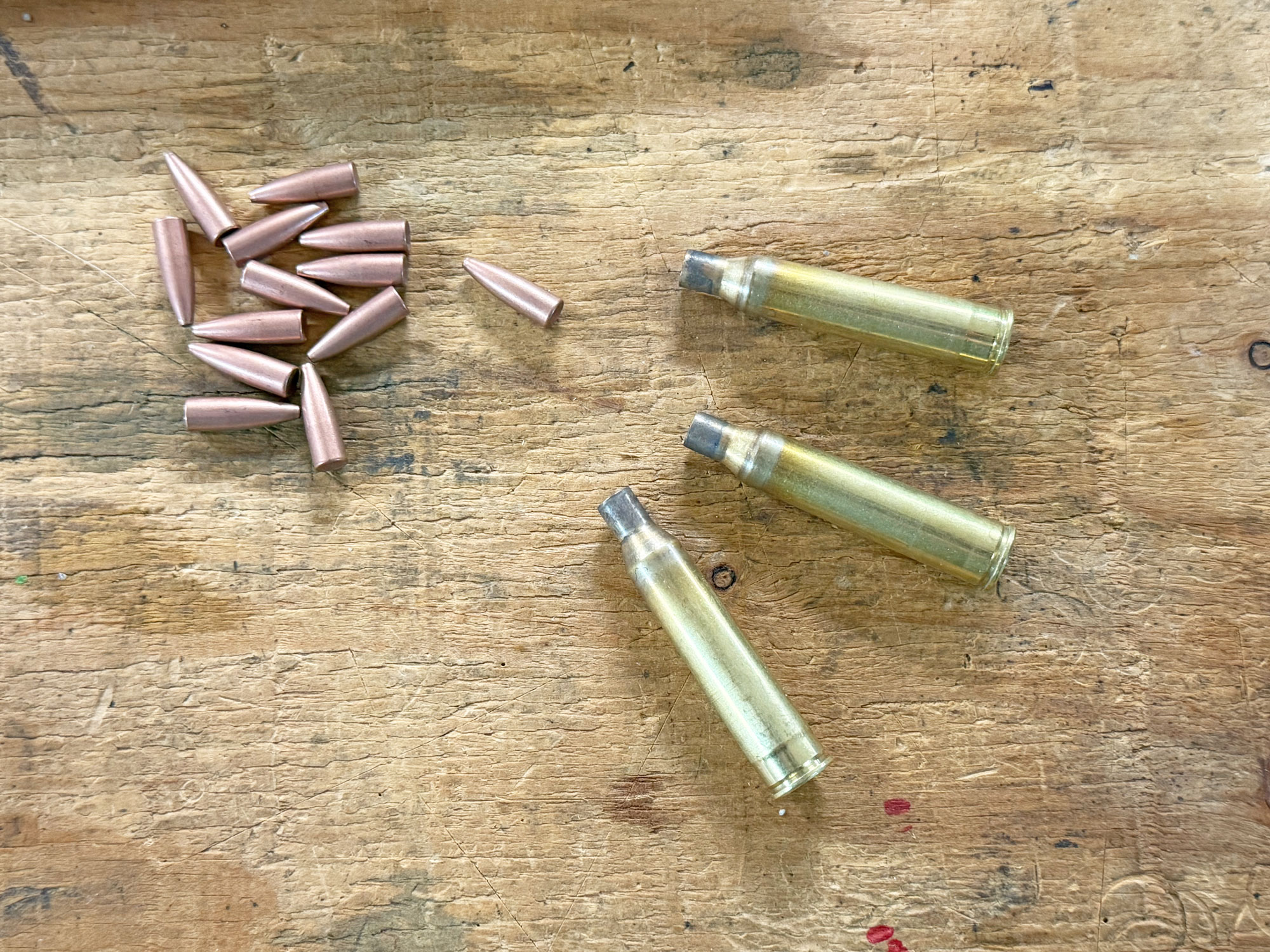
Most 1:12-twist or 1:14-twist .220 Swift rifles will only be able to shoot 55- or 60-grain bullets accurately. Mine only shoots some 55-grain bullets well and others don’t stabilize well in the cold. For anyone who’s nervous about a traditional cup-and-core bullet when using the Swift on deer-sized game, the Speer 55-grain Gold Dot is an excellent option. In my rifle, charged with StaBall Match powder, these top out at about 3,550 to 3,600 fps. Some powders deliver better velocity, but this was most accurate. In ballistics gel, the Gold Dot, which is a bonded bullet, maintains more of its mass, expanding to a greater diameter. The main portion of the permanent wound cavity is longer than that of the 34-grain McGuire, but there are no significant shards peeling away from the bullet’s path. Penetration in ballistics gel was about 12 inches in my testing, but this bullet would likely pass through a deer-sized animal on most shots.

Hammer Bullets 44-grain Hammer Hunter
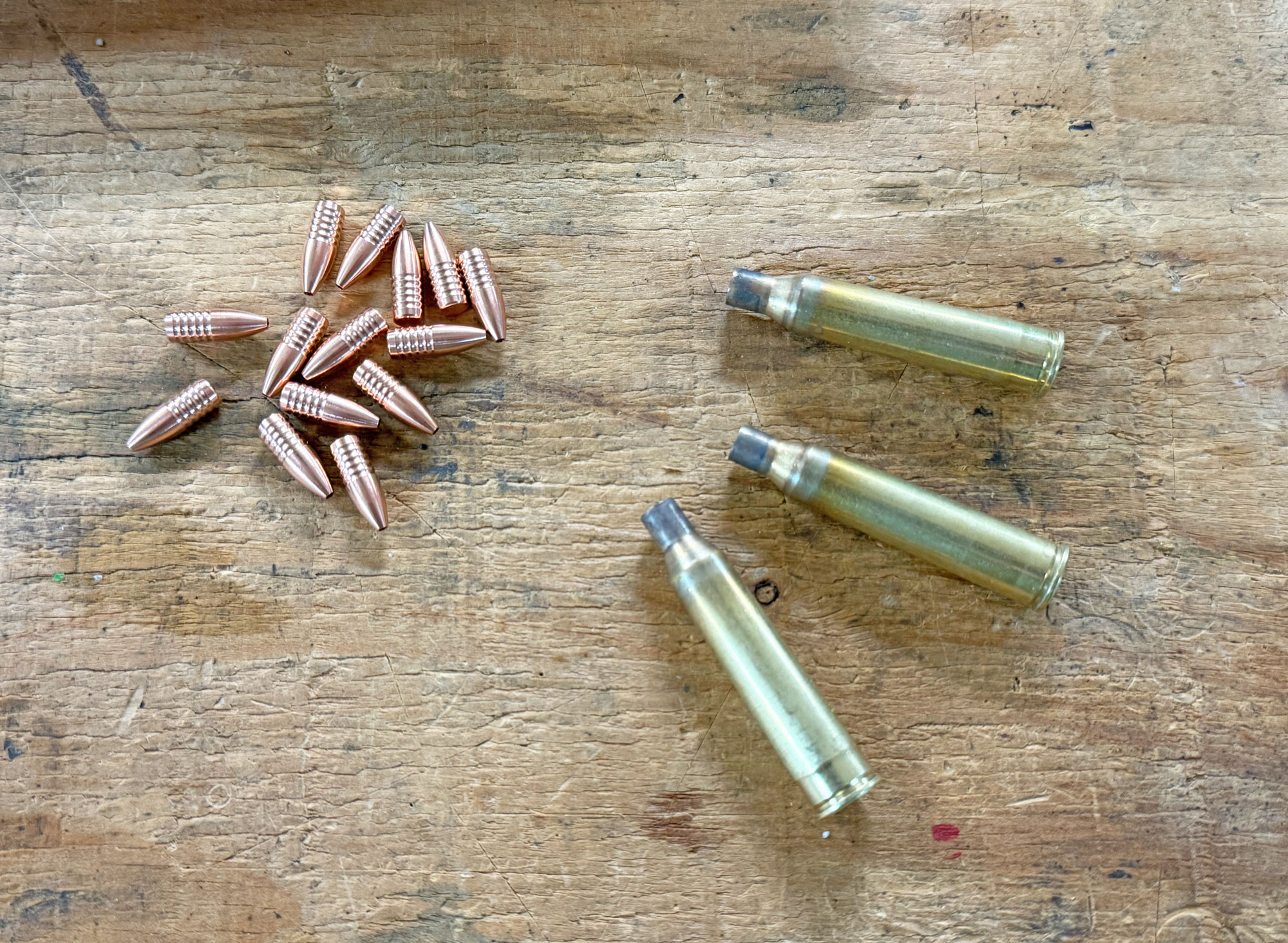
Hammer bullets is one of several companies making modern copper projectiles that are designed to expand violently in soft tissue, shed their petals, and have a base that continues penetrating. The 44-grain Hammer Hunter, Atop a load of StaBall Match, my Swift regularly prints 5-shot 1.25-inch groups, with the bullet leaving the muzzle at 4,116 fps. This 1:14-twist-rated bullet is also a great contender for the .22/250 and combines violent terminal performance with great penetration. Like the 34-grainer, these bullets do lose steam quickly, but inside 300 yards, they are laser beams.
Final Thoughts
It’s been a pleasure to breathe new life into this old gun with some modern bullets. And while not all of us give a rat’s ass about new cartridges, the proverbial crumbs at the table are some excellent newer bullets that work well in the classic cartridges that we want to keep alive.