
We may earn revenue from the products available on this page and participate in affiliate programs. Learn More ›
Marksmanship and riflecraft mean different things to different folks but, make no mistake, there’s never been a better time to be a rifle shooter. While there’s still no shortcut for developing true marksmanship skills, the tools we have today allow us to be more effective (and ethical) hunters than ever. As I’ve been hunting elk near the small town I grew up in, memories of my youth have been flooding back — along with a realization of just how far our shooting tools have come. When I got my start, a common setup would use a Harris bipod or some homemade shooting sticks, a 9x or 12x scope with a duplex reticle, and that’s about it. There were superb marksmen who did things the old-fashioned way, but several key tools, combined with shooting styles developed in the competition world, have elevated the precision and effectiveness of the everyday rifleman.
Rangefinding Binoculars and Ballistic Software
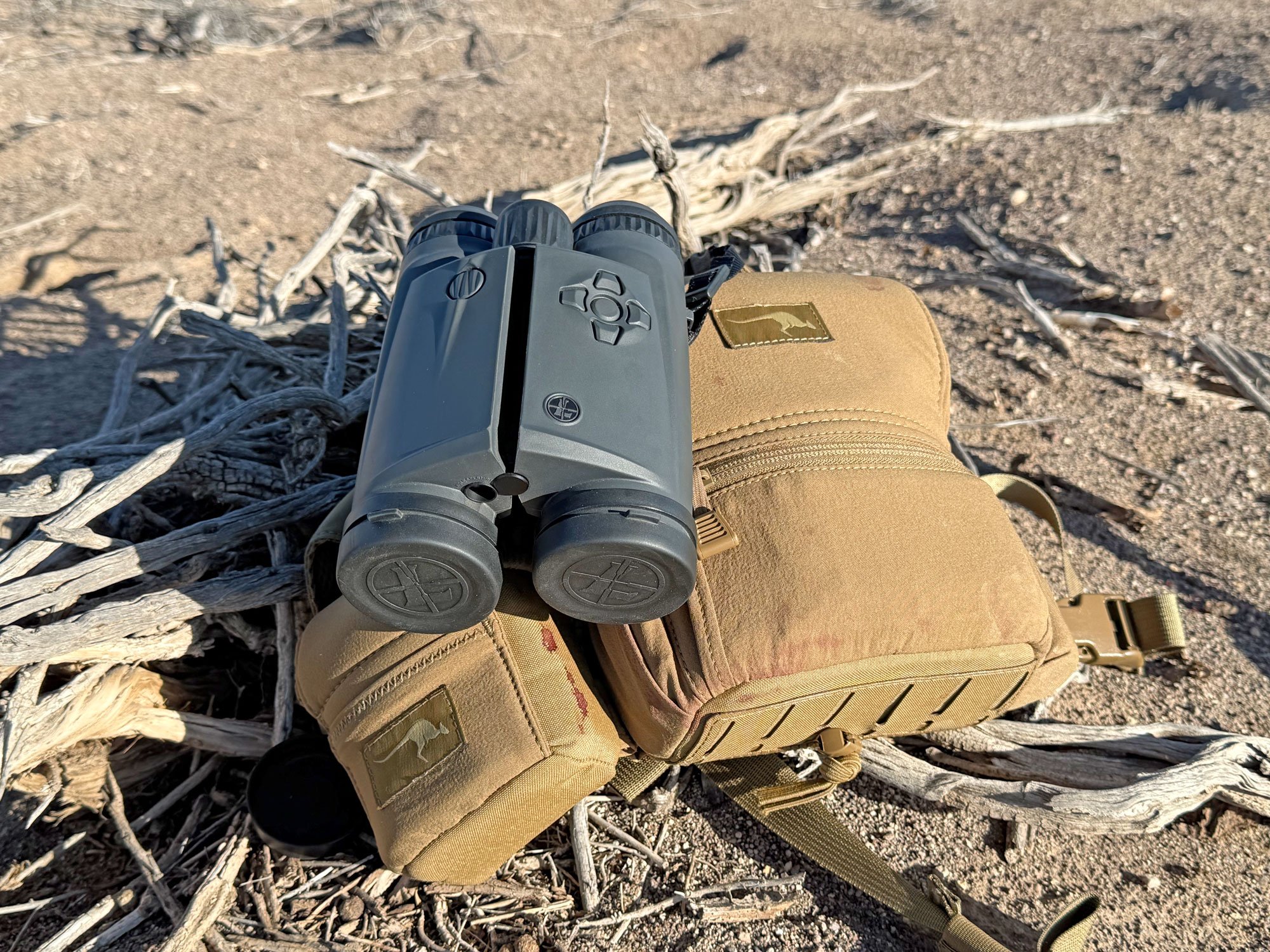
When I was a kid, I didn’t know anyone who had a rangefinder. Most hunters used some sort of MPBR-style zeroing method, estimated range, and let fly. This works pretty well at distances up to about 300 yards, but it’s often easy to misjudge ranges by more than 100 or 200 yards. Modern binoculars with laser rangefinders allow quick and precise ranging combined with a tool you’ll likely be carrying anyway. Even if you have no interest in shooting an animal beyond 300 yards, a precise range sets you up for success.

In recent years, numerous binoculars have begun to include both rangefinding capabilities and ballistic software with onboard environmental sensors. Rangefinding binos now give precise and nearly instantaneous feedback at incredible distances. When combined with modern ballistic software, binos like this will return a heads-up display giving you both elevation and windage holds. They are able to read environmental conditions like temperature, humidity, and density altitude — which is very important when hunting at 7,500 feet compared to my home at 400 feet of elevation.
These tools don’t take the place of practice, a reliable zero on your rifle, familiarity with your equipment, and good judgement. But they certainly help ensure you know more precisely where your bullet will impact before you fire, and give you the feedback to know when you shouldn’t shoot.
Pairing a good rangefinding binocular with a comfortable bino harness — another item that didn’t exist when I was young — allows a practiced shooter to quickly glass, spot, range, and engage targets. It also protects your glass from the elements. These days, I wouldn’t be caught dead using a traditional binocular sling.
Lightweight Shooting Bags
We’ve written a lot about shooting bags, and that’s for good reason. They are one of the most versatile shooting tools you can get. Sand bags have been used for decades as shooting rests, but were typically limited to static shooting ranges or applications. The growth of precision field shooting sports like PRS and NRL hunter has spawned all sorts of shooting bag designs that are versatile and practical for both competition and hunting.
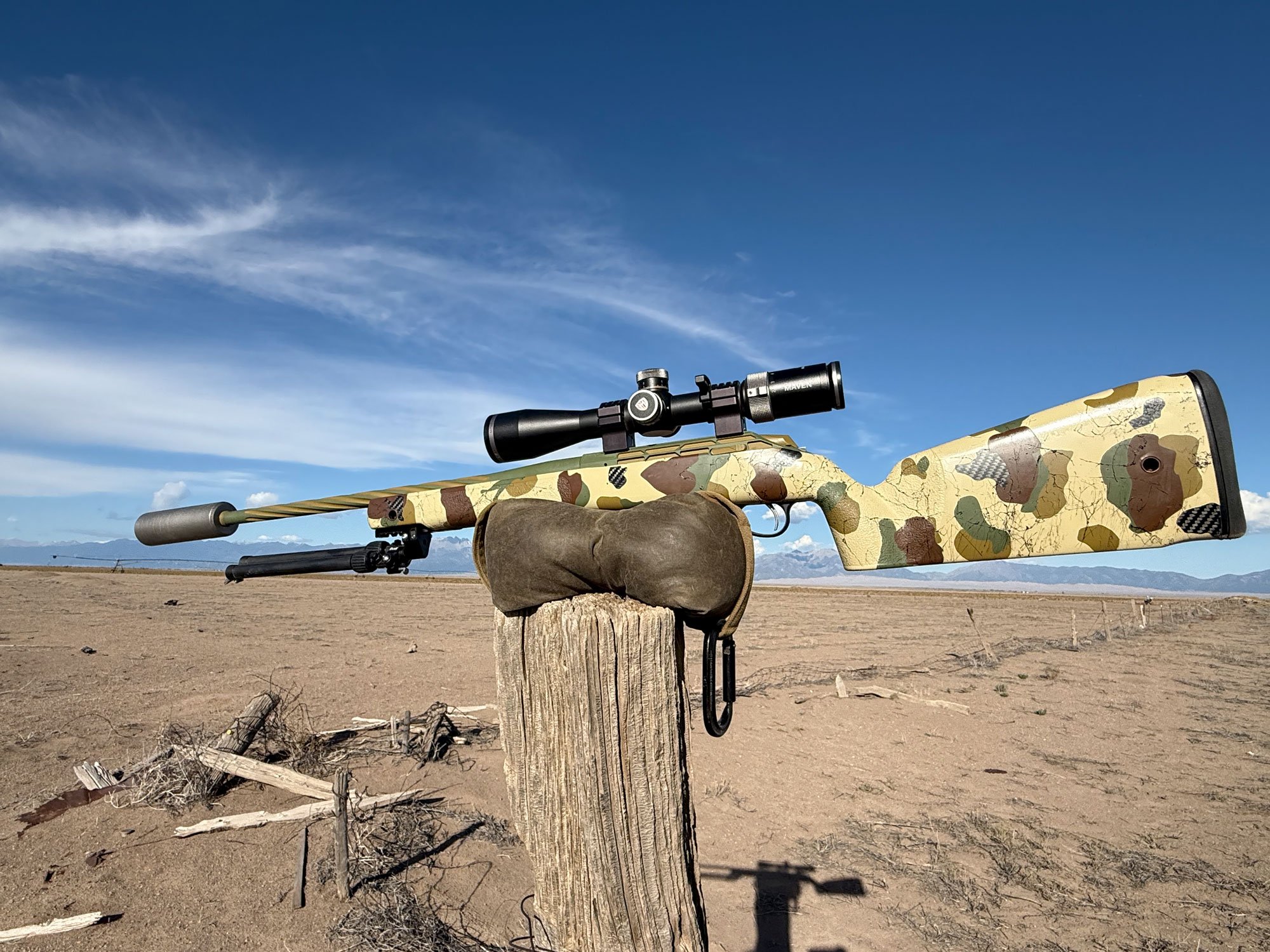
Shooting bags come in many different shapes, sizes, and are made for different applications. One of our all-time favorites is the Game Changer from Armageddon Gear. This style of bag is shaped to be used as a support on a wide variety of surfaces and, when filled with weather-impervious lightweight fill like Git-Lite, they are practical to carry anywhere — even on a backpack hunt for sheep. They can be used as a rear support in conjunction with a bipod, or as a standalone rest by “bagging” a rock, log, tree limb, or fence post.
A key to using shooting bags quickly and effectively is to practice position building and learn how your bag is best used in a given situation. With a Game Changer, you’d place it lengthwise on a flat side atop large rests like rocks or big logs, points down over medium-sized limbs or atop a wooden fencepost, and points up when resting on a thin horizontal support like a tree limb. Once you learn how your bag best fits these different shapes, you’ll be able to recognize potential shooting positions everywhere. Another key tip is to remove enough of the bag’s fill for it to be pliable and able to conform to any surface you need it to.
Bipods
Bipods aren’t new — there have been options for hunters for several decades now — but they are better than ever. In my teenage years I first used them for coyote hunting, which made an immediate difference in how many I hit versus educated. I even started carrying a Harris bipod for my sheep rifle back in 2007. In a game of ounces, I found the added stability for prone shots well worth the weight. Today, we have bipods for a wide variety of applications that offer extreme versatility. Where weight isn’t a factor, the MDT CKYE pod is tough to beat. For backpack hunting, I’ve been using both the Spartan Precision bipods and the new MDT Mountain Bipod, which is ultra light, convenient, and can accomplish a lot. More affordable options like the Tricer RP are light, very adaptable, and a solid value.
Any time you can realistically deploy a bipod, especially combined with rear support, it will give you the most stable position possible.
Shooting Tripods
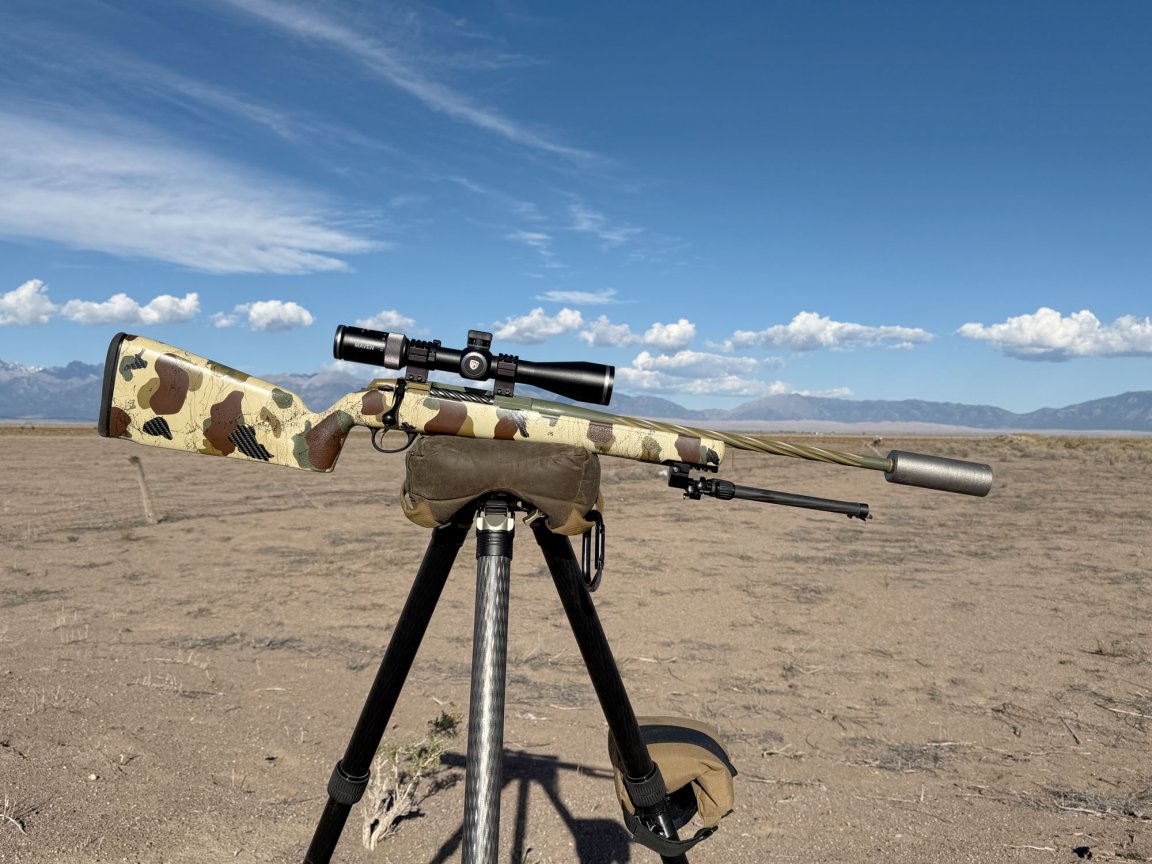
Tripods have been used for spotting scopes, cameras, and some shooting applications for a long time, but they’ve come into their own as a dedicated shooting support system. Many rifles now come with ARCA rails on the fore-end or handguard to facilitate clipping directly into the tripod head. Modern tripod ball heads are also equipped with levers for quick and smooth adjustment and locking.
Lots of shooters prefer to clip into the tripod directly, but many others — including myself — prefer to use a shooting bag atop the tripod for some added cushion. I find that I can reduce the wobble zone of my crosshairs by doing that. If you’re using an ultralight hunting tripod, you can usually use a Game Changer bag right over the top of the ball head. My favorite shooting tripod lately has been a heavy-duty carbon tripod with an apex ring from which I removed the entire ball head. This lightens the tripod dramatically, and my shooting bag fits perfectly atop the setup. I can comfortably shoot from a standing height at several hundred yards.
There is still innovation happening with tripods and accessories too. In competition, and now hunting, informed shooters will sometimes use a tripod leg as a rear support for their rifle in a kneeling or standing position. Any time you can support both the front and rear of the rifle, do it. Common practice is to use another support like a rock or tree limb, then hug one of the tripod legs, squeezing the buttstock against the leg with your support hand. This works well, but requires an additional support or a long bipod out front. A tool I recently got is called the Strong Hand, a 3D-printed shelf that fits over one of your tripod leg segments. With it, you can deploy the tripod, put a bag on the strong hand, then use another of the legs as rear support. It gives you both front and rear support from a single tripod while remaining quick and efficient and not requiring you to weave the rifle through the legs.
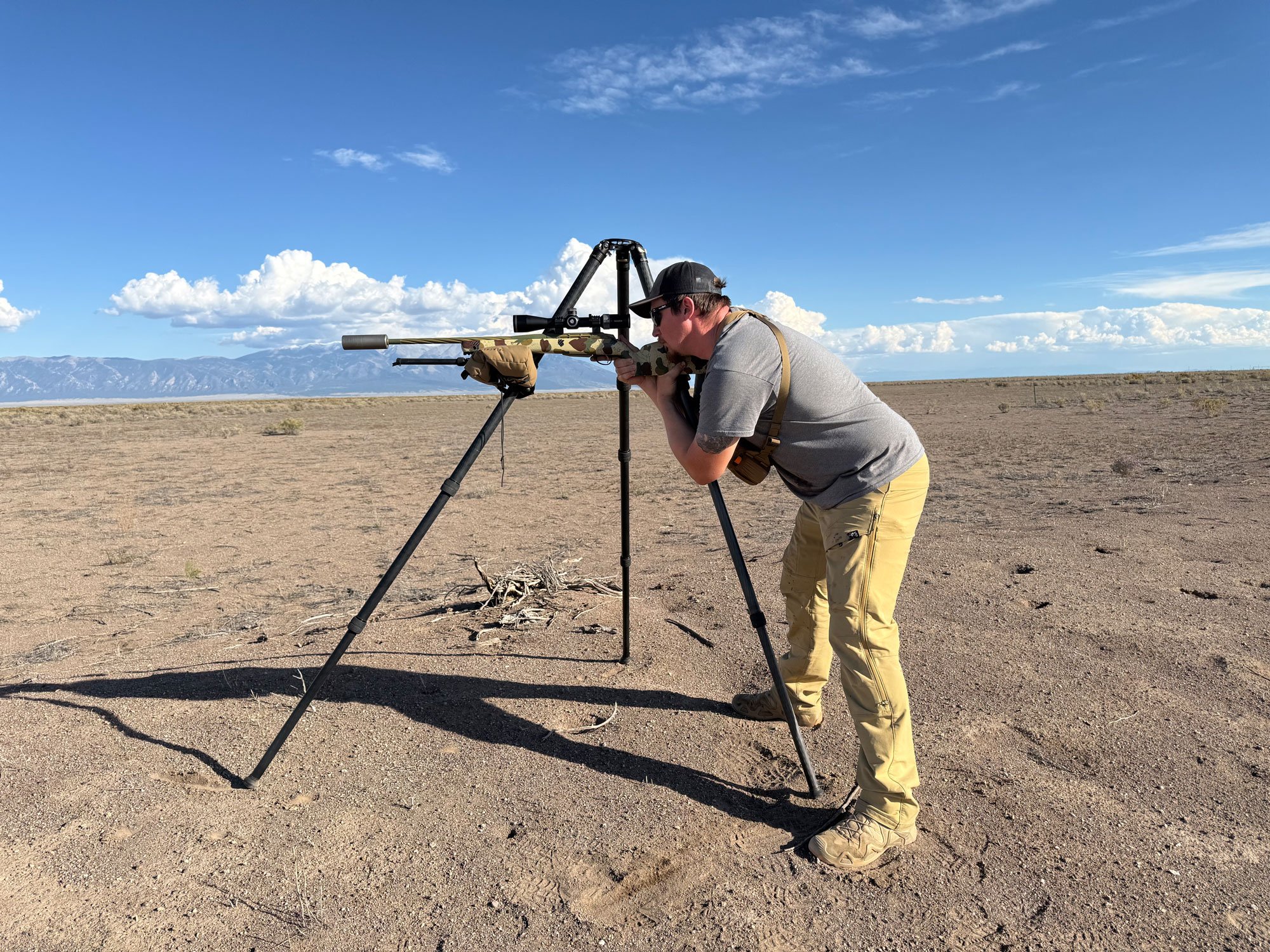
Like all the other tools mentioned here, you might be frustrated by them if you don’t invest the time to practice and use them quickly and efficiently. In both competition and the field, gear manipulation and deployment is one of the biggest keys to increasing both your precision and speed. You’ll likely find that when you’re comfortable with a shooting tripod, you spend less time setting up a shot than you would fighting a sub-par rest or breaking a clean unsupported shot.
First Focal Plane, MIL-Based Scopes
Traditional-styled SFP riflescopes certainly work fine for hunting, and many folks don’t need to change. However, first-focal plane scopes, which provide accurate subtensions at every magnification level do allow a higher level of precision and flexibility for both competitors and hunters who might be shooting 300 yards or more. Most SFP scopes that have a reticle with holdovers or windage hashes are only accurate at maximum magnification and, in many applications, you’re best off using slightly lower magnification levels, rendering those subtensions void. With a FFP scope, it doesn’t matter. The downside to some FFP scopes is that the reticles become very fine at lower magnification levels and can require illumination in dimmer light.
I’ve used SFP scopes for decades, and have certainly come to prefer FFP optics for the majority of my hunting applications. Along with mostly ditching SFP, I have lost any interest in using an MOA-based scope. In principle, there’s not a difference — both MOA and MILs are angular measurements— but in practice, the milliradian is a simpler, more intuitive, tenths-based system. On my 6mm Creedmoor, for example, it’s a bit easier to remember 0.9, 1.5, and 2.2 values , essentially in half-MIL increments, for 300, 400, and 500 yards than 3.1, 5.1, and 7.5 MOA. The system also makes for simpler, less busy reticles with more digestible values.
Suppressors
Technically, we’ve had access to suppressors for many decades. But it’s only in the past 20 years that the majority of hunters have become aware that we can even own them. It still wasn’t until the ATF form 4 process went digital that their popularity exploded. A suppressor is rapidly becoming standard kit for your hunting rifle, and they will likely see further regulatory reductions.
The benefits of a suppressor to a rifleman are twofold: they reduce the noise and blast of the shot from your rifle as well as the felt recoil. The noise reduction will certainly reduce wear and tear on your ears, and can help game remain calmer after the shot or provide a better opportunity for a follow-up shot if it’s needed.
The real benefits of a suppressor to the rifleman are its taming down of the blast and recoil — two of the most influential factors in both shot anticipation (flinching) and follow-through. We beat this subject to death because the less disrupted your position and concentration are through a shot, the better you will shoot. Period. Recoil management is no longer a measure of how much punishment you can take and still hit a paper plate. Rather, of how well you can drive a rifle and maintain both your concentration and sight picture.
Today, hunters have scores of excellent suppressors to choose from and, while some certainly have the opinion that they don’t want or need one of those ugly things on the end of their muzzle, I’ve yet to meet the person who spent some time shooting with one and said that.
Read Next: Yes, a Suppressor Can Make Your Rifle More Accurate
Final Thoughts
While you cannot substitute gear for practice and expect a good outcome, the tools we have today can absolutely help you become a more efficient and accurate rifleman. We tend to look at the past through rose-colored glasses and might be tempted to think that folks were just better shots in the old days. For the most part, they weren’t. Utilizing modern tools doesn’t mean that you can shoot at unreasonable distances, but it also doesn’t mean that you won’t benefit from using one or more of them.