
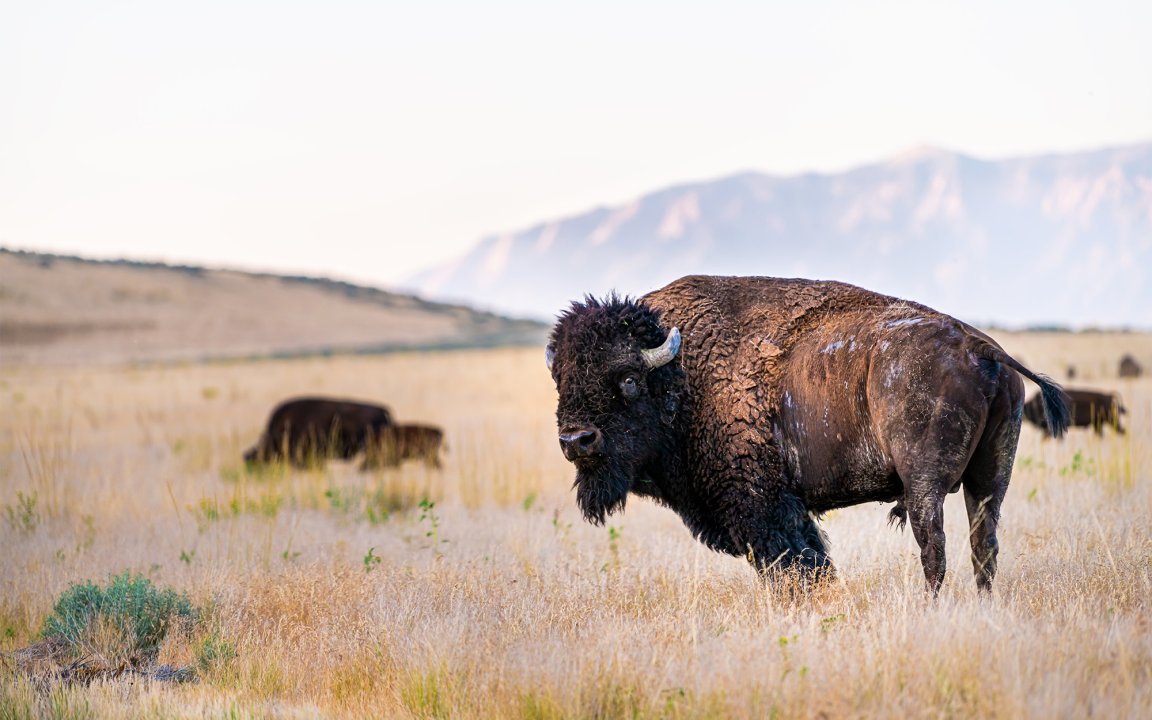
Eight months after a new bison hunt in Utah was approved for 2026, the opportunity is now off the table for 2027. That’s because pneumonia has ravaged the herd. The Utah Division of Wildlife Resources is reporting a significant bison die-off in late July; almost 40 percent of the wild, free-ranging adult bison are dead in one of two Book Cliffs bison hunting units.
“In 20 years of GPS collaring bison in the Book Cliffs area, this kind of die-off event has never occurred in Utah,” Rusty Robinson, UDWR once-in-a-lifetime species coordinator, said in the emergency notice. “Bison have had incredible survival rates since we began researching and monitoring them, and this kind of event is unlike anything our state biologists have ever witnessed.”
Because of the unexpected casualties in the Book Cliffs Bitter Creek unit, the Utah Wildlife Board voted Aug. 20 to offer hunters the option to surrender their bison permits, which are incredibly difficult to draw. Hunters who decide not to hunt the Book Cliffs Bitter Creek unit this fall will have their bonus points reinstated plus receive an additional point. They’ll also be refunded fees paid and their once-in-a-lifetime waiting period will be waived.
“Obviously it’s devastating,” Faith Heaton-Jolly, UDWR spokesperson tells Outdoor Life. “We proposed emergency changes to the hunt because some of those people have been waiting years and years to get these permits. We wanted to give them options because the herd is not what it was when they drew the permit.”
Sixteen of the 41 collared bison in the Bitter Creek unit died between July 29 and August 14. Most of them were cows. Their collars started transmitting mortality signals, which raised a red flag for biologists. Necropsies on six of the carcasses determined bacterial pneumonia as the cause.
“This particular strain mostly impacts cattle and bison and it is usually found in their airway,” Heaton-Jolly says. “One of the pathogens we detected in the tests is common in bighorn sheep, but transmission between bighorn sheep and bison would be highly unlikely.”
The Book Cliffs, named for their resemblance to shelved books, are a sandstone range of remote, tribal and public lands near Vernal in northeastern Utah. This landscape is home to about 400 bison spread across two hunting units sectioned by roaded and roadless areas.
The infected Bitter Creek unit herd (which is in a roaded area) has about 90 adults still alive. They are near the so-far uninfected Little Creek/South unit herd (which is a roadless area). The agency is monitoring both herds closely.
“Typically we don’t relocate bison,” Heaton-Jolly says. “The plan for now is just to not hold a cow hunt on this unit for the next few years. That will help them continue to grow and recover. Beyond that, we’ll have to wait and evaluate what the herd does.”
In December, the Utah Wildlife Board raised the Book Cliffs bison herd population objective from 450 wintering adults to 650 and approved a new cow bison hunt. That cow hunt will still happen this November for those who already drew a permit and don’t want to waive it. But the hunt is now canceled for 2027 in order to help the population recover from the current decline.
Archery hunters already in the field for bison in August were alerted of the die-off, but no changes were made to their season since it’s already underway.
Utah has two of the few wild, free-ranging bison herds left in the Lower 48: the Book Cliffs and Henry Mountains herds. Yellowstone National Park hosts the most important and largest herd in the U.S. at 5,300 animals in 2025. While the park population can fluctuate, it hasn’t experienced extinction followed by reintroduction like in other places around the country.
Yellowstone bison are not hunted in the park, but there is a closely regulated hunt for animals that migrate beyond the park’s boundaries. Bison herds in Utah’s Book Cliffs and Henry Mountains are hunted by draw as a once-in-a-lifetime species. In 2025 about 15,000 resident hunters applied for available 117 tags, and 8,258 nonresident hunters applied for 12 available tags.
More Cow Elk Tags Available
On the flipside, drought conditions have pushed the state to offer more cow elk tags in certain units. This is an effort to prevent habitat damage in areas with limited feed and in areas that are over their elk population objectives. The Utah Wildlife Board approved 450 additional antlerless elk permits in certain units during the 2026 hunting season.
“Ongoing drought conditions have reduced the available amount of feed for wildlife in these areas,” DWR Big Game Coordinator Mike Wardle said in a press statement. “Issuing additional antlerless permits will help redistribute the elk in these areas, which will reduce the pressure and possible competition for limited forage.”
These permits will be distributed to hunters through an alternate draw list generated for each individual hunt and more information will be available on the DWR website.