
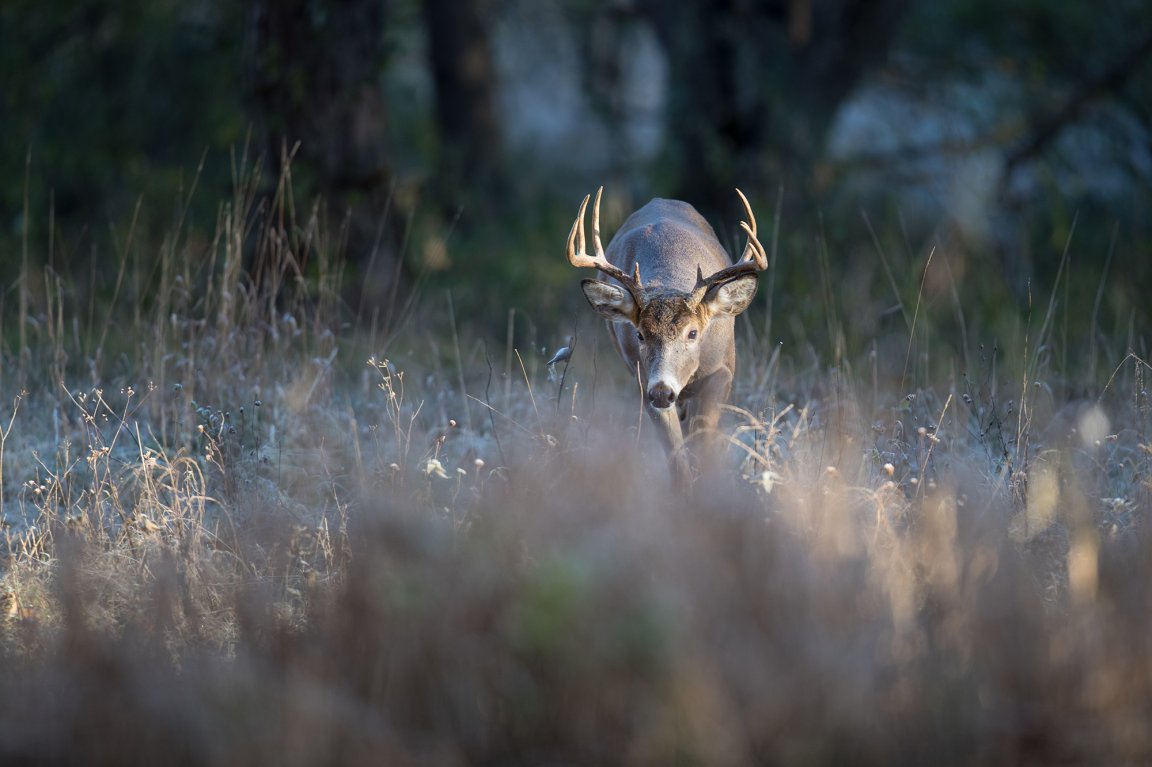
Most of what you’ve read about deer drives is not true. And the maps that you’ve seen published, with arrows indicating the directions deer will travel when pushed by drivers, bear little resemblance to real-life situations in today’s deer woods. As a result, I’d be willing to bet this week’s grocery money that the traditional, worn-out driving tactics you and your partners are currently using are largely ineffective.
In the least, the rather standardized deer drives so prevalent among today’s whitetail hunters don’t have much relevance when it comes to taking big bucks that have become programmed to react to drive situations in an entirely different manner than naive younger deer. In short, today’s big deer are panic-proof, and that means they’re not likely to get up and flee directly away from a conventional drive line.
Yet it took the unraveling of some unforeseen events one year for my own group of hunters to realize just how often mature bucks had undoubtedly been making fools of us.
These events took place in southern Ohio, where it’s common for small groups of hunters to stage drives all day, every day. Only a small percentage of hunters in this area patiently sit in tree stands and still fewer attempt still hunting. Making drives is the name of the game, and the driving typically begins at first light in the morning and continues until evening dusk settles in.
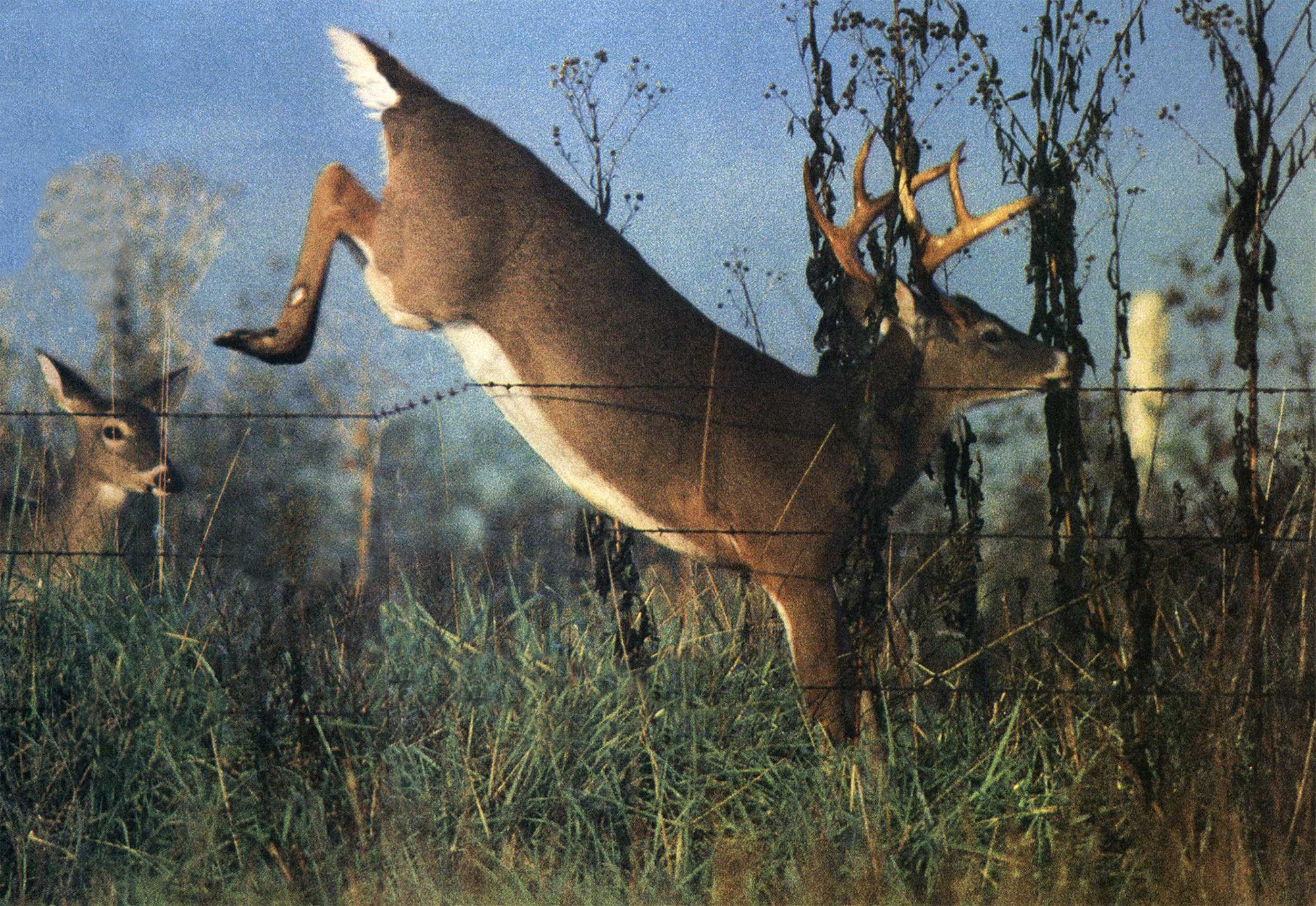
Well, as it happened one day, the six of us planned the logistics for 14 different drives, and by early afternoon we had attached our tags to one doe and two small bucks. Trouble was, by that time we had also completed all 14 drives. Because we didn’t have permission to hunt on adjacent lands, there were only two alternatives: Quit for the day, or return to the location of the first drive that we had staged that morning and begin driving each cover a second time.
With our standers in place, the spread-out drive line began working through the cover exactly as had been the case earlier. However, after he had progressed only about one-third of the way through the cover being driven, Tom Tomlinson popped a bootlace, requiring him to squat down to initiate a repair. It only took a few minutes, but in the meantime the drive line had advanced more than a hundred yards, leaving Tomlinson far behind.

When the hunter finally stood and took only a few short steps, he heard a slight rustling in the leaves behind him and a quick glance revealed a splendid eight-point buck slinking along in a head-lowered, sway-backed posture. Probably more by spontaneous reflex than conscious effort, Tomlinson snapped off a quick shot at almost point blank range, and the deer went down in a heap.
As Tomlinson admired his buck, he considered the hairy situation that might have presented itself had the buck jumped up in front of instead of behind him, because that would have required shooting in the direction of his departing friends—which is absolutely verboten. Right then he realized the importance of every hunter exercising the utmost restraint when it comes to staging drives to always ensure safe shooting at close range, at fully identified targets, and with no intervening cover even partially blocking the gunner’s view.
When the group later rejoined for a confab to discuss the unusual happening, voiced opinions differed widely. Several hunters speculated that the buck had moved into the cover sometime after we had driven the location earlier that morning, but this opinion didn’t account for the buck somehow being behind the drive line during the second attempt to push the cover.
Finally we came to a consensus that the big deer had been there all along and that he had simply refused to leave his chosen security cover, preferring instead to repeatedly circle and dodge any human intruders.
About then, Tomlinson stated his future intentions. “Next time we hunt together,” he said, “I’d like to volunteer to be on the drive line all day. And I hope you don’t mind if I occasionally lag behind a bit!”
Of course, Tom Tomlinson is only one of many hunters who have recently begun to accept the tenet that, aside from hunting scrapes during the rutting period, enacting forced movement is just about the only way to take truly big bucks.
The reason why is because most big bucks become nocturnal in their behavior due to conditions that tend to inhibit their daytime activities. Common examples of conditions that suppress daytime movements include the existence of a full moon (which allows for safer nighttime feeding), strong daytime winds, unseasonably warm temperatures and hunting pressure. Whenever one or more of these conditions exist—a situation that occurs more often than not—maintaining a vigil on stand is futile, with drives being the most viable alternative.
Obviously, the key to the success of any drive is learning how to predict the most likely escape routes the animals will attempt to use. Yet what most hunters fail to understand, especially if the terrain being driven is relatively large, is that though immature deer will likely vacate the premises posthaste, mature bucks probably won’t come out at all.
Big bucks are extremely security conscious. Moreover, they select their hiding places with craft and cunning and seem to instinctively know that rising from their beds and exposing themselves to full view increases their vulnerability. Consequently, when a hunter filters through a big buck’s area, the buck will quite often lower his chin right down onto the ground and then not even blink!
Georgia deer biologist Larry Marchington once told me about a time he was hiking through a wooded area on a routine survey of habitat types when he spotted a whitetail buck bedded in a brushy thicket. The buck quickly lowered his head, and Larry decided to have some fun by attempting to get as close as possible to the animal.
Read Next: Best Lever Action Rifles
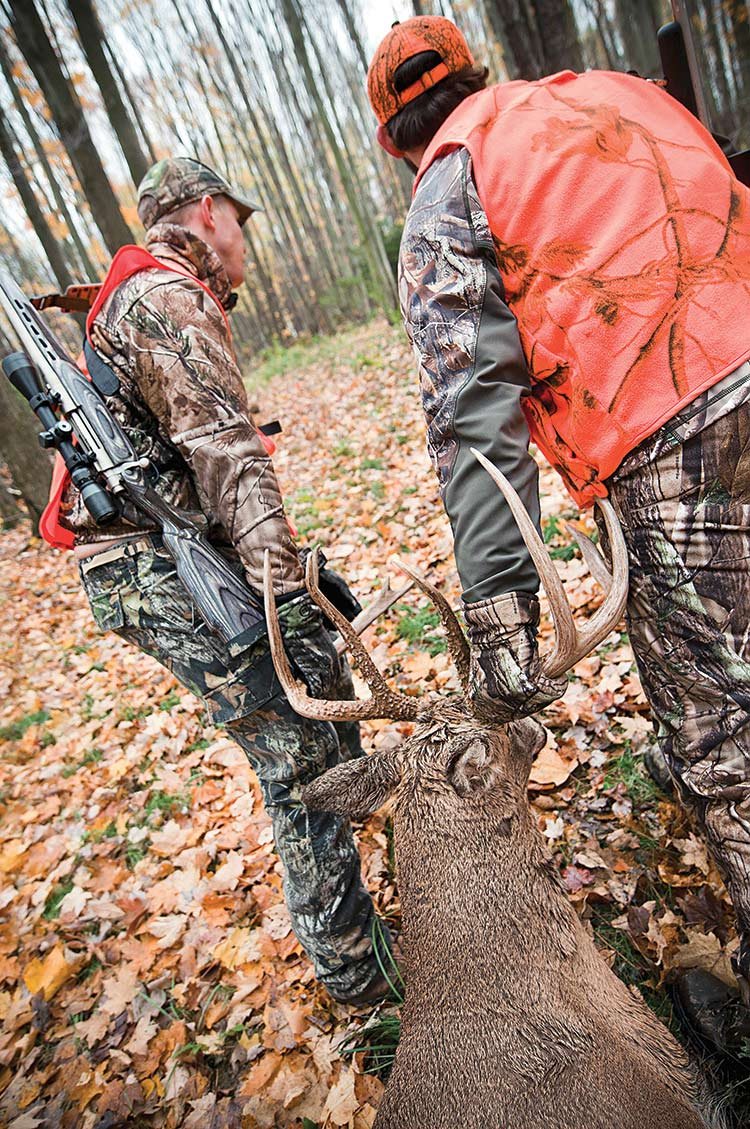
“I made no pretense about my intentions,” Larry explained, “and simply began walking straight toward the animal. He was facing in a quartering-away direction, and I got so close that I could have reached out with a stick and prodded the buck in the rump, but he never budged an inch. Finally I walked around him in a semicircle in order to directly face him. Only after we eventually made eye contact with each other from only scant feet away did the buck explode out of the cover like he’d been scalded!”
Recurring incidents like this make me wonder how many times each year hunters walk right past huge bucks. Therefore, after a drive has been concluded, if members of your group have reason to believe that there is still a buck in the cover somewhere, there’s only one thing to do. Drive the cover a second time, or even a third, until the buck is either routed out or everyone is convinced that he wasn’t there in the first place.
Yet don’t make the mistake of driving the cover in the same manner the second time, because the only thing that this will accomplish is to educate the deer in that particular area. Try something different, such as driving the cover in the opposite direction, with your standers placed in the vicinity of where the drivers started out the first time.
Take a plantation of thick pines, for example. This type of cover offers a buck a myriad of hiding possibilities, and if your drivers repeatedly approach from the west, it won’t take very long for all of the deer in residence to learn from the experience.
Therefore, good advice the second time you drive the pines would be for the drivers to approach from the south, the next time from the east, and so on. That way, especially if you are the lucky beneficiaries of windy weather, the deer will remain totally confused and not know which direction to expect danger from. Nor will they ever know either the surest escape route to take to avoid blundering into hunters on stand, or the intended travel routes of the drivers.
In going back to my friend Tom Tomlinson and how he had to credit a broken bootlace in the successful taking of a nice buck, it’s now a standard practice for every member of our drive line to make a fishhook pattern. This strategy capitalizes upon a wary buck’s preference to hide rather than run.
Draw upon your own gut-level instincts, for example, and imagine yourself trying to elude someone in a jungle. If your pursuer passed close by but you knew that you were well concealed, chances are you’d hunker down and freeze. Later, after that person had passed and continued on for some distance, you’d undoubtedly reason “this spot is no longer safe.” Then you’d probably begin sneaking in the opposite direction to increase the distance separating you and your adversary while simultaneously looking for a new and better hiding place where you wouldn’t again have to risk such a close confrontation.
A whitetail buck behaves much the same by first holding tight in his bed, allowing the driver to pass, and then rising to his feet in an attempt to slip out the back door. Because he is so closely tied to his chosen security cover, it’s not likely that the buck will leave the region entirely. Yet he will indeed feel his safety has been jeopardized and that it’s time to relocate his bed a slight distance away but still in the same immediate area.
It was understanding this behavioral trait of whitetails that prompted Tomlinson to invent his novel fishhook drive. For the purposes of illustration, imagine a brushy riverbottom thicket. One or two hunters have been placed on stand along the far edge of the thicket several hundred yards from the drivers. At the near edge, two hunters enter the thicket and begin a routine drive, making their presence well-known by carrying on a casual conversation as they work their way through the cover.
However, instead of the drivers actually proceeding all of the way through the length of the thicket to where their partners are stationed on stand, they only travel perhaps two-thirds of the way through the thicket and then reverse their line of travel and ever so quietly begin sneak-hunting in the opposite direction toward their starting points. Naturally, they both wear bright-orange safety clothing and always keep track of each other’s location.
Quite often, one of the drivers will have an almost ridiculously easy, close-range shot at a buck slipping away. But here’s what makes this drive so super-effective. Any buck that initially stayed put until the drivers had passed and then began slinking away in the opposite direction will invariably find a new place to quickly bed back down. If one of the drivers does not get a shot when the buck is on his feet, the buck will predictably hold tight in his bed once again when the drivers approach during the course of making their fishhook pattern. Then, when the drivers pass the second time, the buck will again rise from his bed and begin moving away from the drivers; this will take him squarely in the direction where the stand hunters are waiting!
A similar technique is known as “back standing,” in which hunters are placed on stand both ahead of and behind the drive line, with the drivers purposely spreading themselves far apart to actually encourage deer to slip back between them so that the rearmost stand hunters may have shots. Here again, it is imperative that all participants keep close tabs upon their partners’ whereabouts to avoid any possibility of risky shooting.
The intriguing thing about the fishhook drive is that it can be counted upon to produce bucks even on crowded public hunting lands. There have even been several instances in which our group has seen hunters piling into trucks shortly after they had just completed a drive somewhere, has stopped to briefly chat with them, and has then driven the same exact cover and taken a buck that had cleverly eluded the first drive party.
However, one thing that we’ve noticed about the fishhook drive is that it works best in level-terrain situations and especially if the hunting party is relatively small and only if two or three individuals are able to act as drivers.
If the group is small but is hunting in hill country, a still better drive strategy is one that I learned in Tennessee from John Marcks. He dubbed his innovation “the diagonal shift.”
“We rarely have enough hunters in our group to place several on stands and designate still others as drivers,” Marcks explained, “so we don’t use hunters on stand at all.”
If you were to have a bird’s-eye view of a diagonal shift drive, it would look like a line of individuals marching up and across the crest of a ridge, down through the next hollow, up the opposite facing slope, down the next and so on. The most obvious feature of the drive line, however, is that it is not straight but angular, like the longest leg of a right triangle. Thereby, the lead hunter at the forward end of the drive line may be as much as several hundred yards ahead of the trailing hunter at the opposite end of the drive line.
What makes this strategy so productive is that when a buck holds tight until a driver has passed and then rises from his bed and begins sneaking in the opposite direction, the deer has no idea that he might be skulking right into the lap of another driver trailing behind the first.
Moreover, this tactic is a very safe way to stage a drive because due to the way in which the drivers are staggered diagonally across the rolling terrain, a hunter presented with a shot can shoot straight ahead or straight back or to his immediate right or left—assuming that he knows that another driver isn’t directly in front of or in back of him and that the hunter “ahead” of him hasn’t lagged behind, nor the hunter “behind” him speeded up. (In a conventional drive, shooting in any direction other than behind the driver would be very unsafe because of standers placed up ahead and other drivers lined up to one’s right and left.)
A few other tips also are in order when it comes to driving today’s well-educated bucks. I’ve been describing how panic-proof bucks generally prefer to hold tight in their beds rather than make like jackrabbits and head for the next county. But this usually only applies to bucks in large, unbroken tracts of real estate where the animals have plenty of room to circle and dodge intruders.
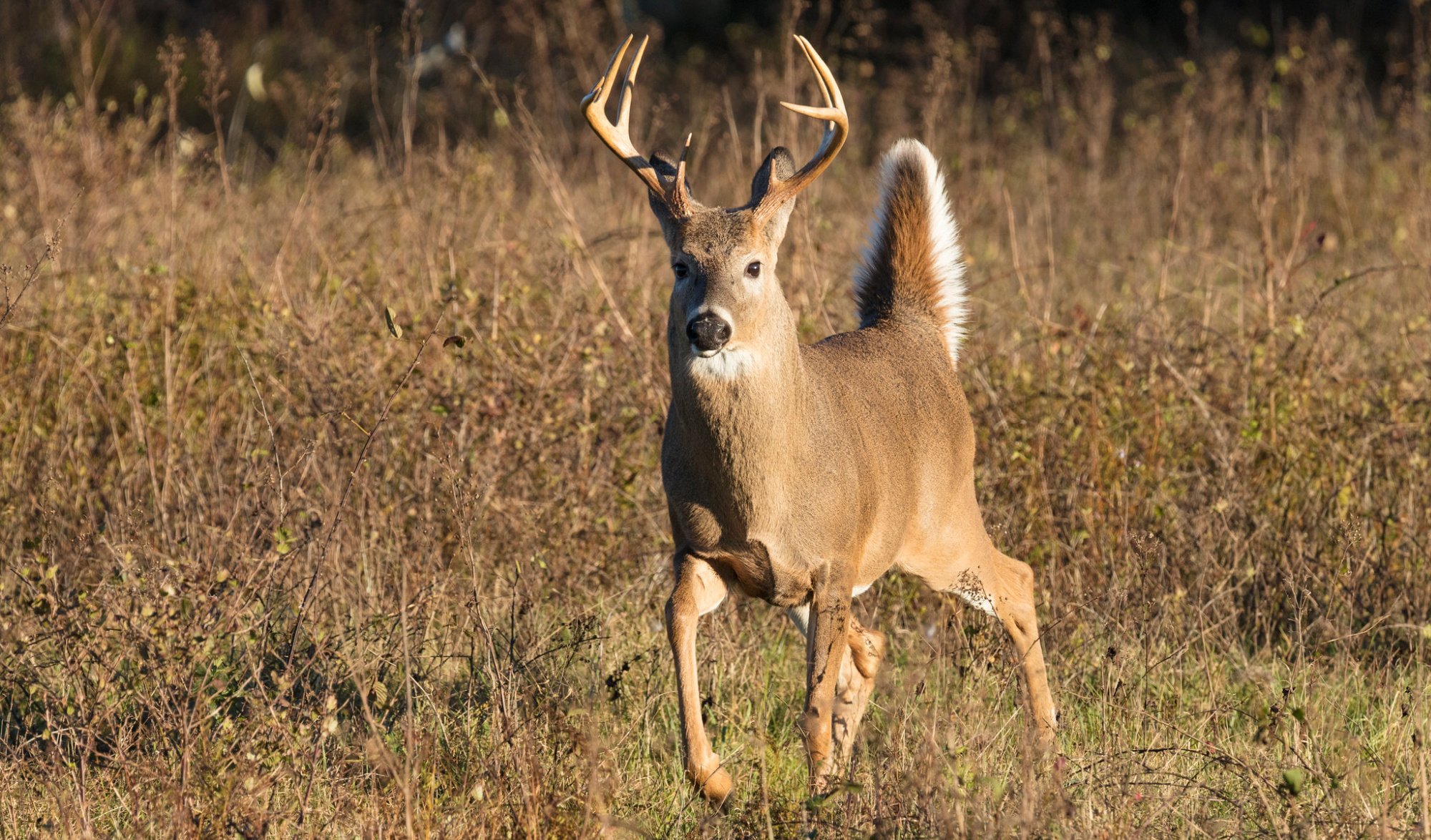
In small or broken segments of terrain, just the opposite often applies, and the deer seem to know that their survival depends upon their ability to get out of a tight space as quickly as possible and into distant cover. My group has had many experiences, for example, in which members began driving a 10-acre woodlot, and heard shooting from the standers within only one minute of beginning to push the cover.
This type of situation makes timing crucial to success. If the drive begins only five minutes too early, before the standers are well situated at their intercept locations, the effort is almost certain to be doomed to failure.
By the same token, a hunter who is instructed to take a stand must exercise great care in hiking to his designated waiting location. If a buck is bedded close by and hears the hunter moving into position, he’ll undoubtedly attempt to skirt the hunter and thereby vacate the immediate area.
Read Next: I Shot My First Buck on the Run, During a Low-Country Deer Drive
A hunter moving to his stand should therefore take the long, roundabout way, if necessary, and sneak into position as quietly as possible. Also of critical importance is that once the stander has selected his vantage point, it is imperative that he not budge an inch. Many standers, after being in position for a few minutes and having an opportunity to survey their surroundings, decide that they’d be better off 50 yards to their right or left. In not knowing that their partners may have already started the drive, they begin walking to the “better” location and any buck coming their way instantly spots their movement and veers sharply to avoid them.
Finally, strive to maintain a degree of flexibility in engineering various types of drives. Today’s whitetail buck lives in closer proximity to mankind than his predecessors, and this has fostered in him the ability to quickly pattern man’s various activities.
It is for this reason that big bucks find it quite easy to outfox unimaginative hunters who always work drives in the same manner day after day and year after year. Conversely, those big bucks that ultimately find themselves packaged away in someone’s freezer are deer that never expected the unexpected.