
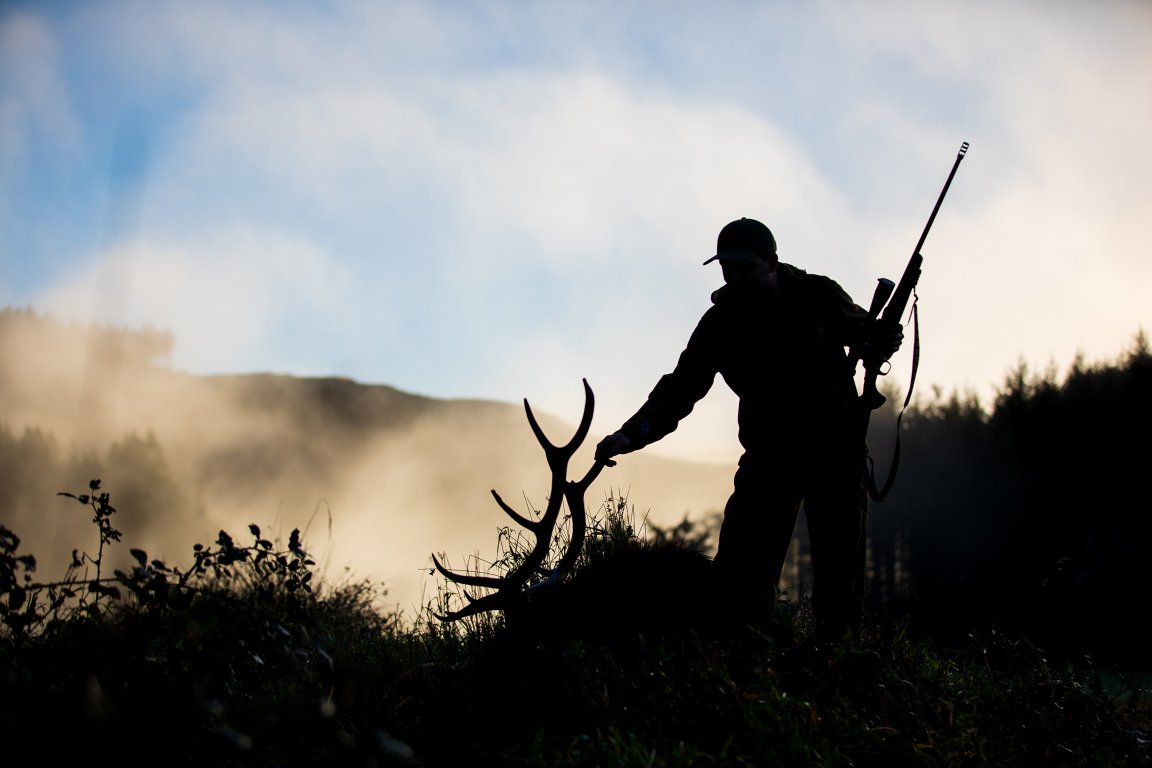
Three hours into an opening morning elk hunt, Dad came walking down the trail. “JC shot a bull, we need to grab our packs and go help,” he said. It was pouring rain in Oregon’s Coast Range.
The bull was in a brushy hell hole. It took most of the day to complete the task. Back at camp we scurried about, getting ready to hunt the last couple hours. That’s when Bob Buss rolled in. His son had just shot a bull, also in the bottom of a massive, brushy canyon. We packed that bull until dark then finished just before noon the following day.
“Well, by the time we break down camp and get home it’ll be late,” JC Johnson said as we wolfed down sandwiches. Dad, JC, and Bob were school teachers and coaches. They had work the next day. Rather than stay and have someone else possibly shoot a bull, we went home. That was 1976. I was 12 years old. It was my first elk hunt.
Dad dropped me off on an old, overgrown logging road early that opening morning. It was dark. “Hike to the very bottom where the road crosses a creek,” Dad said. “It’s only a few hundred yards, but stay on the cut and you can’t miss the creek. Don’t cross the creek, stay on this side of it and find some brush to sit. There’s no way to get lost as long as you stay on the old road.”
He told me not to move until he came and got me. “As hard as it’s raining, elk could be moving all morning,” Dad said. “Just sit still and keep watching. Once daylight comes you’ll see a few trails in the timber across the creek, those are where the elk will be moving.” I hunted three hours that season. The rest of the time was spent packing meat. I’m not sure what drenched me more, sweat flowing beneath rubber rain gear or two days of incessant rain. I loved it.
I liked walking into a new land in the dark, alone. I enjoyed the unknown and how it spiked my senses. I’d been running a trapline for fox, coyote, and beaver and since fourth grade. Much of that time was spent in the dark, before and after school.
I loved the smell of fresh, raw meat in my pack, and how green the rainforest glowed when soaking wet. I also liked the teamwork required to complete the arduous tasks at hand. Monday night Dad and I watched football on TV. Mom cooked fresh backstrap for dinner. It brought back vivid memories of how hard we worked on the hunt, as did every meal we had from elk taken that weekend.
This season marks my 50th year of hunting elk. Many things have changed over the decades. Some have not.
The Constants
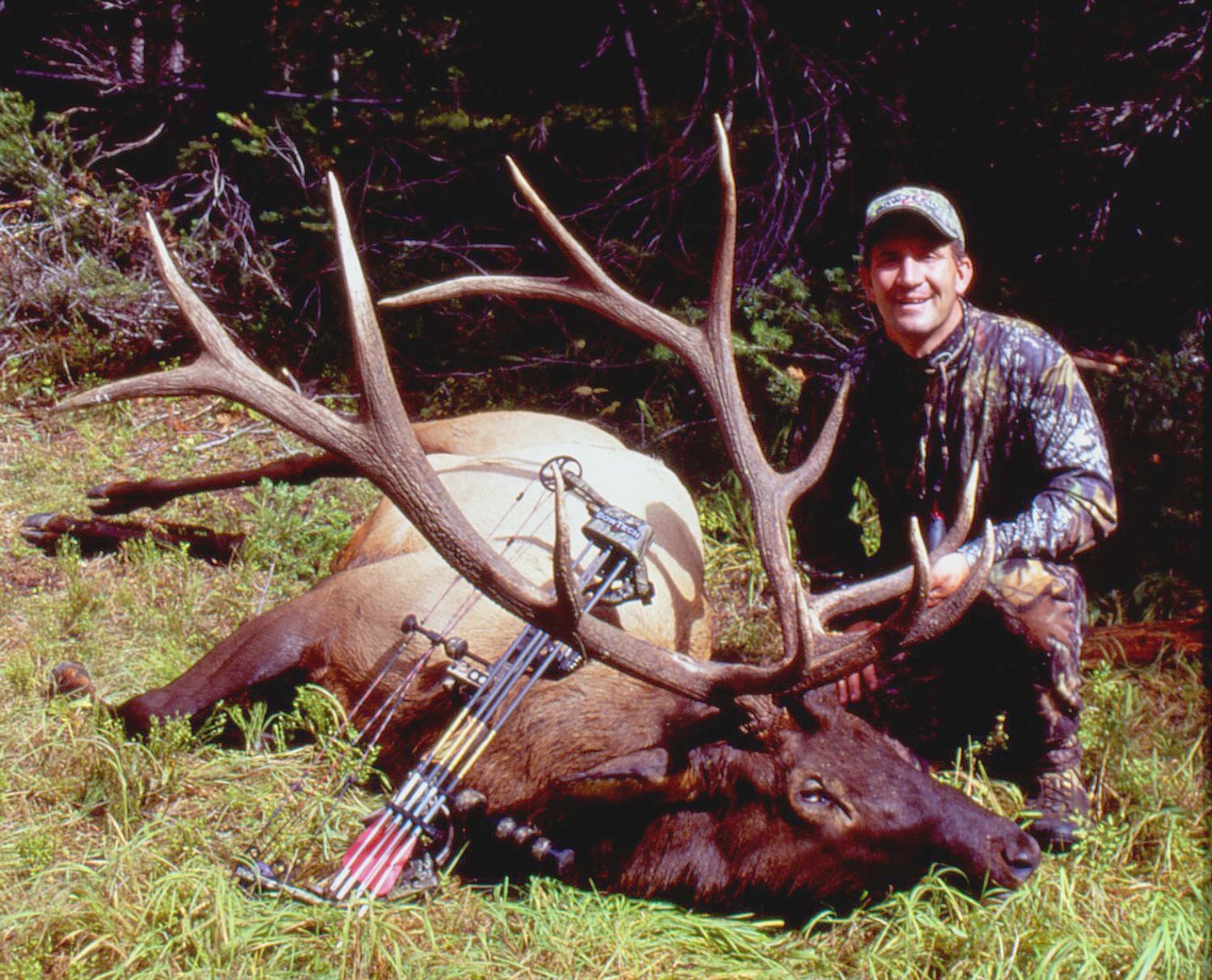
Photo by Scott Haugen
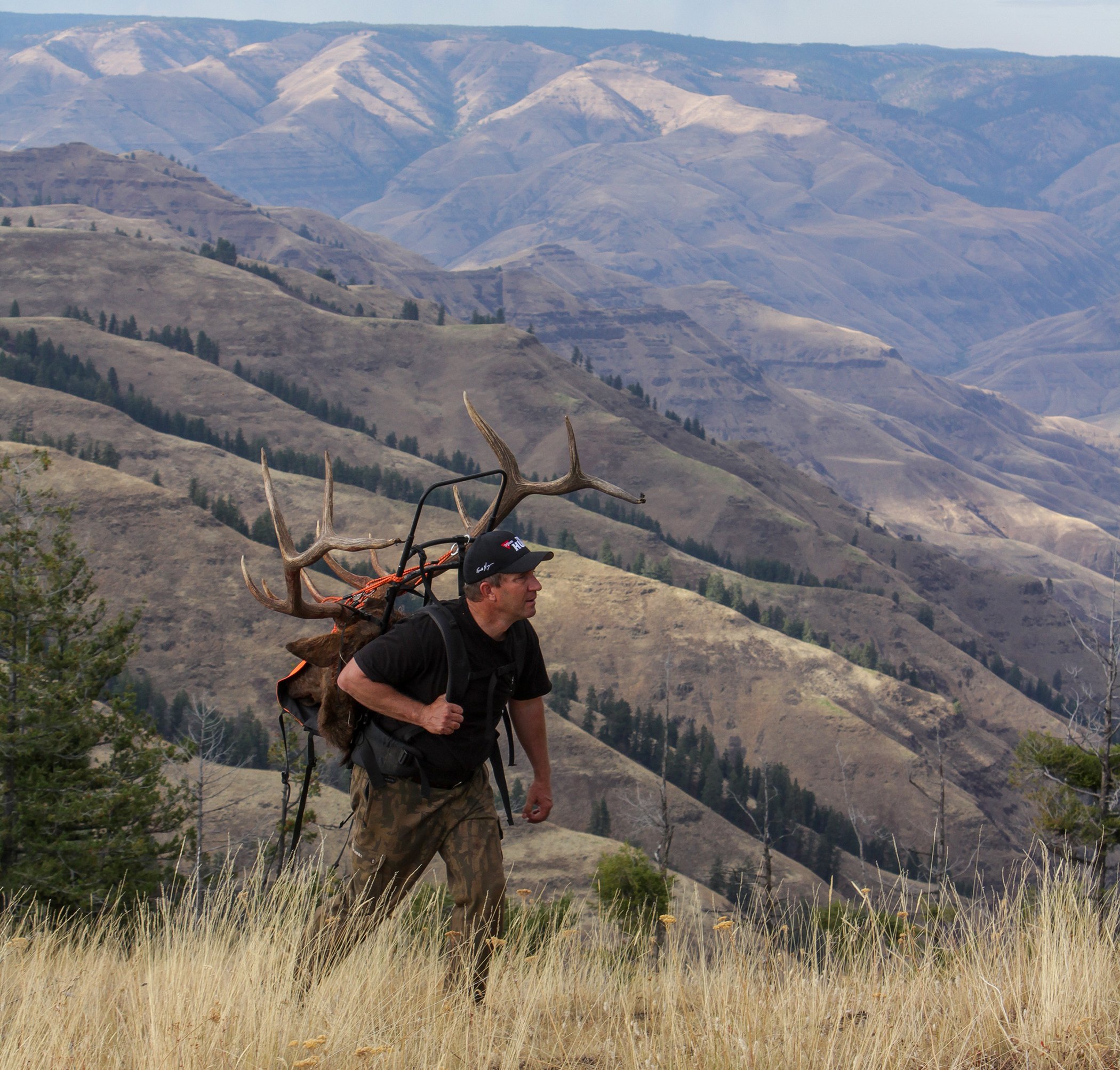
The three biggest challenges of elk hunting remain unchanged: Getting to where elk are, getting out of where elk are, and packing meat. Elk hunting is hard. Period. There are no shortcuts. Hard work is the rule and the better shape you’re in, the better the odds of filling a tag.
I can count on one hand the number of elk hunts that ended in easy pack jobs. Take those when you can get ‘em. It’s the hard hunts that make you appreciate the easy ones. As Father Time keeps chasing me, I appreciate simple pack jobs even more, but they’re still rare in the elk woods.
Over the years, many pack jobs have required hours, even days, to complete. In early archery season, working 24/7 to get meat out of the mountains and into cold storage to prevent spoilage, is the norm for many of us.
One September in the Rocky Mountain wilderness, two buddies and I arrowed three big bulls on opening day. One friend loaded the packstring with meat, rode 23 miles to the trailhead, drove 90 minutes to the nearest town, got the meat hanging in a cooler and then headed back to camp. He arrived at daylight the next day. My other buddy and I had the other bulls broken down and hanging in trees, out of reach from grizzly bears. We broke camp, loaded the elk and got out of there. Every bit of meat was salvaged. That’s a typical elk hunt.
The value of scouting has also remained unchanged. If anything it may be more important as competition among hunters grows (but we’ll get to that later). The more scouting you do, the greater the odds of a successful hunt.
Even with the development of e-scouting, being in the woods is when learning really takes place. Observing elk, in person, offers educational opportunities. When hunting elk, there’s usually a rush to kill a bull once it’s spotted. From the time a bull is located until the time it’s dead, mere minutes might elapse. When scouting in the off-season, you can catch a bull or herd of bachelor bulls, watch them for hours, and you’ll learn a ton from the experience. If you’re a bowhunter, the more cow herds you locate through summer scouting, the more options you have come season.
The patience required to kill an elk has also remained constant over the years. Take your time. Pay attention to minute details, especially once elk have been located. Upon spotting elk, many hunters get overly excited and lose focus. They end up making foolish mistakes and spooking animals. Always monitor the wind and if it changes, abort the stalk and either come in from another angle or return another time. When hunting in timber and heavy shadows, I don’t care if an elk hears or sees me, but if it smells me the gig is up. I’ve never killed a bull that’s smelled me. I’ve seen them catch wind of me from over 800 yards away.
What’s Changed
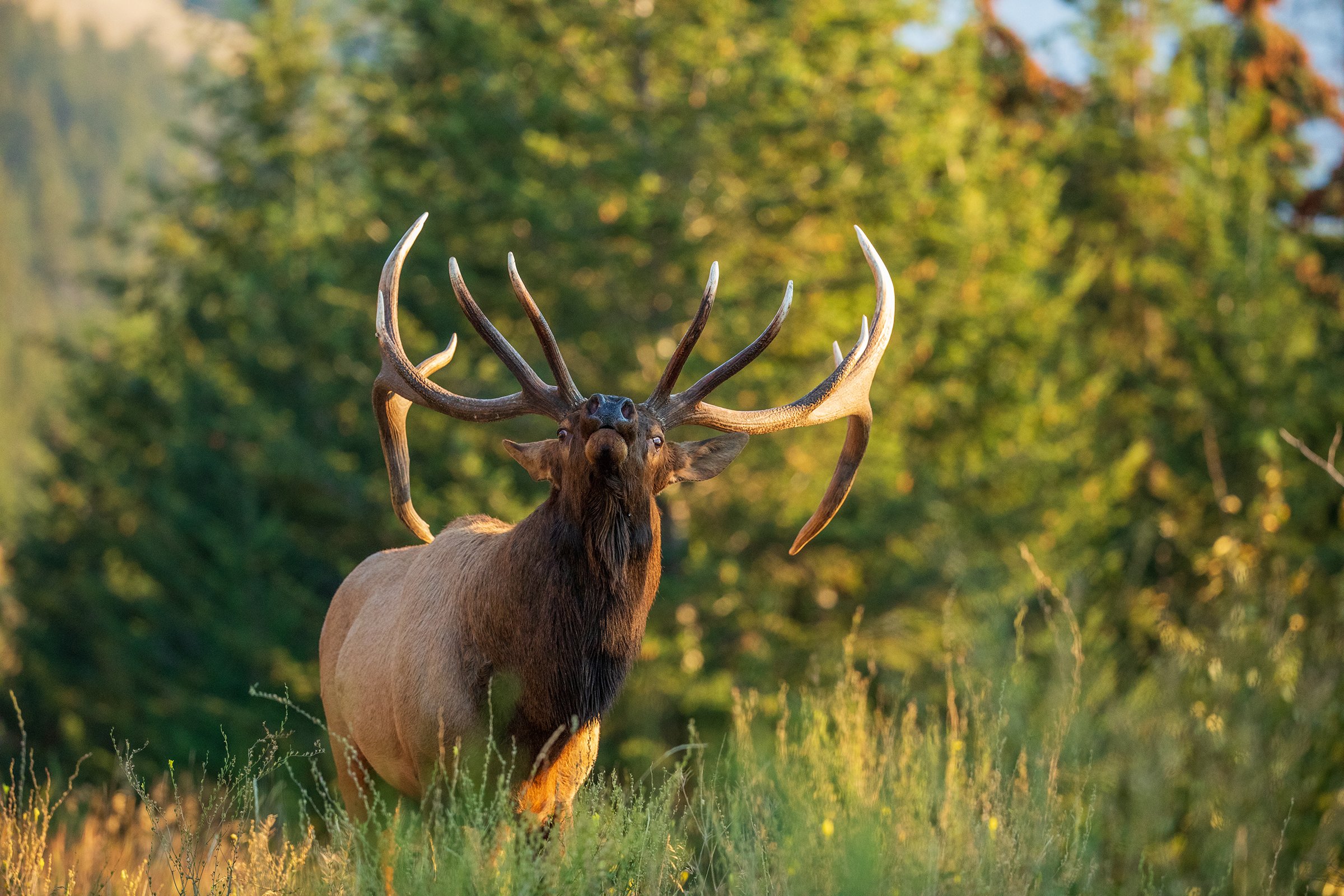
Elk hunting today looks a lot different than when I started as a kid. Of course acquiring an elk tag, especially as a non-resident, is a lot more complicated than it used to be. Besides that, technology is the biggest advancement in elk hunting. From clothes to guns, computers to scouting equipment, the tech world has made finding elk more streamlined. I won’t say it’s made things easier, but modern technology has eliminated much guesswork for elk hunters.
Personally, my biggest advancement has been the use of trail cameras. Trail cameras started gaining traction in the 1980s. These were my high school and college years, when life was good and the music was even better. Getting pictures of elk on trail cameras was a revelation.
Today, I have over 180 trail cameras set in three states spanning more than 800 miles. About half are Moultrie cellular, the rest are Stealth Cam DS4K non-cell cameras. Most of my trail cameras set for elk are in areas of no cell service.
Every one of my trail cameras is programmed to the longest video mode option possible, on the highest definition setting. Over the course of a year I’m amassing many hours of elk footage. I’m always Studying, listening to, and replaying these clips on a home computer and this has taught me a great deal about elk and elk hunting; far more than old trail cams used to. As a former high school teacher with a biology background and Masters degree, trail cameras are one of the most informative learning tools available when it comes to studying animal behavior. Trail cameras are not killing tools, they’re learning tools. Of all the elk I’ve shot, only one was caught on trail cameras.
Long-range shooting has also changed the elk hunting game. When I was a kid, 200 yards was a long shot for many elk hunters out West. Rifles were typically fitted with 4x scopes. When 3x9s came out, it was like going from 8 track tapes to CDs. Today’s precise rifles, advanced loads and powerful scopes make 500-yard shots attainable for practiced shooters. Under favorable conditions, expert shooters can double that killing distance. Long-range shots at elk keep hunters from having to dive into a bull’s domain and potentially spook it, or the entire herd.
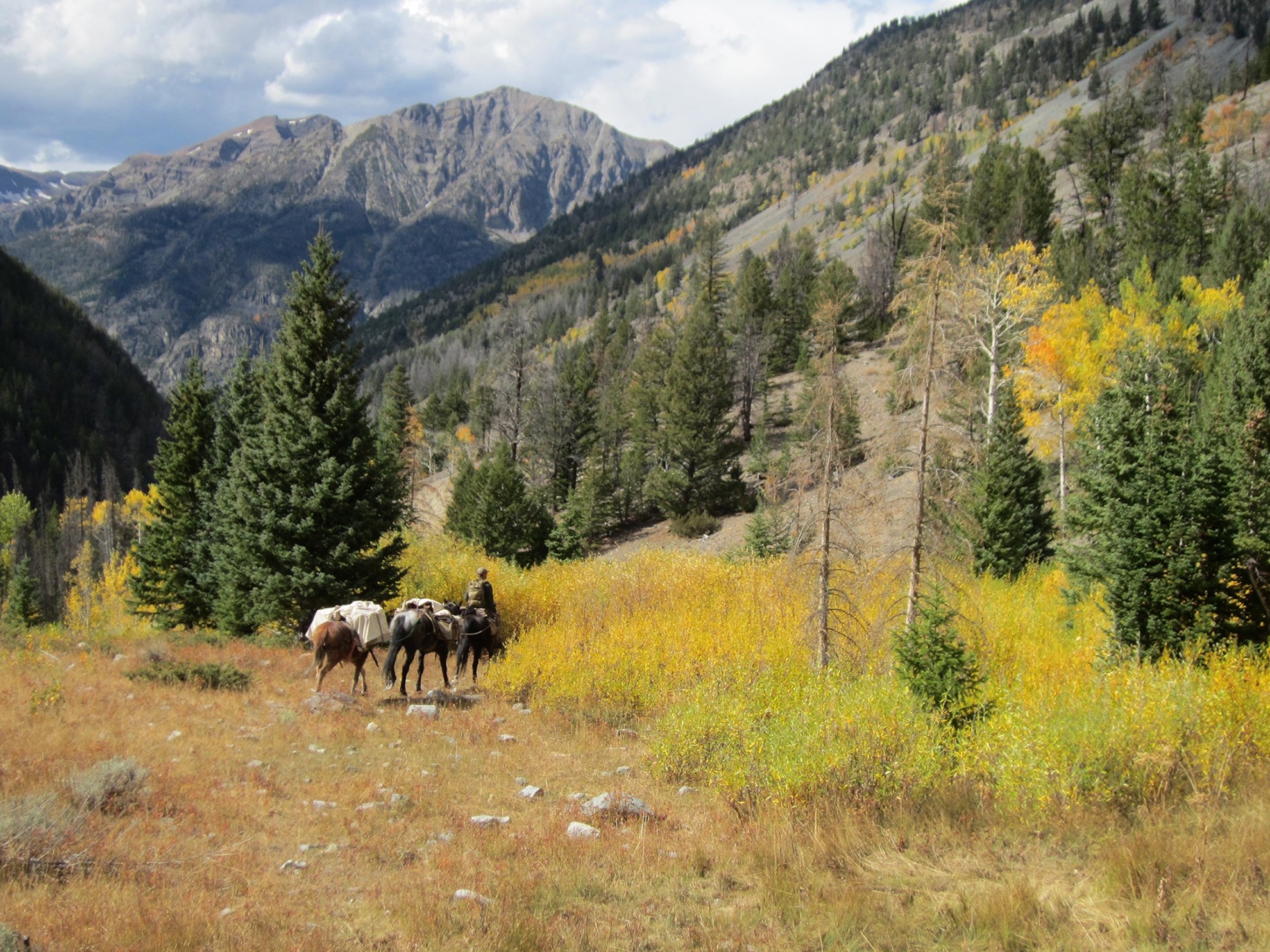
Tip a rifle with a suppressor, and spooking game is further reduced. A growing number of elk outfitters are requiring hunters to shoot suppressed and they advocate being able to shoot 500 yards. With a bit of practice, most hunters can do that, and it makes an outfitter’s job easier.
Navigation advancements like onX have also changed the elk hunting game. For nearly 40 years, paper maps and a compass were the navigation tools elk hunters carried, myself included. Today, navigation technology makes wilderness hunting efficient and safe for the masses. So do various computer apps that allow the tracking of weather events.
Wildfires, snow storms, ice events and raging winds can all impact elk hunting, both immediately and long-term. Now, more than ever, wildfires are shutting down the elk hunting woods, oftentimes days before a season opens, even while a season is in progress. Being able to monitor fires in real-time is invaluable. Should a fire erupt and keep you from where you want to be, it’s important for today’s elk hunter to have multiple backup plans.
One wilderness area that a friend and I used to hunt was on the fringe of a massive wildfire. Though the pine forest was torched, the ground didn’t burn overly hot. Rains the following fall brought green grass back to life, and with it, elk. For three years we experienced exceptional elk hunting. Then one winter a massive snow storm hit, complete with exceptionally high winds. All the burned pine trees toppled and piled atop one another like Pick-Up Sticks. In some places we walked 20 feet above ground, negotiating fallen trees like balance beams. Several square miles of fallen trees made the land un-huntable. It was so severe that elk left the region and have yet to return.
Fires and ice storms have also devoured elk calving grounds in recent years. Where this has happened in the areas I hunt, the elk have moved on. Some herds I’ve not been able to relocate. The amount of ground that elk can cover is mind-boggling. They’re incredibly tough animals.
One of the biggest challenges for many elk hunters in recent years has been the increased presence of predators, namely wolves. I’ve lost prime elk hunting locations in two states where wolves decimated herds and ran them out. When I lived in Alaska’s high Arctic in the 1990s, I ran a 200 mile wolf trapline and saw the devastation these killing machines unleashed on caribou and moose herds. Not only as a hunter, but as a science educator, the hair-brained idea of reintroducing wolves into elk country was unfathomable to me. Black bear and cougar populations continue to grow in most elk habitats as well. While they routinely prey on elk, I’ve not seen them displace entire herds like wolf packs do.
Read Next: Where to Hunt for Elk: The 3 States That Still Offer Great DIY Hunts
The Upshot
Maybe it’s just me but it seems like the elk hunting experience has come full-circle. Fifty years ago the objective was to put meat in the freezer. Achieving this goal with friends made the hunt more meaningful. If everyone didn’t tag out, so be it, for each bull taken was divided equally among all families to enjoy.
Then came a few decades of trophy hunting, where big racks were the objective. I, too, was bitten by the big bull bug, and I still am in some ways. I love the challenge of trying to outwit a wise, old bull. And I like passing up lesser bulls to achieve the end goal, for the more encounters you have, the more you learn. Kill the first bull you call in and the hunt is over. Pass up 15 bulls over a few days and what’s learned will reshape you as a hunter. Do that for 30 years and the level of knowledge gained begins to add up.
Today, with our two sons grown and on their own, I’m back to putting meat in the freezer for my wife and I. Heck, I’ll even shoot a cow given the opportunity, for few animals are better on the plate.
Having written articles on elk hunting for the past 27 years, I’ve noticed that more editors are requesting general elk hunting stories and tips, not trophy hunting methods. The same goes for fellow hunters whom I field questions from around the country. Most aren’t looking for a giant bull to hang on the wall. Most want to hunt public land, escape people and experience elk in nature. A legal bull is what they desire, along with the chance to hear bugles echo through wooded canyons elk call home.
Read Next: The Ultimate Guide to Elk Hunting
When it comes to building elk hunting skills, time is of utmost importance. The more time you dedicate to scouting and hunting for elk, the more knowledge you’ll acquire.
Many seasons, I embarked upon three or four elk hunts. Every hunt, every scouting trip, every single elk encountered, resulted in experience gained. Even after a half-century of chasing majestic elk and punching many tags along the way, there’s one thing I’m certain of. I still have a lot to learn.
Note: Scott Haugen’s new e-book, Elk Hunting The West~The Experience, is available for purchase on Kindle for e-readers, phones, tablets, and computers. Follow Scott’s adventures on Instagram and Facebook.