
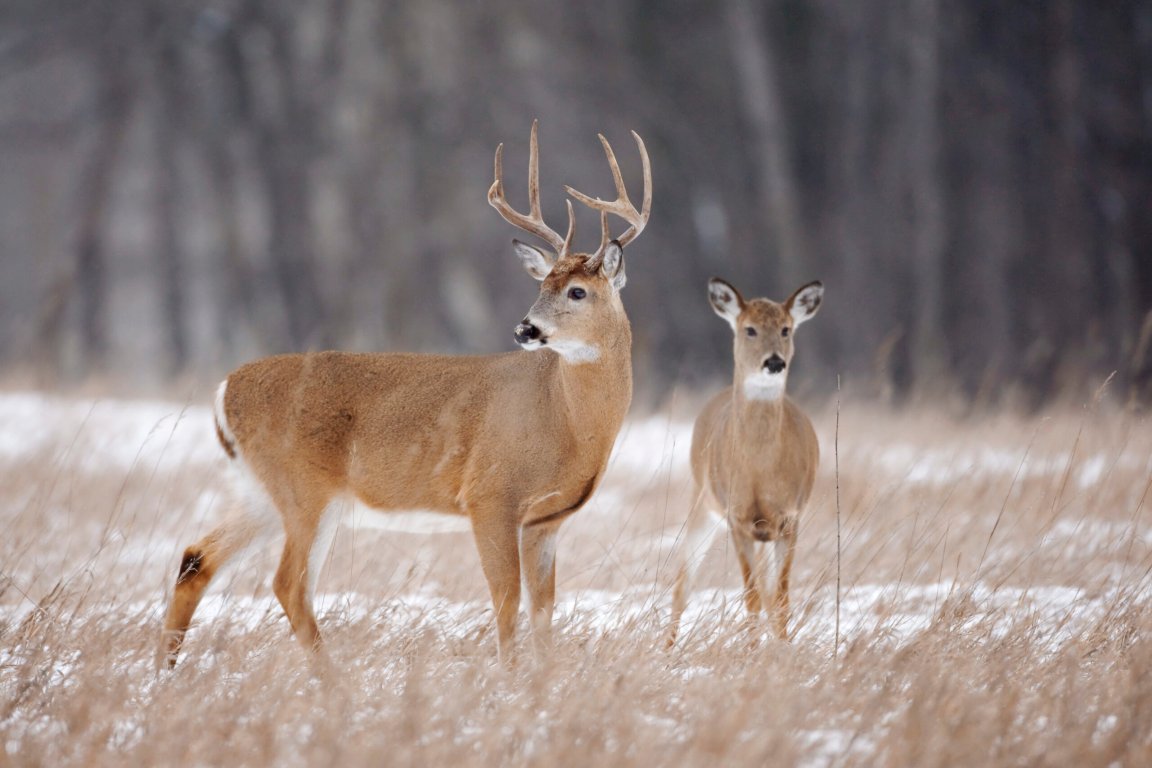
Without doubt, bass fishing and whitetail deer hunting are the two most popular pastimes of sportsmen searching for outdoor adventures. And as strange as it may sound, bass and deer are really very much alike, at least in the ways they respond to bitter cold weather.
Wise anglers know that bass do not experience discomfort when water temperatures plummet. However, bass do begin exhibiting changed behavior. Generally bass will drift away from the shallows and into deeper water as the thermometer falls because temperatures in the depths remain relatively stable on a day-to-day basis. Here, their metabolisms begin to wind down. The bass, therefore, do not require as much food intake to sustain various bodily functions. Consequently, these two alterations in their lifestyle can make them very tough to catch for all but the most experienced fishermen.
Whitetails respond to winter’s periodic onslaughts in much the same way by abandoning their usual haunts until the weather either stabilizes or eventually reverses itself. Yet few people, aside from biologists, are aware that deer also eat less as extremely cold weather approaches. Chemical changes take place in their bodies, causing their digestive processes to switch to s-l-o-w. This, in turn, allows for the maintenance of various body systems at a greatly reduced rate of food intake.
Another important point to emphasize about the anatomies of whitetails is that their brains are comparatively small in relation to their overall body sizes. Therefore, the integrated nervous system coursing throughout their bodies is rudimentary at best. As a result, like most wild creatures that do not possess a sophisticated neural apparatus, their pain thresholds are quite high — making them relatively insensitive to bitter cold temperatures. Many hunters are not aware of this because for generations they’ve been led to believe that when the weather goes sour, deer can be expected to do this or that in order “to seek protection from the elements and be more comfortable.”
Body comfort actually has little to do with their changed behavior patterns. After all, the northern boundary of the whitetail’s native range extends more than 150 miles beyond the United States/Canadian border to approximately 52° latitude. Anyone who has lived thereabouts can tell you that winter temperatures frequently average -20°. The wind-chill factor often makes it seem as cold as -75°. Therefore, it just doesn’t stand to reason that animal species such as whitetails would be native to such hostile climes were they not virtually immune to such weather.
We’ve even seen evidence of this immunity right on our southern-Ohio farm where it is not uncommon to experience at least several days of -20° temperatures each winter.
Behind my barn there is an old tractor trail that wends its way through a 40-acre oak forest. Numerous times, while hauling out firewood, I’ve seen deer bedded on nearby slopes. Often they reveal a thick dusting of new-fallen snow covering their backs — the hollow hairs of their coats providing such superb insulation that their body heat is unable to escape. If I approach too closely, the deer will predictably rise to their feet, shake themselves like soaking-wet dogs and cause clouds of snowflakes to fly — then saunter off to other parts with an air of nonchalance at having been rousted from their beds.
If deer are able to adapt to such gelid temperatures so easily, why is it then, that legions of otherwise knowledgeable hardworking hunters so often strike out when the freeze is on?
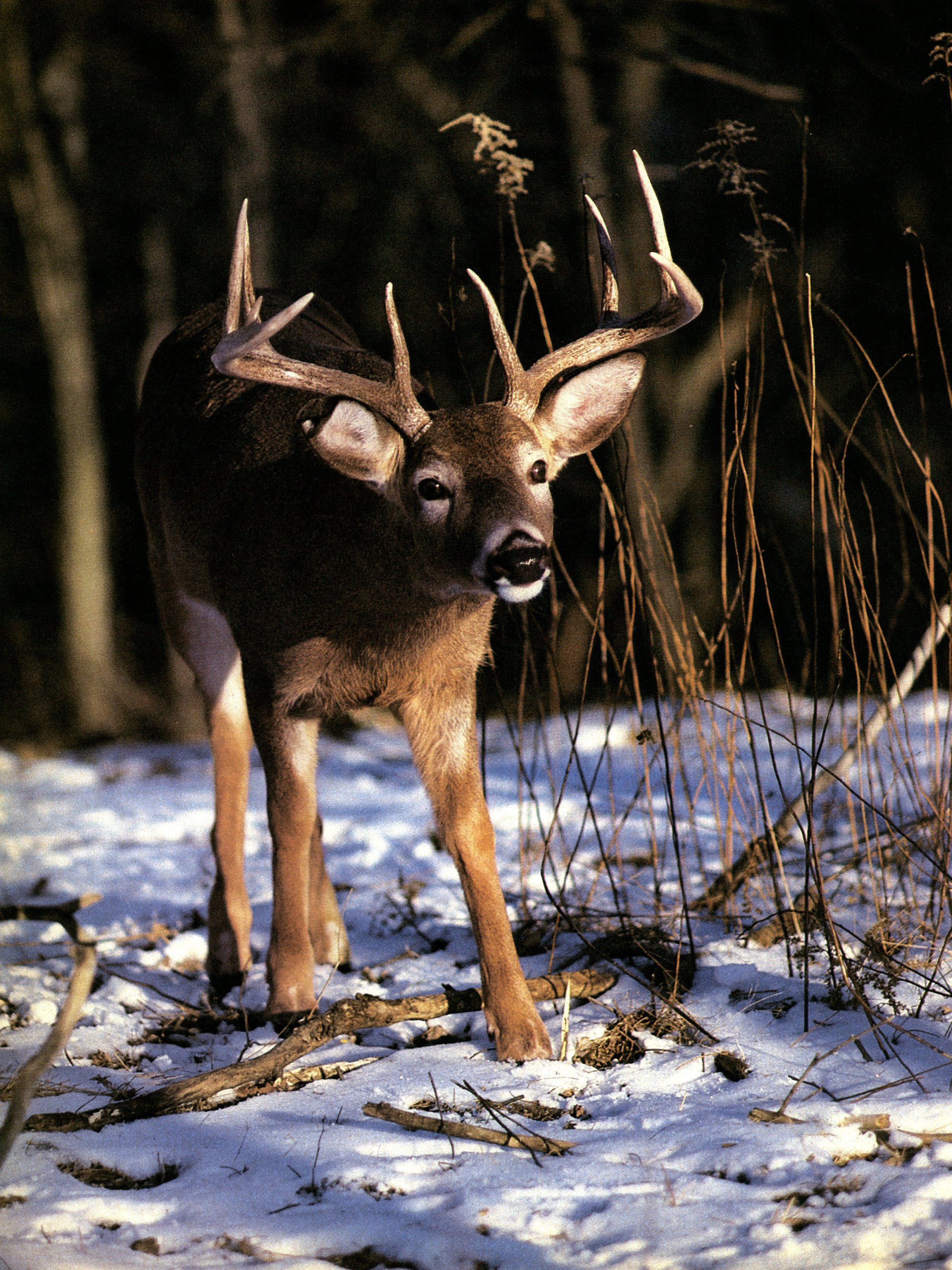
Say, for example, that you’ve been hunting in balmy temperatures for several days, have had the opportunity to look over a number of animals but haven’t seen anything you’d really be satisfied with. So you’ve decided to hold out a while longer, hoping you’ll eventually stumble onto “Mr. Big.”
Suddenly, you wake up one morning to the sound of icy sleet pinging against your bedroom window. Bounding from the rack, you are shocked to discover that the wind is whistling a siren song and that overnight the temperature has dropped 35°.
After sitting on a stand for several hours that morning without seeing a thing, you look and feel like a popsicle. So you begin moving around — sneak hunting — but eventually conclude that the deer have vanished. By day’s end the temperature has fallen another 10°, a light skiff of hoarfrost blankets the ground and your expectations have long since dwindled. You’ve forgotten entirely about taking a nice buck this season and have begun thinking that if you can just manage to fill your doe tag you’ll be very very lucky.
The scenario is the bane of all hunters living north of the Mason-Dixon Line. Because it’s obvious that the deer couldn’t possibly have just disappeared from the face of the earth, the best prospect for success undoubtedly lies in learning more about their behavioral reactions to severe weather.
One of the most telling clues to unraveling the mystery of their disappearance can be traced to changes in the whitetails’ body chemistry — the changes that cause them to require less food. Biologists say that this is an annual occurrence and that, like the rut, it is triggered by progressively shorter days and diminished periods of sunlight. Sometime around mid-November, the growth hormone thyroxin, which for the past eight months has been flooding the body, begins dissipating and will remain at a very low level until the following spring.
This shoots down another popular myth about bucks not feeding much during the rut because they are so love struck. Actually, their reduced food intake can be attributed to a conservation measure on the part of nature. In other words, with each additional week of cold weather, food becomes less and less available so nature accordingly reduces the animals’ need for food by enacting significant changes in their body metabolisms.
Hunters should realize that, as the season progresses and as increasing numbers of severe polar blasts begin descending upon their regions, deer can be expected to move around less and less in search of food. The movements they do exhibit are no longer going to be concentrated during the traditional early and late hours of the day but during midday when it is likely to be warmer. Again, the deer are not seeking “comfort” but rather are conserving energy to more efficiently make use of the sharply reduced food supplies.
I’ve seen this happen with such consistency that I now almost consider it axiomatic. At our northern-Minnesota hunting camp, for example, members of our regular group begin bowhunting in October. We’ve learned from more than 80 years of combined experience that the odds of taking a whitetail early in the season are in our favor if we take up early-morning stands, nap during midday when deer are bedded, then resume our vigils late in the afternoon.
Of course the most serious hunters — diehard veterans who are never willing to give up — may find such tactics repugnant.
Yet during the final days of the gun season in December, those in our party who still have not scored have entirely reversed their strategies. Now the order of the day, paradoxically perhaps, is to sleep late in the morning, wait on stand during midday, then quit early. There’s just not enough likelihood of seeing anything move — particularly at dawn’s first light — to justify the oftentimes agonizing ordeal of sitting as still as a statue in weather so bitter cold that it gnaws at your innermost fiber.
Of course the most serious hunters — diehard veterans who are never willing to give up — may find such tactics repugnant. As far as they’re concerned, they want to be in the field every available minute. That’s fine and dandy but, if they want to maximize their chances for success, they should still be willing to make certain adjustments in the way they hunt.
Late in the season, and particularly when the freeze is on, they should stillhunt or sneak hunt early and late in the day when deer are most likely to be sequestered in their beds. During midday, hunters should play the waiting game on stand when deer are inclined to be traveling to and from feeding sites.
But where, exactly, do the deer go when the bottom falls out of the thermometer and ice storms or sheets of wind-driven sleet are lashing the countryside? The three-pronged answer to this is thick cover on a protected south-facing slope in a low-elevation area of terrain.
Two of the most desirable types of thick cover are dense stands of head-high honeysuckle and nearly impenetrable pine plantations. The pines are most often thickets of immature trees that have their whorls of branches close to the ground.
In the face of adverse weather, deer retreat deep into such seclusions where they can wait out the ensuing tempest. Again, trying to stay warm or achieve some other comfort level has little to do with their evasive behavior. Windy stormy weather makes whitetails extremely restless and nervous. By their very nature, whitetails are already hypertensive and are extremely paranoid creatures. When they’re no longer able to detect, classify and catalog sounds and scents because of the competition from noisy winds and erratic air currents, they waste no time finding a place where they can maintain a low profile. Therefore, rather than allowing themselves to remain vulnerable by bedding on their customary hillside benches and ridgelines, they retreat into deep thick cover. This not only helps to block the wind but perhaps also gives them the feeling that hiding from ready view somewhat compensates for their impaired senses.
Once, for a period of several days in the dead of winter, I had the opportunity to watch an eight-point whitetail buck in a fenced enclosure. This was a wild deer that had recently been captured by biologists for use in various nutrition studies. Its temporary fenced-in home was five acres of relatively open hardwood forest with scattered swatches of second-growth ground cover here and there.
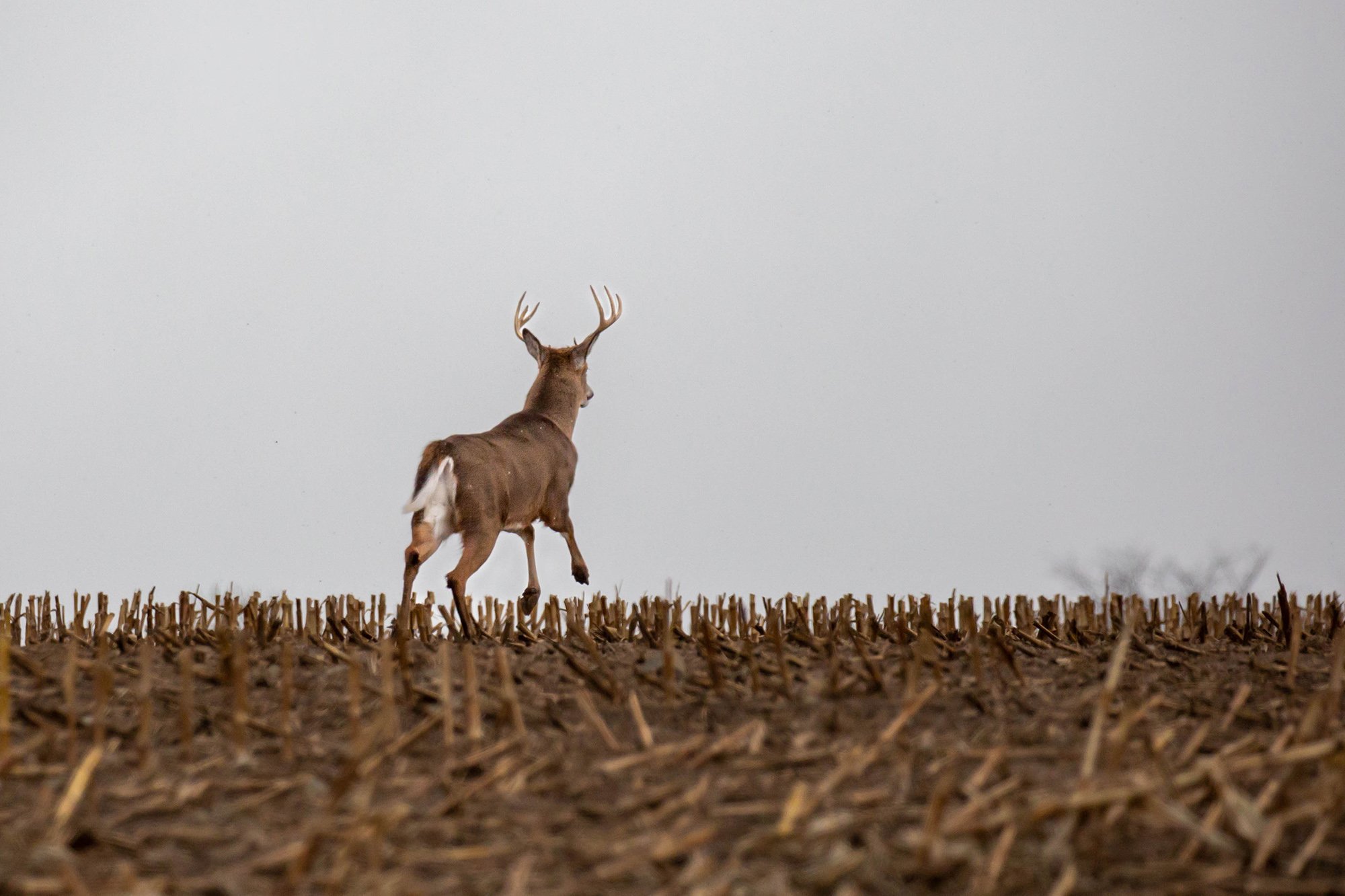
Whenever the weather was warm, sunny and there was no wind, the buck had a particular place it liked to bed. The deer could see in every direction from the high hammock. Yet whenever a frontal storm system moved through the region and the wind began howling, the deer quickly vacated its usual turf. It always went downhill into a little pocket of thick multiflora rose — the only significant cover in the compound — and buried itself right in the middle.
One day as snow clouds scudded against an ominously gray sky and ice-riddled branches creaked in the wind, I watched in amazement as the buck laid on his belly for long hours, his front legs outstretched and his chin resting on the ground. Yet when the wind occasionally intensified with its typical freight-train drone, or an ice-laden branch suddenly crashed to the ground, the buck’s head would instantly come up, swiveling in all directions. Assured that nothing was on the prowl, the buck would then quickly duck back down again. Moments later his head would be up, down, then back up again. Just observing all that nervous energy and pent-up anxiety exhausted me — under these conditions the buck’s entire personality was like a violin string about to snap.
I’m confident that the penned buck would have liked to have had access to much thicker deeper cover to increase his feeling of security. I’m also certain that unconfined deer in their native habitat behave much the same way when the freeze is on. Moreover, a biologist at the research station told me that during one terrible winter storm, the penned buck stayed put for four consecutive days until the weather finally abated.
In addition to tangled jungles of honeysuckle and conifer forests, whitetails also like to retreat into swamps when the freeze is on. Because of the continually decaying organic matter, swamps are always warmer than other regions and this, coupled with the fact that they’re always found in low-lying terrain, keeps them somewhat sheltered from the brunt of the weather.
However, without meaning to again kick the proverbial dead horse, deer don’t seek out swamps in order to stay warm. They go there because past experience has taught them that they’re not likely to bump into hunters in such forbidding territory and, similarly, a swamp is one place where they can continue to effectively rely upon their senses to forewarn them of impending danger.
Yet no matter what type of cover deer may elect to use for hiding, hunting them when the freeze is on can be extremely difficult because the animals’ minds and senses are so preoccupied with monitoring their immediate surroundings. But there are several tactics that seem to be far more productive than others.
First, of course, pay attention to weather forecasts. Deer seem to have built-in barometers that give them advance notice when hostile weather is about to assault their regions. They take due advantage of this insight by stocking up on groceries, instinctively knowing that once the bitter weather strikes it will preclude safe traveling to and from feeding sites for several days. Then, immediately after the frontal system has passed and calmness again prevails, the deer come out of hiding and return to their favorite food plots. Consequently, stand hunting or sneak hunting — just before and immediately after a storm — are two key strategies no enterprising whitetail hunter can afford to pass up.
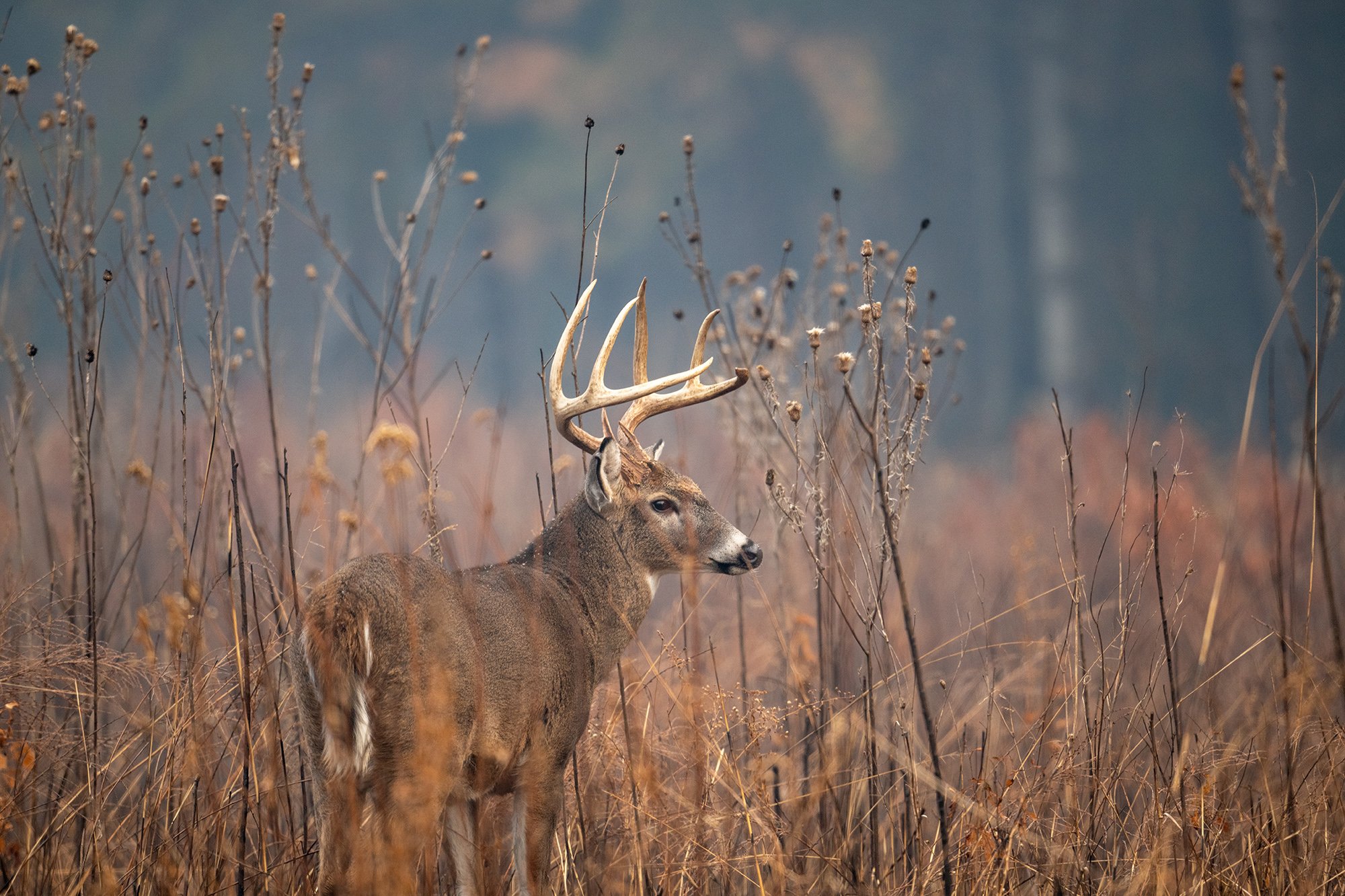
Cornfields can be prime places to try because, throughout the Midwest and the northern border states, it is becoming an increasingly popular agricultural practice to leave corn standing as long as possible. In the past, it was either chopped or combined sometime in October or November. But with storage costs escalating like never before and future market prices uncertain, many farmers nowadays are leaving the corn in the field until such time as they have a specific need for it or until the price increases. Quite often this means as late as February.
Already-picked cornfields are also good bets because a substantial amount of harvest residue may continue to draw deer months after the corn has been combined. On our own cornfields we’re sometimes amazed to see a dozen deer at a time pawing through a foot of snow cover to find spillage.
I emphasize the importance of finding corn when the freeze is on because native wild foods are becoming more and more sparse with each additional week of winter weather. Other popular agricultural foods such as soybeans are rarely allowed to remain in the field beyond their peak harvest times, so corn is a deer magnet beyond compare.
Hunting during a storm can also pay off. The best opportunity occurs when the temperature does not fall dramatically. This usually means that the wind velocity will not be too fierce and any precipitation is likely to be in the form of huge wet snowflakes that begin clinging to cover like giant globs of cotton candy. Under such conditions, whitetails don’t seem to become as jittery and frantic about their safety and may continue to feed during midday periods. The fluffy snow itself may also pacify them just enough during nonfeeding periods so that they will remain tied to their usual haunts rather than diving headlong into thick security cover.
Any deer hiding within a thicket will merely vamoose out the other side, giving you only a fleeting glimpse of their white semaphore flags signaling goodbye. Instead, try to mentally dope out the lay of the land and then approach from high ground.
Conversely, hunting during the most ravaging freeze-outs offers the least chance of success. Now, patiently waiting on stand is inherently a futile endeavor. The animals simply will not come to you. It is necessary for you to go find them by prowling through swamps, honeysuckle or evergreens.
Never try to approach such cover on level ground. Any deer hiding within a thicket will merely vamoose out the other side, giving you only a fleeting glimpse of their white semaphore flags signaling goodbye. Instead, try to mentally dope out the lay of the land and then approach from high ground. This will allow you to look down and through the cover and will make it far easier to spot bedded or sneaking deer.
Another option is to round up several pals and begin staging drives, particularly in the case of expansive pine plantations. Here is a unique situation, not unlike hunting rabbits, where the drivers themselves are likely to be awarded as many shots as the hunters placed on stand. The reason, as we briefly touched on earlier, is because deer that have retreated into the catacombs of thick cover are extremely reluctant to expose themselves, to travel great distances or to sever their close ties with that chosen cover where they’ve decided to holeup. As a result, a buck pushed out by a driver may chart a bounding weaving escape flight that actually takes him only a very short distance before he quickly ducks back down to resume hiding.
Read Next: Tips for Patterning and Hunting a Late-Season Buck
Because the drivers are likely to see a good deal of shooting, those hunters placed on stand should use portable tree stands situated as high as practical so they are not in the direct line of fire of their approaching partners. Also — and this cannot be emphasized too strongly — every hunter participating in such a maneuver should be fully clad in fluorescent orange clothing and should maintain loud voice contact so everyone is well aware of each other’s location.
When hunting during freezing stormy weather, wise garment selection also requires careful thought. For sneak hunting or stillhunting, wool is always the best bet because it is noiseless when the fabric grates against brambles and brush. But when toughing out long hours on stand, I rely exclusively upon down-filled duds and bundle up like a snowman.
I’d be the last to say that hunting deer when the freeze is on is purely enjoyable. Human beings just weren’t designed with bitter-cold weather in mind. But when such conditions prevail, any hunter can indeed fill his tag. Just keep in mind the changed behavior the animals are certain to begin exhibiting and plan your strategy accordingly.
This story was originally published in the November 1987 issue of Outdoor Life.