We may earn revenue from the products available on this page and participate in affiliate programs. Learn More ›
When it comes to judging the wind while hunting or shooting you can either do it the hard and complex way or go the easy route. Both have their place, and which you employ depends on the circumstances, your comfort level, and your gear. No matter which path you take, however, understanding the basics of how wind behaves and how to accurately assess it is essential.
Reading the Wind: Rule of Thirds
For long-range shooting it is useful to segment the wind into thirds, by which I mean dividing the distance from you to the target into three zones: near, medium, and far. Each is important for different reasons but, as Animal Farm demonstrated, some are more important than others.
The First Third: Shooter’s Position
The most critical portion of the wind to look at is the first third of the bullet’s flight, which boils down to the wind at the shooter’s position.
Any impetus the wind imparts at or near the muzzle continues to influence the bullet until it reaches the target. A wind blowing to the left will cause the bullet to keep drifting left even if the wind for the remaining 90 percent of the bullet’s travel is dead calm.
The good news is that we can get the most reliable wind call at the shooting position with the use of a wind meter, by learning to judge the wind’s force on our face and body, and observing its effect on foliage and the environment around us.
The Second Third: Max Ordnance
During the middle portion of the bullet’s flight it travels upwards. As you know, the barrel is pointed upward to counter the effects of gravity. The more distant the target, the higher the bullet rises before arcing down.
If the shot is long enough the bullet can rise to where it travels through a different gradient of wind, almost invariably stronger than what we measure or perceive at ground level.
Think of wind like water moving down a river. At the banks and along the river bed the water moves slower due to friction, and runs fastest in the middle.
The same goes for wind. Friction from the ground, including trees and other terrain features, slows the wind down. If you go up 10 or 20 feet, chances are the wind is stronger – and if your bullet spends any time in that zone you need to account for that bump in velocity.
The Final Third: Time of Flight
The reason to care about the final third of our bullet’s journey is that it spends the most time there. As soon as the bullet leaves the barrel it slams into the atmosphere and rapidly slows down.
Naturally, it takes more time to traverse the final third of its journey than it did in the other thirds — this longer duration of exposure to the wind can substantially influence the bullet’s drift.
Accounting for Each Third
Most hunters don’t think in these terms because, as you’ll see in the examples below, only the wind at the shooting position really matters. But when we’re shooting very long ranges, with a notable max ordinance we absolutely need to take all these zones into account.
Take my Accuracy International AXMC in 300 PRC, which I load with hyper-efficient 230-grain A-Tips for ELR competition. With a target at 1,700 yards, that bullet has a maximum ordnance of about 66 feet above the ground. So it is most certainly experiencing a different wind vector than what I read at the shooting position.
In contrast, a 400 yard shot with a 6.5 PRC rises less than two feet above the muzzle – not enough to make a difference.
So, for typical hunting scenarios we can ignore this bit.
The same goes for the final third of the bullet’s flight. That 1,700 yard shot takes about 2.5 seconds to go the distance while the total travel time for the 6.5 PRC at 400 yards is less than half a second. So we can ignore the final third for a normal hunting shot as well.
This is why the external ballistics in ELR shooting is an order of magnitude more complicated than when hunting.
It is also why we focus on the wind at the shooter’s position when hunting.
How The Wind Can Mislead You
So we just need to get a solid wind call at our position and we’re good to go, right? Not so fast.
The wind you’re measuring is the best data to plug into your ballistic solver, but you need to be on the lookout for how it can be misleading.
Wind Waves
When the wind is consistent that makes for an easy call, but it is often rising or falling or switching direction. Learning to identify a building or diminishing wind is a skill that separates expert marksmen from the rest of the pack.
The signs can be subtle. Analyzing how vegetation is moving is one of the best ways. If you’ve ever watched a field of long grass sway and swirl you can gain an appreciation for this dynamic.
As silly as it sounds, pay attention to what’s happening at your location. There’s a tendency to get a wind call and then lock in to other tasks, like getting a good range to the target or solidifying your shooting position. Learn to maintain situational awareness of what the wind is doing at the muzzle and downrange and tune your windcall accordingly.
Terrain Confusion
The geography where we’re shooting can throw a wind call off kilter too. One common scenario is shooting from an exposed position with a fair bit of wind to a target that’s tucked into the landscape.
In this instance the wind between you and the animal or target might be mostly dead still, making it easy to overcompensate.
It’s also possible for hills and draws to funnel wind, pushing your bullet in an unexpected direction or with more force than you thought.
Thermals can also really mess with a wind call. I’ve seen this in competition numerous times when shooting from the top of a hill across a draw to a far-off target.
The wind is rushing uphill and blowing directly into our faces as though it were a strong headwind. In reality, the wind is likely doing something completely different as soon as you get away from the hillside.
This is where you have to scan the air, rolling the focus on your optic between you and the target. Look for stuff drifting in the breeze to figure out the wind’s true direction.
Grading The Wind
With all this in mind you need to grade the wind in terms of its complexity and decide whether to take the shot or not. I use a simple A to F scale, with an A grade being the least tricky (no wind at all) to an F, which is a “don’t shoot” under any circumstance. The main factors are:
- Wind strength
- Wind direction
- The consistency of those values
- Distance of the shot
- Influence of terrain
- Quality of shooting position
- Confidence in your gear and ballistic data
Drop and Drift Data
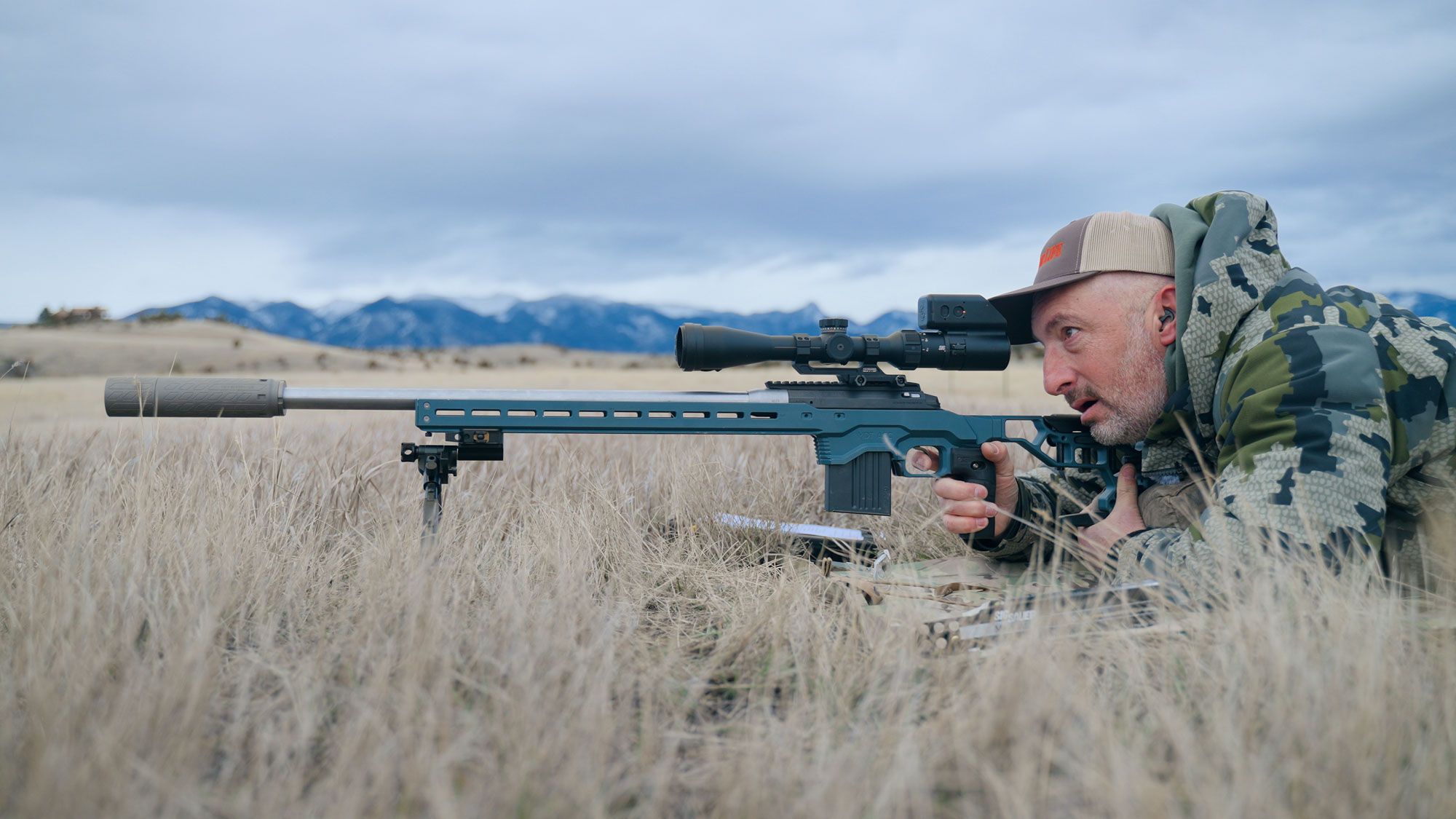
I’m going to skip over talking about building a solid shooting position. For argument’s sake, let’s assume you’ve got a good prone position and are not inducing any extra wobble into your hold.
I’m also going to assume that your rifle is sufficiently accurate and that you have established a good zero.
What’s left is to use a ballistic solver of some sort to come up with your elevation and windage corrections.
There are a lot of quality tools at our disposal. You can plug your info into a free ballistic calculator online to generate a range card. There are free, or inexpensive, apps that do the same and that also allow you to get a firing solution in the field rather than from a pre-made chart.
We also have an increasing selection of excellent rangefinding binoculars with on-board ballistic calculators that display the elevation come-up and windhold in the eyepiece.
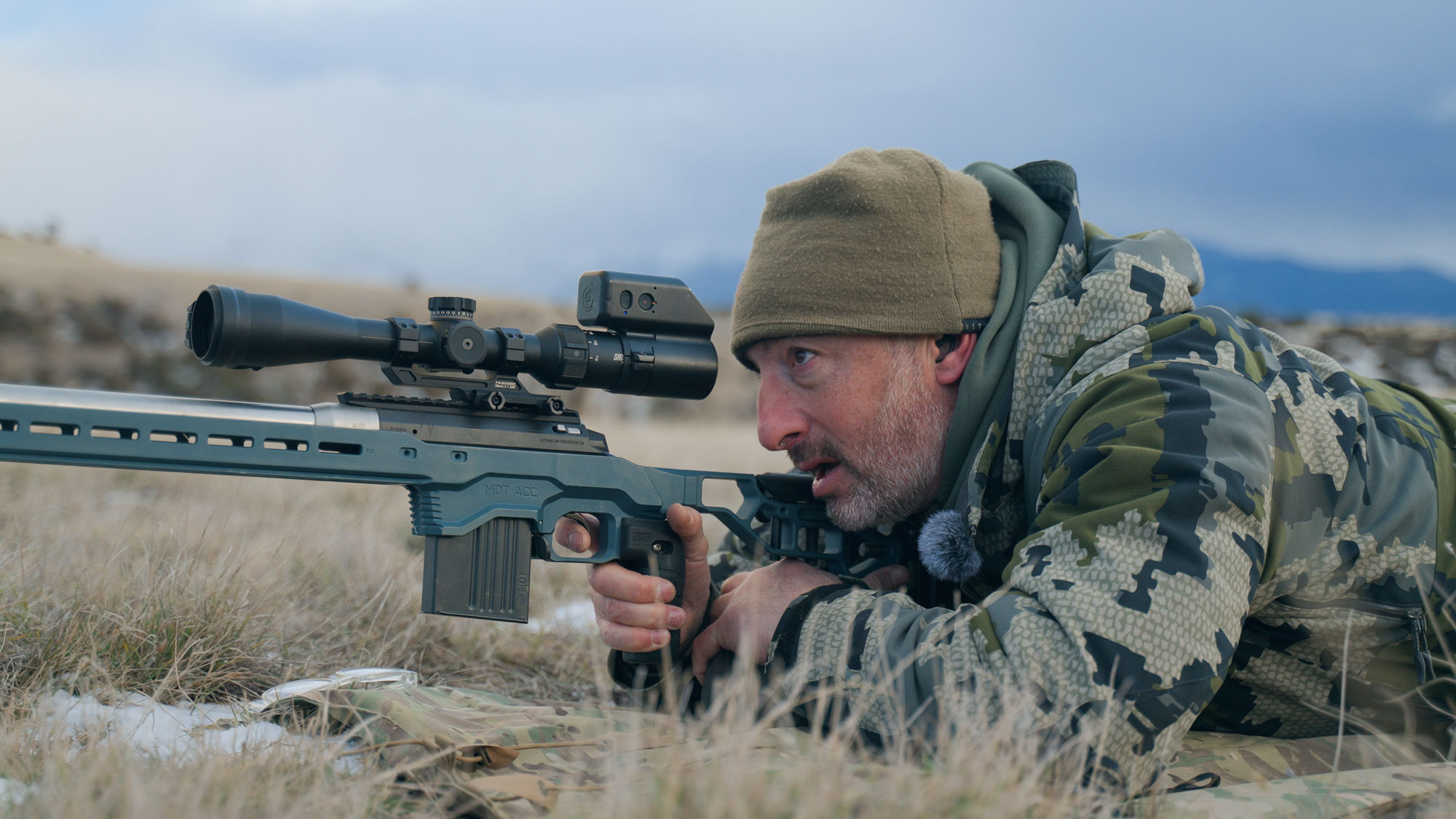
I’ve been running the Sig Kilo 10K Gen IIs for the last couple years and it has become an essential part of my kit — though there are plenty of other offerings to consider as well. I use the 10Ks in conjunction with a Kestrel weather meter to input accurate environmental and wind data to fine tune the calculations.
Deer and Wind Forgiveness
Within 400 yards the wind typically isn’t difficult to cope with. The adage of keeping your crosshairs “on the hair” is a reflection of this.
A deer has a long torso and a large vital zone, meaning it has a lot of what target shooters call “wind forgiveness.” Even if your wind call is off by half, for instance, chances are the bullet will still impact the vitals within our self-imposed 400 yard limit.
With the rifle and load I used in the video that goes with this story, for instance, the drift of my 140-grain OTM bullets in a 10 mph crosswind is about 10 inches at 400 yards. If I royally screw up the windcall by 5 mph either way, I’m still going to tag my animal. At 5 mph the bullet drifts 5.25 inches and at 15 mph it is pushed 14 inches. That four inch difference from the 10 mph hold won’t matter – and hopefully our windcall will be closer to the mark than that.
Respecting the Wind
There’s another adage to keep in mind as well, practically a mantra with long-range shooters: Respect the wind.
In practical terms what this means is don’t ignore the wind. If the wind is blowing and your animal is much over 100 yards, make a correction of some type.
Hunters who don’t spend time practicing in windy conditions with their rifle are most prone to this. The ingrained reflex to center the crosshairs on the target and let fly takes over – and can lead to a gutshot deer or one that takes a bullet through the brisket that won’t kill it quickly.
Types of Wind Corrections
There are three main ways to correct for the wind. You can dial a solution into your windage turret. You can use reference marks in the reticle to line up the shot. Or, if you’re using a traditional duplex reticle you can employ Kentucky windage, where you spitball a hold based on the number of inches your solver says the bullet will drift.
All these can work, but my strong preference is for option two: using the scope’s reference marks.
Dialing windage is popular with some target shooting disciplines where the course of fire follows a predictable, easy pace. In dynamic field matches (sometimes called sniper matches), such the Rifleman Team Challenge or Western Precision Rifle series, you don’t have the luxury to dial wind.
Downfalls of Dialing
One common problem with dialing is that shooters – even seasoned competitors – sometimes forget to dial back to their zero, or make corrections as the conditions change, which leads to predictable disaster.
The possibility for things to go sideways dialing wind while hunting is even greater. Say a better buck appears off to the side and you’re now shooting into a different wind vector. Will you have time to recalculate the solution and redial before the opportunity slips away? Will you be able to do the mental math to figure out on the fly the difference in the previous hold with the new one? That isn’t anything I want to cope with in the field.
Spitballing
Kentucky windage certainly works – I’ve employed it countless times over the years. But we have effective tools at our disposal and unless there’s no other option, we should use them.
When To Hold Over and Hold Off – and When To Dial
Reticles with some type of grid using hashmarks or dots have become ubiquitous. First focal plane scopes with MRAD reticles rule the roost in PRS and other field match series.
Second focal plane scopes with MOA turrets and reticles still dominate the hunting market, however.
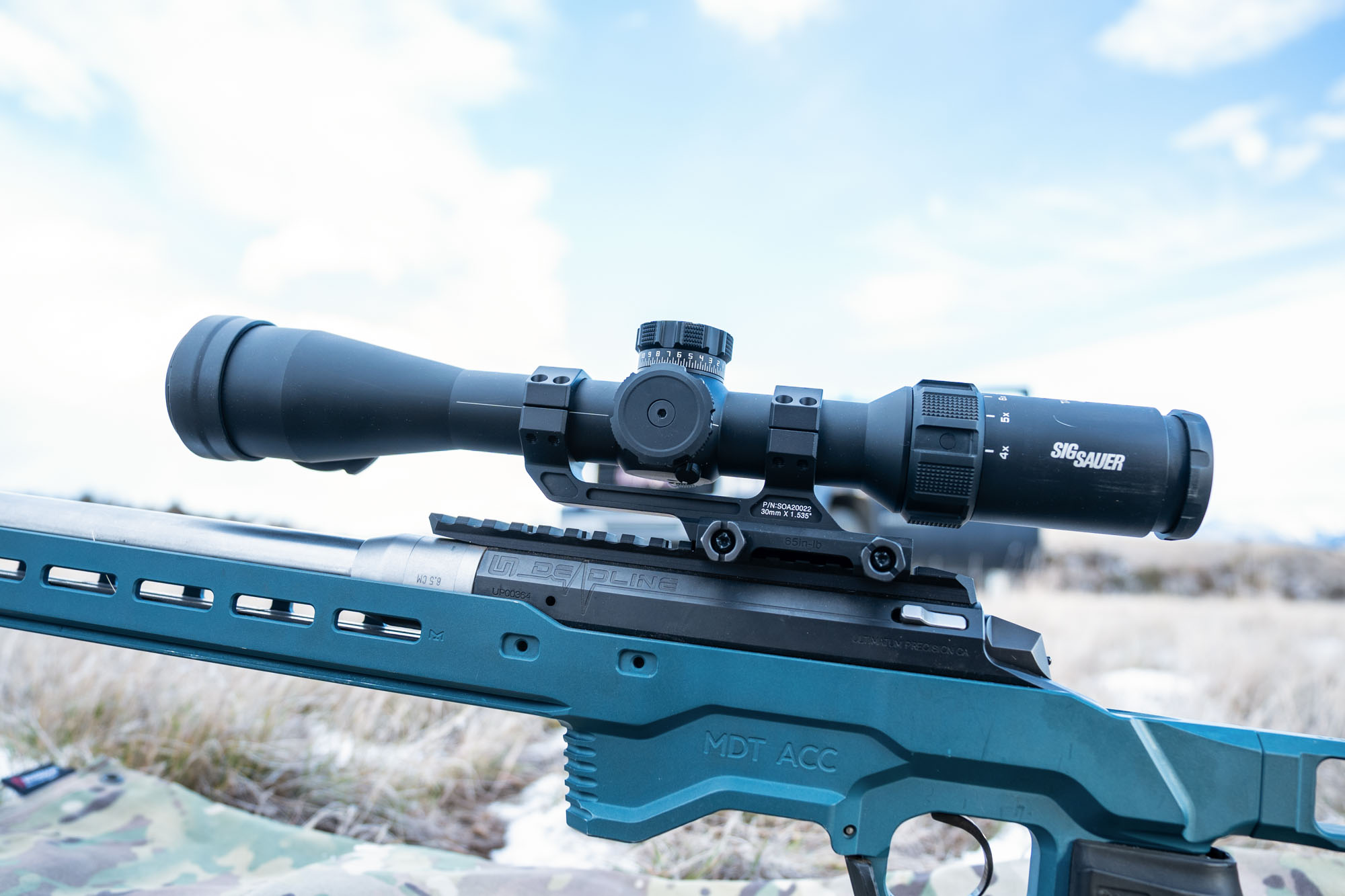
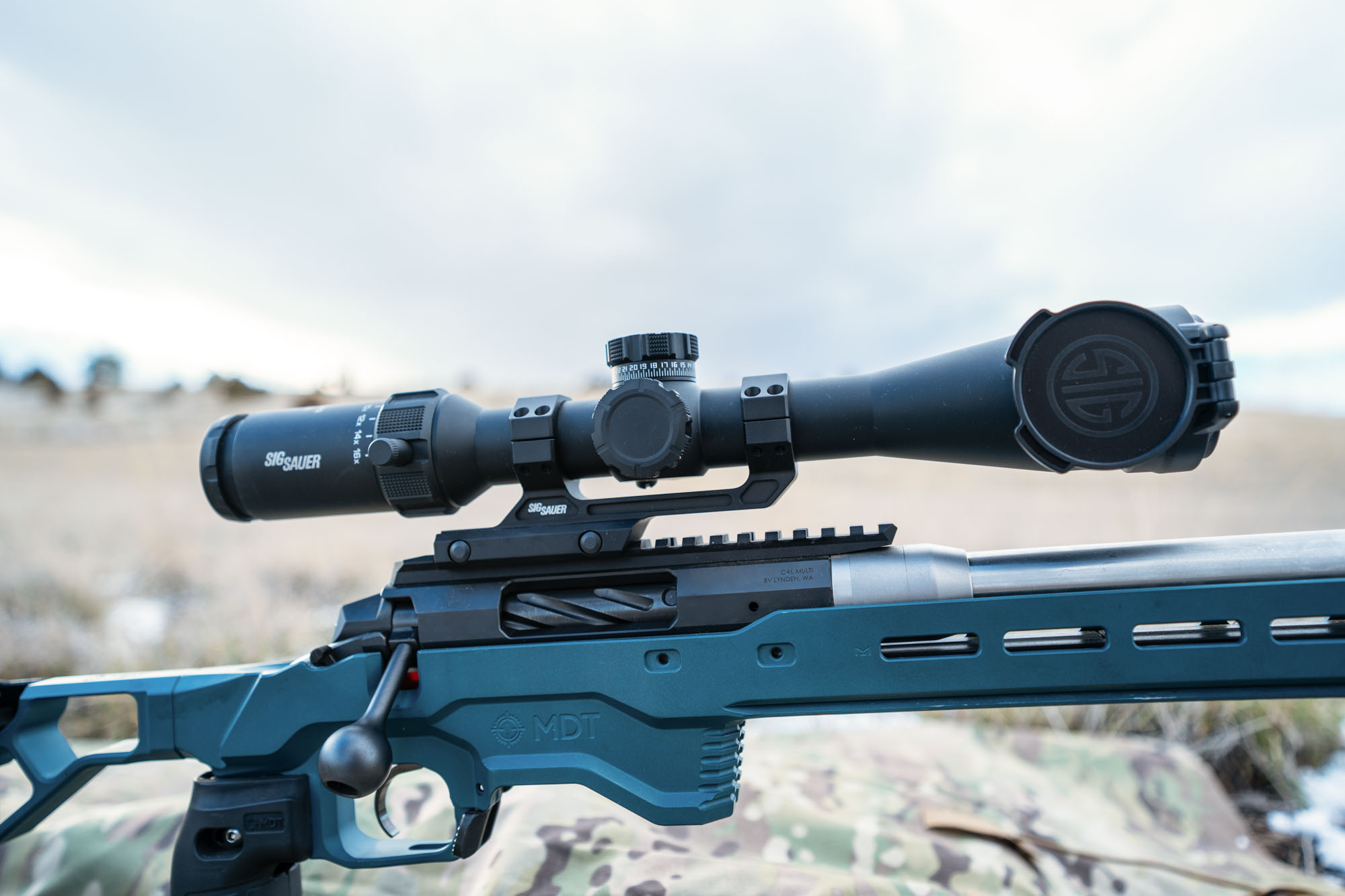
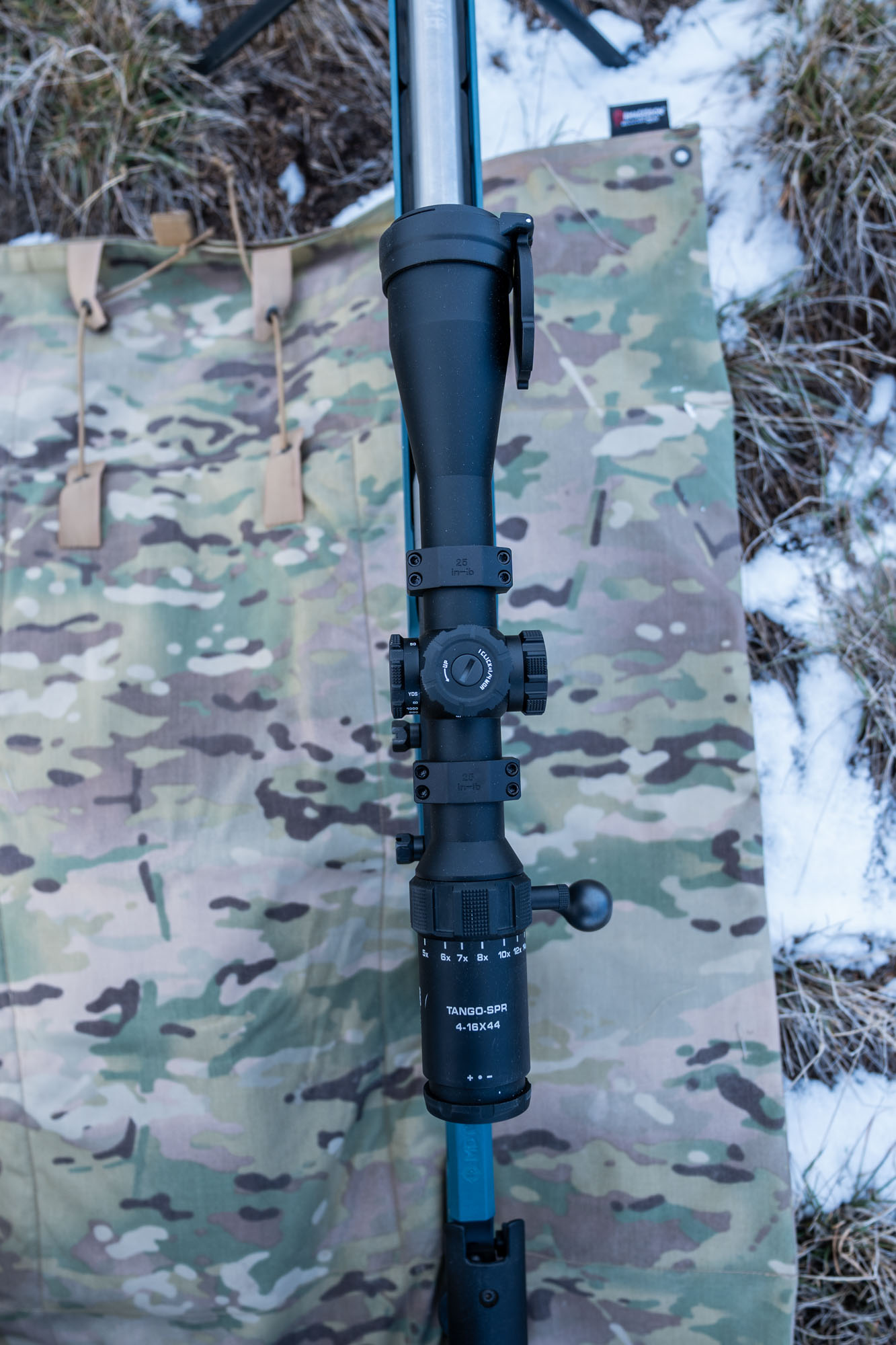
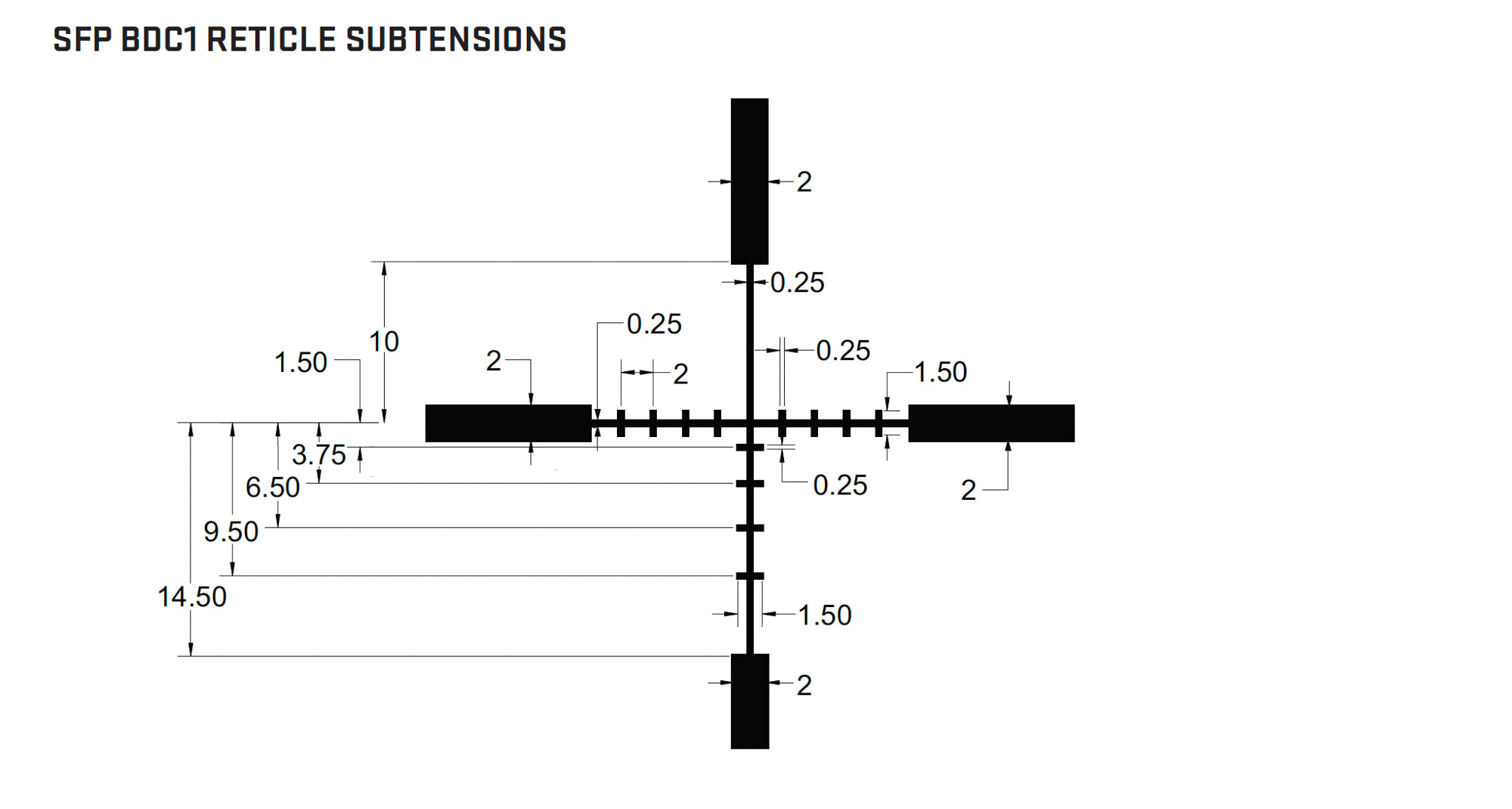
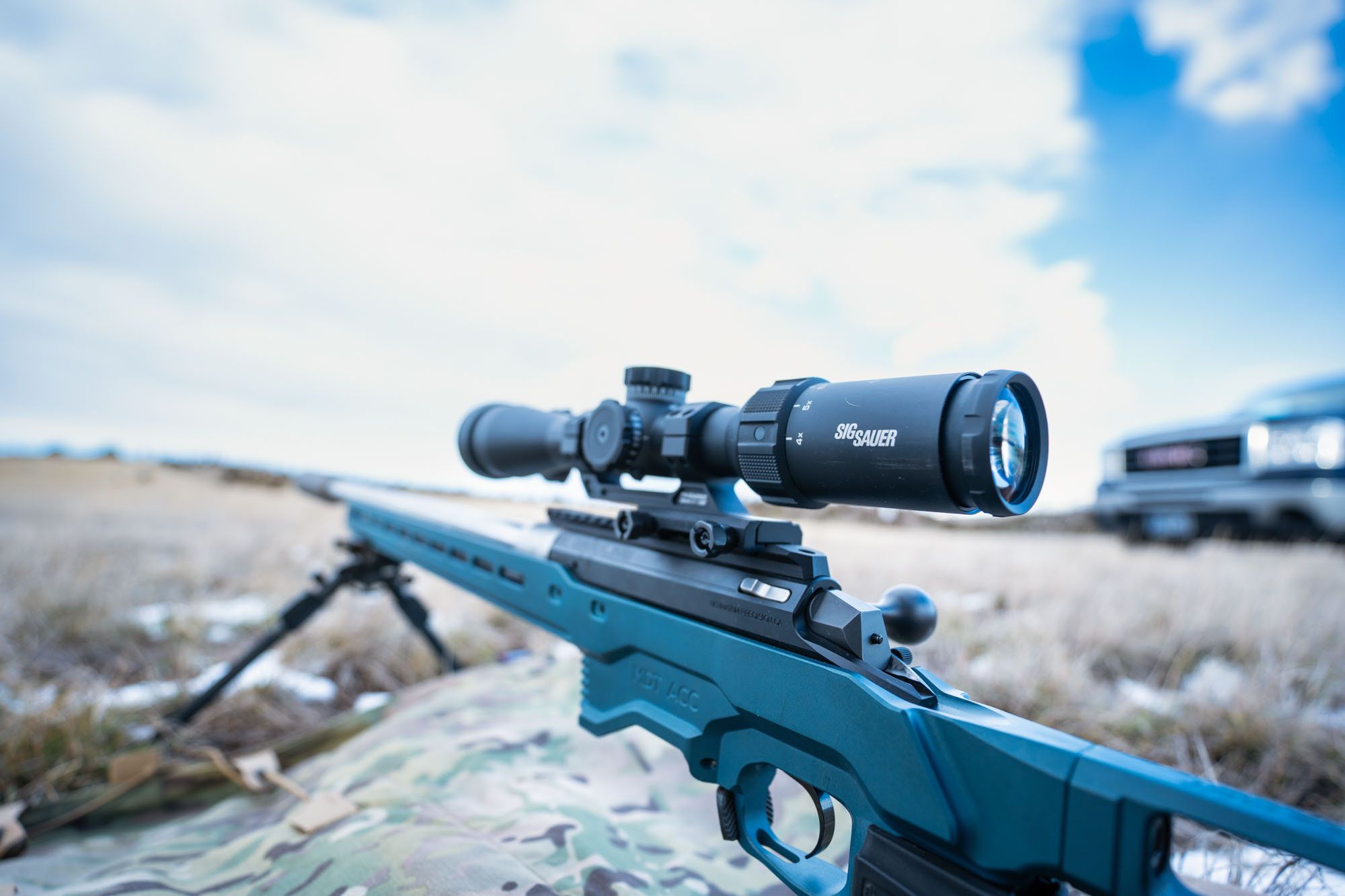
One of the simpler of these to use is a BDC reticle like the one in the Sig Tango-SPR 4-16×44 I mounted on my rifle for this story (this scope won our 2025 optics test great buy award).
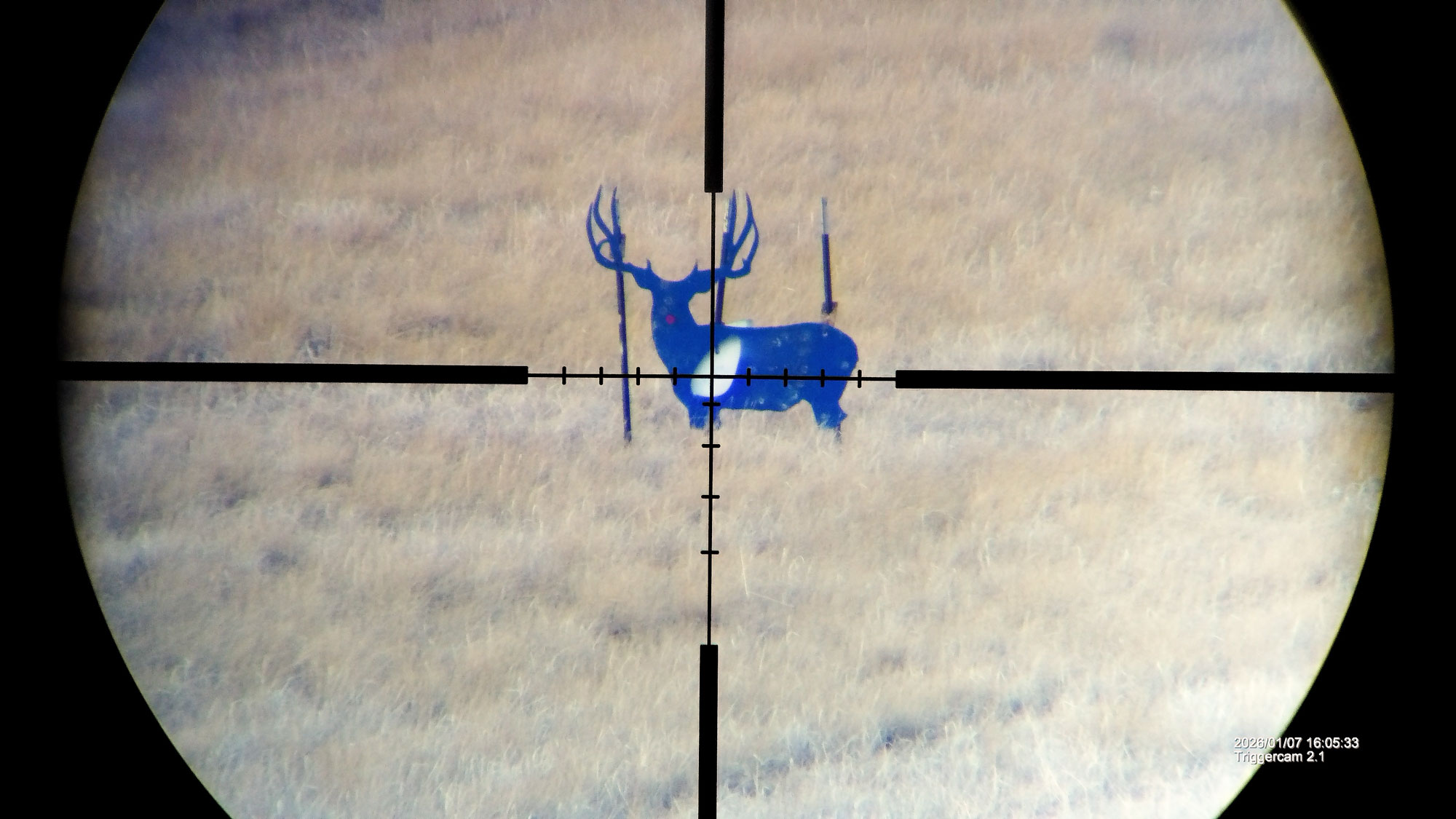
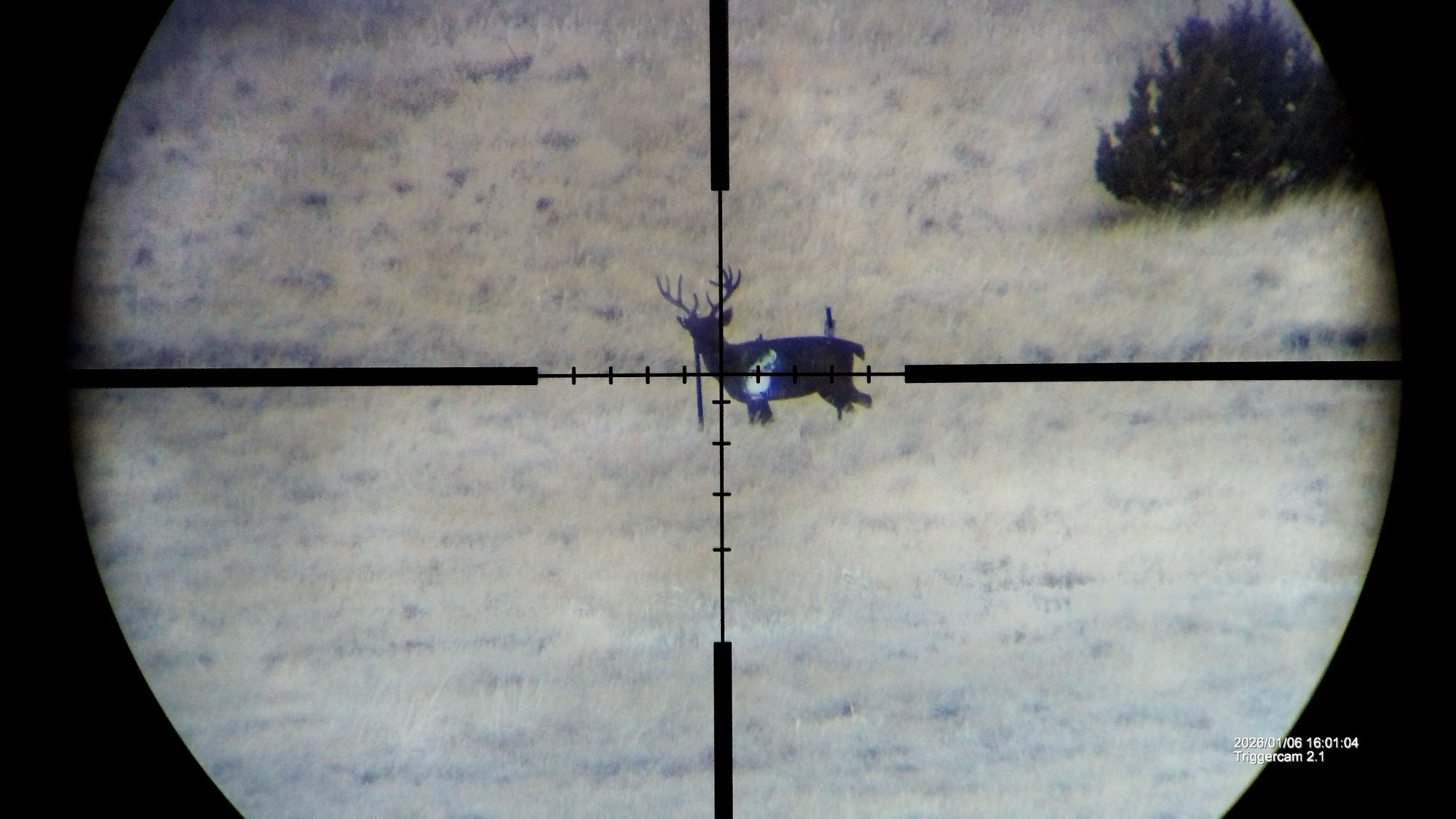
When dialed to maximum magnification, the hash marks along the horizontal crosshair subtend 2 MOA each. (If you dialed back to 8 power they would subtend 4 MOA.)
The marks down the vertical axis show drops from the center of crosshairs of 1.5 MOA, 3.75 MOA, 6.5 MOA, 9.5 MOA, and 14.5 MOA (the top of the duplex post) respectively. For my rifle, with its 100 yard zero, those roughly correspond to distances of 210, 300, 400, 500, and 630 yards. (The values I quoted in my video were slightly different due to the wind, temperature, and elevation that day.)
Though holding over is effective, I like to dial my elevation into my scope because it is more precise and there’s usually ample time to adjust the scope when the animal is farther away.
Making the Shots
I demonstrated the effects of the wind at a couple of distances for this story. The first round of shooting was at 480 yards with a 6 to 8 mph left to right crosswind with some gusting variability. The next day I shortened the distance to just over 200 yards, with a headwind that was switchy, going from left to right, with gusts to 18 mph followed by periods with little to no wind at all.
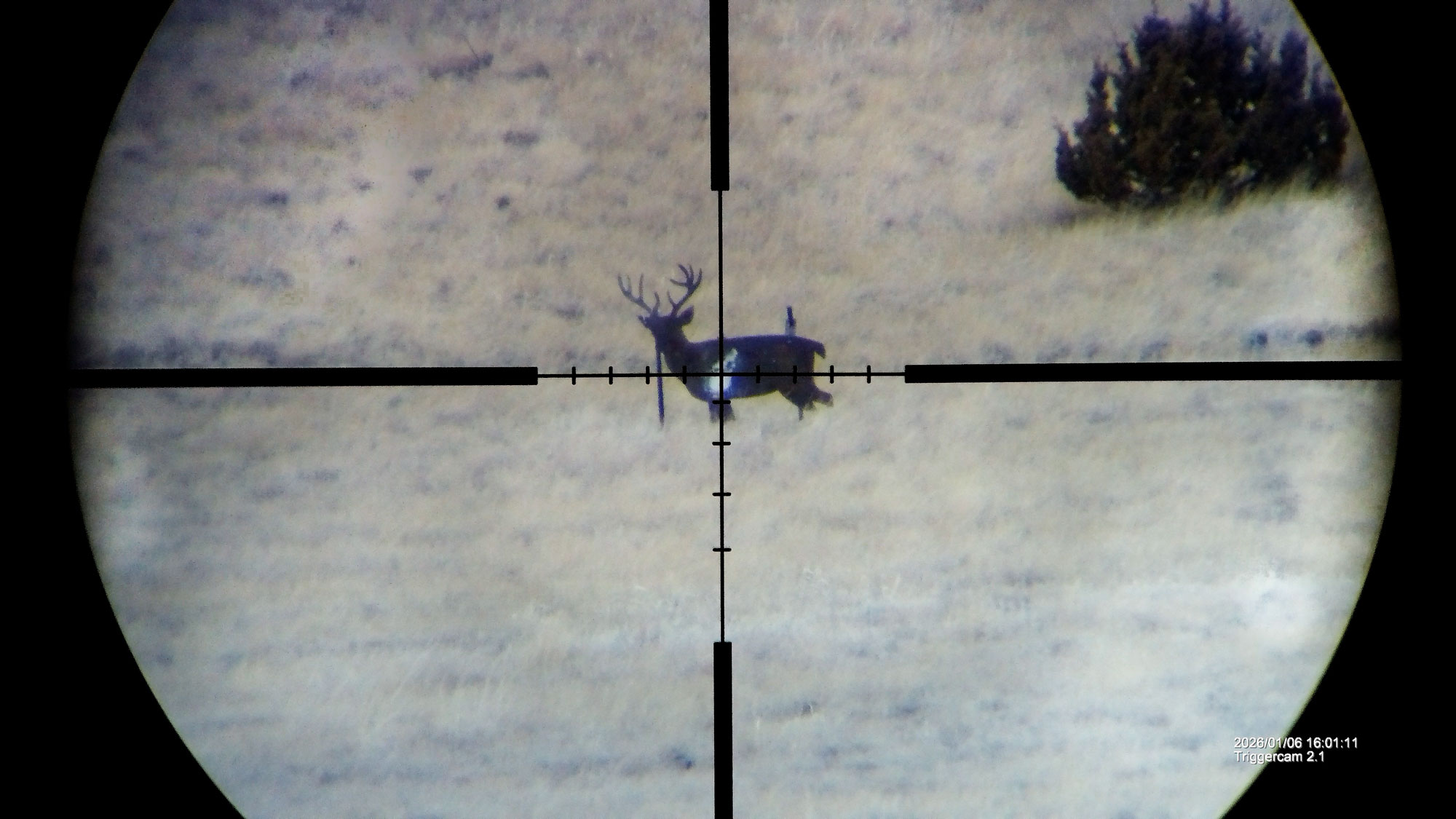
The crosswind the first day necessitated a windhold of 2 to 2.5 MOA. After dialing my 9.25 MOA come-up into the elevation turret, I moved the crosshair left and settled the first hash mark into the target’s vital zone. All those whacked the center steel plate perfectly. It was a perfect demonstration of holding-on-hair.
Then I shot with no correction at all and the bullet drifted back into what would be the deer’s paunch. That simulated gut shot is why respecting the wind when shooting at greater distances is essential. In terms of the wind grades I described above, I’d rate this wind a C. It’s a doable shot but is edging close to the point where not shooting would be the smart call.
The session the following day on the closer target – a more representative hunting shot – was drama free. Despite the gusty and switchy headwind – the condition I dread most in ELR matches – I didn’t have to adjust for the wind at all.
With a straight-on hold the bullets stacked on top of each other in the vitals. It was a case where I’d grade the wind an A-minus for its lack of a challenge.
Final Thoughts on Dealing With Wind
The best way to gain proficiency with the wind is to spend time shooting in it. If you don’t have access to steel at long ranges, do some shooting with a .22 LR when it is blowing hard. Set up skinny targets and you’ll find yourself in a teachable moment.
How to account for the wind, and whether to even take the shot, is situational. You have to weigh all the factors we talked about to make a good choice. But once you have the grading system down, you’ll find some scenarios are layups once you hone your skills and master your gear.