
Jeff Sturgis has made a name for himself by helping deer hunters and property owners better understand habitat and high-level hunting strategies. He’s honed these strategies through decades of hard hunting and consulting on his clients’ properties. He’s also tested them on his own 170-acre property in the bluff country of southern Minnesota (you can follow him on his YouTube channel, Whitetail Habitat Solutions).
This summer, I got to visit Sturgis’ property and get a high-level overview of how he thinks about habitat and targeting mature bucks. In the video above, Sturgis runs through his five favorite setups and explains how he hunts them. Some of these setups take an immense amount of work and expense to develop. Others require minimal habitat work but a deep understanding of deer behavior.
Whether or not you are able to build these exact setups on your own hunting area, there are some key lessons you can learn from him.
Sturgis’ Principles for Successfully Hunting Mature Bucks
Understand Buck Bedding Areas
Everyone talks about “buck bedding areas” but many hunters have only a vague understanding of them. The important point, Sturgis says, is that bucks do not like to bed near a lot of commotion, and that includes commotion from other deer. For example, does will often bed near major food sources. It’s convenient for them to get up from their bed and stroll right into a large food plot or ag field.
Mature bucks don’t like to bed around a mass of other deer. So buck beds will be found farther away from main food sources — even if there is prime bedding habitat right by those food sources. So just because you’re seeing a lot of does and young bucks in an area doesn’t mean it’s a good spot for mature bucks. In fact, it could mean the opposite.
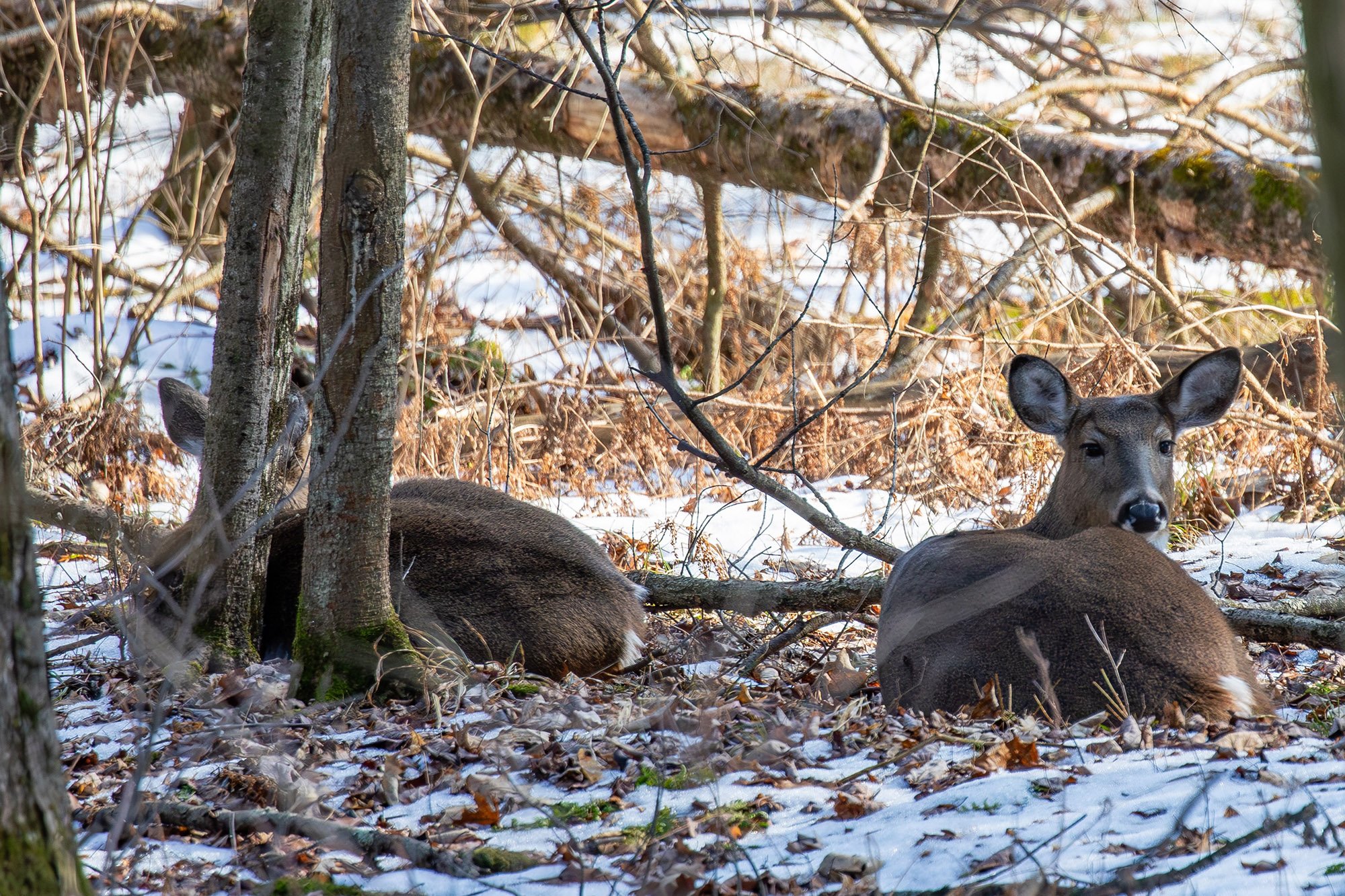
By crossing off areas where mature bucks won’t bed — again, areas with high pressure and activity — you can narrow down where they will bed. Sturgis isn’t afraid to hunt near buck bedding areas, but he does so sparingly. And when he does, he often takes his target buck.
Don’t Spook the Main Food Source
When you see deer consistently coming to a big food plot or agricultural field during daylight hours, it’s tempting to just hunt that major food source. Sturgis will hunt the big “holding plot” on his property, but only when he’s able to do so without spooking deer. He’s got a Redneck blind at the edge of the plot, which has an access route that is completely blocked by screening cover. He can get into and out of the blind with deer in the field — and never spook them. But that setup means he’s only able to hunt the big holding plot during gun season, even if there are target bucks hitting it during bow season.
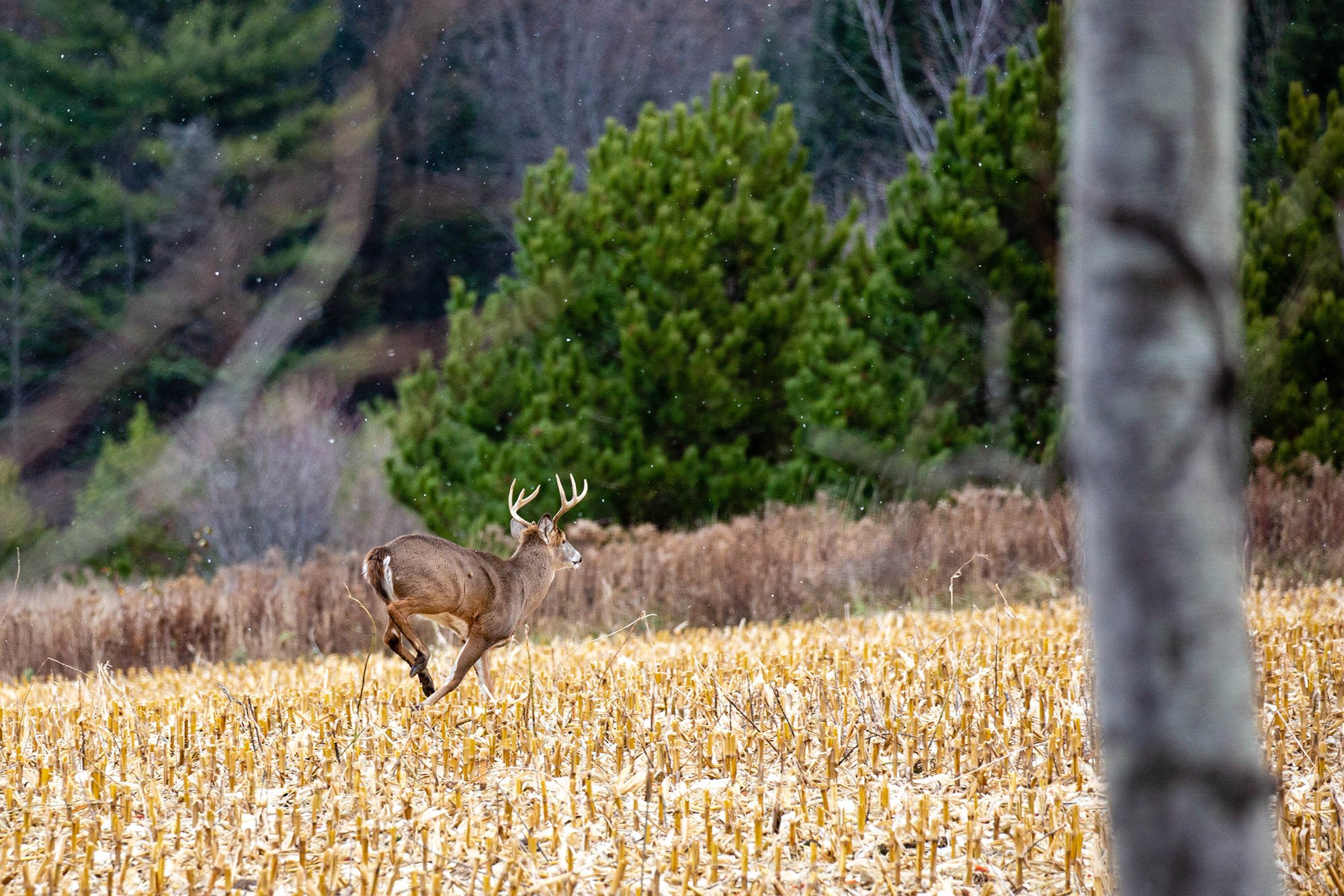
Sturgis considers the holding plot the cornerstone of his entire property. So long as deer feel safe feeding there, he’s in the game. Even if he happens to bump a buck out of its bedding area, that deer is likely to switch bedding areas but still come to the holding plot to feed. This means that Sturgis can keep hunting that buck.
On the flipside, if he blows out the holding plot, it throws off deer behavior for the entire property, and that could be detrimental to his entire season. In some ways, he treats the holding plot like a sanctuary.
Water Is Key
Sturgis has a ton of videos about how to set up and hunt waterholes. He creates his waterhole setups in the woods in traditional rut funnels. These waterholes give deer a reason to come within bow range and to stop there. Sturgis and his wife, Jen, have some of their best big-buck hunts over waterholes.
These setups are relatively easy to implement, assuming you can get some kind of water tank into the woods where you hunt. They’re great places for all-day sits during the heart of the rut.

Sometimes It’s Okay to Sleep In
We all love to be in the woods before sunrise and to hear the telltale sound of a buck marching into range just after shooting light. But in some cases it’s impossible to hunt a spot first thing in the morning without spooking deer. These are often areas near field edges — deer are still in the fields feeding in the dark.
In these scenarios Sturgis will simply enter the stand an hour or so after daylight when deer have left the field. This allows him to slip in undetected and have several hours of quality hunting before leaving again in the evening. These are usually high-probability sits during the rut.
Big Bucks Shouldn’t Know They’re Being Hunted
The main principle that Sturgis’ hunting strategy revolves around is to not overpressure mature deer. He wants big bucks to do their thing: rut, establish their dominance, and move around the habitat, during daylight hours. He lets his Tactacam trail cameras do the monitoring, and he picks his sits carefully. Of course we all love being in the woods and Sturgis does too. So he has stands that are very low impact for those times when he or someone in his family just wants to hunt — and you never know, a mature buck could stroll by any time.
But his approach is much more surgical when really targeting a specific deer.
About Habitat IQ
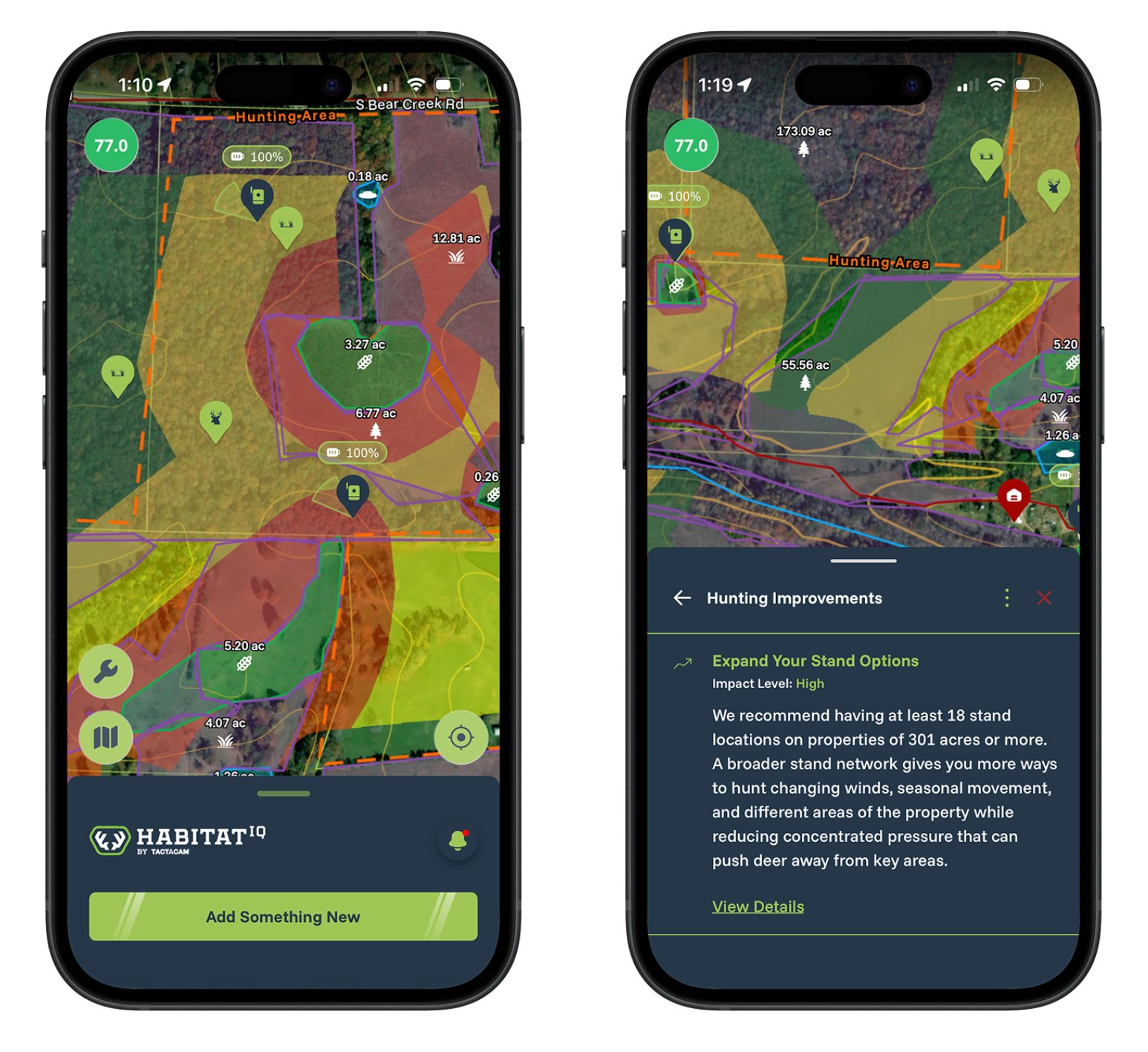
One of the many things I learned from Sturgis is that all of the knowledge (and much more) outlined above has been built into the Habitat IQ app. This app allows the user to draw in habitat features (like food sources, water, timber, and roads) into their own property. The program then uses a powerful algorithm, built off of Sturgis’ knowledge, to make habitat improvement suggestions and predict deer movement.
For example, if you don’t have any useful water sources on your property, the app will suggest adding some waterholes, and give you an idea about the best areas to place them.
Related: Here’s What Most Hunters Get Wrong About Whitetails, According to Jeff Sturgis
The app is basically a digital version of Sturgis’ habitat/hunting consulting business. The more data you add into it, the better information you get back. I think this will be an incredibly powerful tool for anyone who is looking to implement the concepts that Sturgis has proven out over the course of 20-plus years of consulting on deer properties.