
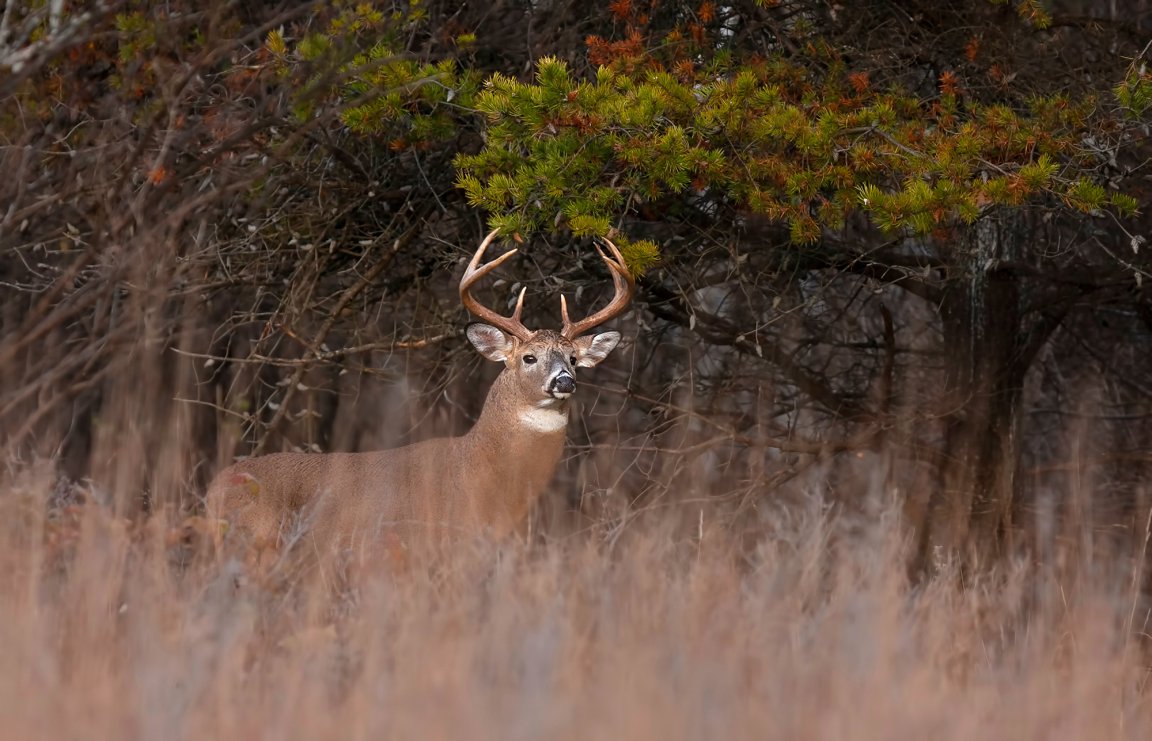
By the time the rut winds down, the weeks of sparring, rubbing, chasing and breeding have taken a marked physical toll on whitetail bucks. Some biologists theorize that when a buck’s testosterone level spikes upward in preparation for breeding, the thyroid gland simultaneously suppresses the desire to feed. This glandular shift, along with the nearly nonstop chasing and breeding, is the reason why a mature buck can lose up to 20 percent of its body weight during the primary mating period.
Certainly, no animal can keep up that pace for very long. At a wildlife experiment station in Michigan, one 4½-year-old buck repeatedly bred 31 different does during that state’s 11-day rut peak. When each doe finally conceived, the buck retreated to a bedding area in thick cover where he remained almost motionless for 52 hours. Then the buck became as single-minded about feeding as he had been about mating, and he began piling on the groceries.
“Lull” Strategies
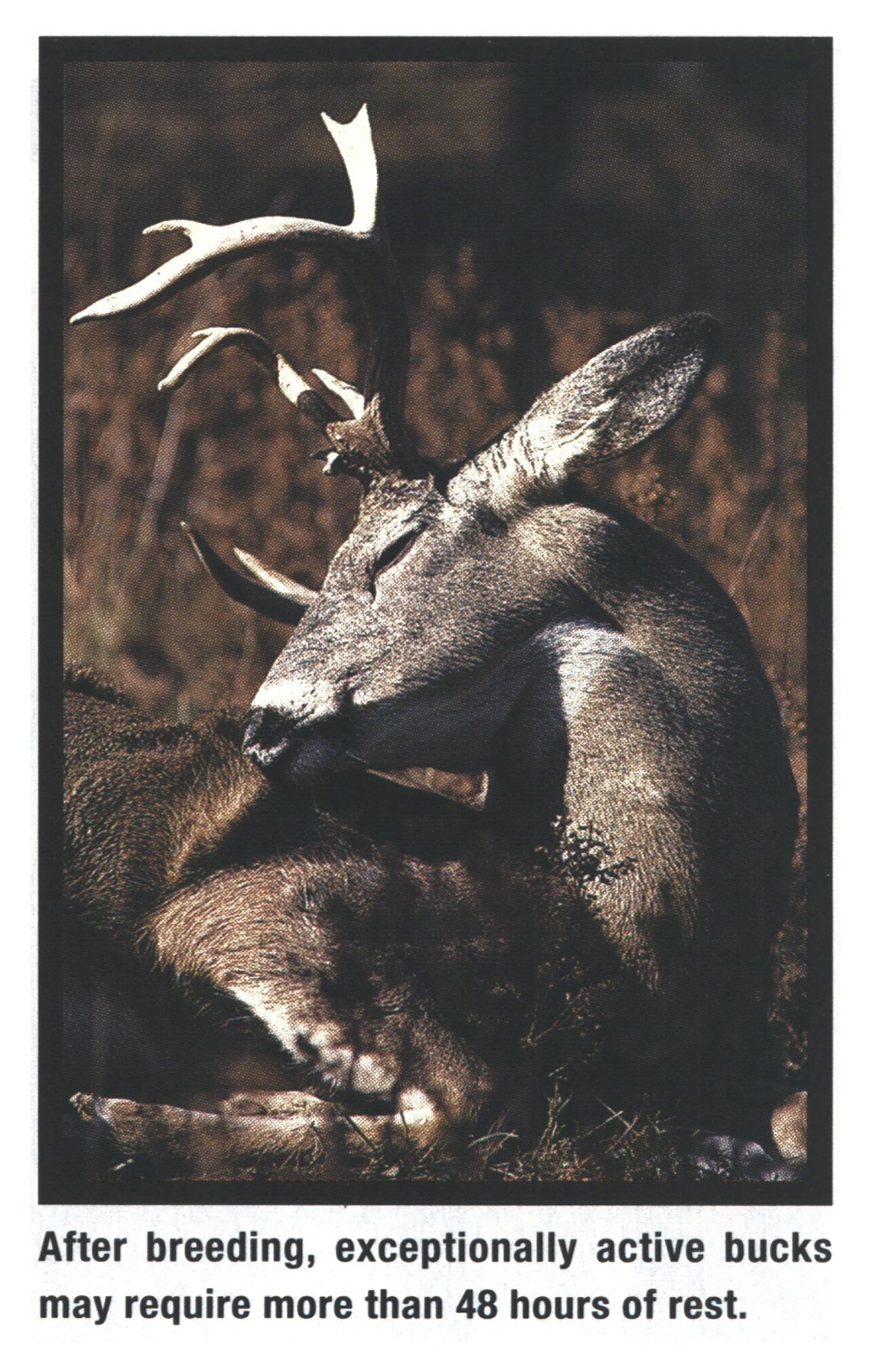
This behavior makes bucks relatively predictable during the immediate post-rut. Overcome by exhaustion, they first enter a recuperative period of several days, during which you had better stillhunt or stage drives, because the chances of seeing a buck walking by your tree stand are slim. After this short recovery period, the bucks are driven to regain lost body weight before winter arrives. At this stage, parking yourself at a prime feeding area located near bedding cover is a winning ticket, but only at midday.
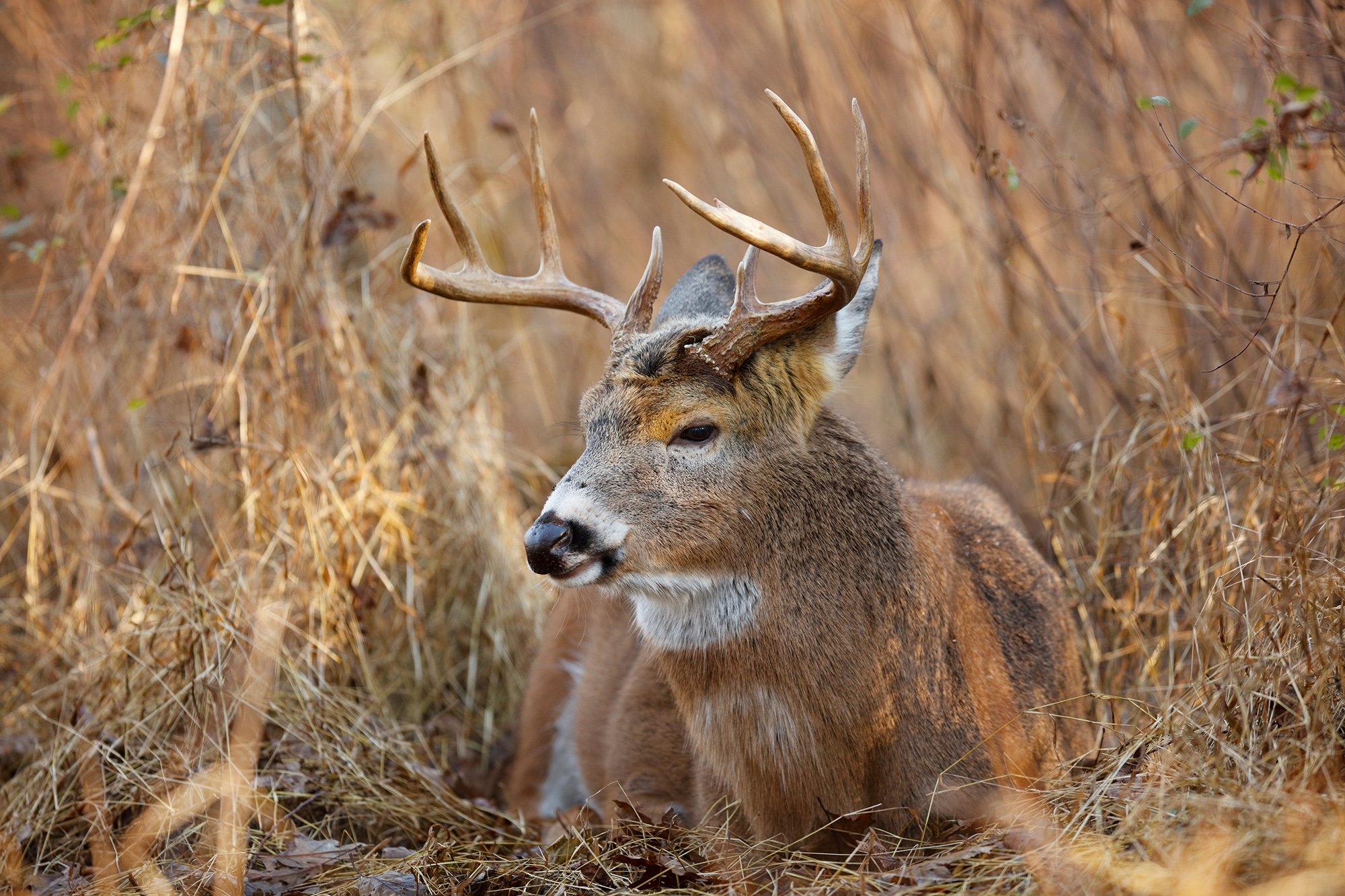
Midday? That’s right — devote the hours from 11 a.m. to 3 p.m. to stand-hunting over feeding areas. The reason being that as winter approaches deer undergo a major shift in their routine, with movement being the most active when the sun is at its highest. (Biologists are in disagreement over what causes this change. Some speculate that the cause is the shortening hours of daylight; others say that declining temperatures play a major role. Most likely, it’s a combination of both, with energy conservation the goal. The deer instinctively know that inactivity at dawn and dusk enables them to retain body energy during the coldest portions of the day.) Whatever the precise explanation, keep in mind this rule of thumb: As the hunting season wears on, whitetails become less active early in the morning and increasingly active at midday.
Still-standing croplands are a major attraction at this point due to the high nutrient value of corn and soybeans, and of legumes that have not yet gone dormant — such as alfalfa and clover. Scout for tracks along the perimeter of such croplands to determine entry and exit routes. Moreover, if you’re hunting a low-growing food source such as beans or clover, don’t approach your stand by walking directly across the open field and skylining yourself; always take a roundabout way through cover that will allow you to slip undetected into your stand.
In the absence of agricultural foods, clear-cuts in early regenerative stages offer an abundance of browse. Equally sought after by rut-weakened bucks are stands of staghorn sumac and groves of white cedar, both of which are high in fat content.
Interestingly, during bitter cold weather, lowland swamps, bogs and marshes are other excellent places to find deer. Such areas offer a measure of protection from the frigid blasts sweeping across surrounding high ground, and they generally offer a cornucopia of green browse throughout the winter. Plus, decaying organic material and the attendant release of heat can mean that a low-elevation swamp may have an average daily air temperature as much as 15 degrees warmer than higher terrain located only a mile away.
All of this is reason enough for hunters to bust out of the post-rut lull that they may have fallen into. What with bucks not moving and the mercury threatening single digits, it’s understandably tough to roll out of bed. No doubt you’ve missed your best opportunity to score a trophy, but with a reversal of your earlier strategies — by stillhunting and driving mornings and evenings, and setting up near food sources at midday — something more impressive than a freezer doe just might step into your sights.
Here We Go Again
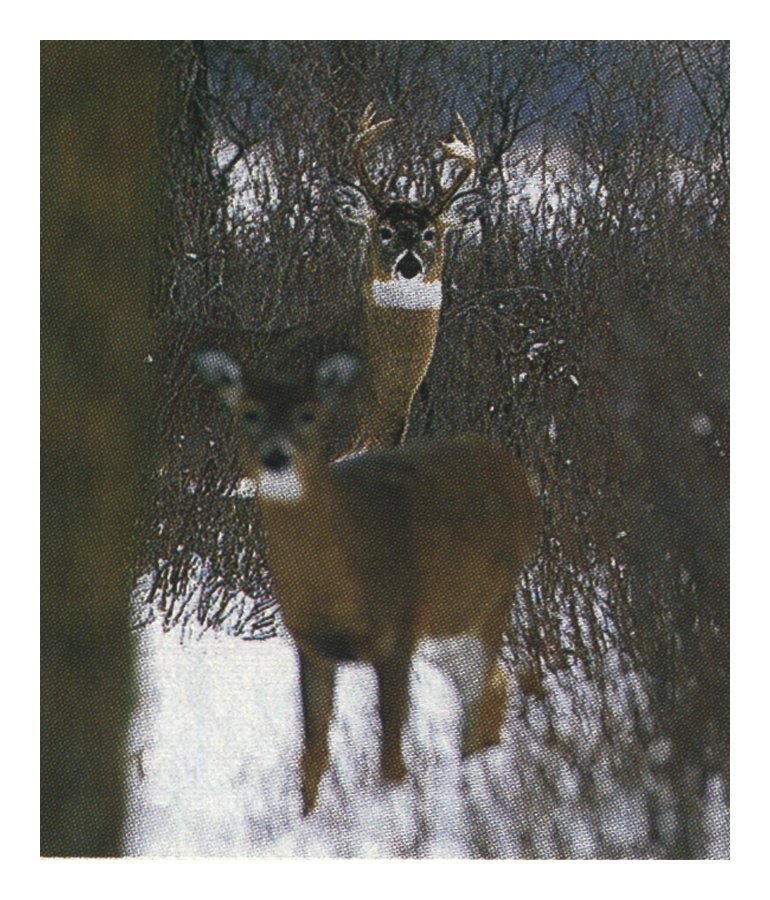
The rutting lull spans a mere four weeks before the deer get it goin’ on again. In most regions, does far outnumber the bucks able to service them, and those that don’t conceive during the first rut experience a follow-up estrous cycle 28 days later.
Because fewer does are available for breeding, the second rut can be even more action-packed than the first, with heightened competition between bucks, wide-ranging travel patterns and better responsiveness to rattling antlers and grunt calls.
Quickly check the scrapes you located earlier in the season. Bucks will reopen many of them. And keep in mind that the key time to stand-hunt the second rut is still midday: In one University of Georgia study, the peak time that bucks tended scrapes during the second rut was shortly before 2 p.m. No matter how you spend the rest of the day, plan on being on a stand overlooking scrapes immediately after your noon lunch break.
This story, “The Post-Rut Lull,” appeared in the December/January 1999 issue of Outdoor Life.