
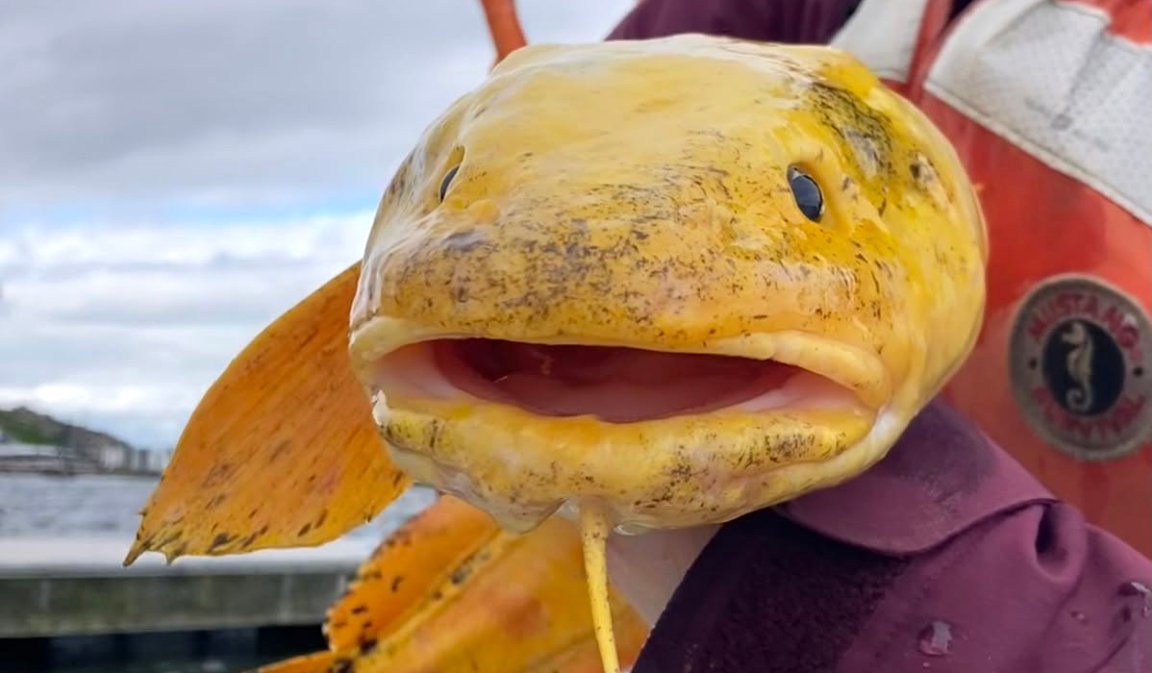
Routine research in the Great Lakes system morphed into an unusual catch this fall.
A U.S. Fish and Wildlife Service survey crew caught a rare yellow burbot in October, according to a statement last week. The fish came from Oswego Harbor, New York, which is on the southeastern side of Lake Ontario. It’s a significant find for more than just its color variation.
“The finding is notable because burbot populations in the lake are extremely low,” the agency wrote on Nov. 10. published last week. “The species typically inhabit deeper, cooler waters than those found within the harbor.”
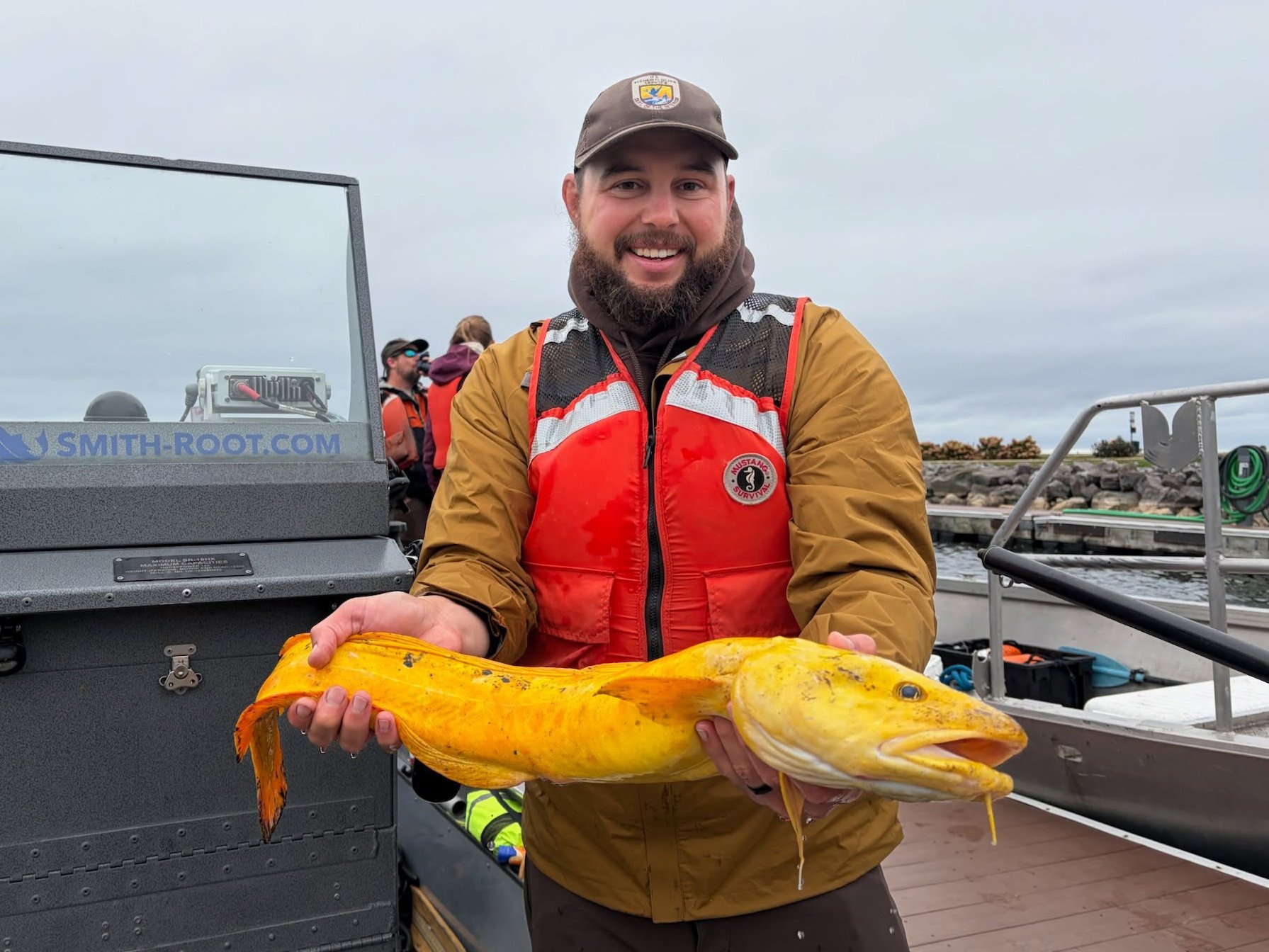
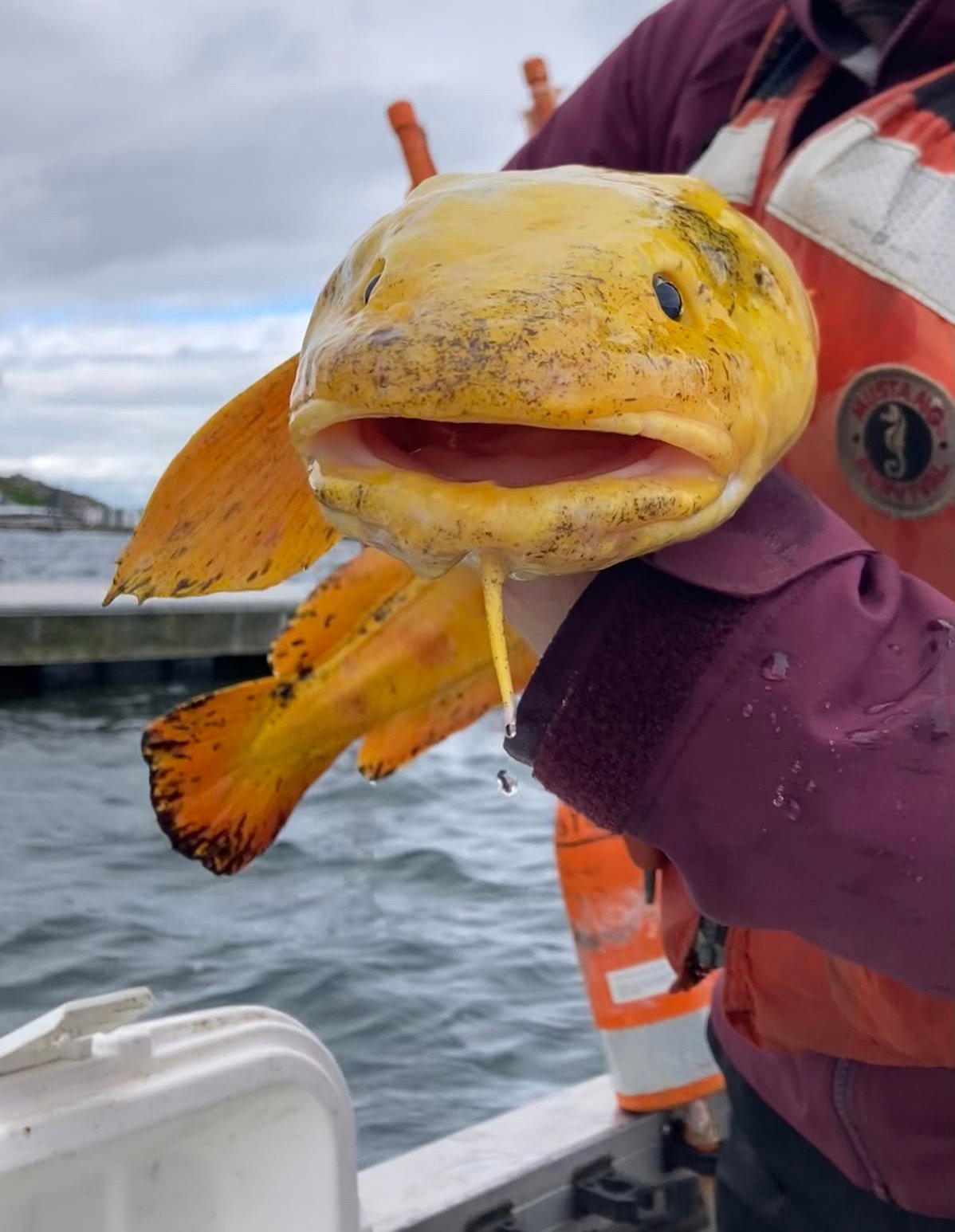
Running the full length of an arm, the off-colored native burbot had xanthochromism, a genetic mutation that causes an animal’s pigment to be excessively yellow or orange. In fish, it displays on their scales and fins, but it can also show up on furred animals. It’s less common than albinism in the wild, but it’s also not unheard of.
A 6.6-foot orange-Creamsicle nurse shark turned up with the same condition, plus albinism, in 2024 in Costa Rica, and the first case of xanthochromism in a sunset-colored snook in the Gulf was documented in 2024.
The variation might be appealing to fishermen, but it’s less fun for the fish themselves. Their bold coloring reduces their ability to hide within their habitat, which means they’re easy prey and often have shorter lifespans.
The deadly-bright hues look similar to banana trout, but that’s a different scenario.
Palomino trout, or bananas, are popular stockers for pond practice. They’re also covered in shades ranging from yellow to orange, but they’re bred that way on purpose. Hatcheries breed them from a mutant rainbow trout strain that lacks the dot pattern but keeps the bow’s notorious red lateral stripe. Despite the golden color, they aren’t related to California golden trout. The strain traces to a single yellow-mottled rainbow fingerling found at a West Virginia hatchery in 1955 and was introduced to anglers in 1963.
Read Next: These Are the Biggest North American Catfish of All Time
As for the yellow burbot in Oswego, it wasn’t released. Its body condition was in decline, so the fish was sent to Cornell University College of Veterinary Medicine to be studied. It’s one of many fish analyzed during the region’s Aquatic Invasive Species Survey. The goal of the survey is early detection of a problem throughout the many bodies of water in the Great Lakes system, including harbors and rivers. Researchers use electrofishing, fyke nets, and gill nets to collect specimens for the survey.