
We may earn revenue from the products available on this page and participate in affiliate programs. Learn More ›
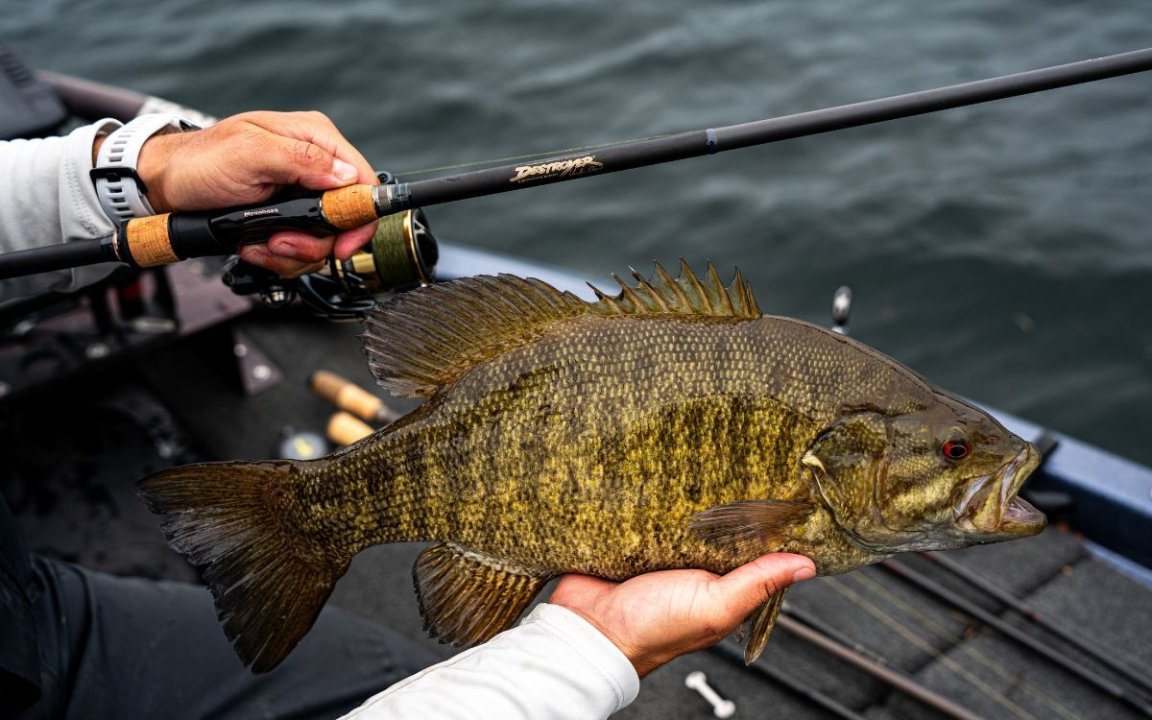
Savvy anglers know that spinning rods can handle the biggest fish around and throw the lightest lures while being both exceptionally sensitive and extremely powerful. Of course one rod can’t do it all and there isn’t one best rod, there are rods that are the best for specific purposes.
Obviously, there’s a near-endless selection of spinning rods to choose from, and we can’t test them all. Since bass are America’s most popular gamefish, we focused this review on rods that were developed with bass in mind. Here are the best bass rods we’ve tested for popular bass fishing techniques.
- Best for Strolling: Megabass Destroyer P5 F3.1/2-611XS
- Best for Dice Baits: G. Loomis IMX Pro Bass IMX-PRO-862S DSR
- Best for Neko Rigs: iROD Quercus IQ702S
- Best for Ned Rigs: Lamiglas XP Bass XP702S
- Best Overall: St. Croix Victory VTS73MXF
- Best for Skipping Docks: Douglas XMatrix DXS 704F
- Best for Dropshotting: Abu Garcia Zenon ZENS-610-4
- Best for Flukes and Small Swimbaits: Shimano Curado CDS70MA
- Best Travel Rod: Megabass Valkyrie World Expedition Travel Spinning Rods
- Best for Small Crankbaits: St. Croix Legend Glass Crankbait Spinning Rod 6’10” M
- Dobyns Champion XP DC 702SF
- Falcon BuCoo SRS BRS-4-17
Best Spinning Rods: Reviews & Recommendations
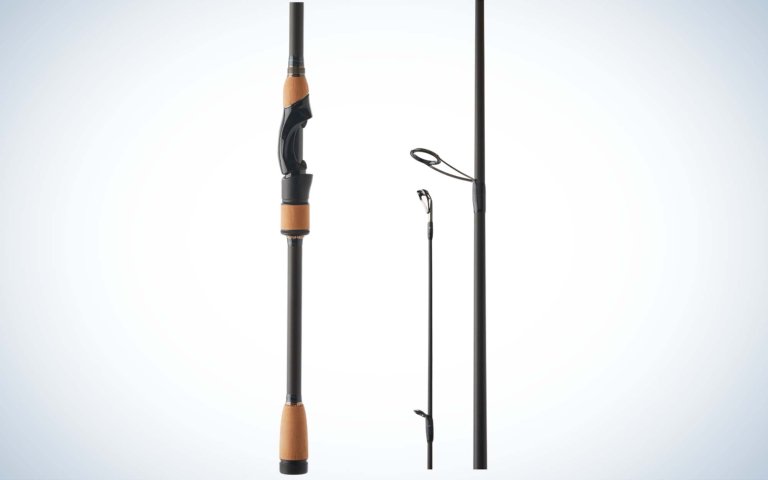
Best for Strolling: Megabass Destroyer P5 F3.1/2-611XS
Pros:
- Incredibly lightweight
- Ergonomic and comfortable reel seat / handle
- End balancer with lighter counterweights
Cons:
- Not inexpensive
Key Features:
- Length: 6 feet 11 inches
- Power: Medium light +
- Action: Extra fast
- Lure Weight: 1/8 to 1/2 ounce
- Split grip cork and 3D dynamics performance grip
The usage of forward-facing sonar has exploded in recent years. This has led to a surge in new tactics like strolling that have taken over the tournament scene. I set out to find the best rod for strolling, and after months on the water, I can confidently say I’ve found it. The Megabass Destroyer P5 Addermine leaves little to be desired. It’s absurdly lightweight, incredibly sensitive, and to this point remains quite durable. That’s a major plus, because admittedly, it’s quite the investment. But I’ve found it to be worth every penny.
The action is perfect for pulsing a minnow overtop of a bass on FFS, and the backbone is strong enough to really drive the hook home with a sweeping hookset. I’ve noticed that too much power leads to missed fish on the hookset, but too little leaves you without the hook fully penetrating the roof of the mouth. The Addermine threads the needle perfectly with action and power to peg a fish on a light jighead for the ensuing fight. I don’t say this lightly. The Megabass Destroyer P5 Addermine has become my favorite spinning rod in my arsenal. It’s a joy to fish with, and it feels amazing in hand. — Derek Horner
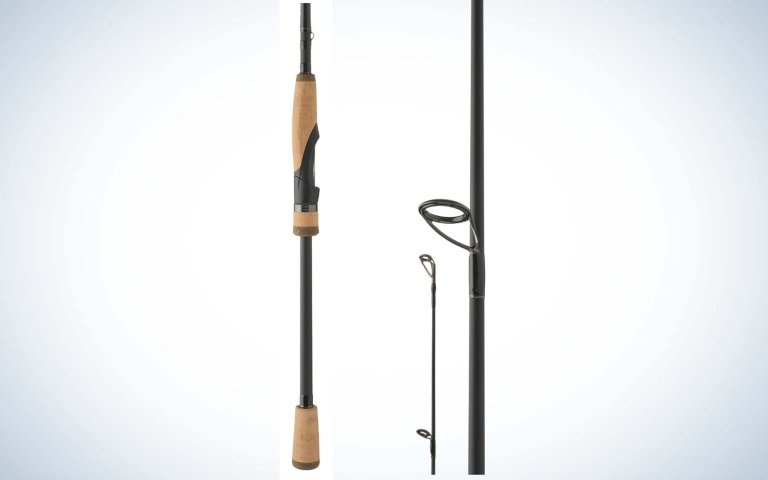
Best for Dice Baits: G. Loomis IMX Pro Bass IMX-PRO-862S DSR
Pros:
- Very lightweight
- Super sensitive
- Carbon-infused Ci4+ reel seats
- Made in the USA
Cons:
- Not inexpensive
Key Features:
- Length: 7 feet 2 inches
- Power: Medium +
- Action: Extra fast
- Lure Weight: 1/8 to 3/8 ounce
- Split grip cork handle
Unless you’ve been living under a rock, you’re sure to have at least heard about the dice bait and urchin craze that’s taken over bass fishing this summer. Seeing as this is a very new trend, I, along with many other anglers, have been trying to dial in the perfect setup for smaller urchin baits and larger urchin baits. I’ve found that a baitcasting setup is best for the larger options, but a spinning rod has been my go-to for smaller urchins like the Yamamoto Uni.
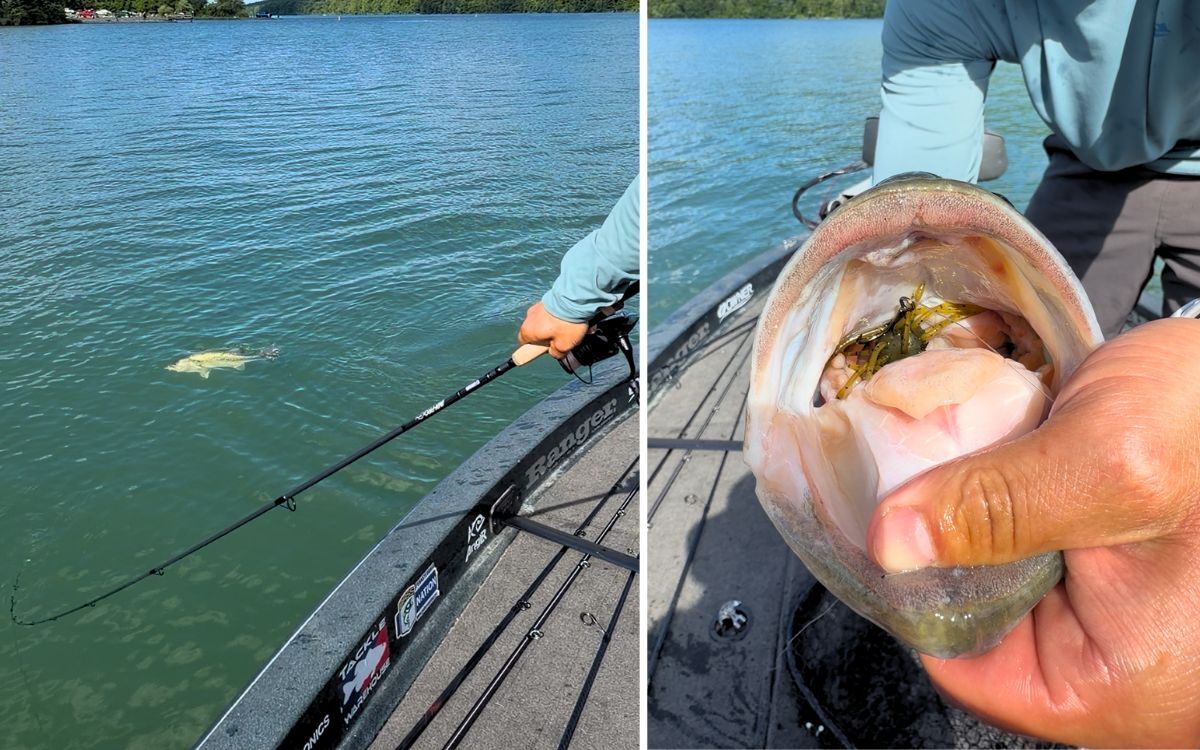
After months of trying many different finesse spinning rods, I’ve finally landed on my favorite. The G. Loomis IMX Pro Bass quite literally couldn’t be any better for fishing a small urchin bait with a light nail weight. The extra fast tip allows me to pulse the bait through the water column to portray fleeing prey, and the medium + power allows me to make long casts and get strong, powerful hooksets when a big bass strikes. It’s incredibly sensitive as well, which is important for feeling the strike through the bow in the line that occurs while pulsing the bait. If you’ve jumped aboard the urchin bandwagon, you won’t be disappointed with the IMX Pro Bass as your small urchin rod. — Derek Horner
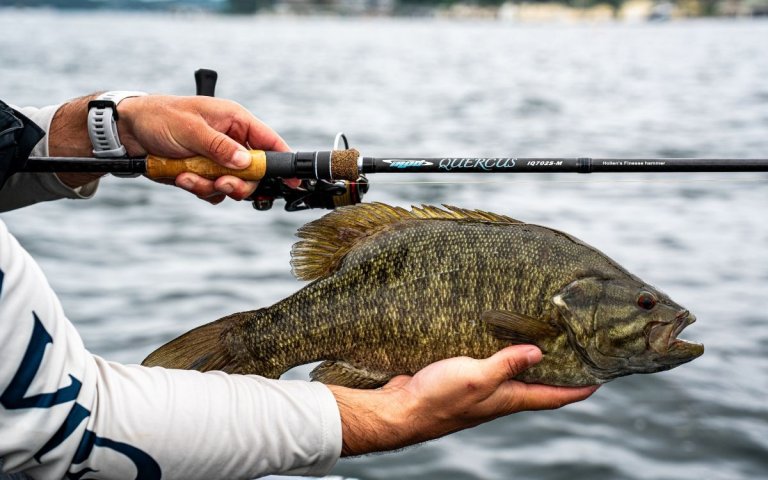
Best for Neko Rigs: iROD Quercus IQ702S
Pros:
- Very sensitive
- Lightweight
- Impressively Durable
- Fuji “0-Type” guides for smooth casts
Cons:
- Action is softer than most fast action rods
Key Features:
- Length: 7 feet
- Power: Medium
- Action: Fast
- Lure Weight: 1/8 to 3/8 ounce
- Split grip cork handle
When considering finesse options, I’ve found that I tend to reach for a Neko rig over a weightless wacky rig nine times out of ten. I prefer the faster, yet still subtle fall rate, and the ability to work bottom structure more efficiently. A Neko rig requires a very sensitive rod with a stout backbone to ensure a good hookset as the bass will oftentimes run with the bait rather than simply hit and sit.
After testing a multitude of finesse rods with a Neko rig, I’ve found the iRod Quercus to be my go-to. It’s surprisingly sensitive, has a lovely action for pulsing the Neko rig around structure, and has an incredible backbone that really drives my straight shank hook home on a hookset. I think my favorite thing about the Quercus though, is the parabolic bend. After fighting plenty of big largemouth and smallmouth, I’ve found it quite rare that one throws my lure during an explosive jump. The rod applies a perfect amount of pressure throughout the fight, keeping big fish pegged. If you love throwing a Neko rig, you can trust me when I say you’ll love the iRod Quercus too. — Derek Horner
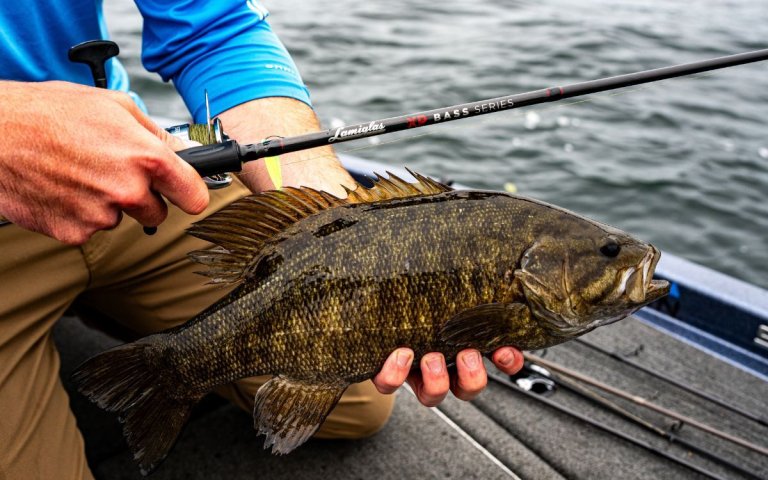
Best for Ned Rigs: Lamiglas XP Bass XP702S
Pros:
- Quite sensitive for the price
- Perfect for very lightweight finesse gear
- Exposed blank ACS trigger reel seat
Cons:
- Too light for many other finesse tactics
Key Features:
- Length: 7 feet
- Power: Light
- Action: Moderate
- Lure Weight: 1/16 to 1/4 ounce
- Split grip cork handle
One of the most popular finesse tactics, particularly for smallmouth, is the Ned rig. This subtle chunk of lead and soft plastic might not look like much, but its fish-catching ability remains unrivaled. The key to a good Ned rig rod is the ability to add action to the bait without moving it along the bottom too quickly. A task that’s much easier said than done.
That is, until I began fishing a Ned rig on the Lamiglas XP Bass rod. The light power and moderate action combine to create a lovely finesse rod that is perfect for Ned rigs. Perhaps it’s not quite as sensitive as other rods I’ve tested that are hundreds of dollars more, but for a $100 rod, I’m beyond impressed by what I can feel as I hop the bait along the bottom. The key to the success of the XP Bass rod is the ability to gently move a Ned rig, but also slam a hook home on a smooth hookset. It’s been a wonderful addition to my rod collection. — Derek Horner
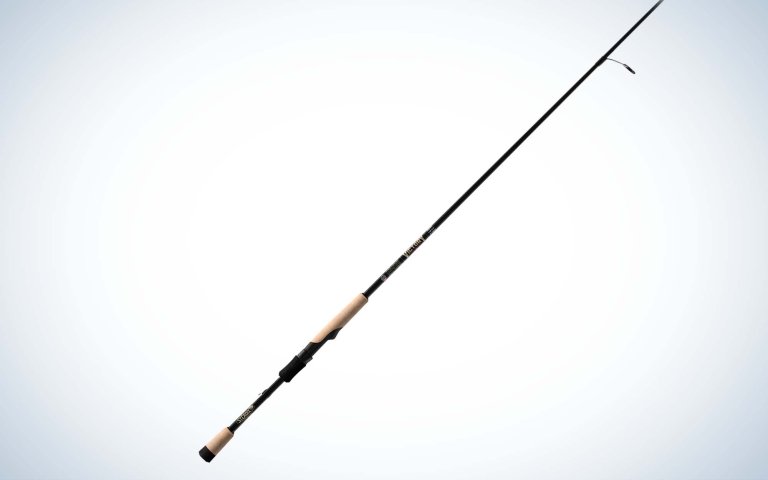
Best Overall: St. Croix Victory VTS73MXF
Pros
- “In-between” length operates well in close quarters and open water
- Remarkably sensitive
- Made in the USA
Cons
- Action may be too fast for some anglers using fast-moving lures
Key Features
- Length: 7 feet 3 inches
- Power: Medium
- Action: Extra fast
- Lure Weight: 3/16 to 1/2 ounce
- Split grip cork and EVA handle
Despite having similar lure weight recommendations as many of the other rods I tested, the St. Croix Victory seemed noticeably bulkier, so to be honest, I didn’t expect much. That’s why I was so surprised at how light it felt—demonstrating the importance of balance over just absolute weight. Everything about it is refined and purpose-driven, from the comfortable reel seat and handle components to the premium cork itself. I even liked the fact that it was neither 7 feet nor 7 foot 6 inches, but rather smack dab in the middle.
If you’re only going to own one spinning rod (a reality that I caution against but nevertheless know is quite possible), this USA-made option is a great choice, capable of doing a lot of different things extremely well. I’d highly recommend it if you want to buy one really nice spinning rod or are limited to how many rods you can carry, like kayak anglers. Beyond being a do-all rod, the Victory is fantastic at my primary uses for a spinning rod, light plastic and finesse swimbaits. Furthermore, it comes at a mid range price for a top-of-the-line product, meaning that you get a lot of bang for your buck.
Buy This for Other Species If: You want to be able to cast aggressive lures all day without getting tired.
Best for Skipping Docks: Douglas XMatrix DXS 704F

Pros
- Easily handles heavier lures than much of the competition
- Tangle-free tip top
- Fuji Alconite guides with ceramic inserts to handle braid
Cons
- May not be ideal for the lightest finesse lures
Key Features
- Length: 7 feet
- Power: Medium
- Action: Fast
- Lure Weight: ⅓ to 1 ounce
- Split grip EVA handle
Unless you’re magical with a baitcasting rod and reel, you’ll need spinning gear to skip lures under docks and then extract the big bass that lives there. Therein lies the conundrum—sometimes you’ll be skipping little lures, and you need the rod to load properly yet still be able to muscle a fish away from steel cables or barnacles. The Douglas XMatrix splits that difference easily and comfortably. It’s still good for many other techniques, but as a committed and half-decent dock skipper, this is one rod I’ll plan to dedicate to that technique as much as possible. It comes with lots of smart innovations, like tip-top frames that are front welded to avoid wrapping with braid, which otherwise could cost you a fish or lead to a broken rod.
Buy This for Other Species If: You tend to fish around heavy cover and need muscle to extract fish that know exactly where to break you off.
Best for Dropshotting: Abu Garcia Zenon ZENS-610-4

Pros
- Super-lightweight yet durable
- Comfortable Fuji reel seat
- Strong titanium alloy guides with nitride silicon inserts
Cons
- Carbon rod handle may be slippery or feel odd in some hands
Key Features
- Length: 6 feet 10 inches
- Power: Medium light
- Action: Extra fast
- Carbon split-grip handle
If you’re not dropshotting, you’re missing out on fish. It’s that simple. Regardless of whether the depth requires a 1/16 ounce weight or a ½ ounce model, any spinning rod may do well at times, but few excel across the board. The Zenon spinning rod allowed me to keep a lure in place on shallow largemouths and mid-range smallmouths alike while simultaneously providing lifelike action. I’d also consider it a good choice for shakey heads. Some anglers may consider it too short at 6 feet 10 inches for techniques where you’re making long casts or need to pick up a lot of line in a hurry, but I found it to perform no differently than any of the seven-footers, and it was well-balanced in a manner that should appeal to fishermen and women of different heights.
Buy This for Other Species If: You never know what you’re going to target in a multi-species fishery, from walleye to pike to bass to crappie.
Best for Flukes and Small Swimbaits: Shimano Curado CDS70MA

Pros
- Proprietary CI4+ reel seat
- Diagonally-wrapped carbon tape increases blank strength
- Fuji tangle-free K guides with Fazlite inserts
Cons
- Dense EVA handle may feel odd at first
Key Features
- Length: 7 feet
- Lure Weight: 3/16 to 1/2 ounce
- Power: Medium
- Action: Moderate
- Split grip EVA and carbon handles
Every time I get in one of the Bassmaster Elite Series pro’s boats in a clear water situation, and especially in smallmouth country, they seem to have a small jig head with a Keitech or Rage Swimmer on the back. It’s a limit-getting technique that also produced my personal best smallmouth last fall while fishing in Michigan with Shimano pro Keith Combs. The 7 foot, medium power, Curado is perfect for that technique.
This rod gives you the ability to make long casts with light lures in windy conditions, but also just enough give so the bass can swallow the lure. That’s when the fun begins, as an airborne smallmouth can easily disgorge that hook, and this rod seems to keep them pegged. The specific form of EVA they use took some getting used to, but their proprietary reel seat is comfortable to fish all day.
Buy This for Other Species If: You want just the right action to let a fish inhale a moving lure and then drive the hooks home.
Best Travel Rod: Megabass Valkyrie World Expedition Travel Spinning Rods

Pros
- Handles heavy lures
- Comes with a travel case
- Extra length allows for long casts
Cons
- Not inexpensive
Key Features
- Length: 7 feet 6 inches
- Medium-Fast
- Lures up to 1.4 ounces
- Four pieces
Usually, travel spinning rods provide light to medium actions and low-level components. Megabass flipped that paradigm with the Valkyrie World Expedition rods. There are two spinning rods, a 6 foot 10 inch, med-fast and a 7 foot 6 inch, med-fast. The model I recommend is the heavier and longer of the two—it can flip heavy weights or cast big swimbaits.
It’s made with artistic and functional touches native to the Japanese market. Thanks to a custom molded reel seat, superior foam split grip handle, and bespoke guides, it doesn’t feel like a typical four-piece rod. In fact, it’s so smooth and refined that you’ll probably use it at home, too, even though it packs up easily into the provided case.
Buy This for Other Species If: You don’t know what you’ll be catching. If you need a travel spinning rod for Amazonian peacock bass, pike, and muskies, or even some saltwater use, this has the refinement and brute strength to tame the beasts.
Best for Small Crankbaits: St. Croix Legend Glass Crankbait Spinning Rod 6’10” M

Pros
- Moderate action prevents fish losses
- Handles light line better than baitcasting gear
- Fuji K Series tangle-free guides
Cons
- For anglers used to graphite, softer action may take some getting used to
Key Features
- Length: 6 feet 10 inches
- ¼-5/8 ounce lures
- Fiberglass construction
- Split grip cork handle
Whether you’re throwing a Shad Rap, a small balsa square bill, or some other diminutive crankbait, it’s easy to overpower them with baitcasting gear. This rod, with its fiberglass construction, creates no such disadvantages. Fish that surge at boatside or slash at a lure at the last minute, won’t get off. Furthermore, the Legend Glass casts those smaller baits long distances, yet at the same time, is short enough to make pinpoint casts in close quarters. For those who find the 6-foot 10-inch length too short, there’s a 7-foot 2-inch version that’s slightly heavier but handles a vast range of moving baits. The cork grips are super-comfortable to fish all day, and the tangle-free guides allow for either fluorocarbon or a braid-to-fluoro combination that flows freely.
Buy This for Other Species If: You’re fishing for light biters or paper-mouthed fish that prevent you from staying hooked up. It’s light enough to employ for panfish or trout, but also heavy enough for everything from pike to light saltwater use.
Dobyns Champion XP DC 702SF

Pros
- Tangle-free Fuji K-Guides with Alconite inserts
- Ultra-premium cork handles
- Covers multiple techniques with no drop off in quality
Cons
- Anglers who prefer EVA may not like the cork handles
Key Features
- Length: 7 feet
- Action: Medium light action
- Power: Fast
- Lure Weight: ⅛ to 1/2 ounce
- Split grip cork handle
Rodmaker Gary Dobyns may have left the spinning rod nirvana of California for the bubba country of Texas, but he’s true to his roots with the Champion XP spinning rod, a fast action, cork-handle rod. Even if a shakey head is your last resort, it’s necessary to have one in your “panic box,” and as VanDam found out at Lewisville it doesn’t discriminate against big fish. The west was the breeding ground not only for the hula grub, but also for darter heads and other fresh-from-Japan techniques, and the exceptional balance makes it feel lighter than its actual weight.
Buy This for Other Species If: You need to feel the slightest breath of a fish against your lure in vertical presentations.
Falcon BuCoo SR BRS-4-17

Pros
- Weight eliminated wherever possible
- Fuji exposed blank reel seat for sensitivity
- Budget-priced
Cons
- Some anglers might not like moderate action for super-light line techniques
Key Features
- Length: 7 feet
- Power: Medium
- Action: Moderate
- Lure Weight: ¼ to 1/2 ounce
- Split grip EVA handle
Other than the distinctive gray handles, nothing cosmetic sets the Falcon BuCoo apart from its competitors, but I found myself seeking it out on multiple trips for bass and stripers. It was as sensitive as rods costing three and four times as much, and just “felt right” in hand. At times I paired it with a top-of-the-line spinning reel, and while they may have been mismatched in terms of price tags (this rod clocks in at under a hundred bucks), they nevertheless felt like they belonged together. Frankly, while other rods may handle a specific niche slightly better, I felt like this one could go toe-to-toe with the best of them. It could feel a tiny bait 30 feet down but also held up to big rampaging fish with an attitude.
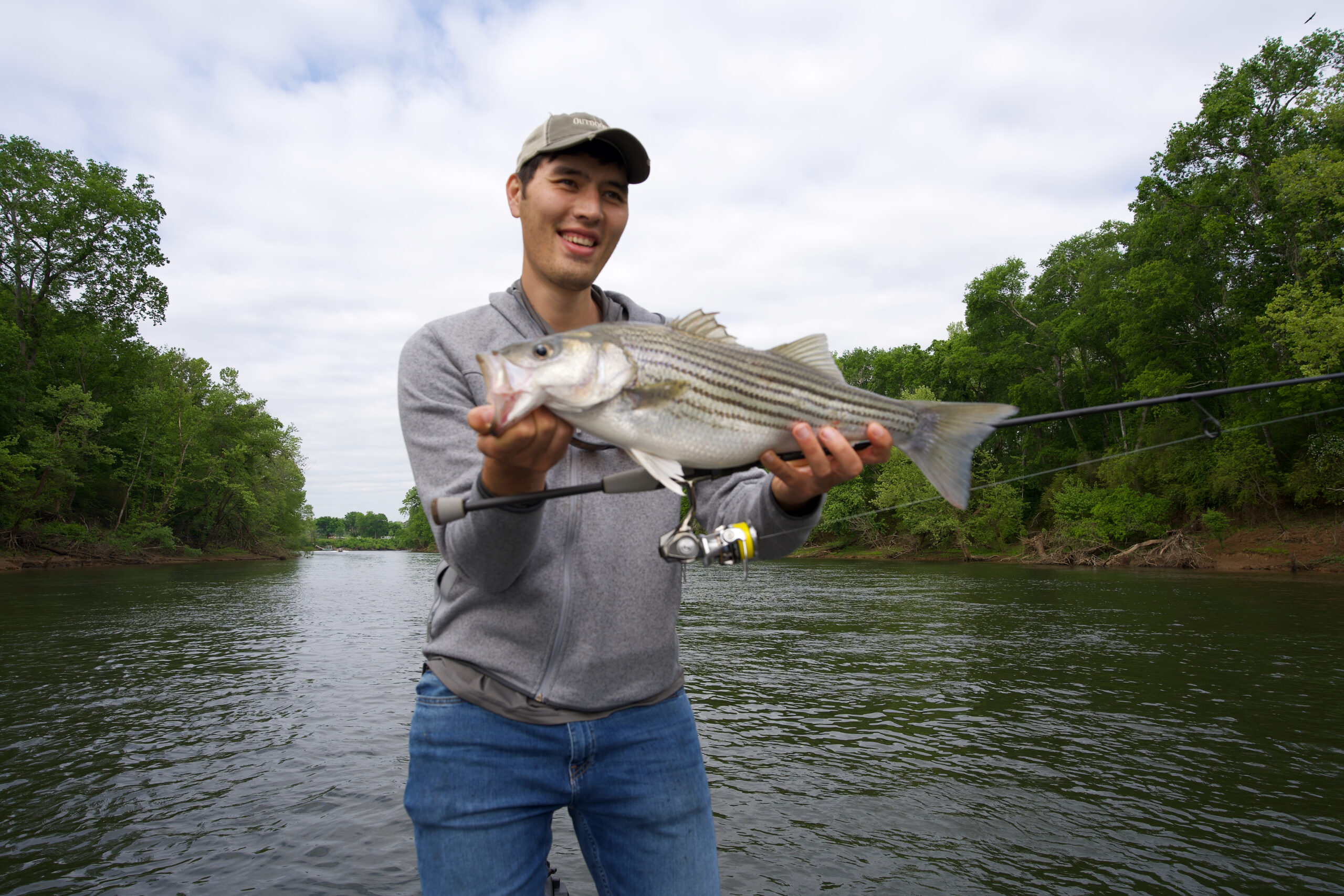
Einsmann fished this rod as well and had this to say. “Being surprised is a good thing when you think a rod is a fantastic performer in the $200 price range and come to find out it costs under $100. The Falcon was a feather weight and sensitive enough that I could feel my jig tick the bottom. I caught my largest fish of the day on it and that eight pounder was tamed easily. It did help that we had a $400 Abu Zenon reel on the rod. I get it if you’re not willing to shell out that cash for a reel, I’m not either. I would suggest a Daiwa Fuego LT as an alternative.”
Buy This for Other Species If: You want a rod that you won’t hesitate to test its mettle, but which still has to perform like one costing two or three times as much.
How We Tested the Best Spinning Rods
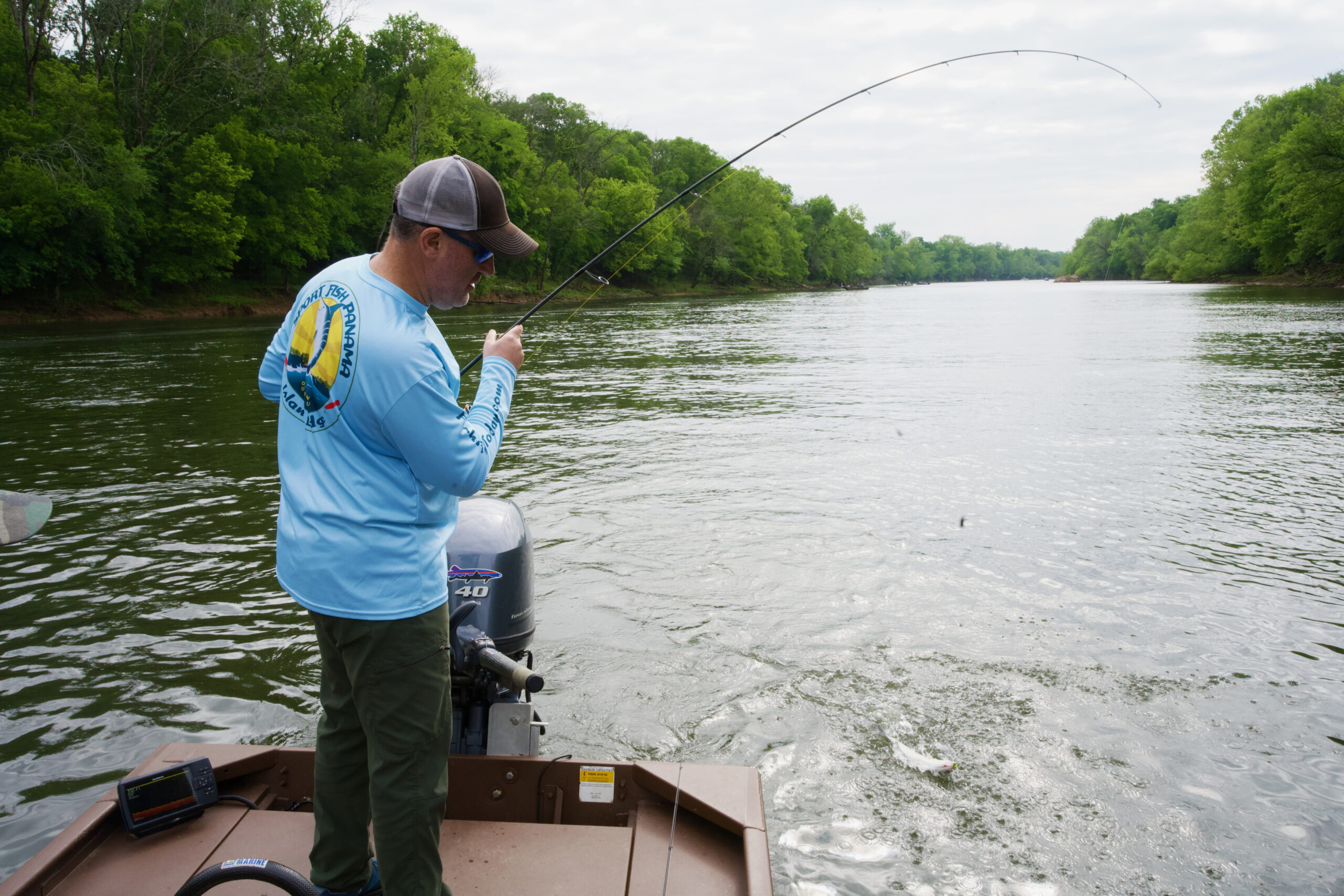
The great thing about most spinning rods aimed at the bass market is that they can be used for a wide range of fishing applications outside of the bass world. That extends from panfish to walleye to stripers to light saltwater use. It doesn’t mean that certain ones aren’t better for specific applications, but rather that you can get a sense of how light and how heavy they can go. Therefore, in addition to using some of these rods for Michigan smallmouth and others for heavy cover largemouth on home waters like the Potomac, Outdoor Life gear editor, Scott Einsmann, and I took them to the Roanoke River in North Carolina to tussle with some hefty stripers, too. Each rod was evaluated for its intended purpose and specialty with a wide range of lure types and weights.
On those fishing trips I evaluated each rod for the following characteristics:
- Hook setting power
- Sensitivity
- Casting distance and accuracy
- Balance and weight
- Handle comfort
In addition to that testing trip, four rods were tested by Outdoor Life’s engagement editor, Derek Horner. He fished rods using specific techniques like the Coike, strolling, Neko, and Ned rigs.
Things to Consider Before Buying One of the Best Spinning Rods
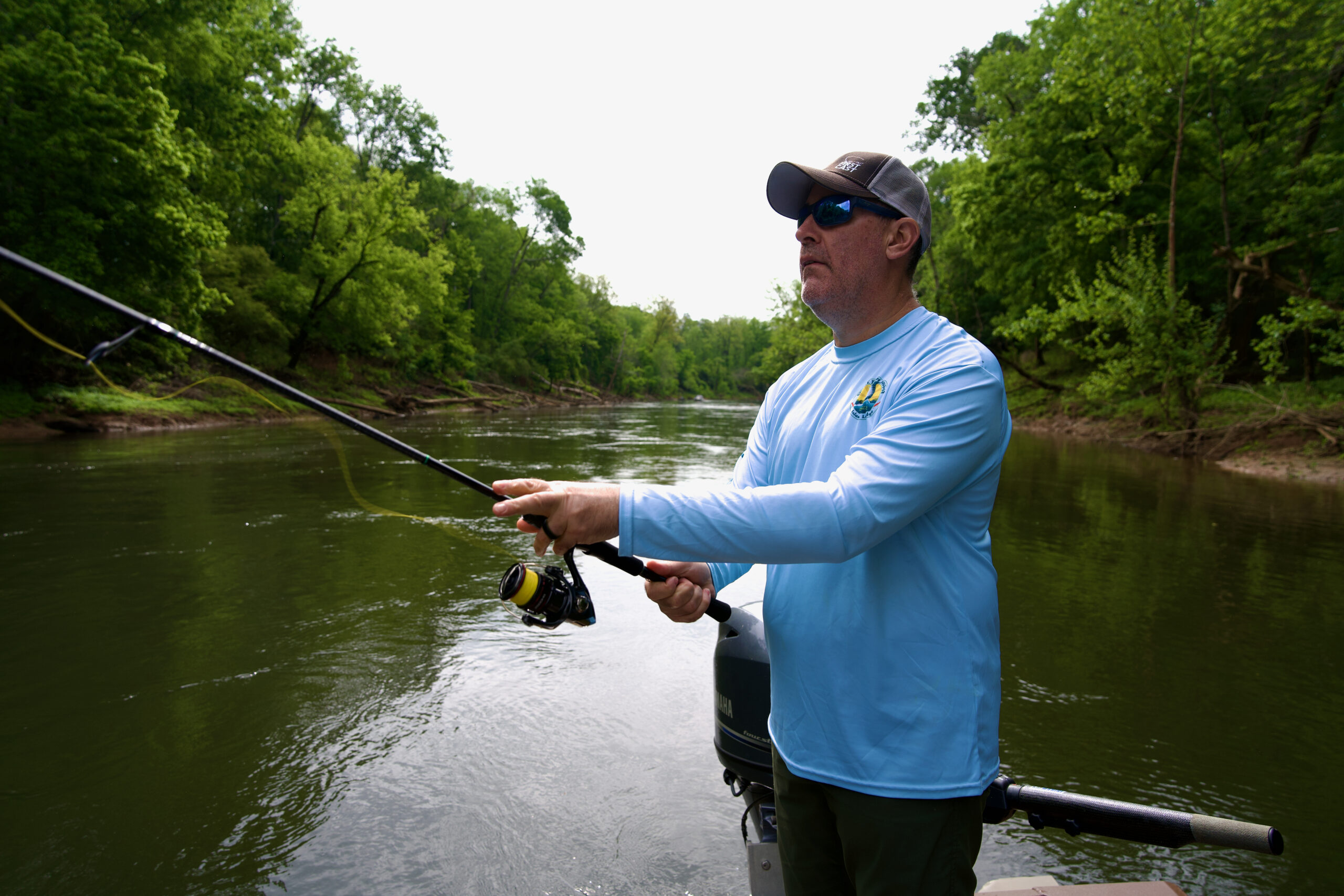
I’m a hardcore bass guy, but like many of my brethren, for a long time, I was heavily biased in favor of using baitcasting gear whenever possible. I’d buy budget spinning combos, expect them to handle all of their finesse applications, and then be disappointed when it somehow didn’t meet my lofty expectations.
The first inkling that m.o. was counterproductive occurred when all-world angler Kevin VanDam caught a Lake Lewisville (Texas) record 11-pound largemouth on a shakey head. Subsequently, I started fishing for salmon, sailfish, and tuna and managed to subdue some true giants with silky smooth spinning reels and rods that matched them. Some of the best anglers in the world, in the most trying situations, use spinning tackle not because they have to, but rather because it’s the best option.
There’s always been a great selection of spinning rods for inshore, panfish, and trout, but the bass rod market has just started to explode. The array has grown due to several factors:
- Widespread adoption of a continually-growing array of finesse tactics like dropshotting, shakey heads, and Neko rigging.
- The fact that most of our best fisheries are becoming increasingly pressured.
- Advanced braids (often used with a fluorocarbon leader) reduced line twist and increased the power inherent in presentations that still remained stealthy.
Whether you’re targeting shellcracker or yellowfin tuna here are a few things to keep in mind when you’re picking your next stick.
Overall Length
Rod length is a distinctly personal choice, but in recent years the average length of bass spinning rods moved from the 6 foot 6 six inch range to 7 foot and above. A longer rod, built properly, will often provide greater casting distance and leverage on open water fish, but it may not do as well in tight spaces. Shorter rods are also usually better for making short, accurate casts around structure.
Handle Length and Composition
All of the rods I tested had split grip handles, some with no foregrips, which is a trend in spinning rods. It’s still possible to find some solid handles, but they don’t add much value while adding substantial weight. Just as important is finding a handle that provides the right amount of leverage and the perfect length for your hands. That may not always be the same thing. For example, when dropshotting, you may prefer something long to grab onto with two hands, while using the same handle to skip docks may end up tangling the rod butt in your shirt. The choice between EVA, cork, and various non-slip grips is also a matter of personal preference.
Rod Power, Action, and Taper
Remember that power and action are two very different things. Power is how much force it takes to bend the rod. Action is how the rod bends. For example a light power and fast action rod is very easy to bend, but it will mostly bend at the tip. And as I learned from the Seth Feider Daiwa Tatula rod, not every medium-light or medium flexes in the same way.
Also, consider the best fishing lines for bass you’ll be using with your set-up. Braid-to-fluorocarbon has less stretch than straight fluoro, which has less stretch than mono, and of course, braid alone has the least of all. That means that a rod that has the perfect hook setting power with mono might need to be replaced with something with more flex if you’re using braid—even if everything else remains constant.
FAQs
Historically rods in the 6 foot to 6 foot 6 inch range were favored, but in recent years 7-foot and above models have become more popular, especially in open water, because they often provide longer casting range.
Most of the spinning rod options we’ve reviewed are in the $100 to $200 range, but there are a surprising number of excellent spinning rods in the sub-$100 range. Of course, by spending much more, it’s possible to get spinning rods that are lighter and arguably in some cases better.
Most pro bass fishermen use spinning rods and reels for finesse techniques—typically anything under a quarter ounce which merits a main line or leader of less than 12 pound test breaking strength.
Final Thoughts
For years, whenever I’ve needed or craved a new spinning rod, I’ve invested in a mid-range stick semi-indiscriminately and hoped for the best. That’s led to a reasonable success rate, but the occasional preventable heartbreak, too. The rod you need to hook and land open water dropshot fish is often different from one made to extract a bruiser from under a gnarly dock.
Oddly enough, it was chasing big fish like yellowfin tuna with spinning gear that caused me to reevaluate my bass tackle choices. I saw how a properly-functioning drag and an ideally-tapered blank can improve lure presentations and maximize landings. That invigorated my spinning tackle choices, and led me to overhaul some of my tool kit.