
We may earn revenue from the products available on this page and participate in affiliate programs. Learn More ›
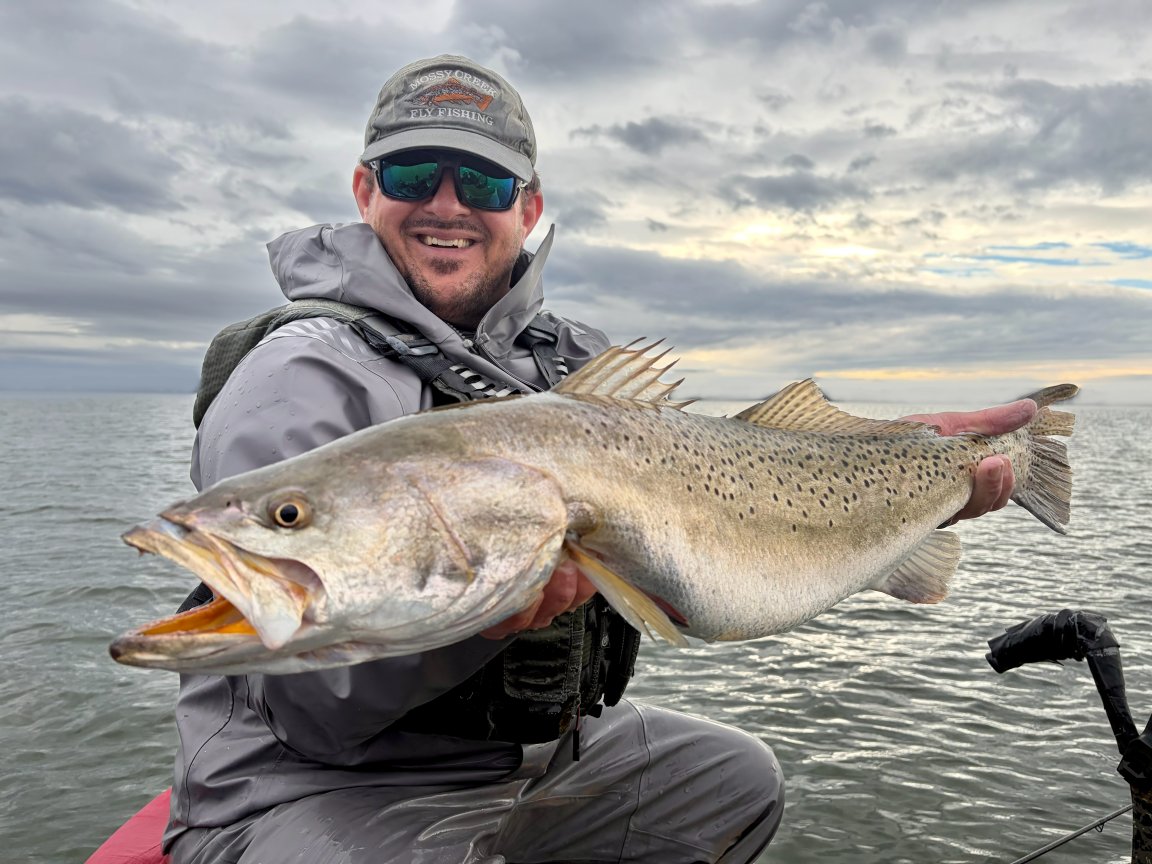
Simms has long been an industry staple for fishing apparel, most notably waders and outerwear. I’ve tested and reviewed many Simms products, including its Challenger lineup of rain gear. While that gear has always performed well, its target market is clear: dedicated recreational anglers. I’ve never bothered to test how Simms outerwear handles the trials and tribulations of everyday use by commercial deckhands or saltwater captains because, frankly, why would I? That’s not the audience it’s intended for, and I wouldn’t expect rain gear designed for landlocked fly anglers to hold up for someone used to hauling crab traps in salt spray and freezing rain all day.
Enter Simms’ new Rip Line Pro series of rain gear, the company’s first attempt at a truly hardcore jacket and bibs designed specifically for watermen. The Rip Line Pro series forgoes much of the aesthetic and, shall we say, fanciness of Simms’ standard recreation-oriented rain gear in favor of pure, rugged functionality. From the moment you see the Rip Line Pro jacket and bibs, it’s clear they aren’t meant for a hike down to your favorite blue-ribbon trout stream. Pick them up and feel them in hand, and that point is driven home. This is not casual rain gear, and it doesn’t sacrifice performance for looks. It’s designed for abuse of the highest order, the kind dished out by Mother Nature on the open sea.
So, how does it handle that? The look and feel right out of the box make a promise, but does the Rip Line Pro series deliver? To find out, I spent a few weeks putting this gear through the wringer in one of the best testing grounds I could think of: the Chesapeake Bay in late fall and early winter. Read on to see how the Rip Line Pro performed.
Simms Rip Line Pro Specs and Features
Key Features
- Four-layer QuadraShed textile build with a laminate interior that never wets out
- Spacer mesh suspender system for easy adjustment of shoulder straps
- Ample storage pockets
- Heavy-duty cuffs, including an oversized 1-millimeter neoprene wrist cuff
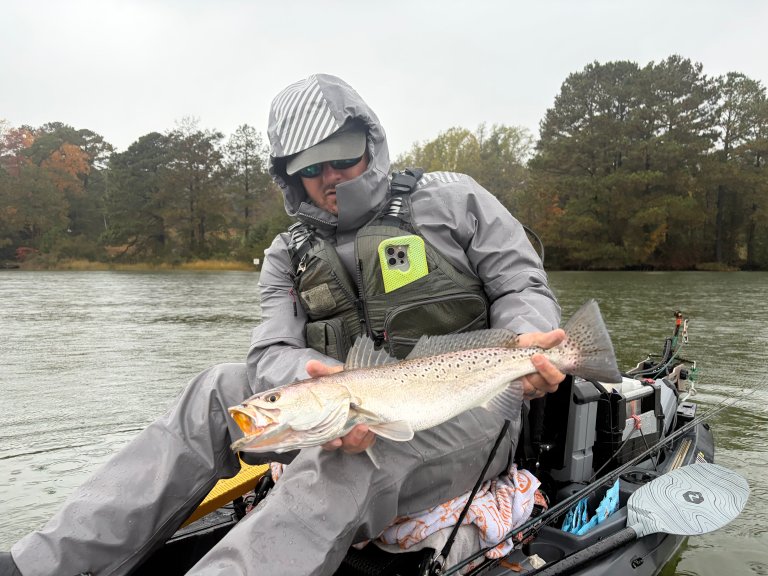
- Reflective strip on hood, shoulders, and belt
- Interior adjustment straps
- Taped seams
- Bibs: $500
- Jacket: $500
Testing the Rip Line Pro gear in the Field
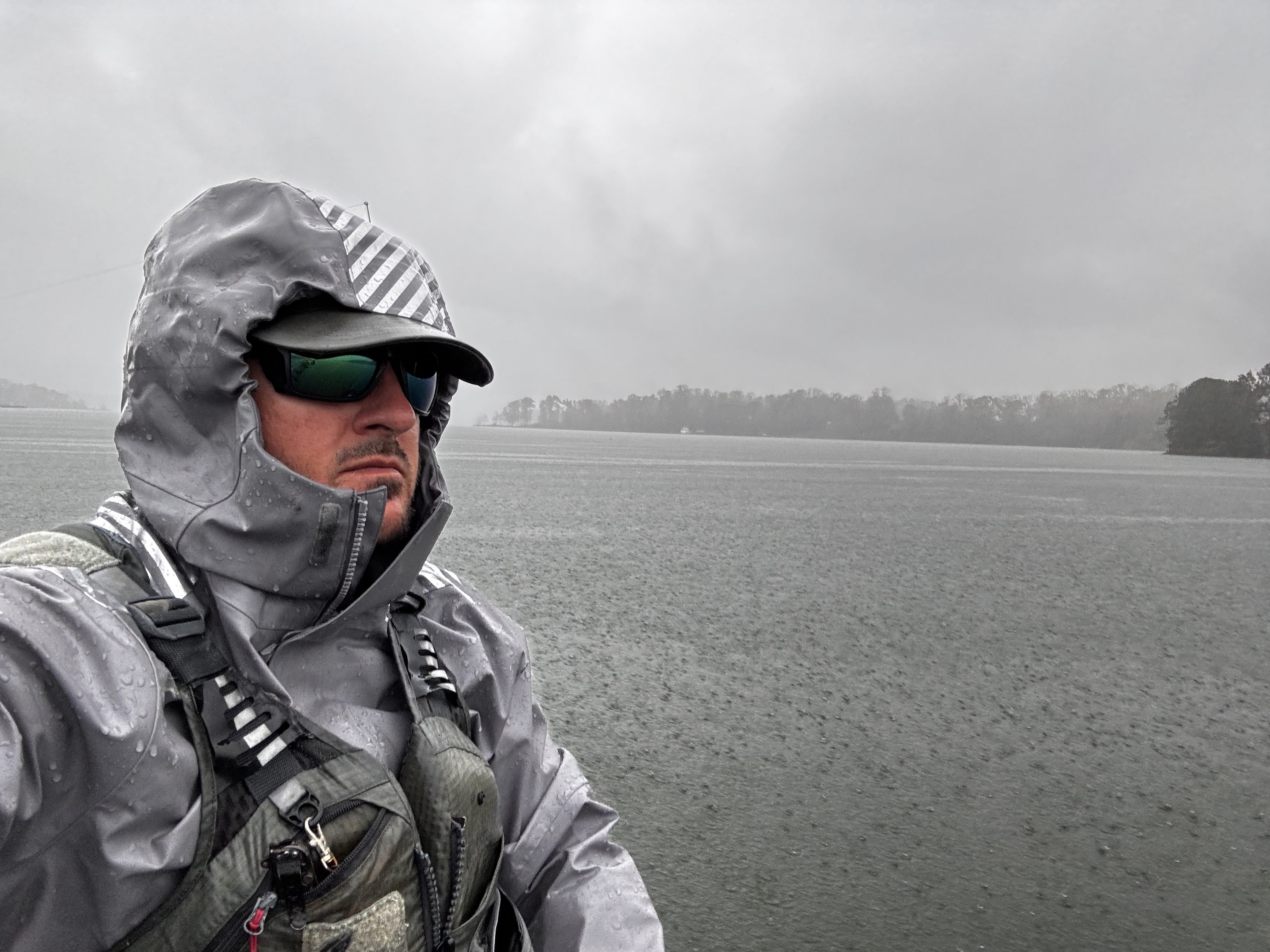
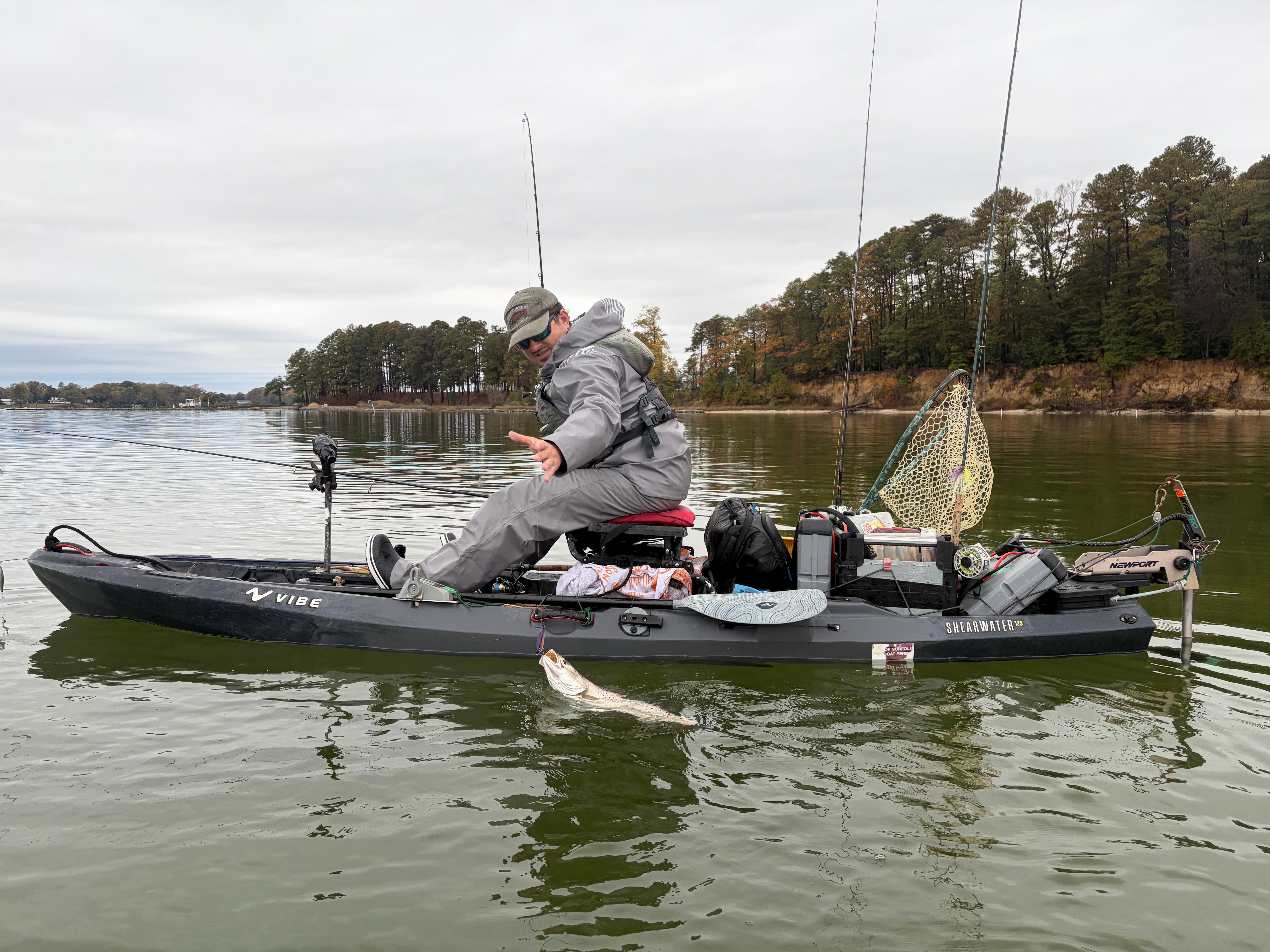
When it comes to testing gear, sometimes the timing doesn’t line up. Given the monthslong drought in the Mid-Atlantic leading up to my test, I was worried that might be the case here. As it turned out, that worry was misplaced. Exactly one day after the Rip Line Pro gear arrived, the forecast called for an epic deluge paired with extreme wind and storms. It was the perfect blend of miserable fishing conditions for testing rain gear. Lucky me.
The forecast proved accurate, and the weather was extreme, almost to a fault. I spent the first few hours of the morning sheltering from lightning under a dockhouse on the water. The Rip Line Pro gear will protect you from a lot, but I don’t think “lightning strike” is on the list. Thankfully, the electrical portion of the storm passed, and I had the rest of the day to fish in a constant downpour and gusting wind.
After a few hours of fishing from a kayak in the rain and getting sprayed with salt water, the first thing I checked was the areas where most rain gear performs worst: the wrists, neck, and ankles. These are typically the hardest spots to protect because they offer a direct path for water to get beneath the rain gear, and they still need to allow some comfort and range of motion. The Rip Line Pro did an outstanding job of keeping moisture out of all three. The wrists and forearms were the most impressive. They feature an extended 1-millimeter neoprene cuff beneath the outer layer that lets this jacket perform almost like a full dry top. Not only does it keep rain out, but the neoprene cuff creates a seal that kept water from flowing down the sleeve even when my arm was fully submerged. I was equally impressed by the neck. While it doesn’t have the full neoprene seal of the sleeves, the hood design and zipper-and-Velcro combination created an impressively form-fitting seal that kept water from dripping down my back or chest. Finally, the ankle cuffs on the bibs did an excellent job of keeping spray and rainwater away from my feet. I was wearing ankle-height deck boots, and the leg cuffs paired perfectly with them to create an angled seal where no water could enter.
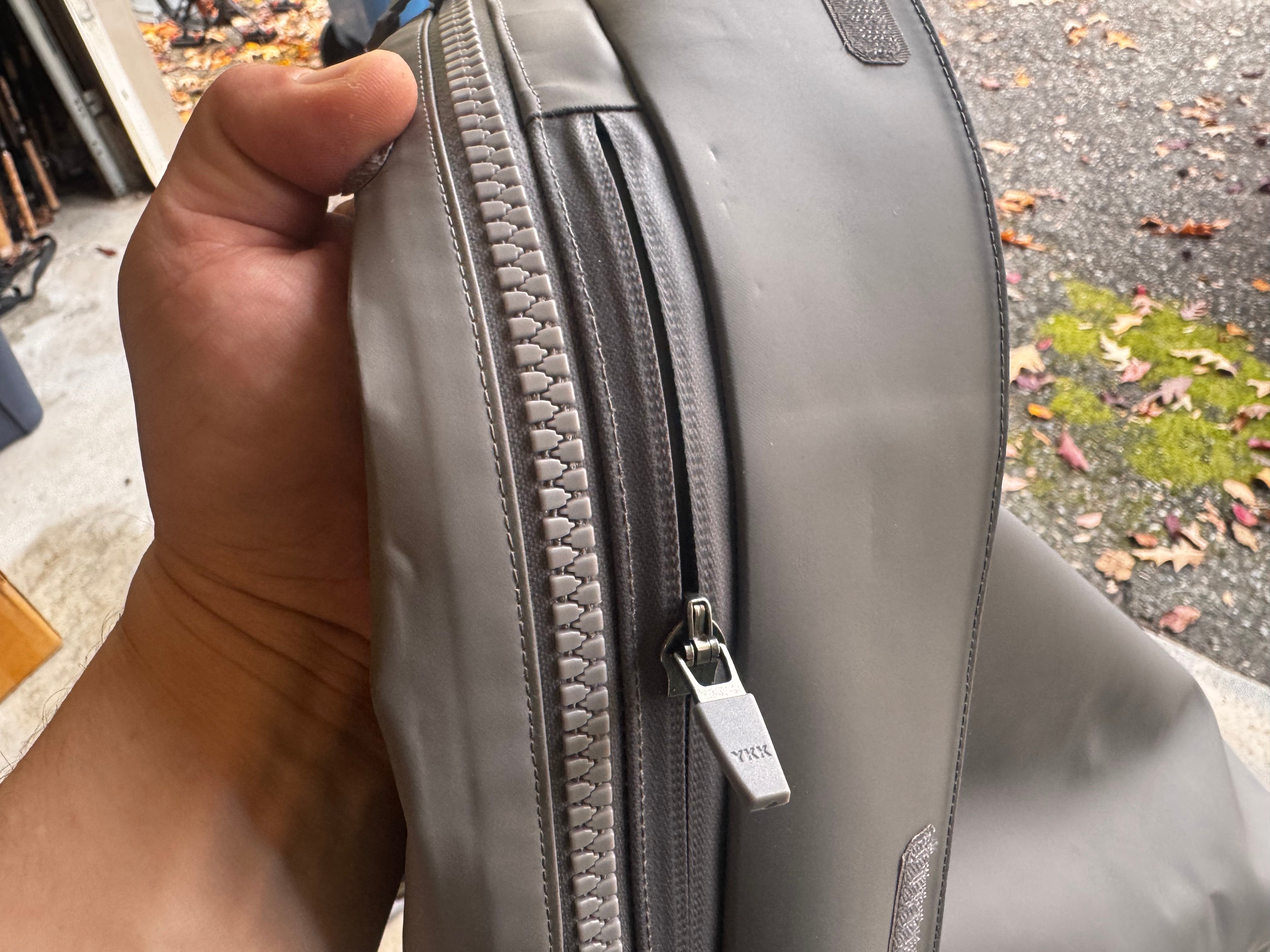
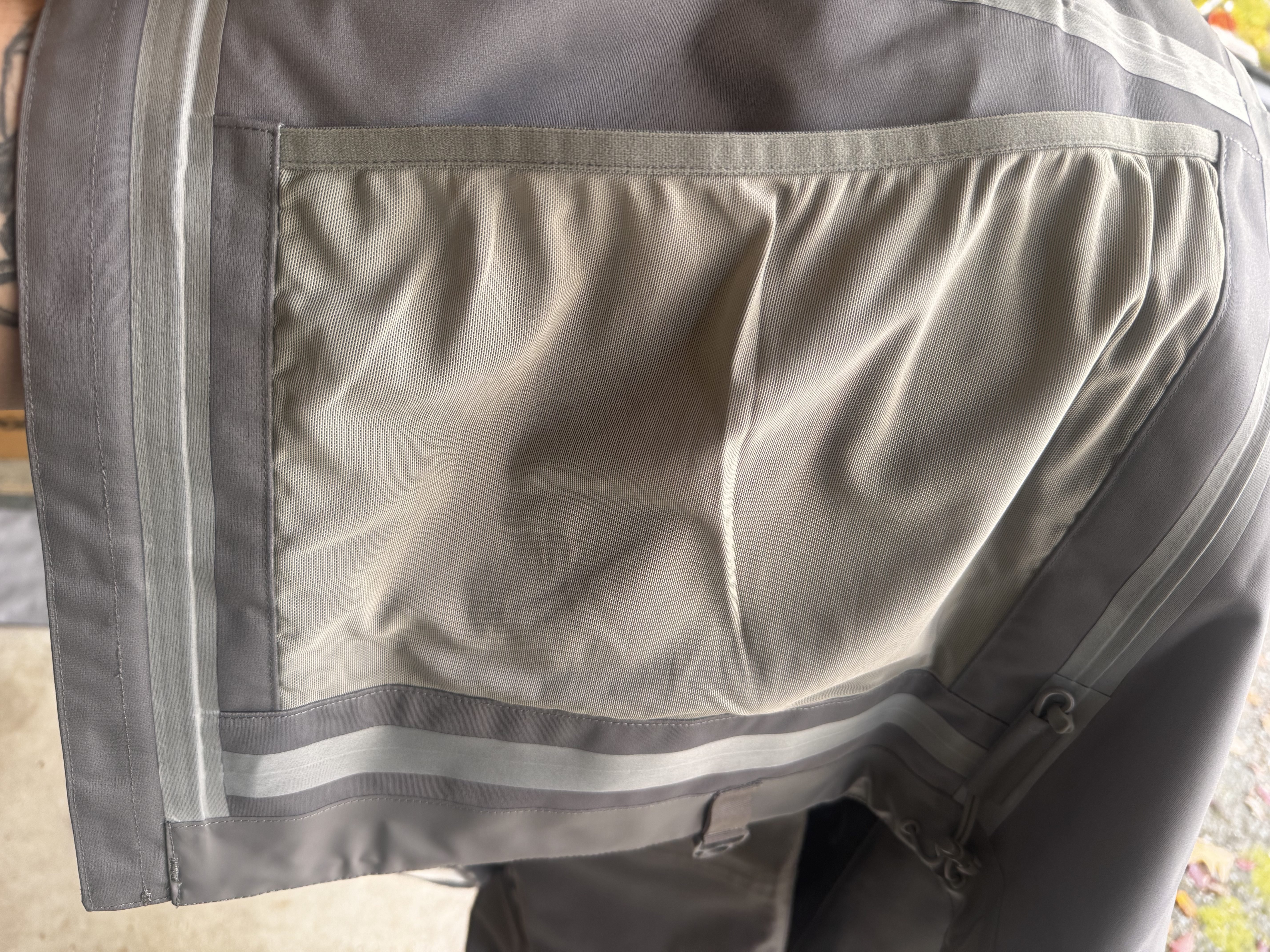
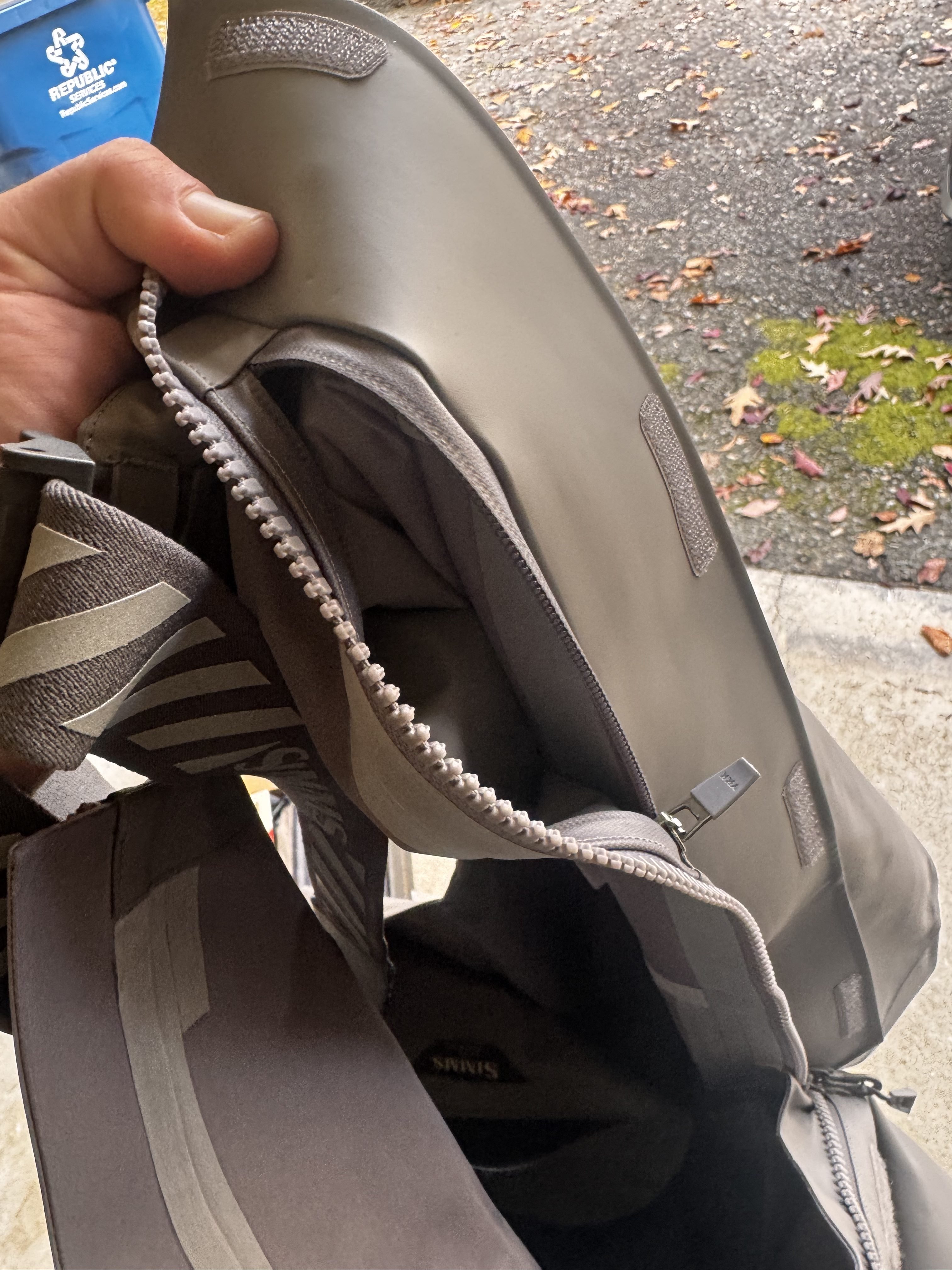
Next, I inspected the storage, namely the various dry pockets on both the jacket and bibs. Each has a well-designed, easily accessible exterior pocket sealed by a watertight zipper and tucked beneath a Velcro storm flap for extra protection. Exterior pockets on rain gear are always a gamble, but accessible waterproof storage is important. The pockets on the Rip Line Pro jacket and bibs performed exceptionally well, even after I opened and closed them many times throughout the day to reach various items. Nothing seeped through the pockets to the interior of the suit, and the pockets kept everything inside them dry and functional.
Dry storage and adjustable cuffs matter, but ultimately the most important job of rain gear is keeping you dry all day long. While I was impressed with how well the Rip Line Pro kept water out of various areas throughout the day, the real test would be how wet and cold I got after fishing in rain and wind for upward of 12 hours.
The answer? Not very. For me, the most impressive part of this gear is the overall protection it offered from the elements. After we returned to the boat ramp and loaded our gear, it was time to strip off the rain suit and inspect the damage. No matter how dry you think you are, a bit of unforeseen moisture usually gets through any rain gear after a long day. Apart from a few wet spots where my shirt had been exposed during the day, I was basically bone-dry. The jacket and bibs also did a great job of blocking wind chill. I had underestimated how well that was working during the day, but looking back, I realized how much the gear kept the wind from affecting my comfort. Not that I needed confirmation, but watching my fishing partners shiver miserably and wring out sopping undershirts provided a sense of warm relief, both physically and emotionally.
What the Rip Line Pro Series Does Best
Protection from the elements, plain and simple. I’ve worn many bibs and rain jackets over the years, some designed for comfort and others for function. The Rip Line Pro does the best job I’ve found of marrying the two, though function is still clearly the priority.
Once you’re fully suited up, this rain gear makes you feel practically invincible, protected by an impenetrable shell of armor. I’m not saying it’s bulletproof, but I could feel an unrealistic sense of confidence building while I wore it. The materials not only kept me bone-dry through a full day of torrential rain but also provided exceptional wind protection during gusts upward of 30 knots. When it comes to protection from extreme water and wind, the Rip Line Pro series is as good as it gets.
Where the Rip Line Pro Series Can Improve:
With extreme weather protection as the focus, it’s easy to understand why some other features take a back seat. That said, there are still a few areas I’d like to see Simms improve.
The most noticeable is the lack of mobility. The four-layer construction and fully waterproof material make this gear weatherproof, but they also make it rather cumbersome. Simms added articulation points and adjustable areas where possible, but there’s still room for improvement. At times, I felt a bit like a piece of vacuum-sealed meat, or a video game character bolted into a mech suit. Yes, I felt invincible, but I also had a harder time than I care to admit squatting to grab a sandwich from the cooler.
Insulation is another area that could be better. The Rip Line Pro gear does an incredible job of protecting you from water and wind, but it doesn’t have much interior insulation for true winter use. That’s easy to offset by layering proper cold-weather clothing underneath, but I could see a built-in cold-weather liner helping. Perhaps Simms will release a “winter” edition of the Rip Line Pro in the future with a wool liner or something similar.
Final Thoughts
The Rip Line Pro series of rain gear is not for everyone. In fact, I would say the target market for this gear is fairly narrow. Most casual anglers and outdoor enthusiasts can get by with less extreme, less expensive rain gear and never have an issue. While this gear is fantastic at keeping you dry, I could see it being overkill for an after-work outing during a light summer shower.
However, what the Rip Line Pro series is designed to do, it does extremely well, and the people who need this type of gear will appreciate it. The Rip Line Pro series is built for serious anglers and people who spend as much time on the water as on dry land. As with any gear in the fishing space, the more purpose-built something becomes, the less universal appeal it tends to have. That said, if you fish as much as I do, serious rain gear becomes less a matter of convenience and more a matter of necessity. The Rip Line Pro jacket and bibs offer the type of performance and functionality I value, and I’m sure many other anglers, deckhands, and charter captains who try them will agree.