
We may earn revenue from the products available on this page and participate in affiliate programs. Learn More ›
If you’re considering a modern high-performance .224 cartridge for varmint, predator, or big-game hunting, 22 ARC vs. 22 Creedmoor is a comparison you’re certain to make. In recent years, heavy-for-caliber, highly efficient bullets that offer great terminal performance have significantly elevated the capability of the .224-bore cartridges. When considering these new rounds, it’s important to remember that the differences — and real advantages — are in the details.
When deciding which .22-cal cartridge is best for you, it’s important to sort out the real pros and cons, as well as the real-world (versus theoretical) differences and how they stack up against legacy cartridges like the .22/250 and .220 Swift. Over the past year I’ve fired several thousand rounds of 22 ARC and 22 Creedmoor through various platforms and the results were not what I expected.
22 Creedmoor
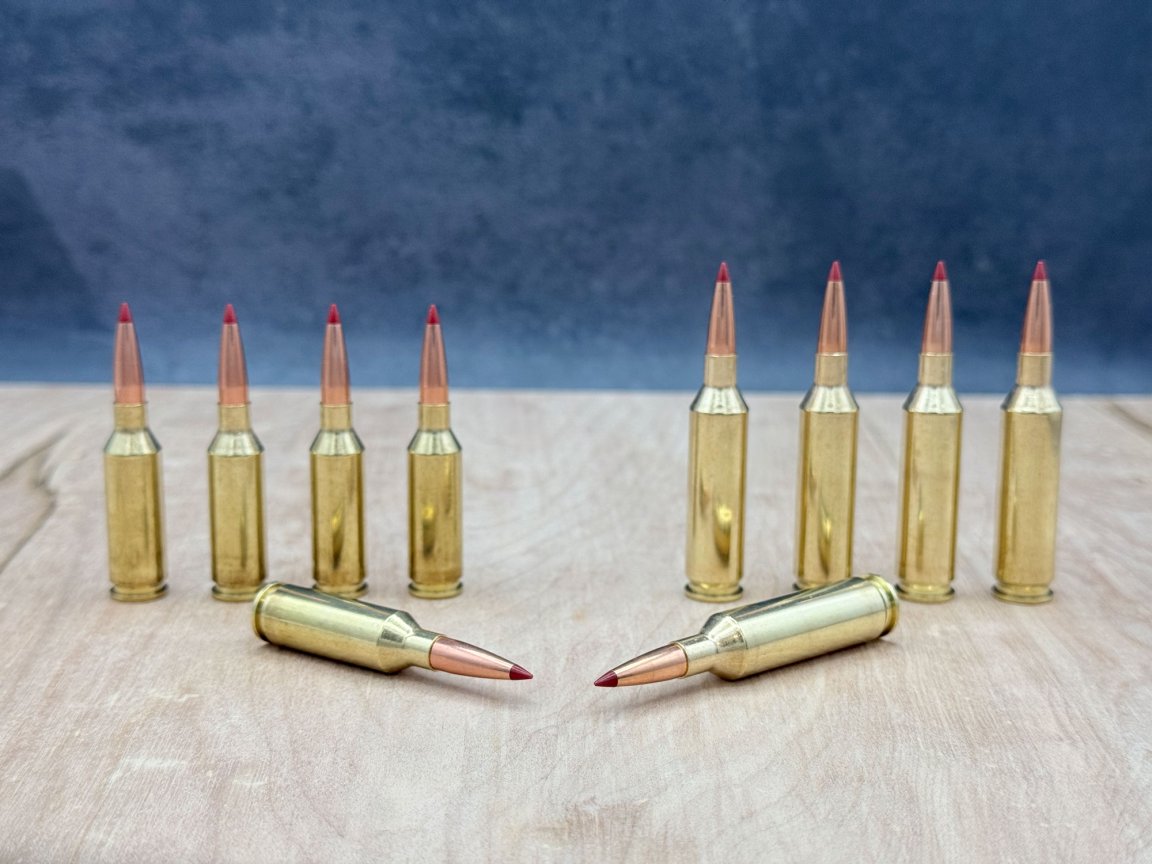
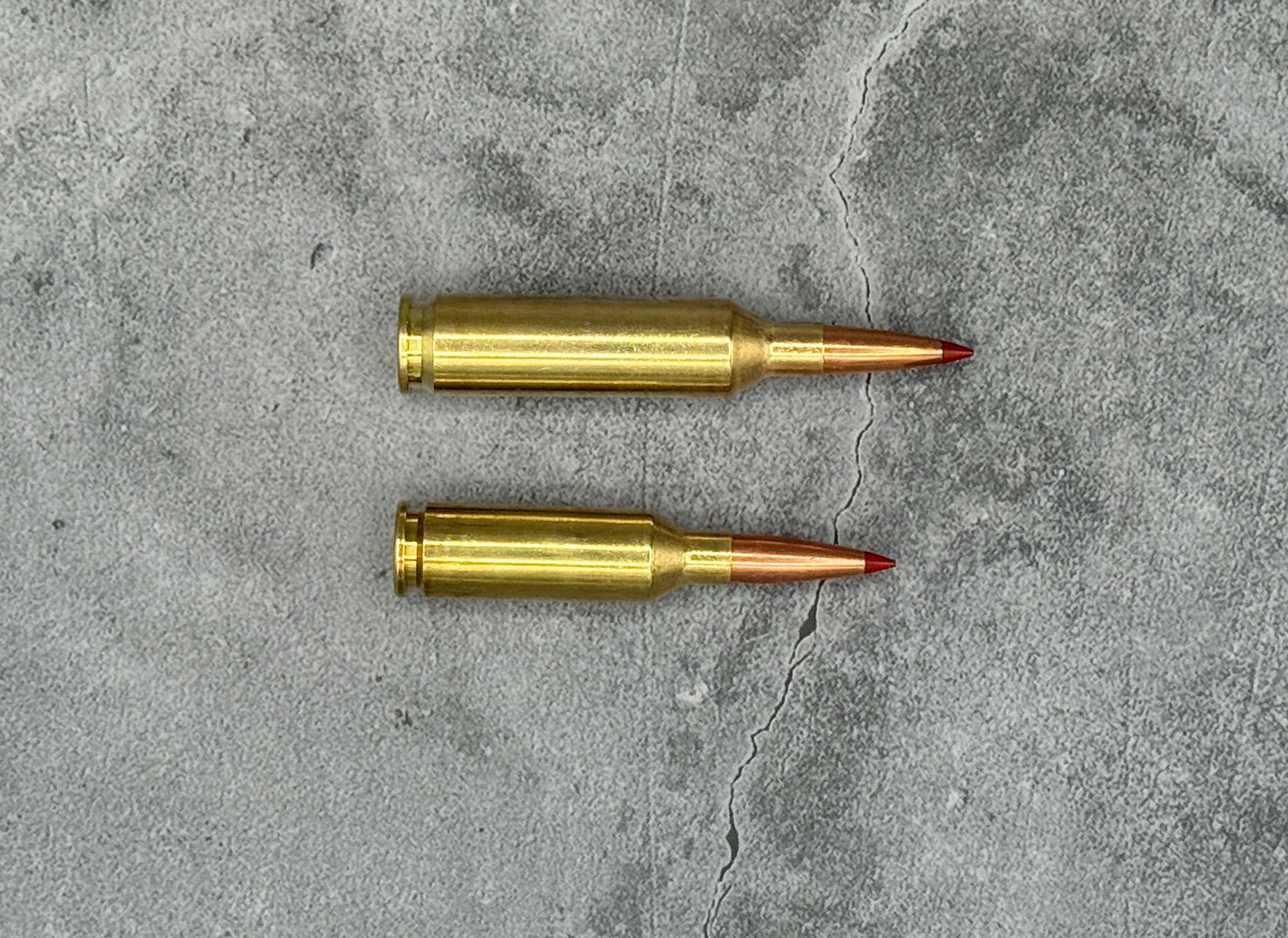
The 22 Creedmoor was recently SAAMI approved, but has been a popular wildcat cartridge for many years. As you might figure, the cartridge is simply a 6.5 Creedmoor case necked to fire a .224-caliber bullet. It offers blistering speeds that put it in the same wheelhouse as the classic-but-defunct .220 Swift. The Creedmoor was derived from the .30 Thompson Center and not the .250 Savage as some like to assert. That affords it about eight grains of water of additional case capacity and higher velocities compared to the .22/250.
Standard twist rate for the 22 Creedmoor is 1-in-8 inches, which is substantially faster than the 1-in-12 or 1-in-14 of the .22/250 or .220 Swift. This allows it to stabilize heavy, efficient 80-grain bullets like the Hornady ELD-X, ELD-M, Sierra 80-grain MatchKing, Berger 85.5, or Nosler 85-grain RDF. In some conditions and elevations the 1:8 twist can stabilize Hornady’s ultra-long 88-grain ELD-M, but not always. The eight-twist is used in order to shoot some lighter (and thin jacketed) .224 lead-core bullets at high velocity without spinning them apart.
The 22 Creed is ideal for leveraging heavy-for-caliber bullets, and that’s probably where you’ll see the best results.
22 Creedmoor Specs
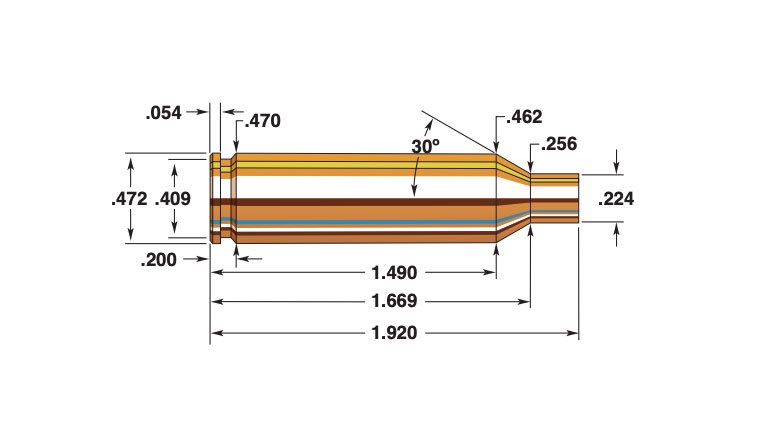
- Parent Case: 6.5 Creedmoor
- Case Capacity: 52.6 Grains H2O
- Shoulder: 30 degrees
- Max COAL: 2.700 inches
- SAAMI Twist Rate: 1:8 inches
- Bullet Weight: 50 to 90 grains — depending on bullet construction
- Powders: Medium to slow — H4350 to H1000, Retumbo, and RL26
22 Creedmoor Rifles Tested
Horizon Firearms Venatic Carbon
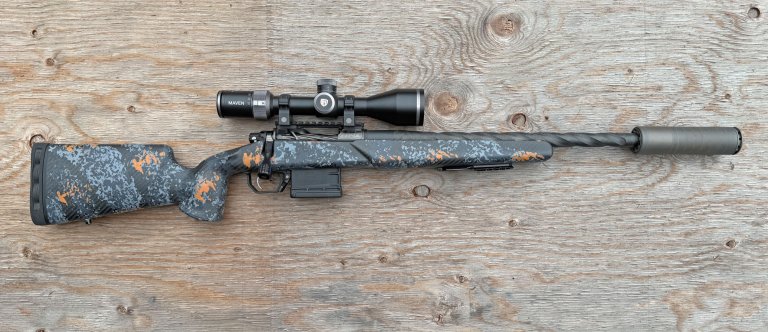
- Barrel 18-inch Proof carbon-wrapped, fluted
- Action Stiller Wombat
- Stock Iota Eko
- Trigger Triggertech
Fierce Firearms MTN Reaper
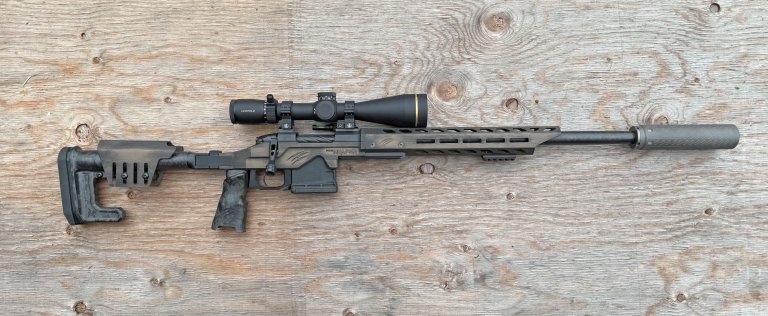
- Barrel 20-inch Fierce carbon-wrapped
- Action Fierce two-lug M700-pattern
- Stock Magnesium/carbon folding chassis
- Trigger Triggertech
Aero Precision Solace Light/Preferred Barrel Blanks Custom Build
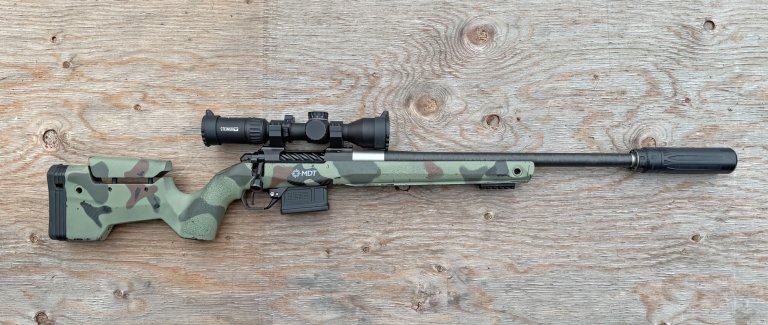
- Barrel 20-inch Preferred Barrel Blanks carbon-wrapped
- Action Aero Precision Solace Light
- Stock MDT CRBN
- Trigger Triggertech
22 ARC
Hornady introduced the 22 ARC — short for Advanced Rifle Cartridge — in 2024 as a necked-down cousin to the popular 6mm ARC. Like the 22 CM, the ARC had already been wildcatted for some time, with shooters necking down 6.5 Grendel cases. The idea behind the .224 Grendel and 22 ARC was to achieve a flatter trajectory in an AR-15 than the 5.56, and to do it with heavier, more aerodynamic bullets. The goal of the 22 ARC was to produce .22/250-like trajectories out of an AR platform, which would greatly aid thermal shooters and others who need a point-and-shoot cartridge. Though it doesn’t beat the .22/250 in muzzle velocity, high-BC bullets allow it to outperform the .22/250 in drop and drift at extended distances downrange.
In 2024, I built two test ARs chambered in 22 ARC that sparked my interest in the cartridge as potentially ideal for mountain sheep, black bears, and deer-sized game. Legendary Alaskan market hunter, wolf-control agent, and Outdoor Life contributor Frank Glaser touted his .220 Swift as the ultimate killer of hoofed game, and I’d long fantasized about putting together a .22/250 or .220 Swift as a sheep rifle — except that the light .224 bullets for standard twist rates get blown around like napkins at a Wyoming barbeque. It just wasn’t that practical. The 22 ARC, along with the introduction of bullets that are dramatically better in the wind, was the catalyst that prompted my reconsideration.
The 22 ARC has a factory twist rate of 1:7 inches, slightly faster than the standard for the 22 CM. Its somewhat lower velocities still allow the use of many lighter lead-core bullets without fear of spinning them apart, but it’s ideal for 80-grain bullets and the intended host of the 88-grain ELD-M bullet that I used to take my bull moose last year.

22 ARC Specs
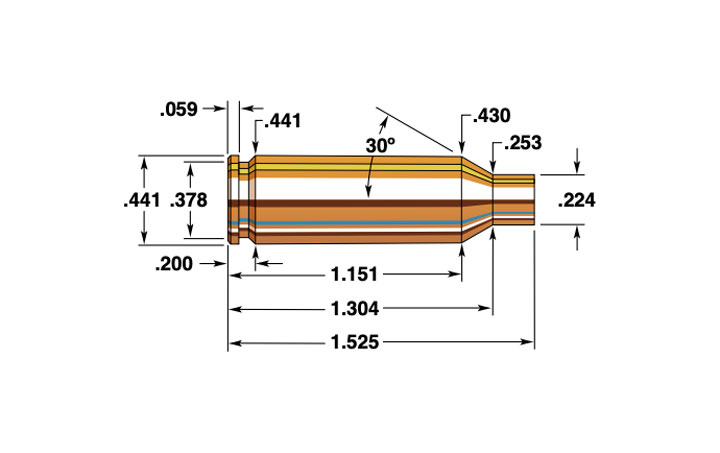
- Parent Case: 6.5 Grendel
- Case Capacity: 34.6 Grains H2O
- Shoulder: 30 degrees
- Max COAL: 2.260 inches
- SAAMI Twist Rate: 1 in 7 inches
- Bullet Weight: 50 to 90 grains
- Powders: Medium-fast powders like Varget, StaBall Match, CFE223, and Accurate 2520
22 ARC Bolt-Action Rifles Tested
Ruger American Gen II Predator
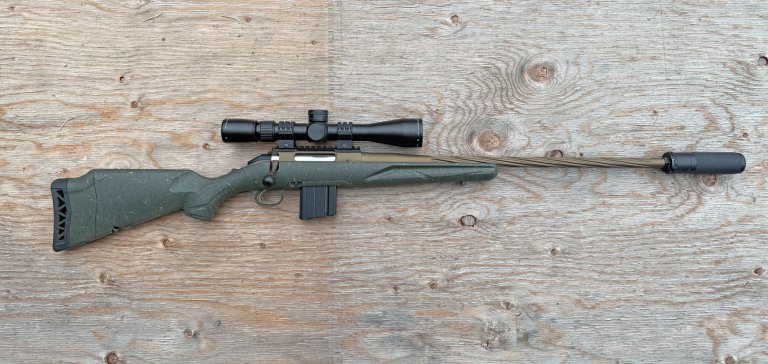
- Barrel 22-inch hammer-forged, fluted
- Action Ruger American Gen II
- Stock Injection-molded factory stock
- Trigger Factory Ruger American trigger
Q Mini Fix
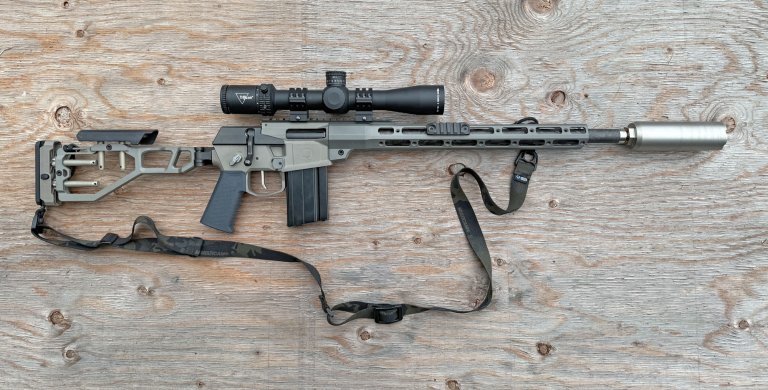
- Barrel 18-inch Proof Research carbon-wrapped
- Action Mini Fix bolt action
- Stock Mini Fix factory chassis
- Trigger Mini Fix proprietary trigger
Zermatt Origin/ Proof Custom Build
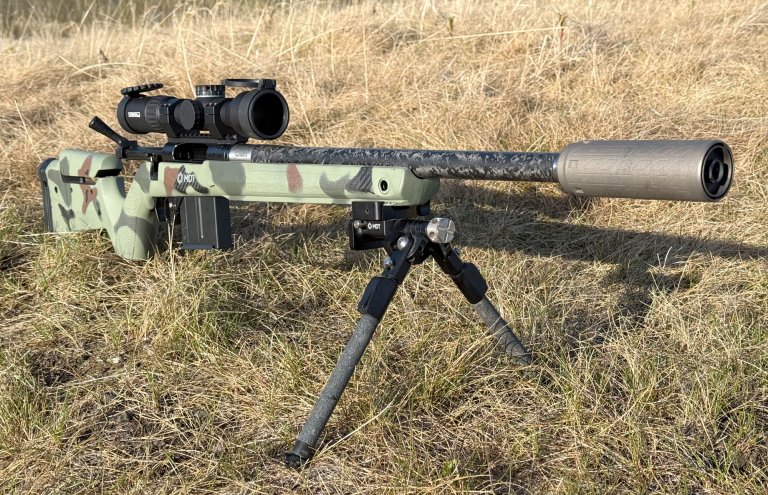
- Barrel 20-inch Proof Research carbon-wrapped, chambered by Hoover Precision Rifles
- Action Zermatt Origin
- Stock MDT CRBN
- Trigger Triggertech Diamond
22 ARC: Bolt-Action vs. Gas Gun
A unique consideration for the 22 ARC is that pressures in factory ammo are kept at a maximum average pressure of 52,000 PSI for compatibility with the AR platform. Pressures exceeding that can cause damage to the bolt lugs. All factory-loaded 22 ARC ammo you’ll find is loaded to this milder threshold.
Bolt-action rifles chambered in 22 ARC are not subject to these pressure restrictions and can operate safely at 60,000 to 62,000 PSI. Because of this, the reloader can make ammunition with higher velocities than are available in factory offerings. This is a legitimate consideration for anyone trying to decide between it and 22 Creedmoor. Loading to these higher pressures will boost muzzle velocities by 100 to 250 fps, give or take.
22 ARC vs. 22 Creedmoor, Head-to-Head
At first glance, there doesn’t seem to be a debate between the performance of the 22 ARC and 22 Creedmoor. The Creedmoor is capable of higher velocities across the board so it wins — end of story. Not so fast.
In the heyday of the .220 Swift and .22/250, speed was the yardstick for measuring a rifle’s performance when shooting long distance. In the era of Modern Cartridge Design other factors have come to trump muzzle velocity. A snapshot of what cartridges and velocities are taking the podium across various long-distance competitive disciplines suggests that raw speed is less important than we think.
22 ARC Vs. 22 Creedmoor Test Data
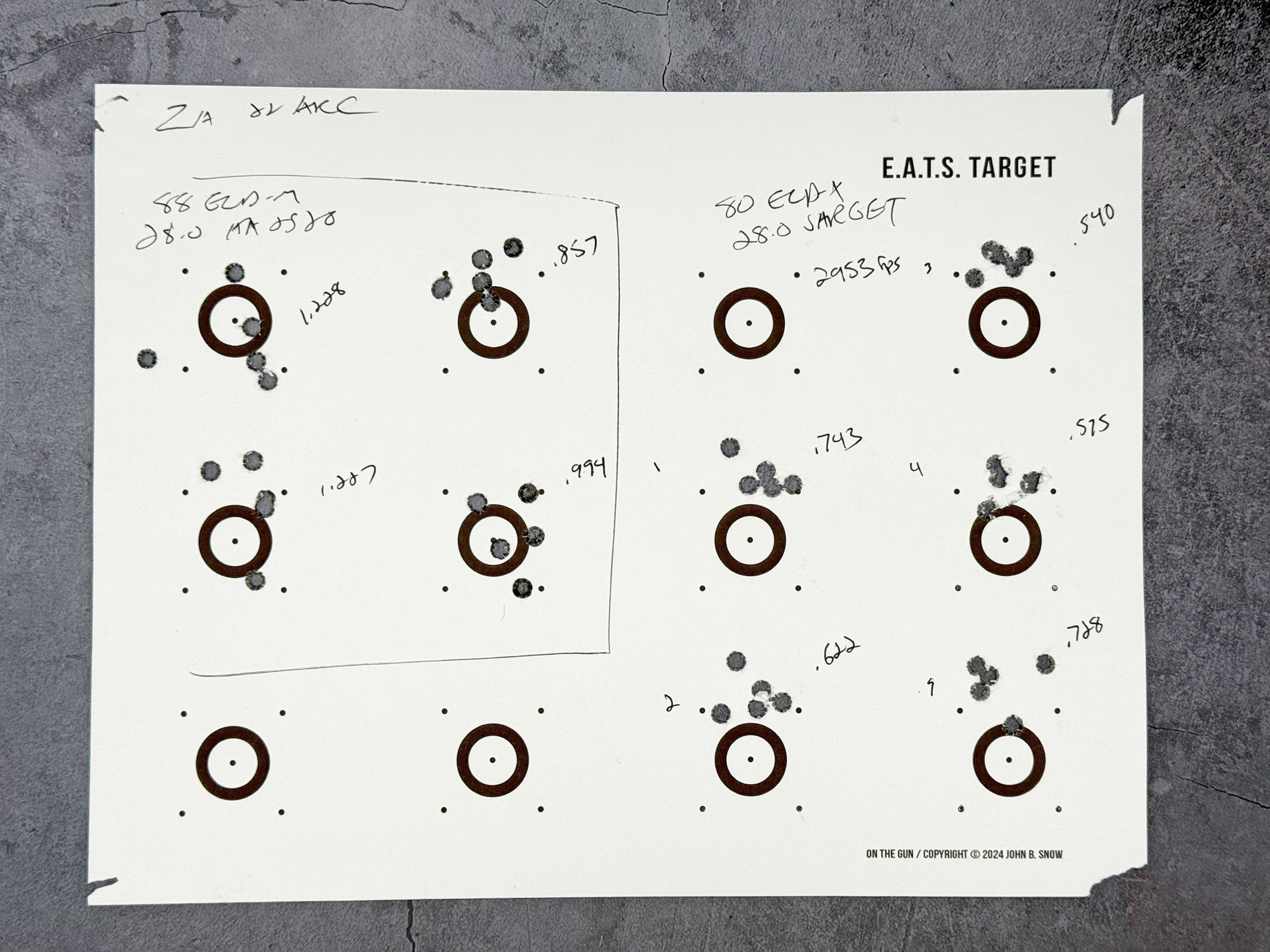
To test the 22 ARC and 22 Creedmoor’s accuracy and velocity, I followed our standard protocol which captures data in 20-shot sample sizes. I did all accuracy testing from a bagged bench at 100 yards, firing in five-shot increments and letting barrels cool between groups. Because three- and five-shot groups don’t provide enough data to assess a firearm’s performance, we compile four five-shot groups into a single 20-shot aggregate group by overlaying targets and marking shots. Using a ballistic analysis app, we can plot group size and, more importantly, mean radius. Mean radius is a measure of the average variation of each shot — not just a measurement of the two worst. Twenty-shot samples are also important when looking at velocity. Velocity spreads or SDs over less than 10 shots simply aren’t consistent enough to give us a reliable estimate.
Zermatt Origin/Proof Custom 22 ARC, 20-Inch Barrel
| Ammo | Avg. 5-Shot Group Size | 20-Shot Group Size | Mean Radius | Velocity | Velocity ES | Velocity SD |
| Hand Load McGuire 71-gn Copper Rose, 28.0 gn Varget | .62 inches | .89 inches | .23 inches | 2972 fps | 34.3 fps | 10.6 fps |
| Hornady Precision Hunter 80-gn ELD-X (factory) | .55 inches | .85 inches | .25 inches | 2847 fps | 58.2 fps | 14.5 fps |
| Hand Load Hornady 80-gn ELD-X, 28.0 gn Varget | .62 inches | .88 inches | .26 inches | 2953 fps | 69.5 fps | 14 fps |
| Hornady Match 88-gn ELD-M (factory) | .50 inches | .73 inches | .27 inches | 2747 fps | 63.7 fps | 17.7 fps |
| Hand Load Hornady 70-grain CX, 31.5 gn CFE223 | .82 inches | 1.15 inches | .34 inches | 3266 fps | 60.1 fps | 15.6 fps |
| Hornady Superformance 70-gn CX (factory) | .89 inches | 1.27 inches | .36 inches | 3057 fps | 48.8 fps | 17.2 fps |
| Hornady Black 75-gn ELD-M (factory) | .84 inches | 1.53 inches | .42 inches | 2950 fps | 81.3 fps | 24.2 fps |
| Hornady V-Match 62-gn ELD-VT (factory) | .98 inches | 1.52 inches | .46 inches | 3275 fps | 113.3 fps | 28.3 fps |
Q Mini Fix 22 ARC, Proof Pre-Fit, 18-Inch Barrel
| Ammo | Avg. 5-Shot Group Size | 20-Shot Group Size | 20-Shot Mean Radius | Velocity (20 Shots) | Velocity ES (20 Shots) | Velocity SD (20 shots) |
| Hornady V-Match 62-gn ELD-VT (factory) | .91 inches | 1.07 inches | .32 inches | 3116 fps | 66.7 fps | 15.4 fps |
| Hornady Black 75-gn ELD-M (factory) | .75 inches | 1.15 inches | .36 inches | 2857 fps | 41.8 fps | 10.4 fps |
| Hornady Superformance 70-gn CX (factory) | 1.03 inches | 1.29 inches | .36 inches | 2956 fps | 90.9 fps | 25.9 fps |
| Hornady Match 88-gn ELD-M (factory) | .83 inches | 1.3 inches | .4 inches | 2650 fps | 134 fps | 33 fps |
| Hornady Precision Hunter 80-gn ELD-X (factory) | .97 inches | 1.26 inches | .44 inches | 2779 fps | 71.7 fps | 18.8 fps |
Ruger American Predator 22 ARC, 22-Inch Barrel
| Ammo | Avg. 5-Shot Group Size | 20-Shot Group Size | 20-Shot Mean Radius | Velocity (20 Shots) | Velocity ES (20 Shots) | Velocity SD (20 shots) |
| Hornady Match 88-gn ELD-M (factory) | .5 inches | .9 inches | .24 inches | 2629 fps | 73.2 fps | 23.8 fps |
| Hornady Black 75-gn ELD-M (factory) | .69 inches | .99 inches | .32 inches | 2845 fps | 81 fps | 18.8 fps |
| Hand Load 80-gn ELD-X, 30.3gn H4350 | .64 inches | 1.13 inches | .32 inches | 2780 fps | 58.5 fps | 17.2 fps |
| Hornady V-Match 62-gn ELD-VT (factory) | .79 inches | 1.26 inches | .33 inches | 3158 fps | 77.5 fps | 22.1 fps |
Horizon Venatic Carbon 22 Creedmoor, 18-Inch Barrel
| Ammo | Avg. 5-Shot Group Size | 20-Shot Group Size | 20-Shot Mean Radius | Velocity (20 Shots) | Velocity ES (20 Shots) | Velocity SD (20 shots) |
| Hornady Precision Hunter 80-gn ELD-X (factory) | .87 inches | 1.23 inches | .34 inches | 3078 fps | 85 fps | 18 fps |
| Hand Load 57-gn Hammer HHT, 45.0 gn StaBall 6.5 | .86 inches | 1.51 inches | .46 inches | 3727 fps | 127 fps | 45.5 fps |
| Nosler 85-gn RDF (factory) | 1.32 inches | 1.81 inches | .54 inches | 2847 fps | 73.1 fps | 26.2 fps |
| Hornady Match 80-gn ELD-M (factory) | 1.63 inches | 2.4 inches | .65 inches | 3075 fps | 72.3 fps | 22.3 fps |
Fierce MTN Reaper 22 Creedmoor, 20-Inch Barrel
| Ammo | Avg. 5-Shot Group Size | 20-Shot Group Size | 20-Shot Mean Radius | Velocity (20 Shots) | Velocity ES (20 Shots) | Velocity SD (20 shots) |
| Hornady Precision Hunter 80-gn ELD-X (factory) | .69 inches | .87 inches | .27 inches | 3110 fps | 48.6 fps | 14.4 fps |
| Hornady Match 80-gn ELD-M (factory) | .72 inches | 1.06 inches | .3 inches | 3121 fps | 57.8 fps | 17.4 fps |
| Nosler 85-gn RDF (factory) | .83 inches | 1.03 inches | .38 inches | 2900 fps | 52.5 fps | 20.6 fps |
Aero Precision/PBB Custom 22 Creedmoor, 20-inch Barrel
| Ammo | Avg. 5-Shot Group Size | 20-Shot Group Size | 20-Shot Mean Radius | Velocity (20 Shots) | Velocity ES (20 Shots) | Velocity SD (20 shots) |
| Nosler 85-gn RDF (factory) | .72 inches | .91 inches | .27 inches | 2883 fps | 71.9 fps | 26 fps |
| Hand Load 80-gn ELD-X, 39.0 gn H4350 *OVER BOOK MAX | .67 inches | 1.0 inches | .28 inches | 3181 fps | 44 fps | 11.3 fps |
| Hornady Precision Hunter 80-gn ELD-X (factory) | .67 inches | .92 inches | .30 inches | 3159 fps | 80.9 fps | 19.1 fps |
| Hornady Match 80-gn ELD-M (factory) | .90 inches | 1.59 inches | .38 inches | 3134 fps | 45 fps | 13 fps |
| Hand Load 80-gn ELD-X, 40.0 gn H4350 *OVER BOOK MAX | 1.225 inches | 1.85 inches | .51 inches | 3256 fps | 40.4 fps | 11.4 fps |
Velocity
The 22 Creedmoor is the hands-down winner over the 22 ARC when it comes to velocity, but I’ve witnessed some interesting quirks from each round. Barrel length is, of course, a key component of the velocity you can reasonably expect. Much of the published velocity data you will find is with 24-inch barrels or, sometimes, 26-inch barrels as with the .220 Swift and .22/250. Shorter barrels will usually tame down the velocities you can expect to achieve. With suppressor use becoming the norm, factory rifles are shifting to 20-inch barrels for many applications and cartridges. All test rifles were in the 18- to 22-inch range.
22 Creedmoor Velocity Notes
One of my most interesting observations has been that, with heavier 80-grain bullets, there isn’t a huge disparity between the velocities of 22 Creedmoor and bolt-action-loaded 22 ARC cartridges. In the barrels tested, factory ammo for 22 Creedmoor ranged between 150 and 250 fps faster than similar factory 22 ARC loads. I was able to achieve about a 300 fps advantage with the 22 CM using 80-grain ELD-X bullets loaded with a couple different powders — topping out at 3,256 fps with a stout load of H4350 from the 20-inch barrel of the Aero/Preferred custom build. That’s compared to 2,990 fps from the 20-inch Zermatt 22 ARC with the same bullet using CFE223. The Creedmoor’s extra velocity comes at the cost of about 30 percent more powder per shot.
Only one powder, Superformance, achieved 3,200 fps within Hornady’s published load data range. I was only able to hit that velocity with StaBall 6.5 and H4350 when exceeding maximum book loads substantially — though I first checked with a ballistician who had measured chamber pressure data indicating I would still be in a safe range. I can only recommend staying within published safe load data, and it’s difficult to gain more than a 150-fps advantage over the 22 ARC while doing so. Most powders I tried would push an 80-grain bullet at 3,050 to 3,150 fps within published load data limits from a 20-inch barrel.
I was able to push lighter monolithic bullets much faster in the 22 Creed, between 3,500 fps and 3,750 fps from the 18-inch-barreled Horizon Venatic, but I noticed my extreme spreads and velocity SD numbers began to get worse as velocities increased.
22 ARC Velocity Notes
The 22 ARC is a fascinating cartridge in several ways. First, it’s a seemingly ideal cartridge for 20-inch barrels and I’m not sure one would gain much by increasing barrel length. It’s a single example, but velocities in my 22-inch Ruger barrel were significantly lower across the board than those from my 18- and 20-inch Proof-barreled rifles. I ran a test load using the slower-burning H4350 to see if that would boost speeds with more space to burn, but it didn’t do much. Barrel to barrel velocity will always vary, but 18 or 20 inches will get you what you need from the 22 ARC.
Second, hand loading the 22 ARC in a bolt-action rifle will allow you to creep up on factory 22 Creedmoor velocities — at least to within about 150 fps. In all my testing, including smaller samples that are not listed here, I achieved best velocities with powders like CFE223, Leverevolution, and Accurate 2520. Though powders like Varget and StaBall Match gave me slightly lower velocities, ES, SD, and accuracy were all better with those.
A reasonable expectation is to push an 80-grain bullet between 2,900 and 3,000 fps, but I was able to drive 70- and 71-grain monolithic bullets to 3,266 fps while staying within safe load limits. Generally, these bullets are not dropping below 2,000 fps until about 550 to 600 yards — only 100 or 200 yards sooner than an average 80-grain 22 Creedmoor load.
Drop and Drift
Because trajectory and wind drift are big reasons why one might choose a slightly faster cartridge, let’s take a look at the drop and drift, in a 10mph 90-degree wind, out to 1,000 yards with a couple of the all-around best-case loads I tested.
| Load | Drop/Drift @ 250 yards (inches) | 500 yards / 10 mph wind | 750 yards / 10 mph wind | 1,000 yds / 10mph wind |
| Aero 22 CM, 80-gn ELD-X @ 3159 fps | -4.42 / 3.47 | -37.04 / 15.22 | -112.9 / 37.93 | -252.91 / 75.44 |
| Zermatt 22 ARC, 80-gn ELD-X @ 2953 fps | -5.57 / 3.87 | -44.22 / 17.07 | -133.92 / 42.73 | -300.71 / 85.3 |
As you can see, there is about a 0.4-MIL/1.3-MOA difference in trajectory at 500 yards, but the disparity increases beyond that. However, wind drift remains within 0.3 MILS or 1 MOA at 1,000 yards in a 10mph right-to-left crosswind. At 500 yards, the difference in wind drift is only about 0.1 MILS or just over a quarter-MOA.
Extra speed gives the 22 Creedmoor an edge, especially for thermal shooters using a maximum-point-blank, point-and-shoot style of hunting. Realistically, though, it’s not a huge advantage over the 22 ARC at practical hunting distances.
Accuracy
The 22 Creedmoor and 22 ARC are each capable of stellar accuracy. In my testing, both cartridges readily produced 20-shot aggregate group sizes of less than 1.5 inches, and many were closer to, or less than, an inch. Their accuracy is perfectly suitable for any normal hunting scenario, but I learned a lot more than my published results can show.
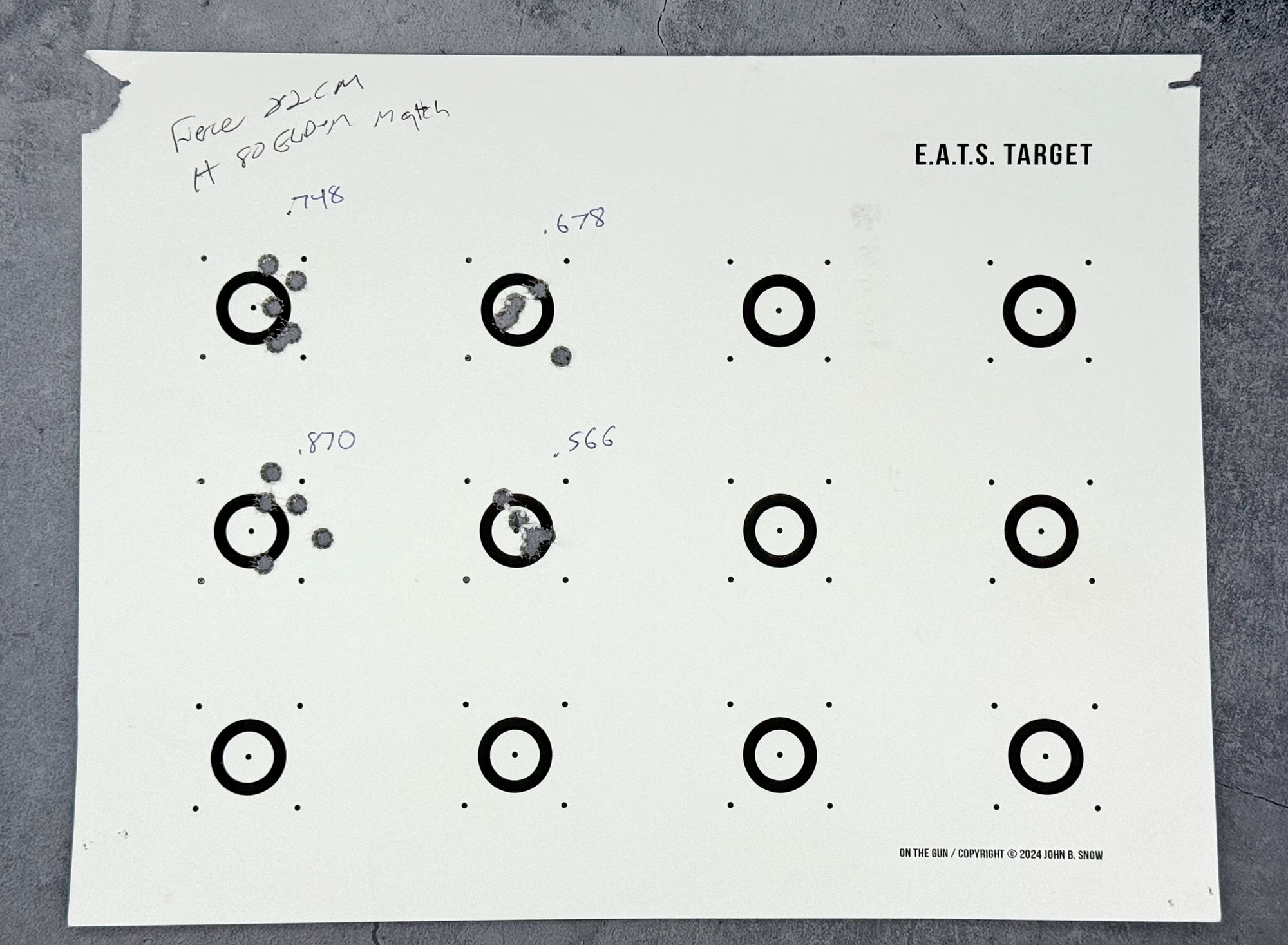
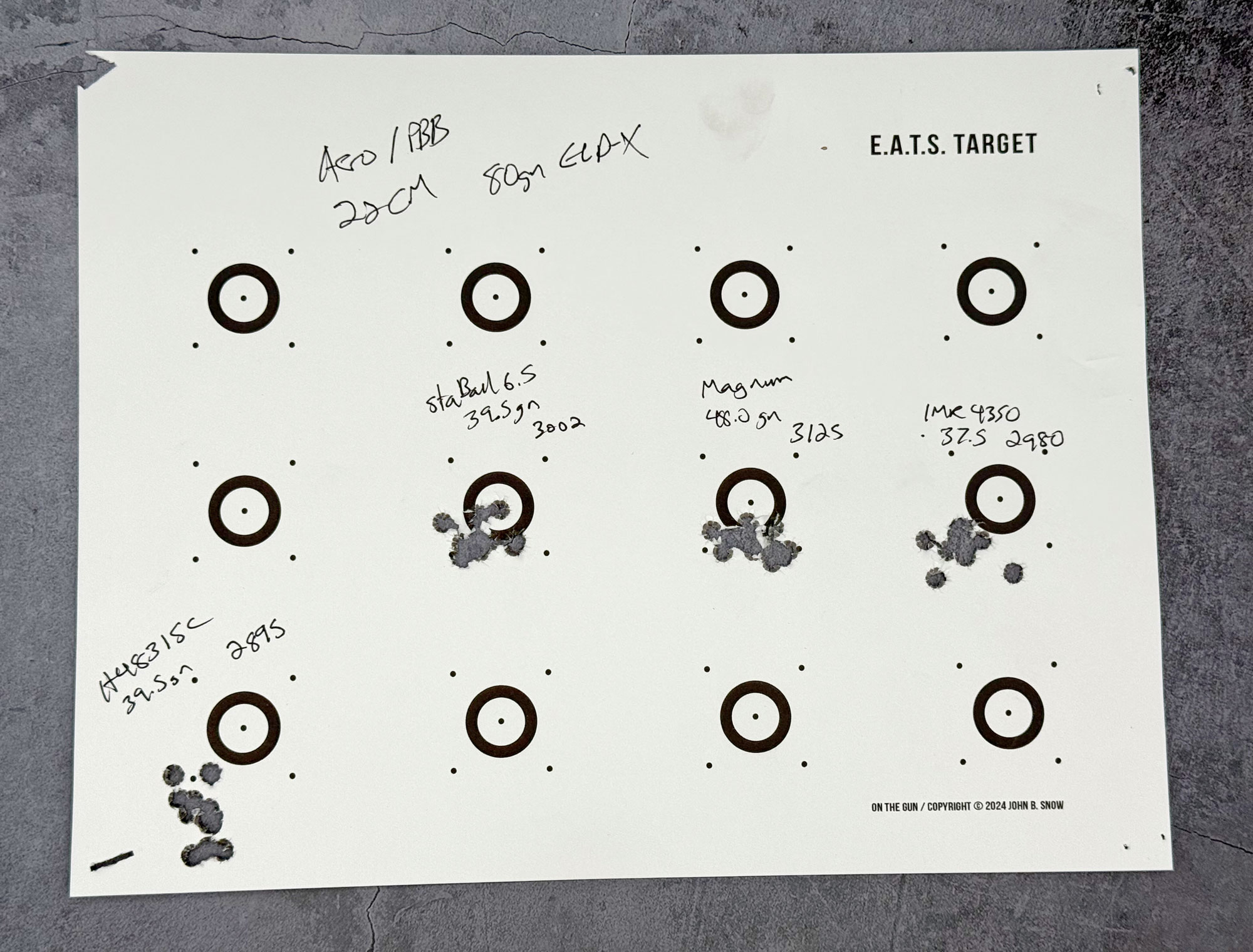
Overall, accuracy of the 22 Creedmoor was more finicky than that of the 22 ARC — something that really only showed itself with large sample sizes. A good example of this is my Aero Precision/Preferred custom build. That rifle hammered out some stupendous groups, but when taking the rifle to longer distances, or repeating test samples, I noticed occasional errant shots or “flyers.” Old Tyler would have written these off as such and pretended they didn’t exist. Not anymore. I needed more data, and I observed that as velocity increased beyond 3,100 fps, these outlying shots became more common. Between 3,100 and 3,200 fps, the rifle generally held tight with one to three shots in a 20-shot aggregate straying outside the fold — sometimes by nearly two inches. Beyond 3,200 fps, dispersion generally deteriorated further. All the most accurate results were at velocities under 3,200 fps.
I noticed a similar trend in the 22 ARC. Loads using Varget or StaBall Match produced more mild velocities than those using CFE223 or Leverevolution, but accuracy was much more consistent. I achieved good accuracy with both the 71-grain Copper Rose and 70-grain Hornady CX bullet using 31.5 grains of CFE223, moving at 3,175 fps and 3,266 fps respectively, but the Copper Rose showed better precision at a tamer 2,972 fps using 28.0 grains of Varget.
My takeaway is that good accuracy can be achieved at the higher velocities within the 22 Creedmoor’s capabilities, but it’s not as easy or consistent as with slightly milder loads that aren’t much faster than the 22 ARC. The sweet spot for the 22 ARC seems to be in the 2,900 to 3,000 fps range, and my most consistent results with the Creed were in the 3,050 to 3,150 fps range — not a huge difference. Flexing the Creedmoor’s full velocity potential will likely cause you to sacrifice some precision.
Rifle Considerations
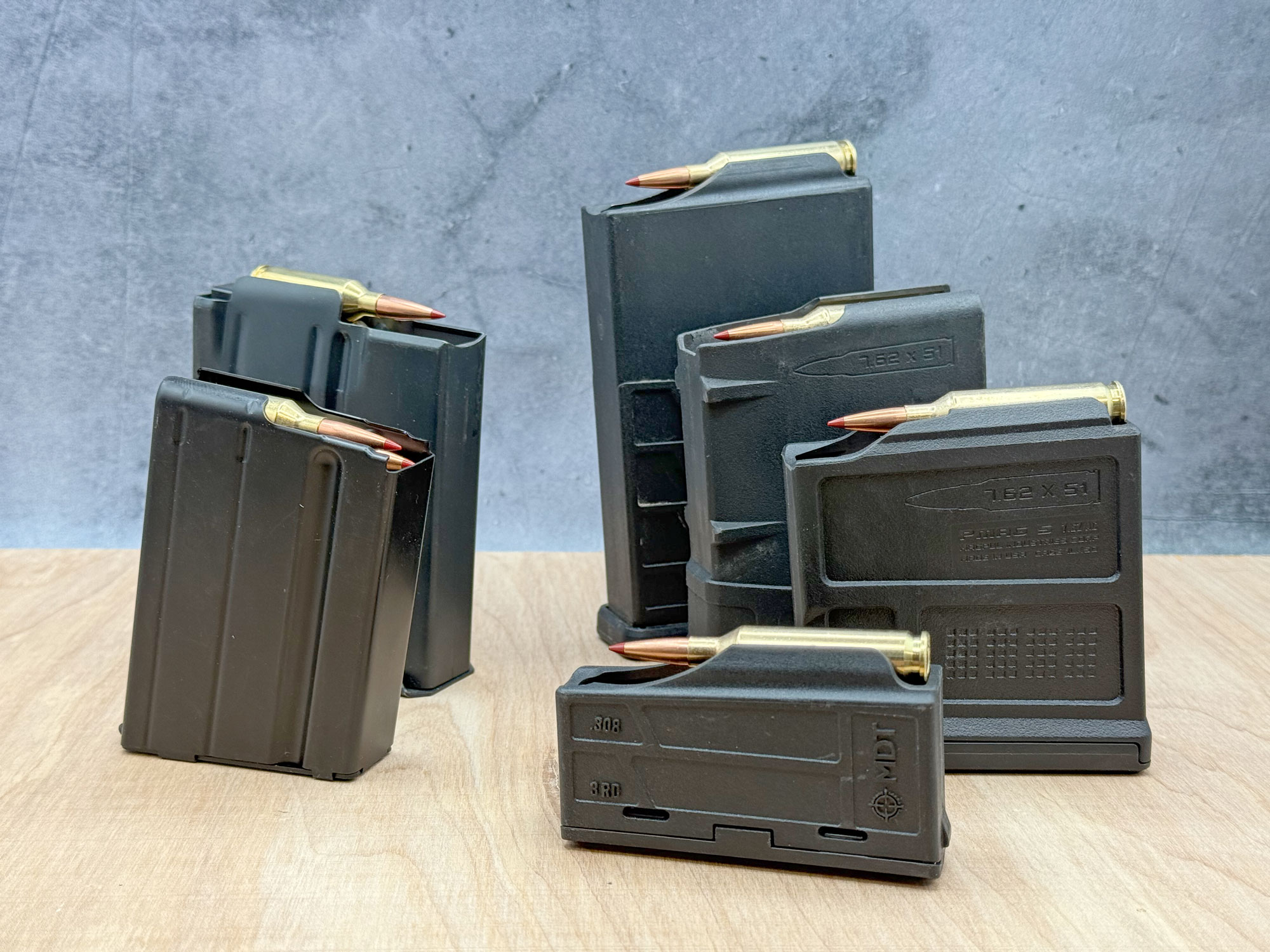
While we like to focus on accuracy and velocity when choosing between two cartridges, available rifles and magazines matter a great deal. In similar-performing cartridges, it’s the details that make all the difference, and it’s where the 22 Creedmoor currently has a nice advantage over the 22 ARC.
Because the 22 Creedmoor uses a standard bolt face and is compatible with any 6.5 Creedmoor magazine, it fits seamlessly into the stream of currently offered rifles and accessories. In a lightweight mountain gun, you can use a feathery flush-fitting MDT polymer magazine or opt for something larger. Common production actions like Tikka and Savage, as well as builders actions can be fitted with 22 CM barrels.
Though there are production 22 ARC rifles available, and it’s not difficult to assemble your own, the ARC does require you to use a PPC bolt face, and the cartridge is undersized for standard short actions. Currently, magazine options are more limited for 22 ARC. Rifles from Ruger use AR Grendel magazines, and the heavy 10-round metal MDT ARC magazines work very well. But, aside from the Hawkins Precision Hunter magazine, there isn’t much for flush-fitting AICS compatibility. Some shooters have 3-D printed spacers to adapt standard Creedmoor/.308 magazines to the ARC, but it’s not plug and play like the 22 CM.
Barrel Life
Barrel life is another factor to consider, but take it with a grain of salt. The obvious winner in this category is going to be the 22 ARC because of its lighter charge weights. I have yet to shoot the barrel out of one, but expect to get at least 2,000 to 3,000 rounds from a barrel.
Derrick Ratliff, Horizon Firearms founder, has seen most 22 Creedmoor barrels last between 1,200 and 1,900 rounds, which isn’t bad for what is essentially a super-improved .22/250, and better than a lot of other overbore cartridges.
How hard you run your rifle also has a huge impact on barrel life. And most hunters will never shoot out their barrel. If you’re a high-volume prairie-dog or target shooter, the ARC is probably the better choice, but it’s a relatively minimal consideration for the majority of us.
So, Which is the Best?
Throughout the months of testing, I’ve waffled on which cartridge is better. Ultimately, the answer depends on your needs and expectations. Here are some guidelines to help you choose:
When the 22 Creedmoor is the Best Choice
- If you only shoot factory ammo
- If maximizing velocity is very important to you
- If you’d rather use a standard bolt face/action and accessories
When the 22 ARC is the Best Choice
- If you’re a reloader
- If you’re willing to give up a little velocity for more consistent accuracy
- If you are a high-volume shooter
Final thoughts on 22 Creedmoor vs. 22 ARC
Picking the best cartridge for you, in any context, requires looking beyond the on-paper attributes. Unfortunately, that’s all most writers and content producers give you. I’ve learned a tremendous amount about these two cartridges over a few thousand rounds of shooting and reloading, and accumulating data is what it took to make the choice for myself. For the average hunter and shooter who’s going to use factory ammo and probably won’t ever wear out a barrel, I think the 22 Creedmoor gets the nod. It will be accurate enough, with a good performance advantage over the 22 ARC.
For a hand loader, I think the 22 ARC offers more consistent accuracy and is less temperamental than the 22 CM. Comparing loads in both cartridges that shot well with the same bullet, an 80-grain ELD-X, the 22 Creedmoor only gives me an additional 100 to 200 yards of useful impact velocity — which is beyond where I’d ever want to shoot at an animal with it anyway.Considering that, I’ll take the cartridge that uses less powder.
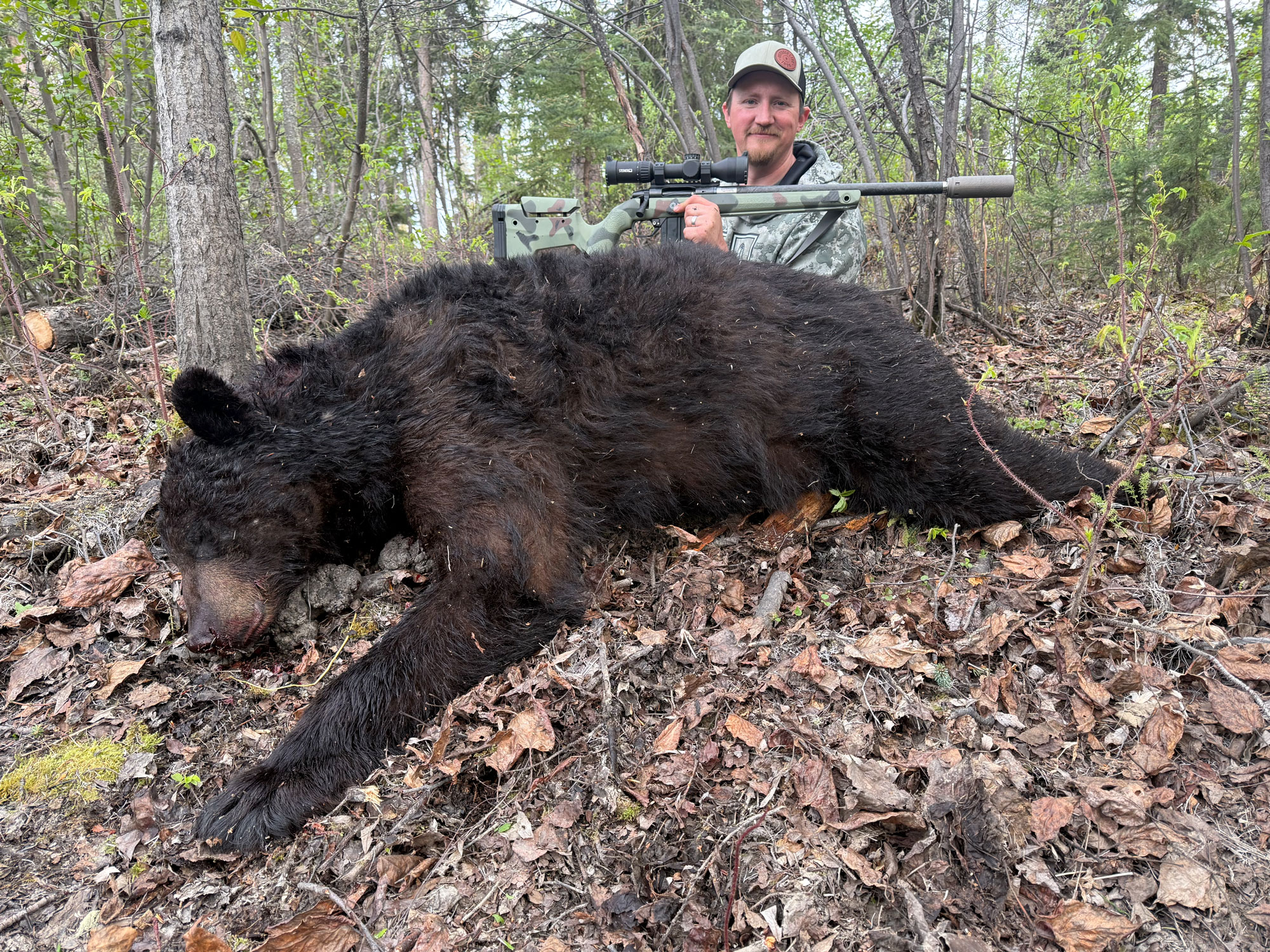
Both cartridges are excellent options for everything from varmints to deer-sized game. So far, I’ve found the 22 ARC to be a solid black bear killer and I know the Creedmoor would do just as well.